
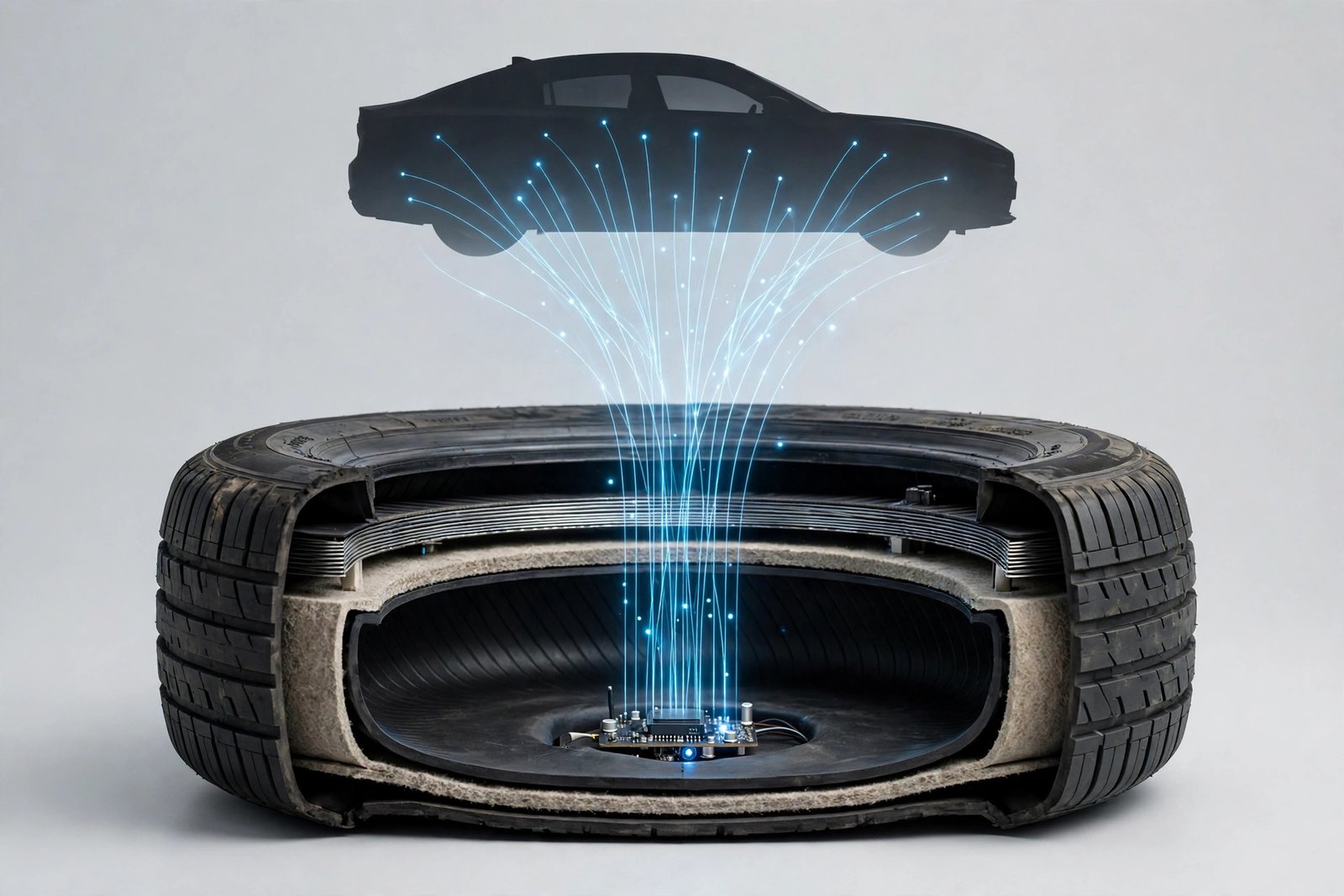
Quick answer: A smart tire is a regular tire with electronics built in — sensors or chips that report pressure, temperature, tread wear, load, and sometimes road grip to your car while you drive. The idea is real and already fitted to a few expensive cars and many truck fleets, but in 2026 there is still no mainstream smart tire you can buy off the shelf for a family car.
In short, what are smart tires? They are tires that can tell the car how they are doing. A conventional tire is silent: it holds air, grips the road, wears down, and gives you no warning until something goes visibly wrong. A smart tire adds sensing and communication to that same rubber. It measures what is happening inside the tire and where the rubber meets the road, then sends that information somewhere useful: a dashboard warning, a phone app, the car’s braking computer, or a fleet manager’s screen.
The term gets used for three different things, and mixing them up causes most of the confusion. Some tires carry only a passive identification chip. Some carry live sensors. Some need no new hardware at all, because software estimates tire condition from data the car already collects. This guide untangles all three, shows the real systems behind the headlines, and gives an honest picture of what you can and cannot buy in 2026.
The three layers behind the term
A smart tire is a tire that reports its own condition and, in the most advanced systems, the condition of the road beneath it. Behind that definition sit three layers:
| Layer | What it is | Example |
|---|---|---|
| Identity | A passive chip that identifies the individual tire | RFID tags embedded during manufacturing |
| Sensing | Live sensors measuring pressure, temperature, tread, load, or grip | Pirelli Cyber Tyre, Goodyear SightLine |
| Intelligence | Software turning readings into predictions and car commands | Michelin SmartWear and SmartLoad |
The identity layer is already widespread and invisible. The sensing layer is real but rare on passenger cars. The intelligence layer is where the newest work is happening. Ask which layer a headline is really about, and it usually becomes easy to judge.
A smart tire is also none of these: a tire that inflates itself (a separate idea), a run-flat tire (stiffer sidewalls, not electronics), or simply a car with a tire pressure monitoring system (TPMS). Your car almost certainly already has TPMS, but TPMS is only the first step on this road, as the comparison later in this article shows.
What smart tires actually measure
Different systems measure different things, but the full menu looks like this:
| Measurement | Why it matters |
|---|---|
| Pressure | Underinflation hurts handling, wears tires unevenly, and wastes fuel |
| Temperature | Heat is an early sign of overload, damage, or a developing failure |
| Tread depth and wear | Worn tread loses wet grip long before it looks bald |
| Load | Overloading shortens tire life and changes braking distances |
| Road friction and grip | Lets safety systems react to ice or standing water sooner |
| Tire identity | Lets the car calibrate itself for summer, winter, or track tires |
No single system measures all of these perfectly. Pirelli’s Cyber Tyre reports pressure, temperature, and tire identity, with grip and aquaplaning detection demonstrated in testing. Goodyear’s SightLine covers wear state, load, inflation, temperature, and estimated road friction. Continental’s ContiSense concept measured tread depth and temperature through the rubber itself. Michelin’s software approach estimates wear and load without adding a sensor to the tire. The direction is clear — more measurements, more of the time — but the finished, do-everything smart tire does not exist yet.
Road friction deserves a special mention because it is genuinely new. Cameras and radar can see rain, but they cannot feel grip. If the tire reports that the road under it has suddenly lost friction — black ice, a flooded patch — the car’s safety systems can brake earlier and gentler, instead of discovering the problem mid-emergency.
RFID and embedded chips: the tire’s ID card
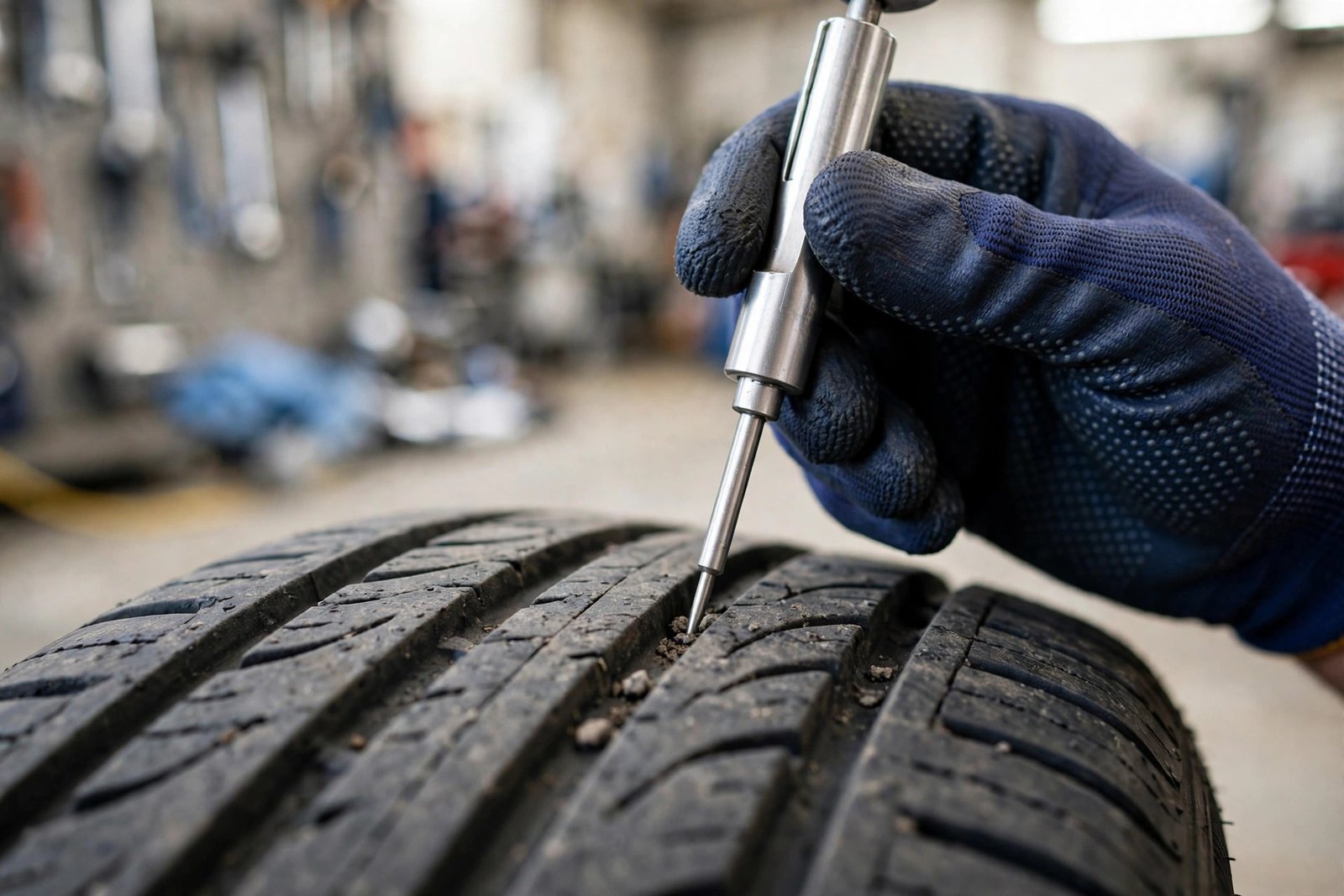
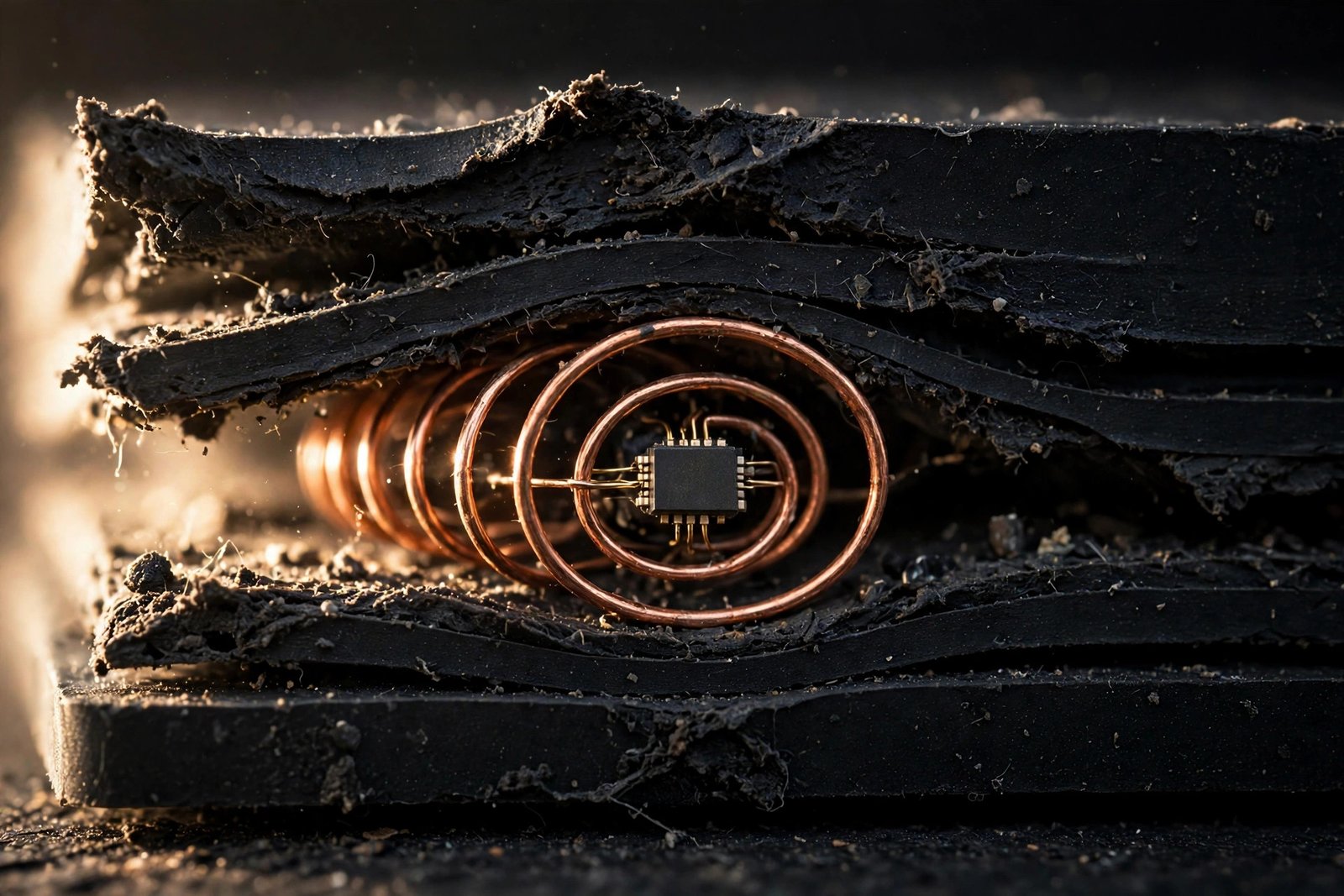
The quietest smart tire technology is also the most common. Many tires rolling off production lines today carry a small RFID (radio-frequency identification) chip embedded in the rubber during manufacturing. You cannot see it, and it changes nothing about how the tire drives. It is the tire’s ID card.
A passive RFID tag has no battery. It sits dormant until a nearby reader powers it with radio waves, and then answers with a company prefix, a product reference, and an individual serial number. Scanned at the factory, in a warehouse, at a dealer, and eventually at a recycler, the tag creates a digital paper trail for one specific tire across its whole life. Michelin has embedded passive RFID tags for years, starting with commercial truck tires and extending to select passenger tires, and the five largest tire makers — Michelin, Bridgestone, Continental, Goodyear, and Pirelli — founded a joint organization in early 2022 to standardize tire data exchange.
What a passive tag cannot do matters just as much. It cannot measure pressure, temperature, or tread depth, and it cannot track a driver: it only responds when a reader is close by, and it stores no personal information. Reporting on Michelin’s RFID program, including a summary of a NHTSA tire-identification study, confirms that scanning a tag does not reveal owner information. The European Union is also developing Digital Product Passport rules, with tire-sector rules reported as pencilled in for adoption around 2027.
How the data reaches your car — and your phone
A sensor inside a spinning tire endures heat, vibration, and flexing. Getting its data out usually follows four steps:
- Sense. A sensor on the tire’s inner liner, in the valve, or embedded in the rubber measures pressure, temperature, acceleration, or vibration. Tire-mounted sensors touch the tire itself, which is one reason Pirelli says Cyber Tyre readings beat valve-mounted sensors that only touch the rim.
- Transmit. Readings travel wirelessly, typically over Bluetooth Low Energy, to a receiver in the car. Some concepts use conductive rubber to carry signals. RFID tags are the exception: they never transmit on their own and only answer a reader.
- Process. Software in the car, a receiver unit, or the cloud turns raw readings into meaning. Michelin’s approach flips the order: its models read signals the car already produces, such as braking intensity and cornering forces, and infer tire wear and load from them.
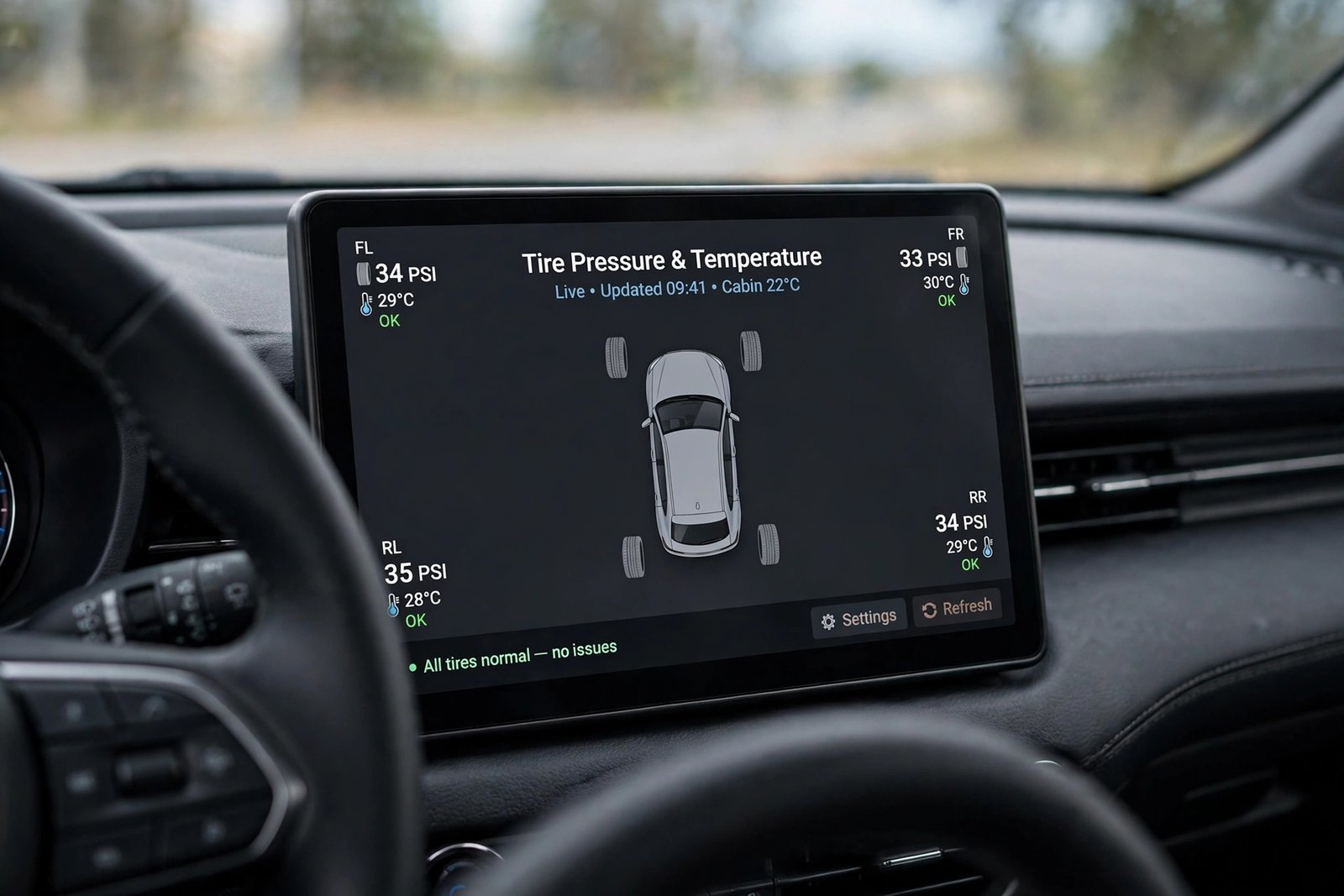
- Act. The result reaches a dashboard warning, a phone app, or a fleet portal — or no human at all, as the car’s electronics quietly recalibrate braking and stability control for the grip available. That last case is where smart tires stop being a gadget and start being a safety system.
Power remains awkward: tire sensors generally run on small sealed batteries, replaced rather than recharged when they die. That is one reason manufacturers also pursue software-only approaches needing no tire hardware.
Real examples: the systems behind the headlines
Pirelli Cyber Tyre
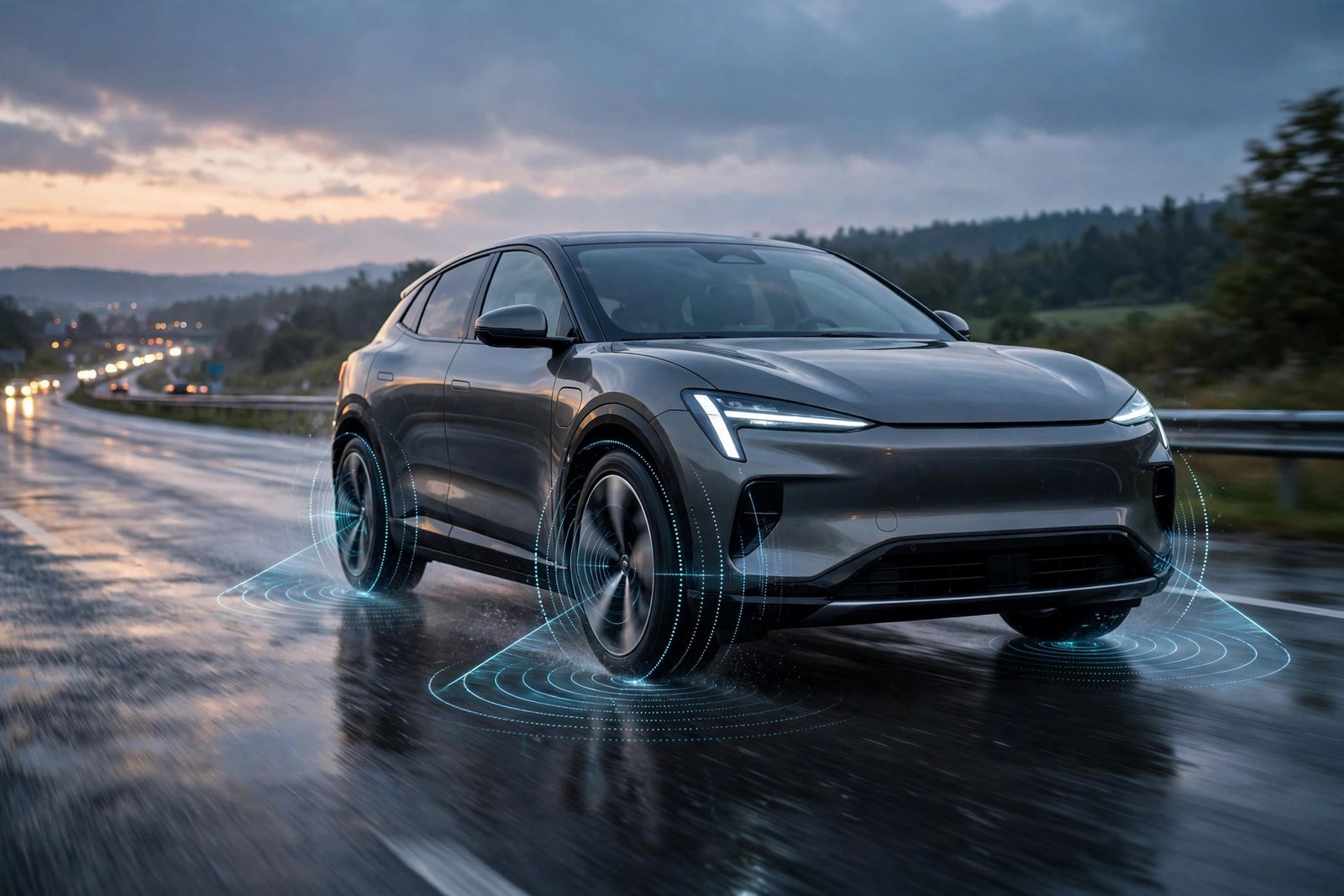
Pirelli’s Cyber Tyre puts a sensor in each tire, linked to software in the car’s onboard computer. It debuted as standard equipment on the McLaren Artura, announced in February 2021 as a world first for factory-fitted sensor tires. Each tire carries a “passport” — type, summer or winter fitment, prescribed pressure, load index, and speed rating — plus live temperature and pressure data. It has since spread to cars including the Pagani Utopia Roadster, with Bosch Engineering partnering on vehicle-dynamics integration. In an October 2026 test at Pirelli’s Vizzola track, evo recorded a Cyber Tyre-equipped car stopping 5.7 meters sooner from 110 kph (68 mph) in wet braking, because the braking system used real-time tire data instead of assumptions. The tire created no extra grip; the car used existing grip better.
Goodyear SightLine
Goodyear describes SightLine, launched in 2021, as a suite of tire intelligence solutions. It measures wear state, load, inflation, and temperature, and combines those readings with road-weather data and friction models to estimate tire-road friction. In a 2023 proof of concept with autonomous delivery company Gatik, SightLine tires estimated friction and fed it to the vehicle’s driving system, detecting low-grip snow and ice in Canadian winter testing. Goodyear has also worked with Dutch research organization TNO on triggering automatic emergency braking earlier on slippery surfaces, with testing reported at speeds up to 50 mph, and demonstrated SightLine with an autonomous-vehicle platform at CES 2026. It remains an automaker and fleet technology, not an add-on for cars already on the road.
Continental ContiSense
ContiSense, shown as a concept at the Frankfurt Motor Show in 2017, used electrically conductive rubber so a tire sensor could send signals to a receiver in the car. It measured tread depth and temperature and could warn immediately if something penetrated the tire — faster than any system waiting for pressure to fall — with data reaching the car through the rubber or a phone over Bluetooth. It never became a retail product. What Continental sells today is ContiConnect, a fleet monitoring service with tire-mounted sensors reporting pressure, temperature, and mileage to a web portal and app. ContiSense shows where sensing could go; ContiConnect is where Continental’s connected-tire business actually lives.
Michelin SmartWear and SmartLoad
Michelin’s system turns the hardware story upside down. SmartWear and SmartLoad, built with vehicle software company Sonatus and demonstrated at CES 2026, are software models estimating tire wear and load from signals the vehicle already generates — braking intensity, cornering forces, load, and driving conditions. Michelin’s tire digital twin chief explained at CES 2026 that the models use sensors already equipping the vehicle, with no additional sensor in the tire. The demo used a 1970 Ford Bronco retrofitted with the system, with results shown in Michelin’s MyTires app. Michelin calls the pair the first building blocks of a full “tire digital twin,” and says the data stays inside the vehicle rather than going to the cloud. It is aimed at automakers and fleets, not individual drivers.
What is actually available today vs what is still a concept
| System | Status in 2026 | Who can get it |
|---|---|---|
| RFID tire tags | In production, widespread in truck tires, growing in passenger tires | Invisible to drivers; no action needed |
| Pirelli Cyber Tyre | In production on select high-end cars | Buyers of specific new premium models |
| Goodyear SightLine | Automaker and fleet integration, demonstrations | Fleets and future new vehicles |
| Michelin SmartWear / SmartLoad | Demonstrated at CES 2026, aimed at automakers | Automakers and fleets |
| Continental ContiSense | 2017 concept, no production version | Nobody — a technology demonstration |
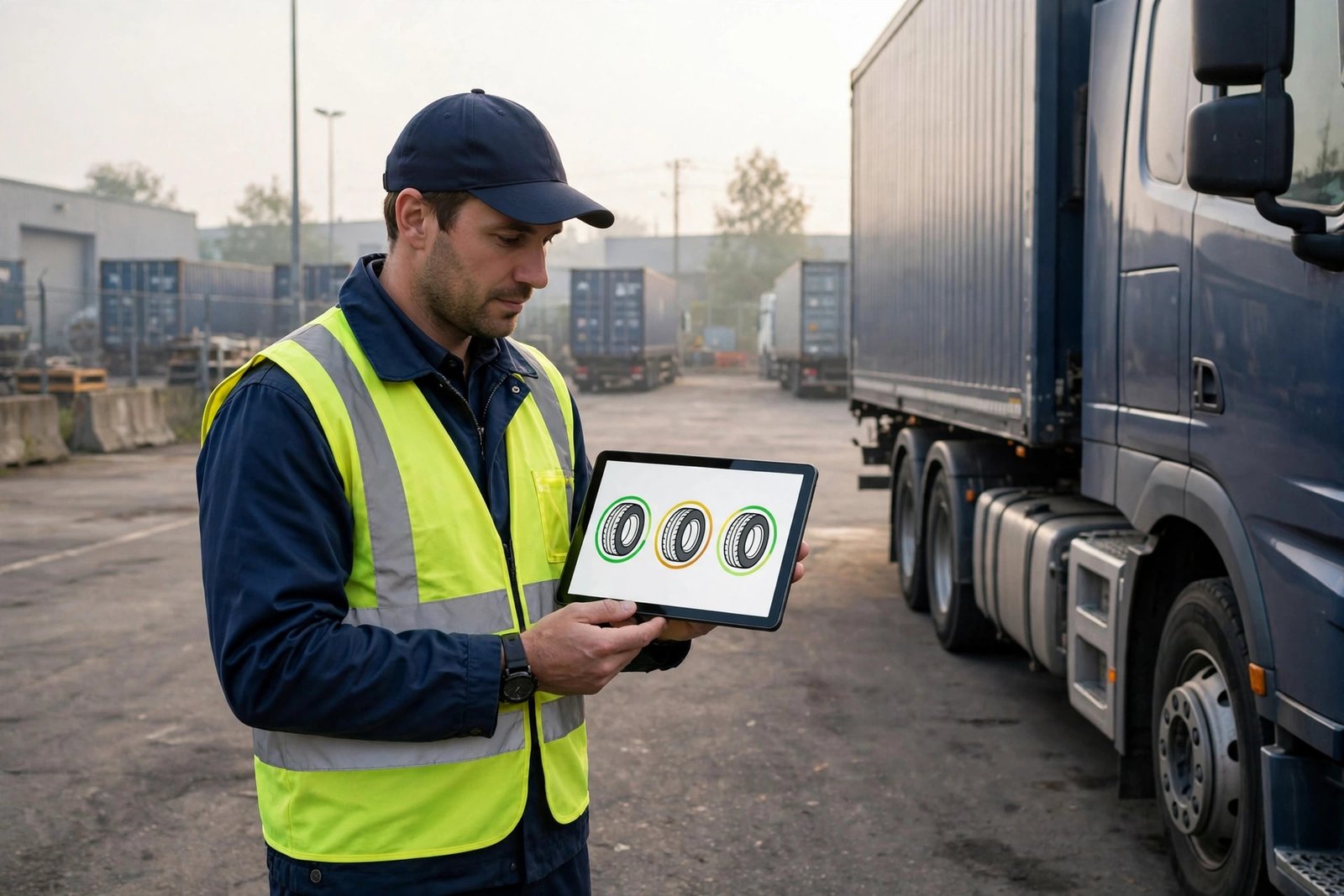
| Continental ContiConnect | Shipping fleet service | Truck and bus fleet operators |
The pattern is consistent: fleets and expensive new cars first, where the economics and integration work make sense. If anyone tries to sell you a “smart tire” for your current car in 2026, check what it actually is — it may be a conventional tire with “smart” in the model name, or an aftermarket pressure sensor dressed up as something more.
How smart tires differ from TPMS
TPMS has been required on new light vehicles sold in the United States since the 2008 model year. Under Federal Motor Vehicle Safety Standard No. 138, it must warn the driver when a tire falls 25% or more below the recommended cold inflation pressure, with full compliance required for vehicles manufactured on or after September 1, 2007. That warning catches the slow leak you would otherwise drive on for weeks. But pressure is all TPMS watches. It does not know your tread depth, your load, or whether the road ahead is icy.
| TPMS | Smart tires | |
|---|---|---|
| Main job | Warn when pressure is low | Report the tire’s full condition and the road surface |
| What it measures | Pressure (plus basic temperature in many sensors) | Pressure, temperature, tread wear, load, friction, tire identity |
| Sensor location | Usually on the valve or wheel | In the tire itself, or software using vehicle data |
| What the car does | Dashboard warning light | Warnings plus recalibrated braking and stability systems |
| Availability | Standard on every new US car since 2008 | Select premium cars and fleets in 2026 |
Think of TPMS as a smoke alarm and a smart tire as a full inspection that never stops. Smart tires build on TPMS rather than replacing it — Pirelli notes Cyber Tyre meets the legal requirements for a tire pressure monitoring system — and the two will coexist for a long time.
If your TPMS light is on right now, that is a today problem. Our guides cover how to reset TPMS, how to tell if a TPMS sensor is bad, what TPMS sensor replacement costs, how long TPMS sensors last, and why the tire pressure light stays on after filling your tires.
What smart tires cannot do — yet
Smart tires cannot fix a puncture, re-inflate themselves, or replace a worn tire. They cannot override physics: a tire with no tread on standing water will aquaplane whether or not it can report that fact, though a car that knows sooner can brake sooner. Sensors add cost and complexity, batteries eventually die, and data raises fair questions about who sees your driving information. The basics still apply: our guide to checking tire tread depth and our advice on when to change tires cover every car on the road.
Our verdict
Smart tires are real, useful, and coming — but not here for most drivers yet. The RFID layer is already in your tires, doing inventory work. The sensing layer is proving itself on supercars, in fleet yards, and in autonomous-vehicle testing. The intelligence layer — software digital twins modeling each tire’s life — may reach ordinary cars first, because it needs no new tire hardware. For 2026, keep your TPMS working, check pressures monthly, and replace tires when worn or old.
Frequently asked questions
What are smart tires in simple terms?
Smart tires are ordinary tires with electronics built in — sensors, chips, or software models that report on the tire’s condition while you drive. A smart tire can report its pressure, temperature, tread wear, load, and in some systems the grip available on the road surface, sending that information to the car, the driver, or a fleet manager.
How are smart tires different from TPMS?
TPMS watches one thing: tire pressure. Under the US federal standard it must warn you when a tire falls 25% or more below the recommended pressure. Smart tires go further, adding temperature, tread depth, load, and road-grip sensing, and in some systems they feed that data to braking and stability controls. Smart tires build on TPMS rather than replacing it.
Can you buy smart tires in the US in 2026?
Mostly no, not as a regular replacement tire. In 2026 smart tires are mainly original equipment on a handful of expensive cars, such as the McLaren Artura and Pagani Utopia with Pirelli Cyber Tyre, plus fleet monitoring systems for trucks. There is no mainstream aftermarket smart tire you can buy for a family sedan.
Do the RFID chips in tires track drivers?
No. The passive RFID tags embedded in many modern tires have no battery and cannot transmit on their own. They only answer when a nearby reader powers them with radio waves, and they store an identification number, a company prefix, and a product reference — not your name, location, or driving data.
How long do smart tire sensors last?
There is no single published figure that covers every system, because smart tire sensors differ in design and most are still factory-fitted rather than replacement parts. Battery-powered tire sensors are sealed units, so when the battery eventually dies the sensor is replaced, not recharged.
Will smart tires work on any car?
No. The advanced systems need matching software in the car to receive and use the tire data — the sensor alone is not enough. Pirelli Cyber Tyre works with software integrated into the car’s electronics, and Goodyear SightLine needs automaker integration to feed braking systems, which is why the technology is arriving as factory equipment first.