

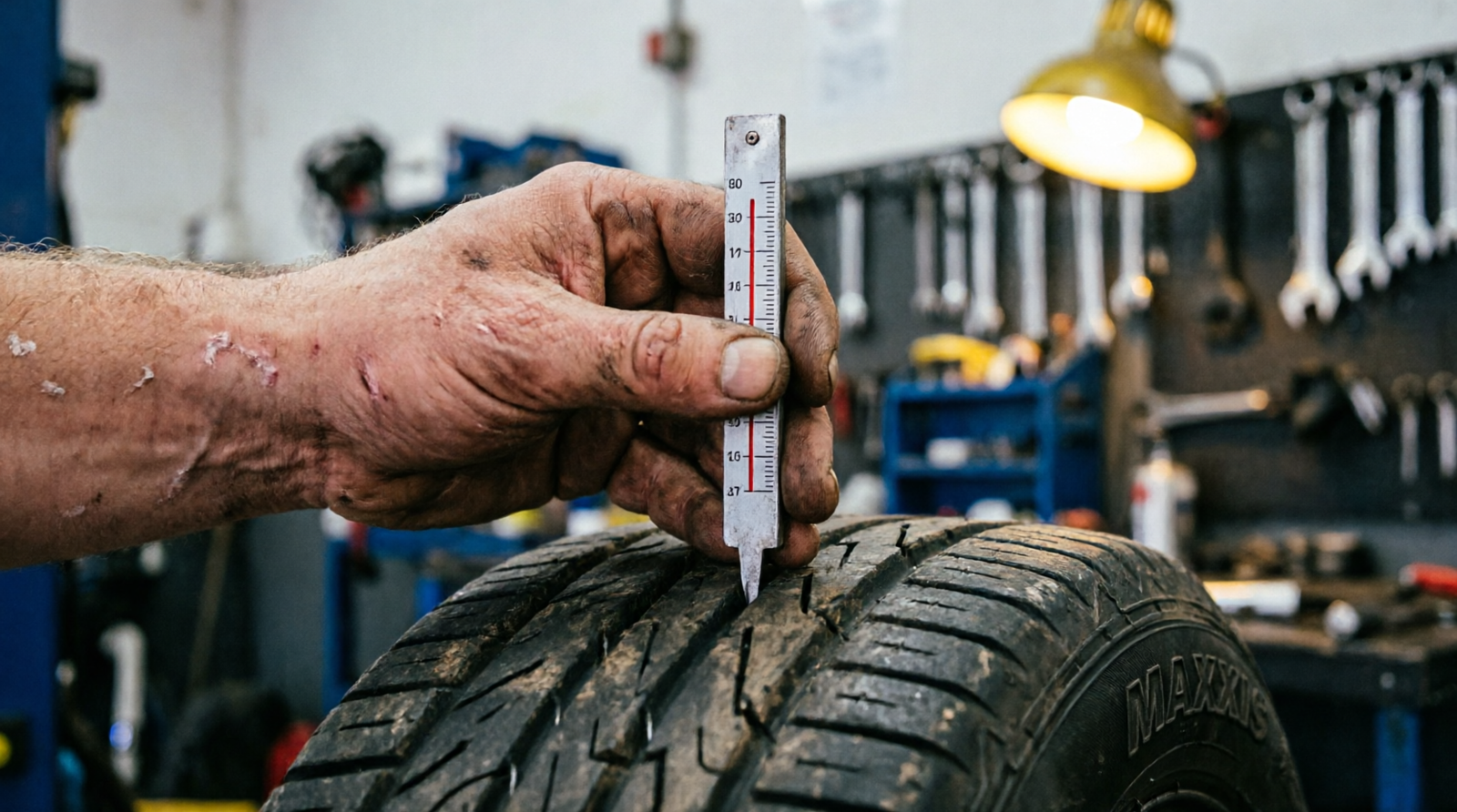
Most of us don’t think about our tires until something feels off — a strange vibration, a low-pressure warning, or a tire shop worker pointing at your tread with a concerned look. But knowing when to change tires shouldn’t come as a surprise. Tires wear down gradually, and a lot of the warning signs are easy to miss if you’re not looking for them.
There’s no magic mileage number that applies to every driver. How long a tire lasts depends on the tire itself, how you drive, your roads, your climate, and how well you keep up with maintenance.
The good news? Tires usually give you plenty of warning before they fail. Worn tread, uneven wear, cracking, bulges, and slow leaks are all signs worth watching for — and this guide walks through exactly what to look for.
How Often Should You Change Your Tires?
There’s no fixed replacement date stamped on a tire that says “swap me out now.” A set might last one driver five years and wear out on another driver in three, even on the same make and model of car.
As a rough guideline, many passenger-car tires hold up for 3 to 5 years, sometimes longer if they’re well maintained and driven under easy conditions. Mileage varies just as much.
Rather than watching the odometer, it’s more useful to check your tires themselves for:
- Tread wear
- Cracks or weather damage
- Bulges or bubbles
- Uneven wear
- Frequent air loss
- Vibration or handling changes
- Damage from potholes or road debris
- Tire age
If your tires are already showing serious damage, replacing them now beats trying to stretch out a few extra miles.
How Long Do Tires Usually Last?
Tire lifespan isn’t one-size-fits-all. Two identical vehicles with the same tires can end up on completely different replacement schedules, just based on how they’re driven and cared for.
| Factor | How It Affects Tire Life |
| Driving habits | Hard acceleration, braking, and aggressive cornering wear tires faster |
| Road conditions | Potholes, rough pavement, and debris can cause damage |
| Tire pressure | Wrong pressure leads to faster or uneven wear |
| Alignment | Poor alignment eats away at certain parts of the tread |
| Climate | Heat and sun exposure speed up aging |
| Tire type | Performance and specialty tires wear differently than standard ones |
| Vehicle weight | Heavier vehicles put more stress on tires |
| Maintenance | Rotations, balancing, and inspections help tires last longer |
Here’s the tricky part: a tire can still have plenty of tread and yet be in rough shape underneath because of age. A newer tire with barely any miles on it might need replacing early if it’s been damaged.
Condition matters just as much as age or mileage — sometimes more.
9 Signs You Need New Tires
Some of these problems jump out at you right away. Others sneak up gradually, and you only notice them once you start paying closer attention to how your car feels on the road.
Here’s what to watch for.
1. The Tread Is Worn Down
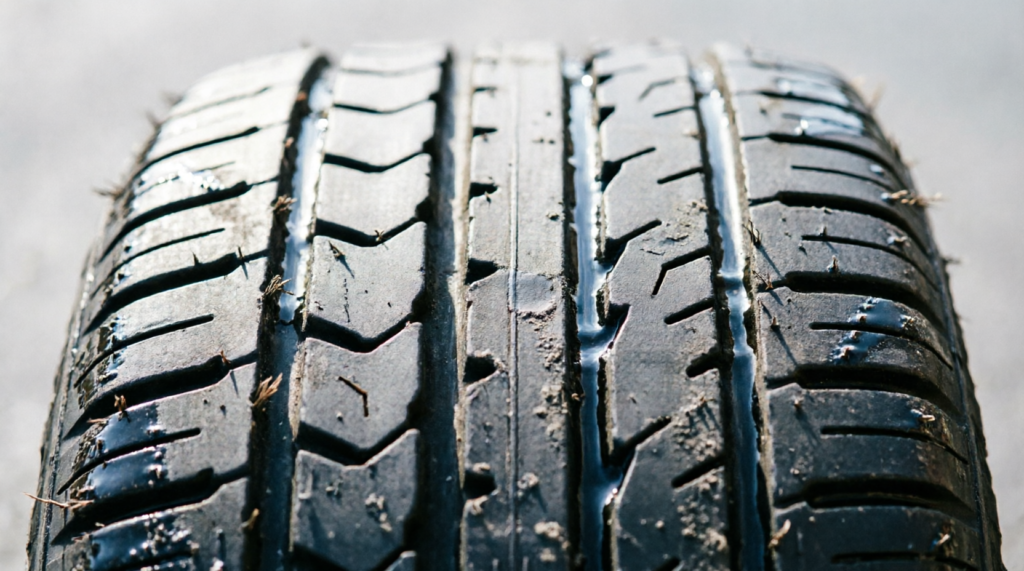
This is the big one — tread depth is usually the first thing people check, and for good reason.
In the U.S., 2/32 inch is the commonly cited minimum before a tire needs replacing. Most tires also come with built-in wear bars that become flush with the tread once you’ve hit that point.
That said, you don’t have to wait until your tires are bald. Wet-weather traction starts dropping off well before the tread is completely gone.
If your tread is getting close to those wear indicators, it’s a good time to start planning ahead rather than waiting for a blowout to force the issue.
2. You See Cracks in the Sidewalls or Tread
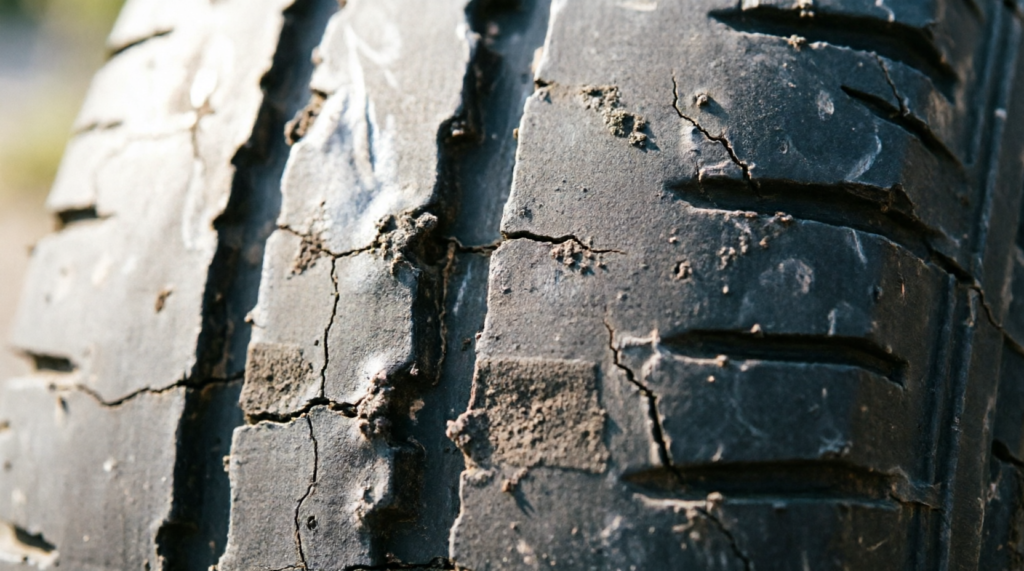
Cracking usually means the rubber is aging.
You might spot small hairline cracks along the sidewall or in the grooves between tread blocks — this is often called “weather checking,” and it tends to show up more as a tire gets older and spends more time in the sun.
Minor surface cracks aren’t always an emergency, but if the cracking looks deep or widespread, it’s worth getting a professional to take a look, especially on the sidewalls.
3. There Is a Bulge or Bubble
If you ever see a bulge or bubble poking out of your tire’s sidewall, don’t wait around on this one.
It usually happens after hitting a pothole or curb hard enough to damage the internal structure of the tire. Once those internal cords are compromised, the tire becomes a lot more likely to fail without warning.
This isn’t something to patch up or keep an eye on for a few weeks. Get it inspected right away — a bulge like this almost always means the tire needs to be replaced.
4. The Tread Is Wearing Unevenly
Tires are supposed to wear pretty evenly across the tread. If one edge looks noticeably more worn than the other, or you notice odd patterns like cupping or scalloping, something else is going on.
A few usual suspects:
- Incorrect tire pressure
- Wheel misalignment
- Worn suspension parts
- Poor wheel balancing
- Skipping tire rotations
Here’s the catch — if you just replace the tire without fixing whatever caused the uneven wear, the new tire will likely wear out the same way. Get both the tire and the vehicle checked out.
5. Your Tires Keep Losing Air
Needing to top off your tires once in a while, especially when the seasons change, isn’t unusual. But if one tire keeps losing pressure over and over, that’s a different story.
A slow leak can be caused by a puncture, a bad valve stem, a wheel issue, or damage to the tire itself.
Driving around on a tire that’s low on air builds up extra heat and speeds up wear, and it can mess with your handling and fuel economy along the way.
If one tire keeps needing air while the others stay fine, don’t just keep refilling it — figure out what’s actually causing the leak.
6. Your Vehicle Vibrates or Handles Differently
A new vibration you haven’t felt before is often your car’s way of flagging a tire or wheel issue.
You might feel it through the steering wheel, the floorboard, or even the seat. The car might also feel a little less planted, especially once you get up to highway speed.
Common causes include:
- Tire imbalance
- Wheel damage
- Uneven tire wear
- Internal tire damage
- Alignment or suspension issues
Not every vibration means new tires are in your future, but it’s not something to shrug off either. A mechanic can pinpoint whether the tire is actually the culprit.
7. A Tire Has Serious Damage From a Puncture
A puncture doesn’t automatically mean a new tire.
Smaller punctures in the tread’s repairable zone can often be patched by a professional. But damage near or on the sidewall, larger punctures, or a tire that’s been driven on while flat is a different situation — replacement is usually the safer call there.
And a plug or sealant shouldn’t be treated as a forever fix. Have any puncture properly inspected before deciding whether to repair it or replace the tire.
8. Your Tires No Longer Provide Good Wet-Weather Traction
If your car suddenly feels less confident on wet roads, that’s often a tread problem.
Tread is what channels water away from the contact patch between your tire and the road. As it wears down, that ability drops off, which means more risk of hydroplaning or sliding.
If you’re noticing more slipping, longer stopping distances, or just less confidence in the rain than you used to have, it’s worth inspecting your tires sooner rather than later.
9. Your Tires Are Getting Too Old
Even tires that barely get driven still age.
Rubber breaks down over time from exposure to sunlight, heat, and oxygen. That’s exactly why a low-mileage tire with good-looking tread isn’t necessarily a safe tire.
Check the DOT identification number stamped on the sidewall. The last four digits tell you when the tire was made — the week, then the year.
So a code ending in 2423 means that tire rolled off the line during the 24th week of 2023.
If your tires are getting up there in age, give them a closer inspection and follow the manufacturer’s guidance on replacement timing.
How to Check Your Tire Tread at Home
You really don’t need any special tools to do a basic tread check yourself.
Park somewhere level and turn your steering wheel if you need a better angle on the front tires. Check a few different spots across the tread rather than just glancing at one section.
Look out for:
- Very shallow tread
- Tread-wear indicators
- Uneven wear
- Exposed cords
- Cracks
- Cuts
- Anything stuck in the tire
A tread-depth gauge costs next to nothing and gives you a far more accurate reading than eyeballing it. The built-in wear bars work fine too as a quick sanity check.
Just remember: tread depth is only part of the story. A tire can measure fine and still be dealing with age-related or structural problems underneath.
Why Tire Age Matters Even If the Tread Looks Good
Age is one of the easiest tire issues to overlook completely.
If your car doesn’t rack up many miles each year, your tires might be several years old while still looking practically new on the surface. Low mileage can make a tire seem fine when it isn’t.
Age-related breakdown affects the rubber and the internal components, and it doesn’t always show up visually right away. Where you park and store your vehicle matters too — tires baking in direct sun or extreme heat age faster than ones kept somewhere more sheltered.
Check that DOT date code, and don’t skip regular inspections just because the mileage is low. When in doubt, have a tire professional take a look.
Should You Replace Two Tires or All Four?
You don’t necessarily need to replace all four at once.
If two tires need work and the other two are still in solid shape, replacing just the pair can make sense — though the right approach really depends on your specific vehicle and drivetrain.
When you’re only replacing two, the newer pair is generally recommended for the rear axle, regardless of whether your car is front- or rear-wheel drive. This helps keep the back end more stable, particularly on wet roads.
All-wheel-drive vehicles add another wrinkle, since mismatched tire diameter or tread depth can put extra strain on the drivetrain.
Before deciding to replace just one or two, it’s worth checking your owner’s manual and the tire manufacturer’s guidance.
| Situation | Possible Approach |
| All four tires are worn | Replace all four |
| One tire is damaged, others are nearly new | Ask a professional about matching a replacement |
| Two tires are significantly more worn | Replace that pair |
| AWD vehicle with different tread depths | Check manufacturer requirements first |
| Tires are different sizes or types | Follow the vehicle manufacturer’s specs |
The goal isn’t buying the fewest tires you can get away with — it’s keeping your car balanced and safe.
When Should You Change Tires for Winter or Summer?
This one really comes down to where you live.
If you’re somewhere with mild winters, all-season or summer tires might get you through the whole year just fine. But if you deal with regular snow and freezing temps, dedicated winter tires make a real difference.
Winter tires stay more flexible in the cold and grip snow and ice noticeably better than most all-season options.
If you swap tires seasonally, let the actual weather guide the timing rather than a date circled on the calendar. As temperatures start dropping consistently, it’s smart to get winter tires on before the first real snowfall hits. Come spring, you can switch back once the cold weather has cleared for good.
What Happens If You Keep Driving on Worn Tires?
Pushing worn or damaged tires past their limit isn’t worth the risk it carries.
Less tread means less grip on wet roads. Structural damage raises the odds of a tire failing outright, and uneven wear throws off your handling and overall stability.
Worn tires also make emergency braking harder — and that’s exactly the moment you don’t want any extra stopping distance, especially in the rain.
If your tires are checking several boxes on this list already, holding off on replacement just to get a few more miles usually isn’t worth the trade-off. Once a tire is clearly unsafe, replacing it should come before anything else.
How to Get the Most Life From Your Tires
A little regular maintenance goes a long way toward making tires last as long as they’re supposed to.
Check Tire Pressure Regularly
Stick with your vehicle manufacturer’s recommended cold tire pressure — you’ll usually find it on a sticker inside the driver’s door or in the owner’s manual.
Don’t confuse this with the max pressure number printed on the tire sidewall itself; that’s not the same thing as your car’s recommended setting.
Rotate Your Tires
Rotating your tires regularly helps spread out wear more evenly across all four. Stick to whatever schedule your vehicle or tire manufacturer recommends.
Keep Your Wheels Properly Aligned
If your car pulls to one side, or your steering wheel sits off-center while you’re driving straight, get the alignment checked. Fixing it early can prevent uneven wear before it starts.
Inspect Tires Regularly
Make it a habit — check your tires whenever you’re already checking your oil, washing the car, or getting ready for a road trip.
Catching a nail, a bulge, or an odd wear pattern early can save you from a much bigger (and more expensive) problem down the line.
Frequently Asked Questions
How often should you change your tires?
There’s no universal timeline. Check tread depth, overall condition, age, and your manufacturer’s recommendations instead of going by mileage alone.
How many years do tires last?
It varies by tire, vehicle, climate, and how well they’re maintained. Older tires deserve a closer inspection and should be replaced per the manufacturer’s age guidance.
How do I know if my tire tread is too low?
Check the built-in wear indicators or measure with a gauge. The common U.S. benchmark is 2/32 inch, though replacing earlier can be smart depending on your driving conditions.
Should I replace tires after five years?
Not automatically, but tires around that age deserve a careful look. Follow your manufacturer’s guidance and watch for cracking or other aging signs.
Can I replace just one tire?
Sometimes — it depends on the tire’s condition, your vehicle, and how much tread the other three have left. Check with a tire professional first.
Are cracked tires safe to drive on?
Minor surface cracks should be checked but aren’t always urgent. Deep or extensive cracking, especially on the sidewall, shouldn’t be ignored.
Is it better to replace all four tires at once?
It gives you a consistent set, but it’s not always necessary. It depends on tire condition, your drivetrain, and how much the tread depths differ.
Conclusion
Knowing when to change your tires really comes down to paying attention — to your tread, your tire age, your air pressure, and how your car feels on the road. If you’re noticing worn tread, cracking, bulges, repeated air loss, or uneven wear, don’t put off getting them checked.
A few minutes spent looking over your tires every so often can catch small problems before they turn into bigger ones — and keep you a lot safer out on the road.