

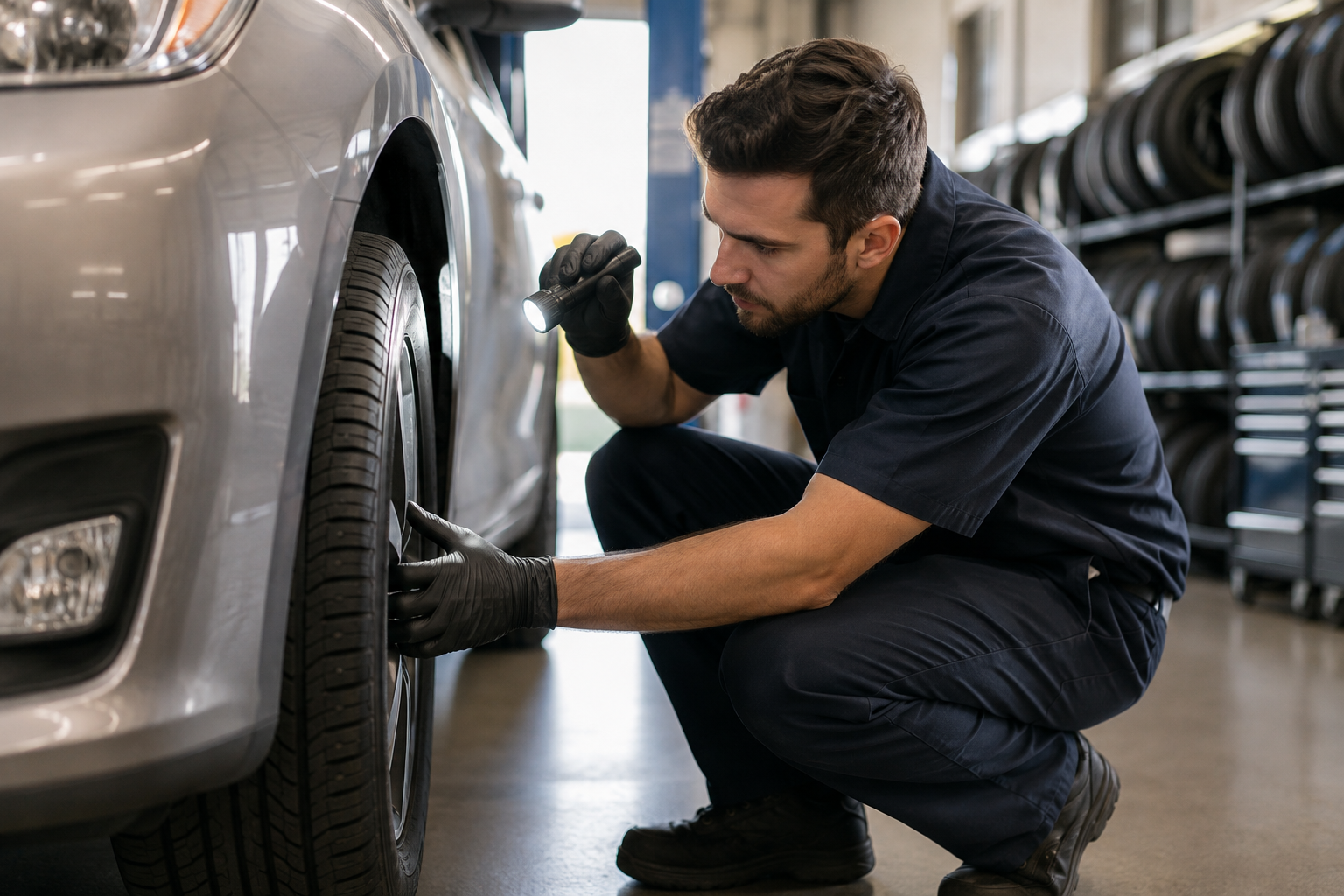
Lane changes should feel routine — check your mirrors, signal, glance over your shoulder, and steer over. If your car instead wanders, pulls, or shakes during that simple move, something in the tire-and-steering system is asking for attention, and it’s worth listening before the problem gets more expensive.
Tires touch the road more than any other part of your vehicle, so they’re the natural first suspect. But pressure, alignment, tread wear, balance, and even worn suspension components can all play a role in how your car behaves mid-lane-change. The good news is that most of these causes are easy to diagnose once you know what to look for. Here’s how to figure out what’s actually going on and when it’s time to find a tire shop that can properly diagnose lane-change instability instead of just selling you a new set of tires.
What People Usually Mean by “Changing Lanes Tire Shop”
This isn’t an official automotive term — it’s typically how drivers phrase a search when their car feels off during a lane change and they’re not sure whether tires are to blame. Type it into Google and you’ll find people who’ve noticed the same odd sensation: everything feels normal driving straight, but the moment they steer into the next lane, something feels loose, delayed, or slightly out of control.
What they’re actually looking for is a shop equipped to diagnose instability, not just sell a new set of tires. That distinction matters. A shop that jumps straight to “you need new tires” without checking pressure, alignment, or balance first isn’t solving the problem — it’s guessing at an expensive fix and hoping it works.
A vehicle that tracks fine going straight but feels loose or twitchy the moment you steer can have several root causes, including:
- Incorrect tire pressure
- Uneven or excessive tread wear
- Poor wheel alignment
- Wheel or tire imbalance
- A damaged tire or bent wheel
- Worn suspension parts
- Steering system issues
- Mismatched tires on the same axle
- Crosswinds or road surface conditions
A competent shop starts by ruling tires in or out, then moves on to alignment, suspension, or steering if needed.
Why Lane Changes Expose Problems Straight-Line Driving Doesn’t
Steering in a straight line asks very little of your suspension and tires. The moment you turn the wheel, though, weight shifts across the vehicle and each tire has to grip differently than it did a second earlier. If one tire is under-inflated, more worn, or has less grip than the others, that imbalance shows up right when you need the car to respond predictably.
Matching Symptoms to Likely Causes
| What You Feel | Likely Cause |
| Car pulls to one side | Alignment or uneven tire pressure |
| Steering feels loose or vague | Steering or suspension wear |
| Vehicle wanders on its own | Alignment, tires, or suspension |
| Steering wheel shakes | Tire balance or wheel damage |
| Car “follows” road grooves | Tire design or road surface |
| Instability at highway speed | Tires, alignment, suspension, or pressure |
| Uneven steering feel side to side | Uneven tread wear or alignment issue |
None of these symptoms automatically mean you need new tires — but they’re all worth having inspected.
Start With Tire Pressure
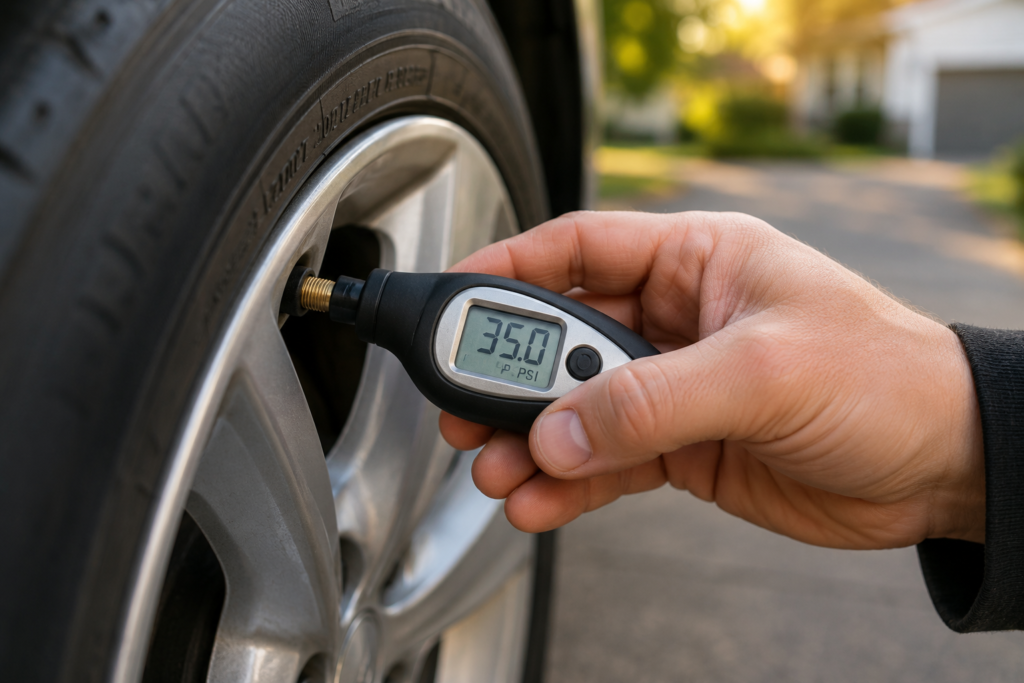
Before booking an appointment, check your tire pressure yourself. It takes five minutes and solves more handling complaints than people expect.
Your vehicle’s recommended pressure is printed on a sticker inside the driver’s door jamb, not on the tire’s sidewall. The sidewall number is the tire’s maximum rated pressure, not your target.
Why it matters: an under-inflated tire flexes more in the sidewall and can feel soft or sluggish; an over-inflated one has a smaller contact patch and can feel harsh or skittish. If pressure differs noticeably from one side of the car to the other, that imbalance alone can make lane changes feel uneven.
Check all four tires cold — ideally before you’ve driven anywhere that day — and don’t forget the spare. If one tire keeps losing air after you top it off, don’t just keep adding pressure. That’s usually a sign of a puncture, a bad valve, or a wheel seal problem that needs attention.
How Alignment Affects Steering Response
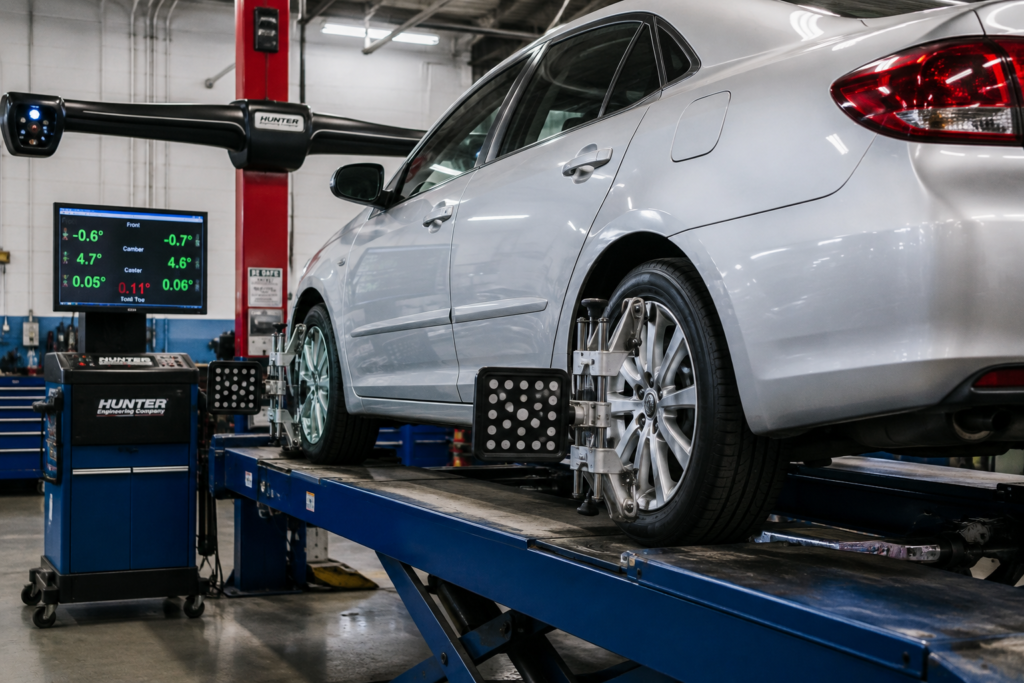
Wheel alignment refers to the angles of your wheels relative to each other and the road. When those angles drift outside factory spec, your car can pull, wander, or feel inconsistent when you steer.
Signs You May Need an Alignment
- The car pulls left or right on its own
- The steering wheel sits crooked when driving straight
- Tread is wearing unevenly
- The vehicle drifts on a straight, flat road
- Steering doesn’t feel centered
- Handling changed noticeably after a pothole or curb strike
Alignment issues are often subtle at low speeds and become much more obvious at 60-70 mph, which is exactly when a lane change matters most. At those speeds, even a fraction of a degree of misalignment translates into a noticeable pull or extra steering correction, because the vehicle has less time to react and the tire’s contact patch is working harder against the road.
If you’ve recently hit a significant pothole or curb, it’s worth having alignment checked even without obvious symptoms yet. Impacts don’t always announce themselves immediately — a wheel can be knocked slightly out of spec while the car still feels mostly normal for weeks, with the wear pattern only becoming visible later. Getting ahead of it with a quick alignment check can save you from replacing a set of tires early.
Could Uneven Tread Wear Be the Culprit?
You don’t need special tools to get a rough read on your tread. Run a hand across each tire and look for spots that are noticeably more worn than the rest — just be careful around any damaged areas or exposed cords.
Common Wear Patterns and What They Suggest
Wear along both edges usually points to chronic under-inflation.
Wear concentrated in the center typically means the tire has been over-inflated.
Wear on one side only often signals an alignment problem.
Cupping or scalloping (uneven dips around the tread) can point to worn suspension components or a balance issue.
If your tread is wearing unevenly, replacing the tires without fixing the underlying cause just means the new set will wear the same way. Diagnosis has to come before replacement.
When to Suspect a Balance Problem
Balance and alignment are often confused, but they’re different issues. Balancing corrects uneven weight distribution around a wheel-and-tire assembly. When it’s off, you’ll typically feel vibration — through the steering wheel, the seat, or the floor — that gets worse as speed increases.
Consider a balance check if:
- Your car vibrates noticeably at certain speeds
- You recently had a new tire installed
- A wheel weight fell off
- Vibration started after hitting a pothole
- The steering wheel shakes on the highway
Don’t assume every handling complaint is an alignment issue — balance and tire condition deserve equal consideration. It’s also worth noting that an out-of-balance wheel usually vibrates at a specific, repeatable speed range rather than constantly, which is a useful detail to mention to a technician since it helps narrow down which wheel is affected before the car even goes on the lift.
Don’t Overlook Suspension and Steering Components
If the tires check out fine — good pressure, even wear, properly balanced — but the car still feels unstable during lane changes, the problem is likely mechanical rather than tire-related. Suspension and steering parts wear out gradually, so drivers often adjust to the change without realizing anything is actually wrong until a technician points it out.
Components worth having checked include:
- Tie rod ends — connect the steering system to the wheels; wear here often causes looseness or clunking during turns
- Ball joints — allow the suspension to pivot; excessive play can cause wandering or vague steering
- Control arm bushings — worn bushings can let the wheel shift slightly under cornering load, which shows up exactly when you steer into another lane
- Sway bar links — help control body roll; failure can make the car feel less planted during a lane change
- Shocks or struts — worn dampers let the car bounce or sway longer than it should after a steering input
A trained technician can usually spot excessive play in these parts by physically inspecting the front end while the car is on a lift, which is one more reason a full inspection beats a quick visual glance in the parking lot.
Could the Tire or Wheel Itself Be Damaged?
Sometimes the problem is more serious than wear or pressure. Potholes, curbs, road debris, or prolonged under-inflation can cause real structural damage.
Watch for:
- Bulges or bubbles in the sidewall
- Deep cuts or cracks
- Objects embedded in the tread
- Exposed steel cords
- A visibly bent wheel
- Rapid, unexplained air loss
A sidewall bulge deserves particular attention — it often signals internal damage that isn’t fixable and shouldn’t just be monitored. If you notice any of these signs, avoid highway speeds until a professional has taken a look.
What a Thorough Tire Shop Inspection Covers
When you bring the car in, describe the actual symptom rather than jumping to a conclusion. Saying “the car shifts sideways when I change lanes at highway speed” gives a technician far more to work with than “I think I need new tires.”
A proper inspection typically includes:
- Tire pressure check across all four tires
- Tread inspection for uneven or excessive wear
- Sidewall inspection for cuts, bulges, or cracking
- Wheel inspection for bends or damage
- Balance check on the tire-and-wheel assembly
- Alignment measurement against manufacturer specs
- Suspension inspection if symptoms suggest a mechanical cause
- Steering component check for looseness or wear
Not every car needs every step — a good technician tailors the inspection to what you describe and what they find along the way.
When It’s Time to Get Your Car Looked At
You don’t have to wait for a flat tire to schedule an inspection. Get it checked soon if:
- The car suddenly starts pulling to one side
- The steering wheel shakes at highway speed
- A tire keeps losing air
- You notice significant uneven tread wear
- Handling changed after hitting a pothole
- You spot a bulge, cut, or other visible tire damage
- Steering feels unusually loose
- The vehicle won’t track straight
A minor handling change can usually wait for a scheduled appointment. Severe vibration, a damaged tire, or any sudden loss of control should be treated as urgent — pull over safely and don’t keep driving until it’s assessed.
Typical Costs for Tire and Alignment Work
Pricing varies by vehicle, region, tire size, and what actually needs fixing, but here’s a general breakdown of common services:
| Service | What It Addresses |
| Tire pressure adjustment | Incorrect inflation |
| Tire rotation | Even tread wear over time |
| Tire balancing | Vibration from uneven weight distribution |
| Wheel alignment | Incorrect wheel angles |
| Tire repair | Certain punctures or minor damage |
| Tire replacement | Worn or unsafe tires |
| Suspension repair | Worn or damaged suspension parts |
Ask any shop to explain exactly what problem each recommended service solves before you approve the work. A reputable shop will walk you through it rather than just handing you a list.
Choosing the Right Shop
Not every tire retailer is equipped to diagnose a handling complaint — some only mount and balance tires. If your issue involves instability rather than a simple flat, look for a shop with broader diagnostic capability.
Before choosing, ask:
- Do they offer wheel alignment services?
- Can they balance tires in-house?
- Do they inspect for internal and external tire damage?
- Will they explain what they find in plain terms?
- Do they provide an estimate before starting work?
- Are they familiar with your specific vehicle?
- Do reviews mention accurate diagnoses, not just fast service?
If you’re searching for a “tire shop near me,” don’t default to the first result — compare services, hours, and reputation, and be specific about your symptom when you call or arrive. A shop that asks follow-up questions about when the instability happens, how fast you were going, and whether it’s gotten worse over time is usually a good sign they’re actually diagnosing the problem rather than guessing.
It’s also worth asking whether the shop uses a computerized alignment machine and a modern tire balancer, since older or poorly maintained equipment can miss small but meaningful measurements. A five-minute phone call before you drive over can save you a wasted trip.
The Bottom Line
A car that feels unstable during lane changes is telling you something, even if the cause isn’t obvious yet. Start with the basics — check your tire pressure and inspect the tread and sidewalls yourself. If the issue persists, a qualified shop can rule out alignment, tire balance, suspension, or steering problems before you spend money on tires you may not actually need.
Catching the real cause early keeps your tires wearing evenly, protects the rest of your suspension from extra strain, and keeps your car predictable exactly when it matters most — in traffic, at highway speed, and every time you signal and move over.
FAQs
Can bad tires make a car feel unstable when changing lanes?
Yes. Incorrect pressure, uneven wear, damage, or mismatched tires can all affect how a car responds to steering input.
Can misalignment cause pulling during a lane change?
Yes. Wheels outside of factory alignment specs commonly cause pulling, wandering, and an off-center steering wheel.
Should I replace my tires if my car feels unstable?
Not necessarily. Pressure, balance, alignment, or suspension issues can all cause similar symptoms — get it inspected first.
Why does my car shift when I change lanes?
Common causes include pressure differences between tires, alignment problems, worn suspension parts, crosswinds, or tire damage.
How often should I check tire pressure?
At least once a month and before long trips, ideally when the tires are cold for an accurate reading.
Can a regular tire shop check alignment?
Many can, but not all — call ahead and confirm the shop has alignment equipment for your vehicle.
Is it safe to keep driving if handling suddenly changes?
Not if the car is hard to control, vibrating badly, losing air, or shows visible tire damage. Pull over safely and get it inspected before continuing.