
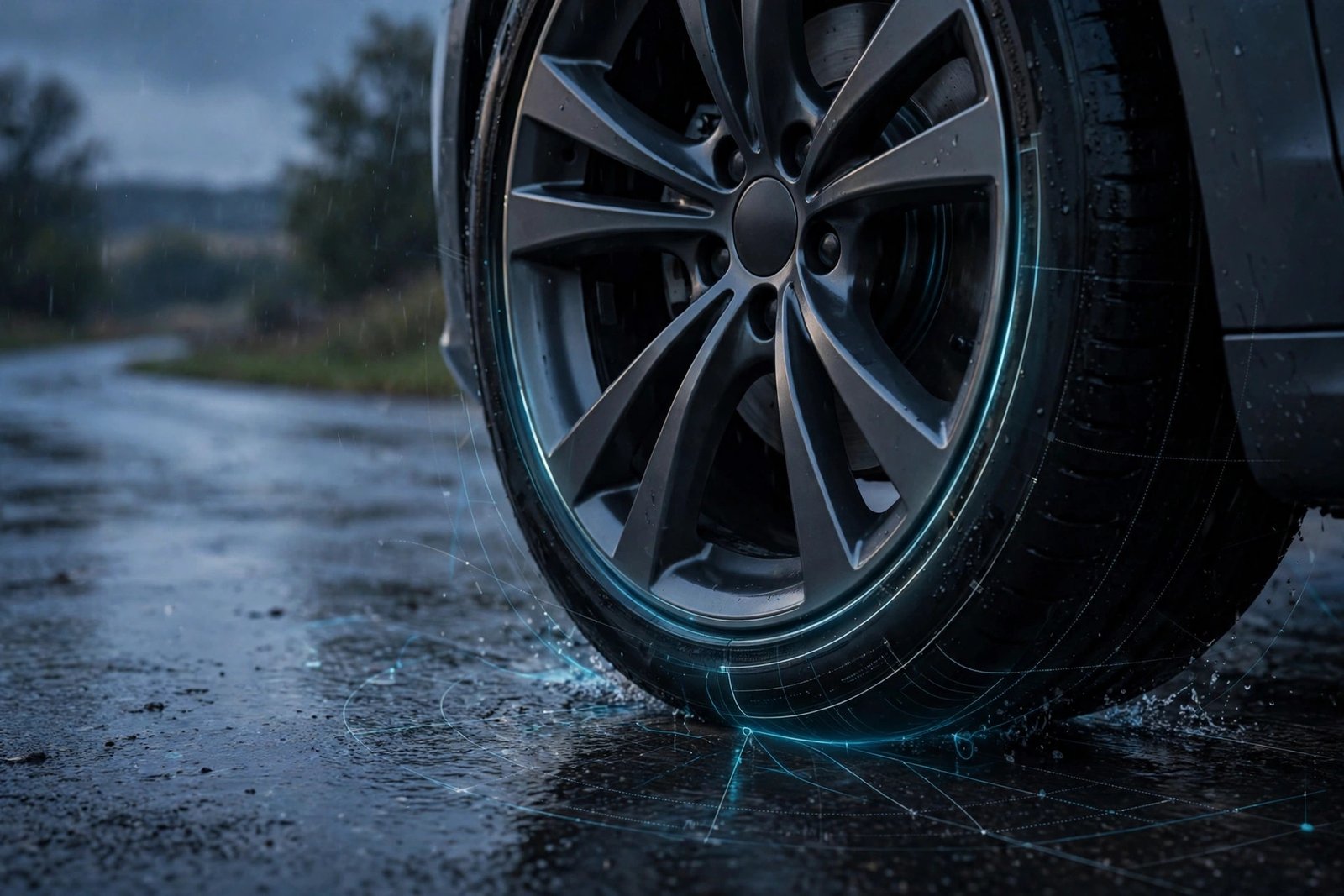
Quick answer: Goodyear SightLine is a suite of tire-intelligence technology, not a tire you can buy. Sensors inside the tire track wear, load, pressure and temperature, estimate road grip, and share that data with fleet software or the car’s safety systems. It already works in fleets and autonomous-vehicle pilots and has appeared in Peugeot and Citroën concept cars — but in 2026 no SightLine tire is on sale for regular US drivers.
Goodyear SightLine is one of the most talked-about names in smart tires, and one of the most misunderstood. Search for it and you will find concept cars, autonomous trucks, and headlines about tires that can “feel” the road. What you will not find is a price, a size chart, or a “buy now” button — and that tells you most of what you need to know. SightLine is not a product on a shelf. It is a set of sensing and software technologies Goodyear builds into tires and connects to vehicles, and so far the customers are fleets, automakers, and research partners rather than drivers.
What Goodyear SightLine actually is
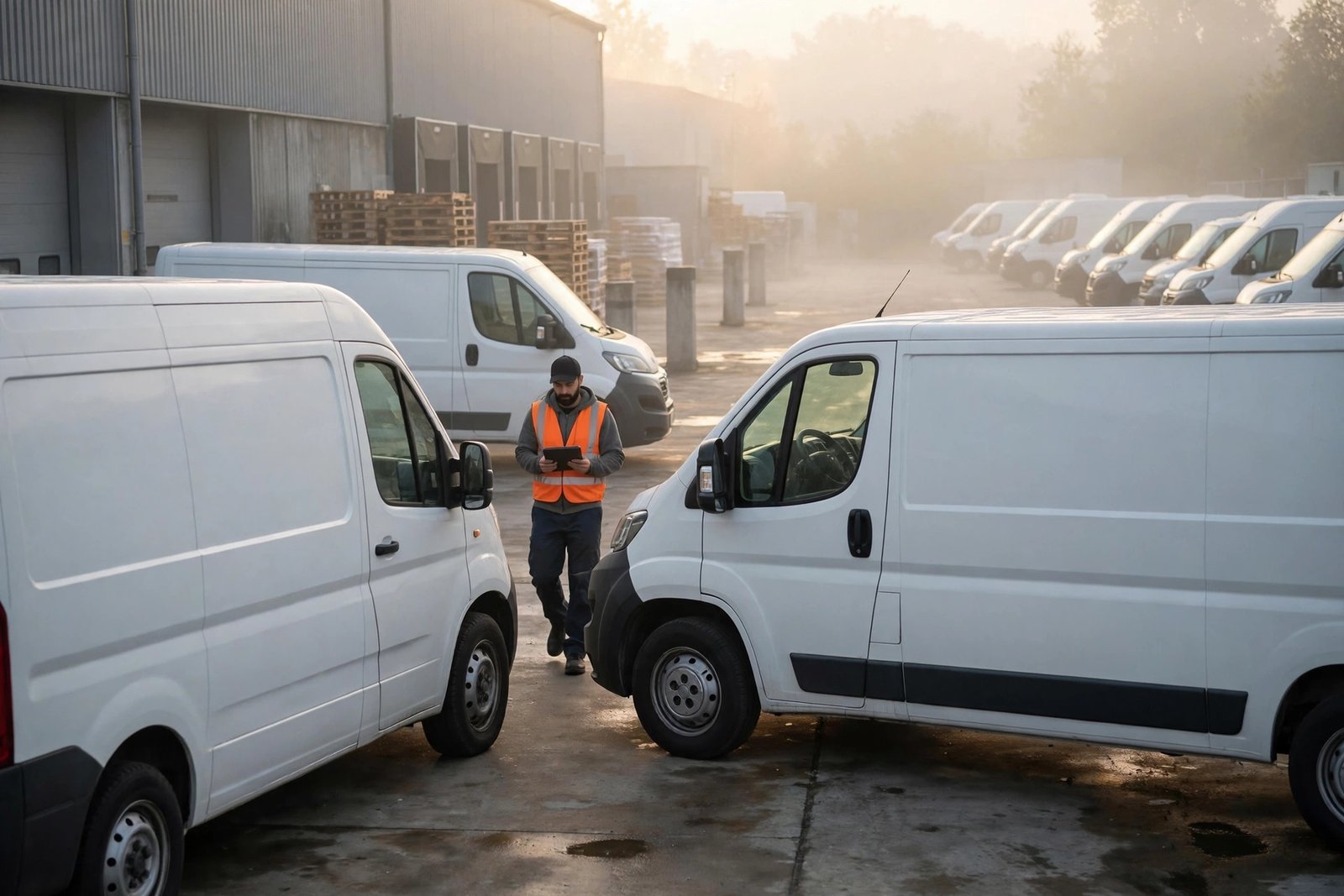
Goodyear launched SightLine on June 16, 2021, describing it as its suite of tire intelligence solutions. The first customers were cargo van fleets in field service, construction, and last-mile delivery, in North America and Europe — a deliberate choice, since a delivery company loses real money every time a tire fails on a route. SightLine uses sensors with cloud-based algorithms to communicate with fleet operators in real time, flagging tires that need service before they cause a breakdown.
Goodyear’s comparison at launch was a smartwatch: just as a watch monitors heart rate, SightLine monitors the health of a tire. But a smartwatch reports to one person. SightLine can report to a fleet manager’s dashboard, to a driver’s display, or directly to the systems that brake and steer the car — and that last step is what makes it more than a fancier pressure warning. It is not a tire model, not an add-on gadget for your existing tires, and not the same thing as the tire pressure monitoring system (TPMS) already fitted to your car, which only warns you when pressure drops significantly. SightLine measures the tire itself and the road beneath it.
Goodyear stated a goal at launch of tire intelligence in all new products by 2027. That was a goal, not a promise of a retail smart tire — and as 2026 draws to a close, no retail SightLine product exists. What does exist is a growing list of fleet deployments, research demonstrations, and concept-car integrations.
What SightLine senses
The core is a sensor mounted inside the tire, paired with software that turns raw readings into useful information:
| What it measures | Why it matters |
|---|---|
| Tire wear state | How much tread life is left, based on the actual tire rather than a guess |
| Load | How much weight each tire carries, which affects safe pressure and handling |
| Inflation pressure | Catches slow leaks and underinflation before they cost fuel, tread, or safety |
| Temperature | Heat warns of overload, underinflation, or damage |
| Road friction potential | Estimates available grip, from tire data, road-weather data, and friction models |
| Aquaplaning risk | In concept integrations, predicts loss of contact on standing water |
The first four items are about the tire itself. The last two are about the world outside it, and they are the reason SightLine gets so much attention. Cameras and radar can see rain, but they cannot feel how slippery the asphalt is. The tire is the only part of the car that touches the road, so a sensor inside it is the only sensor that can measure grip directly — before an emergency, rather than reacting after traction is lost.

How the data travels from tire to car
A sensor inside a spinning tire is no use unless its data gets somewhere. SightLine’s path has three stages. First, the tire-mounted sensor collects readings as the tire rolls. Second, those readings are combined with other vehicle data and run through Goodyear’s cloud-based algorithms, which estimate things no single reading can show alone — most importantly, the friction potential of the road surface. Third, the finished insight goes to whoever needs it: a fleet operator’s screen, a driver’s display, or the vehicle’s own control systems.
For fleets, the payoff is predictive maintenance: the operator sees a worn or underinflated tire coming and schedules the work instead of discovering it during a roadside failure. For vehicles, the payoff is safety: braking, stability, and autonomous systems can adjust to actual tire and road conditions instead of assuming a fresh tire on dry asphalt. That is also why SightLine cannot be retrofitted to the car you own — the vehicle has to be built to receive and act on the data.
SightLine and braking: the TNO research
The most concrete safety evidence comes from Goodyear’s collaboration with TNO, the Netherlands Organization for Applied Scientific Research. The two first showed tire intelligence integrated with antilock braking (ABS) at CES 2024, then went further at CES 2025 with automatic emergency braking (AEB).
The problem is straightforward. AEB systems are typically tuned for high-friction surfaces like dry asphalt. On a wet road or ice, the same system may brake too late, because it does not know how little grip is available until the tires are already sliding. SightLine changes that: through the contact patch, tire intelligence gives the AEB system deeper insight into actual tire and road conditions, so it can brake earlier and more precisely when grip is low. Goodyear’s wet-road testing indicated that an enhanced AEB system incorporating SightLine had the potential to help mitigate impacts at speeds of up to 80 kph (50 mph) by engaging braking earlier. That is a research result from controlled testing, not a guarantee about any car on the road today — no production car currently ships with this integration. But 50 mph covers much of the urban and suburban driving where rear-end collisions happen.
NHTSA has set a 2029 mandate for AEB in passenger vehicles, and Goodyear positions SightLine as a way to make those systems work better where they struggle most. One caution on the numbers: Goodyear’s 2021 launch release said initial testing showed SightLine integration could reduce stopping distance loss by 30%. Note the wording — stopping distance loss, the extra distance lost when a tire is worn compared with new — not stopping distance itself.
SightLine in concept cars: Peugeot Polygon and Citroën ELO
Concept cars are where automakers show what the cabin of the future will do with tire data. Two recent Stellantis concepts put SightLine on display, showing two very different ways of presenting the same information.
Peugeot Polygon: tire data on the heads-up display
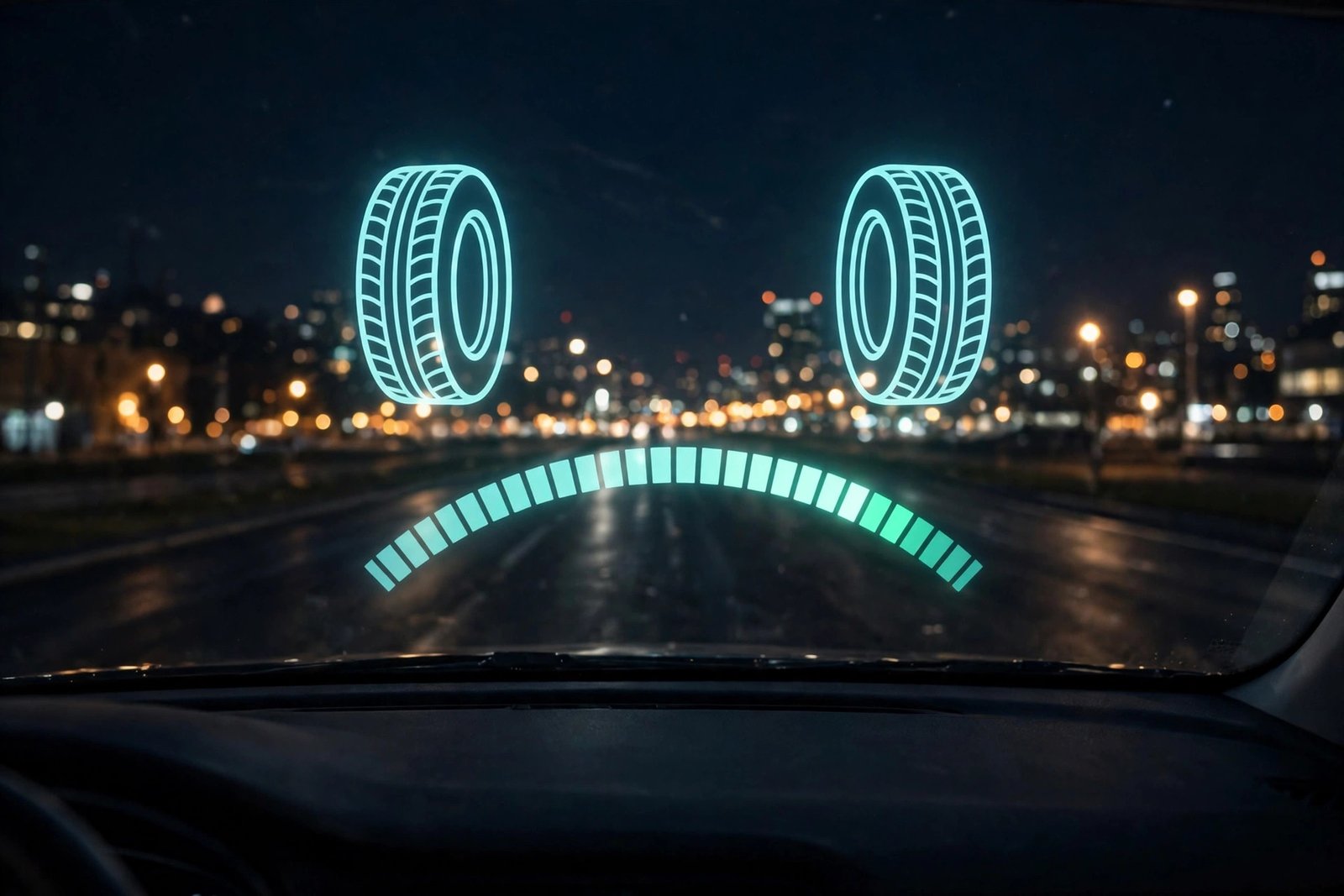
The Peugeot Polygon concept, revealed in November 2025, is a compact electric city car concept previewing Peugeot’s next generation of small cars. Goodyear developed three bespoke tires for its three driving modes — Urban, Player, and Explorer — and fitted them with SightLine. For the first time in a concept integration, tire insights were displayed directly on the heads-up display, giving the driver real-time feedback on tire condition, grip, temperature, wear, and road surface conditions, tailored to the selected drive mode. The Polygon also demonstrated SightLine predicting aquaplaning risk, so control systems could respond before stability was lost. The Polygon is a concept, not a production car — Peugeot says the technologies it previews will arrive from 2027 onward — but it shows the direction clearly: tire data moving from a warning light to a live readout the driver can use.
Citroën ELO: tire pressure on the rim itself
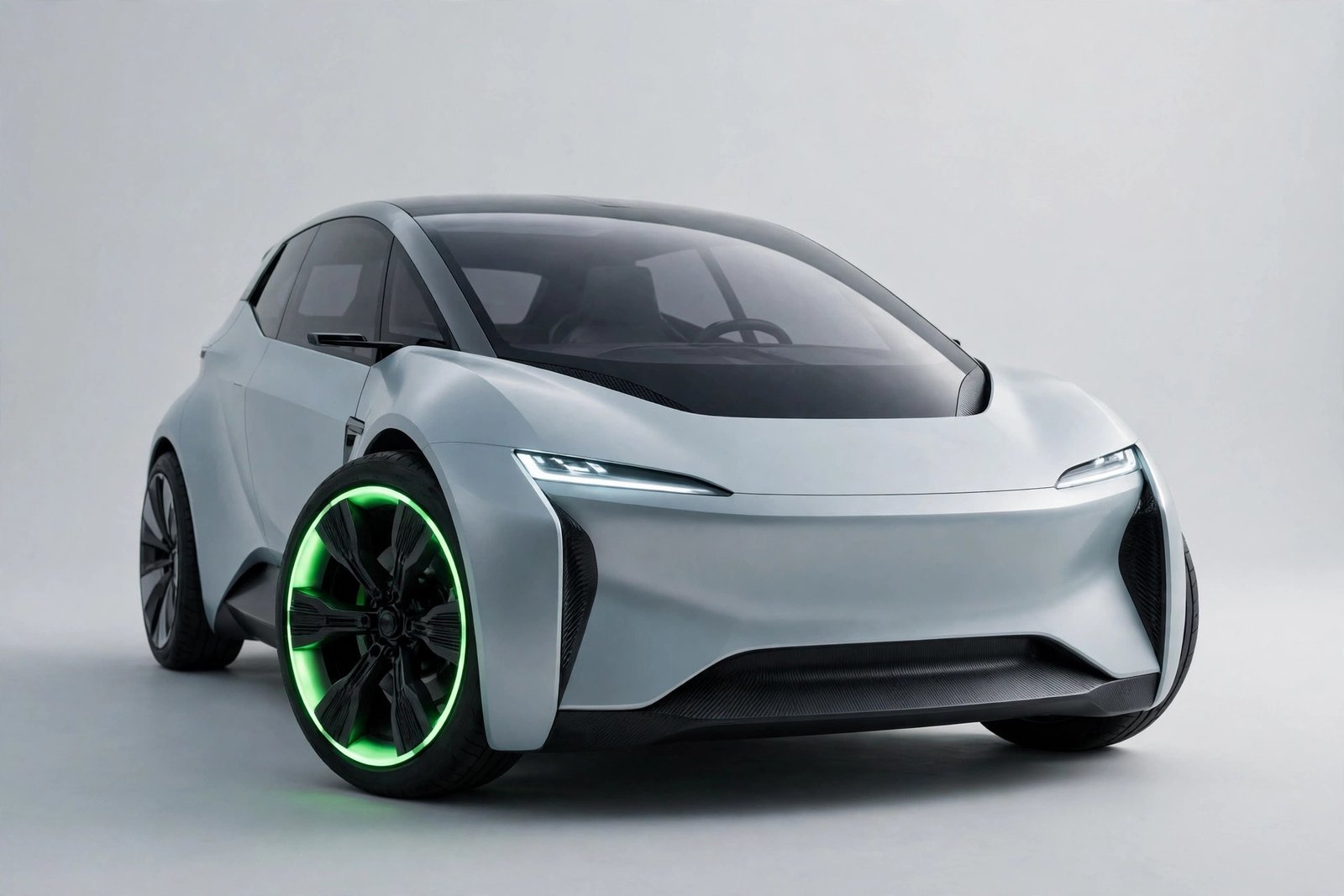
The Citroën ELO concept, unveiled in December 2025, took a simpler approach. Goodyear built a bespoke concept tire for it called the Eagle Xplore, fitted with SightLine and connected to the car and to an app. Pressure and load data go to the cockpit and the app — and, for the first time, tire pressure is also shown directly on the rim through an LED sidebar. Green means the pressure is optimal; red means adjustment is needed. Most drivers never check their tires until a warning light appears, and a warning light only appears after pressure has dropped significantly. A glance at the wheel as you walk up to the car is a check people might actually do. The ELO is the fourth Citroën concept equipped with smart tires, and like the Polygon it is a design study rather than something you can buy — but the LED rim display is the most driver-friendly presentation of tire intelligence shown so far.
| Concept | Year | What SightLine did | How the driver saw it |
|---|---|---|---|
| Peugeot Polygon | 2025 | Condition, grip, temperature, wear, aquaplaning | Heads-up display, tailored to drive mode |
| Citroën ELO (Eagle Xplore) | 2025 | Pressure, wear, load | Cockpit, app, LED sidebar on rim (green/red) |
SightLine and self-driving: the NVIDIA connection
SightLine also keeps appearing in autonomous driving. A self-driving car has no driver to notice an icy road or a soft tire, so it needs the tire to report for itself. Goodyear’s longest-running work here is with Gatik, the autonomous middle-mile logistics company. The collaboration began in 2021, and in January 2023 the two companies demonstrated that SightLine could accurately estimate tire-road friction potential and feed it to Gatik’s automated driving system, including in Canadian winter conditions. By 2024, Gatik was rolling SightLine-equipped Goodyear Endurance RSA tires across a significant portion of its fleet in the US and Canada.
At CES 2026, coverage from Torque News described a further step: Goodyear demonstrating SightLine integrated with the NVIDIA DRIVE Hyperion autonomous vehicle platform (since renamed NVIDIA Hyperion), feeding real-time friction data to path-planning software so the car could adjust before a braking event was needed. We could not find a Goodyear or NVIDIA press release confirming the details, so treat the specifics as reported rather than officially confirmed — but the direction matches everything Goodyear has shown with Gatik and TNO. For an autonomous vehicle, friction data is not a convenience feature. Cameras and lidar can see the road; only the tire can feel it.
Fleet availability vs consumer availability
Here is the honest state of play in 2026. SightLine is real, it is deployed, and it is not for sale to you.
| Who | SightLine status in 2026 |
|---|---|
| Cargo van and delivery fleets | Available since 2021 in North America and Europe |
| Autonomous vehicle operators | Deployed with Gatik in the US and Canada |
| Automakers (OE) | Research and concept integrations (Stellantis, TNO) |
| Regular US drivers | No retail tire, no aftermarket kit, no dealer option — nothing to buy |
What can you do in the meantime? The monitoring your car already has is worth understanding. Our guides on how to tell if a TPMS sensor is bad and how long TPMS sensors last explain the difference between a real pressure problem and a dying sensor, our TPMS sensor replacement cost guide covers what a replacement costs, and how to check tire tread depth shows the manual version of what SightLine does automatically. When it is time for new tires, our summer tire buying guide and best budget tires roundup cover what is actually on sale today.
How SightLine compares with Pirelli Cyber Tyre
The Pirelli Cyber Tyre is SightLine’s best-known rival, and the comparison is instructive because the two systems started from opposite ends of the market. Pirelli’s system debuted on a production car — the McLaren Artura in 2021, the first car to ship with sensor-equipped tires as standard — and has since appeared on the Pagani Utopia, with Aston Martin signed on as a partner. Pirelli works with Bosch Engineering on the vehicle integration, and in testing reported by evo in October 2026, a Cyber Tyre-equipped car stopped 5.7 meters sooner in a wet-braking test than the same car with the system off. Each sensor weighs about 12 grams, sits in a starfish-shaped base inside the tire, and transmits over Bluetooth for around five years.
SightLine started with fleets and worked toward the car; Cyber Tyre started with supercars and is working toward wider production. SightLine’s strongest demonstrations are in friction estimation and earlier emergency braking on slippery surfaces. Cyber Tyre’s strongest are in ABS and stability control tuning on high-performance cars, including torque limiting when tires are cold. Both sense pressure, temperature, wear, and grip. Both need the car to be built to use the data. And neither can be bought at retail in 2026. For a regular driver, the practical difference is nil: you cannot buy either one. The difference that matters is which approach reaches ordinary cars first — and both paths are plausible.
| Goodyear SightLine | Pirelli Cyber Tyre | |
|---|---|---|
| Launched | 2021, for fleets | 2021, on the McLaren Artura |
| First customers | Cargo van and delivery fleets | Supercar makers |
| Key partners | Gatik, TNO, Stellantis, NVIDIA (reported) | Bosch Engineering, McLaren, Pagani, Aston Martin |
| Strongest demonstrations | Friction estimation, earlier AEB on slippery roads | ABS/ESP tuning, wet-braking improvement |
| Available to US drivers? | No — fleet and OE only | No — fitted to new cars only |
Verdict: impressive technology, still out of reach
Goodyear SightLine is the real thing. It has run in fleets since 2021, demonstrated friction estimation in Canadian winters, shown earlier emergency braking on wet roads in research with TNO, and appeared in two polished concept-car integrations. The safety case — a car that knows how much grip it has before it needs to brake — is genuinely compelling. But none of that helps you at the tire shop this weekend. In 2026, SightLine remains a fleet and automaker technology. Keep doing the unglamorous things it automates: check pressures monthly, check tread depth before winter, and replace aging sensors before they leave you guessing. The smart tire future is coming. It just has not reached the retail shelf yet, and anyone selling you a “smart tire” today is selling you something else with a clever name.
Frequently asked questions
What is Goodyear SightLine?
Goodyear SightLine is Goodyear’s suite of tire-intelligence technologies, launched in 2021. It uses sensors inside the tire plus cloud-based algorithms to monitor tire wear, load, inflation pressure and temperature, and to estimate tire-road friction. It is not a single tire model you can buy at a tire shop; it is a system that works with fleet software or a vehicle’s own safety systems.
Can I buy tires with Goodyear SightLine?
Not as a regular US driver in 2026. SightLine started with cargo van fleets in North America and Europe, and its vehicle integrations so far are fleet deployments, autonomous-vehicle pilots, and concept cars. There is no retail SightLine tire listed for consumer cars. If your car is new enough to have a tire pressure monitoring system, that is the tire monitoring you already own.
What does Goodyear SightLine sense?
SightLine measures the tire’s wear state, load, inflation pressure and temperature, and combines that with road-weather data and rubber friction models to estimate tire-road friction potential. In concept integrations it has also been shown predicting aquaplaning risk, so the vehicle can react before grip is lost rather than after.
How does SightLine help automatic emergency braking?
In research with the Dutch organization TNO, Goodyear showed that feeding SightLine tire and road data into an automatic emergency braking system lets the brakes engage earlier on low-friction surfaces such as wet roads or ice, where standard systems tuned for dry asphalt can react too late. Wet-road testing indicated the enhanced system could help mitigate impacts at speeds of up to 80 kph (50 mph).
Is Goodyear SightLine the same as TPMS?
No. TPMS only warns you when a tire is significantly underinflated. SightLine goes further: it tracks wear, load and temperature, estimates how much grip the road surface offers, and can share that information with braking, stability and autonomous driving systems. Think of TPMS as a low-pressure warning light and SightLine as a full health and grip report from the tire itself.
How is SightLine different from Pirelli Cyber Tyre?
Both put sensors inside the tire and feed data to the car’s safety systems, but they started from opposite ends. SightLine began with fleets and autonomous vehicles, with its strongest demonstrations in friction estimation and emergency braking. Pirelli Cyber Tyre began with high-end production cars, debuting on the McLaren Artura in 2021, and works with Bosch on ABS and stability control integration. Neither is available as a retail tire for ordinary drivers yet.