
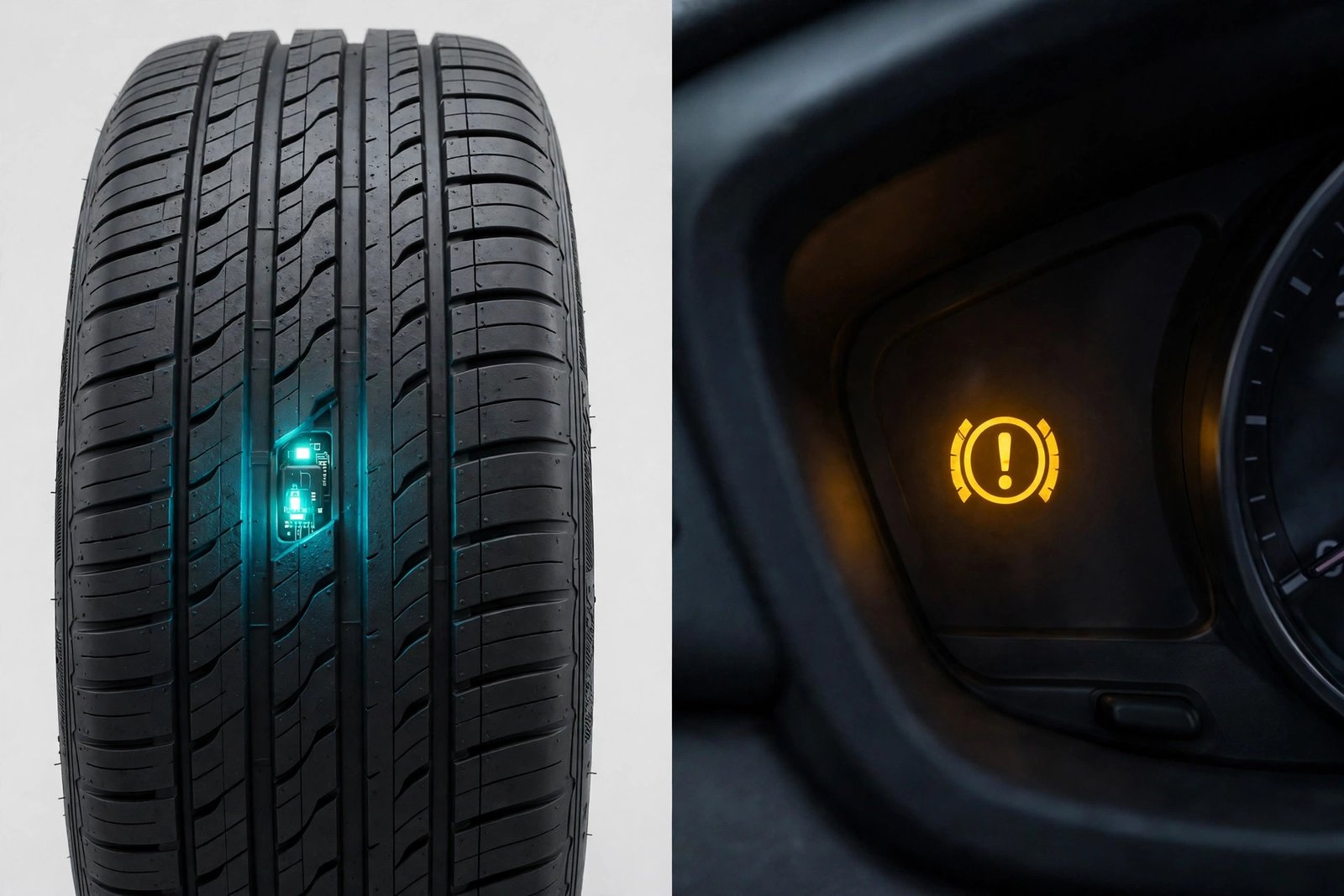
Quick answer: TPMS watches one thing — tire pressure — and warns you when it drops too far. Smart tires watch much more: tread wear, temperature, load, road grip, and aquaplaning risk, and they share that data with the car’s braking and stability systems in real time. Smart tires do not replace TPMS; they build on it. And your car almost certainly has TPMS, not smart tires.
The smart tires vs tpms question confuses people because the two technologies overlap, share hardware, and are described with the same words. Your dashboard shows tire pressures, so your tires feel smart already. They are smart in exactly one way — mandated by law nearly twenty years ago. This article draws the line: what TPMS does, what smart tires add, why one does not replace the other, and how to tell which your car has. TPMS reset and replacement instructions are not repeated here; this guide links to the site’s dedicated TPMS how-tos instead.
The short version
| TPMS | Smart tires | |
|---|---|---|
| Main job | Warn when pressure is low | Report tire condition and road grip to the car |
| What it measures | Pressure (direct systems also sense temperature) | Pressure, temperature, tread wear, load, friction, road condition |
| Where the sensor lives | In the wheel (direct) or nowhere — ABS sensors (indirect) | Inside the tire, in the tread or on the inner liner |
| Required by law in the US? | Yes, since the 2008 model year | No |
| What the car does with it | Almost nothing — it is a warning | Adjusts ABS, stability control, and braking |
| Available on a regular car in 2026? | Yes — fitted to every new car | No — a handful of expensive models and fleets only |
| Can it inflate the tire? | No | No |
That last row surprises people. Neither system adds air. A tire that inflates itself is a third technology, covered in our guide to self-inflating tires. TPMS and smart tires are both about information. The difference is how much information, and what the car is allowed to do with it.
What TPMS does: one job, done by law
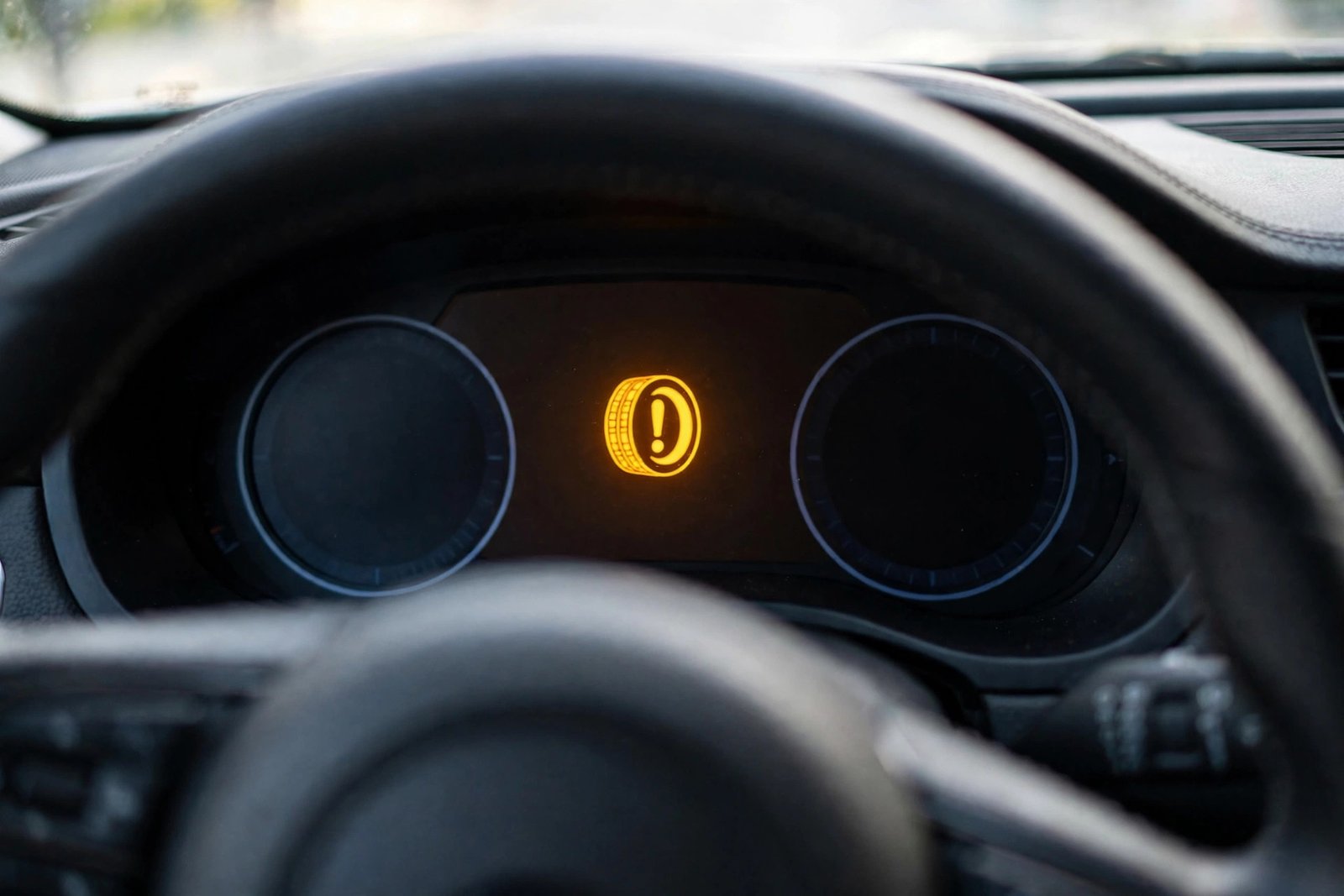
TPMS stands for tire pressure monitoring system, and the name is the whole job description. It monitors tire pressure. When a tire drops significantly below its recommended pressure, it warns the driver with a dashboard light — the horseshoe-shaped symbol with an exclamation mark that every driver learns to recognize.
The reason every car has one is federal law. Congress passed the Transportation Recall Enhancement, Accountability, and Documentation (TREAD) Act in 2000, partly in response to rollover crashes linked to tire failures, and directed the National Highway Traffic Safety Administration (NHTSA) to create a standard requiring a warning system for significantly underinflated tires. NHTSA did so with Federal Motor Vehicle Safety Standard (FMVSS) No. 138, issued as a final rule in April 2005. The standard requires a TPMS capable of detecting when one or more of a vehicle’s tires, up to all four, is 25% or more below the manufacturer’s recommended inflation pressure (the placard pressure), or below a minimum activation pressure in the standard, whichever is higher.
The requirement phased in from October 5, 2005, and reached 100% of covered new vehicles manufactured on or after September 1, 2007. The scope is light vehicles: passenger cars, multipurpose passenger vehicles, trucks, and buses with a gross vehicle weight rating of 10,000 pounds or less, except those with dual wheels on an axle. In everyday terms: if your car was sold new in the US as a 2008 model or later, it left the factory with TPMS.
That 25% threshold matters: TPMS catches significant underinflation, and a tire 10% low — enough to cost fuel and wear tread unevenly — will not trigger a warning. It is a safety net, not a pressure gauge. Our guide to how to tell if a TPMS sensor is bad explains what happens when the safety net itself develops a fault.
Direct vs indirect TPMS
NHTSA gave manufacturers two ways to comply, and the difference explains why some cars show exact pressures and others show only a light. Tire Rack’s TPMS explainer sets out the distinction clearly.
Direct TPMS puts a pressure sensor in each wheel, measuring actual air pressure and warning when any tire falls at least 25% below the recommended cold pressure. Direct systems are more accurate, and most identify which tire is low. Many direct sensors also measure temperature to interpret pressure as the tire heats and cools, but that data is used internally — it says nothing about tread wear or grip.
Indirect TPMS has no pressure sensors. It uses the anti-lock braking system’s wheel speed sensors: an underinflated tire has a slightly smaller diameter, rotates faster, and the system infers pressure loss from that difference. Indirect systems are cheaper, but they cannot show actual pressures, usually cannot identify which tire is low, and cannot detect all four tires losing pressure together — exactly what slow seepage and falling temperatures cause.
| Direct TPMS | Indirect TPMS | |
|---|---|---|
| How it works | Pressure sensor in each wheel | ABS wheel speed comparison |
| Shows actual pressure? | Usually yes, per tire | No — warning only |
| Identifies which tire? | Usually yes | Usually no |
| Detects all four tires low together? | Yes | No |
| Needs sensors serviced? | Yes — sensors have batteries and wear out | No sensors to replace |
If you are unsure which type your car has, the behavior gives it away: a car that shows a pressure number for each tire has direct TPMS. A car that shows only a warning light may have either — but if the manual talks about “calibrating” the system after inflating, that is indirect TPMS learning a new baseline. For the practical side, see our guides on how to reset TPMS, how to program TPMS sensors, and TPMS sensor replacement cost. Those how-tos live there; this article stays on the comparison.
What smart tires add: the tire starts talking
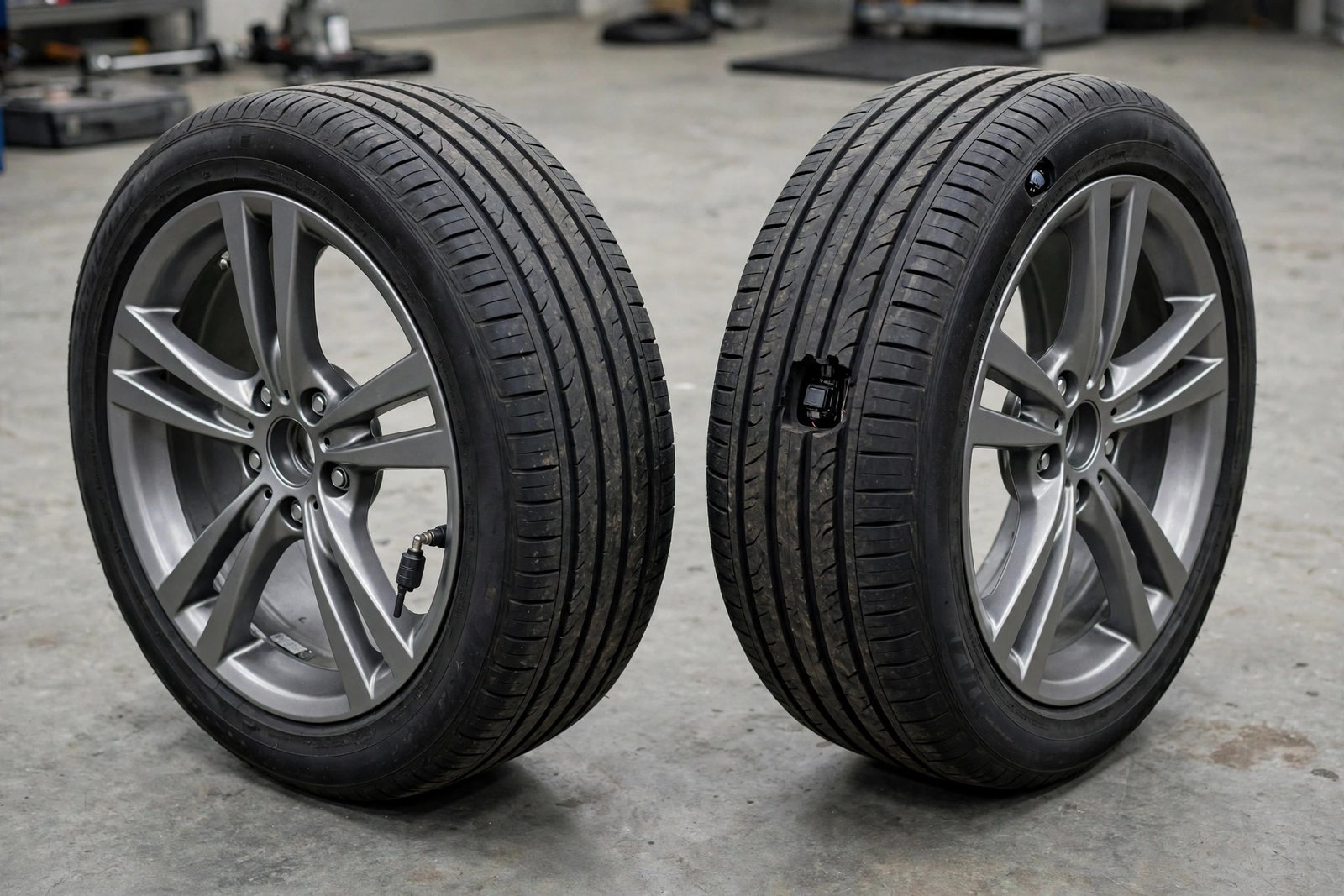
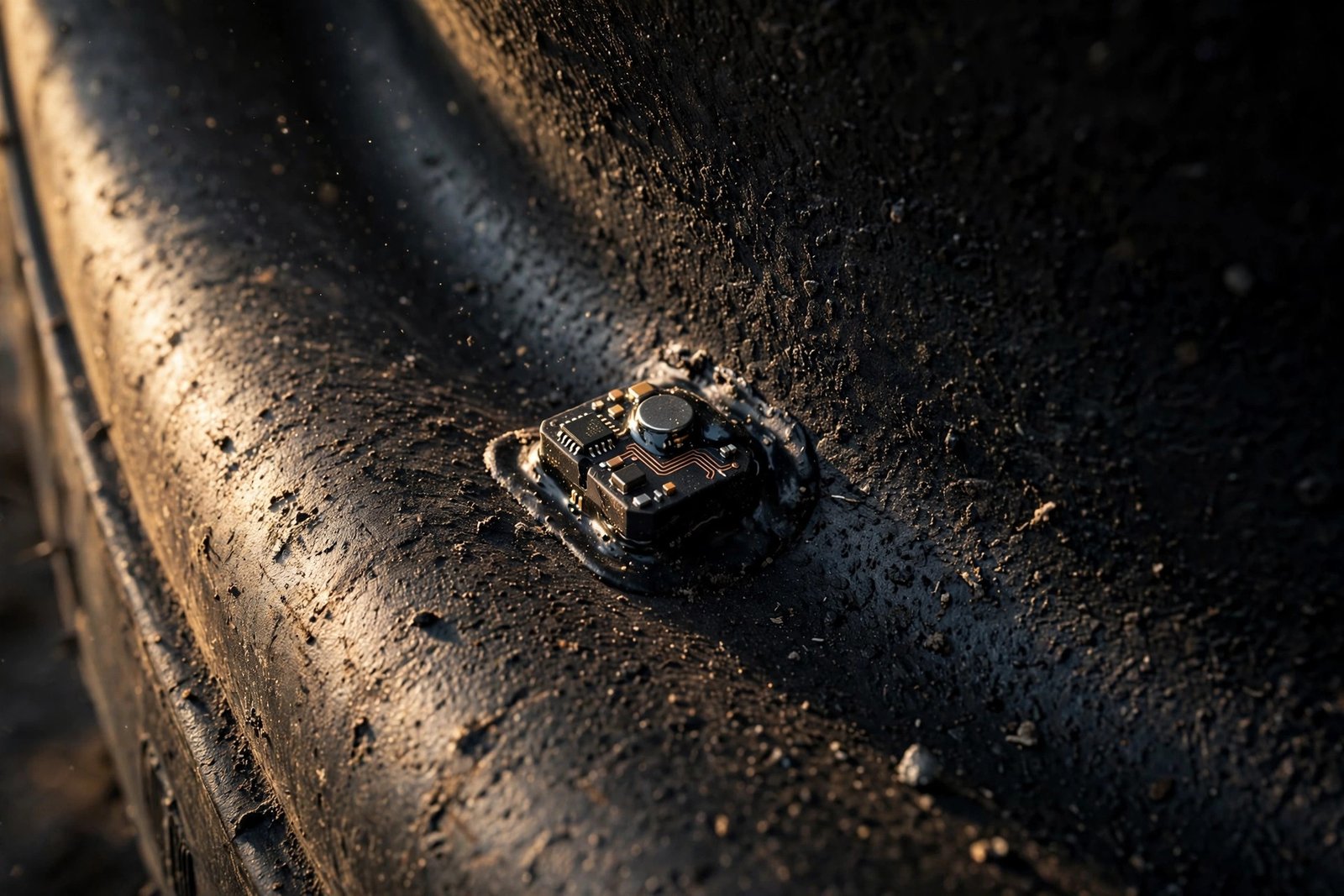
A smart tire keeps the pressure monitoring and adds senses TPMS never had. The sensor moves from the wheel into the tire itself — embedded in the tread, bonded to the inner liner, or built into the tire structure during manufacturing — and measures the tire’s condition and its interaction with the road. Two real systems show what that means.
Pirelli Cyber Tire (Pirelli’s official spelling is “Cyber Tyre”) places a sensor inside the tread measuring pressure, temperature, tread wear, and load, and feeds the data to a control unit adjusting stability control, ABS, and traction control. It also reads grip: available traction, road conditions from dry to icy, vertical and lateral forces, and the speed at which aquaplaning begins. In an October 2026 test by evo magazine, a Cyber Tire car stopped 5.7 meters sooner in wet braking from 68 mph, because the brakes knew the tire’s condition in real time. The sensor weighs about 12 grams, withstands 3,000 g, and transmits via Bluetooth for around five years.
Goodyear SightLine, launched in 2021, senses wear state, load, inflation pressure, and temperature, plus road conditions only tires can sense. It estimates tire-road friction, detects aquaplaning, and tracks wear and remaining mileage. With TNO, the Netherlands research organization, Goodyear showed SightLine data letting automatic emergency braking engage earlier on low-friction surfaces, mitigating impacts at up to 50 mph in wet-road trials. At CES 2026, SightLine fed real-time friction data to NVIDIA’s DRIVE Hyperion autonomous-vehicle platform.
The pattern across both systems is the same, and it is the heart of the difference from TPMS:
| What is measured | TPMS | Smart tires |
|---|---|---|
| Tire pressure | Yes — the whole job | Yes — one input among several |
| Temperature | Sensed by direct systems, used internally | Yes — reported and acted on |
| Tread depth / wear | No | Yes |
| Load on the tire | No | Yes |
| Road friction / grip | No | Yes — estimated in real time |
| Road condition (wet, icy) | No | Yes |
| Aquaplaning risk | No | Yes — predicted before it happens |
| Tire identity (type, size, age) | No | Yes — the tire carries its own ID |
| Feeds ABS / stability control | No | Yes — the point of the system |
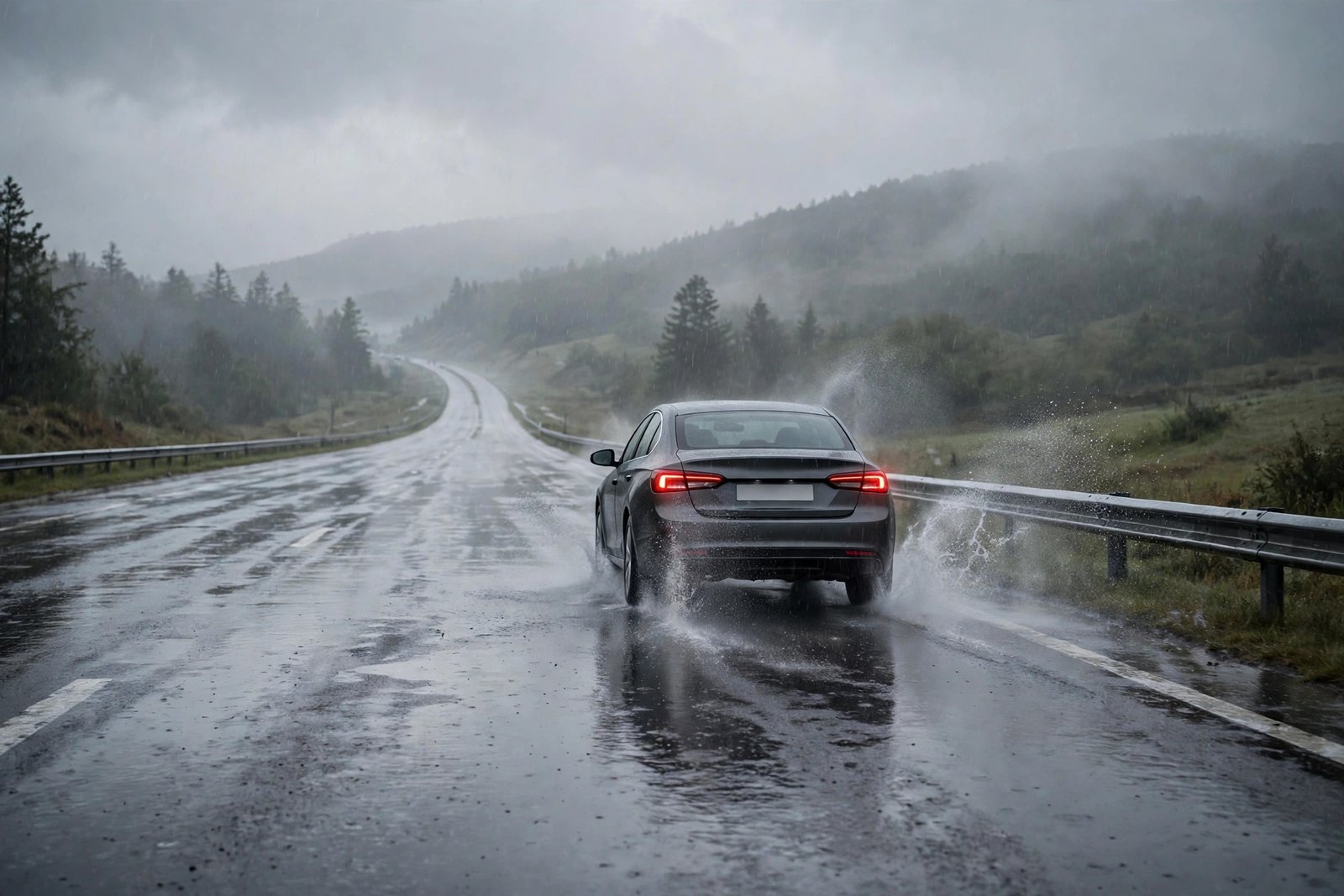
Notice what smart tires do with the data, because that is the real leap. TPMS data goes to a dashboard light and stops. Smart-tire data goes to the car’s control systems, which change how the car behaves: braking earlier on a wet road, adjusting stability control for a worn tire, warning about aquaplaning before the tread loses contact with the road. TPMS informs the driver. Smart tires inform the car.
Do smart tires replace TPMS?
No — and this is the single most common misunderstanding in the whole topic. Smart tires build on TPMS. They do not delete it.
There are three reasons. First, the law. FMVSS No. 138 requires TPMS on new light vehicles, and fitting a smart tire does not remove that requirement. Second, the architecture. Pressure is the foundation reading everything else is built on: a friction estimate means little if you do not know the tire’s pressure. Goodyear’s own SightLine documentation lists TPMS data as one of the inputs its algorithms fuse with tire-mounted sensor data and vehicle signals. Third, the failure modes are different. A smart tire’s tread-wear estimate cannot warn you about a sudden puncture as directly as a pressure sensor can, and a pressure sensor cannot warn you about a worn tire. The two systems cover different risks.
Think in layers. TPMS is the first: is there enough air? Smart tires add layers on top: tread left, tire temperature, load, grip available. Each answers a question the layer below cannot. A TPMS warning on a smart-tire car still means a tire is significantly underinflated — see what to do when the TPMS light is on but the tires look fine.
Does my car already have smart tires?
Almost certainly not. Here is how to tell:
- If your car shows tire pressures on the dashboard, that is TPMS. A per-tire pressure readout is the signature of direct TPMS. It does not mean the tires sense tread wear, load, or grip.
- If your car shows only a warning light, that is TPMS too — direct or indirect. The light is the federally required warning, standard since the 2008 model year.
- If your car warns you about tread wear, road grip, or aquaplaning risk by name, that might be a smart tire. As of 2026, that narrows the field to a very short list. Pirelli’s Cyber Tire debuted on the McLaren Artura and has since appeared on cars including the Pagani Utopia Roadster. Goodyear’s SightLine has been demonstrated on concept and development vehicles and in fleet applications. If you drive a mainstream sedan, SUV, or truck, you do not have either system.
- If you bought your tires at a tire shop, they are conventional tires. No smart tire is sold at retail in the US in 2026. The systems in production are factory fitment, built into specific tires for specific cars and integrated with those cars’ electronics.
Marketing language blurs the line: some products call themselves “smart” for having a Bluetooth pressure sensor in the valve cap. That is an aftermarket TPMS, not a smart tire — it measures pressure, and pressure only. The test is simple: does it know anything about the tire beyond its air pressure? If the answer is no, it is TPMS wearing a smarter name.
What this means for you in 2026
Keep your TPMS working. Sensors have batteries that wear out, and a dead sensor means no warning when you need one. Our guide to how long TPMS sensors last covers lifespan, signs of failure, and replacement timing. If you see a flashing tire pressure light, that usually means a system fault rather than low pressure, and it deserves attention for the same reason: a warning system that cannot warn invites false confidence.
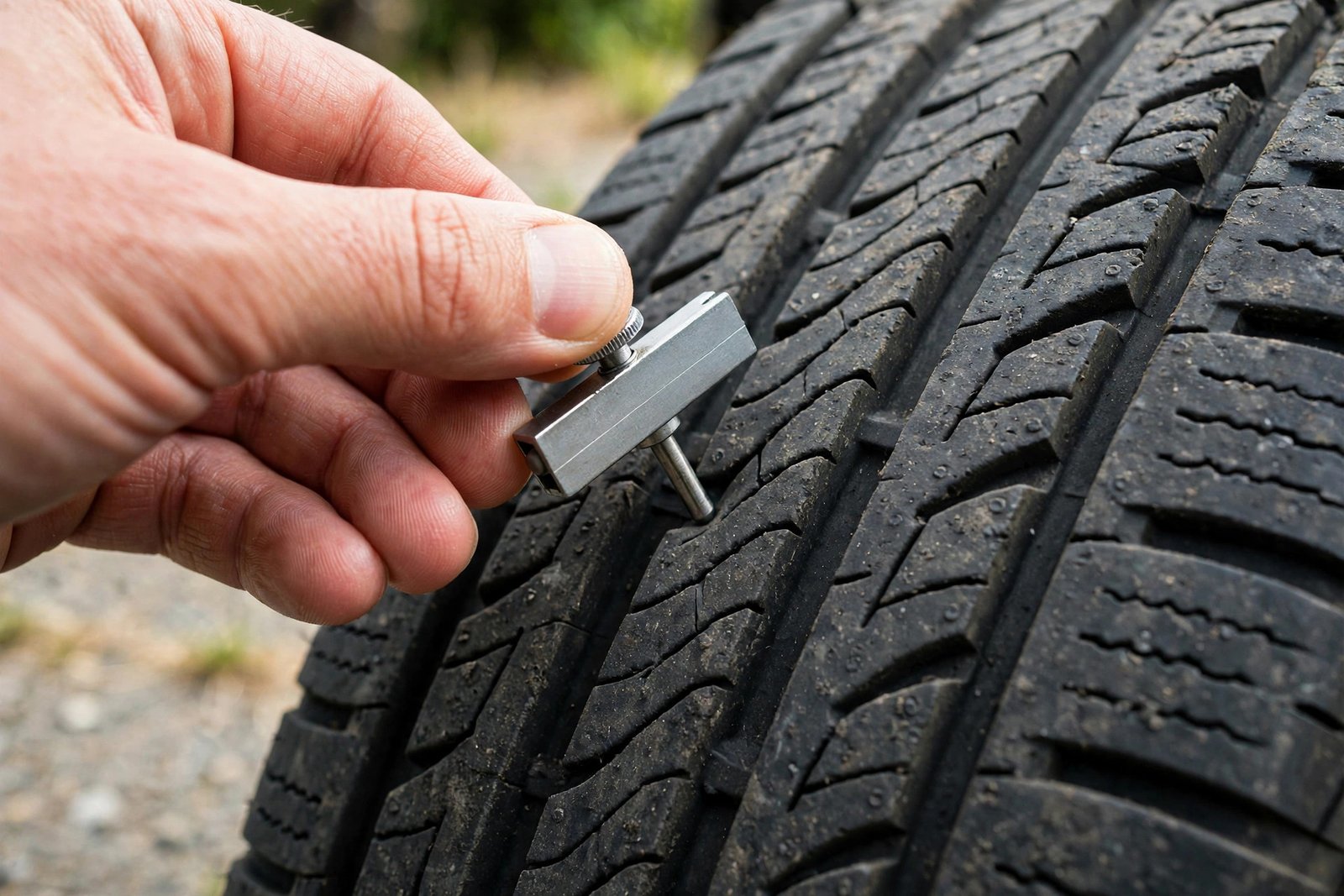
Do not wait for smart tires to take tire care seriously. Tread wear, heat, and load are all things you can check today with a gauge, a tread-depth check, and a look at the sidewalls. The technology will eventually automate those checks; until then, the manual version works.
When you buy your next car, know what to ask. A dealer who says a car has “smart tires” probably means it has a good direct TPMS with per-tire readouts. Ask specifically: does the tire sense tread wear, load, and road friction, and does that data feed the braking and stability systems? If the answer is a pressure readout and a warning light, you are looking at TPMS — which is fine, because TPMS is what the law requires and what every car has. Just do not pay a premium for a name.
The verdict
TPMS and smart tires are successive generations of one idea: the tire should tell you — and eventually tell the car — what is happening where rubber meets road. TPMS, mandated since the 2008 model year, warns you when pressure drops 25% or more. Smart tires extend the idea to tread wear, temperature, load, friction, and road condition, handing data to the car’s safety systems instead of only to a dashboard light. They build on TPMS; they do not replace it. Your car has TPMS. Almost nobody’s has smart tires yet — which is why the monthly pressure check still earns its keep in 2026.
Frequently asked questions
What is the difference between smart tires and TPMS?
TPMS is a warning system that watches one thing: tire pressure. It alerts you when a tire drops 25% or more below its recommended pressure. Smart tires go further — sensors inside the tire also measure tread wear, temperature, load, and road grip, and feed that data to the car’s safety systems so braking and stability control can adapt in real time.
Do smart tires replace TPMS?
No. Smart tires build on TPMS rather than replacing it. Pressure monitoring remains the foundation — Goodyear’s SightLine platform even lists TPMS data as one of its inputs — and the federal requirement for TPMS on new vehicles stands regardless of what other tire technology is fitted.
Does my car already have smart tires?
Almost certainly not. If your car was built for sale in the US from the 2008 model year onward, it has TPMS — a pressure warning system required by federal law. Smart tires are fitted only to a handful of expensive cars and fleet systems as of 2026, such as the McLaren Artura and Pagani Utopia Roadster with Pirelli Cyber Tire. A dashboard pressure readout is TPMS, not a smart tire.
When did TPMS become mandatory in the US?
TPMS became mandatory under Federal Motor Vehicle Safety Standard No. 138, issued by NHTSA in April 2005 under the TREAD Act of 2000. The requirement phased in from October 5, 2005, and applied to 100% of new light vehicles — passenger cars, multipurpose passenger vehicles, trucks, and buses with a gross vehicle weight rating of 10,000 pounds or less, except those with dual wheels on an axle — manufactured on or after September 1, 2007.
What is the difference between direct and indirect TPMS?
Direct TPMS uses a pressure sensor in each wheel to measure the actual air pressure in each tire and can usually show which tire is low. Indirect TPMS has no pressure sensors: it uses the anti-lock braking system’s wheel speed sensors to spot that one tire is rotating faster than the others, which suggests it has lost pressure. Indirect systems cannot show actual pressure readings and cannot detect all four tires losing pressure at the same rate.
Can I upgrade my car to smart tires?
Not in 2026. There is no retail smart-tire upgrade for a regular car: the systems in production are factory fitment on a small number of expensive models, built into the tire and integrated with that car’s electronics. What you can buy is a better version of what you already have — a quality aftermarket direct TPMS kit, a good gauge, and regular checks.