


A flashing tire pressure light usually means the tire pressure monitoring system (TPMS) has a fault. It isn’t telling you a tire is low. On most vehicles, the light blinks for about 60 to 90 seconds when you start the engine, then stays on solid. That pattern points to a problem with the system itself, such as a dead sensor battery, a damaged sensor, or a sensor the car hasn’t learned yet.
That doesn’t mean your tires are fine. A system fault and a low tire can happen at the same time, and a faulty TPMS may not warn you about the second one. Check all four tires with a gauge first. If the light keeps flashing after that, have the system scanned.
Whether you call it a flashing or a blinking tire pressure light, it’s the same warning, and it shouldn’t be left for months.
Flashing vs. Solid Tire Pressure Light
A solid light and a flashing light are two different messages.
| What you see | What it usually means | What to do |
| Solid light | One or more tires are low | Check all four tires and inflate to the door-jamb pressure |
| Flashes for 60–90 seconds, then stays solid | TPMS fault | Check pressures, then have the system scanned |
| A message such as “Service tire pressure system” | TPMS fault on many vehicles | Same as above, and check your manual |
The flash-then-solid pattern comes from the federal TPMS standard (FMVSS 138), and most automakers follow it. If the fault is still there, the sequence repeats every time you start the car. Some vehicles use a different pattern or show only a message, so your owner’s manual has the final word. The warning symbol is a horseshoe-shaped tire cross-section with an exclamation point.
A solid light has its own limit. Federal rules require it to come on when a tire is 25 percent or more below the recommended pressure, which is about 26 PSI on a tire that should be at 35. Some automakers set the warning earlier, but a tire can be noticeably low before the light appears. That’s one reason a TPMS never replaces a pressure gauge.
Direct vs. Indirect TPMS
Many vehicles use direct TPMS: a battery-powered pressure sensor sits inside each wheel, usually attached to the valve stem, and sends readings to the car. Others use indirect TPMS, which has no pressure sensors at all. It uses the ABS wheel-speed sensors to spot a tire that’s spinning faster than the others, which is what a low tire does.
This matters for troubleshooting. Indirect systems can’t have a dead sensor battery, but they can still set a fault, and they usually need a manual reset after you inflate or rotate the tires (a button or an infotainment menu setting). Direct systems can have sensor problems and may need a relearn. Your owner’s manual will say which system you have. The causes below mostly apply to direct systems.
Why Is My TPMS Light Flashing?
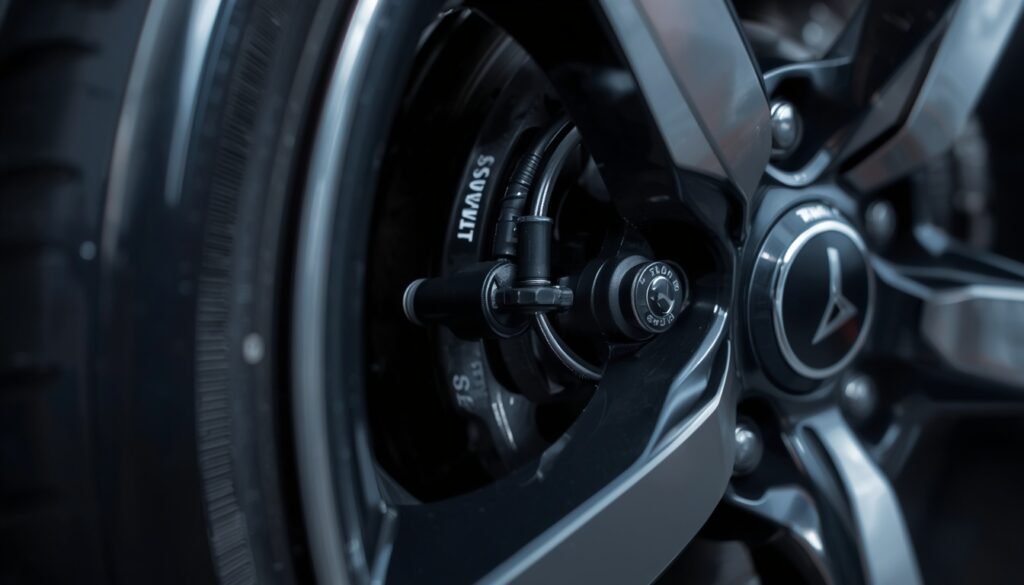
These are the most common causes, roughly in the order shops see them.
The sensor battery is dying
Each direct sensor has a small sealed battery. Sensors typically last roughly 5 to 10 years, depending on the sensor and how much you drive. The battery isn’t replaceable, so the whole sensor gets replaced. Sensors installed together tend to wear out around the same time, so one failure on an older car often means the others aren’t far behind.
New tires don’t automatically need new sensors. But if yours are already old, it’s worth asking about them while the tires are off the wheels.
A sensor is damaged or corroded
A pothole, a curb strike, corrosion, or rough handling during tire mounting can damage a sensor. A damaged valve stem or worn seal can also leak air. A damaged sensor may stop transmitting altogether or send readings the car can’t use.
The car needs to relearn the sensors
Sometimes nothing is broken. After a tire rotation, new tires, a wheel swap, or a sensor replacement, the car may need to learn the sensor IDs or wheel positions again. Some vehicles do this on their own after a few minutes of driving. Others need a manual procedure from the owner’s manual or a TPMS scan tool.
Winter wheels, a spare, or the wrong sensors
A second set of wheels can trigger the warning if their sensors weren’t programmed to your vehicle, or if the wheels have no sensors at all. Aftermarket wheels sometimes come without them. Sensors also have to be compatible with your car. On vehicles that monitor the spare, a dead or missing spare sensor can set the warning too.
A receiver, module, or wiring fault
This is less common. The sensors may be fine, but the part of the system that receives and processes their signals has a problem. A technician with a scan tool is usually needed to find it.
What about cold weather?
Tire pressure drops about 1 PSI for every 10°F drop in temperature. On the first cold morning of the year, a slightly low tire can turn on the solid low-pressure light. It often goes out after a few miles of driving as the tires warm up, but check the pressure when the tires are cold and top up to the placard number. Cold weather explains a solid light much more often than it explains a flashing one.
Tire Pressure Light Blinking After New Tires or a Rotation
If the warning started right after tire service, the timing is your best clue. The most likely explanation is that the TPMS wasn’t relearned or reset, not that a sensor has failed. Sensors can also be damaged during mounting, so that’s a fair question to ask too.
Call the shop that did the work and ask whether a TPMS relearn or reset was part of the job. On many cars it should be. If your car has indirect TPMS, check the manual for the reset procedure.
Can You Drive With a Flashing TPMS Light?
Often yes, for a short trip, but only after you check the tires. A flashing light doesn’t mean a tire is about to fail. The real risk is that the system may no longer warn you if one does.
Start with a gauge. You can’t judge pressure by looking, because a radial tire can be well below spec and still look normal. If any tire is significantly low, flat, bulging, or damaged, don’t keep driving on it. Add air, put on the spare, or call for help.
If every tire is at the placard pressure, nothing looks damaged, and the car drives normally, it’s generally reasonable to drive to a shop. Until the system is repaired, check the pressures by hand about once a week and before any long trip.
Treat a solid light differently. If it comes on while you’re driving, assume a tire is low, then pull over somewhere safe and check. Stop driving and get help if you notice vibration, pulling to one side, or sudden pressure loss.
What to Do Right Now
- Look over each tire for a flat, a bulge, a nail, or sidewall damage. This catches obvious problems, but it can’t tell you the pressure.
- Check the pressure with a gauge, ideally when the tires are cold (before driving, or after the car has sat for a few hours). Use the number on the driver’s door-jamb placard, or in the owner’s manual if there isn’t one. Don’t use the maximum PSI molded into the tire sidewall. That’s the tire’s limit, not your target. If your vehicle monitors a full-size spare, check it too.
- Inflate any low tire to the placard pressure. A tire that keeps losing air has a leak and needs to be inspected.
- Restart the car and watch the light. If it flashes for 60 to 90 seconds and then stays on, the system has a fault. If it was a solid light and the pressures are now correct, it should go out after a few minutes of driving. Indirect systems may need a manual reset.
- Think about recent work. New tires, a rotation, or a wheel swap point toward a relearn issue.
- Get the system scanned at a tire shop or dealer.
How a Flashing TPMS Light Gets Fixed
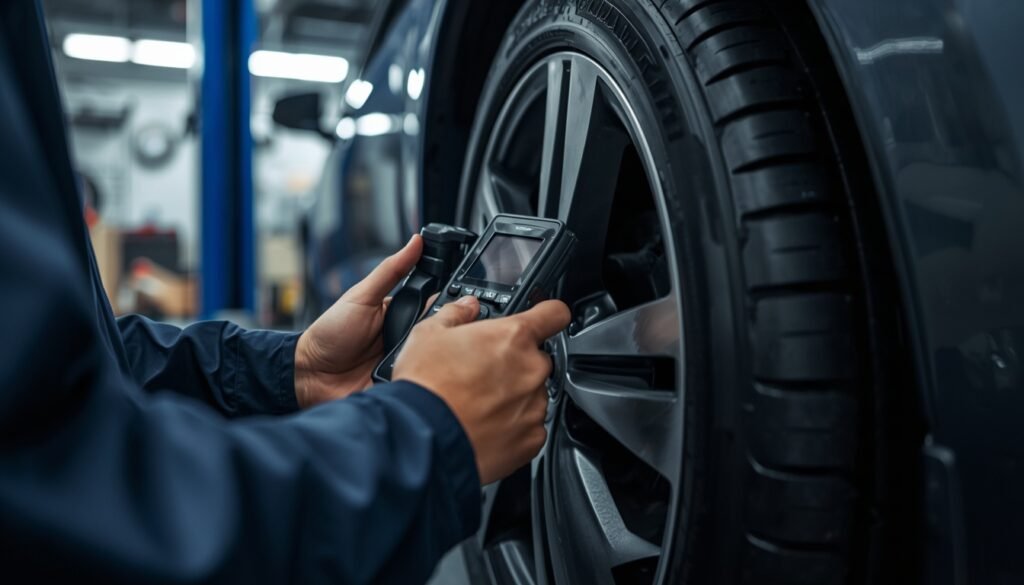
A shop will check the tires, then read the system with a TPMS scan tool. The tool can show each sensor’s ID, reported pressure, communication status, battery status, and any fault codes. That points to the failed part, so nobody has to guess.
From there, the fix usually falls into one of four groups:
- The sensors are fine, and the car needs a relearn or reset.
- A sensor is dead or damaged and needs to be replaced and programmed to the vehicle.
- A sensor doesn’t match the vehicle, as with winter or aftermarket wheels, and needs to be corrected.
- The sensors check out, and the receiver, module, or wiring needs further diagnosis.
Costs vary widely by vehicle. A relearn is usually a minor charge, while a sensor replacement costs more because of the part, the programming, and the labor. Ask which sensor failed and how it was tested. If one sensor has died of old age and the others are the same age, ask whether replacing them together makes sense while the tires are off. That can save you paying for the same labor twice.
Frequently Asked Questions
Why is my TPMS light flashing but my tires are fine?
Correct pressure doesn’t tell you the monitoring system is working. A flashing light with good tires usually means a sensor problem, such as a dead battery, damage, or a sensor the car hasn’t learned. Less often, it’s a receiver or module fault.
Why does my tire pressure light flash for a minute and then stay on?
On many vehicles, that’s how the TPMS reports a system fault, and it repeats every time you start the car until the problem is fixed. Federal rules set the pattern, but some automakers use a different one, so check your manual.
Will adding air turn off a flashing TPMS light?
Not if it’s a system fault. If the light was solid because of low pressure, it should go out after you inflate the tires to the placard pressure and drive for a few minutes. Indirect systems usually need a manual reset.
Will a flashing TPMS light reset itself?
Sometimes. A temporary glitch, or a relearn that finishes after a short drive, can clear it. A failed sensor or a persistent fault won’t clear on its own. If the light flashes again the next time you start the car, the problem is still there.
How do I know if a TPMS sensor is bad?
The light alone can’t tell you which sensor is the problem, or whether it’s a sensor at all. A TPMS scan tool can show whether each one is transmitting and report its battery status.
Why is my tire pressure light blinking after a tire rotation?
Most likely the car needs a relearn or reset after the wheels changed positions. Check your manual or ask the shop that did the work. If it keeps flashing after that, have the sensors scanned.
Conclusion
A flashing tire pressure light usually points to a TPMS fault, not low air. Check all four tires with a gauge, and if the light keeps flashing, get the system scanned before replacing any parts.