
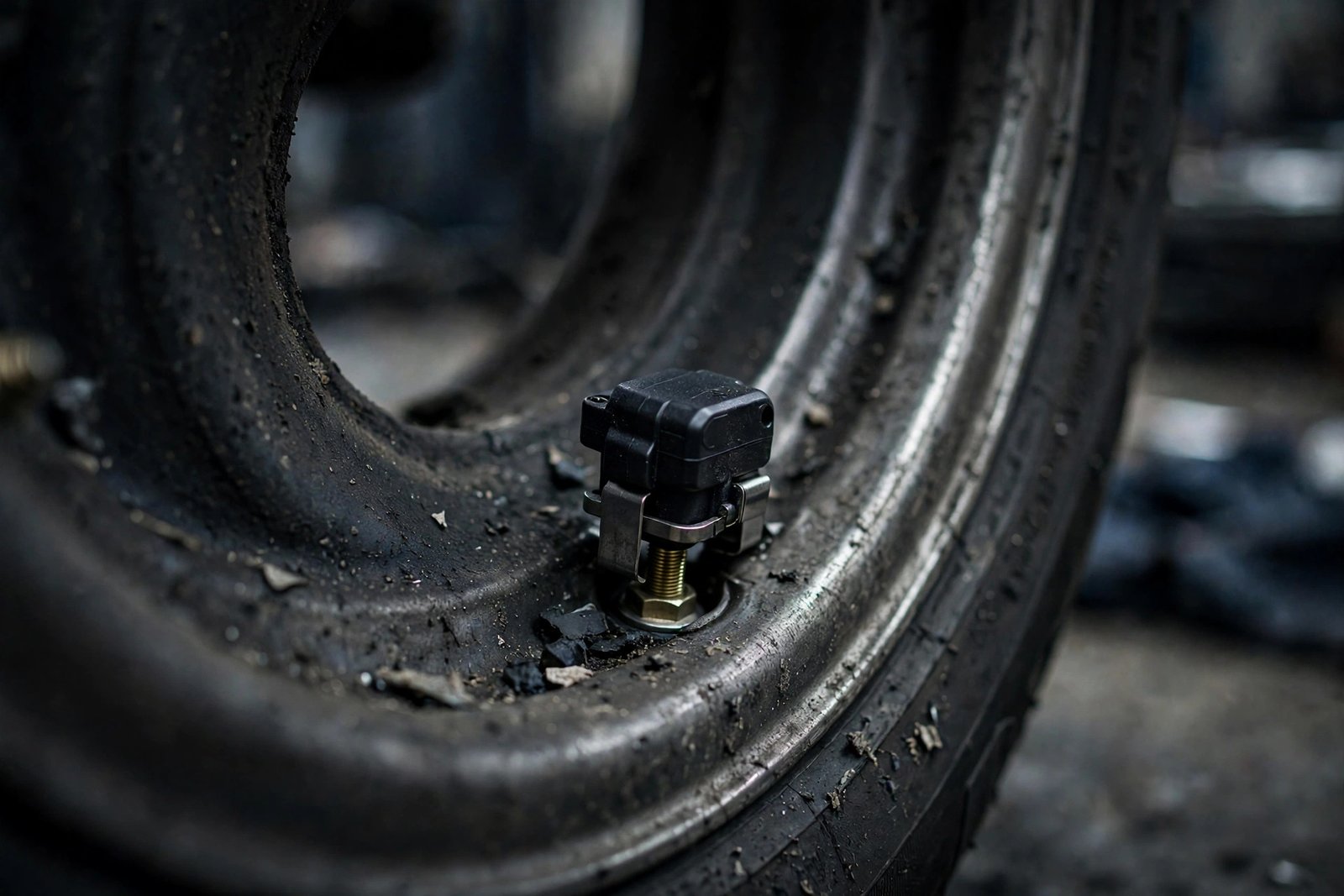
Short answer: most TPMS sensors last 5 to 10 years, or roughly 75,000 to 100,000 miles — whichever comes first. The sealed battery inside each sensor is the limiting factor, and when it dies, you replace the whole sensor, not just the battery. Gentle use can stretch some factory sensors to 10 years; hard driving or brutal climates often land closer to 5–7.
If your tire pressure light has started acting strange on an older car, a dying sensor battery is a likely culprit. Here’s what to know.
How Long Do TPMS Sensors Last?
There is no fixed replacement schedule for TPMS sensors the way there is for oil or brake pads. In practice, they last until they don’t — and the range most technicians and manufacturers point to is 5 to 10 years, with about 7 years a commonly cited average.
Mileage matters too, because a sensor transmits most when the wheels are turning. Estimates vary: NGK puts the battery’s estimated lifespan at 5–10 years or 100,000 miles, and most shops quote roughly 75,000 to 100,000 miles, occasionally stretching toward 120,000 for lightly driven cars — a calendar clock and a mileage clock running at once, and whichever runs out first wins.
Factory-original sensors tend to land at the higher end of the range, and quality aftermarket sensors from established brands are generally in the same ballpark. Past the decade mark, though, they’re living on borrowed time regardless of what the dashboard says.
Why the Battery Is the Whole Story
A direct TPMS sensor is a small electronic unit mounted inside the wheel, usually attached to the valve stem. It measures pressure (and often temperature), then radios that data to your car’s computer roughly every 30 to 60 seconds while driving.
Powering it all is a small sealed lithium battery — typically a 3-volt cell molded permanently into the sensor housing. And here’s the part that surprises most people: the battery cannot be replaced. It’s entombed in plastic to survive years of heat, vibration, and moisture inside a spinning tire. Dead battery means a whole new sensor.
Sensors are thrifty with power, though. When the car is parked, they drop into a low-power sleep mode and barely transmit. That’s why a garage-kept car driven a few thousand miles a year can see sensors last longer in years, while a high-mileage commuter burns through the battery faster in miles.
What Kills TPMS Sensors Early
Age and mileage are the normal killers. These are the ones that cut life short:
Extreme heat and cold. Lithium batteries hate temperature extremes. Desert summers accelerate the battery’s internal chemistry; deep northern winters sap its output and stress it over time.
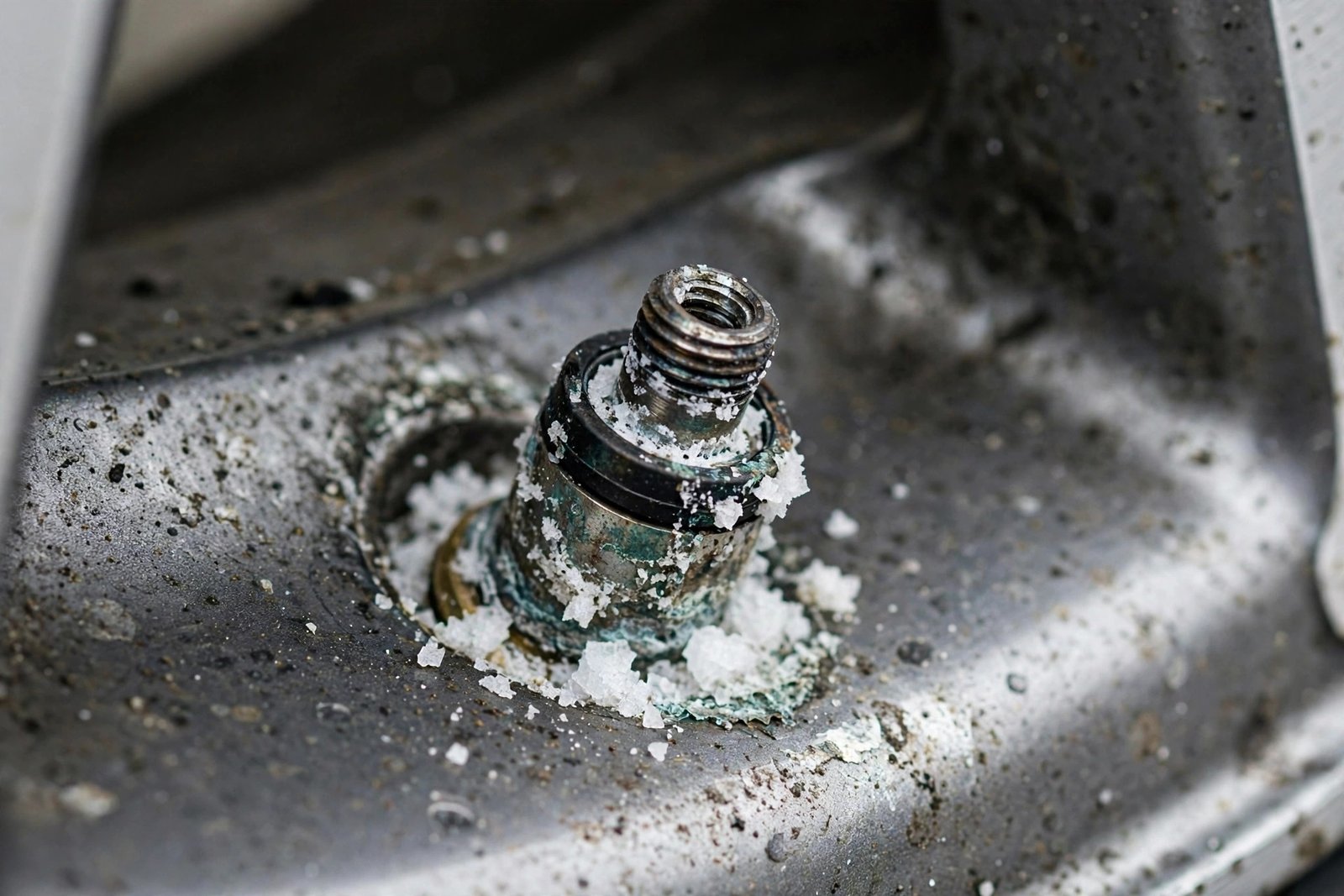
Road salt and corrosion. The sensor lives in one of the nastiest spots on the car — inside the wheel, bathed in water, salt, and brake dust. In salt-belt states, corrosion can attack the valve stem and sensor body long before the battery gives out, and a corroded stem can snap during a routine tire service.
Physical damage. Potholes, curb strikes, and careless tire mounting can crack a sensor. This is why a good shop works carefully around the valve stem when breaking the bead — a rushed tech can kill a sensor in seconds.
Aerosol tire sealants. Emergency “fix-a-flat” cans can gum up the sensor’s pressure port. Some are labeled TPMS-safe; many aren’t. If you’ve used one, tell your tire shop — and don’t be shocked if that sensor never reads right again.
Constant short trips. Every time the wheels start turning, the sensor wakes up and transmits. A delivery driver doing endless short hops racks up transmission cycles far faster than a highway commuter covering the same miles.
Direct vs. Indirect TPMS: Does Your Car Even Have Sensors to Replace?
There are two completely different systems, and only one has batteries that die.
Direct TPMS uses physical sensors inside each wheel — what the vast majority of US cars have had since the federal mandate took effect. If your dashboard shows individual tire pressures, you have direct TPMS, and those sensors will eventually need replacement.
Indirect TPMS has no in-wheel sensors at all. It watches wheel speeds through the ABS system and infers pressure loss (an underinflated tire rolls at a slightly different speed). No sensors means no batteries to die — but also no exact pressure readings, and it needs recalibrating after rotations or pressure changes.
Check your owner’s manual if you’re unsure. But for most American drivers, it’s direct TPMS — which is why sensor lifespan matters.
5 Signs Your TPMS Sensors Are Dying
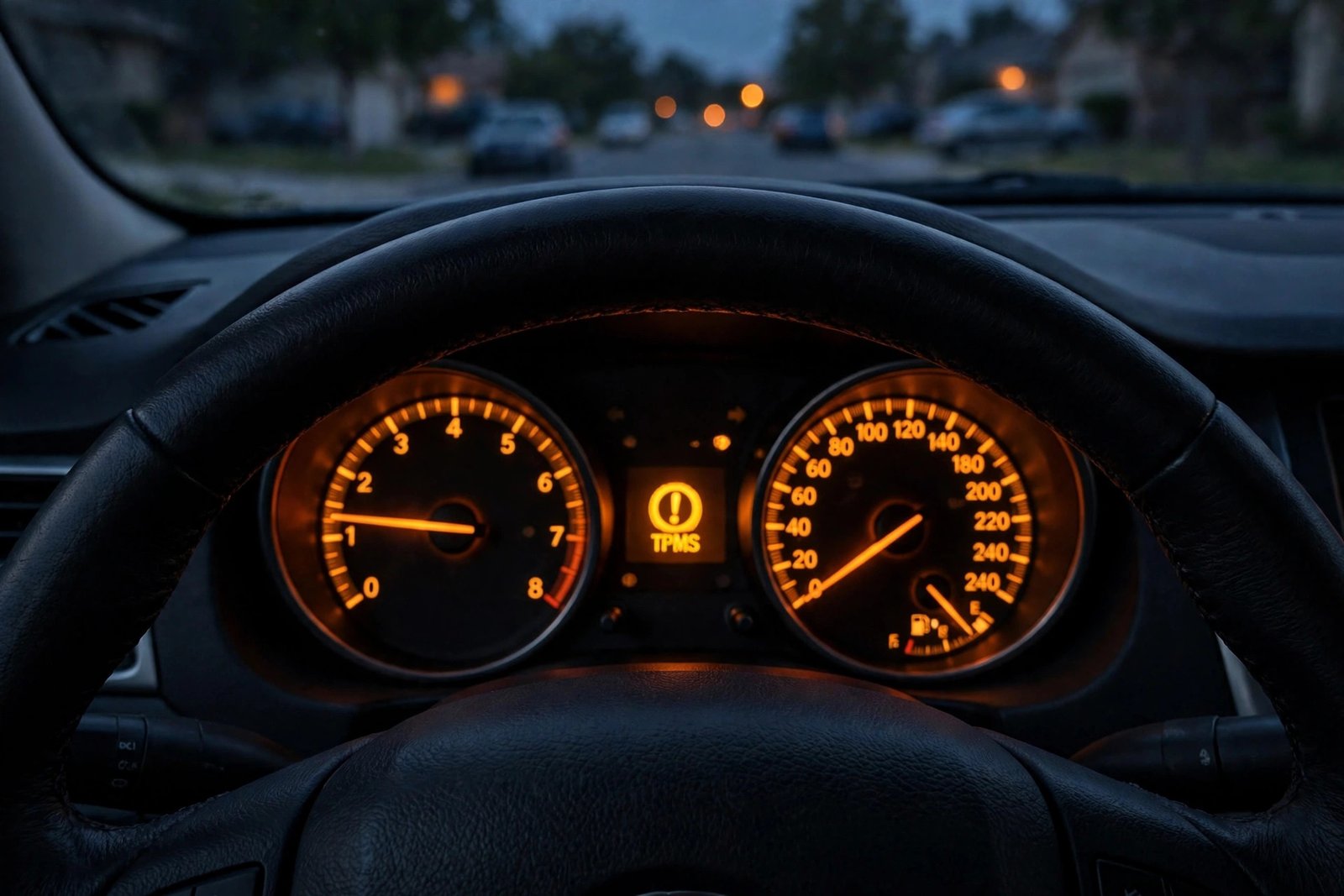
1. The light flashes, then stays on. A solid TPMS light usually means a tire is actually low — check pressures first. But if it flashes for 60–90 seconds at startup, then stays solid, that typically signals a malfunction: a dead sensor that can’t talk to the car’s computer. Our guide to the flashing tire pressure light walks through what to check.
2. Warnings that come and go. A weak battery may transmit sometimes and go silent others — especially in cold weather, when it can’t quite muster the voltage. Warnings on frosty mornings that vanish by afternoon point to the battery, not the tire.
3. A blank reading for one wheel. Cars showing individual pressures will sometimes display dashes (“–“) for one corner. That’s the car telling you it can’t hear that sensor at all.
4. The car is 7+ years old on original sensors. No symptoms yet? At this age they’re on borrowed time, and many shops will flag it during a tire replacement — genuinely good advice, not an upsell.
5. One sensor keeps failing relearn. After a rotation, if one sensor repeatedly fails to pair while the others cooperate, its battery is likely too weak to complete the handshake.
What each symptom means for your next step:
| Symptom | What to do |
|---|---|
| Light flashes for 60–90 seconds at startup, then stays on | Check tire pressures first. If they’re fine, have a shop scan the system — a flashing light usually means one dead sensor. |
| Warnings come and go, often in cold weather | Have the sensors tested — the battery is fading and will only get worse. Plan a replacement soon. |
| Dash shows dashes (“–“) for one wheel | That sensor has gone silent. Book a scan and expect to replace that one sensor. |
| Car is 7+ years old on the original sensors | No rush, but plan to replace all four at the next tire service. They’re on borrowed time. |
| One sensor keeps failing relearn after a rotation | That sensor is likely dying. Replace it; on an older car, replace all four. |
Should You Replace All Four at Once?
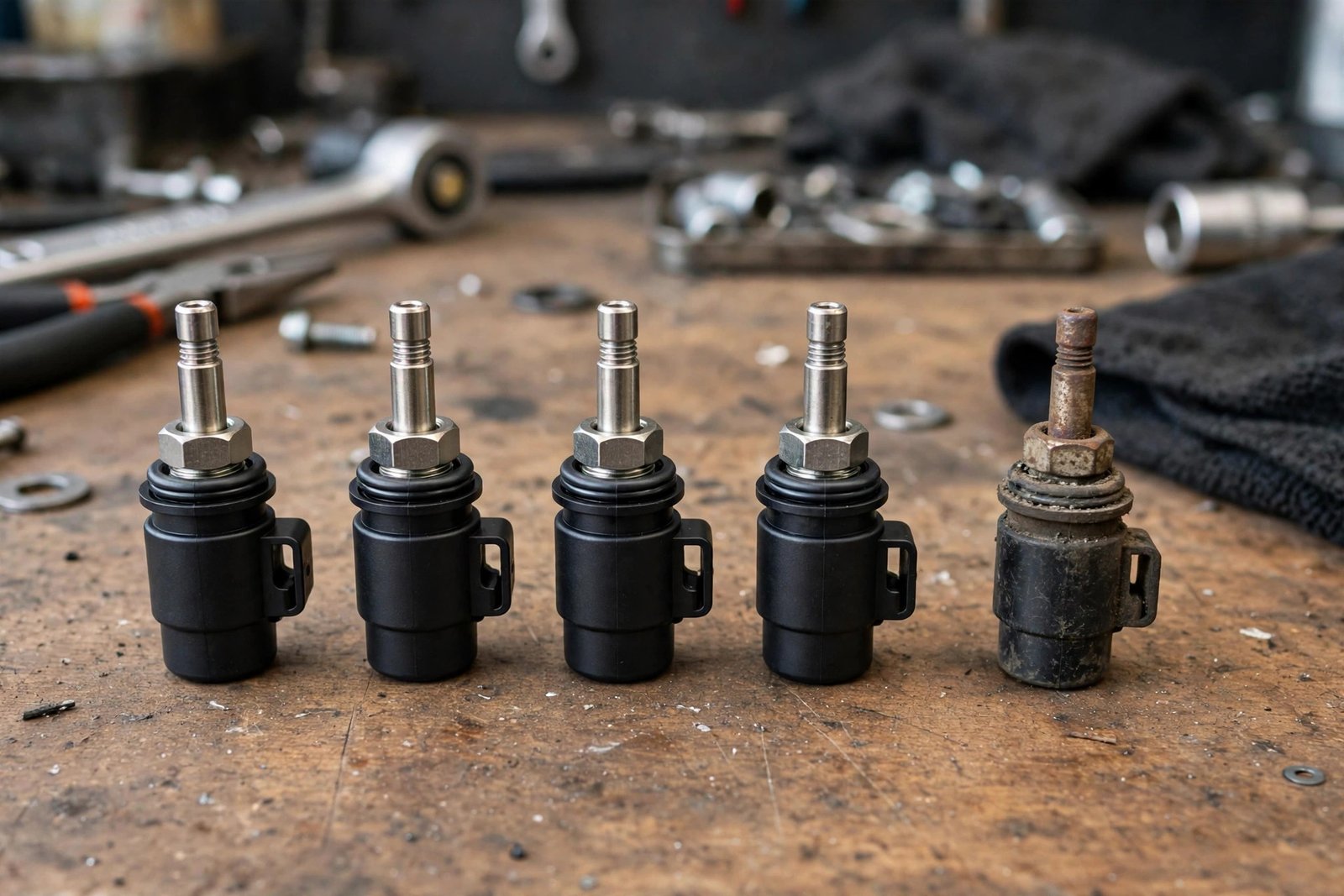
Usually, yes. All four sensors were installed together and lived through the same miles, summers, and salt. When one battery dies of old age, the other three are almost certainly close behind.
It also saves real money: the tire is already off the wheel for the first sensor, so doing the other three adds parts cost but little extra labor. Come back in three months for the next dead one and you’ll pay full labor again.
The exception: a sensor killed young by physical damage — say, a 3-year-old car with a sensor cracked by a pothole. Just replace that one; the others have years left.
How Much Does Replacement Cost?
Expect roughly $50 to $100 per sensor for the part from major brands, with some dealer or specialty-vehicle sensors reaching $200–$250. Labor adds about $15–$30 per wheel at a tire shop, since the tire must come off.
All-in, one sensor typically runs $50 to $250 depending on your car and shop — RepairPal’s national average is $240–$299 as of September 2026. Doing all four at once often lowers the per-sensor price. Budget 4-packs exist for as little as $25–$40 total, but quality varies — a sensor that dies in two years isn’t a bargain.
What that looks like by job size:
| Job | Typical installed cost |
|---|---|
| One sensor | $50–$250 |
| Two sensors (a pair) | $100–$500 |
| All four sensors | $300–$800 |
For the full breakdown by vehicle type and shop-vs.-dealer pricing, see our detailed guide: TPMS Sensor Replacement Cost.
DIY vs. Having a Shop Do It
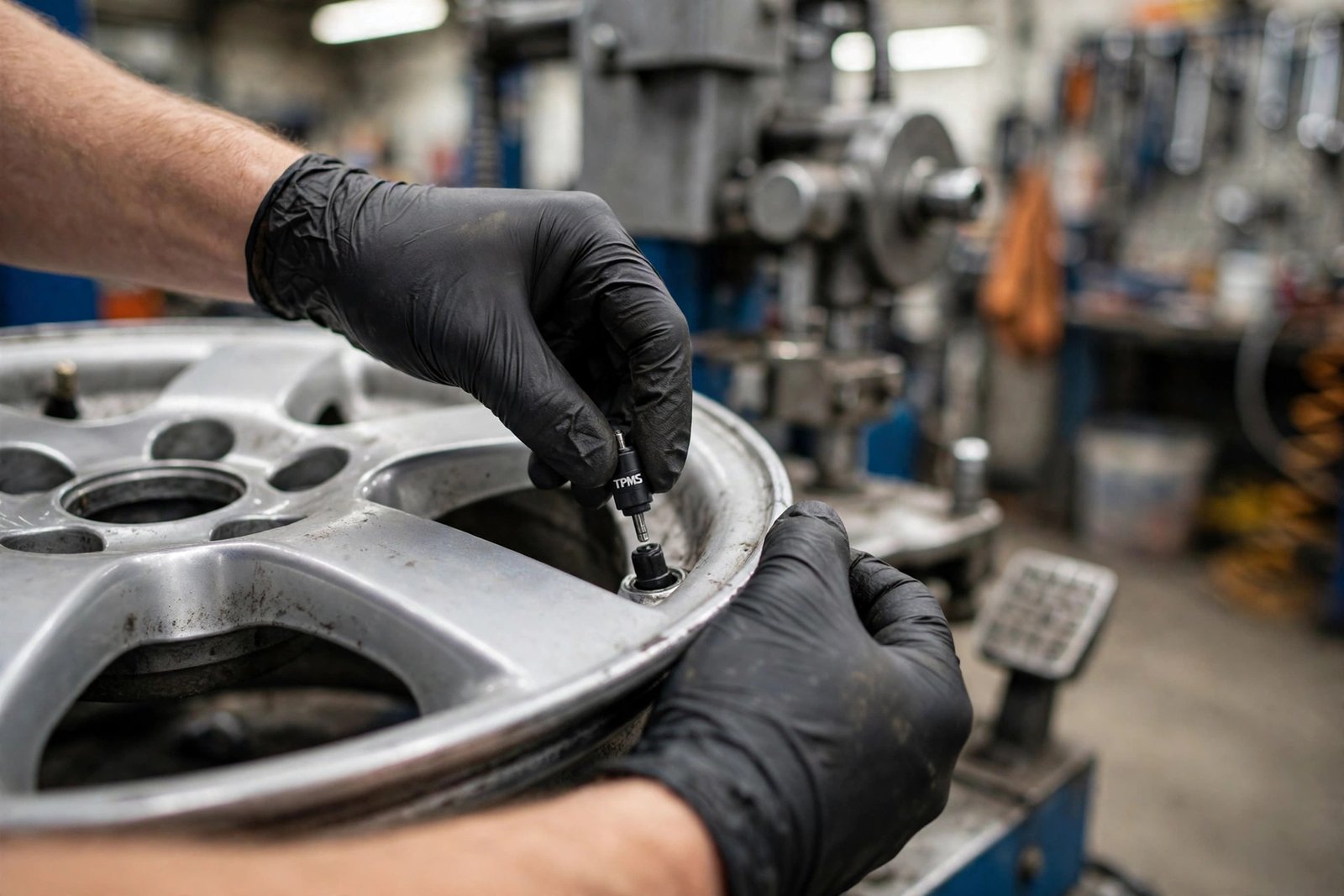
The sensor itself is cheap and the swap is simple — if you have a tire machine. Getting the tire off and back on without one is the hard part, and it’s where DIY attempts damage the new sensor or the wheel. Then there’s the relearn: many cars need a TPMS activation tool ($20–$50) or an OBD-II procedure to pair the new sensor’s ID.
Use a shop if you don’t have tire equipment, your car needs a dealer-level relearn, or you’re doing all four — bundling makes the visit clearly worthwhile. DIY only if you already own a tire changer and TPMS tool.
Either way, budget for the relearn step — an unpaired new sensor is just an expensive valve stem.
Relearn and Reset After Replacement
Every sensor has a unique ID your car’s computer must learn. Depending on the vehicle, that happens three ways: auto-relearn (drive 10–20 minutes and the car figures it out), stationary relearn with a handheld tool (trigger each sensor in sequence), or OBD-II relearn (new IDs written through the diagnostic port, common on Asian and European brands).
A relearn isn’t the same as a simple reset — different procedures for different situations. Our step-by-step walkthrough covers both: How to Reset the TPMS (Tire Pressure Monitoring System).

Why This System Exists at All
TPMS isn’t a luxury feature — it’s federal law. After rollover crashes linked to underinflated tires in the late 1990s, Congress passed the TREAD Act of 2000, and NHTSA followed with Federal Motor Vehicle Safety Standard No. 138. Since September 1, 2007, every new passenger vehicle sold in the US has had to warn the driver when a tire drops 25% or more below its recommended pressure.
It worked: NHTSA research estimated TPMS cut the likelihood of driving on severely underinflated tires by more than half. Read the manufacturer-side background on the Schrader TPMS site, or the full federal rule in NHTSA’s FMVSS No. 138 final rule document.
Frequently Asked Questions
How long do TPMS sensors last on average?
Most last 5 to 10 years or about 75,000 to 100,000 miles, with 7 years a commonly cited average. The sealed lithium battery inside is the limiting factor — when it dies, the whole sensor must be replaced.
Can you replace just the TPMS sensor battery?
No. The battery is permanently sealed inside the housing to survive heat, moisture, and vibration. It can’t be swapped without destroying the sensor, so the entire unit gets replaced.
Do I need to replace all four TPMS sensors at the same time?
It’s strongly recommended. All four are the same age and have endured the same conditions, so when one dies the others are usually close behind — and bundling saves on labor.
Why is my TPMS light flashing?
A light that flashes for about a minute at startup then stays on typically means a system malfunction — often a dead sensor battery — rather than low pressure. A solid light while driving usually means a tire is genuinely underinflated.
Will the TPMS light go off by itself after I replace a sensor?
Not until the new sensor is paired to your car through a relearn. Some vehicles auto-relearn after 10–20 minutes of driving; others need a TPMS tool or an OBD-II relearn at a shop.
Do indirect TPMS systems need sensor replacement?
No — indirect systems have no in-wheel sensors or batteries. They estimate pressure from ABS wheel-speed data, so there’s nothing to wear out, though they need recalibrating after tire rotations or pressure changes.
