

How to Reset Your Tire Pressure Monitoring System
Short answer: Set every tire (including the spare, if monitored) to the pressure on your driver’s door-jamb placard. Then use your car’s reset method: a highway drive at steady speed, the TPMS reset button, a tire-pressure setting in the infotainment or dashboard menu, or a TPMS relearn tool. Your owner’s manual names the right one for your make, model, and year. Resetting — also called recalibrating — the TPMS tells your car to relearn the correct pressure for each tire, so do it after inflating, rotating, or changing tires.
That “it depends” is where most online advice goes wrong. Below: all four methods, when each is needed, and how to tell whether your light needs a reset or is flagging something a reset can’t fix.
How to Reset TPMS in 4 Steps
- Set every tire to the door-jamb placard pressure — including the spare, if your car monitors it.
- Pick your car’s method: drive cycle, reset button, menu calibration or a relearn tool — your manual names the right one.
- Start the reset and complete the drive cycle: 10–30 minutes at a steady 30–50 mph.
- Check the light: off means done; flashing means a fault — get it checked.
Quick Facts — Time: 10–30 minutes. Difficulty: Easy — no mechanical skill needed. Cost: $0–$10 (a basic tire gauge, if you don’t own one). Most cars let you reset — also called recalibrate — the TPMS from the driver’s seat with a dashboard button or the infotainment menu. No tools, no jack, no shop visit.
What “Resetting TPMS” Actually Means
What a “reset” does depends on which of the two system types your car has.
Direct TPMS puts a small battery-powered pressure sensor inside each wheel, usually attached to the valve stem. It measures air pressure directly and radios the readings to the car’s computer — this is what most cars today use. Correcting low pressure often clears the warning by itself once the sensors wake up and report the new readings. A relearn — teaching the car each sensor’s ID or location — is a separate job needed after rotations, tire swaps, or sensor replacement.
Indirect TPMS has no pressure sensors at all. It uses the ABS wheel-speed sensors to spot a tire spinning faster than the others, which is what an underinflated tire does. A “reset” here (usually called calibration) teaches the car what correctly inflated tires look like. This type almost always needs a manual reset after you add air or rotate tires.
Your owner’s manual says which system you have — a reset button does nothing on a car that updates automatically, while skipping calibration on an indirect system leaves the monitor watching an unset baseline.
When You Actually Need a TPMS Reset
- After adding air. Some cars clear the light on their own; indirect systems and some direct ones need you to start the reset manually.
- After a tire rotation. The wheels moved, but the car still thinks each sensor is where it used to be — a relearn may be needed so per-corner readings stay accurate.
- After new tires or new wheels — especially a second set of winter wheels.
- After a sensor replacement. The new sensor’s ID must be registered to the car.
- After a big temperature swing. Pressure drops about 1 PSI per 10°F — some cars need a nudge to clear the light after topping up.
- After a puncture repair. The tire came off the wheel, so a relearn or calibration check is worth doing.
One thing a reset never fixes: an actual fault. A light that flashes for roughly a minute at startup, then stays on, means the system is reporting a malfunction — resetting won’t fix that (see our flashing tire pressure light guide for the patterns).
Step 1: Set Your Pressures First (Don’t Skip This)
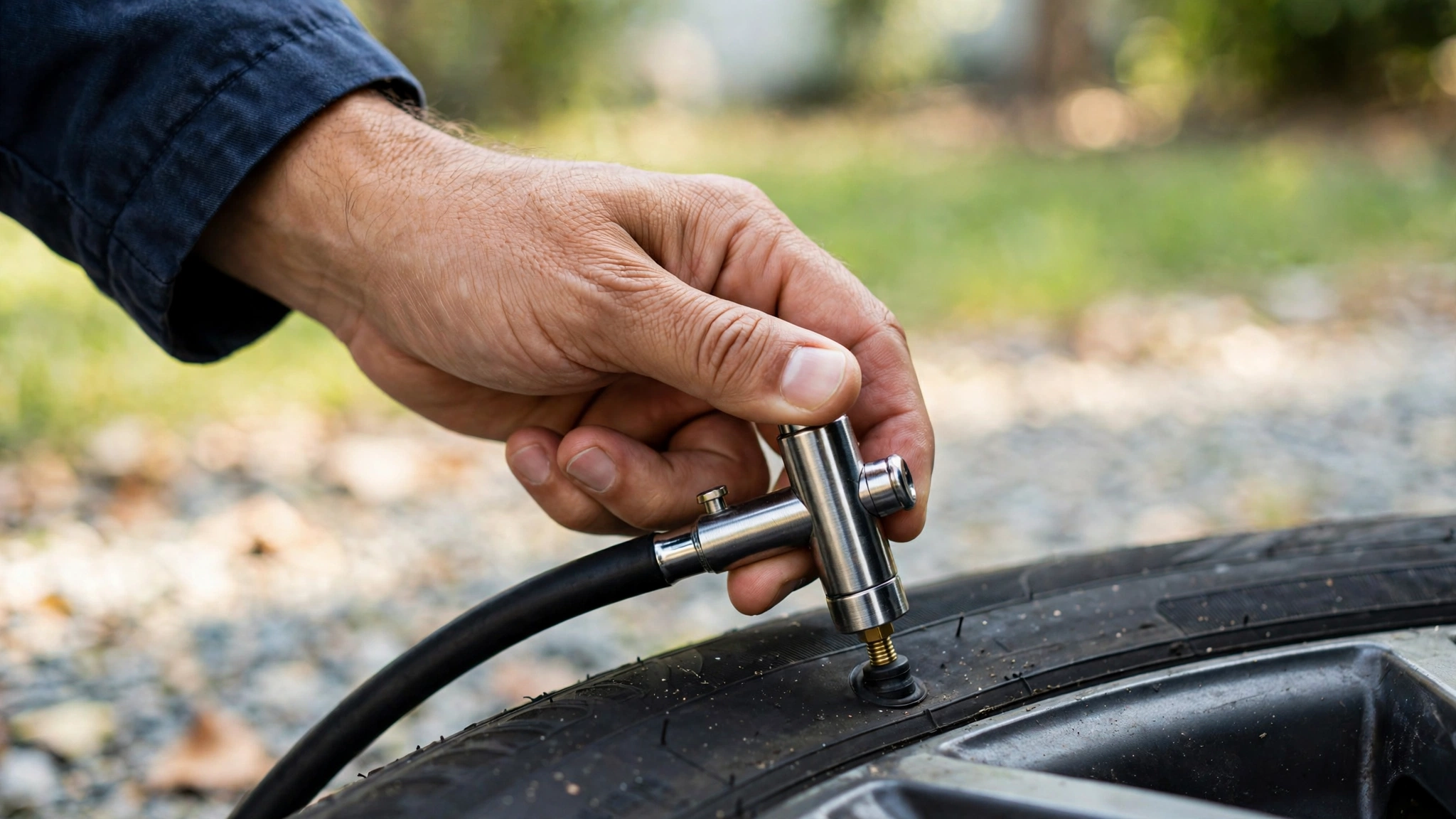
Every method below assumes the tires are already at the right pressure. Resetting with wrong pressures teaches the system the wrong baseline — on an indirect system, it will treat underinflated tires as “normal.”
- Check cold — parked at least three hours. Pressure rises as tires warm up, so a warm reading misleads you.
- Use a manual gauge. A few PSI of error is all it takes to keep the light on. Check every tire, plus the spare if your vehicle monitors it.
- Use the door-jamb placard, not the sidewall. The sidewall number is the tire’s maximum, not your target. The right number is on the driver’s door-edge label or in the owner’s manual — front and rear sometimes differ.
- Be precise. If the placard says 35 PSI, set 35. Some systems stay lit over a 2–3 PSI shortfall.
As NHTSA’s tire safety guidance notes, TPMS only warns when a tire is significantly underinflated — it’s not a substitute for checking with a gauge, including before a reset.
Method 1: The Drive-Cycle Reset

Many direct-TPMS vehicles recalibrate themselves once the sensors wake up and report correct pressures at speed. No button, no menu — just driving. Confirm placard pressure in all tires, then drive at a steady 30–50 mph for 10–30 minutes. The light should go off during or shortly after the drive. (The wheel sensors only transmit when spinning, which is why a parked reset attempt fails on these cars.) If the light is still on afterward, your car likely needs a manual method — or there’s a fault driving can’t fix.
Method 2: The TPMS Reset Button
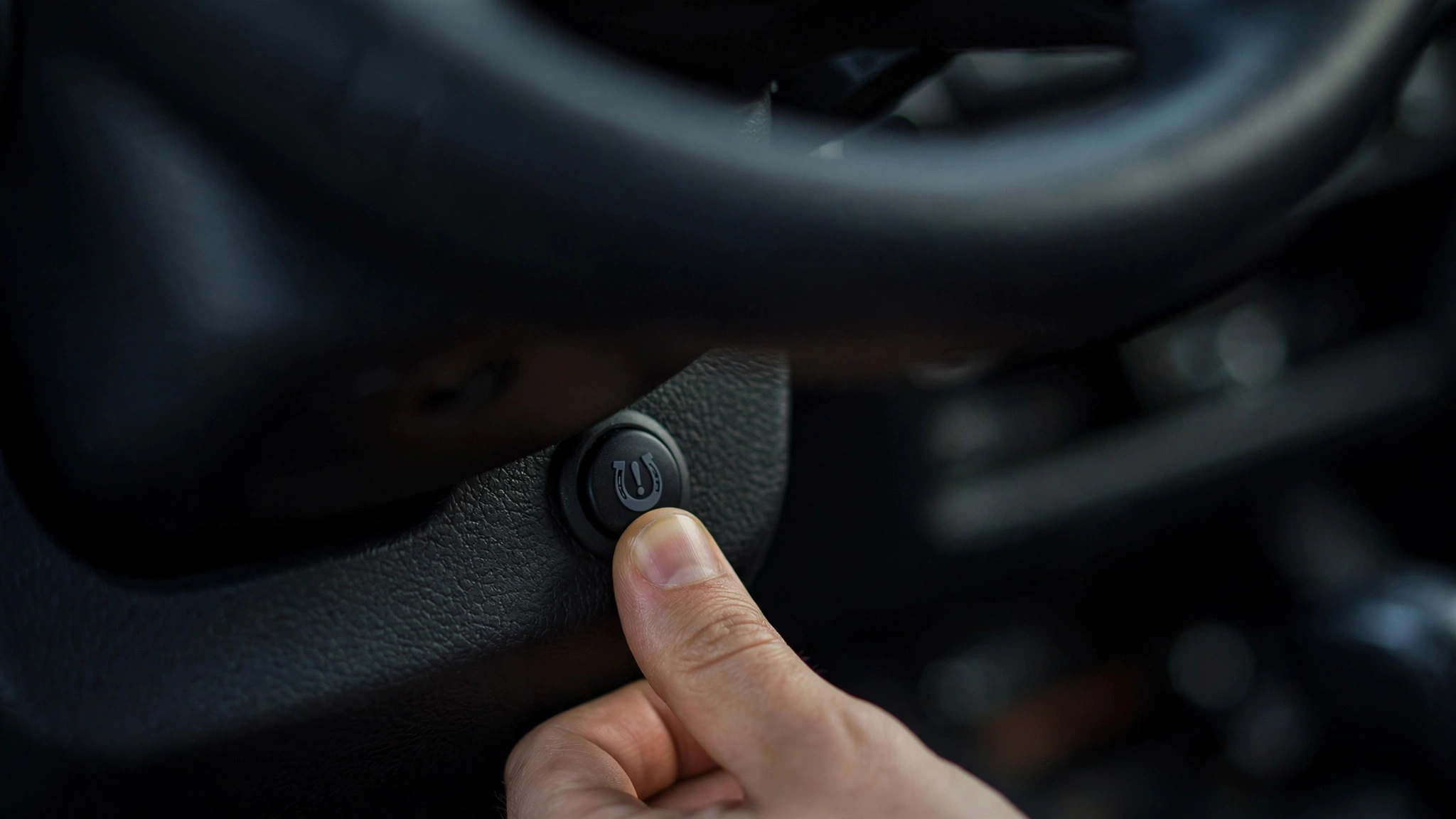
Many vehicles — especially Toyota, Lexus, and older Hondas — have a small physical reset button. Look low on the dashboard near or beneath the steering column, or inside the glove box, for the tire-pressure symbol (a horseshoe-shaped tire cross-section with an exclamation mark) or a “SET”/”TPMS” label. The location varies by model and year; your manual’s instrument-panel illustration pinpoints it.
With tires at the correct pressure, turn the ignition to ON without starting the engine. Press and hold the reset button until the TPMS light blinks — commonly three slow flashes — then release. Start the engine, let it run a few minutes, then complete the 10–30 minute drive cycle the manual specifies. The blinking light means the reset has started, not finished: drive off too soon and the calibration probably never completed.
Method 3: The Settings Menu Reset
Newer vehicles often bury the reset in the infotainment or instrument-cluster menu: look under Vehicle Settings → Tires or Tire Pressure for Calibrate, Initialize, or Store Pressures. Some Hondas, for example, use Vehicle Settings → TPMS Calibration → Calibrate.
With the car parked and power on as the manual instructs (engine running or accessory mode), open the tire-pressure settings, select Calibrate/Initialize/Store Pressures, and confirm. Then complete the 10–30 minute drive the manual specifies — on an indirect system this calibration drive is mandatory, because the car needs rolling data to learn the new baseline. No TPMS option in your menus? Your car either updates automatically (Method 1) or needs a relearn tool (Method 4).
Method 4: A TPMS Relearn Tool
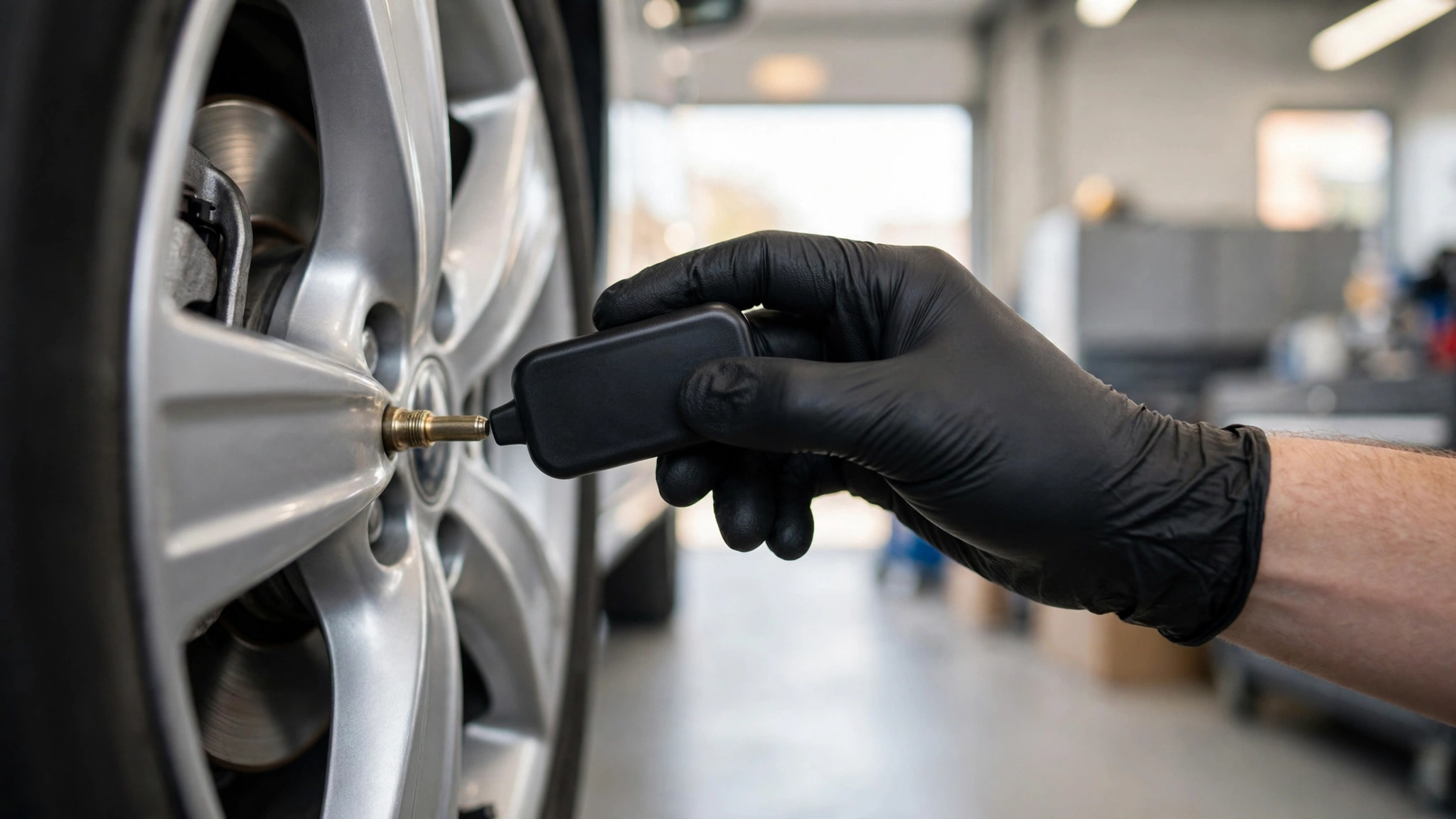
Some direct-TPMS vehicles need an actual relearn: the car goes into learn mode, and you trigger each wheel sensor one by one — usually in a set order like front-left, front-right, rear-right, rear-left — with a TPMS activation tool, the horn chirping to confirm each sensor. Writing sensor IDs to the car’s computer requires OBD-II capability; a basic engine-code reader won’t do it.
You’ll most likely need this after installing new sensors, swapping on a second set of wheels whose sensors were never programmed to the car, or rotating tires on vehicles that track wheel position. Relearn tools for specific makes are sold for DIY use, but the tool must support your exact vehicle and relearn type — most tire shops do this as routine, inexpensive work while the car is already on the lift.
Make-Specific Notes: GM, Ford, Toyota, Honda
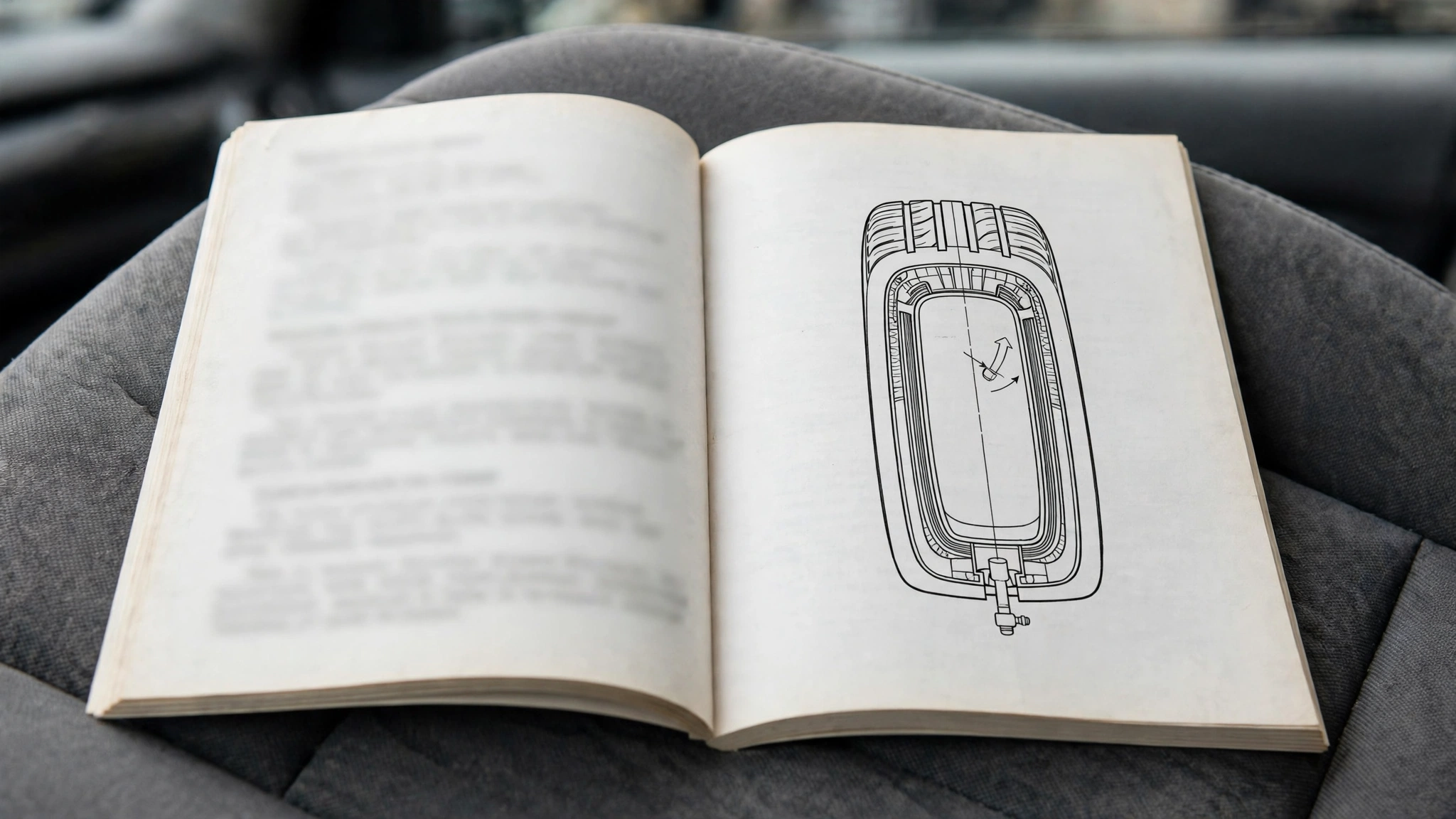
Procedures differ by make, model, and year. Treat these as typical patterns — then confirm against your owner’s manual.
GM (Chevrolet, GMC, Buick, Cadillac). Many GM vehicles use a horn-chirp relearn: enter learn mode via the dashboard menu or a key-cycle sequence, then trigger each sensor in order with a relearn tool — the horn honks once per sensor, twice when done. Most newer models effectively require the tool.
Ford. Most Fords clear a low-pressure warning with a drive cycle after proper inflation — a 10–30 minute drive at highway speed. Rotated or sensor-replaced trucks may need the dashboard relearn or a tool, depending on model year. Check the spare: some Ford trucks monitor it, and a low spare keeps the light on.
Toyota (and Lexus). The classic setup is the physical reset button, often low on the dash or near the glove box: ignition on, hold until the light blinks three times, then drive. On indirect-TPMS models, the button starts a calibration that needs a drive to finish. Newer Toyotas moved this into the multi-information display menus.
Honda (and Acura). Many Hondas with indirect TPMS use a calibration setting in the infotainment system instead of a button. After confirming, the car needs a sustained 10–30 minute drive at moderate speeds to finish learning. Skipping the drive is the top reason Honda owners think the reset “didn’t work.”
No universal procedure exists: two cars from the same brand, three years apart, can use completely different methods. The owner’s manual is the authoritative source — generic guides (this one included) get you most of the way there, but the manual gives the exact sequence.
What to Do When the Reset Doesn’t Work
Pressures set, right method tried, light still on? Check these in order:
- Recheck pressures cold, with the same gauge. Include the spare.
- Look for a leak. If a tire keeps losing air, no reset will hold — find the nail, bad valve stem, or bead leak first.
- Watch the startup pattern. Steady light = low pressure or an unfinished calibration. Flashing for 60–90 seconds at startup, then solid = a system fault (see our flashing tire pressure light guide).
- Confirm the relearn finished. The confirmation blink means the process started — skipping the required drive means it never finished.
- Consider sensor age. Direct-TPMS sensors run on sealed batteries lasting roughly 5–10 years. They don’t fade — they work, then die. A silent sensor on a 7+ year-old car means replacement: our TPMS sensor replacement cost guide puts it at typically $50–$250 per wheel, parts and labor included.
- Check tire sizes. On indirect systems, mismatched sizes confuse the wheel-speed comparison. All four should match the manufacturer’s spec — our tire size guide shows how to confirm.
If the light flashes at every startup, the tires hold pressure, and nothing above helped, get a TPMS scan at a tire shop. Their tool reads each sensor’s ID, battery status, and signal strength — it finds the failed part in minutes, which beats replacing good sensors by guesswork.
What NOT to Do
- Don’t disconnect the battery as a “reset.” It doesn’t fix low pressure, doesn’t register new sensors, and wipes your radio presets, clock, and learned engine settings for nothing.
- Don’t reset to silence a light you’re ignoring. The U.S. Tire Manufacturers Association warns that TPMS warnings can come too late to prevent tire damage — clearing the warning without checking the tires turns a slow leak into a blowout.
- Don’t learn the wrong baseline. Calibrating an indirect system with underinflated tires teaches the car that low is normal. Set pressures first, every time.
Frequently Asked Questions
Will the TPMS light reset itself?
Often, yes — on many direct-TPMS vehicles, the light goes off after you inflate the tires and drive 10–30 minutes. Indirect systems need you to start calibration manually.
How long does a TPMS reset take?
Starting a button or menu reset takes a minute or two; completing it takes a drive cycle — typically 10–30 minutes at steady speed.
Do I need a reset after a tire rotation?
On indirect TPMS, yes — recalibrate. On direct TPMS, the warning may clear on its own, but per-corner readings may point to the wrong wheels until a relearn is done.
Can I drive with the TPMS light on?
A steady light means check the tires as soon as safely possible. A flashing-then-solid light means the monitoring system itself has a fault; the tire may be fine, but you’ve lost the early warning for the next slow leak. Check pressures with a gauge before deciding.
The Bottom Line
Resetting TPMS is a two-part job: set pressures right first, then use your car’s method — usually a drive cycle, a dash button, or a menu setting. When the light won’t go off, it’s telling you something useful: a leak, a low spare, an unfinished calibration, or a dying sensor. Check with a gauge and you’ll rarely need more than one attempt.