
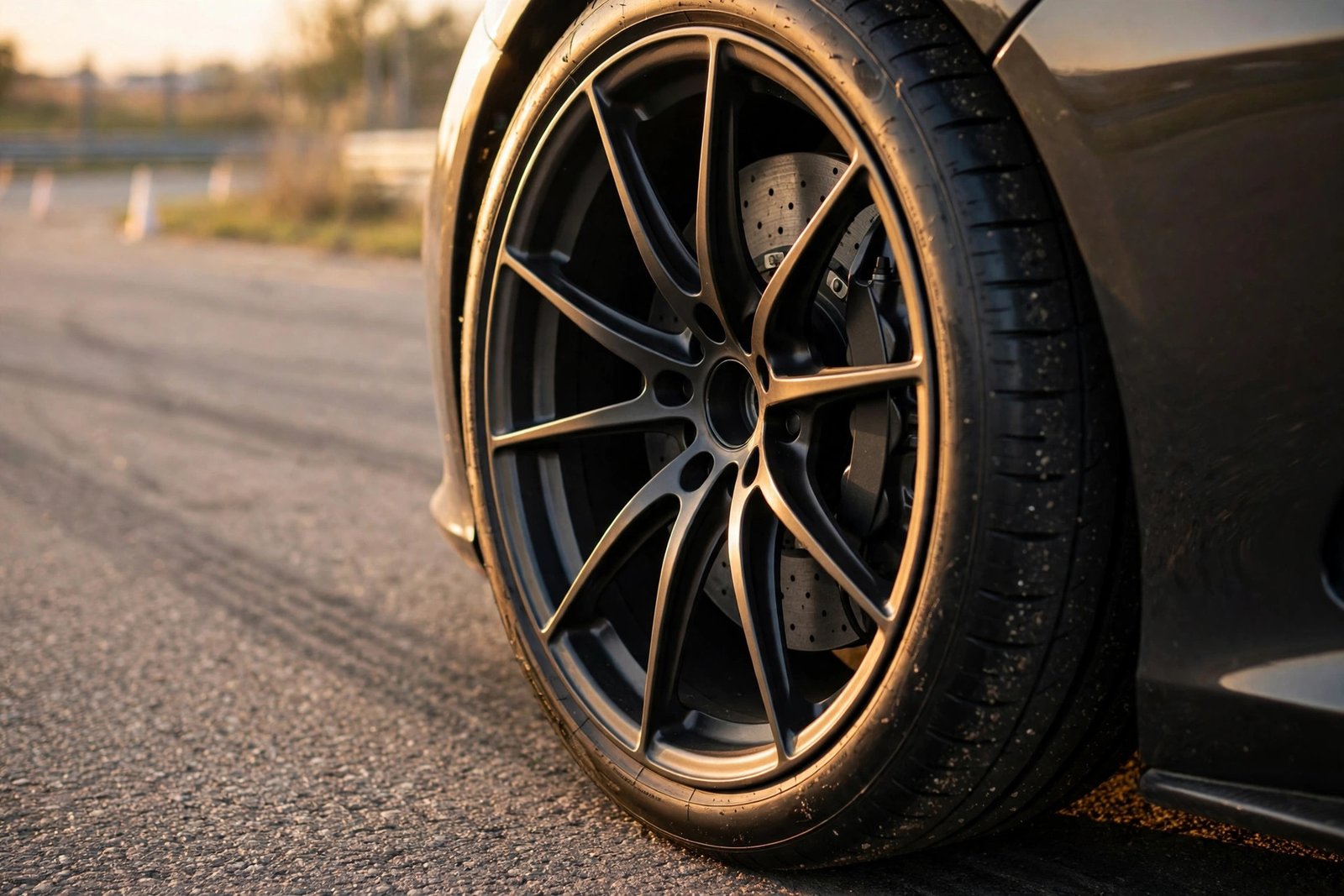
Quick answer: The Pirelli Cyber Tire puts a sensor inside each tire that reports pressure, temperature, tread wear, load, and grip to the car in real time. The car uses that data to warn the driver and to tune its braking and stability systems. In a 2026 demonstration reported by evo, it stopped a car 5.7 meters sooner from 68 mph in the wet. You cannot buy it for a regular car yet: it ships only as original equipment on prestige cars.
Pirelli Cyber Tire is the most developed smart tire system on a real car in 2026. It has shipped as standard equipment since 2021, integrates with the braking and stability systems of a production hypercar, and has been demonstrated stopping a car measurably sooner in the wet. But it lives on cars costing hundreds of thousands of dollars, needs software built into each car’s electronics, and has no version you can buy at a tire shop.
What the Pirelli Cyber Tire is
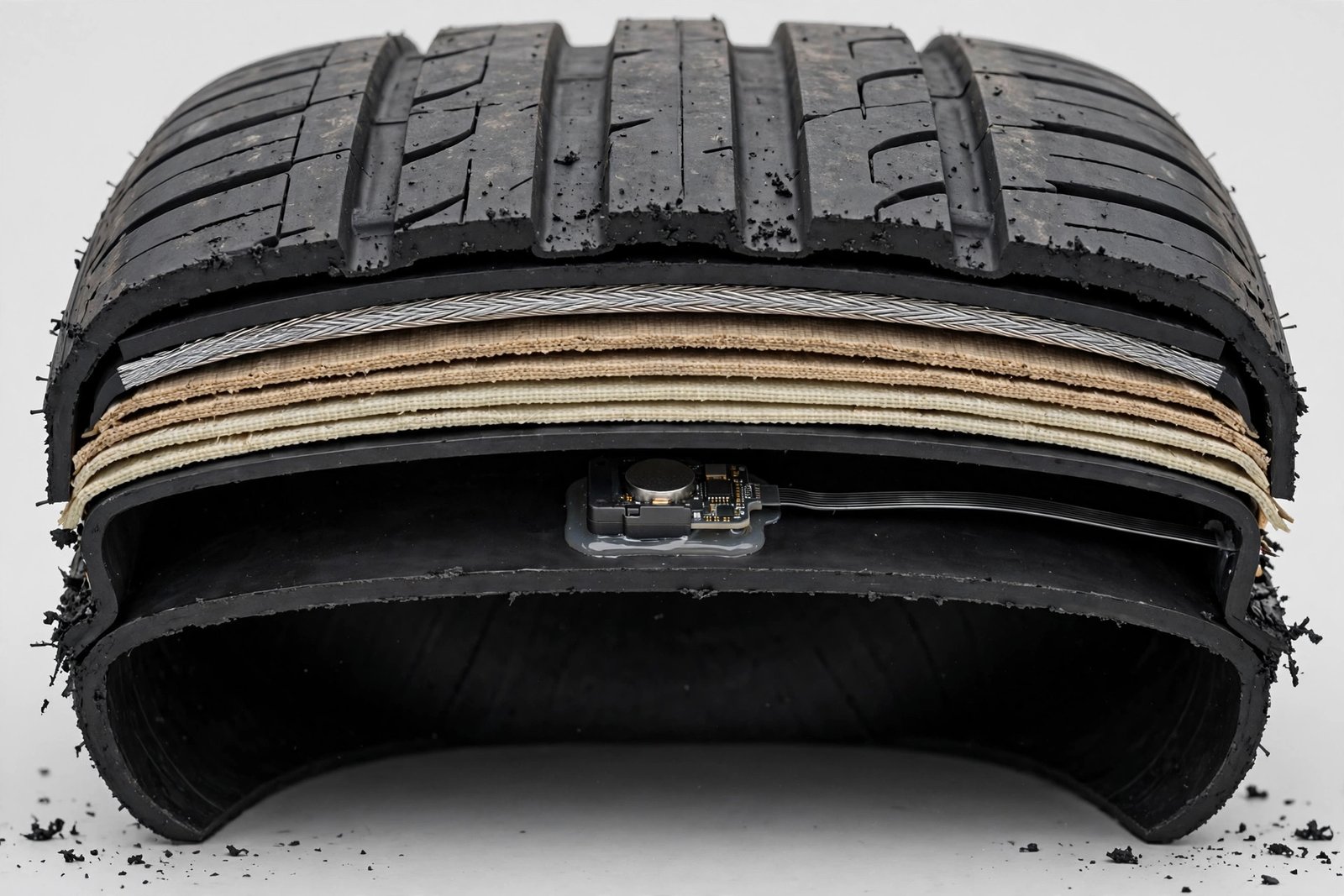
The system has two parts: hardware in the tire and software in the car. A small sensor is bonded inside each tire, and Pirelli software integrated into the car’s electronics processes the data. Some information reaches the dashboard; the rest calibrates alert systems and, in the newest installations, vehicle dynamics systems.
Until this system, a car knew nothing about its tires beyond a pressure warning: not the tire type, temperature, tread depth, or grip. The Cyber Tire system answers those questions continuously, from inside the tire, after two decades of development, according to evo.
One naming note, stated once and then set aside: Pirelli officially spells the product name “Cyber Tyre” in its own materials. This site uses US spelling, so this guide calls it Cyber Tire everywhere else, including the title. They are the same system.
The sensor: small, tough, and bonded to the tire
The figures below come from evo’s hands-on report of October 2026, the most detailed independent description published to date.
| Sensor specification | Figure | What it means |
|---|---|---|
| Weight | About 12 grams | Light enough not to disturb tire balance |
| Size | About a stack of three 10p coins | Small enough to live inside the air chamber |
| Mounting | Starfish-shaped base pad stuck inside the tire | Bonded to the tire, not the rim, for direct contact |
| Durability | Must withstand 3,000 g | Survives the forces of a spinning tire |
| Power | Battery-powered | Sealed battery, sized for the tire’s life |
| Transmission life | Around five years via Bluetooth | Matches roughly a tire’s service life |
| Sensors per car | One in each tire | Four sensors, each reporting its own tire |
| Receivers | One receiver or anchor per axle | Collects raw data close to the wheels |
Mounting matters as much as the numbers. Because the sensor sits in direct contact with the tire rather than the rim, Pirelli says its readings are more precise than a traditional valve-mounted sensor’s. A valve sensor measures the air. A tire-mounted sensor feels the tire itself: temperature, deformation through the contact patch, and vibrations revealing the road surface. That direct contact is what lets the system estimate tread wear and grip.
An early 2010 Pirelli design used a chip just over one cubic centimeter, self-powered by energy scavenging. Today’s battery-powered sensor is a later generation.
Battery life reflects sleep-and-wake design: the sensor rests while parked and works while the wheel turns. Around five years is roughly a set of tires’ service life, and the bonded sensor is replaced with the tire, unlike a TPMS sensor a shop can often service separately.
What it measures
The sensor measures some things directly and estimates others. Keeping the two apart matters, because the most impressive claims sit in the second group.
The tire’s “passport” is stored identity data: the type of tire, whether it is a summer or winter version, the prescribed pressure, the load index, and the speed rating. It answers a question no other system in the car can answer: what tires are fitted right now? When winter tires go on, the car knows, including the different speed rating, and can alert the driver when that tire’s maximum speed is reached.
Live readings start with temperature and pressure, plus tread wear, revolution count, and the vertical load and lateral and longitudinal forces on the tire. Tracking wear continuously lets the car warn before the legal limit and feed the wear state into braking calculations.
The most advanced output estimates available grip and hydroplaning risk: how much speed can be carried before hydroplaning, and how much grip remains before a skid. That is inference, not direct measurement. The sensor feels deformation, vibration, and forces; software concludes how much grip is left.
How the data flows, and the Bosch partnership
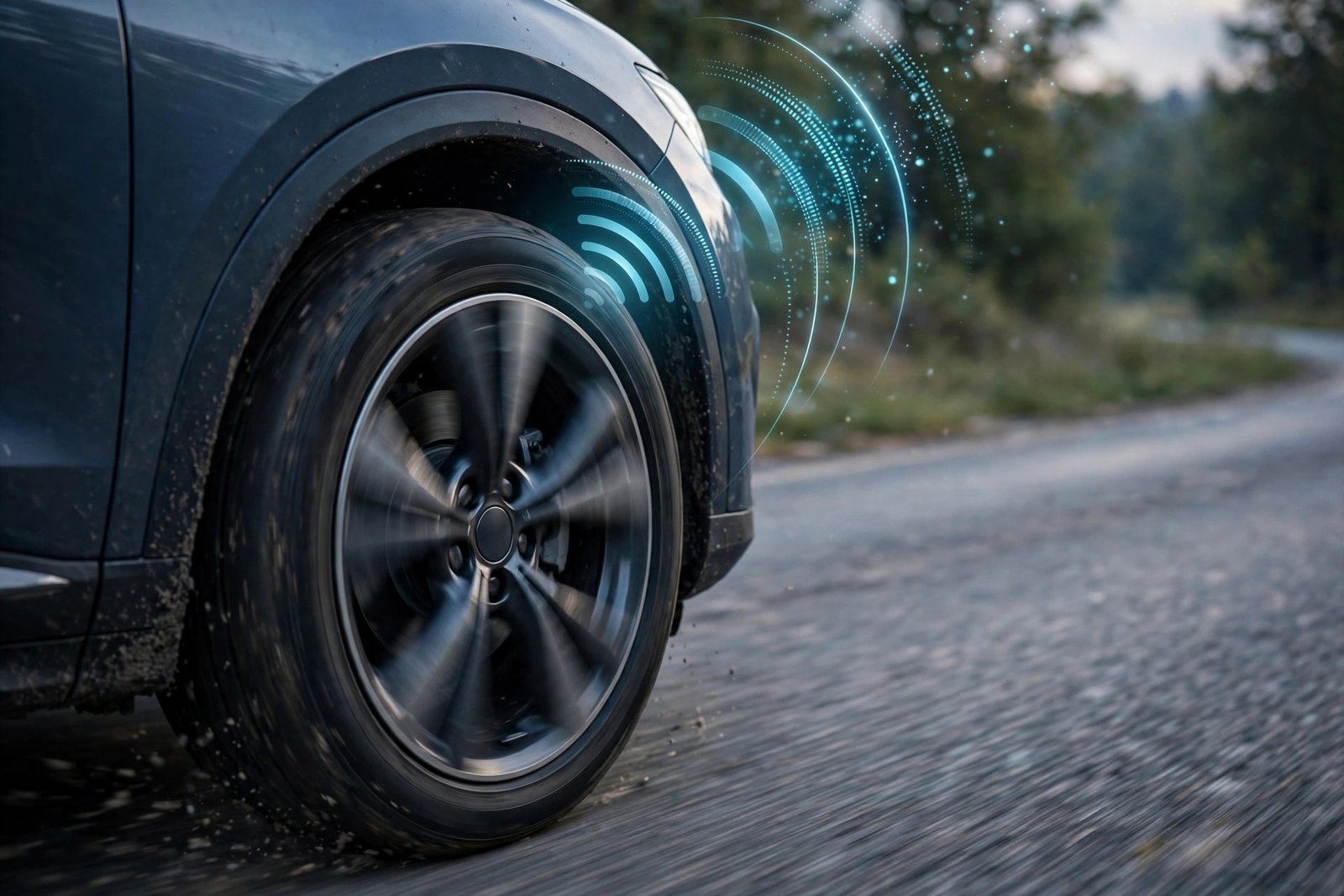
Data travels in four stages: each sensor transmits via Bluetooth Low Energy (BLE); a receiver per axle collects the raw data; algorithms combine Pirelli’s tire modeling with Bosch’s software to produce useful parameters; and those parameters reach the ABS, ESP, and traction control, which respond to the grip actually available.
The Bosch partnership exists because Pirelli makes tires, not braking systems. The two companies signed a joint development agreement on September 10, 2024. Bosch contributes systems expertise and MEMS sensor technology, including Bluetooth Low Energy tire pressure sensors; Pirelli contributes in-tire devices, algorithms, and tire modeling. Bosch had already built an ESP application for Pagani, and deeper integration came through Bosch Engineering.
As evo reports, Bosch will be the agent for the technology: for it to reach regular cars, it must fit any make of tire and integrate with any car’s systems, and that is Bosch’s business. Whether that happens, and how fast, is the open question.
Which cars have it
The list is short, and that shortness is informative. This is prestige-car technology in 2026, fitted as original equipment chosen by the car maker for a specific model.
| Car | Role | What is known |
|---|---|---|
| McLaren Artura | First standard fitment, February 2021 | First car with sensor-equipped tires as standard |
| Pagani Utopia Roadster | First dynamics integration | First model integrated with ABS, ESP, and traction control |
| Aston Martin (future models) | Confirmed, details undisclosed | Announced September 2025; no specific model revealed |
| Further premium and prestige models | In implementation | Pirelli says more models in these segments are following |
The McLaren Artura is the best documented. On February 17, 2021, Pirelli announced the first standard fitment of sensor-equipped tires, on the Artura hybrid supercar. Each sensor reports passport data plus live temperature and pressure. The Artura runs bespoke P Zero tires, 235/35Z R19 front and 295/35 R20 rear, in three types marked with an “MC-C” code.
The Pagani Utopia Roadster is the deeper integration: the first model integrated with the electronics governing vehicle dynamics. In May 2026, Pirelli drove one fitted with the system for more than 1,500 kilometers across Europe, from Pagani to Bosch Engineering to Pirelli, as described in Pirelli’s account of the journey. The system lets the car limit torque to the grip available, for example on cold tires. Its P Zero Corsa tires are 265/35 R21 front and 325/30 R22 rear, according to The Drive.
Aston Martin is confirmed and least detailed. In September 2025, Pirelli announced it would use the technology on future models, the first maker to take it beyond single hypercars. No model, date, or function list has been published, and any claim naming a specific model is speculation until confirmed.
Pirelli announced in May 2026 that production will soon begin in the United States, at its Rome, Georgia plant. The system was also named the most innovative tire technology at the 2025 AutoTech Breakthrough Awards, according to Autoblog.

What the evo test found
The strongest public evidence comes from evo’s report of October 9, 2026, based on demonstrations Pirelli arranged at its Vizzola test track near Milan. Pirelli organized the tests and chose the conditions; evo’s journalists drove and reported what happened. That is first-hand reporting, not an independent comparison test.
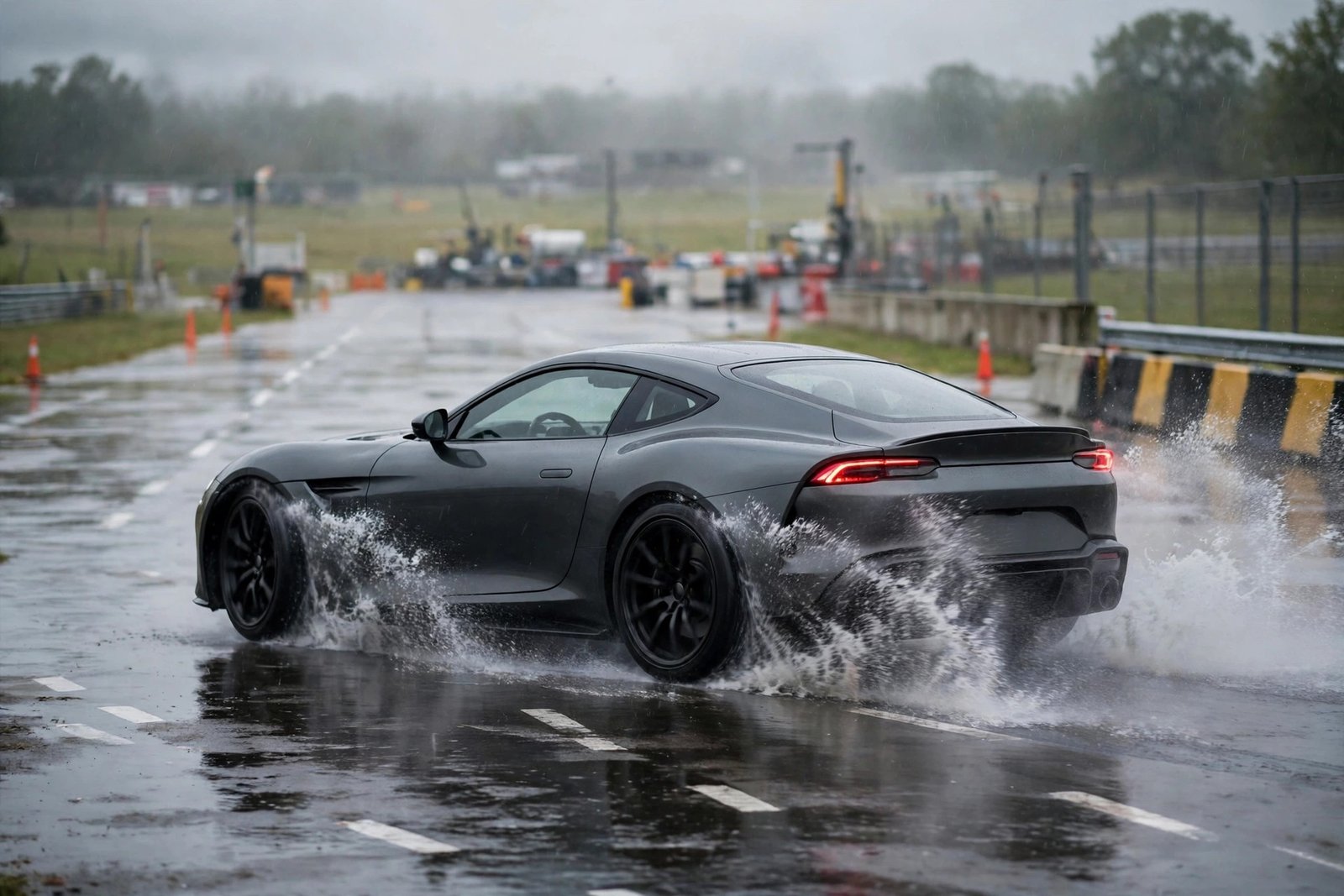
The headline result was wet braking, measured from 68 mph (110 kph) with the test car on winter tires, a higher start speed than evo’s usual 50 mph test. With the system on, the car stopped 5.7 meters sooner, about 18.7 feet. Evo’s explanation: real-time tire data let the braking system go straight to the available grip and hold it there.
The aquaplaning demonstration was more striking. In about 7 mm of water, the car carried straight on when the driver steered with the system off, but could steer with it on: the system knew the fronts were riding on water while the rears had some contact, and used the rear brakes to slow and steer. A third demonstration showed torque limiting keeping the Pagani in check on cold tires.
The caveats: one track, one set of conditions, winter tires, and a single braking figure with no published variation. The 5.7-meter figure is the right number to quote with its context attached: evidence that tire data can improve braking, not a promise for every car and condition.
CyberFleet: the same idea for trucks
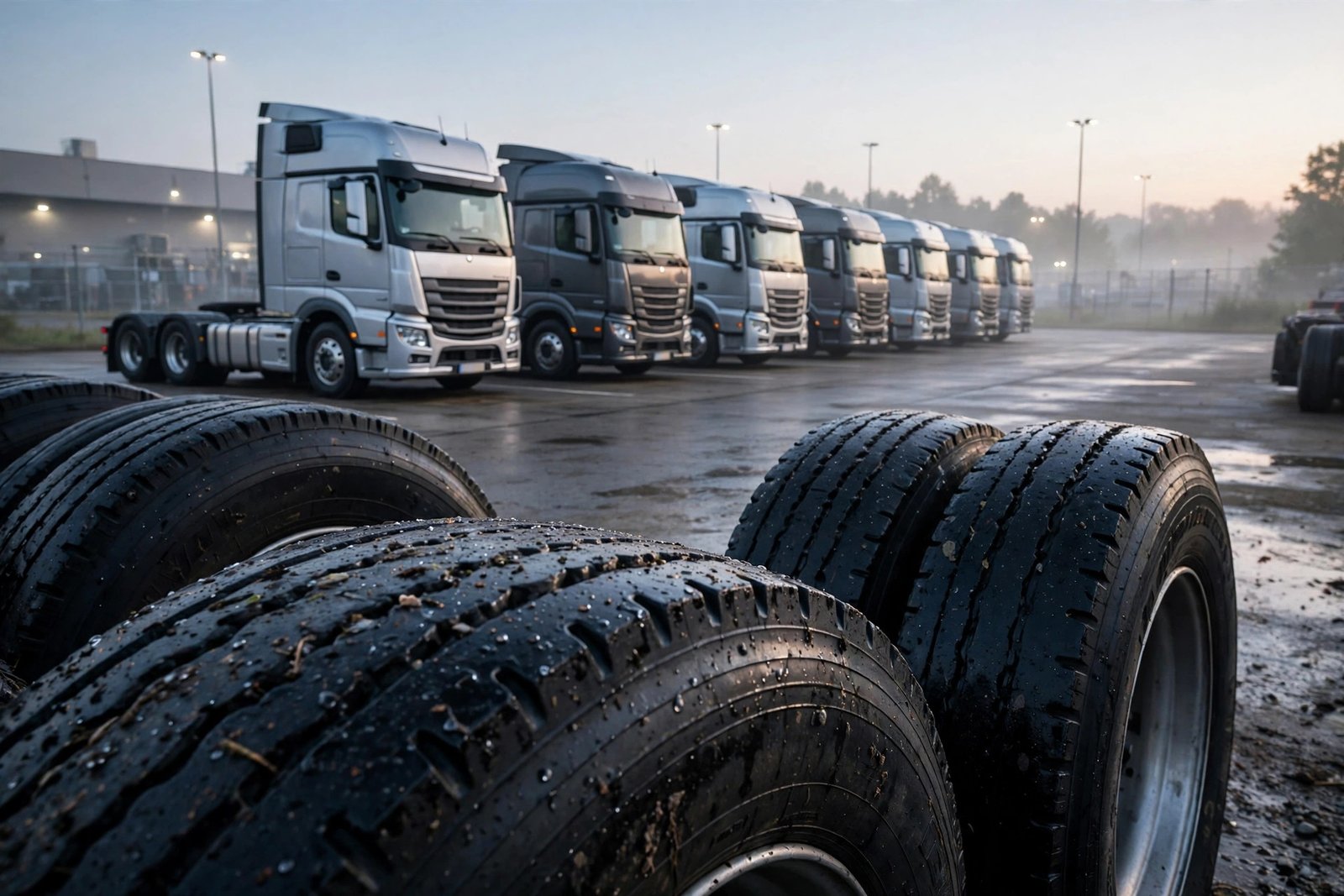
CyberFleet is Pirelli’s fleet system for commercial vehicles, working on trucks long before supercars. A tire-mounted sensor developed with Schrader Electronics, fitted inside the tire, collects pressure, temperature, and identity data in real time for the driver and fleet manager.
In static mode, a handheld reader downloads stored data while the vehicle is parked. In dynamic mode, telematics integration transmits live to a central database for reports and alerts, with track-and-trace recording distance and speed per vehicle.
CyberFleet was tested from early 2012, covering around 7 million test kilometers on 176 tires fitted to 28 vehicles before its Brazilian launch that November, and has been used by fleets in Europe and South America since. Pirelli’s 2012 claim of up to 1,000 euros saved per vehicle per year is a dated manufacturer claim, not a current verified figure. For fleets, tire data pays for itself through fuel and maintenance savings.
Can a regular driver get it?
No, not in 2026. There is no retail version, and no aftermarket kit can add the full system to an existing car: it needs software integrated into the car’s electronics and calibration specific to each model, arriving as a package chosen by the car maker.
The path to regular cars runs through Bosch, fitting the technology to any make of tire and any maker’s systems. CAR magazine expected a rollout to higher-volume cars around 2028, but that is a magazine expectation, not a commitment, and no mainstream model has been announced.
While waiting, keep the tire sensing system you already have working. Check pressures regularly, watch for the signs of a bad TPMS sensor, know how long TPMS sensors last, and understand TPMS replacement cost before a shop quotes you. The Cyber Tire system is the future of tire sensing. TPMS is the present, and it is the system keeping you safe today.
Direct TPMS warns when pressure falls at least 25% below the recommended cold pressure; indirect TPMS infers low pressure from wheel speeds. Both catch underinflation and nothing more. The Cyber Tire system adds identity, temperature, tread wear, load, forces, and grip estimates, feeding braking, stability, and traction systems. TPMS how-tos are covered elsewhere, including how to reset TPMS.
Verdict: real technology, narrow reach, worth watching
The Pirelli Cyber Tire is the real thing. A sensor bonded inside the tire, weighing about 12 grams and built to survive 3,000 g, reports pressure, temperature, tread wear, load, and identity via Bluetooth to receivers on the car. Bosch software turns that data into parameters for braking, stability, and traction systems. It shipped as standard equipment on the McLaren Artura in 2021, integrates with the full dynamics system on the Pagani Utopia Roadster, and in a 2026 demonstration stopped a car 5.7 meters sooner from 68 mph in the wet.
The reach in 2026 is narrow: three car makers, a handful of prestige models, no retail availability, no mainstream date. The future depends on cost, on Bosch’s cross-brand work, and on car makers judging the benefit worth the integration effort. The direction is real; the timeline is not.
For most drivers: admire it, understand it, and do not wait for it. Tires at the right pressure with healthy tread, plus working TPMS, deliver most of the safety benefit available right now. When tire sensing reaches ordinary cars, it will arrive as standard equipment.
Frequently asked questions
What is the Pirelli Cyber Tire?
The Pirelli Cyber Tire is a tire with a sensor bonded inside it, linked to software in the car. The sensor measures pressure, temperature, tread wear, load, and the tire’s own identity, and sends that data wirelessly to the car’s electronics. The car uses it for dashboard warnings and, in the most advanced installations, to calibrate anti-lock braking, stability control, and traction control to the grip actually available.
Which cars have Pirelli Cyber Tire?
The McLaren Artura was the first car to get the system as standard equipment, in February 2021. The Pagani Utopia Roadster was the first car to integrate it with the vehicle dynamics systems governing braking, stability, and traction. Aston Martin has confirmed it will use the technology on future models, with details still undisclosed. Pirelli says the system is being implemented on further models in the premium and prestige segments.
How much shorter did the Cyber Tire stop in the evo test?
In a Pirelli-arranged demonstration at the Vizzola test track near Milan, reported by evo in October 2026, the test car on winter tires stopped 5.7 meters sooner from 68 mph (110 kph) with the system active than without it. The same demonstration included an aquaplaning test in about 7 mm of water, where the car could still steer with the system on. This was a manufacturer demonstration, not an independent comparison test.
Can I buy Pirelli Cyber Tire tires for my car?
No, not as a retail purchase in 2026. The system is fitted as original equipment on a small number of new prestige cars, with software built into each car’s electronics. There is no aftermarket kit that adds the full system to an existing car. Pirelli has said production of the system will soon begin in the United States at its plant in Rome, Georgia, and Bosch will act as agent for wider adoption, but no date for regular cars has been announced.
Is the Pirelli Cyber Tire the same as TPMS?
No. TPMS watches tire pressure and warns you when a tire is significantly underinflated. The Pirelli Cyber Tire measures pressure and temperature too, but adds tread wear, load, forces, tire identity, and grip estimates, and feeds that data to the car’s braking and stability systems. A car with the Cyber Tire system still has pressure-warning functionality; the Cyber Tire builds on that foundation rather than replacing it.
What is Pirelli CyberFleet?
CyberFleet is Pirelli’s fleet version of the same idea: a tire-mounted sensor inside commercial vehicle tires monitors pressure, temperature, and tire identity in real time, sending data to the driver and the fleet manager. It works in static mode, where a handheld reader collects data while the vehicle is parked, or dynamic mode, integrated with a telematics system for live transmission. It has been used by fleets in Europe and South America since the early 2010s.