
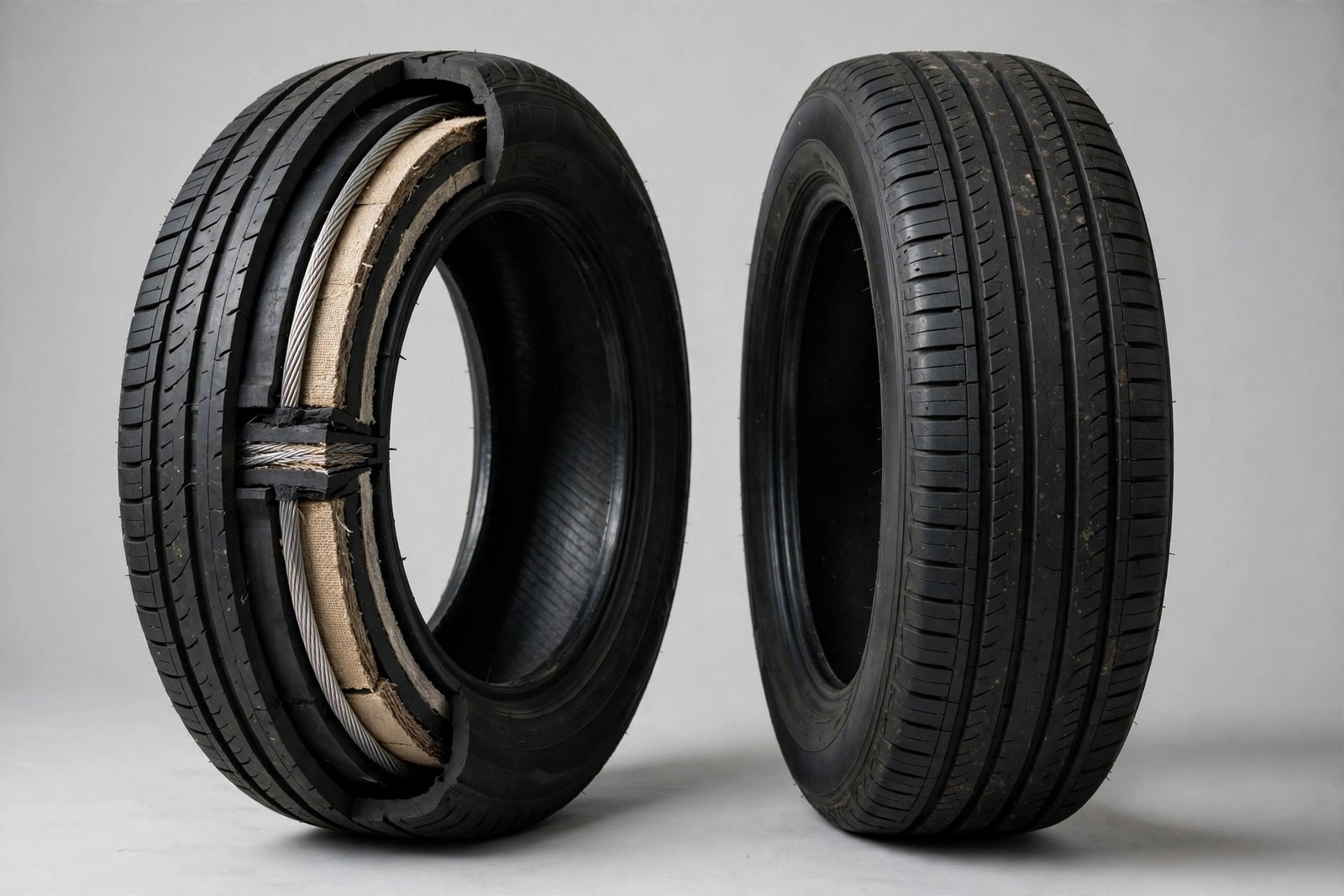
Quick answer: Run-flat tires let you keep driving up to 50 miles at up to 50 mph after a puncture, so you never have to change a tire on the side of the road. Regular tires cannot do that — when they go flat, you stop. That safety net costs real money: run-flats typically cost 30% to 50% more per tire, ride stiffer and noisier, wear out faster, and usually cannot be repaired. If your car came with run-flats from the factory, stick with them. If it did not, regular tires are the better buy for most drivers in 2026.
A flat tire is never convenient — worst of all on the shoulder of a busy highway at night, with trucks passing a few feet away. That is the exact moment run-flat tires were invented for.
But run-flats are not simply “better tires.” They are a trade-off: you pay more upfront and again after a puncture, your ride gets firmer, and your tires may not last as long — in exchange, a puncture stops being an emergency. This guide compares the two as a buyer needs it: how each works, what each costs, how they ride, whether they can be fixed, and which fits your car.
What Are Run-Flat Tires?
Run-flat tires — also called RFTs or zero-pressure tires — are built to keep supporting your car’s weight after they lose all their air pressure.
A regular tire is basically a rubber balloon. Pressurized air holds the car up. When the air escapes, the thin sidewalls collapse, the tire folds onto the rim, and you have to stop right away — driving on it would shred the tire and damage the wheel.
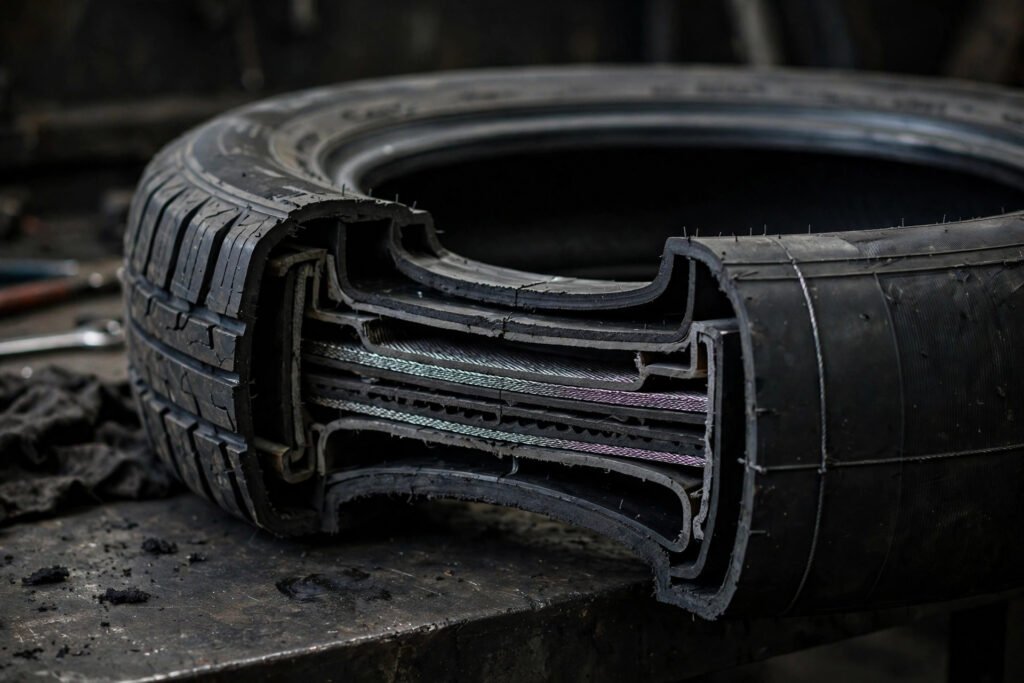
A run-flat changes what happens next. Its sidewalls are much thicker and stiffer, made from harder rubber compounds. When the air is gone, they hold the tire’s shape and carry the load — you lose pressure, but not the tire or control of the car. In short, a run-flat buys you time and distance after a puncture, so you can reach a shop instead of stopping where it happened.
The three types of run-flat tires
Most drivers will only ever meet the first type, but it helps to know all three:
1. Self-supporting run-flats. The common type. Reinforced sidewalls carry the car after pressure loss. Bridgestone, Michelin, Continental, Pirelli, and Goodyear all make these, and this is what the rest of this article means by “run-flat.”
2. Self-sealing tires. A sticky sealant layer inside plugs small punctures before much air escapes. They still need air to work, so they are not the same as a self-supporting run-flat.
3. Support-ring systems. An internal ring on the wheel carries the car’s weight if the tire deflates. Rare on ordinary passenger cars; more common on premium and military vehicles.
How far can you drive on a run-flat tire?
The standard rating, repeated by Bridgestone and nearly every other maker, is up to 50 miles at up to 50 mph after a complete loss of air pressure (80 km at 80 km/h). Your exact limit depends on the tire model, load, speed, and heat buildup. Treat both numbers as ceilings, not targets: drive slower if you can, head for the nearest tire shop, and never stretch a run-flat past its limit.

How do you know if your car has run-flat tires?
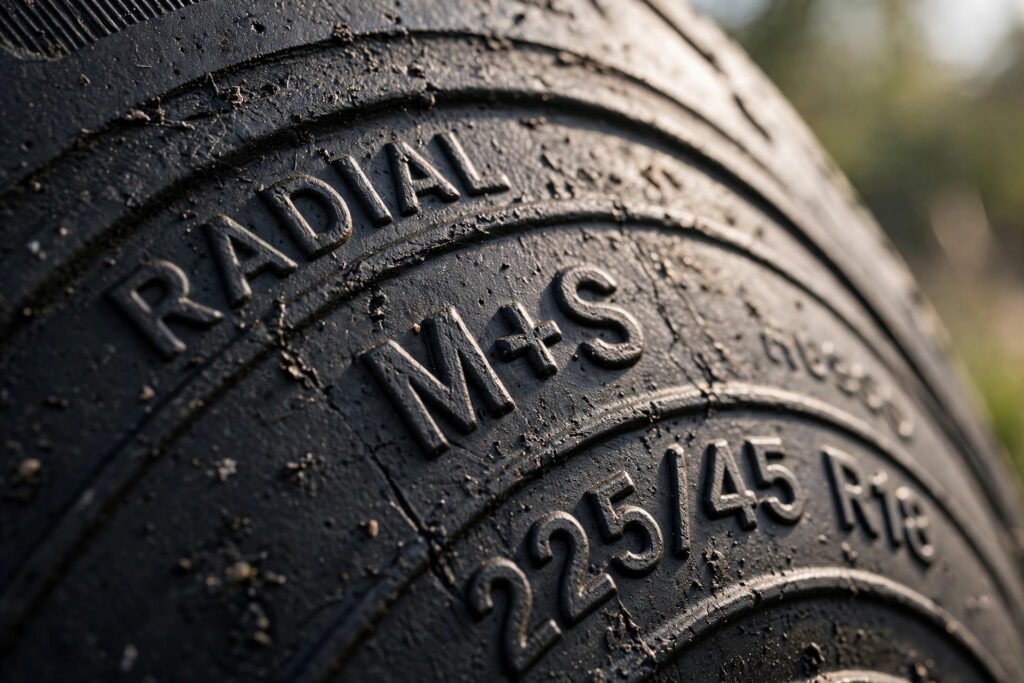
Check the sidewall for RFT, SSR, ROF, ZP, or RSC (BMW’s label); BMW-approved tires also carry a star marking. If unsure, check your owner’s manual — and learn what tire numbers mean before you shop.
What Are Regular Tires?
Regular tires — also called conventional or standard tires — rely entirely on air pressure to support the vehicle. No air, no support. That is their only real weakness, and it is a big one in the wrong moment.
Everything else is an advantage. They are simpler to make, so they cost less and come in far more sizes. Their flexible sidewalls soak up bumps and noise, so they ride softer and quieter. They run cooler, so they usually last longer. And a nail in the tread can usually be patched for around $20 to $30.
The catch is what happens when one goes flat. You stop — or you should. A tire that deflates quickly can drop one corner suddenly, pull the steering hard, and leave you changing a tire on the shoulder. That is why every car with regular tires needs a backup plan: a spare and a jack, a compact temporary spare, or at least a repair kit and a pump. If your car has no spare, read our guide to what to do when you get a flat tire with no spare before you need it.
Run Flat Tires vs Regular Tires: Head-to-Head Comparison
| Feature | Run-Flat Tires | Regular Tires |
|---|---|---|
| Drive after a puncture | Yes — up to 50 miles at up to 50 mph | No — stop immediately |
| What holds the car up | Reinforced sidewalls | Air pressure only |
| Spare tire needed | Usually no | Yes, or a repair kit |
| Average cost per tire | $150–$250+ | $90–$160 |
| Price premium | Roughly 30–50% more | Baseline |
| Ride comfort | Stiffer, firmer, more road noise | Softer, quieter, more cushioned |
| Tread life | Shorter — 30,000–45,000 miles | Longer — 45,000–65,000 miles |
| Repair after a puncture | Usually not repairable | Often repairable (tread punctures) |
| TPMS required | Yes — mandatory | Recommended (standard on US cars after 2008) |
| Handling after a flat | Stable — keeps its shape | Unstable — corner drops, steering pulls |
| Weight | Heavier | Lighter |
| Choice of sizes and models | Limited — sometimes special order | Huge — nearly every size and type |
| Factory fitment | Standard on most BMWs, MINIs, some Mercedes and Cadillacs | Standard on most other cars |
In short: run-flats win on safety and convenience after a puncture; regular tires win on almost everything else.
Pros of Run-Flat Tires
No roadside tire change. Changing a tire on a busy interstate shoulder is dangerous, especially at night or alone. A run-flat lets you drive calmly to the next exit, a gas station, or home instead. For drivers who travel alone often, that alone can justify the price.
Better stability when a tire loses air. A regular tire that blows out can drop one corner suddenly at highway speed. A run-flat keeps its shape, so the car stays level and you keep more steering control — most important on a front tire.
No spare tire needed. Cars fitted with run-flats from the factory usually come with no spare at all. That frees up trunk space and cuts weight — roughly 15 to 25 kg for the spare, jack, and tools — and gives carmakers more freedom in trunk and cabin design.
No emergency roadside call for a flat. If you commute long distances or drive for work, run-flats cut out the wait for roadside assistance after a simple puncture. On road trips through rural areas, where the next tire shop might be an hour away, that peace of mind is a genuine buffer.
Cons of Run-Flat Tires
They cost a lot more. Expect roughly 30% to 50% more per tire, and in some sizes far more. CarGurus gives one example: a 245/35ZR-19 Michelin Pilot Sport 4S costs about $325 on Tire Rack, while the run-flat version costs about $362 — and for other tires the gap can be $150 to $200 or more per tire. Across four tires, that is often an extra $200 to $400.
A stiffer, noisier ride. The reinforced sidewall is stiff by necessity, and that stiffness is with you on every mile. It transmits more bumps, vibration, and road noise into the cabin. Tire Rack’s testing of Bridgestone’s third-generation run-flat found the same trade-off, though newer designs have narrowed the gap. Regular tires are still the quieter, cushier option.
Most punctures mean a full replacement, not a repair. A nail in a regular tire is often a $20 to $30 patch. A run-flat driven on while deflated usually cannot be repaired, because the damage is often internal and invisible, and most makers and shops will not guarantee a repair — trying can void the warranty. Bridgestone and Michelin allow repairs only under strict conditions for specific models. For most drivers, one puncture means a new tire at $150 to $500.

Shorter tread life. The stiff construction generates more heat and friction, so run-flats wear faster — roughly 30,000 to 45,000 miles, against 45,000 to 65,000 for comparable regular tires. A 2013 J.D. Power study of over 30,000 owners found run-flats lasting about 6,000 fewer miles, with 31% of run-flat owners having already replaced at least one tire, against 19% of conventional-tire owners.
Pros and Cons of Regular Tires
Regular tires win on cost, comfort, lifespan, repairability, and selection. They are cheaper, softer and quieter, usually longer-lasting, and easy to patch when a nail lands in the tread. If you need winter capability, compare options in our all-season vs winter tires guide.
Their downside is the flat itself. A regular tire that loses air cannot keep going, and a rapid deflation can pull the car hard to one side. You need a plan: a spare, a repair kit, or roadside assistance. If you do not know how yet, learn how to change a flat tire and how to put on a spare tire before you need those skills at night on a highway. If you have no jack, our guide to changing a tire without a jack covers the workarounds. A spare, jack, and tools also take up trunk space and add weight.

How Much Do Run-Flat Tires Cost?
Here is what to expect in the US, based on prices reported by tire reviewers and retailers:
- Entry-level run-flats: about $120–$160 per tire
- Mid-range run-flats: about $160–$220 per tire
- Premium / performance run-flats: about $220–$350 or more per tire
- Full set of four, installed: roughly $800–$1,100 for mid-range tires, and $800–$2,200-plus before installation across the wider market, depending on size and brand
Add installation ($15–$30 per tire), balancing ($10–$15 per tire), and any TPMS reset, and the bill climbs further — against roughly $90–$160 per comparable regular tire.
But the purchase price is only half the true cost. After a puncture, a regular tire is often a $20 to $30 repair, while a run-flat is often a $150 to $500 replacement. Add the shorter tread life, and owning run-flats over five years can cost several hundred dollars more.
That does not make them a bad buy — it makes them a buy to go into with your eyes open. The money buys safety and convenience, not savings.
The TPMS Rule: Run-Flats Only Work With a Warning System
Here is a safety point every top guide stresses, and it is non-negotiable: a run-flat tire must always be paired with a working Tire Pressure Monitoring System (TPMS).
The reason is simple: a deflated run-flat still looks normal and drives almost normally, because the stiff sidewall hides the usual warning signs — no visible sag, no dramatic handling change. Without TPMS, you might not realize you have a flat and keep driving at full highway speed on a tire rated for only 50 miles at 50 mph.
All US cars built after 2008 must have TPMS, so most drivers are covered — but verify yours works before relying on run-flats, especially on an older car. Learn when to change your tires and the warning signs to watch for so a slow leak never becomes a surprise.
Can You Switch From Run-Flats to Regular Tires?
Yes — many BMW owners do exactly that, for a softer ride and lower replacement costs. But do it properly:
- Replace all four at once. Never mix run-flats and regular tires — the different sidewall stiffness upsets handling, braking, and stability.
- Match the original size, load index, and speed rating in your owner’s manual.
- Sort out your backup plan first. Your car probably has no spare or jack, so buy a spare kit, a compact temporary spare, or a repair kit with a pump — and know how to use it.
- Check your TPMS works with standard tires too.
- Check your warranty and lease. Some require run-flats, and leased BMWs often need the originals reinstalled before turn-in.
The reverse switch is trickier: cars built for run-flats usually have suspension tuned for the stiffer sidewalls, so fitting run-flats to a car designed around soft regular tires makes the ride penalty worse. Check your owner’s manual and talk to a tire shop before switching either way.
Who Should Buy Run-Flat Tires?
Choose run-flat tires if: your car came with them from the factory (BMW, MINI, some Mercedes and Cadillacs) — your suspension is tuned for them and your car has no spare-tire well; you often drive alone, at night, or on highways where stopping is unsafe; you take long rural road trips far from tire shops; trunk space matters; or you would rather pay more than ever change a tire yourself.
Choose regular tires if: your car came with them (most cars); budget matters; ride comfort and quiet matter on rough roads; you can change a tire or carry a spare and repair kit; or you drive an uncommon size or a truck, where run-flat choices are thin.
A simple rule of thumb: if your car came with run-flats, keep them. If it came with regular tires, keep those. The factory chose the tire type to match the car’s suspension, weight, and storage — fighting that choice usually costs money and comfort for little benefit.
What to Do When a Run-Flat Tire Goes Flat
Even with run-flats, a puncture needs action — just not immediately, and not on the shoulder. Once the TPMS light comes on, ease off the gas, stay under 50 mph, and drive to the nearest shop or home if closer, aiming for well under 50 miles. Get the tire inspected promptly and expect a replacement, not a repair, and replace it with the same type.
Verdict: Which Should You Buy in 2026?
For most drivers, regular tires are still the smarter buy in 2026. They cost less, ride better, last longer, can be repaired cheaply, and come in far more choices. With a spare or a repair kit — and the knowledge to use them — they cover the flat-tire problem for a fraction of the price.
Run-flats earn their premium when stopping for a flat is dangerous, difficult, or impossible. If your car came with them, you drive alone at night, or you travel far from help, that safety net is worth the premium — and newer designs have narrowed the ride-comfort gap.
So the answer is not which tire is better in general — it is which is better for your car, your roads, and your tolerance for a roadside tire change. Match the tire to the car it came on, keep your TPMS working, and never mix the two types.
Frequently Asked Questions
How far can you drive on a run-flat tire after a puncture?
Most run-flats are rated for up to 50 miles at up to 50 mph after losing air pressure, according to Bridgestone. Treat both numbers as maximums — the exact limit depends on your tire model, load, speed and heat.
Can run-flat tires be repaired after a puncture?
Usually no. Most makers and shops recommend replacing a run-flat driven on while deflated, because of hidden internal sidewall damage. Bridgestone and Michelin allow repairs only under strict conditions for specific models. A regular tire with a small nail in the tread can often be patched for around $20 to $30.
Are run-flat tires worth it?
Yes, if your car came with them, you often drive alone at night or on highways, or you have no spare and no room for one. For most budget-conscious drivers, regular tires plus a spare or inflator kit are better value — cheaper, softer-riding, and longer-lasting.
Can you replace run-flat tires with regular tires?
Yes, in most cases — but replace all four at once, match the original size, load index and speed rating, and make sure your TPMS works. You will also need a backup plan for flats, since your car probably has no spare. Check warranty and lease terms first; leased BMWs often need the original run-flats reinstalled before return.
Can you mix run-flat tires and regular tires?
No. Mixing them on the same vehicle — even on different axles — is not recommended by makers and safety bodies. The stiffer run-flat and softer regular sidewalls handle differently, which can upset braking, steering and stability. Always fit four tires of the same type.
Do run-flat tires wear out faster than regular tires?
Yes, in most cases. The stiffer sidewalls generate more heat and friction. Reported typical ranges are roughly 30,000 to 45,000 miles for run-flats versus 45,000 to 65,000 miles for comparable regular tires, depending on the model, driving style and maintenance.
