

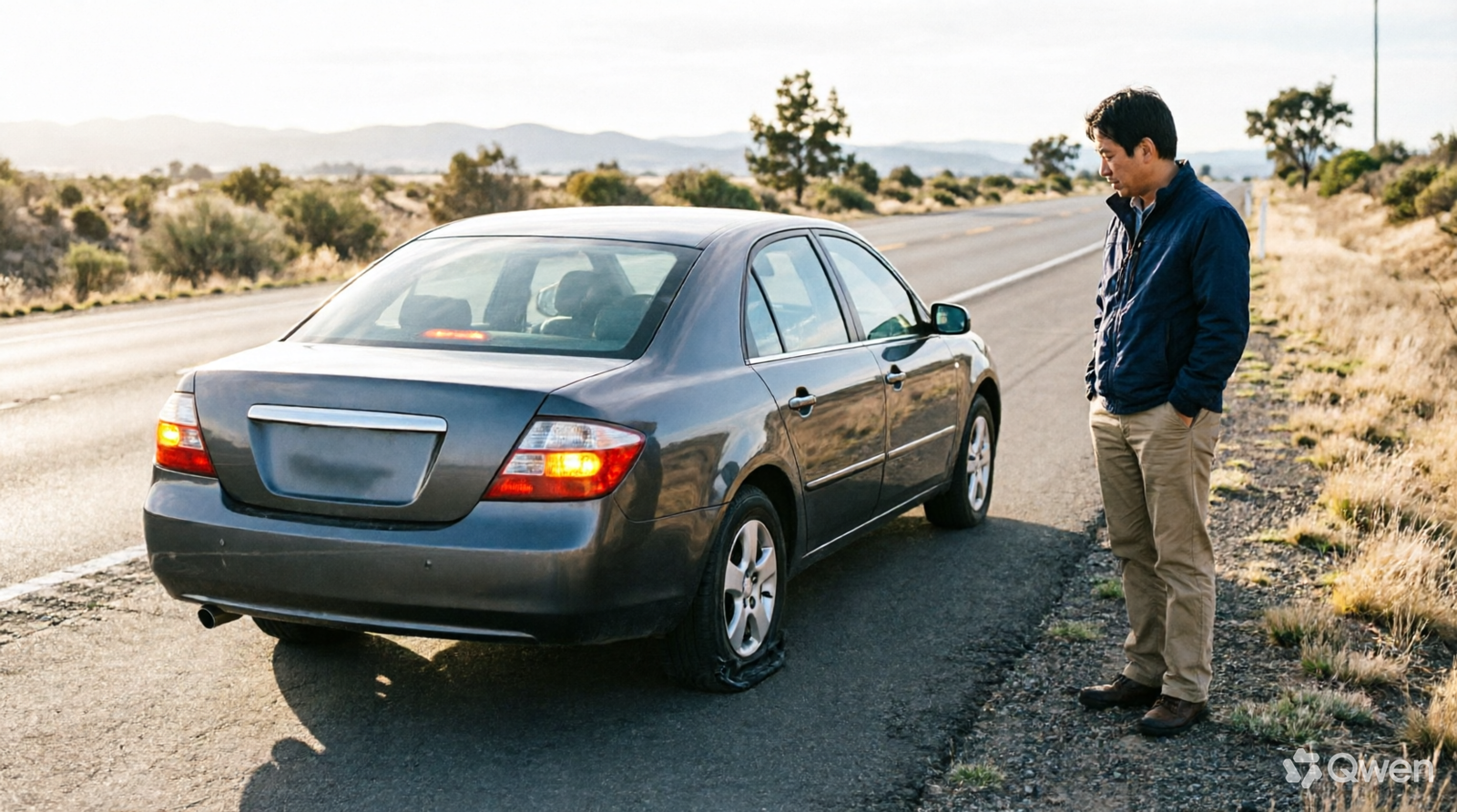
A flat tire always seems to happen at the worst possible moment — and it’s even worse when you pop the trunk and realize there’s no jack in sight. If you’re wondering how to change a tire without a jack, the honest answer is that there’s no truly safe DIY way to do it. But that doesn’t mean you’re stuck. Here’s what actually works when you’re in this situation.
Can You Change a Tire Without a Jack?
Removing a wheel requires lifting the vehicle high enough for the damaged tire to clear the ground. A jack is built specifically for this job — it’s engineered to lift a vehicle safely at approved contact points without shifting or buckling under the weight.
Without one, there’s no reliable, safe method for a typical passenger vehicle. Some people try ramps, wooden blocks, cinder blocks, or even stacked rocks as a workaround. These substitutes are risky because none of them are designed to hold a vehicle’s weight securely, and they can shift or collapse without warning.
The safest approach is straightforward: don’t attempt to lift your car with makeshift supports just to swap a tire. If you’re stranded, your first priority should be getting yourself and any passengers somewhere safe — the tire can wait a few extra minutes.
Why Improvising a Jack Is Dangerous
A car can weigh several thousand pounds, and even an object that looks sturdy enough may not account for the vehicle’s balance, the ground beneath it, or exactly where the weight is being supported. An improvised setup can fail suddenly, often with little to no warning.
Common risks include:
- The vehicle shifting or rolling unexpectedly
- An unstable support tipping over mid-repair
- Damage to the undercarriage or frame
- The wheel staying under partial load, making removal harder and more dangerous
- Injury from working underneath or beside an unsupported vehicle
- Traffic hazards if you’re stopped on or near an active road
Even a real jack has to be positioned exactly where the manufacturer specifies. A random object from the side of the road is never an equivalent substitute — no matter how solid it looks.
It’s also worth remembering that a jack only lifts the vehicle; it isn’t designed to hold that weight indefinitely while you work underneath. That’s why professionals also use jack stands or wheel chocks for extra stability. Skipping that step — or trying to replace it with a log, a milk crate, or a stack of bricks — removes the built-in safety margin that keeps the vehicle from settling unexpectedly while the wheel is off.
What to Do If You Have a Flat Tire and No Jack
If you find yourself with a flat and no jack, resist the urge to start hunting for something to prop the car up with. Instead, focus on safety first.
- Get out of traffic. If the car can still move, pull it as far away from moving vehicles as possible.
- Turn on your hazard lights and follow any emergency procedures listed in your owner’s manual.
- Avoid standing near traffic, especially on a highway shoulder.
- Assess your options for getting help.
Depending on your situation, you might use:
- Roadside assistance — a technician arrives with the right equipment
- A mobile tire service — someone comes to you and handles the repair on-site
- A tow service — the vehicle gets transported if the tire can’t be safely handled where you are
- An approved tire repair product — useful for certain punctures, though not all damage qualifies
- Your vehicle’s emergency kit — check what’s actually included before assuming
The right choice depends on your tire’s condition, your location, and what equipment you have on hand.
Can You Use a Spare Tire Without a Jack?
Having a spare doesn’t remove the need to lift the car. A spare is just a replacement wheel — installing it still means taking the damaged wheel off first, which requires raising the vehicle safely.
It’s also worth noting that many newer vehicles skip the traditional spare altogether. Instead, they might come with a tire inflation kit, sealant, run-flat tires, or another mobility solution entirely. Before assuming you have what you need, check your owner’s manual and inspect what’s actually stocked in your trunk.
| Equipment | Typical Purpose |
| Spare tire | Temporary replacement for a damaged tire |
| Vehicle jack | Designed to safely raise the vehicle |
| Lug wrench | Loosens and tightens wheel lug nuts |
| Tire sealant | Temporary fix for certain puncture types |
| Air compressor | Re-inflates a tire when appropriate |
| Roadside kit | May include flares, gloves, or other emergency items |
Equipment varies by make and model, so don’t assume one procedure works for every vehicle.
Safe Alternatives to Changing the Tire Yourself
In most no-jack situations, calling in professional help is genuinely the safest move — not just the easiest one.
Roadside Assistance
Roadside assistance providers deal with flat tires constantly, and they bring the right tools and experience to handle it safely. If you have an auto club membership, an insurance add-on, or a manufacturer roadside program, check whether tire service is included before you pay out of pocket.
Mobile Tire Service
A mobile tire technician can often come directly to your location. Depending on the provider and the extent of the damage, they may be able to repair or replace the tire on the spot, saving you from having to drive anywhere at all.
Towing
If you’re stuck somewhere unsafe — a narrow shoulder, poor visibility, bad weather — or the tire damage is severe, towing is usually the better call. It removes the need to work roadside entirely.
What If the Tire Is Only Low on Air?
A tire that’s simply losing air isn’t automatically the same emergency as one that’s blown out completely. If the tire itself is intact and your vehicle’s manufacturer allows temporary inflation, a portable inflator might get you enough pressure to reach a repair shop safely.
That said, don’t keep adding air to a tire that’s visibly damaged. Skip driving on a tire that:
- Has come apart or is missing chunks of tread
- Shows a major sidewall bulge or tear
- Won’t hold pressure at all
When you’re unsure whether a tire is repairable or genuinely done, a professional inspection is always the safer route.
Can You Drive on a Flat Tire?
Generally, no — not unless your vehicle is specifically built for it, like models equipped with run-flat tires. Driving on a standard flat can cause further tire damage, harm the wheel itself, and noticeably affect handling and braking.
If you’ve already found a safe spot to pull over, don’t assume creeping along to the nearest shop is harmless. Check your owner’s manual for guidance, or just call for assistance.
Run-Flat Tires Are Different
Run-flat tires are designed to provide limited mobility after losing pressure, but “limited” is the key word. Capabilities vary by tire and vehicle, so even with run-flats, stick to the manufacturer’s specified speed and distance limits rather than treating them as fully functional.
Essential Equipment to Keep in Your Car
The best defense against a stressful roadside moment is checking your equipment before you actually need it. If your car uses a conventional spare, confirm the manufacturer-supplied tools are present and in good shape.
A solid emergency kit typically includes:
- A properly functioning jack
- Lug wrench
- Spare tire (if your vehicle has one)
- Tire pressure gauge
- Portable air compressor
- Reflective triangles or flares
- Flashlight
- Work gloves
- Roadside assistance contact info
Having the gear is only half the equation — know how to use it correctly, or at least know when to call someone who does.
When Should You Call Roadside Assistance?
Calling for help is often the smartest decision, not a last resort. Consider it strongly if any of these apply:
- Your vehicle has no jack, or the jack is damaged
- You’re stopped near fast-moving traffic
- The ground is soft, uneven, or on a slope
- The tire damage looks severe
- You can’t identify the vehicle’s approved lifting points
- You don’t have the correct replacement tire
- Weather or poor visibility makes roadside work unsafe
There’s no real upside to taking unnecessary risks just to avoid making a phone call.
How to Prevent Flat Tire Problems in the Future
A little preparation goes a long way toward making the next flat far less stressful.
Check your equipment periodically. Don’t wait until an emergency to discover your jack is missing or broken.
Know your tire setup. Find out whether your car uses a spare, run-flats, or a sealant-and-inflator kit — the right response depends on which one you have.
Monitor tire pressure regularly. Properly inflated tires are less likely to fail unexpectedly, and checking pressure takes only a minute.
Save your roadside assistance info somewhere accessible, like your phone, so you’re not scrambling to find it during an actual emergency.
Keep your owner’s manual in the car. It has vehicle-specific details on lifting points, spare tire limitations, and emergency procedures.
Conclusion
If you’re dealing with a flat and no jack, the safest path is to skip the improvised lifting tricks entirely. Move away from traffic, check what equipment you actually have, and lean on roadside assistance, a mobile tire service, or a tow provider. A short wait for the right help beats risking an injury under a several-thousand-pound vehicle.
Frequently Asked Questions
Can I change a tire without a jack?
Not safely for a standard wheel change — you need proper equipment to lift and support the vehicle. Improvised methods aren’t a reliable substitute.
What can I use instead of a car jack?
Nothing improvised is truly safe. If you don’t have a working jack, contact roadside assistance or a mobile tire service instead.
Can I put a spare tire on without lifting the car?
No. Installing a conventional spare still requires removing the damaged wheel, which means the vehicle needs to be raised properly first.
What should I do if I have a flat tire and no jack?
Move somewhere safe, turn on your hazards, and call roadside assistance or a mobile tire service rather than trying to lift the car yourself.
Can I drive a short distance on a flat tire?
Generally not — even a short drive can damage the tire and wheel further and make the car harder to control.
Are tire sealants a replacement for a jack?
Not really. Sealants can temporarily fix certain punctures, but they don’t work for every type of damage and don’t eliminate the need for proper equipment in most cases.
Is changing a tire dangerous?
It can be, especially near traffic or without the vehicle properly supported. If you’re missing equipment or unsure of the process, professional help is the safer choice.