

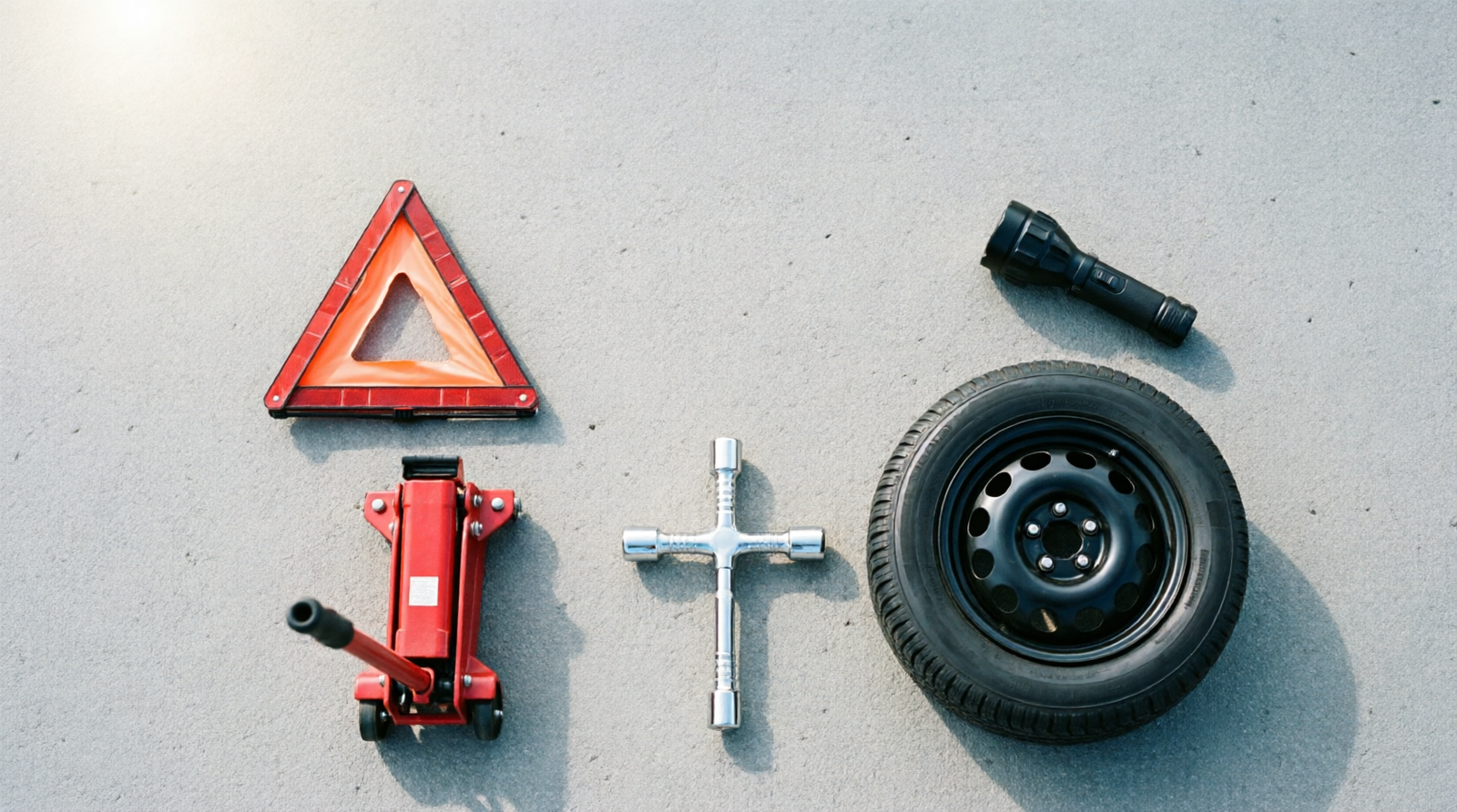
Nobody plans a flat. It happens on the way to work, in a supermarket car park, or on a stretch of highway with nowhere to pull over. Sometimes you can fix it yourself. Sometimes calling someone is the smarter move.
This guide explains what a roadside tire change service actually does, what it doesn’t, and how to decide. If you’d rather do it yourself, our step-by-step guide to changing a flat tire walks you through it.
A note on this guide: I haven’t used a roadside service myself, so this article is based on research into how these services typically work. Coverage, prices, and response times differ a lot between companies, so always confirm the details with your own provider.
What a Roadside Tire Service Does
You call, give your location, and someone is sent to where the car is stuck. What happens next depends on what they find. The usual outcomes are:
- They put your spare on
- They patch a small puncture, if the tire allows it
- They fit a new tire, if the company carries stock
- They arrange a tow if the tire can’t be dealt with on the spot
The aim is to get you to a safe next step, not necessarily to fix everything roadside.
Roadside Assistance vs. a Mobile Tire Company
These get mixed up all the time, but they’re different.
Roadside assistance comes through your insurer, a motoring club, your car’s manufacturer, or sometimes a credit card. It usually means fitting the spare you already have, and it’s often included in a membership. It doesn’t normally bring a replacement tire.
A mobile tire company is a paid service that can go further. They may bring a new tire, mount it, and balance it where the car is parked, which matters if you have no spare or it’s a temporary donut.
If you have a good spare and just want it fitted, roadside assistance is usually enough. If you need a proper replacement, ask a mobile tire company.
Does Roadside Assistance Change Tires?
In most cases, yes. If you have a usable spare, a technician can normally swap it on. But a roadside technician isn’t a tire shop. They can rarely repair or permanently replace a tire at the roadside, and they usually work with the spare already in your car, not one they bring.
Plans differ. Some limit the number of calls per year or the distance covered. Read your plan before you need it.
What Usually Happens to the Tire
| Situation | Likely outcome |
|---|---|
| Flat with a usable spare | Spare is fitted |
| Small puncture in the tread | May be patched, depending on the provider |
| Sidewall damage | Tire needs replacing |
| No spare | A mobile tire company or a tow |
| Spare is flat or damaged | Another solution needed, often a tow |
| More than one tire damaged | Usually a tow |
How the Call Goes
- Call your provider by phone, app, or through your insurer.
- Give your exact location. On a highway, that means road name, direction, nearest exit, or mile marker. “Near the gas station” isn’t enough.
- Describe the problem: flat, blowout, or bent wheel, and whether you have a spare.
- Give the car details, and the tire size if you know it.
- Wait somewhere safe. How long depends on traffic, weather, and how busy they are.
- Let them look first. They decide whether it’s a swap, a repair, or a tow.
When to Call Instead of Doing It Yourself
A flat doesn’t automatically mean you need help. If you’re in a driveway or an empty car park, your spare is inflated, and you know your way around a jack, it’s a job you can do yourself.
Call for help if:
- You’re on a busy highway or a narrow shoulder
- It’s dark, or the weather is bad
- There’s no spare, or the spare is flat
- The jack or wrench is missing or broken
- The tire is shredded, or the wheel looks bent or cracked
- A lug nut won’t budge
- More than one tire is damaged
- You’re simply not confident with a jack
Don’t be tempted to do it yourself in an unsafe spot just to save a service fee.
| Do it yourself | Call for help | |
|---|---|---|
| Cost | Cheap if you have the tools | Service fee, unless covered |
| Skill | Basic know-how | None |
| Safety near traffic | Riskier | Handled by a professional |
| Time | Quick if you know how | Includes waiting time |
| Best for | Safe spots, prepared drivers | Anywhere unsafe or difficult |
What It Costs
Prices vary widely by country, city, time of day, distance, and what the job involves. I won’t quote figures, because they’d go out of date or be wrong for where you live.
If you’re covered through your insurance, car maker, motoring club, or a credit card, the call may cost nothing extra. If you’re paying out of pocket, ask for the full price up front, and check what it includes:
- The call-out fee
- Labor
- The tire itself, if you need one
- Mounting and balancing
- A new valve stem
- Disposal of the old tire
- Taxes, and any after-hours charge
A cheap-sounding quote can grow quickly once these are added.
Does Insurance Cover It?
Sometimes, but not automatically. Roadside help is usually a separate add-on, not part of standard cover. Where it is included, it often pays for the labor of fitting a spare but not a new tire. Cover varies too much to guess, so read your policy or ask your insurer directly.
Also check these before buying a separate plan: your car’s manufacturer warranty, a motoring club membership, and your credit card benefits. Many drivers are already covered without knowing it.
How to Choose a Mobile Tire Company
Do this before you need one, not while you’re standing beside a flat:
- Coverage area. Some only work within a limited radius.
- What they actually do. Spare fitting, repairs, new tires, and balancing aren’t offered by every company.
- Hours. A provider that’s genuinely open at 2 a.m. matters more than it sounds.
- Clear pricing. If they won’t give a straight answer up front, that tells you something.
- Recent reviews. Look for patterns about wait times and surprise charges.
- The right tire. If they’re bringing a new one, confirm the size, load rating, and speed rating match your car.
While You Wait
Your only job is to stay safe.
- Get the car as far from traffic as you reasonably can, with your hazard lights on.
- On a busy road, staying in the car with your seatbelt on is often safer than standing beside it.
- Set out reflective triangles only if you can do it without stepping into traffic.
- Keep your phone charged in case the technician needs your location again.
- Don’t start the change yourself because the wait feels long. If it drags on, call back.
Different Cars, Different Situations
A normal car with a normal spare is the easy case. Others are trickier:
- No spare. Many newer cars have a sealant kit or run-flats instead. Tell the provider when you call.
- Run-flat tires. They keep you moving for a limited distance after losing air, so you may have time to reach a safer place first. Follow the manufacturer’s speed and distance limits.
- Trucks, RVs, and unusual tire sizes. A standard service van may not have the right jack or tire. Confirm with your provider beforehand.
- Locking lug nuts. Have your wheel-lock key ready.
Roadside assistance and a tire shop solve different problems. One gets you out of an immediate jam. The other handles the tire properly. Once you’re safe, go to a shop for the permanent fix.
Get Ready Before It Happens
- Check whether your car has a spare at all, and how much air it has
- Know where the jack and lug wrench are
- Know your tire size
- Save your provider’s number somewhere you can find it without a login
- Keep your tires properly inflated and check them for wear
See our spare tire guide for how to check your spare and what its limits are.
Frequently Asked Questions
Does roadside assistance change tires for free?
If tire service is part of your plan, there’s usually no extra charge for the call. It depends on your provider and membership level.
Will they bring a new tire?
Roadside assistance usually doesn’t. They fit the spare you already have. A mobile tire company often can.
Can they fix a puncture on the spot?
Sometimes, if it’s in the tread of an otherwise healthy tire. Sidewall damage usually rules it out.
What if my car has no spare?
Tell them when you call. A mobile tire company may bring a tire, or you may need a tow.
Can they change a tire on the highway?
They’ll try, but if the location is too dangerous they may tow you instead.
How long does the change take?
Once the technician is there, it’s usually 15 to 30 minutes. The wait beforehand is the unpredictable part.
Can I drive a short way on a flat?
Not unless the manufacturer says the tire is built for it. Driving on a flat can ruin the tire and damage the wheel.
Is it worth paying for a plan?
For frequent drivers, or anyone who doesn’t want to change a tire beside a highway at night, often yes. Compare the plan’s cost with what a single call-out would cost you, and check what you’re already covered for.
Final Thoughts
A flat doesn’t have to be a crisis. A roadside service is there for when you’re unsafe, unequipped, or unsure. A few minutes spent checking your cover, your spare, and your provider’s number now will make the day it actually happens far less stressful.