

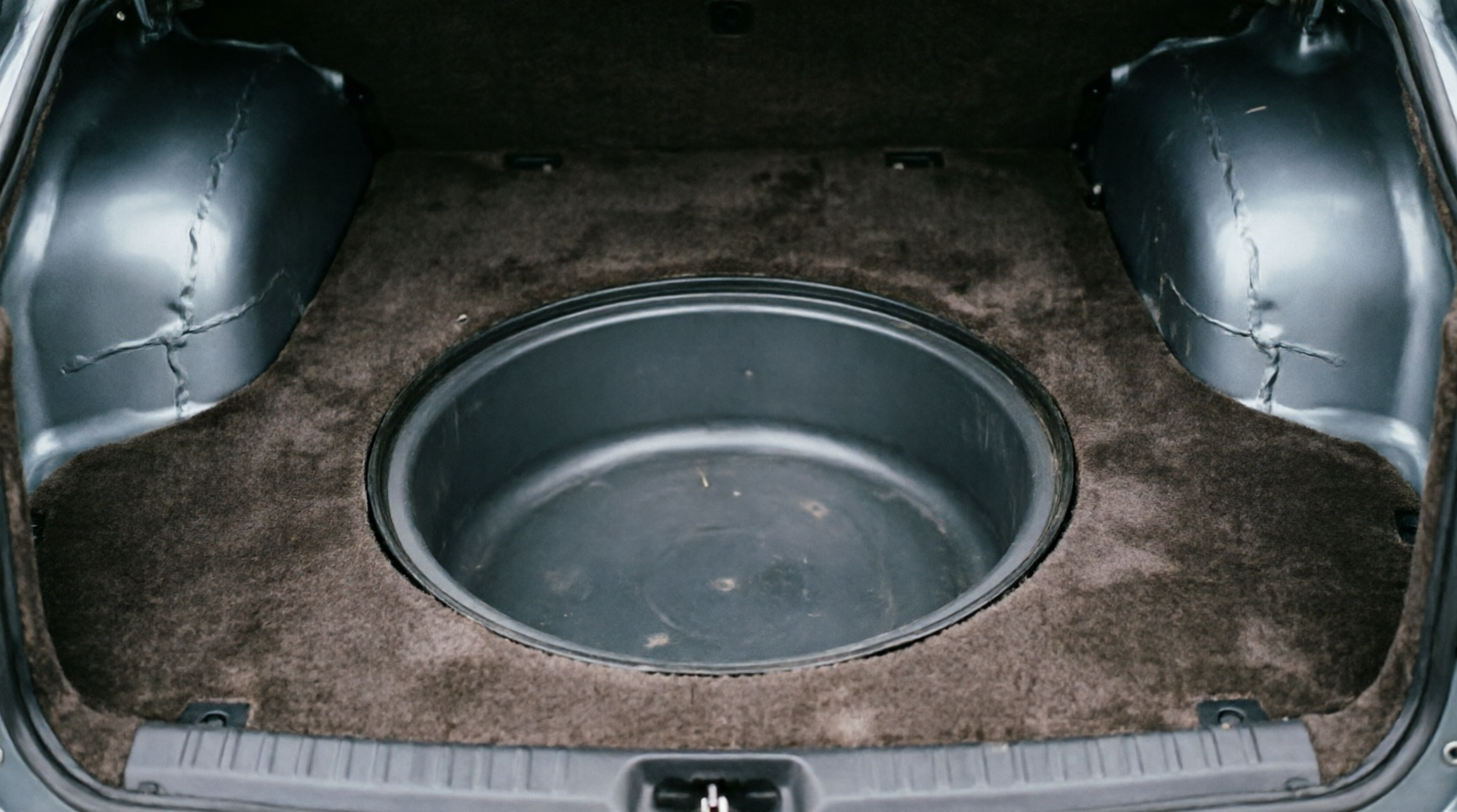
You’re driving along and suddenly the car starts pulling to one side. You pull over, and there it is — a flat tire. Then you pop the trunk and realize there’s no spare. Now what?
It happens more often than people expect. Plenty of newer cars skip the spare entirely to save weight and cargo space. But a flat tire and no spare isn’t the dead end it feels like. You’ve got several paths forward, and this guide walks through all of them.
Step One: Get Somewhere Safe
Before you think about the tire, think about yourself.
If you feel the flat while driving, don’t slam the brakes or yank the wheel. Ease off the gas and steer gradually toward a shoulder, parking lot, or gas station. Anywhere flat and out of traffic works.
Once you’ve stopped:
- Flip on your hazard lights immediately.
- Shift into Park (or leave it in gear for a manual transmission).
- If you’re on a busy road or highway shoulder, stay buckled in and stay inside the car if traffic is close.
- If you do need to get out, exit from the side away from moving cars.
- Never stand in front of or behind the vehicle while it’s on a shoulder.
- Avoid trying to inspect or fix anything until traffic has slowed down or you’ve moved somewhere calmer.
It’s tempting to jump straight into problem-solving mode, but a shoulder on a busy road is one of the more dangerous places to be standing. If your only option is a narrow shoulder with fast-moving traffic nearby, it’s often smarter to call for help and wait inside the vehicle than to attempt any kind of repair yourself.
Is It Ever Okay to Keep Driving?
Almost never. A fully flat tire can wreck the sidewall and even bend the wheel underneath it, and it makes the car noticeably harder to steer. Even a “slow leak” can go flat within a mile or two, so don’t count on getting far.
The one exception is run-flat tires, which are built to handle a certain distance at reduced speed after losing pressure. Even then, stick to what your owner’s manual says — don’t guess.
What’s Actually in Your Trunk?
Before deciding on next steps, find out what your car gives you to work with. Not every vehicle handles this the same way.
| What you have | What it lets you do |
| Full-size spare | Swap the damaged tire right there |
| Compact “donut” spare | Drive short distances to a repair shop |
| Tire inflator | Add air if the tire can still hold pressure |
| Sealant/repair kit | Plug small tread punctures temporarily |
| Run-flat tires | Drive a limited distance at reduced speed |
| Roadside assistance plan | Get help inspecting, repairing, or towing |
| None of the above | Call for a tow or roadside service |
Your owner’s manual will tell you exactly what your car has, where it’s stored, and whether the manufacturer allows a temporary fix at all. It’s worth a quick read before you’re stuck on the shoulder guessing.
Figure Out Why the Tire Went Flat
If it’s safe to do so, take a look at the tire before deciding on a fix. What you find changes everything about your next move.
A Small Puncture in the Tread
A nail or screw stuck in the tread can be one of the more manageable types of tire damage. However, a proper repair isn’t as simple as pulling it out and inserting a plug. The U.S. Tire Manufacturers Association says the tire should be removed from the wheel, inspected internally, and repaired using both a plug or stem and a patch. A plug alone isn’t considered an acceptable permanent repair.
If your vehicle has a manufacturer-approved tire mobility kit, you may be able to use it as a temporary measure to get to a tire shop. Have the tire professionally inspected and repaired or replaced as soon as possible.
Damage to the Sidewall
This one’s non-negotiable: don’t try to patch a torn or bulging sidewall yourself. Adding air won’t make it safe to drive, and the tire will likely need replacing outright.
A Tire That’s Beyond Saving
If the tread is shredded or the tire’s been driven on flat for any distance, sealant and inflators probably won’t do much. At that point, towing is the safer call.
Getting Back on the Road: Your Real Options
Once you know what you’re dealing with, here’s how each option plays out.
Use a Portable Air Compressor
If the damage looks minor, a portable inflator can buy you time. Check the recommended pressure on the sticker inside your driver’s door — not the number printed on the tire itself, which is a maximum, not a target. Attach the inflator to the valve stem, fill to the right pressure, and watch how it holds.
If it drops right back down, that’s a sign of a bigger leak, and driving on it isn’t worth the risk.
An inflator is useful when:
- The leak is slow, not severe
- You just need to reach a nearby shop or safe spot
- There’s no visible structural damage
- You can keep an eye on the tire as you go
Keep in mind an inflator only adds air — it doesn’t fix whatever caused the leak.
Try a Sealant or Repair Kit
Some cars come with a factory tire mobility kit instead of a spare — usually a bottle of sealant paired with a compressor. It’s designed for small tread punctures only.
Skip it for:
- Larger holes or tears
- Any sidewall damage
- A tire that’s separated from the wheel
- Damage severe enough that the tire won’t hold air at all
Always follow the kit’s specific instructions, and know that sealant can sometimes make it harder for a technician to inspect the tire properly afterward.
Call Roadside Assistance
This is often the simplest route when you have no spare and no quick fix on hand. Depending on your provider, roadside assistance might inflate the tire, apply a temporary repair, tow you to a shop, or get you and the car somewhere safer.
Check first whether you already have coverage — through your car insurance, the manufacturer’s warranty, a membership like AAA, or even a credit card perk. A lot of drivers pay for a tow out of pocket without realizing they already had it covered.
When you call, have this ready:
- Your exact location
- Which direction you were heading
- Vehicle make, model, and year
- Which tire is affected
- Whether you’re somewhere safe or on a live shoulder
- Whether the car is blocking traffic
- Whether you have any repair tools on hand
Head to a Tire Shop
If you’ve made it somewhere safe and the tire’s holding air, your next stop is a professional. A technician can check the tire from the inside, confirm whether it’s repairable, or recommend a replacement that matches your car’s size and load requirements.
Only drive there if the tire is properly inflated and staying that way. If it keeps losing pressure, a tow is cheaper than risking more damage — or worse, an accident.
Keep in mind that a tire driven while badly underinflated can suffer internal damage that isn’t visible from the outside. Even if a puncture looks small and repairable, a technician may find the tire has been compromised enough that replacement is the safer call. It’s a good reminder not to push your luck driving on a tire that’s clearly struggling to hold air, even for a short trip.
Stuck Somewhere Remote?
Being stranded outside city limits changes the math a bit. Don’t try to push forward on a flat just because the nearest shop is far away.
If you’ve got cell signal, call for roadside help and give the most precise location you can. If service is spotty, conserve your battery and stay near the vehicle unless it’s genuinely unsafe to do so. Getting away from danger always comes before trying to fix the tire yourself.
Preventing the Next Flat
A flat with no spare is a good excuse to get better prepared before it happens again.
Should You Add a Spare?
If your car didn’t come with one, buying one is worth considering — especially for long road trips or rural driving. Just make sure it actually fits: matching tire size, wheel size, bolt pattern, load rating, and clearance around the brakes all matter. A donut spare is only meant for short-term use, not daily driving.
Build a Small Emergency Kit
You don’t need to pack the whole garage. A few essentials go a long way:
- Portable tire inflator
- Tire pressure gauge
- Manufacturer-approved sealant or repair kit
- Flashlight and reflective vest
- Warning triangle or flares
- Phone charger or power bank
Keep Up With Basic Maintenance
Check your tire pressure monthly and before long trips — pressure shifts with temperature changes more than people expect. Look over the tread for embedded debris or uneven wear, rotate the tires on schedule, and never ignore a tire-pressure warning light. It’s usually the first clue something’s wrong.
| Situation | Best next step |
| Tire is slightly low | Add air, keep monitoring it |
| Small puncture in the tread | Try an appropriate repair kit |
| Tire won’t hold pressure | Call roadside assistance |
| Sidewall is damaged | Don’t drive — get professional help |
| Tire is shredded | Arrange a tow |
| Car has run-flat tires | Follow the manufacturer’s speed/distance limits |
FAQs
Can I drive on a flat tire if I don’t have a spare?
Generally no — it risks the tire, the wheel, and your ability to control the car safely.
What’s the first thing I should do?
Get to a safe spot, turn on your hazards, and check the damage before deciding on a fix.
Does Fix-a-Flat actually work?
Sometimes, for small tread punctures — but it’s not meant for sidewall damage or major holes.
How far can I drive on a flat before it’s a problem?
A regular tire shouldn’t be driven flat at all. Run-flats are the exception, within manufacturer limits.
Will roadside assistance fix the tire on the spot?
It depends on your provider — some can patch or inflate it, others will just tow you to a shop.
Can a puncture from a nail actually be repaired?
Often yes, if it’s in the tread and the tire hasn’t sustained internal damage from being driven flat.
Is it worth buying a spare if my car didn’t come with one?
Yes, particularly if you drive long distances often — just confirm it’s compatible with your vehicle first.
Conclusion
A flat tire with no spare feels like a crisis in the moment, but it rarely is. Get safe, assess the damage, and lean on an inflator, sealant kit, or roadside assistance depending on what you’re dealing with. A little prep now — even just a portable inflator in the trunk — makes the next flat a lot less stressful.