
Quick answer: A standard tire balance costs $10 to $25 per tire, or about $40 to $100 for all four tires in 2026. RepairPal’s estimator, updated September 3, 2026, puts the average job at $37 to $55 in labor. New tires? You may pay nothing extra — most retailers include balancing in the installation price. Road-force balancing, the advanced version for stubborn vibrations, runs $80 to $160 for a set of four.
That steering wheel shimmy at 65 mph is the most common reason drivers ask for this price — and balancing is one of the cheapest services your car will ever need, and one of the easiest to overpay for.
Prices below come from RepairPal, Jerry (updated November 4, 2026), Walmart’s July 2026 service menu, and a January 2026 comparison of 11 US service centers. Prices vary by location, so use them as benchmarks for your local quote.
What Tire Balancing Actually Is
No tire and wheel combination is perfectly even in weight — tiny differences in the rubber, rim, and valve stem leave one side slightly heavier. At parking-lot speeds you never notice; at highway speed, that heavy spot tugs the wheel hundreds of times a minute, and you feel it as a shake in the steering wheel, seat, or floor.
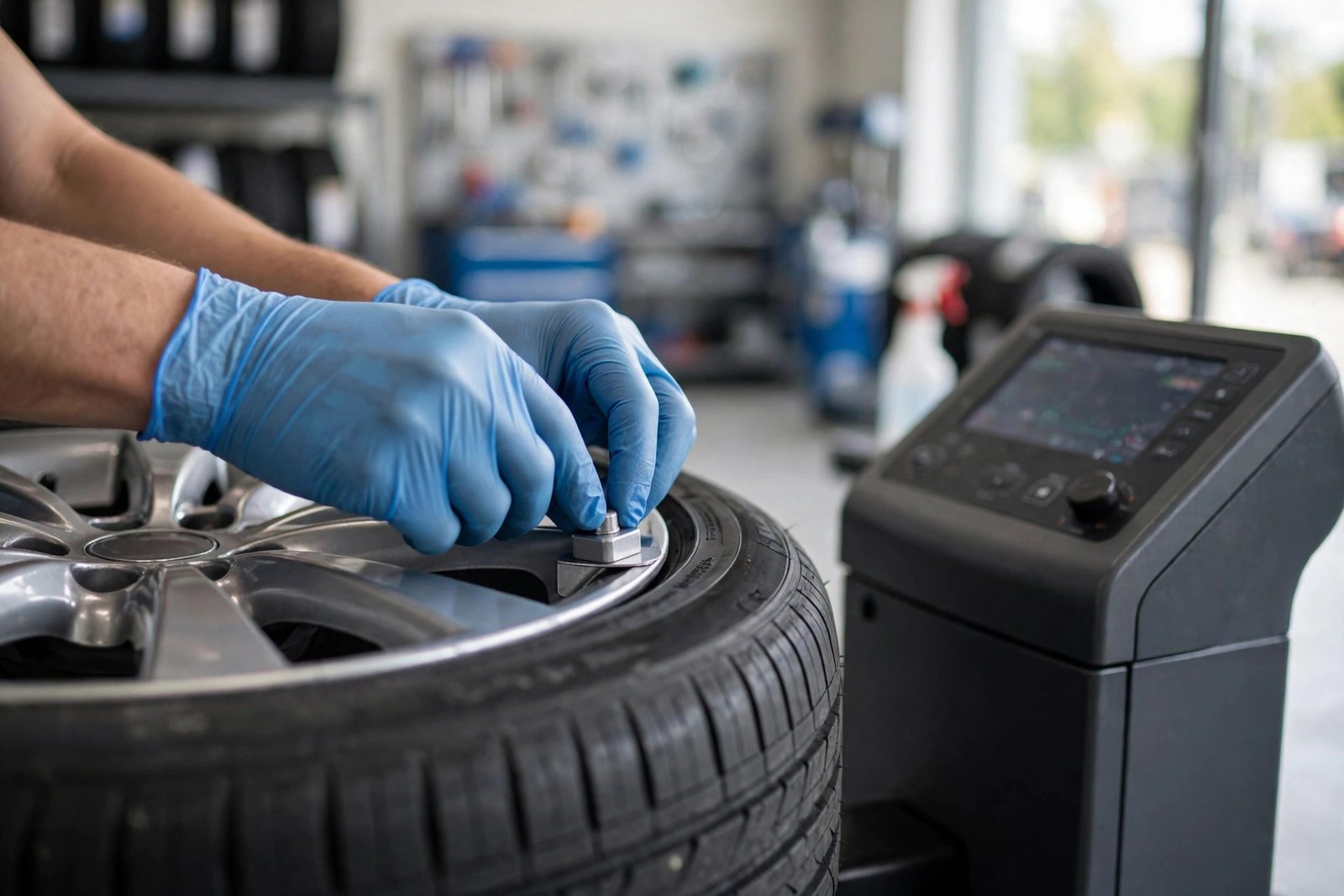
Balancing fixes that. A technician mounts each wheel on a balancing machine, spins it to find the heavy spots, and attaches small metal weights — clip-on for steel wheels, stick-on for alloy wheels — so it spins evenly. A good result leaves under about 0.25 ounces (7 grams) of imbalance per plane, per Jerry’s guide.
The weights cost very little — you are mostly paying for the technician’s time, the machine, and the shop’s overhead. Note that balancing is not a wheel alignment: balancing corrects weight distribution, while alignment adjusts wheel angles (toe, camber, caster). A balance fixes vibration; an alignment fixes pulling and uneven wear. See our full comparison in tire balancing vs alignment.

How Much Does Tire Balancing Cost in 2026?
| Service | Cost per tire | Cost for all four |
|---|---|---|
| Standard spin balance | $10–$25 | $40–$100 |
| RepairPal average (labor) | — | $37–$55 |
| Road-force balance | Up to $30 | $80–$160 |
| Walmart lifetime balance + rotation | $15 | $60 |
| Balance included with new tires | $0 extra | $0 extra |
The key benchmark is the standard range: $10 to $25 per tire, from Jerry’s guide updated November 4, 2026, which puts a typical four-wheel job at $40 to $100 out the door. An earlier estimate cited by ThePricer in July 2026 was lower — $10 to $18 per tire, or $40 to $72 for four. If your quote lands inside $40 to $100 for four standard passenger tires, you are in fair territory.
RepairPal’s estimator, last updated September 3, 2026, puts the average job at $37 to $55, all labor, before taxes and fees — a national average that sits at the low end of Jerry’s range.
Remember: one tire after a puncture repair costs $10 to $25; all four costs four times that. If a shop quotes one flat number, ask whether it covers one wheel or all four.
Tire Balancing Prices by Shop
Below: a January 2026 Auto Trends comparison of 11 service centers, plus Walmart’s July 2026 menu. Reported prices vary by location — confirm with your local store.
| Shop | Reported cost per tire | Notes |
|---|---|---|
| Costco | $7–$8 (about $30 per vehicle) | Cheapest; membership required |
| Sam’s Club | $10 | Membership required |
| Discount Tire | $10–$15 | Free rebalancing if you bought the tires there |
| Walmart | $15 (lifetime balance + rotation) | $60 for four; installation package $18 per tire |
| Les Schwab | $15–$20 | Free if you bought the tires there |
| Big O Tires | $15–$20 | Free if you bought the tires there |
| Firestone | $15–$20 | Free if you bought the tires there |
| Pep Boys | $15–$20 | Lifetime balancing from $14.99 |
| Midas | $18 | Free if you bought the tires there |
| Goodyear | $20+ | Higher end of the chain range |
| Dealership | $20–$30 | Usually the most expensive option |
| Independent shop | $10–$30 | Widest range; often the best value locally |
Warehouse clubs are cheapest — Costco at $7 to $8 per tire and Sam’s Club at $10 — but you need a membership. Discount Tire is the standout chain: $10 to $15 per tire, with free rotation and rebalancing for the life of tires bought from Discount Tire or America’s Tire, per the retailer’s published customer-care policy.
Walmart’s July 2026 menu lists lifetime balance and rotation at $15 per tire — $60 for four, with free rebalancing every time you come back. Its installation package is $18 per tire and includes mounting, lifetime balance and rotation, and valve service for tires bought at Walmart.
Dealerships sit at the top at $20 to $30 per tire — rarely a better result than a good chain charging half as much.
Standard Balance vs Road-Force Balance
Most drivers only ever need a standard spin balance — but if a vibration survived one, you need to know about the second option.
A standard spin balance spins the wheel freely and measures weight imbalance. It costs $10 to $25 per tire and solves the vast majority of vibration problems. Ask for a dynamic (two-plane) balance, which checks both sides of the wheel — a static-only balance is a shortcut Jerry’s guide warns against.
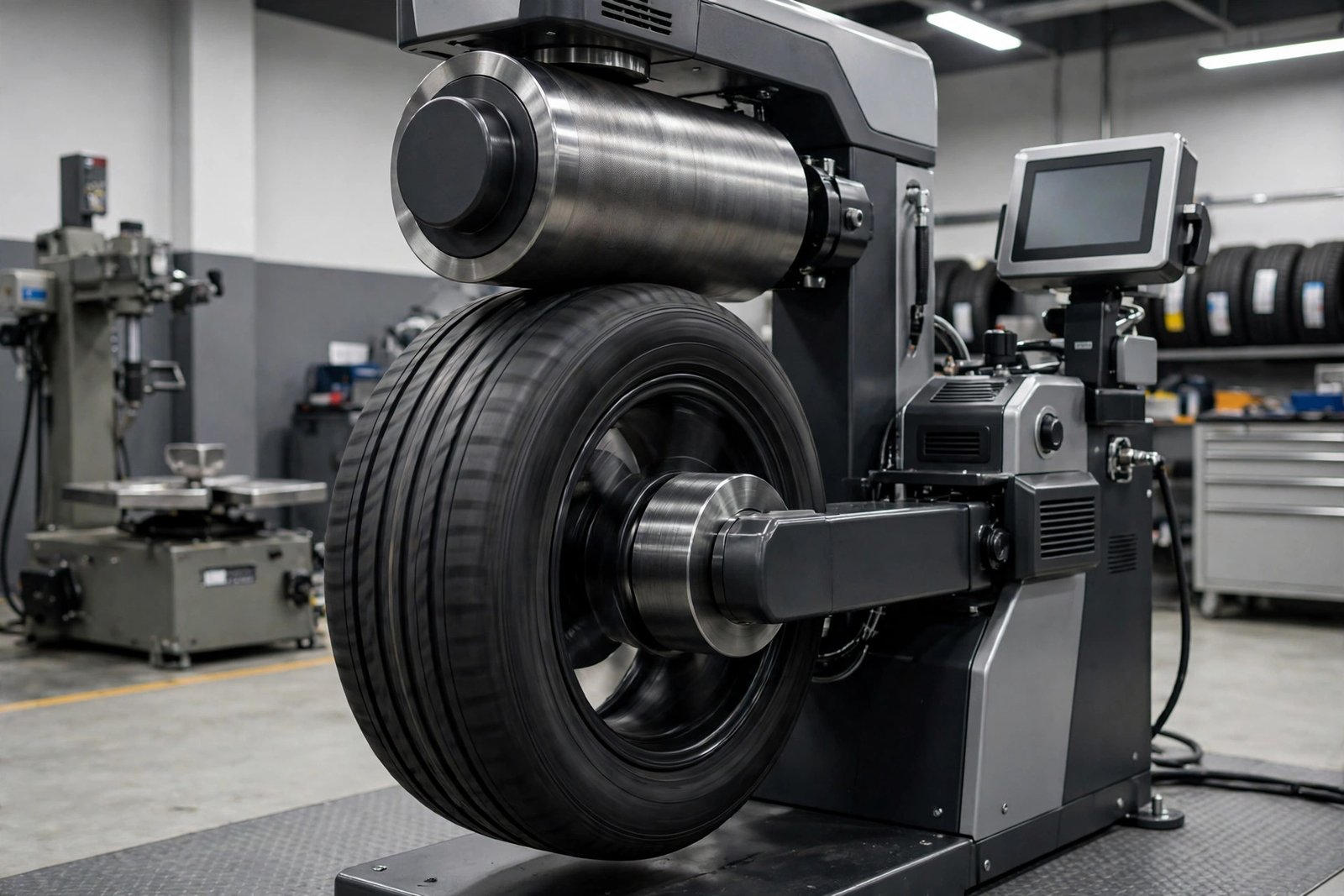
A road-force balance presses a large roller against the tread while the wheel spins, simulating the weight of your car on the road. That can expose problems a free spin cannot: a tire that is slightly out of round, a stiff spot in the sidewall, or a mismatch between the tire’s high spot and the wheel’s low spot. The technician can then rotate the tire on the rim — called match-mounting — and give you a printed road-force measurement. Under roughly 10 to 15 pounds is considered good.
Road-force costs up to about $30 per tire, per a March 2025 consumer-parts estimate cited by ThePricer, and Jerry puts a four-wheel road-force job at $80 to $160 — roughly double a standard balance.
Start with a standard balance for new tires, a rotation, or a first-time vibration. Pay for road-force only if a standard balance did not fix the shake, you run low-profile, run-flat, or performance tires, or the machine flags an out-of-round assembly.
What Makes the Price Go Up (or Down)
Wheel and tire size. Larger diameters, wide wheels, low-profile, run-flat, and mud-terrain tires add roughly $5 to $15 per tire, per Jerry. They are heavier and harder to handle, and sometimes need different machine adapters.
Vehicle type. A compact sedan on 16-inch wheels is the cheapest job in the shop. Luxury, performance, and heavy-duty trucks run higher, and Jerry notes these rarely exceed $150 to $200 for a standard balance unless other services are bundled in.
Shop type and location. A high-rent city shop, a dealership, or a specialty wheel shop charges more than a mass-market tire center in a smaller town. Jerry estimates urban and high-cost areas add 10 to 30 percent.
Standalone vs bundled. Balancing is often discounted — or free — with a new tire purchase or a lifetime rotation and balance package. A standalone visit can cost $10 to $20 more per set.
Wheel condition. Corrosion on the bead seat or old adhesive where a weight fell off adds $10 to $25 in prep time. A bent wheel will never balance properly, no matter how many weights are added, and needs straightening or replacement first.
TPMS and add-ons. Some cars need a tire-location relearn after the tires come off ($0 to $30, per Jerry), and TPMS service kits (seals, valve cores, caps) run $5 to $15 per wheel. These are legitimate, but they should appear as separate lines on your estimate — not buried inside the balancing charge.
What Is Included — and What Is Not
A fair quote covers labor, machine time, the wheel weights, removing and refitting each wheel, and a basic inspection of the tire and rim — often how a shop spots a bent rim, a bulge, or a separated belt that balancing cannot fix.
What balancing usually does not include:
- Mounting — putting a tire onto a rim is a separate job with its own per-tire labor charge.
- Wheel alignment — a full alignment runs $90 to $150, per Jerry, and is a completely different service.
- TPMS sensor replacement — a failed sensor is a parts cost on top of the balance.
- Tire disposal — disposal or recycling fees are separate if an old tire is being replaced.
- Wheel repair — straightening a bent rim or fixing curb rash is priced by the damage.
Before you approve the work, ask for an out-the-door quote that includes the weights, any TPMS relearn, and disposal fees. If the estimate grows after the wheels come off, ask the shop to show you the problem — a bent rim or a damaged tire is visible, and a good shop will show it before charging to fix it.
Signs You Need a Tire Balance

- Steering wheel shake at 50 to 75 mph. The classic symptom. If the wheel shimmies at a specific highway speed and calms down above or below it, the front tires are the likely cause.
- Vibration in the seat or floor. Same speed range, different location — this usually points to the rear tires.
- Uneven or cupped wear. Dips, scalloped edges, or bald patches suggest the tire has been bouncing as it rolls — see our guide on when to change your tires for the wear patterns that mean a tire is done.
- A weight fell off. Look for a clean strip where a stick-on weight used to be, or a bare spot on the rim edge where a clip-on weight sat. Losing one weight is enough to throw a wheel out of balance.
- After new tires, a rotation, or a pothole hit. Any of these can shift the balance. New tires always need balancing, and a hard pothole hit can knock a weight loose or bend a rim.

One diagnostic trick: if the shake appears only while braking, the problem is almost certainly your brakes, not your balance. If the car pulls steadily to one side without speed-related vibration, that is an alignment or tire-pressure issue.
How Often Should You Balance Your Tires?
Balance your tires every 5,000 to 8,000 miles, usually at the same time as a tire rotation. Jerry’s guide gives 6,000 to 8,000 miles; other guides give 5,000 to 7,000. The exact number matters less than the habit — pairing balancing with rotation means the job gets done on schedule, not only after a vibration shows up.
Also balance your tires whenever you buy new tires (no exceptions), after a repair that required removing the tire from the rim, after hitting a deep pothole or curb, and at every seasonal tire change.
It is cheap insurance. An unbalanced tire wears unevenly, and uneven wear shortens tire life — so the $40 to $100 you spend on balancing can save you far more in early tire replacement. Pair it with a rotation — see how often to rotate your tires and the right tire rotation pattern for your drivetrain.
How Long Does It Take, and Can You Do It Yourself?
A standard balance on all four tires typically takes 30 to 60 minutes. The waiting time is another story: at a busy store, you can wait an hour or two for an open bay. Book an appointment, and bring your wheel-lock key.
Can you balance tires yourself? Practically no. A proper dynamic balance needs a computerized machine that measures imbalance to a fraction of an ounce — equipment that costs thousands of dollars. Home bubble-balancer kits ($50 to $200) only check static balance on one plane, the outdated method professional guides warn against.
You can rotate your own tires at home, but balancing is one job where professional equipment genuinely matters. One home step is worth doing first: check your tire pressures — a low tire can feel like a vibration. Our guide on what tire numbers mean explains the size, load, and speed codes on your sidewall.
How to Save Money on Tire Balancing
Buy your tires where balancing is free for life. Discount Tire, Firestone, Les Schwab, and Big O Tires all offer free rebalancing on tires purchased from them. If you plan to keep the car for years, that perk can be worth more than a small discount on the tire price.
Use a warehouse club if you are already a member. Costco at $7 to $8 per tire is the cheapest published price in the January 2026 comparison — but don’t buy a membership just for balancing.

Bundle it with a rotation. Combining the two into one visit saves a second trip and often a second labor charge — Walmart’s $15-per-tire lifetime balance and rotation package is built around this idea.
Get an out-the-door quote from two shops. Prices for the same job can vary 30 to 50 percent between shops in the same area. A five-minute phone call is the highest-value step in this guide — and it costs nothing.
One thing not to do: skip balancing to save $50. An unbalanced tire wears in patches, and patchy wear can take thousands of miles off a tire’s life — far more costly than the balance that would have protected it.
The Verdict: Which Option Should You Choose?
For most drivers: get a standard spin balance at a tire chain or a trusted independent shop, and pay $40 to $100 for all four.
- Best value: Discount Tire or Walmart. Discount Tire charges $10 to $15 per tire and rebalances free for life if you bought your tires there. Walmart’s $15-per-tire lifetime package ($60 for four) is the simplest deal on the market — one payment, rebalancing included.
- Cheapest if you are a member: Costco. At $7 to $8 per tire, about $30 per vehicle, it is hard to beat — but only if you already have a membership and bought your tires there.
- Best one-stop shop: Firestone or Pep Boys. Both sit at $15 to $20 per tire, offer lifetime or bundled options, and can handle alignment or brake work if your vibration turns out to be something else.
- Avoid the dealership for a routine balance. At $20 to $30 per tire, you pay roughly double the chain price for a job where the equipment and the result are the same.
- Pay extra for road-force only when you need it. If a standard balance fixed nothing, or you run low-profile or run-flat tires, the $80 to $160 for a four-wheel road-force balance is money well spent. For a first-time vibration on standard tires, skip the upgrade.
And remember the one rule that makes all of this free: if you are buying new tires, balancing should already be in the installation price. If a shop tries to charge a separate balancing fee on top, ask why — and compare that quote against a competitor first.
Frequently Asked Questions
How much does tire balancing cost in 2026?
A standard balance typically costs $10 to $25 per tire, or about $40 to $100 for all four. RepairPal’s estimator, updated September 3, 2026, puts the average job at $37 to $55 in labor. Road-force balancing costs more, usually $80 to $160 for four.
Is tire balancing free when you buy new tires?
Often, yes. Most retailers include balancing in the installation charge, and many — including Discount Tire, Firestone, and Les Schwab — offer free rebalancing for the life of tires purchased at their stores. Confirm before you pay, because some shops list it as a separate line item.
How often should I balance my tires?
Balance your tires every 5,000 to 8,000 miles, usually with a tire rotation, and always when you buy new tires. Also get a balance checked right away if you feel a new vibration, hit a deep pothole, or notice a wheel weight has fallen off.
What is road-force balancing, and is it worth the extra cost?
Road-force balancing presses a roller against the tread to simulate the weight of your car on the road, finding problems a standard spin balance misses, such as an out-of-round tire or a stiff spot in the sidewall. It costs up to about $30 per tire. It is worth it when a standard balance has not fixed a stubborn highway vibration, or for low-profile, run-flat, and performance tires — but most drivers do not need it first.
Does tire balancing fix a steering wheel shake?
Yes, if the shake is caused by uneven weight in the tire and wheel assembly. A steering wheel that shimmies at 50 to 75 mph usually points to unbalanced front tires; vibration in the seat or floor points to the rears. If the shake only happens when you brake, or your car pulls to one side, balancing is not the fix — you need a brake inspection or a wheel alignment instead.
How long does tire balancing take?
A standard balance on all four tires typically takes 30 to 60 minutes, including a quick inspection and a test drive if needed. The exact time depends on your tire size, wheel condition, and how busy the shop is — wait time for an open bay can add an hour or more.