
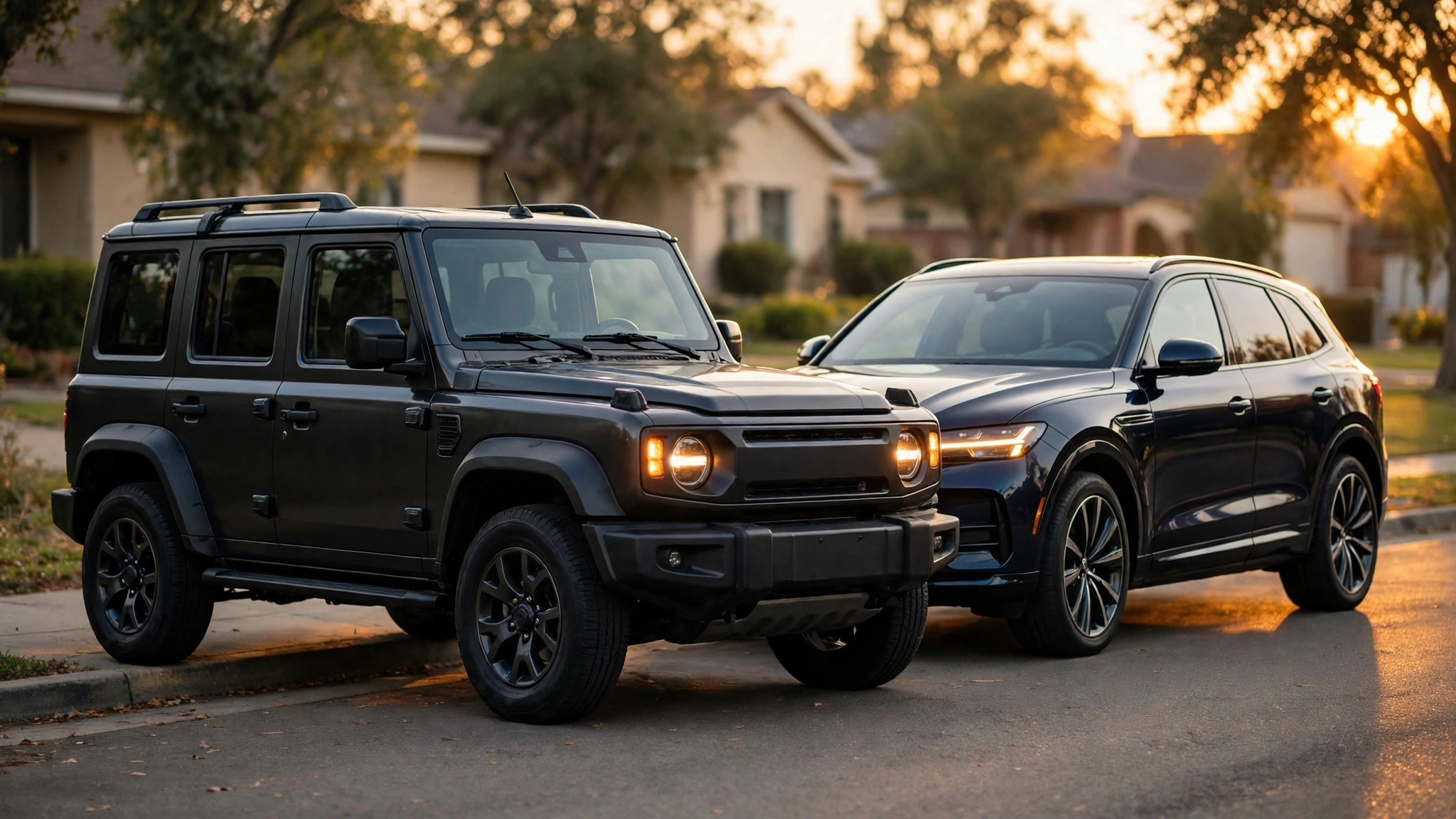
Kia Telluride vs Hyundai Palisade: Which 3-Row SUV Wins?
Shopping for a three-row family SUV almost always leads to the same two names: the Kia Telluride and the Hyundai Palisade. They are built by sister companies under the same parent, they ride on a shared platform, and they carry the same industry-leading warranty. So which one should you actually buy?
Short answer: For most families, the Kia Telluride wins — slightly better fuel economy, more cargo room behind the third row, and higher towing ratings on the hybrid. The Hyundai Palisade is the smarter pick if you want an eight-seat hybrid or the lower-priced hybrid. Read on for the full breakdown.
A note on numbers: Specs below are typical US versions for the newest generation (2026 Palisade, 2027 Telluride) as widely reported. Figures vary by year, trim, options and market — always confirm the exact spec with your dealer before buying.
Verdict
Winner: Kia Telluride — it leads in more categories while matching the Palisade on warranty, safety tech and interior quality. Its hybrid is rated up to 35 mpg combined against about 34, it holds 22.3 cu ft behind the third row against 19.1, and its gas version starts $245 lower. Pick the Palisade instead if you want the lower-priced hybrid ($45,760 vs. $48,035 with destination) or an eight-seat hybrid layout.
Quick read: the Telluride wins on fuel economy, space and hybrid towing; the Palisade wins on hybrid price and hybrid seating. Both share the same 10-year/100,000-mile powertrain warranty.
Scored comparison
| Category | Kia Telluride (2027) | Hyundai Palisade (2026) | Edge |
|---|---|---|---|
| Price (gas, starting MSRP) | 9 — $39,190 | 8 — $39,435 | Telluride |
| Hybrid price (with destination) | 7 — $48,035 | 9 — $45,760 | Palisade |
| Hybrid fuel economy | 9 — up to 35 mpg combined (FWD) | 8 — up to ~34 mpg combined (FWD) | Telluride |
| Power and torque (gas) | 8 — 274 hp / 311 lb-ft | 8 — 287 hp / 260 lb-ft | Tie |
| Cargo behind 3rd row | 9 — 22.3 cu ft | 7 — 19.1 cu ft | Telluride |
| Max cargo | 9 — ~88–89 cu ft | 8 — ~87 cu ft | Telluride |
| Hybrid towing | 8 — up to 4,500 lb | 7 — up to 4,000 lb | Telluride |
| Hybrid seating | 7 — 7 seats only | 9 — 8 seats available | Palisade |
| Warranty and reliability | 9 — 10 yr / 100,000 mi powertrain | 9 — 10 yr / 100,000 mi powertrain | Tie |
Scores are our 1–10 reading of the figures already in this article; they are not separate test results.
How we rank / Sources & method
We compare manufacturer figures from Kia America and Hyundai Motor America (kia.com and hyundaiusa.com), official EPA fuel-economy ratings at fueleconomy.gov, and the IIHS safety ratings linked in this article. Prices are starting MSRP excluding destination unless stated; the fuel-cost comparison uses the article’s $116-a-year figure from carthrive.com’s worked calculation at 15,000 miles a year.
Data as of: November 2026 (specs verified November 2026).
Same Family, Different Personalities
First, the family history. Kia and Hyundai are corporate siblings, and the Telluride and Palisade are their shared answer to the three-row SUV question. Same platform, same 10-year/100,000-mile powertrain warranty, same philosophy: big comfort, strong value, no luxury badge tax.
If you are also looking at used models, note that the previous generation (roughly 2020–2025) used a shared 3.8-liter V6 with about 291 horsepower. The newest generation splits the powertrain lineup — and that is where this comparison gets interesting.
Engines and Performance: The Only Real Split
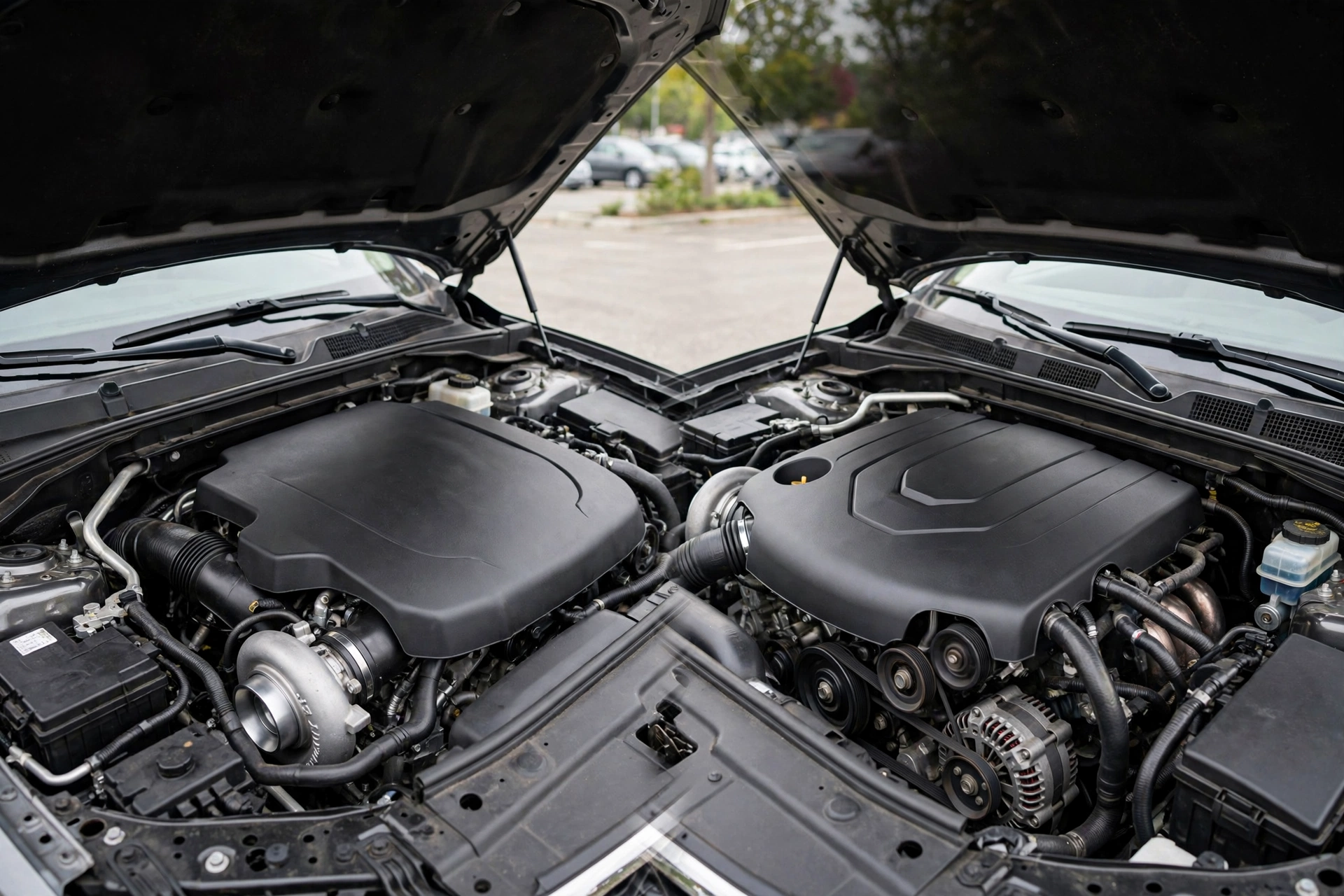
This is the one area where the two SUVs genuinely diverge.
Kia Telluride (gas): a 2.5-liter turbocharged four-cylinder making around 274 horsepower and 311 lb-ft of torque, paired with an 8-speed automatic. That turbo torque is the star of the show — it pulls harder at low speeds than the numbers suggest, which you feel merging onto highways and climbing hills with a full load.
Hyundai Palisade (gas): a 3.5-liter naturally aspirated V6 making around 287 horsepower and 260 lb-ft of torque, also with an 8-speed automatic. It is the smoother, more traditional-feeling engine, and V6 loyalists will appreciate its linear power delivery.
Both hybrids: here’s the twist — Kia and Hyundai use the same hybrid system in both SUVs: a 2.5-liter turbocharged hybrid putting out roughly 329 combined horsepower and 339 lb-ft of torque through a 6-speed automatic. Put a Telluride Hybrid and a Palisade Hybrid next to each other and the powertrain is a dead heat. Your decision moves to price, seats and towing instead.
Fuel Economy: The Hybrid Changes Everything

Gas three-row SUVs are thirsty — that is just physics. The gas versions of both models land around 20–22 mpg combined depending on drivetrain, and your real-world number will move with your right foot.
The hybrids rewrite the story. The Telluride Hybrid is rated at up to 35 mpg combined on front-wheel-drive versions (about 31 with all-wheel drive). The Palisade Hybrid is rated at up to 34 mpg combined (roughly 29–30 with all-wheel drive). That is a small gap — at 15,000 miles a year it works out to roughly a hundred dollars a year in fuel — but combined with the hybrid’s stronger torque, it makes the hybrid the default recommendation for most buyers who can afford the upfront premium.
Want to compare the official EPA figures yourself? You can look up both SUVs at fueleconomy.gov.
Behind the Wheel: How They Actually Feel
Numbers only tell half the story, so here is the part spec sheets miss. The Telluride’s turbo four has a eager, punchy character — peak torque arrives early, so it feels quicker around town and more confident when you floor it to merge. The trade-off is a slightly busier engine note when you work it hard.
The Palisade’s V6 is the old-school charmer: smoother, quieter and more linear when you roll into the throttle. It does not pull as hard from a stop, but it feels calmer and more relaxed on long highway cruises. If your driving is mostly city traffic and school runs, you will probably enjoy the Telluride’s responsiveness more. If you do long, quiet highway miles, the Palisade’s refinement is hard to beat.
Both ride comfortably and steer easily for their size, and both offer all-wheel drive for snow and light off-road duty. Neither is sporty — these are family haulers, and they both nail the assignment.
Size, Seats and Cargo: Measured Differences
Park them side by side and these two are nearly identical in footprint — both ride on the same wheelbase and seat seven or eight depending on whether you pick second-row captain’s chairs or a bench.
The differences show up in the tape-measure details:
- Behind the third row: the Telluride offers 22.3 cubic feet; the Palisade 19.1. That gap is the difference between luggage for a long weekend and luggage for a long weekend plus a cooler.
- Maximum cargo: roughly 88–89 cubic feet for the Telluride versus about 87 for the Palisade. Close, but the Telluride leads at every folding point.
- Seating quirk: the Telluride Hybrid seats seven only, while the Palisade Hybrid keeps an eight-seat layout with the bench. If you need that eighth seat and a hybrid, Hyundai is the only answer.

Head-to-Head Spec Comparison
| Spec | Kia Telluride (2027) | Hyundai Palisade (2026) |
|---|---|---|
| Gas engine | 2.5L turbo 4-cyl | 3.5L V6 |
| Gas power (approx.) | 274 hp / 311 lb-ft | 287 hp / 260 lb-ft |
| Hybrid power (approx.) | 329 hp / 339 lb-ft | 329 hp / 339 lb-ft |
| Hybrid MPG (combined, up to) | 35 FWD / 31 AWD | 34 FWD / ~30 AWD |
| Gas MPG (combined, approx.) | 20–22 | ~19–21 |
| Cargo behind 3rd row | 22.3 cu ft | 19.1 cu ft |
| Max cargo | ~88–89 cu ft | ~87 cu ft |
| Seating | 7–8 (hybrid: 7 only) | 7–8 (hybrid: 8 avail.) |
| Towing, gas / hybrid | up to 5,000 / 4,500 lb | up to 5,000 / 4,000 lb |
| Starting price (MSRP) | $39,190 | $39,435 |
| Powertrain warranty | 10 yr / 100,000 mi | 10 yr / 100,000 mi |
Price and Value: Where the Palisade Fights Back

On with-destination pricing, these two are $2,275 apart: the Kia Telluride Hybrid starts at $48,035 while the Hyundai Palisade Hybrid starts at $45,760 (starting MSRPs $46,490 and $44,160 before destination, per kia.com and hyundaiusa.com, checked November 10, 2026).
Fuel math at 15,000 miles a year: the annual fuel-cost difference between the two hybrids works out to about $116 a year (carthrive.com’s worked calculation). $2,275 ÷ $116 ≈ 20 years — fuel savings alone won’t close the price gap, so buy on the space, features, and driving feel you prefer, not on the fuel math.
Where the Telluride earns its keep: reviewers and buyers consistently rate its interior a notch richer, it gives you more cargo space at every row, and its hybrid tows 500 lb more. The Palisade counters with a lower hybrid price and that eight-seat hybrid option. Neither is a bad value — they are just optimized for slightly different buyers.
For a quick side-by-side of any two models on your own shortlist, try our free car comparison tool.
Still comparing? See the Toyota Corolla vs Honda Civic matchup for a sedan take on this kind of head-to-head, the Toyota Tacoma vs Ford Ranger comparison for trucks, or the Honda Pilot vs Toyota Highlander guide for another three-row family SUV.
Towing: A Small but Real Edge
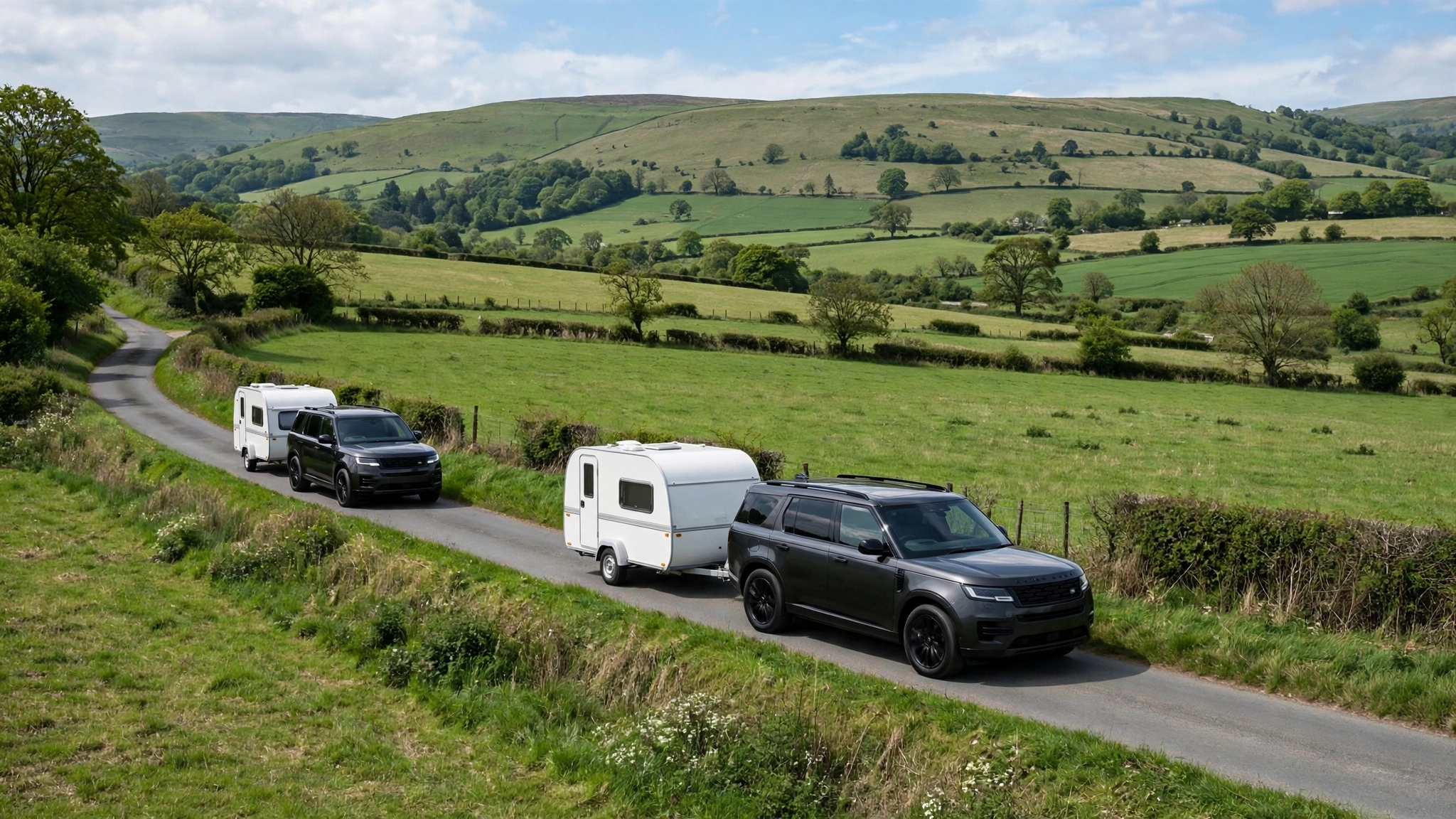
Both gas versions tow up to about 5,000 lb when properly equipped — enough for a small camper or a pair of jet skis. The hybrid Telluride is rated up to 4,500 lb versus 4,000 lb for the hybrid Palisade. If towing matters to you, that 500-lb gap plus the Telluride’s extra torque makes the Kia the natural pick.
Interior and Technology
Both cabins are quiet, well-built and family-friendly, with available dual 12.3-inch displays and a long list of driver-assist features. This is honestly a taste test: the Telluride leans slightly bolder and more rugged in its design language, the Palisade slightly more elegant and premium. Sit in both — your gut reaction is a legitimate data point here, because on paper these interiors tie.
Safety
Both SUVs come loaded with modern driver-assist tech — automatic emergency braking, lane-keeping assistance, blind-spot monitoring and adaptive cruise control are all widely available across the lineups. In IIHS testing, both SUVs earned the institute’s top award: the 2027 Telluride — gas and hybrid — was named a 2026 Top Safety Pick+ for vehicles built after June 2026, and the 2026 Palisade earned the same 2026 Top Safety Pick+ award for vehicles built after November 2025. For the latest independent crash-test results, look up each model by year at IIHS, which publishes its ratings free.
Reliability and Ownership Costs
Here is a genuine tie: both carry the same 10-year/100,000-mile powertrain warranty and 5-year/60,000-mile basic coverage, which remains the strongest mainstream warranty in the segment. Because they share so much engineering, long-term reliability expectations are similar — the biggest variable is which powertrain you choose, with the turbo and hybrid systems being newer designs than the old V6. For broader context on which models hold up best, see our 2025 reliability roundup.
The Verdict: Which Should You Buy?
Buy the Kia Telluride if you want: the roomier cargo area, slightly better hybrid fuel economy, stronger low-end torque, and the higher hybrid towing rating. It is the pick for active families who load up gear and trailers.
Buy the Hyundai Palisade if you want: the lower-priced hybrid, a more refined V6 feel in the gas version, and — the deciding factor for some — an eight-seat hybrid. It is the pick for big families who prioritize people over cargo.
- Price winner: Split — the Telluride has the lower gas starting price ($39,190 vs. $39,435), while the Palisade has the lower-priced hybrid ($44,160 vs. $46,490).
- Fuel winner: Kia Telluride — the Telluride Hybrid is rated up to 35 mpg combined (FWD) versus about 34 for the Palisade Hybrid.
- Space and features winner: Kia Telluride — the roomier cargo area (22.3 cu ft behind the third row versus 19.1) and stronger low-end torque.
- Overall pick: Kia Telluride — it leads in more categories while matching the Palisade on warranty, safety tech, and interior quality.
Still deciding between other family SUVs? Read our Toyota RAV4 vs Mazda CX-5 comparison for a smaller two-row matchup, or run any pair through our free car comparison tool.
Frequently Asked Questions
Is the Kia Telluride the same as the Hyundai Palisade?
Not the same vehicle, but close cousins. They are built by sister companies, share a platform, much of their engineering, and the same 10-year/100,000-mile powertrain warranty. The styling, interiors, gas engines and tuning differ.
Which is bigger, Telluride or Palisade?
They are nearly identical in overall size and wheelbase. The Telluride offers slightly more cargo space — 22.3 cubic feet behind the third row versus 19.1 in the Palisade.
Which is more fuel efficient?
The Telluride Hybrid edges it: up to about 35 mpg combined (FWD) versus up to about 34 for the Palisade Hybrid. Gas versions of both land around 20–22 mpg combined depending on drivetrain.
Which is cheaper, the Telluride or the Palisade?
Base gas trims start within a few hundred dollars of each other ($39,190 vs. $39,435). The Palisade Hybrid starts a couple thousand dollars below the Telluride Hybrid making it the value play on the hybrid side.
Do both have a hybrid option?
Yes. Both offer the same 2.5-liter turbocharged hybrid system with about 329 combined horsepower. One difference: the Telluride Hybrid seats seven only, while the Palisade Hybrid offers an eight-seat layout.
Which tows more?
Gas versions of both tow up to about 5,000 lb when properly equipped. The Telluride Hybrid is rated up to 4,500 lb versus 4,000 lb for the Palisade Hybrid.
More head-to-heads on the site: Jeep Wrangler vs Ford Bronco and Hyundai Tucson vs Kia Sportage.
Related Comparisons
Specs verified November 2026 from Kia America / Hyundai Motor America.