
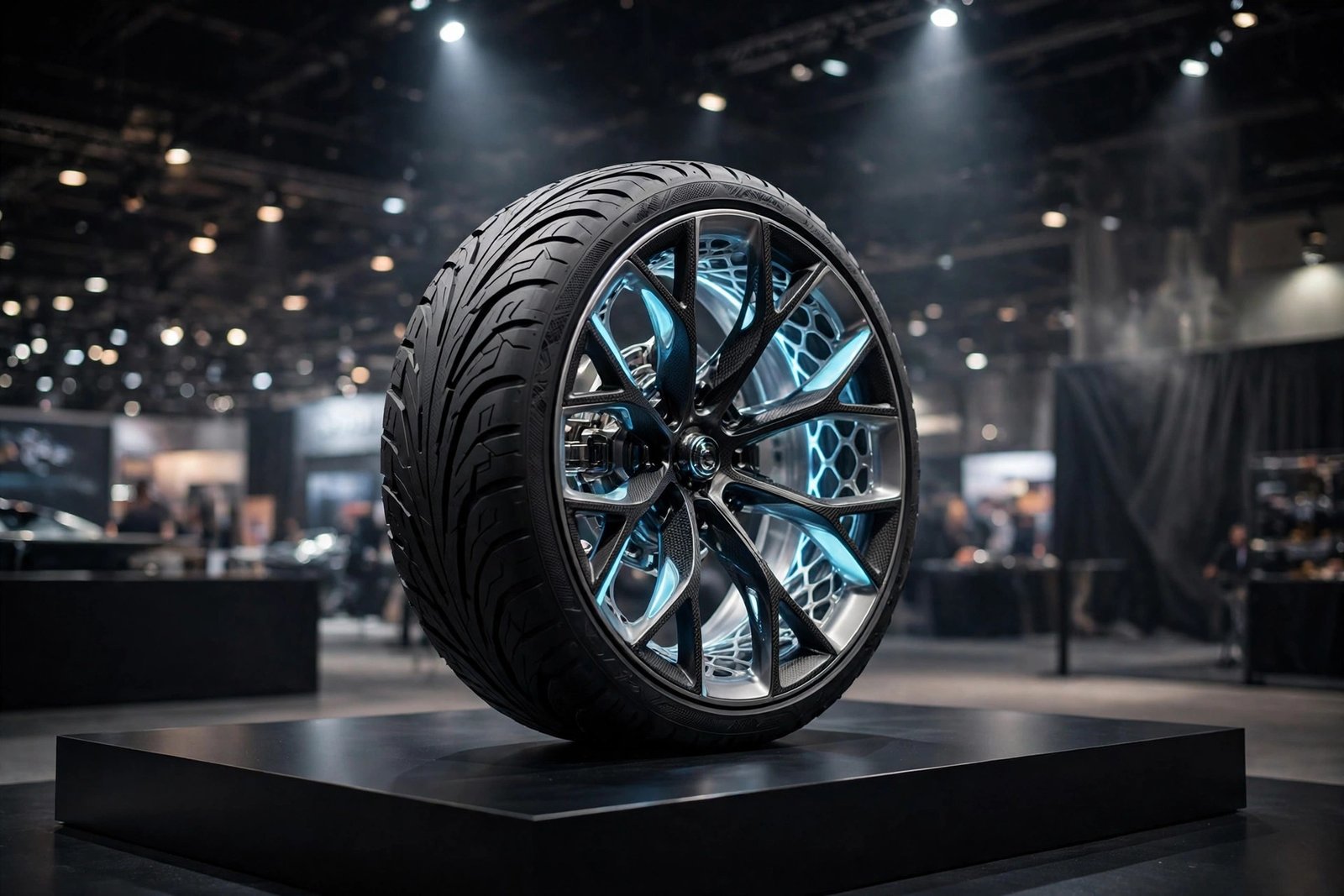
Quick answer: Continental ContiSense was a genuinely clever 2017 concept: a tire whose rubber itself carried electrical signals, so it could report tread depth and temperature and warn you the instant a nail pierced the tread. It never became a tire you could buy. Nine years later, Continental still describes it as future technology, and what the company actually sells is ContiConnect — a sensor-based monitoring system for truck fleets, not a smart tire for your car.
The Continental ContiSense story is a useful warning about how tire technology actually reaches drivers. When Continental unveiled it at the Frankfurt Motor Show in September 2017, the coverage was breathless: a tire that could feel a puncture the moment it happened, measure its own tread, and tell your phone before you knew anything was wrong. The idea was real and the engineering serious. Yet no ContiSense tire has ever appeared in a tire shop, at any price, for any car. This article explains what ContiSense was, how its conductive rubber was supposed to work, what happened to it, and what Continental sells instead — so that if you encounter the name in an old article or a forum post, you know what you are looking at: a concept, not a product.
The 2017 Frankfurt debut: two concepts, one concept tire
ContiSense debuted at the Frankfurt Motor Show (IAA) in September 2017, alongside sibling concept ContiAdapt. Continental’s own history page records the debut. The show ran September 14–24, 2017, and Continental displayed one concept tire combining both systems, with three tread zones for wet, slippery, or dry surfaces.
Continental positioned the pair as the next step after its REDI sensor, brought to market in 2014, and as stablemates of two technologies it did sell: ContiSeal puncture sealing and ContiSilent noise reduction. What none of the 2017 coverage contained was a production date, a price, or a car it would fit. SlashGear noted at the time that there was no indication the tire might ever go into production — the most accurate sentence written about ContiSense.
How ContiSense worked: the tire as a wire
Most smart tires put a sensor in the tire and transmit wirelessly. ContiSense made the tire itself part of the circuit.
Electrically conductive rubber
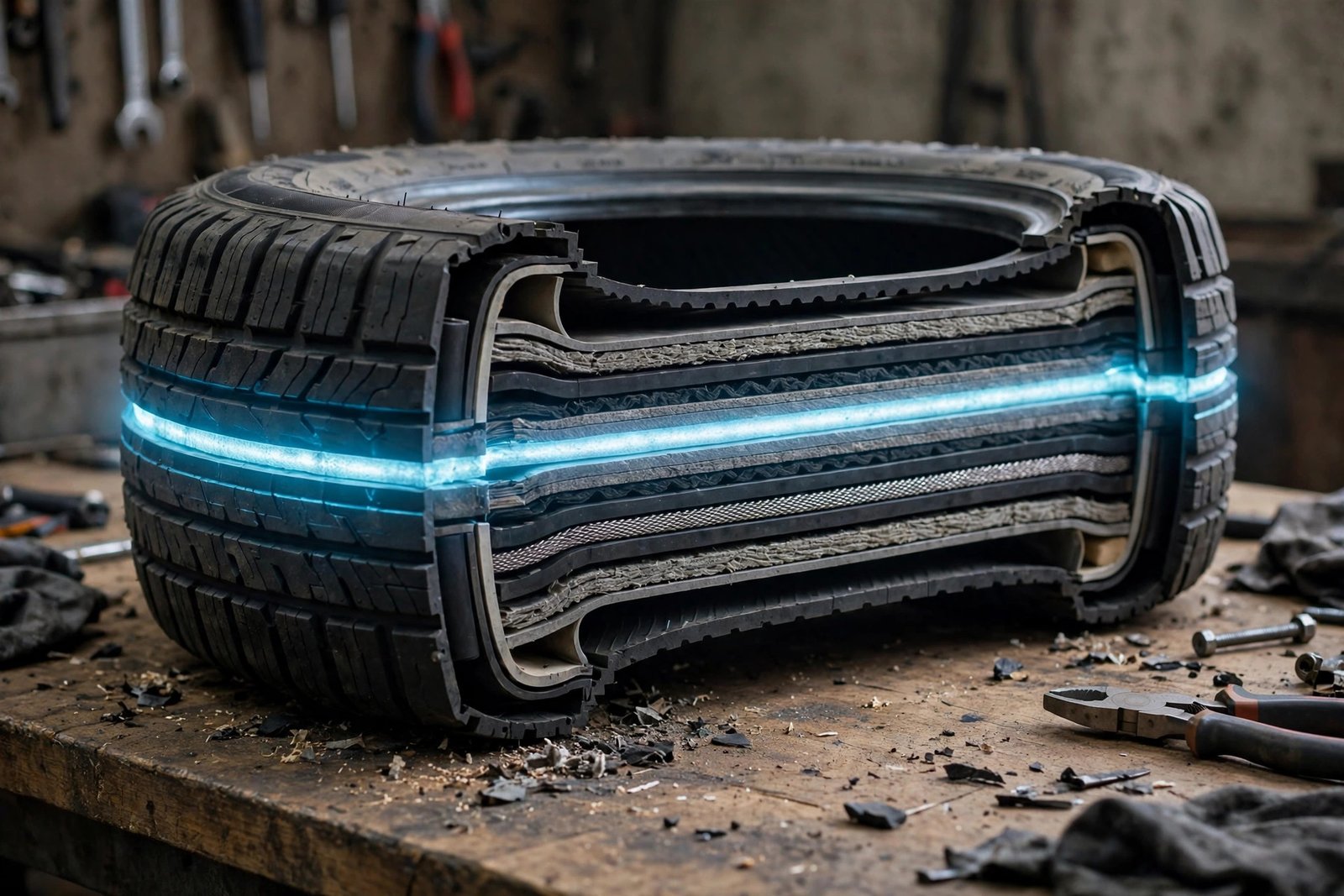
Ordinary tire rubber is an insulator — it does not conduct electricity. ContiSense was based on electrically conductive rubber compounds that allowed electric signals to be sent from a sensor in the tire to a receiver in the car through the rubber itself. Sensors embedded in a conductive rubber layer continuously monitored tread depth and temperature, and if the values moved above or below predefined limits, the system alerted the driver.
Continental’s current website still describes the idea in the same terms: sensors embedded in a conductive rubber layer measure inflation pressure and tread depth, as well as tire and road temperature, and can report dangerously low tread and determine immediately if a nail or road debris has punctured the tire. Note the tense: nearly a decade after the debut, ContiSense is still presented as the future, not the present.
Measuring tread depth through the rubber
The tread-depth trick is the cleverest part. As Continental’s PR consultant Kai Rühling explained to Digital Trends at the show, the electrical tension running through the conductive rubber depends on the thickness of the material: more rubber on the tread means lower electrical tension, less rubber means higher tension. As the tire wears down, the electrical signal changes measurably, so the system can infer tread depth without any camera, gauge, or physical probe — a measurement made from inside the tire, continuously, while driving.
That matters because tread depth is the tire measurement drivers neglect most. Pressure gets a dashboard light; tread gets nothing. A tire can sit at perfect pressure and be nearly bald, and the only warning is a check the driver has to remember to do. ContiSense was an attempt to automate that check entirely; see how to check tire tread depth.
The puncture warning: a circuit that closes on impact
The headline feature was puncture detection. Continental’s description, quoted consistently across the 2017 coverage, was this: if anything penetrates the tread, a circuit in the tire is closed, triggering an immediate warning for the driver, faster than the systems used to date, which only warn the driver when the tire pressure has already begun to fall.
The difference is the whole point of the concept. Your car’s TPMS watches pressure. Under the US federal standard FMVSS No. 138, it must warn you within 20 minutes once a tire is 25 percent or more below its recommended cold pressure. A nail that lodges in the tread and seals its own hole can leak very slowly — slowly enough that you drive on it for days and find a flat tire in the morning, with no warning in between. ContiSense would have warned you at the moment of penetration, because the penetrating object itself completed the circuit. The warning would arrive before the damage became a pressure problem, which is precisely when a warning is most useful.

Getting the data out: receiver and Bluetooth
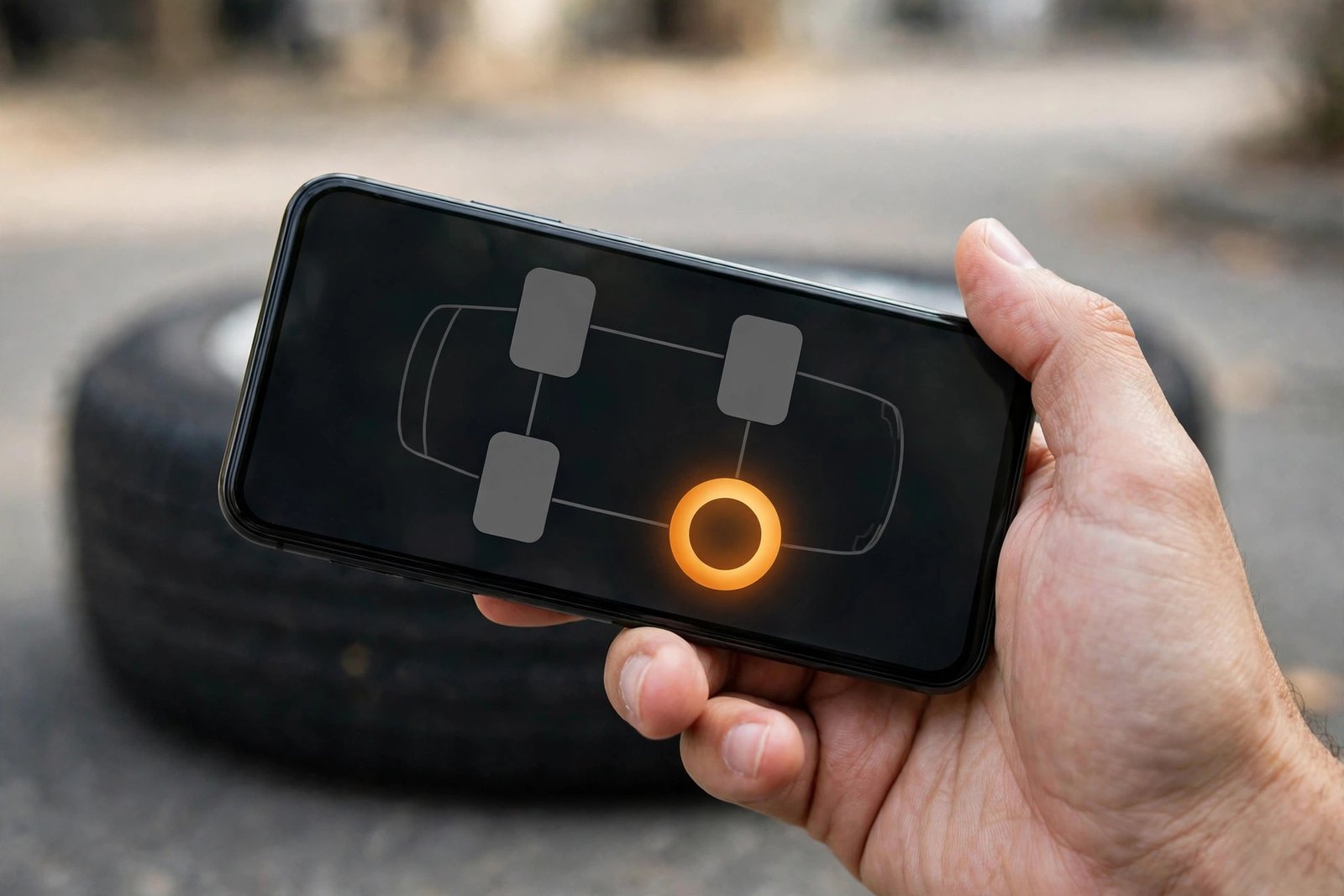
ContiSense data had two routes out of the tire: through the conductive rubber to a receiver in the car, and via Bluetooth to a smartphone. The Bluetooth route was the consumer-friendly one — a phone app showing tire condition without dashboard integration — and it is the idea that survived: Continental’s later fleet product uses a phone app in exactly that way, even though the conductive rubber did not.
Continental also said future versions would add sensors for road temperature and surface conditions, but New Atlas noted that this was not yet at concept stage — a direction of travel, not a demonstrated feature.
| What ContiSense promised | How it was supposed to work | Status in 2026 |
|---|---|---|
| Tread depth monitoring | Electrical tension through conductive rubber changes as tread wears | Concept only, never sold |
| Temperature monitoring | Sensors in the conductive rubber layer | Concept only, never sold |
| Instant puncture warning | Penetration closes a circuit in the tire | Concept only, never sold |
| Road temperature / snow / water sensing | Additional future sensors, planned only | Never demonstrated in ContiSense |
| Phone alerts via Bluetooth | Data sent to a smartphone | Idea reused in ContiConnect fleet app |
ContiAdapt: the sibling that tried to change the tire itself
ContiSense only watches. Its sibling, ContiAdapt, acts — and understanding ContiAdapt explains a lot about why neither concept reached production.
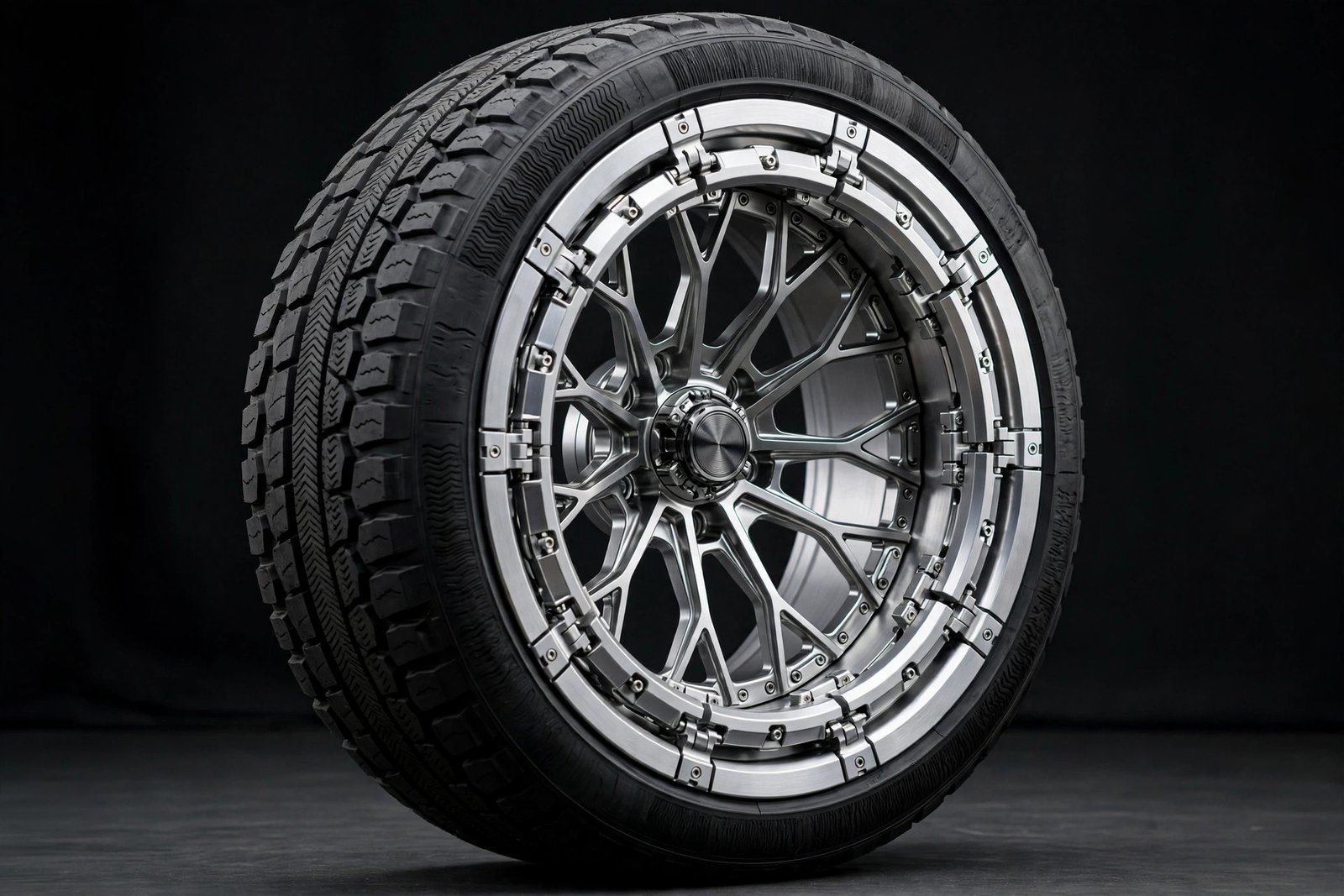
ContiAdapt combined micro-compressors integrated into the wheel, to adjust tire pressure, with a variable-width rim. Together, they could modify the size of the contact patch — the area of tire touching the road — which Continental described as a decisive factor for safety and comfort under different road conditions. The system offered four combinations of pressure and rim width, tuned for wet, uneven, slippery, and normal conditions. One contemporary report noted that ContiAdapt could set tire pressure below 1 bar (about 14.5 psi) — far below any normal road pressure — to maximize the contact patch on loose or slippery surfaces.
The concept tire shown at Frankfurt was designed specifically to exploit ContiAdapt. It had three different tread zones, tailored for wet, slippery, and dry surfaces. As ContiAdapt varied pressure and rim width, different tread zones became the main contact point with the road, giving the tire different characteristics for different conditions without changing the tire itself. Continental was showing a tire that could reshape its own footprint on demand.
It is easy to see why it stayed a concept: a wheel with built-in micro-compressors, a rim that changes width while staying airtight, a control system choosing between four modes, and a three-zone tire — every one a new, expensive component in the hardest-worked part of the car. ContiAdapt has not been heard from as a product program since 2017. ContiSense was the plausible concept, ContiAdapt the moonshot; neither shipped, but the sensing idea lived on in other forms.
Why ContiSense never became a product you could buy
Continental has never published a post-mortem on ContiSense, so the honest answer combines what is documented with what can reasonably be inferred. What is documented: no production date was ever announced, no retail tire ever appeared, no carmaker ever announced ContiSense fitment, and Continental’s own website still describes the technology in future terms. What explains that record:
The system change was too large for the benefit. ContiSense needed conductive rubber, a sensor and battery in the tire, a receiver in the car, and interpretation software — a coordinated change across tire, wheel, and vehicle electronics. A faster puncture warning is real, but TPMS already covers the worst cases, and the gap was hard to price.
Simpler sensing caught up. The market went a different way: small sensors mounted inside the tire or on the valve, transmitting wirelessly, with the cleverness in software rather than in the rubber. Pirelli’s Cyber Tyre uses a sensor stuck to the inside of the tire and Bluetooth; Goodyear’s SightLine combines tire-mounted sensors with software models. Both achieve most of what ContiSense promised without conductive rubber.
The money was in fleets, not family cars. A sensing tire is worth the most where tires are a managed cost: trucking fleets and bus operators, where one blowout means downtime and a roadside bill. Continental’s commercial energy went there, into ContiConnect. The consumer market was never going to pay first for conductive-rubber sensing.
None of this means ContiSense was a fake. The idea was demonstrated and described in consistent technical detail; it simply took a different path to market than the one shown on the stand.
What Continental sells today instead: ContiConnect
If you want Continental tire monitoring in 2026, the product is ContiConnect — and it is important to understand what it is and is not. ContiConnect is a digital tire monitoring service for truck, bus, and trailer fleets. It is not a consumer tire, not a ContiSense tire, and not something you fit to a family car.
The system works with sensors, not conductive rubber: tire-mounted sensors attach to the inner casing and report pressure and temperature, and valve-cap sensors offer a quicker start. Data goes to a web portal and phone app with alerts for inflation problems, leaks, temperature, mileage, and GPS location. The app can also read sensors directly via Bluetooth — the closest surviving echo of ContiSense’s phone-alert idea.
| ContiConnect version | How it works | Best for |
|---|---|---|
| ContiConnect Live | Continuous remote monitoring, data from anywhere at any time | Trucks, buses, and trailers on the road |
| ContiConnect Live for Trailers | Once-a-day readings plus GPS, without a direct power source | Fleets that drop trailers at different locations |
| ContiConnect Yard | Readings taken every time a vehicle passes a yard reader | Fleets that return to a central depot |
| ContiConnect Lite | Reads sensor signals via the phone app, no additional vehicle hardware | Fleets starting out with digital monitoring |
| ContiConnect Pro | Current platform name for automated monitoring with predictive maintenance | Fleets wanting the full portal, app, and analytics |
Continental says ContiConnect sensors last 2.5 years (valve-cap) to 4 years (tire-mounted) — even the shipping product has a sensor-replacement cycle.
For passenger cars, Continental’s current consumer technologies are the ones already selling in 2017: ContiSeal puncture sealing and ContiSilent noise reduction. Both are genuine and buyable; neither senses anything. Our Continental ExtremeContact DWS06 Plus review and Continental vs Pirelli comparison cover what the brand actually offers now — neither mentions ContiSense, because no tire on sale carries it.

ContiSense vs ContiConnect: do not confuse the two
The names invite confusion, and search results mix them freely. The distinction is simple:
| ContiSense | ContiConnect | |
|---|---|---|
| What it is | A smart tire concept from 2017 | A fleet tire monitoring product, on sale today |
| How it senses | Electrically conductive rubber compounds | Tire-mounted or valve-cap sensors |
| What it measures | Tread depth, temperature, punctures, pressure | Pressure, temperature, mileage, GPS location |
| Who it is for | Was aimed at future passenger cars | Truck, bus, and trailer fleets |
| Can you buy it? | No, never sold | Yes, as a fleet service |
| Data destination | Car receiver and smartphone via Bluetooth | Web portal and phone app |
What this means for your car today
ContiSense promised tread monitoring, temperature monitoring, and instant puncture warnings — none available to a regular driver as a Continental product in 2026, but all with workable stand-ins. Check tread yourself, regularly; see how to check tire tread depth and when to change tires. Keep TPMS healthy — see how to tell if a TPMS sensor is bad and TPMS sensor replacement cost. And if you hear a new rhythmic noise or notice slow pressure loss, inspect the tread before the next long drive.
The sensing tire is coming, in systems like Pirelli’s Cyber Tyre and Goodyear’s SightLine — sensors and software, not conductive rubber. It will probably arrive as standard equipment on a new vehicle, not as a tire you choose. Until then, judge tire technology by what is on sale and measured, not by what looked remarkable on a show stand.
Verdict: a clever concept that pointed the right way
ContiSense deserves more respect than most forgotten concepts. Its core insight — that the tire should report its own condition, and that a puncture warning should arrive at penetration, not pressure loss — was correct, and the industry has spent the years since proving it by other means. Its conductive-rubber technology was elegant and never commercialized; ContiAdapt was bolder still and further from production.
What happened to ContiSense is the ordinary fate of a good concept: the idea survived, the implementation did not. Continental sells fleet monitoring as ContiConnect, Pirelli and Goodyear sell sensor-based tire intelligence to carmakers, and the conductive rubber tire remains a 2017 showpiece. The promise about what tires could know is being kept — just not by the tire that made it.
Frequently asked questions
What is Continental ContiSense?
ContiSense is a smart tire concept Continental showed at the Frankfurt Motor Show in 2017. It used electrically conductive rubber compounds to carry signals from a sensor in the tire to a receiver in the car, continuously monitoring tread depth and temperature and warning the driver instantly if anything penetrated the tread. It was a technology demonstration, not a product, and it was never sold to consumers.
Can you buy Continental ContiSense tires?
No. ContiSense was never released as a retail tire, and as of 2026 there is no ContiSense tire you can buy, no price, and no fitment list. Continental still describes the technology on its website as the future of tire monitoring. What Continental actually sells today for tire monitoring is ContiConnect, a fleet system for trucks and buses, not a consumer tire.
How did ContiSense detect a puncture faster than TPMS?
TPMS only warns once air pressure has fallen — under the US standard, once a tire is 25 percent or more below its recommended pressure. ContiSense worked differently: if anything penetrated the tread, it closed an electrical circuit in the tire’s conductive rubber, triggering an immediate warning before pressure had begun to fall.
What is the difference between ContiSense and ContiAdapt?
ContiSense is passive: it senses and warns. It monitors tread depth and temperature through conductive rubber and alerts the driver to problems. ContiAdapt is active: it changes the tire, using micro-compressors in the wheel and a variable-width rim to adjust pressure and contact patch size for wet, uneven, slippery, or normal conditions. The two were shown together at Frankfurt in 2017 in a single concept tire with three tread zones.
Why did ContiSense never go into production?
Continental never announced a production date, and no production version followed. The concept needed conductive rubber, new wheel hardware, and car-side receivers — a large system change for a benefit sensor-based monitoring could deliver more simply. Continental’s commercial effort went into ContiConnect fleet monitoring instead.
What does Continental sell today instead of ContiSense?
For monitoring, Continental sells ContiConnect, a digital tire management system for truck, bus, and trailer fleets. Sensors mounted inside the tire or on the valve report pressure, temperature, and mileage to a web portal and phone app, in Live, Yard, and Lite versions. For passenger cars, Continental sells conventional tires with technologies like ContiSeal puncture sealing and ContiSilent noise reduction — useful features, but not the sensing tire ContiSense promised.