
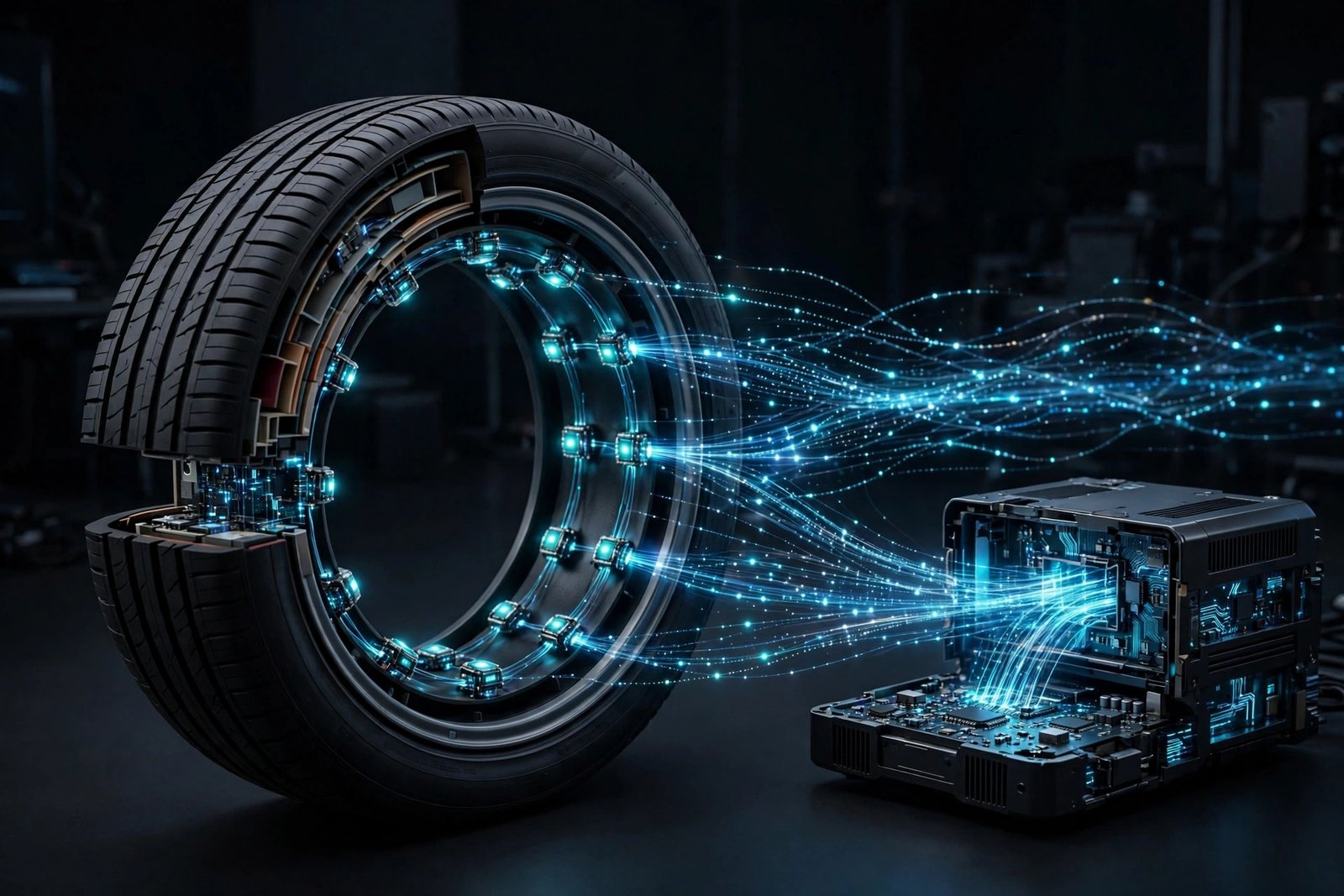
Quick answer: In 2026, smart tire technology is a mix of sensor tires fitted to a few premium cars (Pirelli Cyber Tyre), fleet and automaker intelligence platforms (Goodyear SightLine, Continental ContiConnect), software models that estimate tire condition without new tire hardware (Michelin SmartWear and SmartLoad), and one next-generation chip still in development (POLYN). There is still no smart tire a regular driver can buy off the shelf.
Smart tire technology has moved past the demo stage — but it has not reached the tire shop. In 2026 it lives in three places: a handful of expensive new cars that ship with sensor tires as standard equipment, truck fleets whose managers watch tire data on a screen, and software labs where tire wear is estimated from data a car already collects. This guide walks through each major system, what it actually does, and what is genuinely new this year.
If you want the plain-English version of what a smart tire is before the system-by-system detail, start with our guide to what smart tires are. This article goes deeper: the technology, the players, and the evidence behind the claims.
The 2026 landscape in one table
The field looks crowded, but the players fall into clear groups:
| System | Maker | Type | Status in 2026 |
|---|---|---|---|
| Cyber Tyre | Pirelli | Sensor tire + car software | Production on select premium cars |
| SightLine | Goodyear | Tire intelligence platform | Automaker and fleet integration |
| SmartWear / SmartLoad | Michelin | Software digital twin | Demonstrated at CES 2026 |
| ContiSense / ContiConnect | Continental | Concept + fleet service | Concept shelved; fleet service shipping |
| POLYN | POLYN Technology | Friction-sensing chip | Prototypes, production targeted 2028 |
That table is the whole story in miniature: one production sensor tire, two integration platforms, one software approach, one concept that became a fleet service, and one chip still in the lab. Everything below fills in the detail.
The systems that define the field
Pirelli Cyber Tyre
Pirelli’s Cyber Tyre is the furthest along: a sensor inside each tire, connected to software in the car’s computer. It debuted as standard equipment on the McLaren Artura, announced in February 2021 as a world first. Each tire carries a digital “passport” — tire type, summer or winter fitment, prescribed pressure, load index, and speed rating — plus live pressure and temperature data. It has since spread to the Pagani Utopia Roadster, with Bosch Engineering partnering on the vehicle-dynamics integration.
The headline evidence for Cyber Tyre came in October 2026, when evo tested a Cyber Tyre-equipped car at Pirelli’s Vizzola Ticino track and recorded a wet-braking stop 5.7 meters shorter from 110 kph (68 mph) than the same car running on assumption-based braking. The tire created no extra grip; the braking system used real-time tire data to use the grip already there more effectively. Pirelli also says Cyber Tyre readings beat valve-mounted sensors because the sensor sits on the tire itself rather than on the rim, and the system meets the legal requirements for a tire pressure monitoring system.

Goodyear SightLine
Goodyear’s SightLine, launched in 2021, is described by Goodyear as a suite of tire intelligence solutions. It measures wear state, load, inflation, and temperature, then combines those readings with road-weather data and friction models to estimate tire-road friction potential. The most concrete demonstration came in 2023, when Goodyear and autonomous delivery company Gatik ran a proof of concept in Canada: SightLine tires estimated friction, fed it to the vehicle’s autonomous driving system, and detected low-grip snow and ice conditions during winter testing.
SightLine has since been tested with Dutch research organization TNO on triggering automatic emergency braking earlier on slippery surfaces, with testing reported at speeds up to 50 mph, and Goodyear demonstrated the system with an autonomous-vehicle platform at CES 2026. It remains a business-to-business technology: automakers and fleets, not an accessory you can add to the car in your driveway.

Michelin SmartWear and SmartLoad
Michelin’s entry turns the hardware story upside down. SmartWear and SmartLoad, built with vehicle software company Sonatus, are software models that estimate tire wear and tire load from signals the vehicle already generates — braking intensity, cornering forces, load, and driving conditions. Michelin’s tire digital twin chief explained at CES 2026 that the models use sensors already equipping the vehicle, with no additional sensor in the tire. The demonstration ran on a 1970 Ford Bronco retrofitted with the system, with results shown in Michelin’s MyTires app, and Michelin says the data stays inside the vehicle rather than being sent to the cloud.
Why does that matter? Because it removes the two biggest barriers to smart tires — cost and hardware in a spinning, flexing tire. If a car can estimate tire condition from data it already has, the technology can reach ordinary vehicles through software updates and new-model integration instead of waiting for a new generation of tires. Michelin calls SmartWear and SmartLoad the first building blocks of a full “tire digital twin,” and our separate guide to how smart tires work explains the sensing and software split in more detail.
Continental ContiSense and ContiConnect
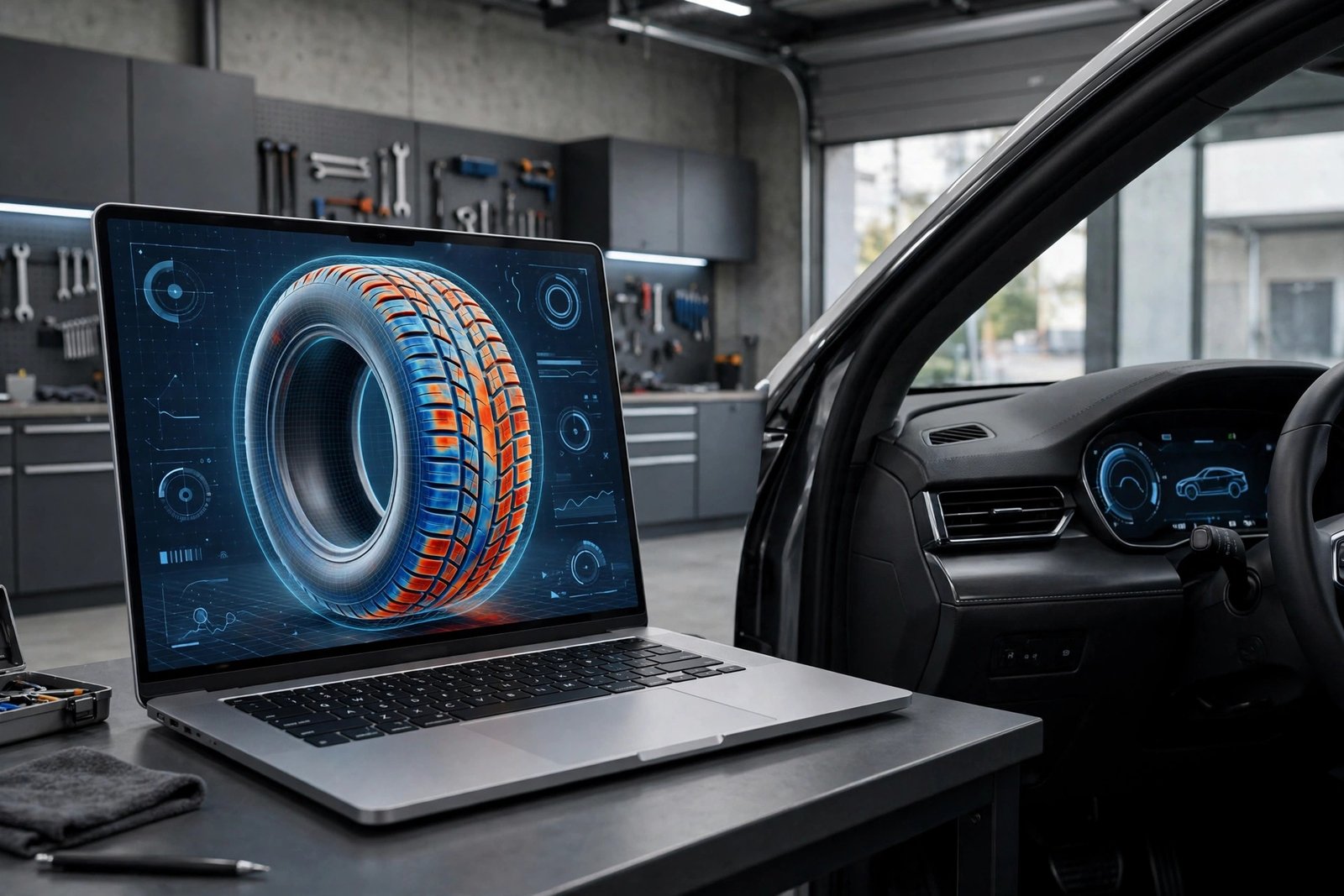
Continental’s story is two products with one name family. ContiSense was the 2017 concept: electrically conductive rubber carrying signals from a tire sensor to a receiver in the car, measuring tread depth and temperature and warning instantly if something penetrated the tire — faster than any system waiting for pressure to fall. It never became a retail product, and Continental’s own materials now describe it in past-tense concept terms.
What Continental actually sells is ContiConnect, a fleet monitoring service: sensors on truck and bus tires report pressure, temperature, and mileage to a web portal and app, with alerts when a tire drifts out of range. The distinction matters because ContiSense still appears in “smart tire” roundups as if you could buy it. You cannot. ContiConnect you can — if you run a fleet.

POLYN: the chip in the rubber
The newest name in the field is POLYN Technology, whose chip is designed to sit inside the tire rubber and measure road friction directly — a measurement no production system currently makes from inside the tire. POLYN says the chip can sense the friction coefficient between tire and road and detect aquaplaning conditions, with the data feeding vehicle stability and braking systems. The company’s timeline targets 2028 for production, and in 2026 the technology is at the prototype and partnership stage. Treat POLYN as the one to watch for the late 2020s, not as something you can buy.
Digital twins: the tire that lives in software
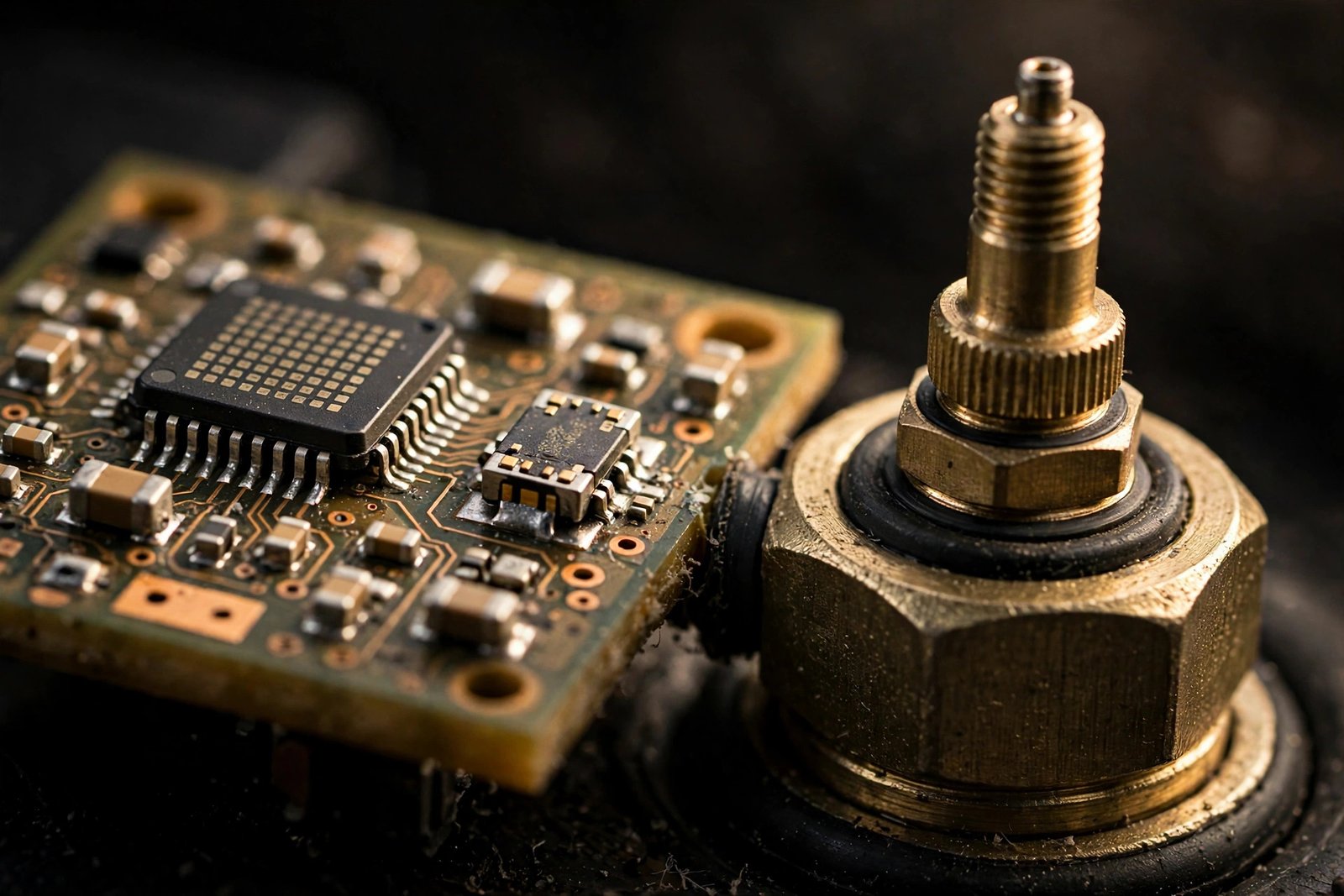
The phrase “digital twin” gets thrown around a lot, so here is what it means for tires: a software model of a specific tire that updates as the tire ages. It starts with the tire’s identity — type, size, manufacturing data — then absorbs driving data: miles, loads, temperatures, braking events. From that history it estimates current tread depth, remaining life, and the grip available right now. Michelin’s SmartWear and SmartLoad are the first building blocks of such a twin; Goodyear’s SightLine platform builds a similar picture from sensor data plus weather and friction models.
The practical payoff is prediction instead of reaction. A digital twin can warn that a tire will reach minimum tread depth in 3,000 miles, or that a fleet’s tires are wearing unevenly because of alignment problems, before a driver notices anything. For fleets, that means scheduling tire changes instead of suffering roadside failures. For safety systems, it means braking decisions based on the tire’s actual condition rather than a generic assumption. The twin is software, so it improves as models improve — but it is only as good as the data feeding it, which is why the sensor and software approaches are converging rather than competing.
How smart tire technology reaches safety systems
The most important question about smart tire technology is not what the tire measures — it is what the car does with the measurement. The answer, in 2026, is mostly “nothing yet, but the plumbing is being built.” The path from tire to braking system runs through the car’s electronics architecture, and each maker is building it differently:
- Tire data in. A sensor in the tire (Pirelli) or a software model reading vehicle signals (Michelin) produces pressure, temperature, wear, load, or friction estimates.
- Vehicle integration. Software in the car’s computer receives the data. Pirelli works with Bosch Engineering on this layer; Goodyear integrates SightLine with automaker platforms and autonomous driving systems.
- Safety systems act. Braking, stability control, and automatic emergency braking adjust to the tire’s real condition. The evo Cyber Tyre test — 5.7 meters shorter wet stop from 110 kph — is the clearest public evidence of this layer working. Goodyear’s TNO work on earlier emergency braking is the same idea from the friction-estimation side.
- The driver hears about it. Dashboard warnings and phone apps are the visible layer, but the most valuable actions may be invisible: a car that brakes earlier on ice without the driver ever knowing why.
That fourth step is why the technology’s arrival will feel undramatic. You will not buy a “smart tire” and suddenly see new dashboard graphics. You will buy a new car, and its braking will quietly be a little better on a wet road than the last one.
What it means for ordinary drivers
For a driver with a car already in the driveway, smart tire technology in 2026 changes nothing directly — and that is the honest answer, not a sales pitch. What it changes is what to watch for in your next car: whether it ships with sensor tires, whether its safety systems use tire data, and whether the tire maker’s app gives you tread and wear information without a trip to the shop.
The maintenance habits that matter today are unchanged. Your TPMS light is still the warning that counts: our guides cover how to reset TPMS and why the light stays on after filling your tires. Check pressures monthly, inspect tread regularly, and replace tires when they are worn or old — no sensor changes that.
Our verdict: what to watch in 2027
Smart tire technology in 2026 is real but narrow: one production sensor tire, two integration platforms, one software twin, one fleet service, and one chip in the lab. The most important development is not a single product but the convergence — sensors, software, and safety systems starting to speak the same language. Watch for three things in 2027: whether Cyber Tyre spreads beyond premium cars, whether Michelin’s software approach reaches production vehicles, and whether POLYN’s chip hits its 2028 production target. Until then, the best “smart tire” decision most drivers can make is keeping the tires they have properly inflated and inspected, with help from our guides to checking tread depth and when to change tires.
Frequently asked questions
What is smart tire technology?
Smart tire technology is the combination of sensors, chips, and software that lets a tire report its own condition — pressure, temperature, tread wear, load, and sometimes road grip — to the car, the driver, or a fleet manager. It includes sensor tires like Pirelli Cyber Tyre, intelligence platforms like Goodyear SightLine, software models like Michelin SmartWear and SmartLoad, and fleet services like Continental ContiConnect.
Which cars have smart tire technology in 2026?
Very few. Pirelli Cyber Tyre is fitted as standard equipment to a small number of premium cars, including the McLaren Artura and Pagani Utopia Roadster. Most other systems are in automaker integration or fleet use, not available as standard equipment on mainstream cars.
Is smart tire technology the same as TPMS?
No. TPMS (tire pressure monitoring system) watches tire pressure and must warn you when a tire falls 25% or more below the recommended pressure under the US federal standard. Smart tire technology adds temperature, tread wear, load, and road-friction sensing, and in some systems feeds that data to braking and stability controls.
What is a tire digital twin?
A tire digital twin is a software model of a specific tire that updates as the tire ages, combining its identity and manufacturing data with driving history — miles, loads, temperatures, braking events — to estimate current tread depth, remaining life, and available grip. Michelin calls SmartWear and SmartLoad the first building blocks of a full tire digital twin.
Can I add smart tire technology to my current car?
In 2026, no. The advanced systems need matching software in the car’s electronics to receive and use tire data, so they arrive as factory equipment or fleet installations. Aftermarket pressure sensors exist, but they are TPMS accessories, not smart tire systems.
When will smart tires be available for regular cars?
There is no announced date for a mainstream aftermarket smart tire. The technology is spreading through new-car equipment and fleet adoption first. POLYN’s friction-sensing chip targets production in 2028, and Michelin’s software approach could reach production vehicles sooner because it needs no new tire hardware — but neither is a product you can buy today.