
Quick answer: Leasing costs less per month — about $148 a month less on average in 2026 — but buying costs less overall if you keep the car. Over six years, buying a $39,900 Toyota RAV4 costs roughly $47,033 all-in versus about $60,420 for two back-to-back leases, a gap of around $13,386. The rule of thumb: lease if you want a new car every three years and drive within the mileage limit; buy if you keep cars for five years or more, drive a lot of miles, or want to own something at the end.
How leasing actually works
The lease vs buy a car question starts with understanding what a lease actually is. A lease is not a way to buy a car slowly. It is a long-term rental. You pay to use a new car for a set period — usually 24 to 36 months — and then you return it. Your monthly payment covers three things: the depreciation (the difference between the car’s price today and what the leasing company expects it to be worth at the end, called the residual value), the finance charge (the money factor, which works like an interest rate), and taxes and fees.
That is why a lease payment is lower than a loan payment on the same car. When you finance, you are paying off the car’s full price. When you lease, you are only paying for the slice of value the car loses while you have it. The catch is that when the lease ends, you own nothing. The car’s remaining value belongs to the leasing company, and your next car means starting a new payment.
A lease also comes with rules a loan does not: a mileage limit (usually 10,000 to 12,000 miles a year), a requirement to keep the car in good condition, and a fee — typically around $350 — if you return the car instead of leasing or buying another one from the same brand.
How buying actually works
When you buy with a loan, you borrow the car’s full price (minus your down payment and trade-in) and pay it back over a set term, usually 48 to 72 months. Your monthly payment is higher because you are paying for the whole car, not just its depreciation. But every payment builds equity: it reduces what you owe on an asset you will eventually own outright.
Once the loan is paid off, you have a payment-free period — months or years of driving with no monthly car payment at all. That payment-free period is where buying pulls ahead financially. A leased car never gives you one: when one lease ends, the next one starts, and the payments never stop.
Buying also means freedom. There is no mileage limit, no excess-wear charge at return, and you can modify the car, sell it whenever you like, or drive it for 200,000 miles if it holds up.
Monthly cost: leasing wins, by about $148 a month
The leasing pitch is real, and the numbers back it up. Experian’s Q2 2026 data puts the average new-car loan payment at $765 a month and the average lease at $617 a month — a gap of about $148. Other 2026 figures put the average loan at $748 and the average lease at $613, a similar $135 gap. Leasing is typically 20 to 30 percent cheaper per month than financing the same vehicle.
That lower payment is why leasing is tempting, and for some drivers it is genuinely the right call. But the monthly payment is only one number in a much bigger picture. AAA’s 2026 Your Driving Costs study puts the true cost of owning a new car at $12,863 a year — about $1,072 a month — based on a new car driven 15,000 miles a year over five years. Depreciation alone costs $4,422 a year, more than fuel ($2,595), insurance ($2,098), or finance charges ($1,184). Both the lease payment and the loan payment sit inside that much larger annual cost.
So the honest question is not “which payment is lower?” It is “which option costs less in total, for the way I actually use a car?” That is a different question, and it has a different answer.
Total cost over 3 years: closer than you would think
Over a single three-year term, the gap is smaller than the monthly payments suggest. One 2026 cost breakdown on a $55,000 luxury sedan found total 3-year out-of-pocket costs of $35,260 for leasing versus $40,312 for buying — leasing cheaper by about $5,000 at the three-year mark. But the buyer still owns a car worth a large share of its original price at that point, while the lessee owns nothing and has to start over.
That is the key insight for the three-year comparison: leasing costs less out of pocket over three years, but buying leaves you holding an asset. The fair comparison is net cost — total amount paid minus the vehicle’s value at the end of the term. On a $40,000 vehicle over 36 months, buying typically produces a net cost of $6,000 to $10,000 versus $15,000 to $20,000 for leasing, once the car’s remaining value is counted.
Total cost over 6 years: buying wins clearly
Stretch the timeline and the picture flips decisively. A six-year worked example comparing a $39,900 Toyota RAV4 bought outright against two back-to-back three-year leases of the same car found:
| Buy (6 years) | Lease twice (6 years) | |
|---|---|---|
| Total all-in cost | ~$47,033 | ~$60,420 |
| What you own at the end | A paid-off RAV4 | Nothing |
| Monthly payments after year 5 | $0 | Still paying |
The gap is about $13,386, or $2,231 a year — roughly the price of never owning anything. The buyer pays the loan off (typically in five years), then drives payment-free in year six while the lessee starts a second lease. Over ten years the gap grows further: someone who leases a $35,000 car every three years might spend $45,000 or more in lease payments and have zero equity, while someone who buys the same car, pays it off in five years, then drives it five more years payment-free spends about $42,000 and still owns a car worth around $8,000 — coming out roughly $11,000 ahead, plus five years of payment-free driving.
The break-even point is generally around year 4 to 5 of ownership. Hold the car longer than that and buying wins decisively. Hold it for three years or less and leasing can win — which is exactly the situation leasing was designed for.
Lease vs buy at a glance
| Lease | Buy | |
|---|---|---|
| Average monthly payment (2026) | ~$617 | ~$765 |
| Upfront cost | Lower (first payment + fees) | Higher (down payment + taxes) |
| Total cost over 3 years | Lower out of pocket | Higher out of pocket, but you keep an asset |
| Total cost over 6+ years | Higher | Lower — loan ends, payments stop |
| Equity at the end | None — you return the car | You own the car |
| Mileage limit | Yes, usually 10,000–12,000/yr | None |
| Excess mileage charge | $0.15–$0.25 per mile | None |
| Wear and tear charges | Yes, at return | None |
| Disposition fee | ~$350 at return | None |
| Warranty coverage | Usually the whole lease term | Ends while you still own the car |
| Can you modify or sell it? | No | Yes |
| Best for | New car every 2–3 years, low miles | Keeping a car 5+ years, high miles |
The mileage trap: the biggest lease risk
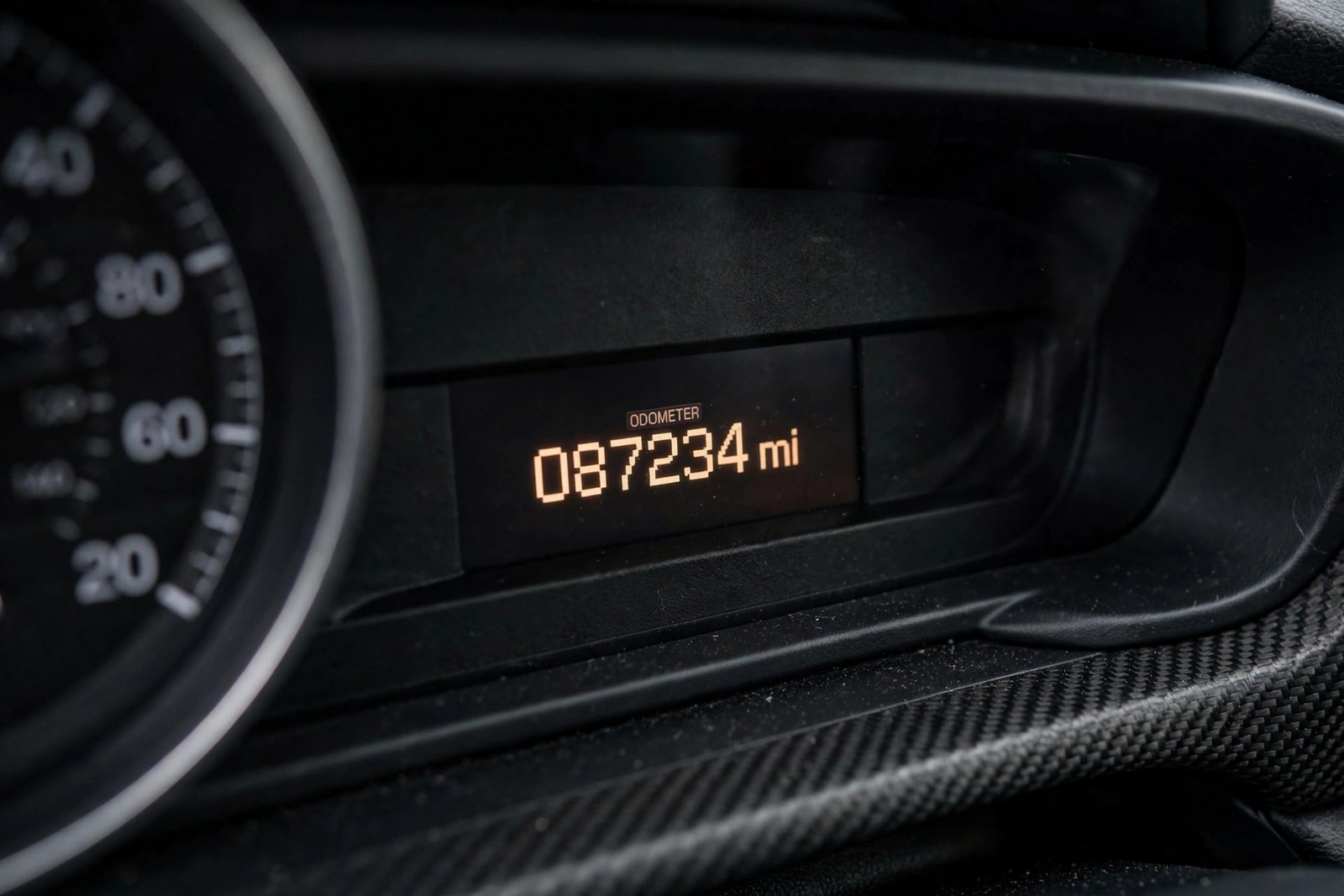
Mileage limits are where leases get expensive, and they catch more people than any other term. Most leases allow 10,000 to 12,000 miles a year. If you drive 15,000 miles a year on a 10,000-mile lease, that is 15,000 extra miles over three years — at $0.15 to $0.25 per mile, that is $2,250 to $3,750 due at lease end, all at once.
Before you sign a lease, do an honest count of your annual miles. Check your odometer history or your last year of driving. If you are anywhere near the limit, buy the extra miles up front in the lease — it is almost always cheaper than paying for them at return. And if you drive 15,000 miles or more a year, leasing probably is not the right structure for you at all; the excess-mileage charges will eat the monthly-payment advantage.
Depreciation: the cost nobody sees
Depreciation is the largest cost of owning any vehicle — larger than fuel, larger than insurance, larger than maintenance for most drivers. A new car loses approximately 20% of its value in the first year, about 30% by the end of year two, and by year five most vehicles retain only around 45% of their purchase value. Luxury sedans can lose 65 to 75% over five years.
This matters for the lease-vs-buy decision in two ways. First, when you lease, you are paying for the car’s steepest depreciation years — the first three — and then handing the car back just as depreciation slows down. When you buy and keep the car, you get the slow-depreciation years for free. Second, residual value decides most lease deals: a car that holds its value well (like a Toyota RAV4 or Camry) has a high residual, which means lower depreciation to pay for, which means a lower lease payment. Before you fall for a monthly payment, look up the model’s residual value on Kelley Blue Book, Edmunds, or iSeeCars.
Who should lease?
Lease if:
- You want a new car every two to three years and the latest safety tech and features matter to you.
- You drive within the mileage limit — under 12,000 miles a year, honestly counted.
- You value a lower monthly payment and full warranty coverage for the whole time you have the car.
- You use the car for business and can deduct lease payments as a business expense, which can make the after-tax cost significantly lower.
- You found a genuinely subsidized deal — a high residual value (65% or more) and a low money factor (under 0.00200, roughly 4.8% APR equivalent). To convert a money factor to an APR, multiply by 2,400: a money factor of 0.00125 equals 3% APR, while 0.0035 equals 8.4% APR.
A worked example: if you are comparing two specific cars, a real lease comparison shows how the math plays out in practice. Our Honda Accord vs Toyota Camry lease comparison walks through two 2026 sedans: the Accord leases for about $50 a month less, but the Camry’s hybrid fuel economy and included maintenance narrow the gap — exactly the kind of trade-off you should work through for any car you are considering. You can also compare any two cars side by side with our Compare Cars tool.
Who should buy?
Buy if:
- You keep cars for five years or more. This is the single biggest factor — past year four or five, buying wins on total cost almost every time.
- You drive a lot of miles. No mileage limit, no excess-mileage bill, no worrying about the odometer.
- You want to build equity and eventually drive payment-free.
- You want freedom: to modify the car, sell it when you choose, or keep it for a decade.
- You are buying a car that holds its value well, so your equity is real money at trade-in time.
Buying is also the better choice if you are buying used. A two- to three-year-old certified pre-owned car is often the best overall value: someone else paid for the steepest depreciation, and you get a nearly new car with years of affordable ownership ahead.
The hidden costs of each option
Leasing’s hidden costs: the disposition fee (~$350) at return; excess-mileage charges ($0.15–$0.25 per mile); excess wear-and-tear charges for scuffed wheels, stained seats, or dented panels; early-termination fees if you need to end the lease early, which can run into thousands of dollars; and higher insurance requirements, since the leasing company usually requires full coverage with higher limits.
Buying’s hidden costs: a larger down payment and higher monthly payment; maintenance and repair costs once the warranty ends (budget for this — it is the trade-off for the payment-free years); and depreciation risk — if the car’s value falls faster than your loan balance, you can owe more than the car is worth, especially early in the loan.
A simple decision framework
Answer these three questions honestly and the choice usually makes itself:
- How long will I keep this car? Three years or less leans lease. Five years or more leans buy. Four years is the grey zone — run the numbers on your specific deal.
- How many miles do I drive a year? Under 12,000 leans lease. Over 15,000 leans buy.
- What matters more: the lowest monthly payment, or the lowest total cost? Lowest payment leans lease. Lowest total cost leans buy.
If all three answers point the same way, you have your answer. If they conflict — say you want a new car every three years but you drive 18,000 miles a year — the mileage answer should win, because excess-mileage charges are the most common way a lease turns expensive.
One more rule from the ownership-cost data: keep total vehicle costs under 15 to 20 percent of your take-home pay. If the car eats a fifth of your paycheck, it is too much car — leased or bought.
Related reads
- Compare Cars tool — compare any two cars side by side
- Honda Accord vs Toyota Camry Lease 2026: Which Sedan Leases Better?
- Honda Accord Hybrid vs Toyota Camry Hybrid
- What to Check When Buying a Used Car
- Most Reliable Cars 2025
- Best Cars for College Students