
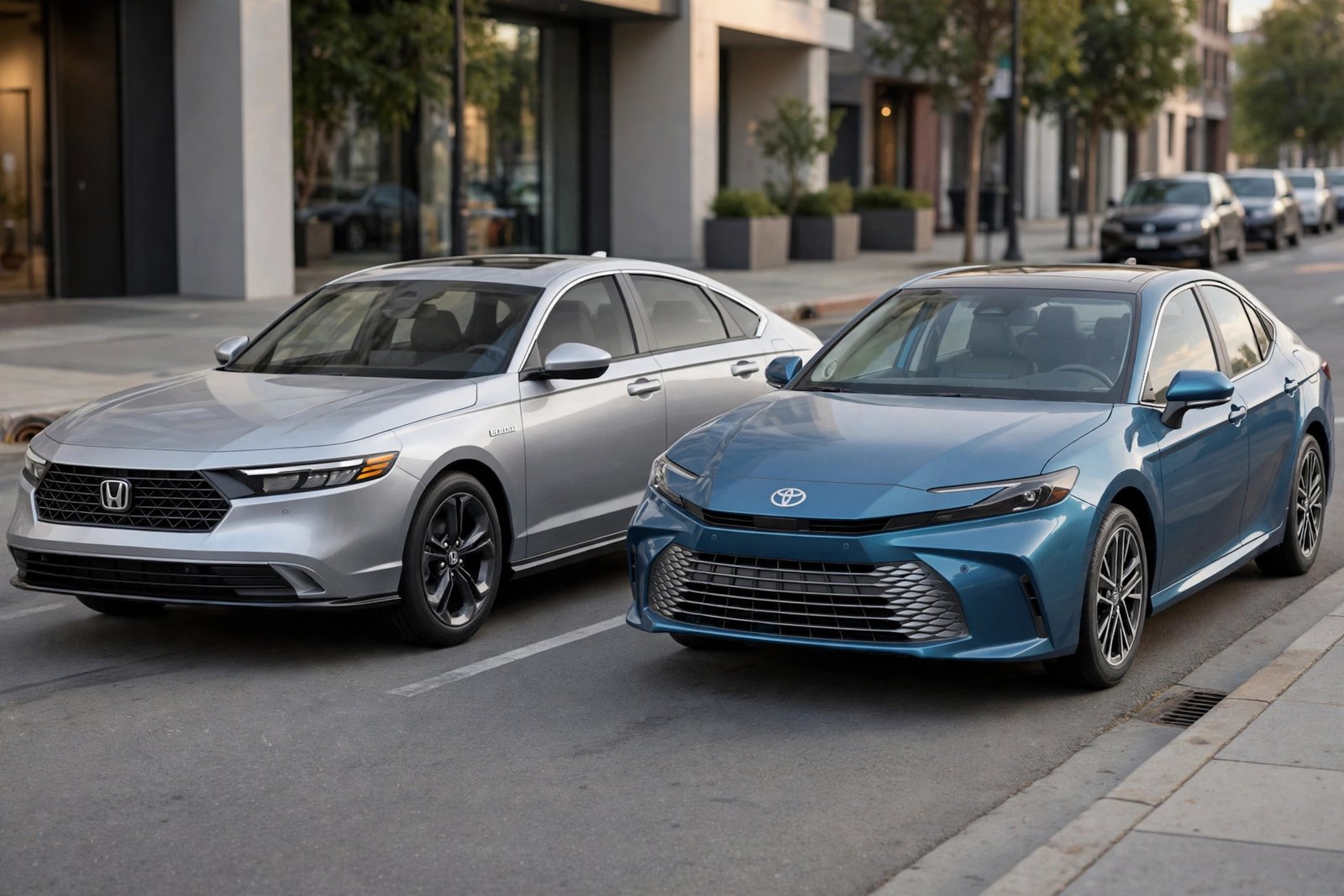
Quick answer: The 2026 Toyota Camry Hybrid starts at $29,300 and the cheapest Honda Accord Hybrid starts at $33,795 — about $4,500 apart before destination. The Camry wins on price, fuel economy (up to 51 mpg combined vs the Accord’s best 48 mpg), power (225 hp vs 204 hp) and available all-wheel drive. The Accord fights back with a roomier back seat (40.8 inches of rear legroom vs 38.0), a bigger trunk (16.7 cu ft vs 15.1), and a quieter, more composed drive. Buy the Camry for value and efficiency; buy the Accord for space and driving feel.
This is the most even fight in the midsize sedan class — and the most confusing one, because the two cars take opposite approaches to the same idea. Toyota went all-in: every 2026 Camry is a hybrid, no exceptions. Honda hedged: the Accord still sells a gas engine in its two cheapest trims and reserves its hybrid system for the four upper trims. The result is that the cheapest way into a hybrid midsize sedan is a Toyota, while the cheapest way into an Accord of any kind is still a gas car.
That split shapes everything that follows. If you simply want a hybrid sedan and want to spend as little as possible, the comparison is nearly over before it starts. But if you care about how a car feels on a long drive, how much room your passengers get, or whether you need all-wheel drive for winter, the Accord has real arguments — they just cost more. This article works through the actual 2026 numbers: hybrid systems, MPG, power, price, trims, space, safety and driving feel, so you can pick the one that fits your life.
Honda Accord Hybrid vs Toyota Camry Hybrid: Specs at a Glance
| Spec | 2026 Honda Accord Hybrid | 2026 Toyota Camry Hybrid |
|---|---|---|
| Starting MSRP (before destination) | $33,795 (Sport Hybrid) | $29,300 (LE FWD) |
| Price with destination | $34,990 | $30,195 |
| Hybrid system | 2.0L Atkinson 4-cylinder + two-motor hybrid | 2.5L 4-cylinder + 5th-generation hybrid system |
| Total system output | 204 hp | 225 hp FWD / 232 hp AWD |
| Torque | 247 lb-ft | Not published by Toyota |
| Transmission | Direct-drive unit (no conventional gearbox) | ECVT |
| Drivetrain | FWD only | FWD or available AWD (every trim) |
| Best EPA fuel economy (city/hwy/comb) | 51 / 44 / 48 mpg (EX-L Hybrid) | 52 / 49 / 51 mpg (LE FWD) |
| Rear legroom | 40.8 in | 38.0 in |
| Trunk space | 16.7 cu ft | 15.1 cu ft |
| Passenger volume | 105.7 cu ft | 99.9 cu ft |
| Hybrid battery warranty | 8 years / 100,000 miles | 10 years / 150,000 miles |
| Seating | 5 | 5 |
Prices are manufacturer base MSRPs before destination ($1,195 Honda, $1,295 Toyota), taxes and dealer fees. Verify current pricing on honda.com and toyota.com before you buy — prices can change during the model year.
The Big Difference: Two Opposite Hybrid Strategies
Toyota made the simpler bet. When the Camry was redesigned for 2025, the gas-only engine was dropped entirely. For 2026, all five Camry trims — LE, SE, Nightshade Edition, XLE and XSE — run the same 2.5-liter four-cylinder paired with Toyota’s fifth-generation hybrid system. You cannot buy a slow, thirsty base Camry, because there isn’t one. Every Camry is a 225-horsepower hybrid that returns at least 44 mpg combined, and the base LE returns 51.
Honda’s lineup is split in two. The Accord LX and SE still use a 1.5-liter turbocharged four-cylinder making 192 horsepower, with a CVT and front-wheel drive. The hybrid system — a 2.0-liter Atkinson-cycle four paired with a two-motor setup — only appears from the Sport Hybrid upward, through the EX-L Hybrid, Sport-L Hybrid and Touring Hybrid. That means the cheapest Accord on the lot is a gas car, and the cheapest Accord Hybrid costs roughly $4,500 more than the cheapest Camry Hybrid.
Neither approach is wrong; they just serve different buyers. Toyota’s strategy means hybrid efficiency is standard, not a premium upgrade. Honda’s means buyers who want the lowest possible monthly payment can still get an Accord without paying for hybrid hardware — but anyone who wants a hybrid Accord is pushed into the upper half of the range, where the price starts to overlap with the Camry’s top trims.
Hybrid Powertrains: How Each System Works
The two hybrid systems could hardly be more different in character, even though both pair a four-cylinder engine with electric motors.
The Accord Hybrid’s two-motor system does most of its work electrically. Around town, the electric motor drives the wheels while the gas engine mostly acts as a generator; at highway speeds a clutch connects the engine directly to the wheels. There is no conventional transmission and no CVT at all — just a direct-drive unit. The result is a car that feels more like an electric car in daily driving: smooth, quiet, and responsive the instant you touch the pedal. Total system output is 204 horsepower, with 247 lb-ft of torque from the propulsion motor.
The Camry Hybrid uses Toyota’s fifth-generation hybrid system: a 2.5-liter four-cylinder working with electric motors through an electronically controlled continuously variable transmission (ECVT). It makes 225 horsepower with front-wheel drive, and 232 horsepower with all-wheel drive, because the AWD version adds a dedicated electric motor on the rear axle. Toyota does not publish a torque figure for the Camry, which is normal for the brand.
On the road, the difference is subtle but real. Reviewers consistently describe the Accord as the quieter car under acceleration and the more natural-feeling one — the engine note stays subdued, and the power delivery feels linear. The Camry is no slouch, but its ECVT lets the engine rev higher and hold there under hard acceleration, which some drivers find droning. If driving feel matters to you, test-drive both back to back on the same road. The spec sheet will not tell you which one you prefer.
MPG: The Camry Wins, but the Gap Depends on the Trim
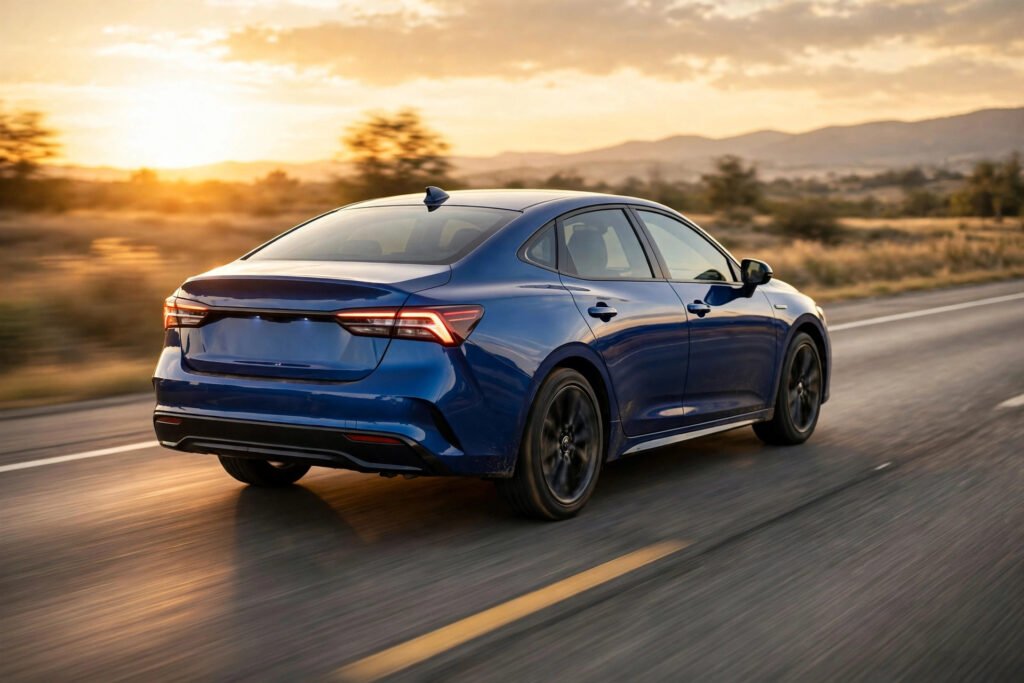
Fuel economy is the Camry’s clearest win — but read the fine print, because the gap changes a lot depending on which Accord you pick.
The Camry LE with front-wheel drive is the efficiency champion of the pair: EPA-rated at 52 mpg city, 49 highway, and 51 combined. Every other Camry trim is a step down, mostly because of bigger wheels and sportier tuning: the SE, Nightshade, XLE and XSE land around 46–47 mpg combined with front-wheel drive, and adding all-wheel drive costs a little more — the XSE AWD drops to about 43 mpg combined.
The Accord Hybrid’s best figure comes from the EX-L Hybrid, which rides on smaller wheels: 51 city, 44 highway, 48 combined. The Sport, Sport-L and Touring Hybrids, all on 19-inch wheels, are rated at 46 city, 41 highway and 44 combined. So the real-world gap is 3 mpg combined if you compare the most efficient version of each car — and 7 mpg if you compare the entry hybrid of each car. Buy the Camry for efficiency; buy the Accord despite it.
Power and Performance: Close on the Road, Clear on Paper
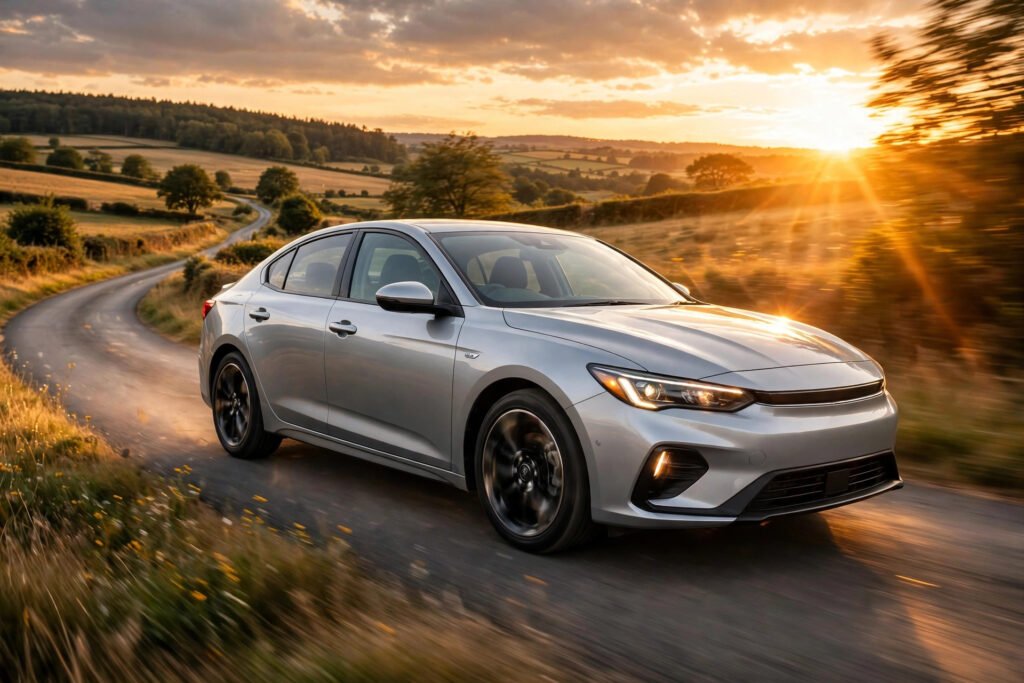
On paper, the Camry is the more powerful car: 225 horsepower (232 with AWD) against the Accord’s 204. In independent testing, though, the two are almost dead even. Car and Driver’s instrumented testing clocked the Accord Hybrid at 6.7 seconds to 60 mph, against 6.8 seconds for the Camry XSE AWD and 7.0 seconds for a front-wheel-drive Camry Nightshade. In other words, the Accord’s lighter, more electric-feeling drivetrain makes up for its horsepower deficit where it counts — getting away from a light.
Both cars are quick enough for any normal driving, and both are a big step up from the old gas-only midsize sedans. Neither is a sports sedan, and neither pretends to be. The Accord feels a touch more composed in corners and more settled over rough pavement; the Camry feels a touch softer and more isolated.
Price and Trims: Where the Money Goes
Here is where the comparison gets interesting, because the price gap is not the same at every level.
| Trim | 2026 Toyota Camry Hybrid | 2026 Honda Accord Hybrid |
|---|---|---|
| Entry hybrid | LE FWD — $29,300 | Sport Hybrid — $33,795 |
| Mid-range | SE — about $32,000 | EX-L Hybrid — $35,095 |
| Sporty | Nightshade — $32,800 | Sport-L Hybrid — $35,495 |
| Premium | XLE — $34,500 | Touring Hybrid — $39,495 |
| Top | XSE — $35,700 | — |
Trim prices are base MSRPs before destination; mid-range Camry figures vary by source and options. The key figures — $29,300 for the Camry LE and $33,795 for the Accord Sport Hybrid — are confirmed on Toyota’s own comparison page.
The story the table tells is simple: Toyota gives you a hybrid for under $30,000, and Honda does not. The $4,495 gap at the entry point is the single biggest fact in this comparison, and it is the reason the Camry is the better buy for most shoppers.
But climb the range and the picture flips. A Camry XSE at $35,700 costs almost exactly the same as an Accord EX-L Hybrid at $35,095 — and at that level the Accord gives you more rear legroom, a bigger trunk and a quieter cabin for slightly less money. If your budget is $35,000–$40,000 anyway, the Accord stops looking expensive and starts looking like good value. The Touring Hybrid tops out around $39,495, while the most expensive Camry, the XSE AWD, lands in a similar band once options are added.
So the pricing verdict depends on your budget. Under $32,000, the Camry is the only real choice. Around $35,000, it is a genuine toss-up. Above $38,000, you are choosing between two well-equipped cars and should decide on space and feel, not price.
Space and Comfort: The Accord’s Home Turf
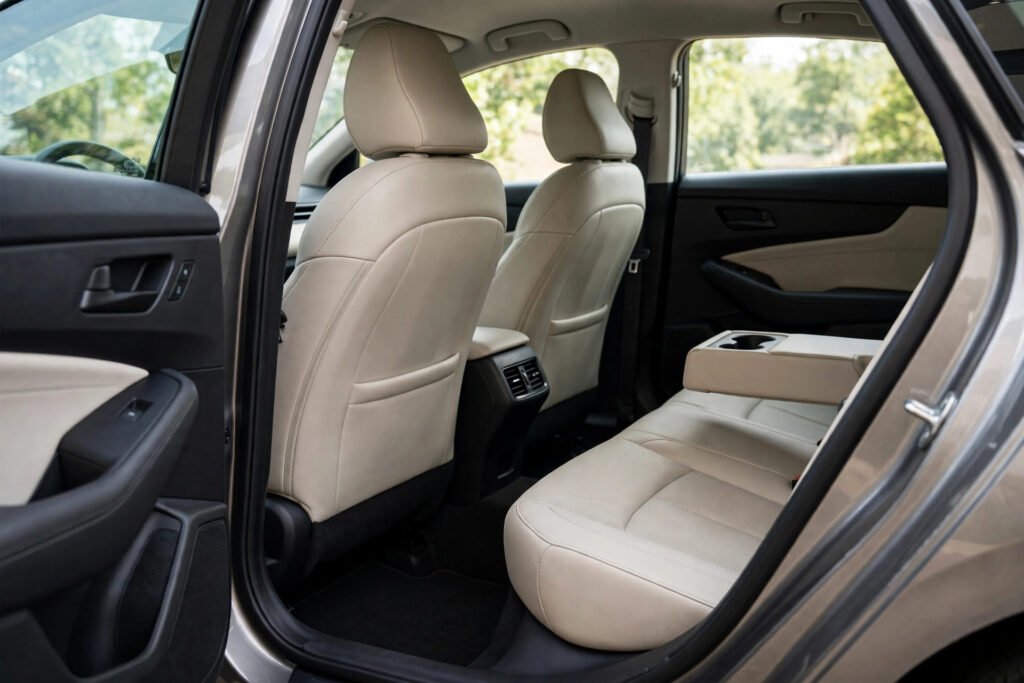
If there is one area where the Accord wins outright, it is interior space. The Accord offers 105.7 cubic feet of passenger volume against the Camry’s 99.9, and the difference is concentrated exactly where passengers feel it: the back seat. Rear legroom is 40.8 inches in the Accord versus 38.0 inches in the Camry — a 2.8-inch gap that turns a cramped back seat into a comfortable one for tall adults. The trunk tells the same story: 16.7 cubic feet in the Accord against 15.1 in the Camry.
That does not make the Camry small. Its 38 inches of rear legroom is fine for most adults on most trips, and its 15.1-cubic-foot trunk swallows a week’s groceries or two large suitcases without complaint. But if you regularly carry adult passengers in the back, the Accord is meaningfully more comfortable, and you will notice it every single time.
Up front, both cars are excellent. The Accord’s cabin feels a touch more spacious and airy, helped by its longer wheelbase and slimmer dashboard. The Camry’s cabin feels a touch more cocooned and premium in its upper trims, especially the XLE and XSE with their leather and ambient lighting. Both offer a 12.3-inch touchscreen on their hybrid trims — standard across the Accord Hybrid range — along with wireless Apple CarPlay and Android Auto, wireless phone charging on upper trims, and a full suite of driver-assistance features.
Safety, Tech and Warranty

Both cars come with a full set of standard driver-assistance technology. Honda Sensing is standard on every Accord, including adaptive cruise control, lane-keeping assist, forward collision warning with automatic braking, blind-spot monitoring and traffic-sign recognition. Toyota Safety Sense 3.0 is standard on every Camry, with the same core features plus proactive driving assist. Both cars are strong safety picks; check the latest IIHS and NHTSA ratings before you buy, as final 2026 scores are still being published.
The warranty comparison favors Toyota in one specific place: the hybrid battery. Toyota covers the Camry’s hybrid battery for 10 years or 150,000 miles, against 8 years or 100,000 miles for the Accord’s. Basic bumper-to-bumper coverage is 3 years or 36,000 miles for both brands, and powertrain coverage is 5 years or 60,000 miles for both.
On tech, the two are evenly matched. Both give you a large touchscreen, smartphone integration, and a digital instrument display on upper trims. The Accord’s infotainment is often praised as the simpler and more intuitive of the two, with physical climate controls and a clean menu layout. The Camry’s system is more feature-rich in its top trims but can feel busier. Neither will frustrate you; both will feel modern for years.
Driving Feel: Quiet Honda vs Confident Toyota
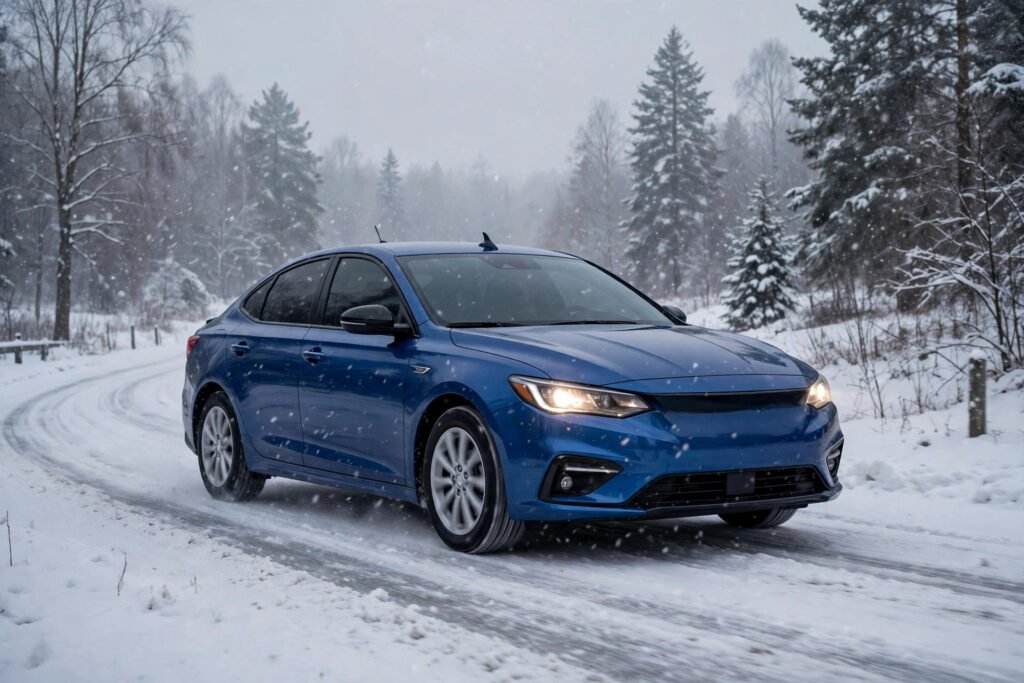
Spend a week in each car and the difference is character, not quality. The Accord Hybrid is the quieter, more relaxed car. Its two-motor system keeps the engine out of the conversation most of the time, road noise is well suppressed, and the steering has a natural weight that makes the car feel smaller than it is. It is the car you pick if you do a lot of highway miles and want to arrive fresh.
The Camry is the more confident car in bad weather and the more planted one at speed, especially with all-wheel drive. Its available AWD — a $1,525 option on every trim — uses a dedicated rear electric motor that engages only when the front wheels slip, so it costs almost nothing in fuel economy on the LE (51 mpg combined drops to about 50). For anyone in the snow belt, that alone can decide the comparison.
Neither car will excite you the way a sports sedan would, and that is fine. These are family sedans that happen to be efficient, and both do the job brilliantly. The Accord is the better driver’s car; the Camry is the better all-weather car. Pick the strength that matches your roads.
Pros and Cons
2026 Honda Accord Hybrid
Pros:
- Roomiest back seat and biggest trunk in the class
- Quieter, smoother and more natural-feeling hybrid system
- Larger standard touchscreen (12.3 inches) on every hybrid trim
- Strong value at EX-L level, where it undercuts the Camry XSE
- Gas LX/SE trims give buyers a cheaper non-hybrid option
Cons:
- Cheapest hybrid costs about $4,500 more than the cheapest Camry Hybrid
- Lower fuel economy (44–48 mpg combined vs up to 51)
- No all-wheel drive at any price
- Less horsepower on paper (204 hp vs 225/232)
2026 Toyota Camry Hybrid
Pros:
- Lowest hybrid entry price in the class ($29,300)
- Best fuel economy (up to 51 mpg combined)
- More power, and the only AWD option in the pair
- Longer hybrid battery warranty (10 years / 150,000 miles)
- Hybrid standard on every trim — no gas-only compromise
Cons:
- Smaller back seat and trunk than the Accord
- Engine can sound strained under hard acceleration
- Top trims cost as much as the Accord with no space advantage
- No gas-only option for buyers who want the lowest sticker price
Verdict: Which Hybrid Sedan Should You Buy in 2026?
For most buyers, the answer is the Toyota Camry Hybrid. It costs less, uses less fuel, makes more power, offers all-wheel drive, and backs its battery for longer. The LE at $29,300 is the value pick of the entire midsize class, and even the mid-range SE and XLE trims undercut comparable Accord Hybrids. If you want a hybrid sedan and you want the smartest financial choice, this is it.
Buy the Honda Accord Hybrid if space and serenity matter more to you than the sticker price. Its back seat is genuinely roomier, its trunk is bigger, its cabin is quieter, and its hybrid system feels more refined in daily driving. The EX-L Hybrid is the sweet spot — the most efficient Accord, and priced within a few hundred dollars of the Camry XSE while giving you more room. If your budget is already $35,000 or more, the Accord deserves a long test drive.
One last note: this comparison is about hybrid powertrains only. If you are weighing the Accord and Camry on monthly lease payments instead, read our separate comparison, Honda Accord vs Toyota Camry Lease, which looks at the same two cars through a leasing lens. And if you are cross-shopping other sedans, our Toyota vs Honda brand guide and Kia K5 vs Honda Accord comparison may help. You can also build your own head-to-head with our Compare Cars tool.
Frequently Asked Questions
Which hybrid sedan is more fuel efficient, the Accord Hybrid or the Camry Hybrid?
The Camry Hybrid. The 2026 Toyota Camry LE Hybrid is EPA-rated at up to 51 mpg combined (52 city / 49 highway), while the most efficient Accord Hybrid, the EX-L, manages 48 mpg combined (51 city / 44 highway). The gap is 3 mpg combined, and it grows to 7 mpg against the Accord Sport Hybrid at 44 mpg combined.
Which is cheaper, the Honda Accord Hybrid or the Toyota Camry Hybrid?
The Camry Hybrid, by a wide margin at the entry point. The 2026 Toyota Camry LE Hybrid starts at $29,300 before destination, while the cheapest Accord Hybrid, the Sport Hybrid, starts at $33,795 — a gap of about $4,500 before destination charges. The gap narrows higher up the range: a Camry XSE and an Accord EX-L Hybrid are priced within about $100 of each other.
Which is more powerful, the Accord Hybrid or the Camry Hybrid?
The Camry Hybrid. Its 2.5-liter hybrid system makes 225 horsepower with front-wheel drive and 232 horsepower with all-wheel drive, against 204 horsepower for the Accord Hybrid’s 2.0-liter two-motor system. In independent testing the two are nearly identical to 60 mph, though, so the Camry’s power advantage shows up more on paper than at a traffic light.
Does the Honda Accord Hybrid have all-wheel drive?
No. Every 2026 Honda Accord, hybrid or gas, is front-wheel drive only. The Toyota Camry offers available Electronic On-Demand all-wheel drive on every trim, for about $1,525, which makes the Camry the only choice of the two for snowy or slippery climates.
Is the Toyota Camry all hybrid in 2026?
Yes. Every 2026 Toyota Camry — LE, SE, Nightshade, XLE and XSE — runs the same 2.5-liter hybrid system. There is no gas-only Camry. The Accord still splits its lineup: the LX and SE use a 1.5-liter turbo gas engine, and only the Sport, EX-L, Sport-L and Touring trims are hybrids.
Should I buy the Honda Accord Hybrid or the Toyota Camry Hybrid in 2026?
Buy the Camry Hybrid if you want the lowest hybrid price, the best fuel economy, more power and available all-wheel drive. Buy the Accord Hybrid if you want a roomier back seat and bigger trunk, a quieter and more engaging drive, and a larger standard touchscreen — and you are willing to pay roughly $4,500 more to get into a hybrid.
