
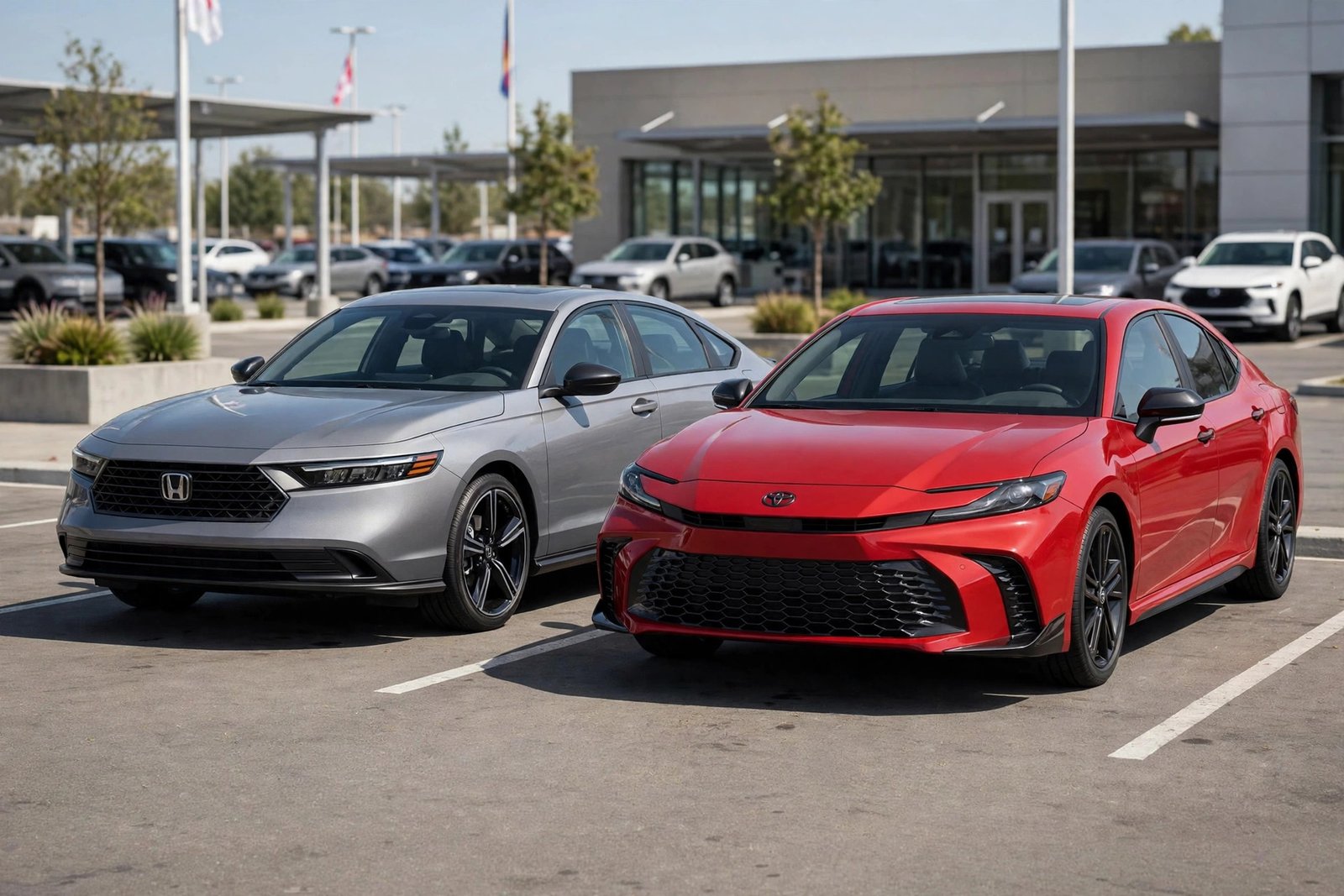
Quick answer: The Honda Accord leases cheaper — recent advertised offers put it roughly $50 a month below the Toyota Camry once the cash due at signing is counted. The Camry fights back at the gas pump: every 2026 Camry is a hybrid at up to 51 mpg combined, against 44 mpg for the Accord Hybrid and 29/37 mpg for gas Accords. Low-mileage drivers who want the smallest payment should lease the Accord. Drivers who cover a lot of miles, or who want all-wheel drive and the strongest resale value, will usually come out ahead in the Camry.
How a lease payment actually works
Before comparing numbers, it helps to know what you are paying for. A lease payment is not the price of the car divided by the number of months. It is built from three things: the depreciation (the difference between the car’s price today and what the leasing company thinks it will be worth at the end of the term, called the residual value), the finance charge (the money factor, which works like an interest rate), and taxes and fees.
That is why the advertised monthly payment never tells the whole story. Two offers can show the same monthly figure while costing very different amounts, because one asks for far more cash due at signing. The honest way to compare leases is the effective monthly cost:
Effective monthly cost = (monthly payment × term in months + cash due at signing) ÷ term in months
Use that formula on every offer in this article and you will see why the Accord keeps winning on price — and why the Camry still deserves a close look.
The two cars at a glance
| 2026 Honda Accord | 2026 Toyota Camry | |
|---|---|---|
| Starting MSRP | $28,395 (gas LX) | $29,300 (LE Hybrid) |
| Hybrid starting MSRP | $33,795 (Sport Hybrid) | Standard on every trim |
| Hybrid power | 204 hp | 225 hp (FWD), up to 232 hp (AWD) |
| Best fuel economy | 44 mpg combined (Sport Hybrid) | 51 mpg combined (LE) |
| Gas fuel economy | 29 city / 37 highway mpg | No gas-only version |
| Trunk space | 16.7 cu. ft. | 15.1 cu. ft. |
| Rear legroom | 40.8 in. | 38.0 in. |
| All-wheel drive | Not offered | Available (Electronic On-Demand AWD) |
Prices are manufacturer starting MSRPs before destination charges, taxes, title and dealer fees. Toyota’s destination charge for cars is $1,295, and Honda’s pricing excludes destination too, so the real gap at the dealer is a little wider than the MSRP gap.
Two things jump out immediately. First, the Accord has the lower entry price, by about $900 — and its gas models are the reason. Second, the Camry has no cheap gas version at all: every 2026 Camry is a hybrid. That pushes its starting price up, but it also means every Camry buyer gets hybrid fuel economy and 225 horsepower as standard. With the Accord, the hybrid is a $5,400 step up from the base gas model.
Recent advertised lease deals
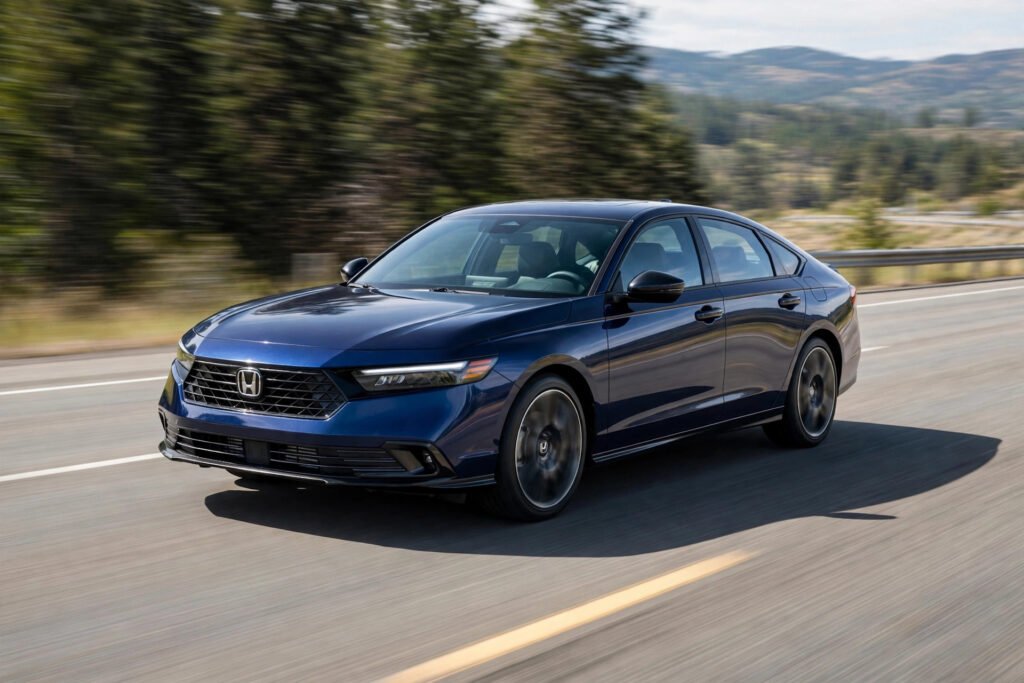
Lease offers change every month and vary by region, so treat these as a snapshot of the market in 2026 rather than a price you can walk in and demand today. What matters is the pattern: in every round of offers we found, the Accord was cheaper to lease.
| Offer | Accord | Camry |
|---|---|---|
| October 2026 | $229/mo, 36 mo, $3,999 due (effective ~$340/mo) | $279/mo, 36 mo, $3,999 due (effective ~$390/mo) |
| May 2026 | $259/mo, 36 mo, $3,999 due (effective ~$370/mo) | $319/mo, 36 mo, $2,999 due (effective ~$402/mo) |
| January 2026 | $209/mo, 36 mo, $3,999 due (effective ~$320/mo) | $299/mo, 39 mo, $2,999 due (effective ~$376/mo) |
| Toyota published offer, exp. Nov 2, 2026 | — | $359/mo, 36 mo, $359 due at signing |
| Accord Hybrid (May 2026) | $299/mo, 36 mo, $3,999 due (effective ~$410/mo) | — |
A few things to note about these numbers:
- The Accord’s edge is consistent. Across three different months, the Accord’s effective monthly cost ran about $50 to $60 below the Camry’s. That is roughly $1,800 to $2,000 over a three-year lease.
- The Camry’s cheapest deal had a catch. Toyota’s published $359-a-month offer looks low on upfront cash — only $359 due at signing — but the monthly payment is higher, and that particular offer expired on November 2, 2026. By the time you read this, Toyota’s current program (running to November 30, 2026) may look different. Always check the current offer on Toyota’s site.
- The Accord Hybrid costs more than the Camry. This is the twist. The gas Accord leases cheaply, but the Accord Hybrid — the one that actually competes with the Camry on fuel economy — was advertised at $299 a month with $3,999 due, an effective cost of about $410 a month. That is slightly more than the Camry LE’s effective cost in the same period, and the Camry is the more powerful and more economical car. If you want a hybrid, the Camry is the better lease.
- Watch for incentive conditions. Some advertised Accord prices assume a loyalty discount (for current Honda owners) or a conquest incentive (for owners of a rival brand). Autoblog noted that the Accord becomes more expensive if you do not qualify for its loyalty or conquest incentive. Ask the dealer which incentives are baked into the quote and whether you qualify before you compare.
Residual values: what the car is worth at lease end
The residual value is the leasing company’s prediction of what the car will be worth when the lease ends, and it matters twice: a higher residual means lower depreciation, which means a lower monthly payment — and it also sets the price if you decide to buy the car at lease end.
Toyota publishes a concrete example with its Camry lease offer: a 2026 Camry LE with a total suggested retail price of $31,214 had a lease-end purchase amount of $21,538. That is about 69% of the car’s price retained after three years — a strong residual, and one reason Camry leases stay competitive despite the higher monthly payment. A separate dealer example showed a lease-end purchase price of $21,928 on a $33,206 Camry LE, roughly 66%.
Honda does not publish a single residual figure for the Accord, because residuals vary by trim, term and mileage. In general, the Accord also holds its value well — both of these sedans are among the strongest resale performers in the midsize class — but the Camry’s hybrid-only lineup and Toyota’s reputation give it a small edge at trade-in time. If there is a real chance you will buy the car at lease end, ask both dealers for the exact residual and the lease-end purchase price in writing. It is the one number that turns a lease into a potential purchase, and it is worth comparing directly.
Fuel costs: where the Camry claws the money back
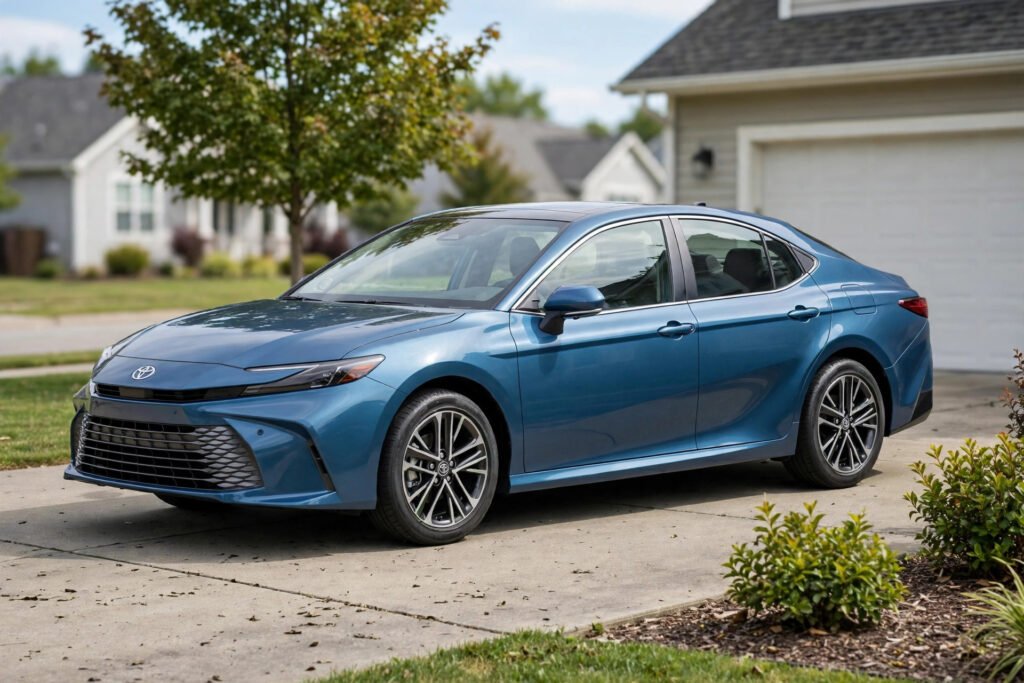
The Accord wins the monthly payment by about $50. The Camry wins the fuel bill, and for some drivers that is worth more.
The 2026 Camry LE is EPA-rated at 53 mpg city, 50 highway and 51 combined. Other Camry trims are rated at 46 mpg combined (SE, XLE and XSE front-wheel drive), and all-wheel-drive versions at 43 to 50 mpg combined depending on trim. The Accord Hybrid’s Sport trim is rated at 46 city, 41 highway and 44 combined, and the gas Accord at 29 city and 37 highway.
What does that mean in dollars? At 12,000 miles a year, the Camry LE uses roughly 235 gallons of gas a year. A gas Accord uses roughly 360 gallons. At $3.50 a gallon, that is a difference of about $440 a year, or roughly $37 a month — enough to cover most of the Accord’s payment advantage. Against the Accord Hybrid the gap is smaller, around $150 to $200 a year, but it still points the same way.
Independent cost comparisons agree: one ownership-cost breakdown put the Camry’s fuel bill at $84 a month against $134 for the Accord, making the Camry about $67 a month cheaper to own overall once fuel, maintenance and insurance were counted. That is a financing comparison rather than a lease comparison, but the fuel math is the same. If you drive 15,000 miles a year or more, the Camry’s fuel savings can fully erase the Accord’s cheaper payment. If you drive 8,000 miles a year, they barely matter, and the Accord’s lower payment wins easily.
Lease terms, mileage and fees

The fine print is where leases get expensive, and it is mostly the same for both cars — but there are differences worth knowing.
- Mileage allowance. Most advertised offers for both cars are built around 10,000 miles a year. Toyota’s published Camry lease terms charge $0.15 per mile over the limit. If you drive 12,000 miles a year, that is 6,000 extra miles over three years, or about $900 at lease end. It is almost always cheaper to buy the miles up front, in the lease itself, than to pay for them at return.
- Disposition fee. Toyota charges a $350 disposition fee when you return the Camry at lease end. Honda charges a similar fee on its leases. Both brands typically waive it if you lease or buy another vehicle from the same brand.
- Term length. Both brands advertise 36-month leases most often, and Toyota has also offered a 39-month Camry lease. A longer term lowers the monthly payment but keeps you in the car longer, past the point where the factory warranty still covers everything. A 36-month lease lines up neatly with the warranty on both cars.
- Maintenance included. Toyota includes ToyotaCare — scheduled maintenance — on every new Camry. That is a real saving over three years of oil changes and inspections, and it is one of the Camry’s quiet advantages in a lease comparison. Honda does not include scheduled maintenance in the same way, so budget for it on the Accord.
- Wear and tear. Both brands charge for excess wear and damage at return — scuffed wheels, stained seats, dented panels. Walk around the car with the inspector, and consider that a car you garage and keep clean will cost you nothing extra either way.
Trims: which version leases best?
Honda Accord trims: LX, SE, Sport Hybrid, EX-L Hybrid, Sport-L Hybrid and Touring Hybrid. The LX and SE are the gas models and the cheapest to lease. The Sport Hybrid is the entry point to hybrid power at $33,795, and the Touring Hybrid tops the range. In our view the sweet spot for leasing is the SE if you want the lowest payment, and the Sport Hybrid if you want hybrid economy without paying for luxury features you will hand back in three years.
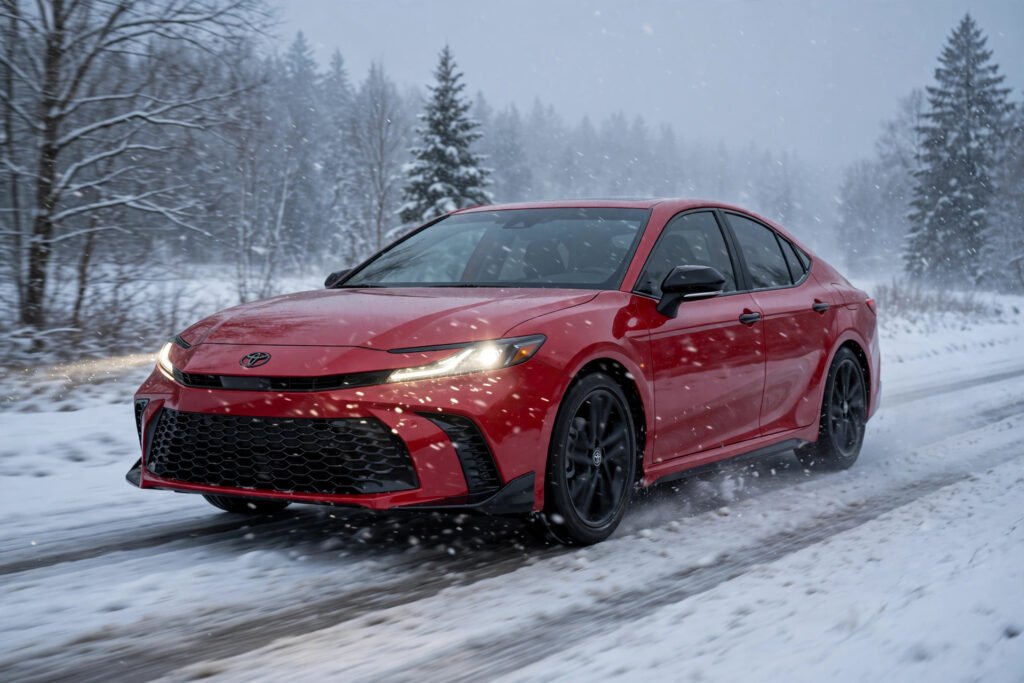
Toyota Camry trims: LE, SE, XLE and XSE, all hybrid, with all-wheel drive available. The LE is the cheapest lease by a wide margin and the most economical at 51 mpg combined. The SE adds sportier styling and costs more to lease — around $359 a month in May 2026 offers against $319 for the LE — while the XSE is the expensive one at around $449 a month. For leasing, the LE is the value pick. The SE only makes sense if you genuinely want its looks and features, because you pay for them every month and hand them back.
One more trim note: the Camry is the only one of the two that offers all-wheel drive. If you live where winters are real, that alone can settle the decision — the Accord has no AWD option at any price.
Interior, space and everyday living
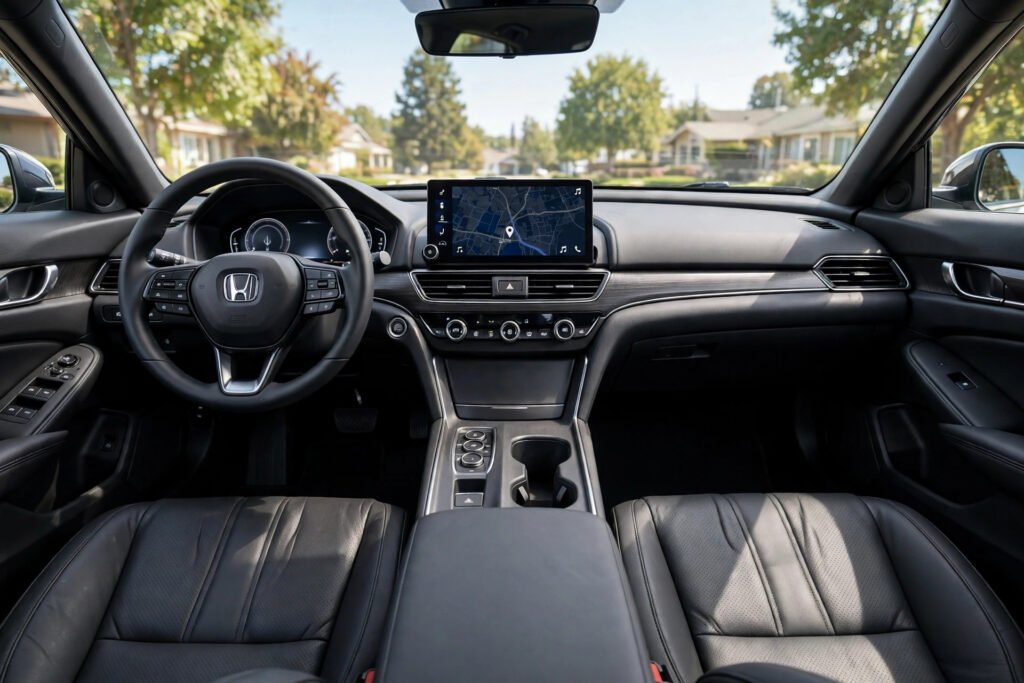
A lease is three years of daily life, so the cabin matters as much as the payment. The Accord is the roomier car: 16.7 cubic feet of trunk against 15.1 for the Camry, and 40.8 inches of rear legroom against 38.0. If adults regularly ride in the back seat, or you carry a stroller or golf clubs, the Accord is noticeably more comfortable.
The Camry counters with a quieter, more refined cabin and a driving feel that reviewers consistently rate as the more polished of the two. Its hybrid system is smoother at low speeds, and the car feels a class above its price inside. The Accord drives more sharply — it is the more engaging car on a winding road — but it is also a little louder on the highway.
Tech is a wash. Both cars offer large touchscreens, wireless smartphone integration, and a full suite of driver-assistance features as standard. Neither car will embarrass you on equipment; the differences are in taste, not in spec sheets.
Which sedan leases better in 2026?
It depends on how you drive — honestly, that is the answer, and the numbers back it up.
Lease the Honda Accord if: you drive under 10,000 miles a year, you want the lowest possible monthly payment, you need the biggest back seat and trunk in the class, or you prefer the sharper-driving car. The gas Accord is the cheapest way into a midsize sedan in 2026, and its effective monthly cost beats the Camry by about $50 a month.
Lease the Toyota Camry if: you drive 12,000 miles or more a year, you want a hybrid (the Camry Hybrid leases for about the same as the Accord Hybrid, and it is the better hybrid), you need all-wheel drive, or you value ToyotaCare maintenance and the strongest residual value. The Camry’s fuel savings and included maintenance narrow or erase the Accord’s payment advantage over a full three-year term.
Our pick: for most people, the Honda Accord SE is the better lease — it is simply the cheapest way to drive a genuinely good midsize sedan. But if you are choosing between the hybrids, pick the Toyota Camry LE. It is more powerful, more economical, available with AWD, and its residual value is stronger. The Accord Hybrid is a good car at a price that does not make sense next to the Camry.
Whichever you choose, do three things before signing: get the effective monthly cost (payment plus upfront cash, spread over the term) in writing from both dealers; confirm which incentives you actually qualify for; and set the mileage allowance to match your real driving. The best lease is not the one with the lowest advertised payment — it is the one with the lowest total cost for the way you actually use the car.
Pros and cons
Honda Accord — pros: lowest monthly lease payment; roomiest back seat and trunk; sharp, engaging drive; cheap gas models. Cons: hybrid costs extra and leases for more than the Camry; no all-wheel drive; no included scheduled maintenance; gas models are thirsty next to the Camry.
Toyota Camry — pros: standard hybrid with up to 51 mpg; strongest residual value; available all-wheel drive; ToyotaCare maintenance included; quiet, refined cabin. Cons: higher monthly lease payment; smaller trunk and back seat; higher trims get expensive quickly; no gas-only budget option.
Frequently Asked Questions
Which leases cheaper, the 2026 Honda Accord or Toyota Camry?
The Accord, in every recent advertised offer. In October 2026 the Accord was advertised at $229 a month for 36 months with $3,999 due at signing (about $340 a month once the upfront cash is spread across the term), against $279 a month with $3,999 due for the Camry LE (about $390 effective). In May the gap was similar: $259 a month for the Accord versus $319 for the Camry LE. Offers change monthly, so always check the current program before you sign.
How much is a 2026 Toyota Camry lease per month?
Recent advertised Camry LE leases have ranged from $279 to $359 a month for 36 months, depending on the month and how much is due at signing. Toyota’s published offer expiring November 2, 2026 was $359 a month for 36 months with $359 due at signing, while an October offer was $279 a month with $3,999 due at signing. The true monthly cost depends on the upfront cash, so compare the effective monthly cost, not just the headline payment.
How much is a 2026 Honda Accord lease per month?
Recent advertised Accord leases have ranged from $209 to $259 a month for 36 months with $3,999 due at signing. The Accord Hybrid costs more to lease, around $299 a month with $3,999 due at signing in recent offers. Some advertised Accord prices also assume a loyalty or conquest incentive, so the payment can rise if you do not qualify.
Is the Camry or Accord better to lease for fuel savings?
The Camry. Every 2026 Camry is a hybrid, and the LE is EPA-rated at 53 city, 50 highway and 51 combined mpg. The Accord Hybrid is rated at 44 mpg combined on the Sport Hybrid trim, and gas Accords are rated at 29 city and 37 highway mpg. The Camry’s fuel savings narrow the Accord’s monthly payment advantage, and for high-mileage drivers they can erase it.
What mileage limit do Accord and Camry leases have?
Most advertised offers for both cars are built around 10,000 miles a year. Going over typically costs around $0.15 per extra mile on the Camry, and a $350 disposition fee is due at lease end unless you lease or buy another vehicle from the same brand. If you drive 12,000 to 15,000 miles a year, ask for that mileage in the lease up front — buying miles later is more expensive.
Should I lease or buy a 2026 Accord or Camry?
Lease if you want a new car every three years, drive within the mileage limit, and value a lower monthly payment and warranty coverage for the whole term. Buy if you drive a lot of miles, keep cars for many years, or want to build equity — the Camry’s strong resale value and the Accord’s durability both reward long-term owners. Leasing makes the most sense when the effective monthly cost, including upfront cash, beats the cost of financing.