
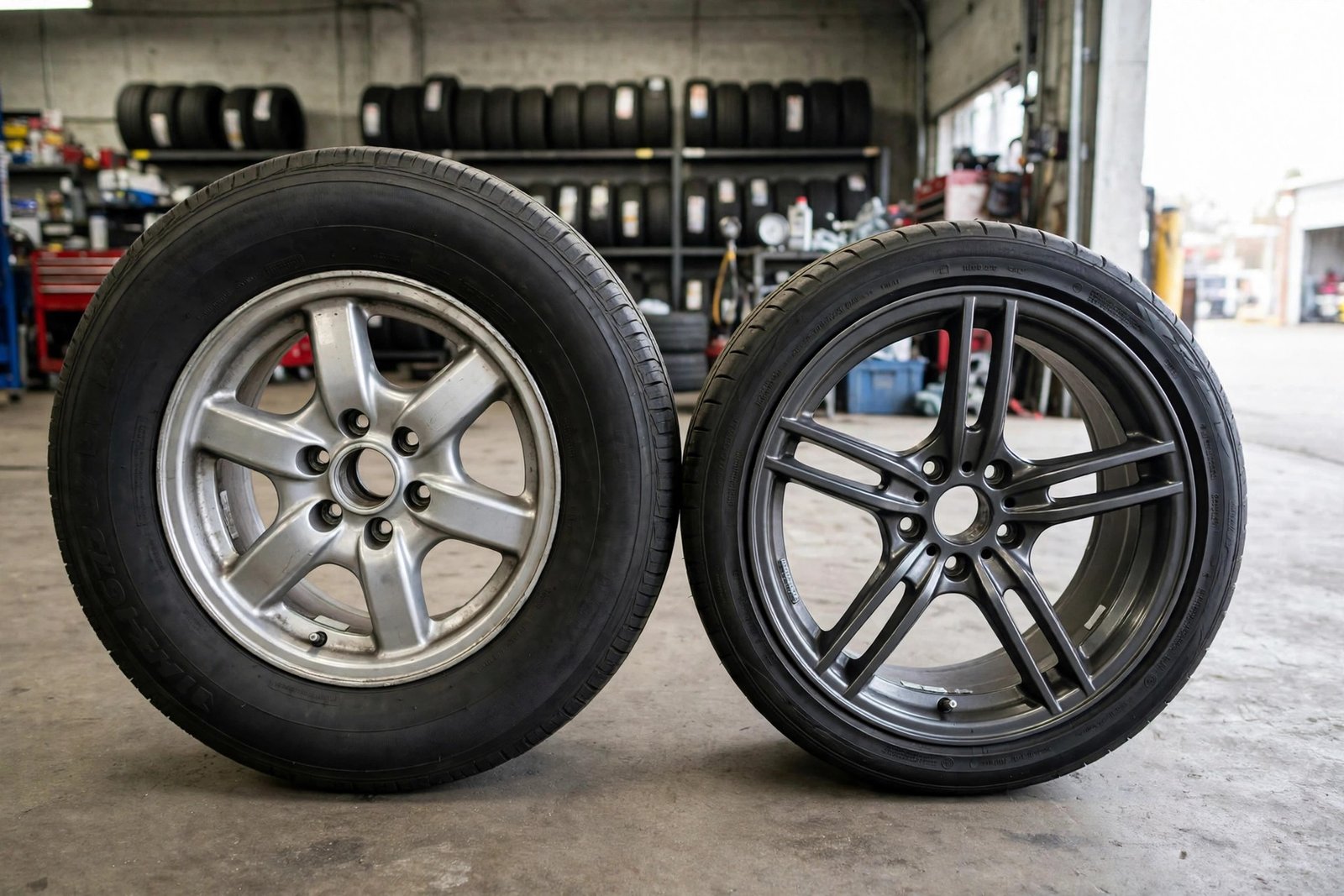
Quick answer: 17-inch wheels ride softer. Their taller tire sidewalls absorb bumps, potholes, and rough pavement before the harshness reaches the cabin, and they are quieter and cheaper to run. 18-inch wheels look sportier and handle more sharply, but they ride firmer, transmit more road noise, cost more to replace, and are easier to damage on bad roads. If comfort and value matter most, 17 inches wins. If sharp handling and looks matter most — and your roads are smooth — 18 inches is the better pick.
The one-inch difference that changes everything
On paper, the difference between a 17-inch wheel and an 18-inch wheel is just one inch of rim diameter. In the driver’s seat, it feels like much more than that. The reason is simple: when the wheel gets bigger, the tire’s sidewall gets shorter — and the sidewall is the part of the tire that does the cushioning.
Most cars that offer both sizes use the same overall tire diameter for each. That means the bigger wheel is paired with a lower-profile tire, so the total height of the wheel-and-tire package stays roughly the same and your speedometer keeps reading correctly. What changes is how much of that total height is wheel and how much is tire. With 17-inch wheels, more of it is tire — soft, air-filled rubber that flexes. With 18-inch wheels, more of it is metal, and less of it flexes.
That single trade-off — cushion versus stiffness — explains almost every difference in this comparison: ride comfort, handling, noise, cost, fuel economy, and how easily a pothole can ruin your day.
Sidewall height explained: where the comfort actually comes from
The sidewall is the part of the tire between the rim and the tread. Its height depends on the tire’s aspect ratio — the second number in a tire size. If you have not read it before, our guide to what tire numbers mean breaks down every number on the sidewall.
Here is a real-world example of how the same car changes between sizes:
| Tire size | Wheel diameter | Sidewall height | What it means |
|---|---|---|---|
| 225/45R17 | 17 inches | 225 × 45% = 101 mm (about 4.0 in) | Taller cushion, softer ride |
| 225/40R18 | 18 inches | 225 × 40% = 90 mm (about 3.5 in) | Shorter cushion, firmer ride |
The 17-inch setup in this example has roughly half an inch more sidewall to absorb each bump. Half an inch of rubber and air does not sound like much, but it is the difference between a pothole thudding softly and the same pothole jolting the whole car. Think of the sidewall as a second set of springs: the taller it is, the more it can deform and soak up an impact before your suspension even gets involved.
This is also why the aspect ratio usually drops by about 5 points when you go up an inch in wheel size — 45 to 40 in the example above. The tire maker is keeping the overall diameter the same so the car behaves the same way on the road. If the overall diameter changed, your speedometer, odometer, gearing, and ground clearance would all shift.
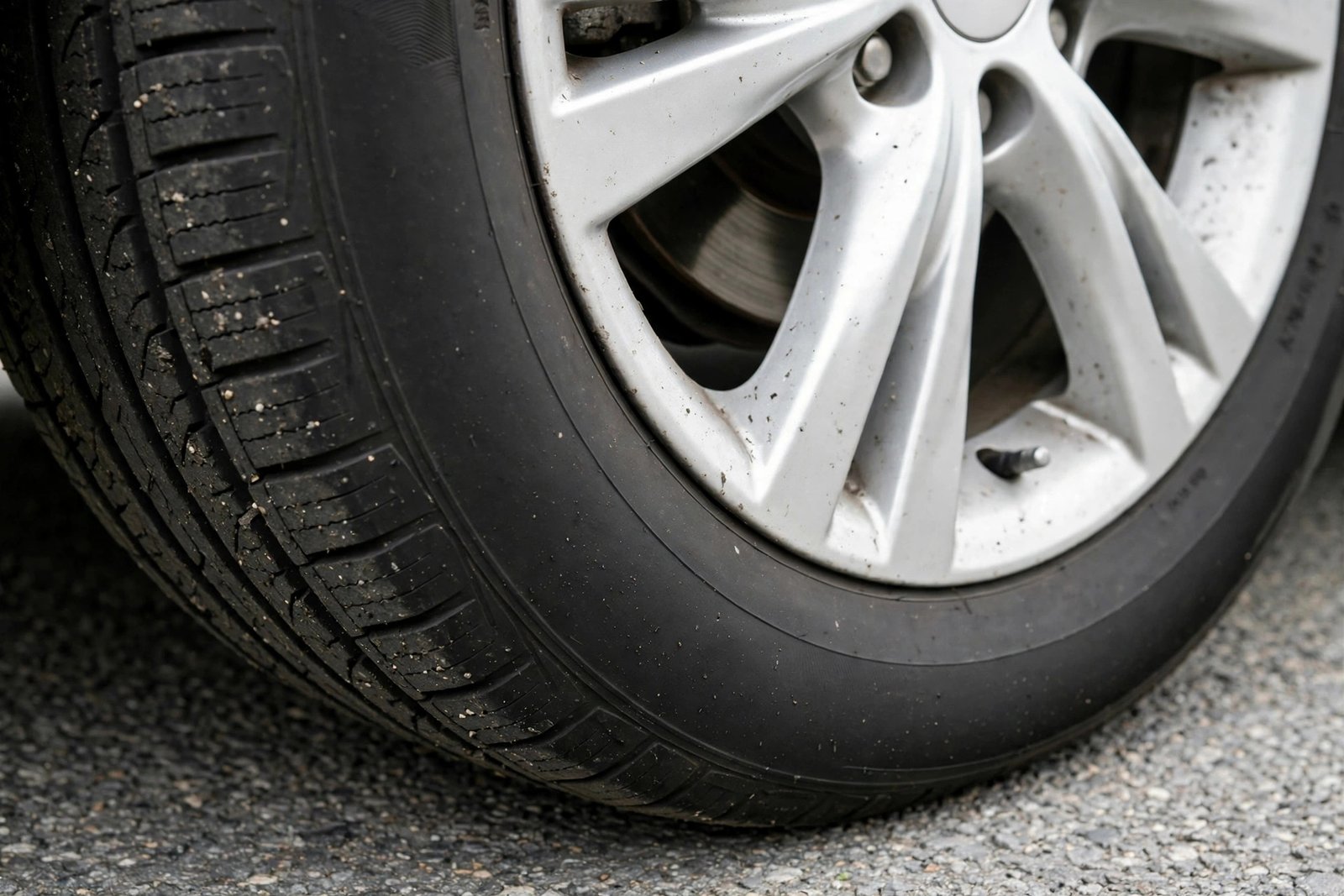
17-inch vs 18-inch wheels: the full comparison
| Feature | 17-inch wheels | 18-inch wheels |
|---|---|---|
| Ride comfort | Smoother — taller sidewalls absorb bumps and potholes | Firmer — shorter sidewalls transmit more of the road |
| Handling and steering | Softer feel, more sidewall flex in corners | Sharper steering response, steadier in corners |
| Road noise | Quieter on most surfaces | More road noise and harshness, especially on rough pavement |
| Tire cost | Cheaper tires, more budget options | More expensive tires, fewer budget choices |
| Wheel cost | Cheaper wheels | More expensive wheels, roughly $100–$200 more per set in one comparison |
| Fuel economy | Slightly better — lighter setup, less rolling resistance | Slightly worse — heavier, often wider tires |
| Pothole and curb damage | Better protection, more cushion before the rim | More vulnerable — thin sidewall, rim closer to the road |
| Tire availability | Wide choice, many comfort-focused tires | Fewer options, more sporty and performance tires |
| Looks | Practical, understated | Sportier, fills the wheel arch better |
| Winter driving | Better — taller sidewalls cope with snow and potholes | Worse — stiffer, more damage-prone, pricier winter tires |
Ride comfort: the deciding factor for most drivers
Ride comfort is where the 17-inch wheel earns its reputation, and it is the main reason most family cars and daily drivers come with 17-inch wheels as standard.
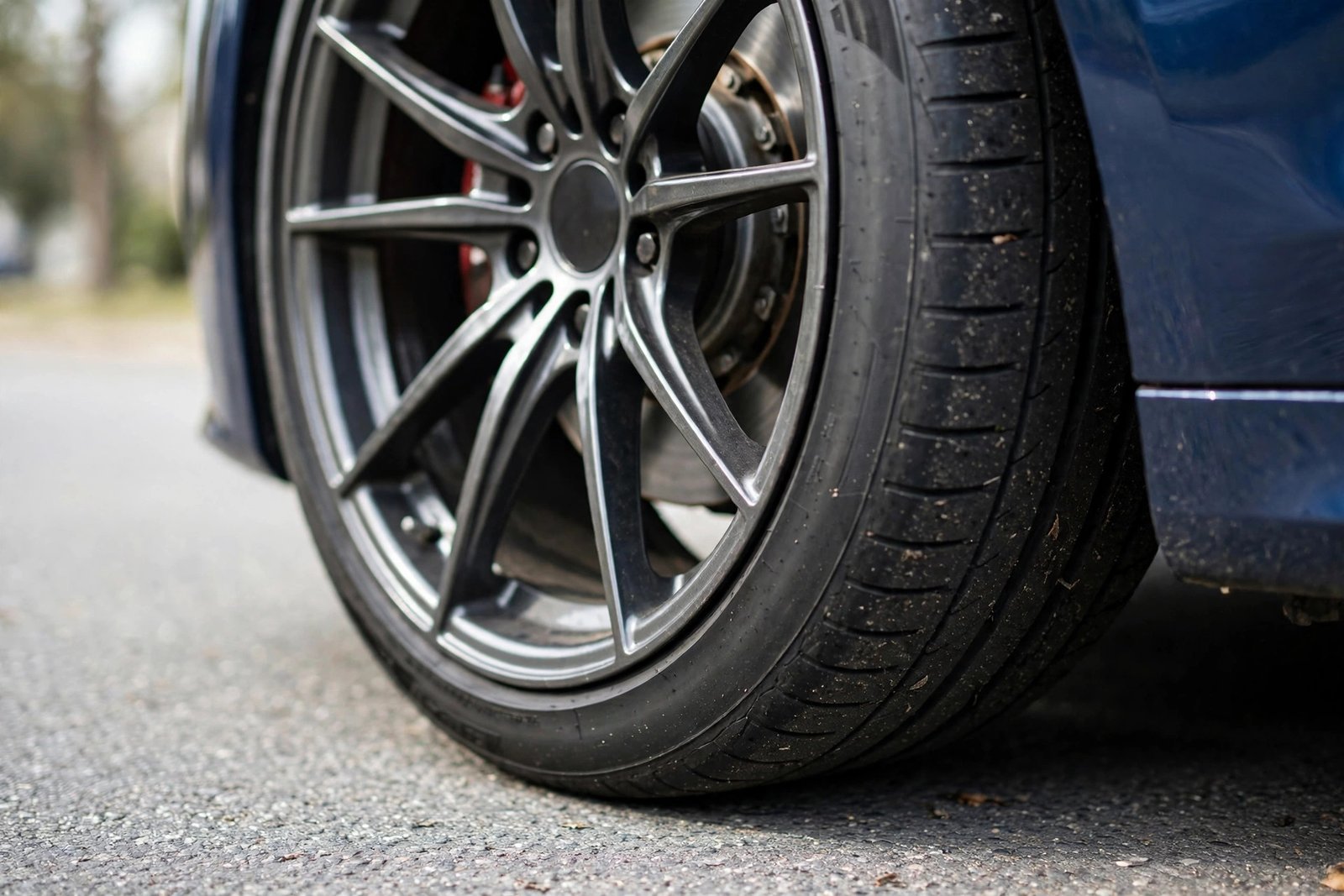
A taller sidewall is a bigger pocket of air and rubber. When the tire hits a bump, that pocket deforms — it compresses, spreads the impact over a longer moment, and passes a softer version of the hit up into the suspension. The result is a ride that feels cushioned and forgiving, especially on broken pavement, expansion joints, gravel, and potholes. Drivers who spend their days on poorly maintained roads notice the difference immediately.
An 18-inch setup has less of that cushion. The shorter sidewall is stiffer, so it deforms less and passes impacts through more directly. On a smooth highway the difference is small, and many drivers would not notice it at all. On a rough city street or a country road, the difference is obvious: sharper thumps, more vibration through the seat and steering wheel, and a ride that feels busy rather than settled.
How big is the gap in practice? It depends on the car. A softly suspended sedan will still ride reasonably well on 18-inch wheels, because the suspension does most of the work. A firmly suspended car will feel noticeably harsher. Tire choice matters too: a comfort-oriented touring tire on 18-inch wheels can ride better than a stiff performance tire on 17-inch wheels. But all else being equal — same car, same tire family, same pressure — the 17-inch setup rides softer. Every major comparison of the two sizes reaches the same conclusion.
There is one more comfort factor people forget: long drives. A firmer ride is tiring over hours. If you regularly drive long highway distances, the softer 17-inch ride is not just nicer, it is less fatiguing.
Handling and steering: where 18 inches fights back
If ride comfort were the only thing that mattered, nobody would buy 18-inch wheels. The reason they exist — and the reason performance cars use them — is handling.
A short sidewall flexes less when you turn the steering wheel. With a tall sidewall, there is a tiny delay and a slight squirm as the rubber bends before the car changes direction. With a short sidewall, the response is more immediate: you turn the wheel, and the car turns. The car also feels steadier mid-corner, because the tire is not rolling onto its shoulder as much.
On a winding road or a highway on-ramp, an 18-inch setup feels more connected and more confident. The steering feels sharper, the car feels more planted, and the driver gets more feedback about what the tires are doing. For a sporty driver, that feeling is worth the comfort trade-off.
For most daily driving, though, the handling advantage is smaller than it looks on paper. In normal commuting — city streets, highways, parking lots — you rarely push a car hard enough for sidewall flex to matter. The 17-inch setup handles perfectly well for everyday use. The 18-inch advantage shows up when you drive enthusiastically, not when you drive to work.

Road noise: the quiet cost of bigger wheels
Road noise follows the same pattern as ride comfort. Taller sidewalls absorb the high-frequency vibrations that become tire roar, so 17-inch wheels are generally quieter. Shorter sidewalls transmit more of that vibration into the cabin, and the wider tires often fitted to 18-inch wheels add to the noise on coarse surfaces.
The difference is not dramatic — a decibel or two in most cases — but on a long highway drive it adds up, and it is one of the reasons luxury cars aimed at quiet comfort tend to stick with smaller wheels and taller tires. If a quiet cabin matters to you, 17-inch wheels help. If you want to go further, our guide to low profile tires explains how tire profile affects noise, comfort, and cost in more detail.
Tire cost and availability: 17 inches wins by a clear margin
This is the least glamorous part of the comparison and one of the most important over the life of the car. Tires are a recurring cost, and the size you choose sets the price of every set you will ever buy.
17-inch tires are cheaper. They use less material, they are made in higher volumes, and there are far more budget and mid-range options to choose from. 18-inch tires cost more per tire, and the choice of affordable options is narrower — the range leans toward sporty and premium tires. One independent comparison found 18-inch tires running roughly $10 to $20 more per tire than the equivalent 17-inch size, and a set of 18-inch wheels costing roughly $100 to $200 more than the same wheels in 17-inch. Prices vary by brand and model, so check the actual tires you would buy, but the direction is consistent: bigger costs more.
Availability matters too. A common 17-inch size like 225/65R17 is stocked almost everywhere, in every price range. An 18-inch size may have fewer options in stock, which can mean waiting for an order or paying more for what is available. Over several sets of tires, the savings from 17-inch wheels are substantial.
Fuel economy: a small but real advantage for 17 inches
Fuel economy follows weight and rolling resistance, and 17-inch setups usually win on both. A 17-inch wheel-and-tire package is generally lighter than the 18-inch equivalent, and lighter wheels take less energy to get moving every time you accelerate. Wider 18-inch tires can also create more rolling resistance, which costs a little more fuel at cruising speed.
How much? Most comparisons put the difference at around 1 to 2 mpg in real-world driving, and some electric vehicle drivers report a 3 to 5 percent range difference between smaller and larger wheels. That is not enough to choose a wheel size on fuel economy alone, but over tens of thousands of miles it is real money — and it is one more point in the 17-inch column.
Acceleration and braking follow the same logic. Heavier wheels need more effort to spin up and more braking force to stop, so a 17-inch setup usually feels slightly more responsive from a standstill. Again, the difference is small, but it is there.
Pothole and curb damage: the hidden risk of 18-inch wheels
This is the difference that can cost you the most in a single moment. With a tall sidewall, the tire has room to absorb a pothole hit before the rim is involved. With a short sidewall, there is less rubber between the road and the metal — a hard hit can bend or crack the wheel, pinch the tire’s sidewall, or cause a blowout.
Drivers on rough roads know this from experience: 18-inch wheels are noticeably more vulnerable to pothole and curb damage, and repairs are expensive. A bent alloy wheel can cost far more to fix or replace than the money saved by any other factor. If your daily route includes potholes, speed bumps, and rough shoulders, the extra protection of 17-inch wheels is worth a lot.

Which size should you choose?
Choose 17-inch wheels if:
- Comfort is your top priority — you want the softest, quietest ride
- You drive on rough, potholed, or poorly maintained roads
- You want the lowest running costs — cheaper tires, cheaper wheels, slightly better fuel economy
- You drive long distances and want a less tiring ride
- You need winter tires, or you want a dedicated winter wheel set
- You drive a family car, commuter, or SUV used mainly for daily driving
Choose 18-inch wheels if:
- Sharp handling and steering feel matter more to you than comfort
- You drive a sporty car, and the car was designed around 18-inch wheels
- You drive mostly on smooth highways and well-maintained roads
- You like the sportier look and the way larger wheels fill the arches
- You are willing to pay more for tires and accept a firmer ride and higher damage risk
For most drivers, most of the time, 17-inch wheels are the smarter choice. They ride better, cost less, last longer on rough roads, and give up very little in everyday handling. The 18-inch wheel is the right choice when driving feel and looks are genuinely more important to you than comfort and cost — and you know your roads can handle it.
Can you switch from 17-inch to 18-inch wheels (or back)?
Yes, in most cases, but there are rules. The golden rule is to keep the overall tire diameter as close as possible to the original — within about 3 percent — by choosing a lower-profile tire for the bigger wheel. That keeps your speedometer, odometer, and gearing accurate.
Before you buy, check these five things:
- Clearance. The bigger wheel and tire must clear the brakes, suspension, and wheel arches, including at full steering lock.
- Load rating. The new tires must carry at least the load rating your car requires.
- Speedometer accuracy. A diameter change of more than a few percent will make your speedometer read wrong.
- Tire pressure. The pressure on your door-jamb placard was set for the factory tire size. A different size may need a different pressure — confirm it with a tire professional.
- TPMS. Your tire pressure monitoring sensors need to fit the new wheels, or be transferred or replaced.
A tire shop can confirm fitment in minutes using your car’s make, model, and year. Do not guess — a wheel that looks right and rubs at full lock is an expensive mistake. And remember, you cannot fit 17-inch tires on 18-inch rims, or vice versa. The tire size must match the rim size exactly.
Verdict
17-inch wheels win on ride comfort, noise, cost, fuel economy, pothole protection, and winter driving. 18-inch wheels win on handling, steering response, grip, and looks. Neither is objectively better — they are built for different priorities. But if you are choosing for a daily driver and you are not sure, choose 17 inches. It is the comfortable, practical, cheaper choice, and the one most drivers are happiest with a year later. Choose 18 inches only when you know exactly what you are giving up and you want what it gives back.
Frequently asked questions
Are 17-inch wheels more comfortable than 18-inch wheels?
Yes, in most cases. A 17-inch wheel uses a tire with a taller sidewall, and that extra rubber and air acts like a second layer of suspension, soaking up potholes, expansion joints, and rough pavement before the bumps reach the cabin. An 18-inch wheel uses a shorter sidewall, so more of the road surface gets transmitted into the car.
Do 18-inch wheels handle better than 17-inch wheels?
Yes. The shorter, stiffer sidewall of an 18-inch tire flexes less under sideways forces, so steering feels sharper and more direct, and the car feels steadier in corners. The difference is most noticeable on smooth roads and in spirited driving; on rough roads, the comfort penalty often matters more.
Are 18-inch tires more expensive than 17-inch tires?
Usually, yes. Both the wheels and the tires cost more in 18-inch sizes. One independent comparison put the gap at roughly $100 to $200 more per set of wheels, plus around $10 to $20 more per tire, though prices vary by brand and model. Check the actual tires you would buy before deciding.
Do 17-inch wheels get better fuel economy than 18-inch wheels?
Slightly, in most cases. A 17-inch wheel-and-tire setup is usually lighter, and lighter wheels take less energy to accelerate. Wider 18-inch tires can also add rolling resistance. The difference is small — often around 1 to 2 mpg — but it adds up over the life of the tires.
Can I switch from 17-inch wheels to 18-inch wheels?
Yes, on most cars, as long as you keep the overall tire diameter close to the original size by choosing a lower-profile tire, and you check brake clearance, suspension clearance, load rating, and speedometer accuracy. A tire professional should confirm the fitment before you buy.
Are 17-inch wheels better in winter than 18-inch wheels?
Generally, yes. The taller sidewall of a 17-inch tire copes better with snow, ice, and potholes, and 17-inch winter tires are usually cheaper and easier to find. Many drivers run 17-inch wheels as a dedicated winter set and keep 18-inch wheels for the rest of the year.
Sources and further reading
- EngineerFix — Are 18-Inch Wheels Better Than 17-Inch Wheels?
- Auto Care HQ — Differences Between 17 and 18 Inch Alloy Wheels: Pros and Cons
- Discounted Wheel Warehouse — 17 vs. 18-inch Wheels: Which Size Should You Choose?
- Related on Smart Tire Guide: Low Profile Tires Pros and Cons, 225/65R17 vs 235/65R17, Best Budget Tires, How to Check Tire Tread Depth
