
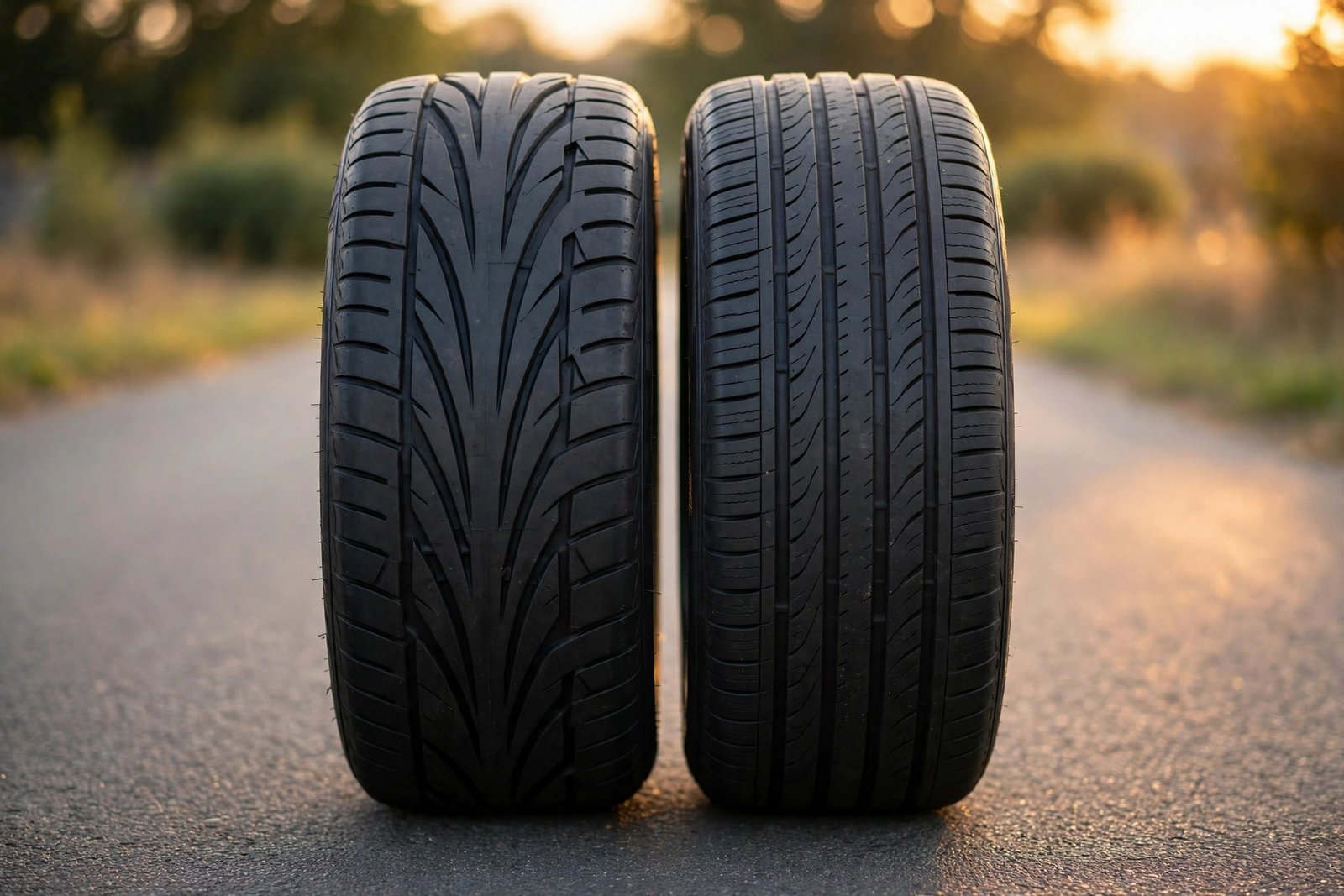
Quick answer: There is no single winner — but if you want one name, it is Goodyear, by a narrow margin. Across 360 professional tests, Goodyear finished ahead 215 times to Bridgestone’s 137, and owners rate Goodyear 7.9 out of 10 versus 7.1 for Bridgestone. Goodyear wins on tread life, comfort, noise, and winter grip. Bridgestone fights back where it matters most for safety: it stops shorter in the wet and the dry and rolls with less resistance, saving fuel. Buy Goodyear for the longest-lasting, quietest tire; buy Bridgestone for the shortest stopping distances.
If you are shopping for tires, Bridgestone vs Goodyear is one of the oldest arguments in the tire world. Both brands have been around for close to a century, both make tires for everything from compact sedans to heavy trucks, and both show up as original equipment on brand-new cars — so the decision comes down to the details.
This comparison is built on the largest head-to-head dataset available: 360 professional tests in which both brands fielded a tire, plus nearly 6,700 owner reviews, along with the manufacturers’ own warranty figures. Where the numbers are close, we say so.
Bridgestone vs Goodyear at a Glance
| Category | Bridgestone | Goodyear | Winner |
|---|---|---|---|
| Overall test record (360 shared tests) | 137 wins | 215 wins | Goodyear |
| Owner rating (out of 10) | 7.1 | 7.9 | Goodyear |
| Wet braking (average) | 131 ft | 132 ft | Bridgestone |
| Dry braking (average) | 126 ft | 128 ft | Bridgestone |
| Snow braking (average) | 79 ft | 77 ft | Goodyear |
| Rolling resistance (average) | 7.88 kg/t | 8.01 kg/t | Bridgestone |
| Noise (average) | 71.65 dB | 70.88 dB | Goodyear |
| Tread life in wear tests (average) | 25,035 miles | 30,553 miles | Goodyear |
| Price | Cheaper in 76 of 137 tests, about 1.3% less | — | Bridgestone |
| Longest touring warranty | 80,000 miles (Turanza QuietTrack) | 85,000 miles (Assurance MaxLife) | Goodyear |
| Range (tires on sale) | 213 tires, 5,685 sizes | 146 tires, 5,130 sizes | Bridgestone |
| Would buy again (owners) | 6.2 / 10 | 7.6 / 10 | Goodyear |
Test figures are from Tire Reviews’ brand comparison, updated November 2026, covering 360 shared professional tests and 6,697 owner reviews.
The Two Brands in Brief
Bridgestone
Bridgestone was founded in 1931 in Tokyo, Japan, and is now the largest tire manufacturer in the world by sales. Its best-known lines for American drivers are Turanza (touring all-season), Potenza (performance summer), Blizzak (winter), Dueler and Alenza (SUV and truck), and Ecopia (fuel-efficient).
Bridgestone’s reputation is built on braking and efficiency: its tires consistently post the shortest stopping distances in independent tests, and its ENLITEN technology cuts weight and rolling resistance to save fuel. The trade-off is that Bridgestone’s tires tend to wear faster and ride a little firmer and louder than Goodyear’s equivalents.
Goodyear
Goodyear was founded in 1898 in Akron, Ohio, making it the older of the two companies and one of the most recognized American tire brands. Its best-known lines are Assurance (touring all-season), Eagle F1 (performance), Wrangler (truck and all-terrain), and WinterCommand (winter).
Goodyear’s strength is balance. Its tires rarely dominate a single measurement the way a Bridgestone does on braking, but they are consistently near the top across wet grip, comfort, noise, and wear — and that consistency is what wins overall test placements. Owners notice it too: Goodyear leads Bridgestone on every owner-rated category, from wet grip (8.2 vs 7.3 out of 10) to comfort (8.0 vs 6.8) to tread life (7.7 vs 6.7).
What the Test Data Actually Says
The most useful way to compare two tire brands is not one test, but hundreds of them — a single test can turn on one tire model, one size, or one day’s weather.
Here is what that record shows, according to Tire Reviews’ November 2026 update:
- Overall: Goodyear finished ahead in 215 of 360 shared tests, Bridgestone in 137, with 8 draws.
- By season: Goodyear leads in every season — summer (93 wins to 72), winter (77 to 38), and all-season (42 to 25).
- Owners agree: Goodyear’s 7.9 out of 10 owner score beats Bridgestone’s 7.1, and Goodyear owners are far more likely to say they would buy again (7.6 vs 6.2 out of 10).
That looks like a clear Goodyear win — until you look at which measurements each brand wins. That is where your driving priorities decide the answer.

Head-to-Head by Category
Braking: Bridgestone wins
Braking is the most important safety measurement a tire has, and it is Bridgestone’s strongest suit. Across the shared tests, Bridgestone averaged 131 feet in wet braking against 132 for Goodyear, winning 124 of 213 comparisons, and 126 feet in dry braking against 128, winning 115 of 205. The margins are small — a foot or two — but consistent, test after test.
The pattern holds model to model: the Bridgestone Potenza Sport beat the Goodyear Eagle F1 SuperSport in 8 of 10 shared tests, stopping 5.1% shorter in the wet, and the newer Potenza Sport Evo swept the SuperSport 3–0. If the shortest possible stop matters to you, Bridgestone is the brand to beat.
Tread life: Goodyear wins — by a lot
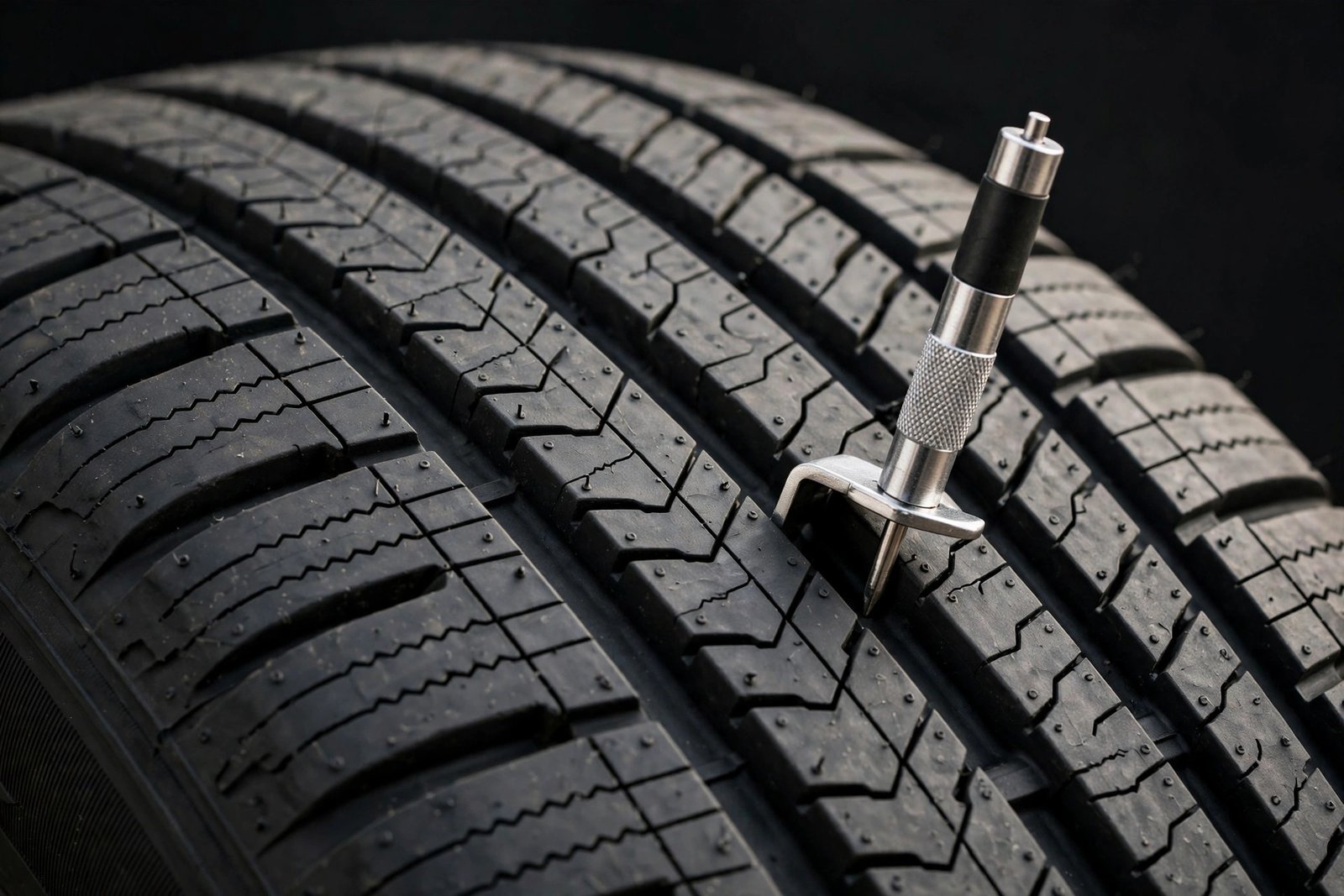
This is the biggest gap in the whole comparison. In independent wear testing across 50 shared tests, Goodyear tires lasted an average of 30,553 miles against 25,035 miles for Bridgestone — about 28% further — winning 45 of the 50 tests. Owners agree, rating Goodyear’s tread life 7.7 out of 10 against 6.7 for Bridgestone.
The warranties back it up: Goodyear’s longest-lasting touring tire, the Assurance MaxLife, carries an 85,000-mile limited treadwear warranty, against 80,000 miles for Bridgestone’s Turanza QuietTrack. (In the all-weather category the order flips — the Bridgestone WeatherPeak carries 70,000 miles against 60,000 for the Goodyear Assurance WeatherReady.) If you drive 15,000 miles a year, the wear-test gap is roughly the difference between replacing tires at three and a half years and at four and a half.
One caution: a mileage warranty covers manufacturing defects, not a promise your tires will last that long. Rotation, alignment, and tire pressure decide whether you reach the number. If you want to know when your tires are done regardless of brand, read our guide to when to change your tires.
Comfort and noise: Goodyear wins
Goodyear is the quieter, more comfortable brand. It averaged 70.88 dB against Bridgestone’s 71.65 dB in noise testing, winning 101 of 143 comparisons, and owners rate Goodyear’s comfort 8.0 out of 10 against 6.8 for Bridgestone — one of the widest owner-rating gaps in the data.
The model matchups confirm it: against the Potenza Sport, the Goodyear Eagle F1 Asymmetric 6 was 2.1 dB quieter across 11 tests. If you spend hours a day on the highway, that difference is something you will feel — or rather, not hear — every single drive.
Bridgestone does fight back with the Turanza QuietTrack, which uses noise-dampening tread grooves and is genuinely quiet for its class — we covered it in our Bridgestone Turanza QuietTrack review. But as a brand-wide trait, quiet comfort belongs to Goodyear.
Wet grip and aquaplaning: a split decision
Wet performance is nearly a tie. Bridgestone wins wet braking (shorter stops); Goodyear wins wet handling and aquaplaning resistance. In plain terms: Bridgestone stops shorter when you hit the brakes in the rain, while Goodyear is a little more secure driving through standing water at speed. If you live somewhere with heavy rain and flooded roads, Goodyear’s aquaplaning edge matters; if your main worry is an emergency stop on a wet road, Bridgestone’s braking edge matters more.
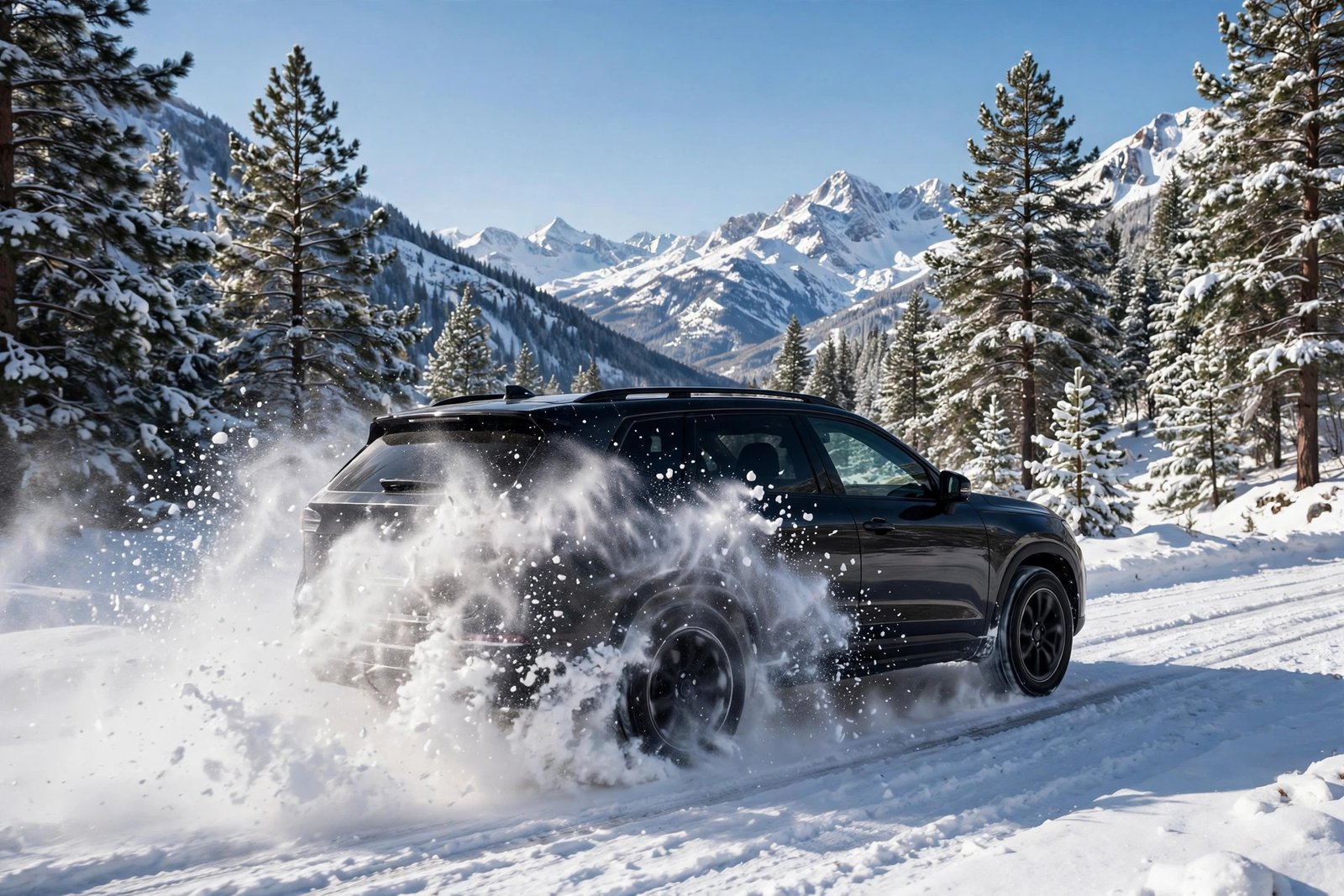
Winter performance: Goodyear wins overall, Bridgestone wins on ice
Goodyear leads the winter category 77 tests to 38, with shorter snow braking (77 feet vs 79 feet) and better snow traction and handling. But the headline matchup — the Bridgestone Blizzak WS90 against the Goodyear WinterCommand Ultra — is essentially a tie, and the details matter.
In Tire Rack’s studless winter test, the Blizzak WS90 stopped about a foot shorter on ice from 12 mph and 9.9 feet shorter in wet braking from 50 mph, while the WinterCommand Ultra was quicker accelerating on snow and stopped 5.9 feet shorter in dry braking. Other comparisons found the Blizzak about 11 feet shorter on ice braking on average. The honest summary: the Blizzak is the better ice tire, the WinterCommand is the better snow-acceleration tire, and both are excellent. If your winters mean icy mornings, buy the Blizzak. And remember that any dedicated winter tire beats any all-season tire in real winter — see our all-season vs winter tires breakdown if you are weighing that choice.
Fuel economy: Bridgestone wins
Lower rolling resistance means less fuel burned (or more range, in an EV), and Bridgestone leads here: 7.88 kg/t against 8.01 kg/t on average, winning 94 of 157 comparisons. The gap is under 2%, so it will not transform your fuel bill, but it is consistent — the Turanza T005 had 3.7% lower rolling resistance than the Goodyear EfficientGrip Performance 2, and the Potenza Sport Evo about 9.7% lower than the Eagle F1 SuperSport. Hybrid and EV drivers should weight this one more heavily.
Price and value: Bridgestone is cheaper to buy, Goodyear is cheaper to own
Bridgestone was the cheaper tire in 76 of 137 shared price comparisons, costing about 1.3% less on average. In one 225/65R17 price check, the Goodyear Assurance MaxLife listed at $148.99 against $179.26 for the Bridgestone Turanza QuietTrack — but prices vary so much by size, retailer, and rebates that you should always check your exact size.
The more important math is cost per mile: Goodyear’s roughly 28% wear-test advantage more than offsets Bridgestone’s roughly 1% price advantage. A tire that costs a few dollars more but lasts a year longer is the cheaper tire.
Best Tires From Each Brand by Category
Brand averages hide big differences between individual models. Here are the flagship matchups:
| Category | Bridgestone pick | Goodyear pick | Who usually wins |
|---|---|---|---|
| Touring all-season | Turanza QuietTrack (80,000-mile warranty) | Assurance MaxLife (85,000-mile warranty) | Goodyear on longevity; Bridgestone on quietness |
| Grand-touring all-season | Turanza 6 | EfficientGrip Performance 2 | Goodyear on wear and value; Bridgestone on aquaplaning |
| Max performance summer | Potenza Sport / Potenza Sport Evo | Eagle F1 SuperSport | Bridgestone on braking; Goodyear on dry handling feel |
| Ultra-high performance summer | Potenza Sport | Eagle F1 Asymmetric 6 | Goodyear 9–6 in 15 shared tests; Bridgestone sharper, Goodyear longer-lasting |
| Winter | Blizzak WS90 | WinterCommand Ultra | Near-tie; Bridgestone on ice, Goodyear on snow acceleration |
| All-weather | WeatherPeak (70,000-mile warranty) | Assurance WeatherReady (60,000-mile warranty) | Bridgestone on warranty and wet braking |
| Truck / all-terrain | Dueler A/T | Wrangler DuraTrac | Goodyear on owner ratings and off-road durability |
| SUV highway | Alenza AS Ultra | Wrangler Steadfast HT (70,000-mile warranty) | Goodyear on SimpleScore ratings and warranty |
A note on performance: the Potenza Sport is the sharper driver’s tire — it wins braking and lap times — but the Eagle F1 Asymmetric 6 lasted 33.3% longer in wear tests and was 2.1 dB quieter, which is why it took 9 of 15 shared tests. For a daily-driven sports sedan, the Goodyear is the smarter buy; for weekend track work, the Bridgestone.

For trucks and SUVs, Goodyear’s Wrangler line is the deeper bench: the Wrangler DuraTrac outscored the Dueler A/T 693 by a wide margin in owner-based comparisons (68 vs 55), and the Wrangler Steadfast HT carries a 70,000-mile warranty against 60,000 miles for the comparable Dueler H/T 684 II.

Which Brand Should You Buy?
Stop asking which brand is better in general, and ask which brand is better for you:
Buy Goodyear if you:
- Drive high mileage and want tires that last
- Want the quietest, most comfortable ride
- Drive in snow often and want strong all-round winter performance
- Drive a truck or SUV and want strong all-terrain options
- Want the lowest cost per mile
Buy Bridgestone if you:
- Want the shortest braking distances, wet or dry
- Drive a hybrid or EV and want maximum range
- Want a Blizzak — still the benchmark winter tire for ice
- Want the sharpest performance tire for fast road driving or track days
- Found the Bridgestone model you want at a better price than the Goodyear equivalent
Either brand works if you drive a normal sedan or crossover in a mild climate and keep up with rotation and pressure checks.
One rule matters more than the brand: always compare the specific tire models in your size. The gap between a Turanza QuietTrack and a Potenza Sport is far bigger than the gap between Bridgestone and Goodyear as brands. Check the tire size code on your sidewall first — our guide to what tire numbers mean explains how — then compare the two or three models that actually fit your car.
How They Compare to Michelin
Michelin still sits above both brands in most independent tests, particularly on tread life — our Goodyear vs Michelin tires comparison covers that rivalry, and the Michelin Pilot Sport 5 review shows what the benchmark looks like. Both brands undercut Michelin on price, which is why this fight matters: for many drivers, the real choice is the best tire at a sensible price. Continental is also worth a look; see our Continental ExtremeContact DWS06 Plus review.
Verdict: Goodyear Wins on Points, Bridgestone Wins on Braking
Scored round by round, Goodyear takes the decision: more test wins, higher owner scores, longer tread life, quieter ride, better winter performance, and lower cost per mile. For the average American driver buying tires for a daily-driven car, Goodyear is the better default choice in 2026.
But Bridgestone wins the round that matters most in an emergency. Its braking advantage is small but real and repeated in test after test, its fuel-economy edge is genuine, and the Blizzak remains the winter tire other winter tires are measured against. If you value stopping distance above all else, or you drive where ice is a fact of life, Bridgestone is the right call.
The real lesson of 360 tests is that both brands are excellent. The wrong choice is not picking Bridgestone over Goodyear or Goodyear over Bridgestone — it is buying a tire for the brand name on the sidewall instead of the test results, warranty, and owner feedback for the specific model in your size. Pick your priorities, compare two or three models that fit your car, and either brand will serve you well.
Frequently Asked Questions
Is Bridgestone better than Goodyear?
Neither brand is better across the board. Across 360 shared professional tests tracked by Tire Reviews, Goodyear finished ahead in 215 tests and Bridgestone in 137, with 8 draws, and owners rate Goodyear 7.9 out of 10 versus 7.1 for Bridgestone. But Bridgestone wins the key braking and fuel-efficiency measurements, so the better brand depends on what you prioritize: Goodyear for tread life, comfort and winter grip; Bridgestone for braking and fuel economy.
Which lasts longer, Bridgestone or Goodyear tires?
Goodyear lasts longer on average. In independent wear testing across 50 shared tests, Goodyear tires averaged 30,553 miles versus 25,035 miles for Bridgestone, winning 45 of the 50 tests. The flagship warranties tell the same story: the Goodyear Assurance MaxLife carries an 85,000-mile treadwear warranty, while the Bridgestone Turanza QuietTrack carries an 80,000-mile warranty.
Which is cheaper, Bridgestone or Goodyear?
Bridgestone is usually slightly cheaper at the register. In shared test pricing, Bridgestone was the cheaper tire in 76 of 137 comparisons, costing about 1.3% less on average. However, because Goodyear tires tend to last longer, Goodyear often works out cheaper per mile over the life of the tire.
Which is better in winter, Bridgestone or Goodyear?
Goodyear wins the winter category overall, taking 77 of 118 shared winter tests, with shorter snow braking distances on average (77 feet versus 79 feet). But Bridgestone’s Blizzak WS90 is one of the most respected winter tires ever made and beats Goodyear’s WinterCommand Ultra on ice braking, so for pure ice performance Bridgestone is still the pick.
Are Bridgestone and Goodyear good tire brands?
Yes, both are premium brands and two of the largest tire makers in the world. Bridgestone was founded in 1931 in Tokyo and Goodyear in 1898 in Akron, Ohio. Both supply tires as original equipment on new cars, both compete at the top of independent tests, and both back their touring tires with 60,000 to 85,000-mile treadwear warranties.
Should I buy Bridgestone or Goodyear for a daily driver?
For most daily drivers, Goodyear is the safer default choice because its tires last longer, ride quieter, and score higher with owners. Choose Bridgestone if your top priorities are the shortest braking distances and the best fuel economy, or if you want a Blizzak for winter. Either way, compare the specific tire models for your car, not just the brand name, because the gap between two models from the same brand is often bigger than the gap between the brands.