
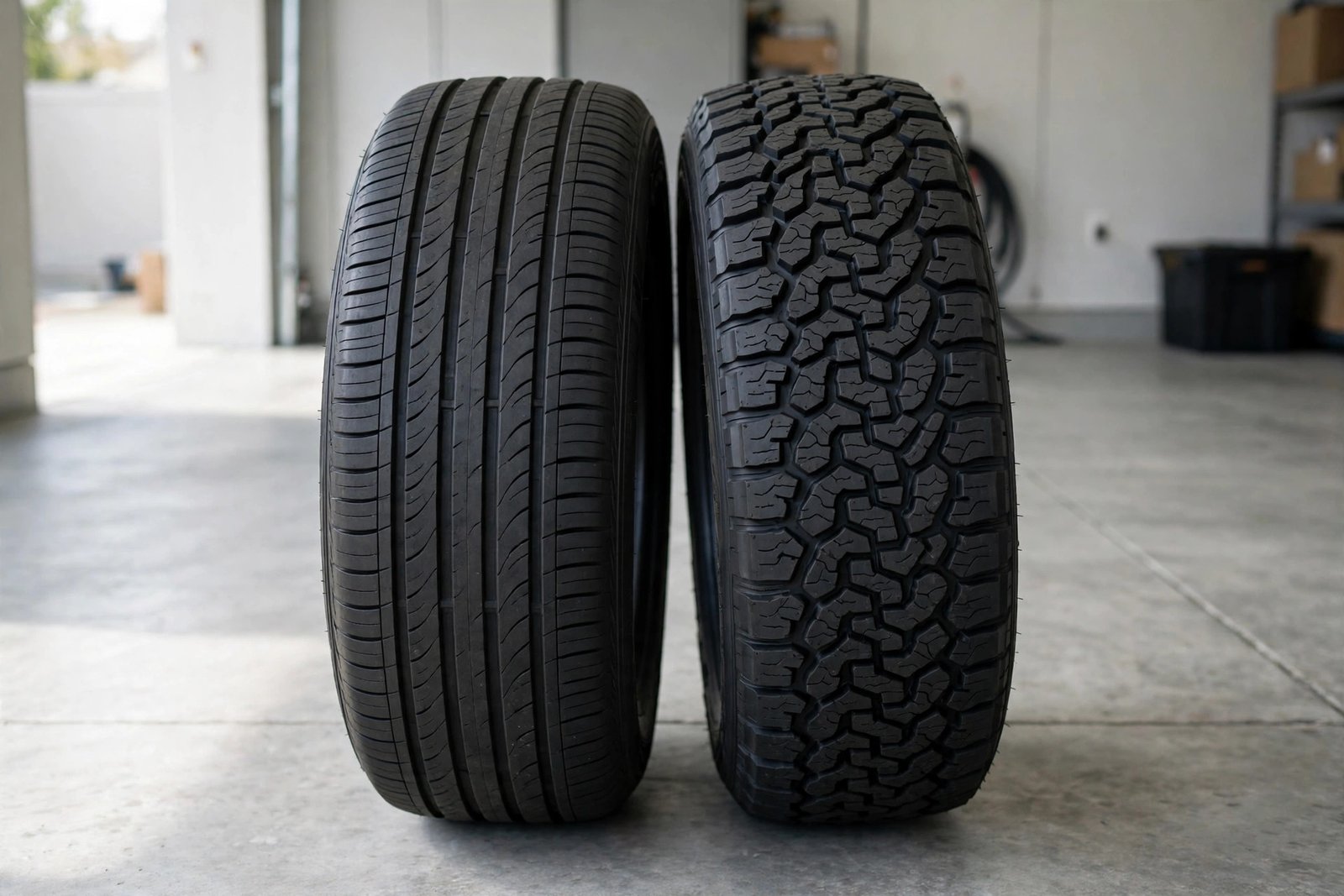
Quick answer: Yes — you can mix tire brands on a car, but never on the same axle. The two tires on the front axle must be identical to each other, and the two tires on the rear axle must be identical to each other. The front pair can be a different brand from the rear pair, as long as every tire is the correct size, load index, and speed rating for your car, and the pairs are the same tire type with similar tread depth. If you replace only two tires, put the new pair on the rear axle, even on a front-wheel-drive car. All-wheel-drive cars are the exception: mismatched tires can damage the drivetrain, so replace all four if you can.
The axle rule: the one rule that matters most
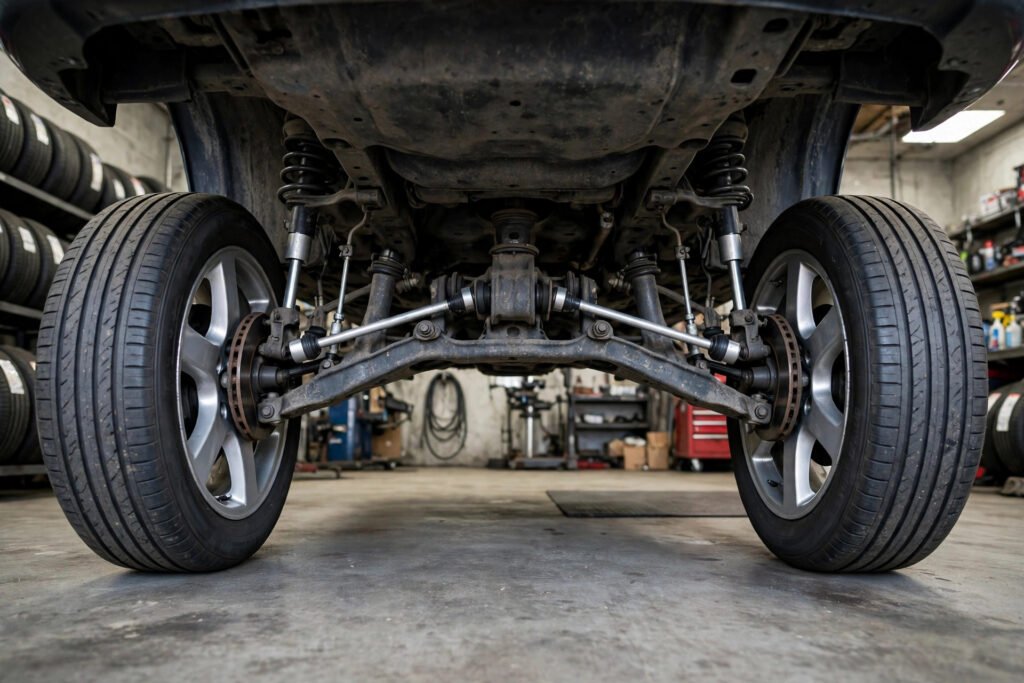
When drivers ask can you mix tire brands on a car, the answer is yes — with one rule. Every tire maker and tire guide agrees on this, and it is the rule the whole article hangs on: the two tires sharing one axle must be identical. Same brand, same model, same size, same tread pattern, same load index and speed rating, and similar tread depth. The left and right tires on an axle do the same job at he same time — they brake together, they turn together, and they carry the same corner of the car. If they grip differently, the car pulls to one side under braking, feels vague in a turn, and can behave unpredictably in the wet.
That sounds strict, and it is. But it also leaves room to mix. The front pair and the rear pair do different jobs, so they do not have to be the same brand. A Michelin pair up front and a Continental pair at the back is a setup that tire makers accept, provided the specs line up. What they do not accept is a Michelin on the left front and a Continental on the right front — even if the size on the sidewall matches exactly.
| Setup | Verdict |
|---|---|
| Four identical tires (same brand, model, size, ratings) | Ideal — what every tire maker recommends |
| Matched pair on each axle, different brands front vs rear | Acceptable compromise, if all specs match |
| Different brands or models on the same axle | Do not do this — unpredictable handling and braking |
| One new tire next to one worn tire on the same axle | Avoid — replace in pairs when you can |
| Different sizes on the same axle | Never — unless your car was built that way (see below) |
There is one exception to the “same size everywhere” idea: some sports cars come from the factory with wider tires on the rear axle than the front — a staggered setup. That is a design the vehicle maker approved, with the sizes written in the owner’s manual. It is not a license to mix sizes yourself. If your car did not come with a staggered setup, do not create one.
Why the brand name is not the real issue
Here is the part that surprises most drivers: the brand name on the sidewall is the least important thing about a tire. What matters is everything stamped next to it. Two tires from different brands can be near-identical in size, construction, and ratings, while two tires from the same brand can be completely different — a touring all-season tire and an ultra-high-performance summer tire from one maker share almost nothing except the logo.
The truth sits in the middle: brand mixing is fine across axles, dangerous on one axle, and only as good as the specifications you match.
What must match: the checklist
Before you buy a different brand for one axle, check every item on this list. If any one of them fails, the tire is the wrong tire for your car, whatever the brand.
Size. The full size designation — for example, P205/55R16 — must match your car’s specification exactly: section width, aspect ratio, and rim diameter. A tire that is even slightly different in diameter rolls a different distance per revolution, which throws off your speedometer, your traction control, and, on an all-wheel-drive car, the drivetrain. If you are not sure how to read the numbers on your sidewall, our guide to what tire numbers mean walks through every code, and our 265/70R17 explainer shows a worked example.
Load index. This is the number in the service description (the “94” in 94H) and it tells you the maximum weight one tire can carry. Never fit a tire with a load index below the minimum your vehicle maker specifies. A higher load index is acceptable — Continental notes that you can mix load indexes if both are above the maker’s minimum, and in that case the higher-rated pair goes on the rear axle.
Speed rating. The letter after the load index (the “H” in 94H) is the maximum speed the tire is rated to sustain. Like the load index, it must be at or above your car’s requirement — never below it.
Construction. Every tire on the car must be the same construction type. In practice, that means radial tires all round — radial and bias-ply (non-radial) tires flex completely differently, and mixing them creates severe handling imbalance. This rule applies to all four wheels, not just one axle.
Tire type and season. All four tires should be the same type: all-season, summer, or winter. Mixing types is covered in detail below, but the short version is that winter and summer tires grip so differently that the car becomes unpredictable. The same goes for run-flat tires: never mix run-flats with regular tires on the same car.
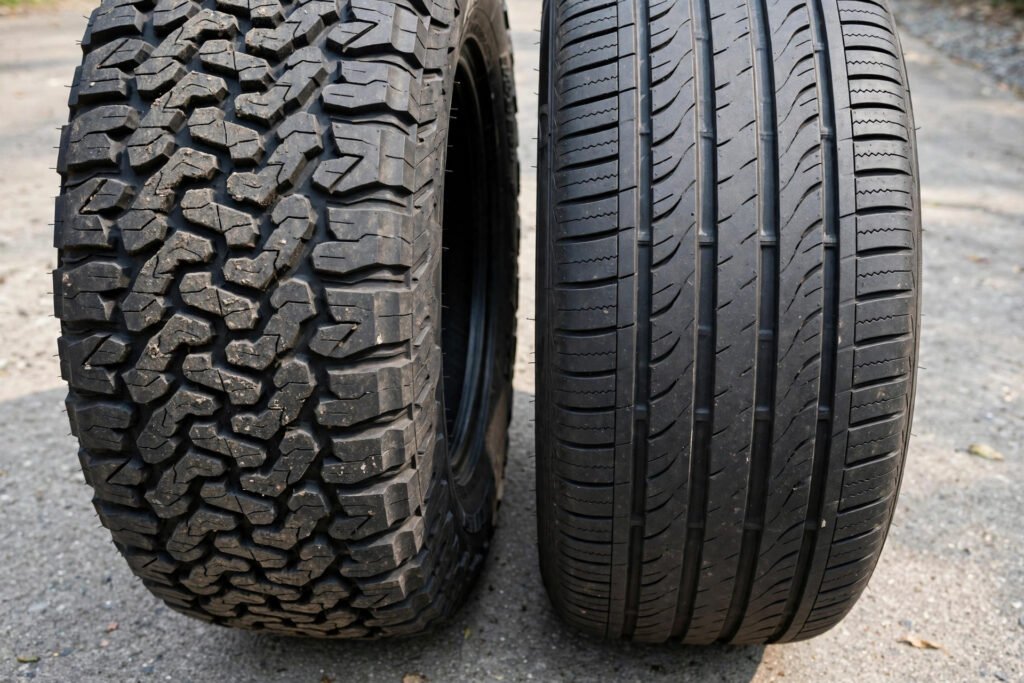
Tread pattern. On the same axle, the tread pattern must match — same brand, same model, same pattern. Across axles, the patterns can differ, but keep them in the same performance category. A touring all-season tire at one end and a high-performance summer tire at the other will brake and corner differently, and that difference shows up exactly when you need grip most.
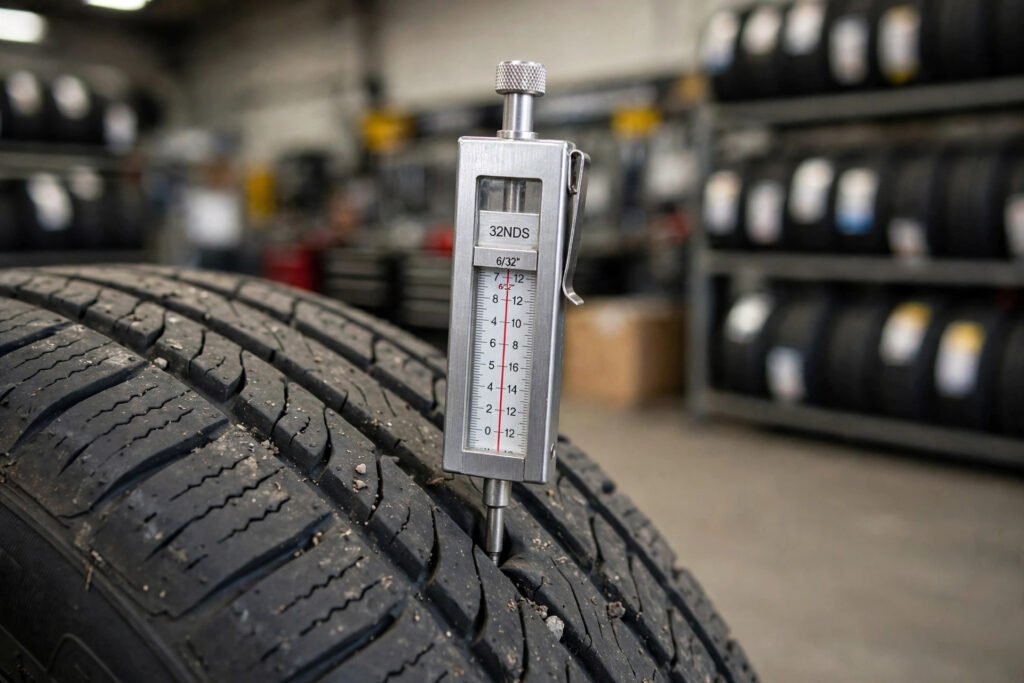
Tread depth. This is the one people forget, and it matters even when everything else matches. Keep the tread-depth difference between the two tires on one axle to 2/32 inch or less. A new tire typically starts with about 10/32 inch of tread, so a new tire paired with a half-worn tire on the same axle is already a mismatch of 5/32 inch or more — enough to change how the car behaves in the wet.
| What to check | The rule | Where to find it |
|---|---|---|
| Size (e.g. P205/55R16) | Must match the vehicle maker’s size exactly | Sidewall + driver’s door-jamb placard |
| Load index | At or above the maker’s minimum, never below | Sidewall service description |
| Speed rating | At or above the maker’s minimum, never below | Sidewall service description |
| Construction | Radial on all four — never mix radial and bias-ply | Sidewall (the “R” in the size) |
| Tire type / season | Same type on all four wheels | Sidewall + tread design |
| Tread pattern | Identical on the same axle | Visual — compare the tread blocks |
| Tread depth | Within 2/32 inch on the same axle | Tread-depth gauge or the penny test |
If you are unsure about any row in that table, ask the tire shop to check before they mount anything.
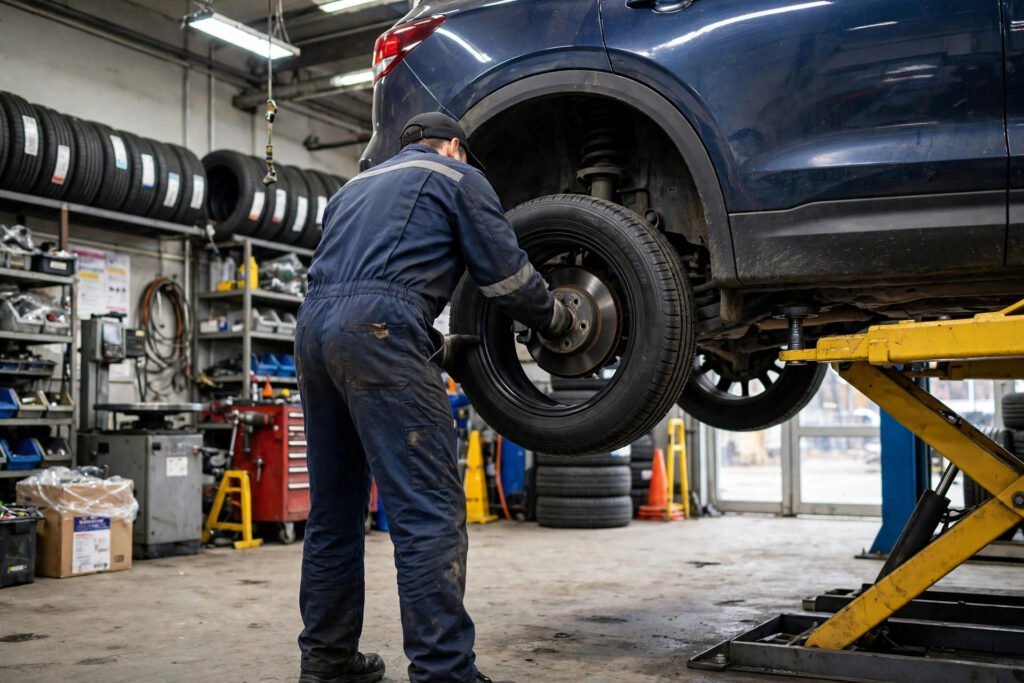
Where the new pair goes: always the rear
This is the rule that feels backwards to most drivers, and it is the one that matters most in the rain. When you replace only two tires, put the new pair — the ones with the deepest tread — on the rear axle, regardless of whether your car is front-wheel drive, rear-wheel drive, or all-wheel drive. Michelin and Continental both give this guidance, and the reason is hydroplaning. Worn tires lose their grip in standing water first: if the worn tires are on the rear, the back of the car can slide out while the front still holds — a spin most drivers cannot catch. If the worn tires are on the front instead, the car understeers and plows straight ahead, which is far easier to control.
On a front-wheel-drive car this feels especially wrong, because the front tires do the driving, the steering, and most of the braking. Surely the best tires should go where the work is? The tire makers’ answer is no: the rear tires are your stability, and stability is what keeps you on the road in the wet.
One source you will find online says the opposite for rear-wheel-drive cars — new tires on the front, for better turn-in and braking. Treat that as a minority view, not the standard. The Michelin and Continental position — new pair on the rear for most vehicles — is the one the industry follows. If your owner’s manual says something different for your specific car, follow the manual.
AWD is the exception: replace all four
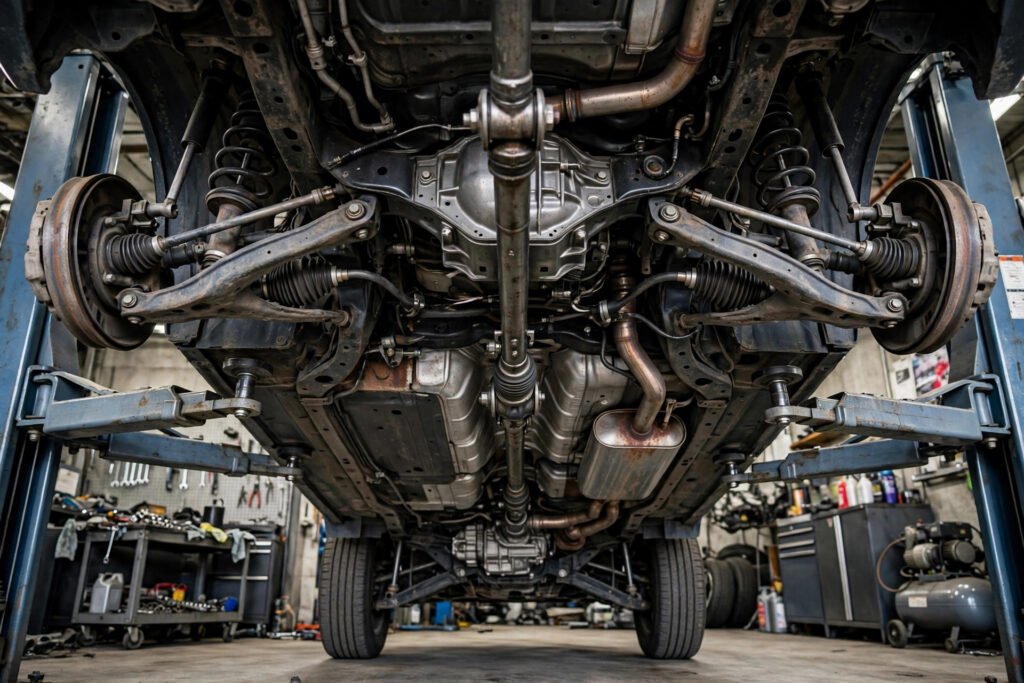
All-wheel-drive cars change the math. On a front-wheel-drive or rear-wheel-drive car, a small difference in tire diameter is a handling problem. On an all-wheel-drive car, it is a drivetrain problem too.
An AWD system constantly splits power between the front and rear axles, and it assumes all four tires roll the same distance per revolution. When they do not — because one pair is newer, a different brand with a slightly different diameter, or simply more worn — the system reads the difference as wheel slip and works the center differential, clutches, or viscous coupling overtime to compensate. Over time, that extra work wears out expensive drivetrain parts. That is why the guidance for AWD is stricter: many AWD manufacturers recommend keeping the difference in tire circumference to a quarter-inch or less, which typically works out to a tread-depth difference of no more than 2/32 inch between the most and least worn tire on the car.
In practice, that means:
- Best: replace all four tires as a set, same brand and model.
- Acceptable: replace a pair, but only if the other pair is nearly new and the tread depths stay within 2/32 inch of each other.
- Avoid: one new tire on an AWD car. If a single tire is damaged beyond repair, some shops can shave a new tire down to match the tread depth of the other three — ask about it before you buy, because it is far cheaper than a drivetrain repair.
- Check the manual: your car’s own tolerance is the number that counts. It is usually in the owner’s manual under tires or all-wheel drive.
When mixing is unavoidable: one tire, or a tight budget
Sometimes mixing is not a choice. A tire blows out on a road trip, the exact model is out of stock, or the budget only stretches to two tires this month. That is exactly why the axle rule exists — it tells you how to mix safely instead of telling you that you cannot mix at all.
One tire damaged, the other three are fine. If the tire on the other side of the same axle is nearly new and the same brand and model is still available, a single replacement is acceptable — but only if the tread-depth difference stays within 2/32 inch. If the matching tire is worn more than that, replace the pair. And if your car is AWD, read the section above first: a single new tire is the riskiest mix of all on an AWD system.
Two tires needed, budget is tight. Buy a matched pair of the best tires you can afford, fit them on the rear axle, and keep the existing pair on the front — provided the existing pair still has legal tread and no damage. This is the standard compromise, and it is safe as long as the specs match. Our comparison of Hankook vs Kumho tires is a good starting point if you are weighing two budget-friendly brands against each other.
The exact model is discontinued. Tire models get replaced every few years, so a matching tire may simply not exist anymore. In that case, buy a matched pair from the same brand in the same performance category, or a matched pair from another brand with the same size, load index, and speed rating. Replace the pair, not one tire — and put the new pair on the rear.
A used tire as a stopgap. A used tire can get you home or through the week, but treat it as temporary. Match the size, load index, and speed rating, check the DOT date code, and inspect it for cracks, bulges, and repairs before it goes on the car. Then replace it — and ideally its axle partner — with a proper matched pair as soon as you can.
What never to mix
Some combinations are not compromises — they are simply unsafe. If any of these apply, do not drive on the combination, even for a short trip.
| Never mix | Why it is dangerous |
|---|---|
| Winter tires with summer or all-season tires | Completely different rubber compounds and grip — the car brakes and turns unpredictably, especially in the cold and wet |
| Run-flat tires with regular tires | Different sidewall stiffness and handling; a run-flat’s pressure warning system cannot work properly with a regular tire on the car |
| Radial tires with bias-ply (non-radial) tires | The two constructions flex so differently that handling becomes severely unbalanced |
| Different sizes on the same axle | Different rolling diameters pull the car to one side and confuse traction control and ABS |
| Directional tires with symmetric or asymmetric tires on one axle | Directional tires must rotate one way; mixing tread designs on an axle gives uneven wet grip |
| A damaged tire with a good tire | A bulge, a cut to the cords, or a cracked sidewall is a blowout risk, not a mixing question — replace the damaged tire |
Two of these deserve a second look, because they catch people out. The first is winter and summer tires: Continental is explicit that drivers should never mix winter tires with all-season or summer tires, and Michelin agrees. The second is run-flats: a run-flat tire is built to support the car with no air pressure, so its sidewall is far stiffer than a regular tire’s. Mixing the two gives you one corner of the car that behaves completely differently from the others.
The bottom line
Four identical tires is the ideal, and it is what every tire maker recommends. But real life gets in the way — a blowout, a discontinued model, a tight month — and when it does, mixing brands is not the problem. Mixing on the same axle is the problem.
Keep it simple: identical tires on each axle, matched specs everywhere, new pair on the rear, and all four the same on an AWD car. Do that, and a mixed-brand car drives safely and predictably.
Frequently asked questions
Is it illegal to mix tire brands on a car?
In the United States there is no federal law against mixing tire brands, and Michelin confirms there is no law against fitting different brands at the front and rear. What the law and the safety rules do require is that every tire meets your vehicle maker’s specifications for size, load index, and speed rating — and in the UK and much of Europe, fitting different tires on the same axle is generally prohibited by law, so check local rules before you travel.
Can I mix the same brand but a different model on one axle?
No — not on the same axle. Two tires from the same brand can still behave very differently if one is a touring all-season model and the other is an ultra-high-performance summer tire, because the tread pattern and rubber compound are different. The two tires on one axle should be the same brand and the same model, with closely matched tread depth.
Can I replace just one tire?
You can, but it is the weakest option. A single new tire next to a worn one on the same axle creates a grip and diameter mismatch, so tire makers and tire shops strongly recommend replacing tires in pairs. If you do replace one tire, match the brand, model, size, load index, and speed rating of the tire on the other side, and keep the tread-depth difference to 2/32 inch or less.
Can you mix tire brands on an AWD car?
It is risky, and most makers say not to. All-wheel-drive systems are sensitive to differences in rolling circumference, and many AWD manufacturers recommend keeping the difference in tire circumference to a quarter-inch or less, which works out to a tread-depth difference of no more than 2/32 inch between the most and least worn tire. The safest choice on an AWD vehicle is four identical tires, replaced as a set.
Is it OK to have different tire brands on the front and back?
Yes, as long as each axle has a matched pair. You can run one brand on the front axle and a different brand on the rear axle, provided both pairs are the correct size, load index, and speed rating for your car, share the same construction and tire type, and have similar tread depth. Four identical tires are still the ideal, but a matched pair per axle is the accepted compromise.
Can I mix winter tires and summer tires on the same car?
No. Never mix winter tires with summer or all-season tires on the same vehicle. Winter and summer tires use very different rubber compounds and tread designs, so they grip very differently — especially in the cold and wet — and the car can become unpredictable under braking or in a turn. Continental is explicit on this point: drivers should never mix winter tires with all-season or summer tires.
Related reads
- What Do Tire Numbers Mean?
- What Does 265/70R17 Mean? Tire Size Explained
- Hankook vs Kumho Tires
- How Much Does Tire Rotation Cost?
- Compare Cars tool — compare any two cars side by side
Sources
- Mixing tyres — Continental Tyres UK
- To Mix Tires, Or Not To Mix Tires? — Continental Tire US
- Can you mix different tyres? — Michelin UK
- Can I Have Different Brand Tires on My Car? — EngineerFix
- Can I Mix Tire Brands? What Drivers Need to Know — ANewSet
- What you should know about mixing tires on your vehicle — Tire.ca
- Is It OK to Have 2 Different Brand Tires? — EngineerFix
- Do All 4 Of Your Tire Tread Patterns Have To Match? — Jalopnik