
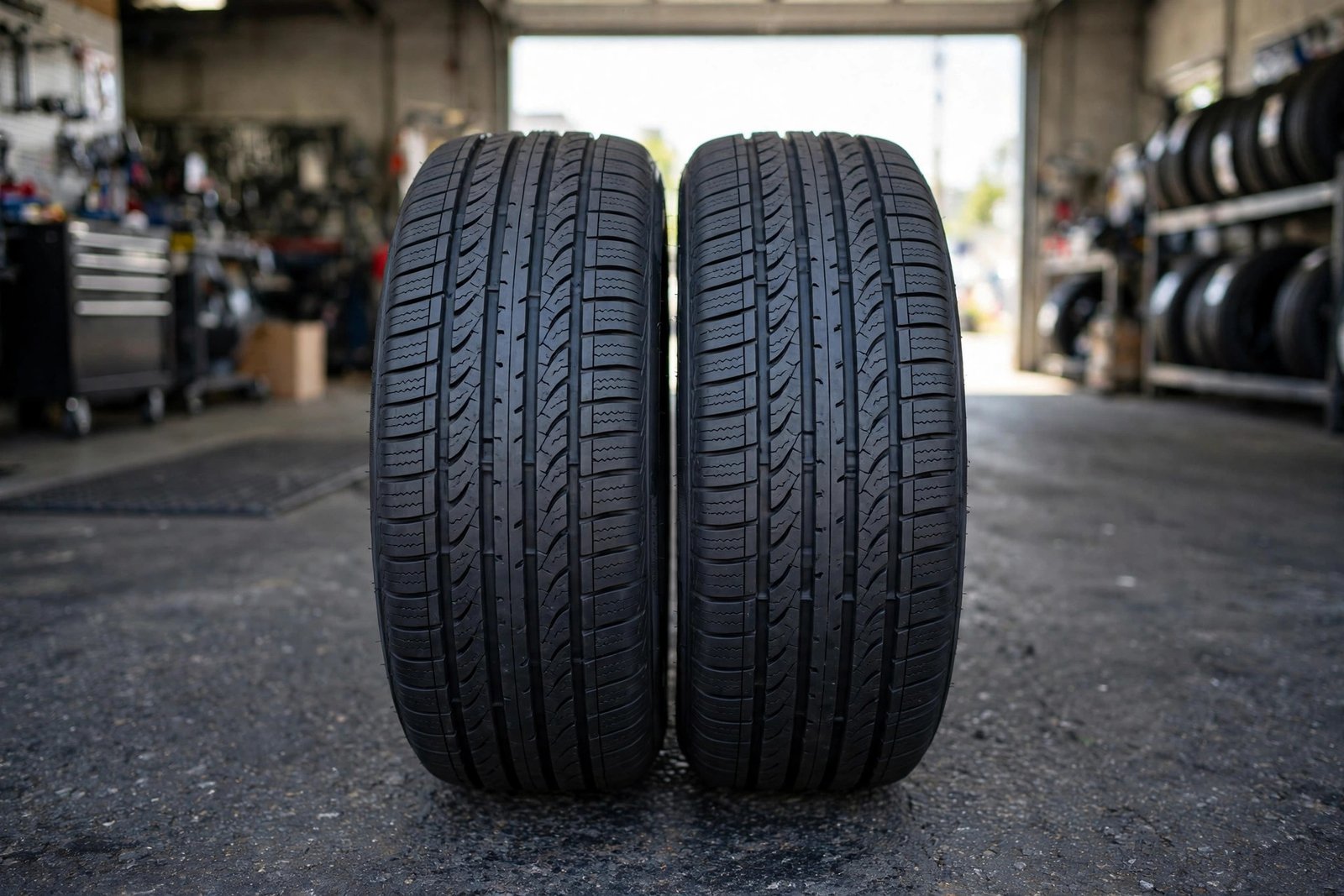
Hankook vs Kumho Tires: Which Korean Value Brand Should You Buy in 2026?
Hankook and Kumho are the two Korean brands that built their names the same way: by selling tires that do 90% of what a premium tire does for 20–40% less money. If you are shopping for a new set and the Michelin or Continental price made you wince, one of these two is probably already on your shortlist.
So which one is actually better? The honest answer is that there is no runaway winner — but there is a pattern. Across the independent tests run in 2025 and 2026, Hankook tends to win on outright performance and wet-weather safety, while Kumho tends to win on value, tread life in some categories, and ride comfort in others. The right pick depends on what you drive and what matters most to you.
Quick Answer: Hankook vs Kumho at a Glance
Short version: Pick Hankook if wet-weather safety and outright grip matter most. Pick Kumho if you want the best value for money, strong tread life, and a quiet, comfortable ride at a slightly lower price. For most daily drivers on a budget, either brand is a smart buy.
| Category | Hankook | Kumho | Edge |
|---|---|---|---|
| Wet grip | Strong; Ventus Evo stopped 3% shorter in the wet than Kumho’s Ecsta Sport PS72 across 8 shared tests | Strong; Ecsta HS52 beat Hankook’s Ventus Prime 4 on wet braking in ADAC 2026 (31.1 m vs 34.5 m) | Hankook overall, but it depends on the model |
| Dry grip | Excellent; Ventus Evo won 6 of 8 shared tests vs the Ecsta Sport PS72 | Very good; Ecsta HS52 edged dry braking slightly in its matchup | Hankook |
| Tread life | Good; up to 100,000-mile warranty on Optimo H727 | Good; up to 75,000-mile warranty on Solus TA11; HS52 lasted 7.7% longer than Ventus Prime 4 in wear tests | Tie — varies by model |
| Comfort & noise | Quieter in all-season tests (Kinergy 4S2 beat Solus HA31 clearly) | Quieter in some winter and touring matchups | Tie — varies by model |
| Price | Value-priced, usually slightly dearer than Kumho | Usually the cheaper of the two by a small margin | Kumho |
| Warranties | Up to 100,000 miles; SURETIRE PLAN with 30-day trial and road hazard cover | Up to 75,000 miles; 30-day trial on select models | Hankook on paper |
| Winter tires | Strong; i*cept RS3 won 5 of 6 tests vs Kumho’s WinterCraft WP52 | Solid on snow, weaker in aquaplaning | Hankook |
| Best for | Drivers who want near-premium performance for less | Drivers who want maximum value per dollar | — |
Two Korean Brands, Two Slightly Different Ambitions
Both are South Korean, sell globally, and sit in the same “value” tier — a step below Michelin, Continental, and Bridgestone on price, but a big step above budget no-name tires on quality.
The difference is one of ambition. Hankook has spent the last decade pushing upward: its Ventus performance tires now compete directly with premium brands in independent tests, and it supplies original-equipment tires to a wide range of carmakers. Kumho has stayed closer to its value roots, focusing on dependable, affordable tires for sedans, crossovers, and trucks.
The Lineups: What Each Brand Actually Sells
Before comparing performance, it helps to know which tire lines you are actually choosing between — a Hankook Kinergy and a Hankook Ventus are very different tires, and the same is true of Kumho’s Solus and Ecsta lines.
| Use | Hankook | Kumho |
|---|---|---|
| Everyday all-season (sedans) | Kinergy GT, Kinergy PT, Optimo H727 | Solus TA11, Solus TA31, Solus TA51a |
| Performance summer | Ventus Evo, Ventus Prime 4, Ventus S1 evo | Ecsta Sport PS72, Ecsta HS52, Ecsta PS71 |
| SUV / crossover | Dynapro HP2, Dynapro HT, Dynapro AT2 | Crugen HP71, Crugen HT51, Crugen Premium KL33 |
| All-terrain / truck | Dynapro AT2, Dynapro MT2 | Road Venture AT52, Road Venture MT71 |
| Winter | Winter i*cept evo3, Winter i*cept RS3, i*Pike | WinterCraft WP52, WinterCraft WP71, I’Zen |
| EV | iON evo AS, iON evo AS SUV | Solus TA91 EV, Ecsta PS71 EV |
The key point: do not compare “Hankook” to “Kumho” in the abstract. Compare a Kinergy to a Solus, a Ventus to an Ecsta, a Dynapro to a Crugen. That is how the test data below is organized, and it is how you should shop.
Wet Grip: Hankook Leads — With One Big Exception
Wet grip is the category that matters most for safety, and it is where the test data is clearest.
In the most recent head-to-head data from Tyre Reviews, Hankook’s Ventus Evo beat Kumho’s Ecsta Sport PS72 in 6 of 8 shared independent tests run in 2025–2026, stopping 3% shorter in the wet on average. The Ventus Evo earned a 9.4/10 overall test score against 9.2 for the PS72. If wet-weather safety is your top priority, the Ventus Evo is the stronger performance tire.
But the story flips in the touring-tire matchup. Kumho’s Ecsta HS52 beat Hankook’s Ventus Prime 4 in 5 of 8 shared tests, and its wet-braking advantage was striking: in the ADAC 2026 summer test, the HS52 stopped in 31.1 meters versus 34.5 meters for the Ventus Prime 4 — a 3.4-meter gap that is genuinely meaningful in an emergency stop. The HS52 also led 15 of 30 wet measurements across the shared tests and resisted straight-line aquaplaning at a 2.5% higher speed. In performance summer tires, Hankook currently has the edge; in mainstream touring tires, Kumho’s HS52 is the wet-weather star.

Dry Grip: Hankook by a Nose
On dry roads, Hankook holds a small but consistent advantage at the performance end. The Ventus Evo’s 6–2 test win over the Ecsta Sport PS72 included dry braking and handling, and testers repeatedly praised its steering response and behavior at the limit. The Kumho PS72 can match it on outright pace in some sizes, but testers flagged its braking and its less polished behavior when pushed hard.
In the touring matchup the gap nearly disappears: the Ecsta HS52 actually edged the Ventus Prime 4 on dry braking by 0.8% on average across 8 tests, and led 9 of 12 dry measurements. For normal daily driving — commuting, highway cruising, school runs — you will not feel a difference between these two on dry pavement.
Tread Life: A Genuine Tie That Depends on the Model
Tread life is where brand-level comparisons fall apart, because it varies so much from one tire line to another. Here is what the evidence says:
In independent wear tests, Kumho’s Ecsta HS52 lasted 7.7% longer than Hankook’s Ventus Prime 4. That is a real, measured advantage in the same test program.
In warranty coverage, Hankook’s headline numbers are higher: up to 100,000 miles on the Optimo H727, 90,000 on the Kinergy PT, and 70,000 on the Kinergy GT. Kumho’s top US warranties are 75,000 miles on the Solus TA11, 70,000 on the Crugen HT51 (P-metric), and 65,000 on the Crugen HP71. Figures come from the manufacturers’ warranty documents and vary by model and size — always check the warranty on the exact tire you are buying.
In UTQG treadwear ratings — the number molded into the sidewall — the two brands overlap heavily. Kumho’s Solus TA11 carries a 700 treadwear rating and the Crugen HP71 a 640, while Hankook’s comparable touring tires cluster lower in many sizes. A higher treadwear number suggests longer life, but the rating is assigned by each manufacturer, so it is best used to compare tires within one brand, not across brands.
One thing that affects tread life for both brands is maintenance. Both manufacturers require regular rotation to keep the mileage warranty valid (Hankook every 7,500 miles or fewer, Kumho every 5,000–8,000 miles depending on the document). Skip rotations and the warranty is void — and the tires will wear unevenly anyway.
Comfort and Noise: No Clear Winner — Check the Model
Comfort and noise are the most subjective categories here, and the test data refuses to crown a winner.
Hankook wins clearly in the all-season comparison: the Kinergy 4S2 scored 87.5 on comfort and 92.2 on noise against 81 and 81 for Kumho’s Solus HA31. In winter tires the pattern reverses: Kumho’s WinterCraft WP71 was notably quieter than Hankook’s Winter i*cept evo3, which testers flagged for elevated road noise at highway speed.
Both brands tune their touring and SUV tires for a calm cabin. If a quiet ride is a top priority, read owner reviews for the exact model and size you are considering — two tires from the same brand can sound very different.
Price and Value: Kumho Is Usually Cheaper — Slightly
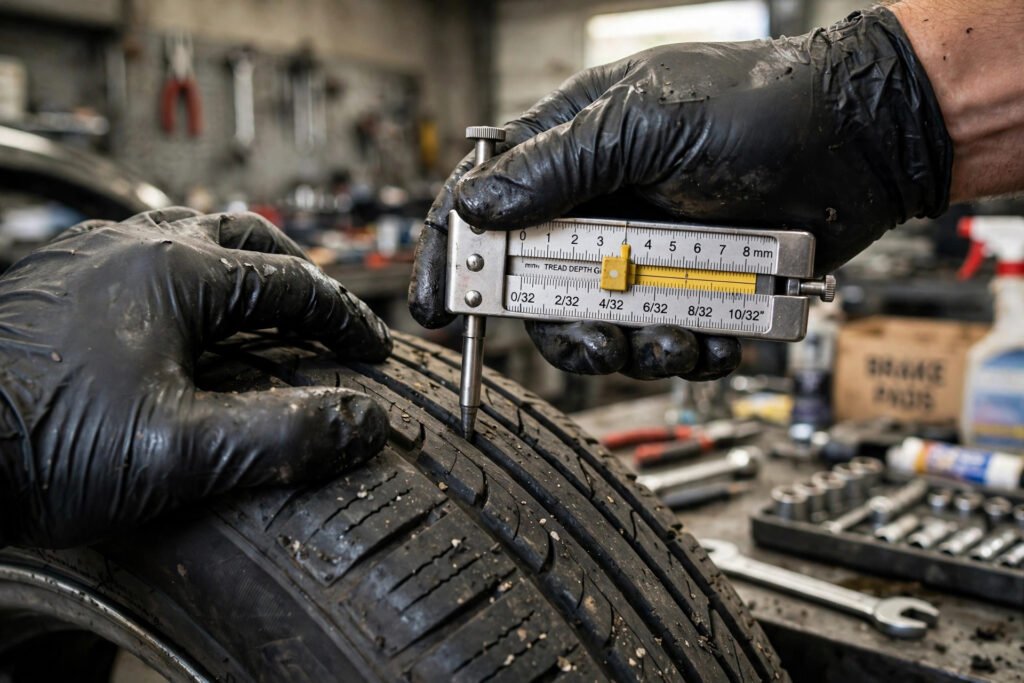
Tire prices swing by size, retailer, season, and promotions, so nobody can pin down a single number. What the market consistently shows is that both brands undercut premium tires by roughly 20–40%, and Kumho is usually the cheaper of the two for a comparable tire, often by 5–10%. If you are unsure how to spot uneven wear, see our guide on how to check tire tread depth.
The value question is not “which is cheaper” but “what do you get for the money.” Kumho’s Ecsta HS52 is the standout value pick here: it beats its Hankook rival on wet braking and tread life while costing less. Hankook’s Ventus Evo is the standout performance pick: it costs more and earns it with better wet safety.
Warranties: Hankook’s Coverage Looks Stronger on Paper
Both brands back their tires with a limited warranty against defects in workmanship and materials for the usable tread life, plus a treadwear mileage warranty on most replacement (non-OE) tires. The differences are in the details:
- Hankook launched its SURETIRE PLAN in 2025, covering its Ventus, Dynapro, Kinergy, Weatherflex, i*cept, i*Pike, and iON lineups with a 30-day free trial, limited manufacturer warranty, treadwear mileage warranty, and road hazard warranty that replaces a qualifying tire damaged by a non-repairable road hazard.
- Kumho offers a 30-day trial on select models and a road hazard program on many of its lines, with treadwear warranties up to 75,000 miles (Solus TA11) and 70,000 miles (Crugen HT51 P-metric).
Both require you to keep records: to claim a treadwear warranty you generally need proof of purchase, the warranty card submitted on time, and a rotation record. Staggered fitments (different sizes front and rear) are typically covered at half the standard mileage, since those tires cannot be rotated.
Hankook’s headline 100,000-mile warranty on the Optimo H727 is the longest in this comparison, and its SURETIRE PLAN is the more complete package. But a warranty is only as good as the tire underneath it — a tire that needs replacing at 40,000 miles with a pro-rated credit is still a tire that wore out early. If you are building a shortlist on a tight budget, our best budget tires guide covers more value options beyond these two brands.
Winter Tires: Hankook Takes It
If you drive through real winter, Hankook is the safer bet. Its Winter i*cept RS3 beat Kumho’s WinterCraft WP52 in 5 of 6 head-to-head test encounters, with a clear advantage in wet performance (86 vs 75.6 overall) and aquaplaning resistance (90 vs 67.6) — the WP52’s weak spot. On dry roads the Hankook also pulled ahead (86.8 vs 76.9).
Kumho’s winter tires are not bad tires. The WP52 is solid on snow and dry tarmac and actually edged the Hankook on straight-line wet braking in one test. But its poor aquaplaning reserves make it a compromised choice if your winters involve heavy rain and standing water.

Hankook vs Kumho for SUVs, Trucks, and EVs
SUVs and crossovers: Both brands have strong lineups. Hankook’s Dynapro HP2 carries a 65,000-mile warranty; Kumho’s Crugen HT51 carries 70,000 miles (P-metric) and is widely praised for steady highway manners and towing stability. For a family crossover that mostly sees pavement, pick on price and noise reviews for your size.
Trucks and all-terrain use: Hankook’s Dynapro AT2 (60,000-mile warranty) and Kumho’s Road Venture AT52 (55,000 miles P-metric) are direct rivals — both cut-and-chip-resistant all-terrains with good wet feedback. Kumho’s AT52 tends to be cheaper; Hankook’s AT2 has the longer warranty.
EVs: Both brands now make EV-specific tires — Hankook’s iON evo AS and Kumho’s Solus TA91 EV. EV tires matter because electric cars are heavier and deliver instant torque, which wears tires faster. Hankook’s iON line has the more established test record so far, and its lower rolling resistance is exactly what EV drivers want for range.
Pros and Cons
Hankook — Pros and Cons
Pros:
- Stronger outright performance in summer and all-season tests
- Better wet-weather safety at the performance end
- Longer headline warranties (up to 100,000 miles)
- Broader OE presence and more complete warranty package (SURETIRE PLAN)
- Strong winter tire lineup
Cons:
- Usually a few dollars more per tire than Kumho
- Some models are noisier than their Kumho rivals (notably the Winter i*cept evo3)
- Wet performance can vary by model — the Ventus Prime 4 trails the Ecsta HS52
Kumho — Pros and Cons
Pros:
- Usually the cheaper buy, often by 5–10%
- Ecsta HS52 is a standout: better wet braking and longer wear than its Hankook rival, for less money
- Strong tread life in touring tires (Solus TA11: 75,000-mile warranty, 700 treadwear rating)
- Quiet, comfortable ride in touring and winter lines
- Good SUV/truck value (Crugen HT51, Road Venture AT52)
Cons:
- Weaker at the performance end — the Ecsta Sport PS72 trails the Ventus Evo on wet safety
- Winter tires have an aquaplaning weakness
- Shorter headline warranties than Hankook
- Less consistent across the lineup — the gap between its best and worst tires is wider
Which Should You Buy? The Verdict for 2026
There is no single winner, but there is a clear decision rule:
- Buy Hankook if: you want the safest, sharpest tire for the money — especially a performance summer tire (Ventus Evo), an all-season tire (Kinergy 4S2), or a winter tire (Winter i*cept RS3). Hankook wins this comparison on outright ability.
- Buy Kumho if: you want the best value — especially the Ecsta HS52 touring tire, which beats its Hankook rival on wet braking and wear while costing less, or a Solus/Crugen tire for a daily driver, crossover, or truck. Kumho wins this comparison on value per dollar.
- Either is fine if: you drive a normal sedan or crossover, mostly commute and run errands, and just want a reliable tire that is far better than a no-name budget tire. In that case, buy whichever of the two is cheaper in your exact size — and spend the savings on an alignment and regular rotations.
Our overall pick for 2026: Hankook, by a small margin — because its advantage shows up where it matters most (wet safety, winter performance, warranty coverage), and its lineup is more consistent. But Kumho’s Ecsta HS52 is the single best-value tire in this comparison — if that is the tire you need, buy it with confidence.
Whichever you choose, remember the two rules that matter more than the brand: buy the right size and type for your vehicle, and keep the tires inflated, aligned, and rotated. A well-maintained Kumho will outlast a neglected Hankook every time. If you are still deciding between tire types, our summer tire buying guide walks through the whole decision step by step.
Frequently Asked Questions
Are Hankook tires good quality?
Yes. Hankook is a major global tire maker whose Ventus and Kinergy tires regularly finish near the top of independent European tests, sometimes within a few percent of premium brands like Michelin and Continental at a 20–40% lower price. Quality varies by model, so check the test record for the specific tire you are buying.
Are Kumho tires good quality?
Yes. Kumho is a well-established South Korean tire maker with a strong value reputation. Its Ecsta HS52 touring tire beat Hankook’s Ventus Prime 4 in 5 of 8 shared independent tests, and its Solus and Crugen lines are widely used as original equipment and replacements. Kumho is a big step up from no-name budget tires.
Which lasts longer, Hankook or Kumho?
It depends on the model. In shared wear tests, Kumho’s Ecsta HS52 lasted 7.7% longer than Hankook’s Ventus Prime 4. On warranty coverage, Hankook’s longest is 100,000 miles (Optimo H727) versus Kumho’s 75,000 miles (Solus TA11). For most drivers, either brand’s touring tire should last 50,000 miles or more with regular rotations.
Are Hankook tires better than Kumho in the rain?
At the performance end, yes — Hankook’s Ventus Evo stopped 3% shorter in the wet than Kumho’s Ecsta Sport PS72 across 8 shared tests. But in touring tires the reverse is true: Kumho’s Ecsta HS52 stopped 3.4 meters shorter than Hankook’s Ventus Prime 4 in the ADAC 2026 wet-braking test. Check the model, not just the brand.
Which is cheaper, Hankook or Kumho?
Kumho is usually slightly cheaper — typically 5–10% less than a comparable Hankook, and it was the cheaper tire in the price checks tracked alongside the Tyre Reviews comparisons. The gap is small, usually a few dollars per tire, so let performance and warranty break the tie.
Do Hankook and Kumho tires come with a warranty?
Yes, both do. Hankook’s SURETIRE PLAN covers its main lineups with a 30-day trial, treadwear mileage warranty (up to 100,000 miles on some models), and road hazard cover. Kumho offers treadwear warranties up to 75,000 miles and a 30-day trial on select models. Both require proof of purchase and regular rotation records for a treadwear claim.