
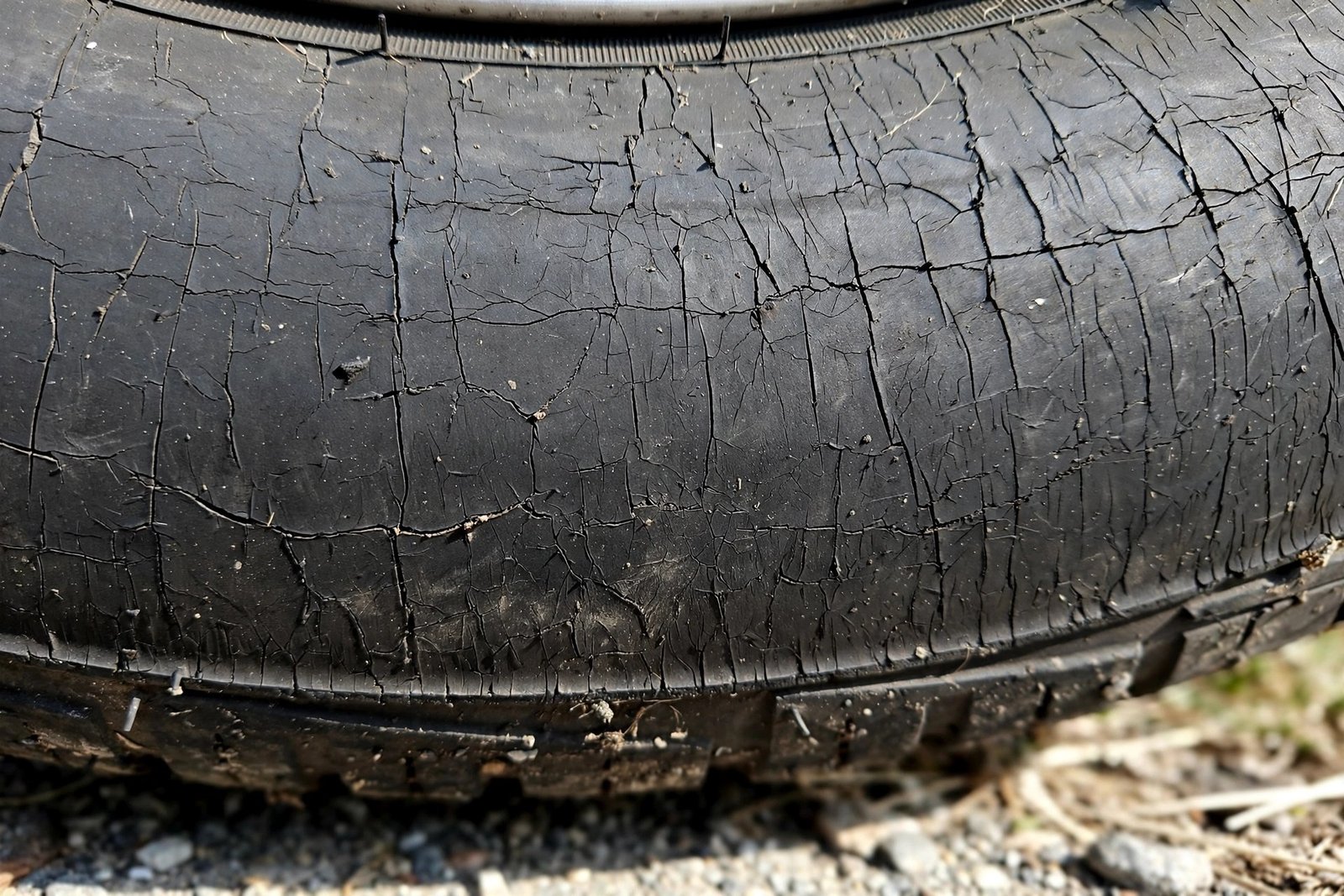
Quick answer: A fine, shallow hairline crack in the outer rubber is usually cosmetic — the tire can be used for now, but have it checked by a tire professional and keep an eye on it. A deep crack that opens when the sidewall flexes, any crack showing fabric or cord, a bulge, or any air loss means the tire is finished — do not drive on it at highway speed. Sidewall damage cannot be safely repaired: the US Tire Manufacturers Association limits repairs to the tread area only, and a plug or patch cannot restore a flexing sidewall’s strength. If in doubt, the safe answer is always to replace the tire.
What sidewall cracking actually is
The sidewall is the smooth rubber wall between the tread and the rim. It is the most flexible part of the tire: it bends on every turn of the wheel, absorbs bumps, and carries the load of the car. It is also the thinnest part, with far less rubber and reinforcement than the tread.
Sidewall cracking — also called weather checking, ozone cracking, or dry rot — is what happens when the rubber compound in that wall slowly breaks down. The rubber loses its flexibility, dries out, and develops fine cracks on the surface. At first the cracks are tiny, like a spiderweb in the black rubber, and they sit only in the outer layer. Left alone, they grow deeper and wider, and eventually they can reach the fabric cords inside the tire. That is the point where a cosmetic problem becomes a structural one.
It is important to know that cracking is not the same as a cut or a puncture. A cut is a sharp, localized injury from a curb or road debris. Cracking is a slow, widespread aging process across the whole sidewall. Both can be dangerous, but they get there in different ways — and they are judged by different tests.
What causes sidewall cracks
Cracking is mostly about age and environment, not mileage. A tire with plenty of tread left can still be cracked and unsafe, because the rubber ages whether the car is driven or not.
Age and sunlight. Ultraviolet light from the sun breaks down the rubber compound over time. Tires that live outdoors, parked in the sun day after day, crack faster than tires kept in a garage.
Ozone. Ozone in the air — from the atmosphere and from electric motors, welding equipment, and some industrial sources — attacks rubber and causes the fine network of cracks called ozone cracking. This is why tires stored near electric motors or in a garage with ozone-generating equipment age faster.
Heat. Hot climates speed up every aging process in rubber. A tire that lives in Arizona will generally crack sooner than the same tire in a cool climate.
Underinflation. A tire running low on air flexes far more than it should, and that extra flexing generates heat. Heat accelerates cracking and weakens the sidewall from the inside. Keeping pressure correct is the single cheapest way to slow sidewall aging.
Sitting unused. This surprises people, but tires that sit still crack faster than tires that are driven. The rubber compound contains protective waxes and oils that are released to the surface when the tire flexes in use. A car parked for months does not get that protection, so its tires dry out and crack — which is why the tires on a low-mileage car that sat in a driveway can be in worse shape than the tires on a daily driver.
Most tire manufacturers recommend that tires be inspected every year once they reach five years old, and replaced by ten years old even if the tread looks fine, because the rubber’s chemical structure deteriorates with age regardless of mileage. Some tire guides advise replacing at five to seven years in hot climates. The exact age limit varies by manufacturer, so treat ten years as the absolute maximum, not a target.

How to tell if a crack is dangerous
This is the question that matters, and there is a simple rule that settles most cases: if anything other than black rubber shows inside the crack — fabric, white or yellow threads, or metal — the tire’s structure is damaged and it has to be replaced. The same applies if the rubber bulges out in one spot, which means the cord layers behind it have broken.
Work through these checks in order:
1. Look at the crack in normal light. Fine, shallow crazing across the sidewall, with only black rubber visible inside the cracks, is usually cosmetic. It is a sign of aging, not an emergency — but it is a sign the tire is getting old, and it should be checked by a tire professional.
2. Flex the sidewall gently. Press the sidewall near the crack, or have someone turn the steering wheel while the car is parked, and watch whether the crack opens up. A crack that gapes open when the rubber flexes is deep, and deep cracks are structural. A crack that stays closed and shallow is far less worrying.
3. Check the depth and length. A crack that is deep enough to catch a fingernail, that keeps getting longer, or that runs in a long line parallel to the rim is a warning sign. A crack running parallel to the rim can mean trouble in the bead area, where the tire seals against the wheel — a failure there can break the seal and lose air fast.
4. Look for the other red flags. Any bulge or bubble on the sidewall means the internal cords have broken and air pressure is pushing the rubber outward — that tire can blow out without warning. Any cut that reaches the cords, any puncture below the shoulder of the tire, or any steady loss of air means the same thing: the tire is finished.
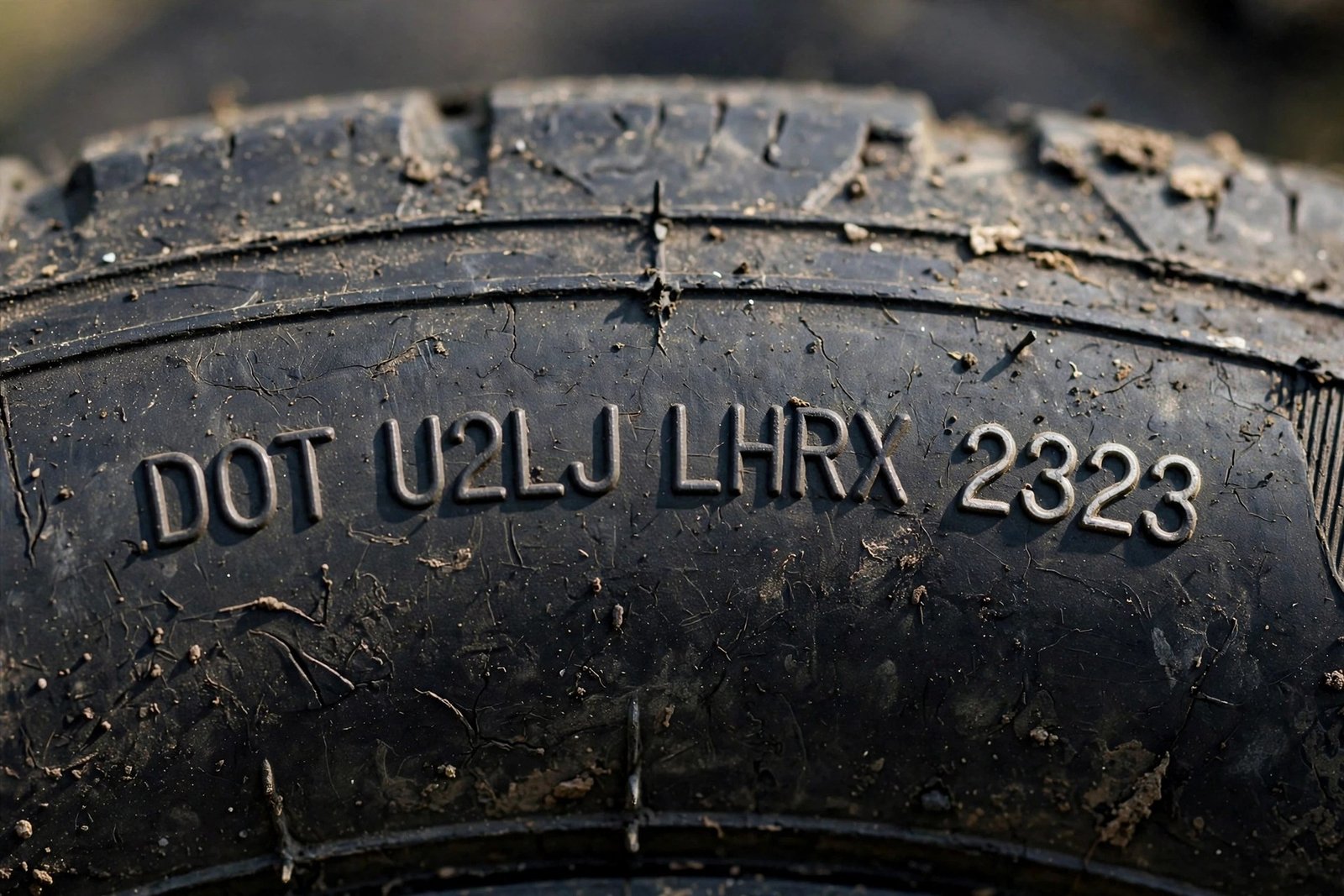
5. Read the tire’s age. Find the DOT code on the sidewall. The last four digits are the week and year of manufacture — 3223 means the 32nd week of 2023. A tire with widespread cracking that is also six or more years old is a replacement candidate even if no single crack looks terrible. Age and cracking together are a much stronger signal than either one alone.
When in doubt, ask a tire professional to inspect it. Most tire shops will look at a sidewall for free, and a trained eye can tell in seconds whether a crack is cosmetic or structural. Do not let a shop talk you into a repair for sidewall damage — there is no safe one.
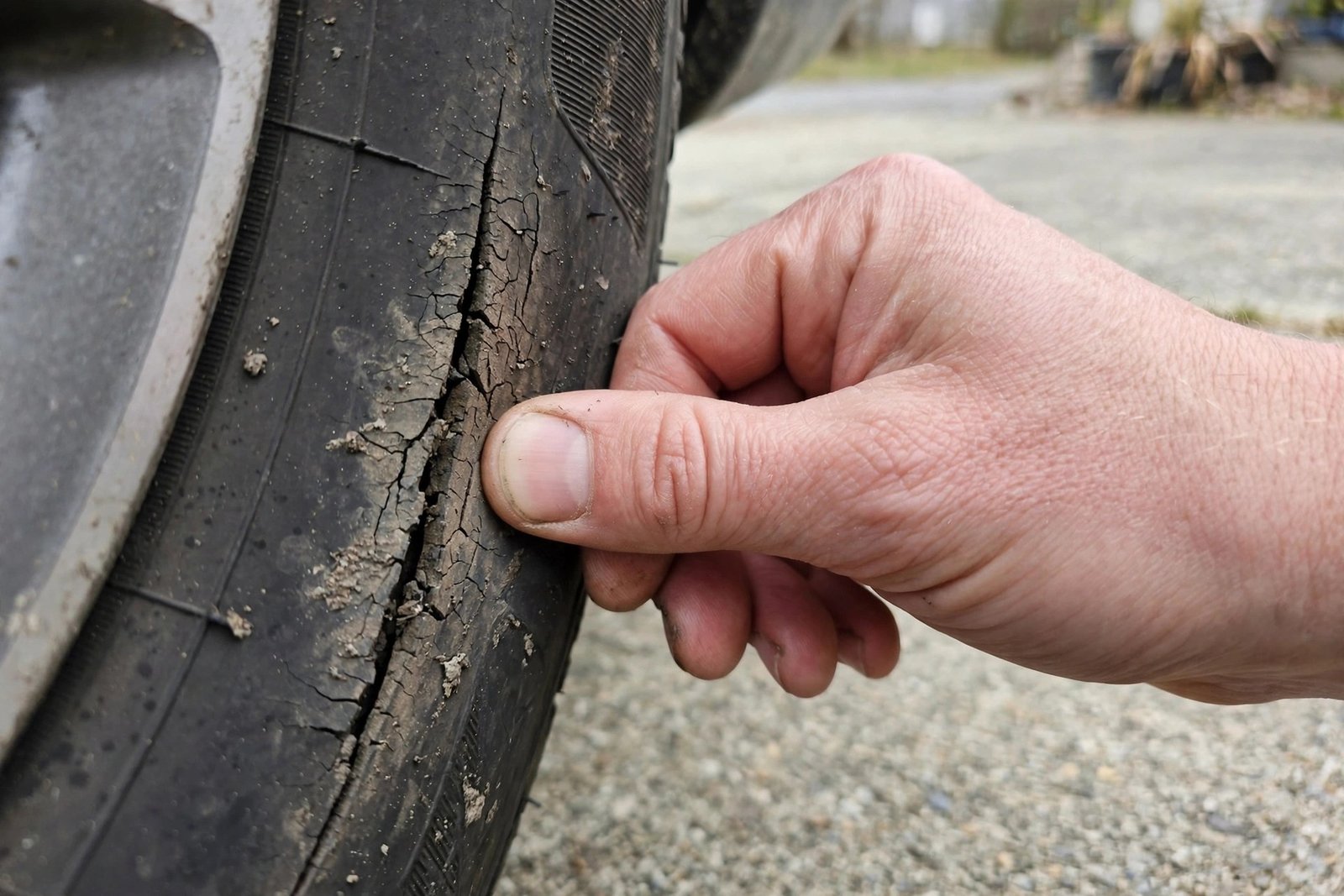
Sidewall damage chart: what you see, and what to do
Not all sidewall damage is cracking. Use this chart to sort out what you are looking at.
| Damage | What it looks like | Safe to drive? | What to do |
|---|---|---|---|
| Hairline weather cracks | Fine crazing in the rubber, often near the rim or lettering; only black rubber inside the cracks | For now | A sign of aging. Read the tire’s age, have it checked by a tire professional, and inspect it every year once it is 5 years old |
| Deep or spreading cracks | Cracks that open when the sidewall flexes, keep lengthening, or show fabric or colored material | No | Replace. The structure is damaged |
| Cut to the cords | Ply or cord visible, or felt when the cut is gently opened | No | Replace. Any visible cord means the tire is finished |
| Bulge or bubble | A raised lump on one spot, usually after a pothole or curb strike | No | Fit the spare and replace the tire. The cord layers behind the rubber have broken |
| Hole or puncture in the sidewall | Nail, screw, or slit below the shoulder; tire losing air | No | Replace. Repairs belong in the tread area only |
| Scuff or curb rash | Scraped rubber on the outer surface, no depth, no cord showing | Usually yes | Cosmetic. Keep an eye on it, and have it checked if the scrape is deep |
| Crack parallel to the rim | A long crack running around the tire near the bead | No | Replace. It can break the seal between the tire and the wheel |
The line that matters most is the one between the first row and the rest. Hairline cracks in the outer rubber are the only sidewall damage that is ever “for now.” Everything else on this chart is a replacement.
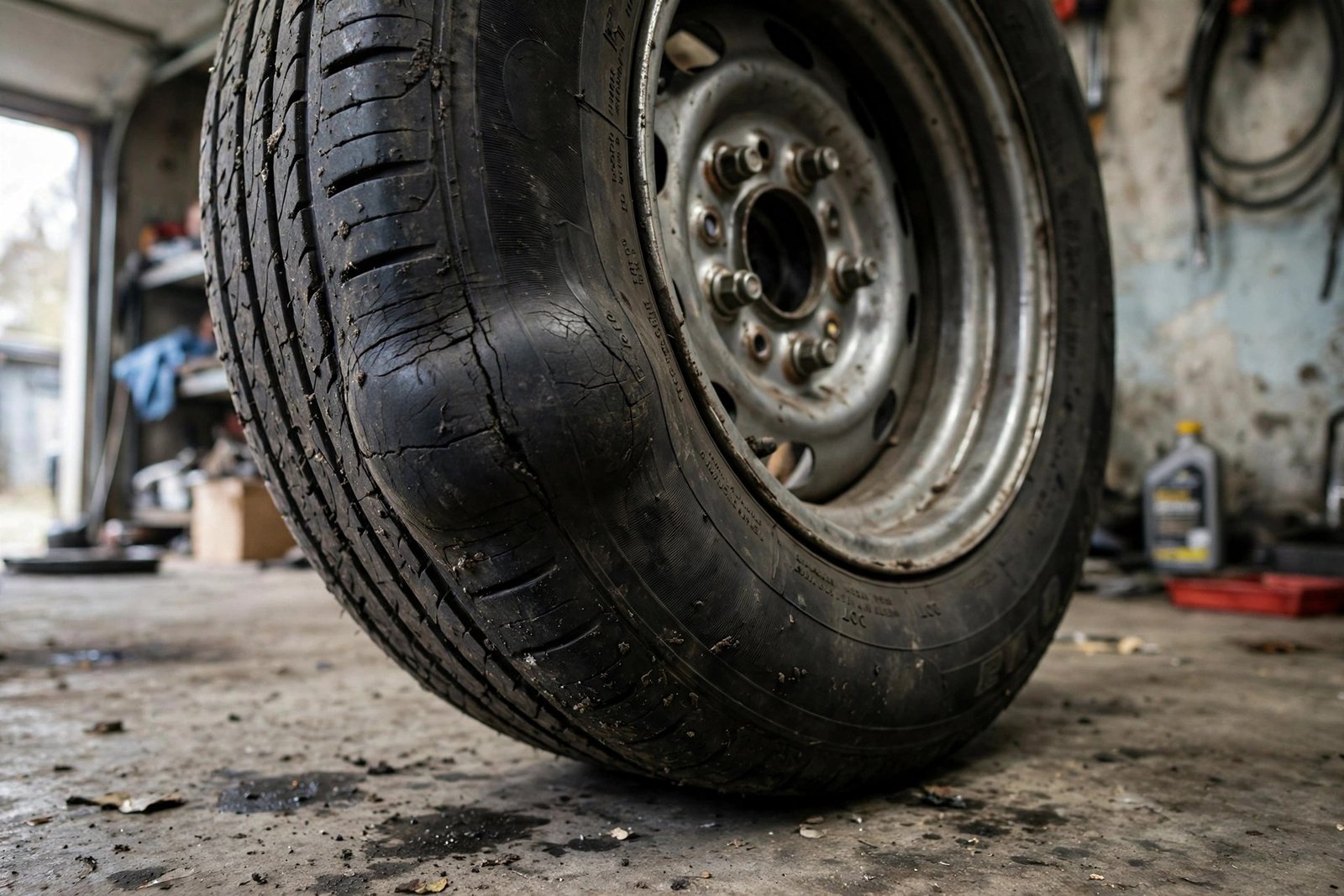
Why a cracked sidewall cannot be repaired
Drivers often ask why a shop will happily plug a nail hole in the tread but refuses to touch a sidewall crack. The answer is physics.
The tread area is thick, stiff, and reinforced with steel belts. A plug-and-patch repair there sits in a stable, barely flexing part of the tire, and it can last the life of the tire. The sidewall is the opposite: thin, unreinforced, and flexing thousands of times per mile as the tire rolls. A plug or patch on the sidewall is being bent and stretched constantly, and it cannot restore the strength of the cords underneath. It will work loose, leak, or fail — and when a sidewall fails, it usually fails suddenly, as a blowout at speed.
That is why the industry rules are so clear. The US Tire Manufacturers Association (USTMA) limits tire repairs to the tread area, for punctures up to 1/4 inch (6 mm). Michelin states that a punctured or cut sidewall cannot be repaired, because the rubber can no longer flex the way it must. Other major manufacturers — Goodyear, Bridgestone, and others — give the same guidance in their service bulletins: sidewall injury means replacement. A shop that offers to patch a sidewall is not doing you a favor; it is doing something the entire industry considers unsafe, and it voids the tire’s warranty.
There is one narrow exception, and it does not apply to your car: some commercial, agricultural, and off-road tires can receive a specialist “section repair.” Passenger and light-truck tires on public roads cannot. Do not confuse the two.
The one thing a shop can do for a cosmetic scuff — a shallow scrape that has not cut into the rubber deeply enough to expose cords — is nothing at all. It is safe to leave alone. But the moment damage reaches the cords, the tire is done, and the only question is what to replace it with.
What to do when you find a cracked sidewall
1. Do not keep driving at highway speed on a bad one. If the crack is deep, shows cord, comes with a bulge, or the tire is losing air, the tire can fail without warning. Slow down, and get off the highway if you can do so safely.
2. Fit the spare. If the tire is flat or losing air fast, install the spare. Most space-saver spares are meant for temporary use only — typically no more than 50 miles at 50 mph — so drive straight to a tire shop. Do not try to inflate a tire with sidewall damage and drive on it.
3. Get a professional inspection. Even for hairline cracks, a tire professional’s opinion is worth having. The inspection is usually free, and it settles the question of whether the tire is cosmetic or structural.
4. Replace the tire. A replacement tire typically costs about $100 to $400, depending on size, brand, and type, and US drivers paid an average of about $212 for their last tire, according to a national driver survey. That is the whole cost of the fix — there is no cheaper repair option, because there is no safe repair option.
5. Replace in axle pairs when you can. If the tire on the other side of the same axle is also old or worn, replace both so the axle matches in size, tread depth, and grip. A single new tire next to a worn one can hurt braking and handling, and on all-wheel-drive cars, a big difference in tire circumference can stress the drivetrain. If the other tire is nearly new and the same brand and model is available, a single replacement is usually acceptable.
6. Check the other three tires. Sidewall cracking is an aging problem, and tires on the same car are usually the same age. If one is badly cracked, inspect the rest — and check their DOT dates. You may be looking at a full set, not a single tire.
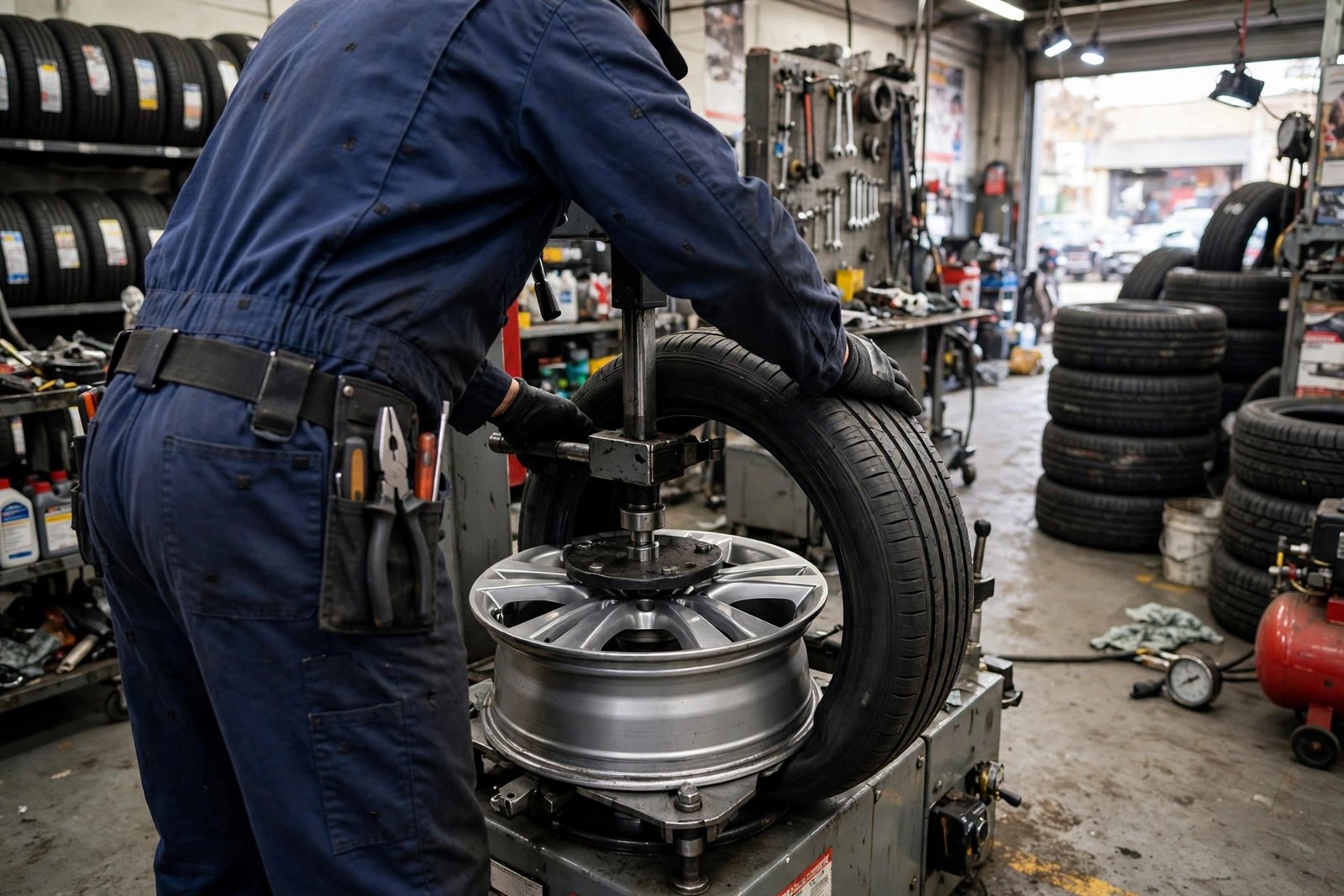
How to prevent sidewall cracks
You cannot stop rubber from aging, but you can slow it down a lot.
- Keep tire pressure correct. Check monthly, when the tires are cold, against the pressure on the driver’s door-jamb placard — not the maximum printed on the sidewall. Underinflation is the fastest way to overheat and weaken a sidewall.
- Park out of the sun when you can. A garage or shade slows UV damage. If the car sits outside for long periods, tire covers help on stored vehicles.
- Drive the car regularly. The protective compounds in the rubber are released by flexing. A car that sits for months is harder on its tires than a car driven every day.
- Avoid curb strikes and potholes. Impacts damage the sidewall structure directly and can turn a small crack into a failure.
- Do not use harsh cleaners or tire dressings with petroleum solvents on the sidewalls. Mild soap and water is enough — solvents can dry out the rubber.
- Check the DOT date when buying tires. A “new” tire that has been sitting in a warehouse for three years is already three years into its life. The last four digits of the DOT code tell you the week and year it was made — make sure you are not buying old stock at a new-tire price.
- Inspect your tires every year from age five onward, and plan on replacement by age ten at the latest, even if the tread still looks good. Tread depth tells you how much rubber is left on top; it tells you nothing about the condition of the sidewall.
The bottom line
A cracked sidewall is one of those problems where the right answer depends entirely on what you are looking at. Fine, shallow cracks in the outer rubber are a normal sign of an aging tire — worth watching, worth having checked, but not a reason to panic. Deep cracks, cracks that show cord, cracks that open when the rubber flexes, bulges, and any air loss are a different matter entirely: the tire is structurally damaged, it cannot be repaired, and it can fail without warning.
The test is simple enough to do in your driveway: look for anything other than black rubber inside the crack, press the sidewall and see if the crack opens, and read the DOT date. If the tire fails any of those checks, replace it. A new tire costs a few hundred dollars. A blowout at highway speed costs far more.
Related reads
- How to Check Tire Tread Depth
- When to Change Tires: 7 Warning Signs
- Best Budget Tires
- How to Change a Flat Tire: Step-by-Step Guide for US Drivers
- Tire Came Off Rim While Driving? Causes, What to Do & Repair
- Compare Cars tool — compare any two cars side by side