
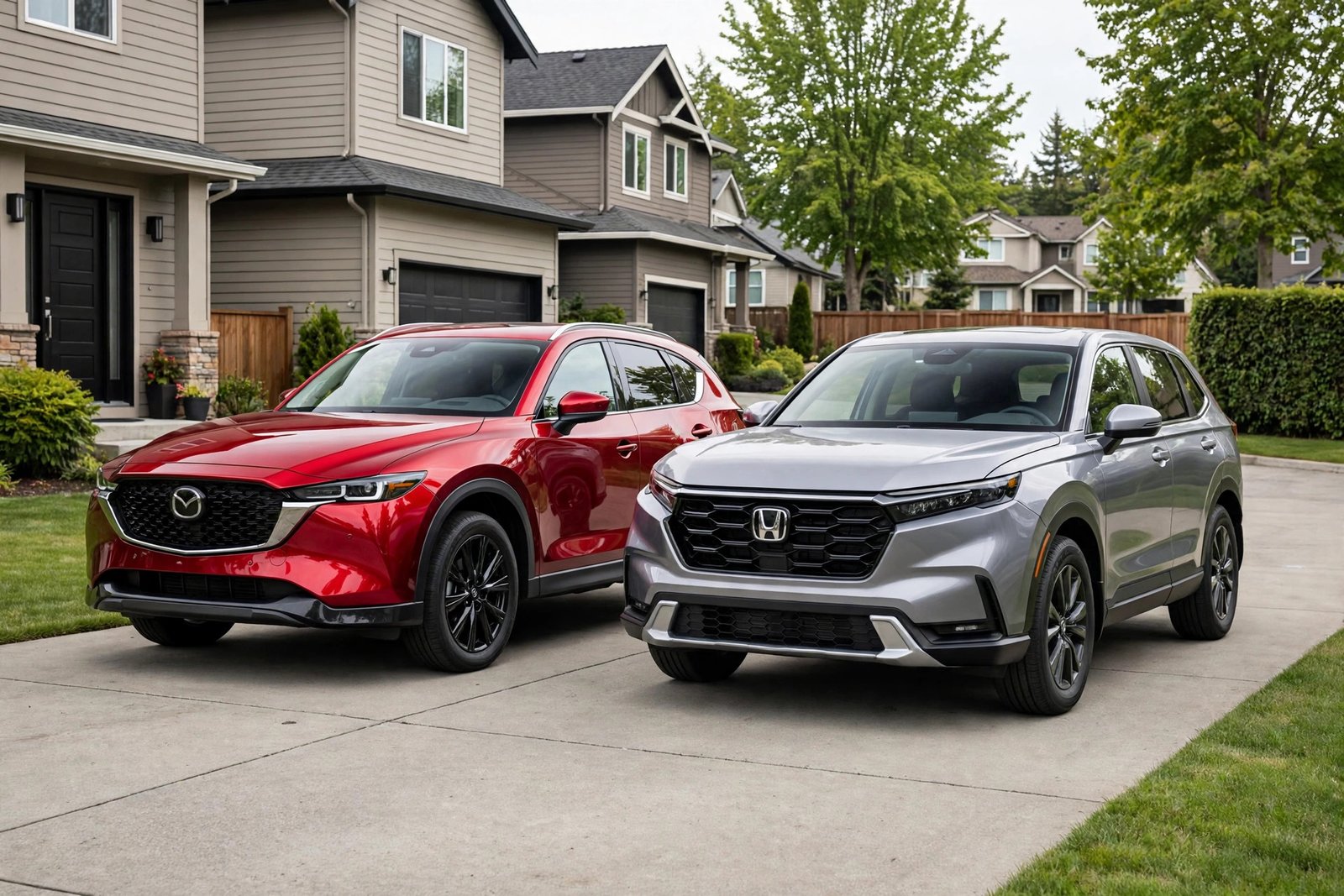
Quick answer: Buy the 2026 Honda CR-V if you want the best all-round family SUV — more space, a hybrid that returns up to 40 mpg combined, and Honda’s long reliability record. Buy the 2026 Mazda CX-5 if you love driving — sharper steering, standard all-wheel drive on every trim, a cabin that feels more expensive than its price, and a starting price $930 lower than the Honda. The CX-5 wins the drive. The CR-V wins the daily grind.
The compact SUV class is the most competitive segment in America, and these two are its most interesting opposites. The CR-V is the rational choice: the best-selling logic of space, efficiency, and resale value. The CX-5 is the emotional choice: a mainstream SUV engineered to feel like something more expensive. For 2026, the gap between them got more interesting, because Mazda fully redesigned the CX-5 — bigger, roomier, and more high-tech — while Honda refined the CR-V with a new TrailSport Hybrid trim and more standard tech.
If you are cross-shopping other compact SUVs too, our Chevrolet Equinox vs Honda CR-V comparison covers the CR-V’s other big rival, and our Compare Cars tool lets you line up any two models side by side with real photos.
Mazda CX-5 vs Honda CR-V at a Glance
| 2026 Mazda CX-5 | 2026 Honda CR-V | |
|---|---|---|
| Starting MSRP | $29,990 (+ $1,595 destination) | $30,920 (+ ~$1,345 destination) |
| Top trim | 2.5 S Premium Plus, $38,990 | Sport Touring Hybrid, about $42,550 |
| Engine (gas) | 2.5L 4-cyl, 187 hp / 186 lb-ft | 1.5L turbo 4-cyl, 190 hp / 179 lb-ft |
| Hybrid | None for 2026 (due 2027) | 2.0L hybrid, 204 hp / 247 lb-ft |
| Transmission | 6-speed automatic | CVT |
| Drivetrain | AWD standard on all trims | FWD standard; AWD +$1,500 (gas) |
| EPA MPG (gas) | 24 city / 30 hwy / 26 combined | 28 city / 33 hwy / 30 combined (FWD) |
| EPA MPG (hybrid) | N/A | Up to 40 city / 34 hwy / 37 combined (AWD) |
| Cargo behind 2nd row | 33.7 cu ft | 39.3 cu ft (gas) / 36.3 cu ft (hybrid) |
| Max cargo | 66.5 cu ft | 76.5 cu ft (gas) / 71.8 cu ft (hybrid) |
| Ground clearance | 8.0 in | 7.8–8.2 in |
| Seating | 5 | 5 |
| Safety highlight | IIHS Top Safety Pick+ (2026) | NHTSA 5-Star overall rating |
| Powertrain warranty | 5 years / 60,000 miles | 5 years / 60,000 miles |
Prices are manufacturer MSRP before destination, taxes, and options, and can change. Confirm the current figure with the dealer before you buy.
Price: The Mazda Starts Lower — and Includes AWD
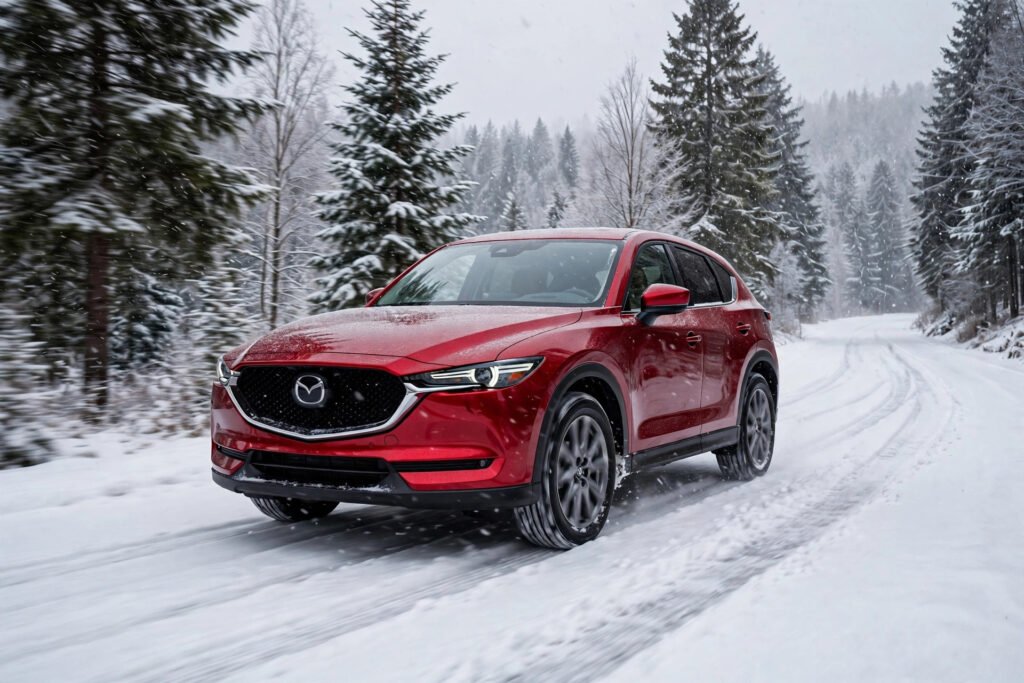
The CX-5 wins the price comparison at the entry level, and the win is bigger than the sticker suggests. Mazda lists the redesigned 2026 CX-5 from $29,990 MSRP for the 2.5 S, before a $1,595 destination charge — a figure confirmed in Mazda’s official 2026 CX-5 fact sheet. The 2026 CR-V starts at $30,920 MSRP for the LX, before roughly $1,345 destination. That is $930 apart on the sticker — but the CX-5 includes i-Activ all-wheel drive as standard equipment on every single trim. On a gas CR-V, all-wheel drive costs an extra $1,500. So a buyer who wants AWD — and in snowy states, most buyers do — is really comparing about $31,585 for the Mazda against about $33,765 for the Honda. That is a real $2,000-plus gap.
The Mazda’s trim ladder is simple: five trims from $29,990 to $38,990, all with the same engine and AWD. The CR-V’s range is wider and more expensive at the top. The gas CR-V runs from the $30,920 LX through the EX ($33,150) and EX-L ($35,400). Hybrid trims start at $35,630 for the Sport Hybrid and climb to about $42,550 for the Sport Touring Hybrid. If your budget tops out near $39,000, the Mazda gives you its best trim; the Honda gives you a mid-level hybrid.
The honest caveat: the CR-V’s higher price buys things the Mazda cannot offer at any price in 2026 — a hybrid powertrain and significantly more space. Price alone favors the CX-5. Value depends on what you need the SUV to do.
Engines and Driving Feel: The Mazda Is More Fun, the Honda Is Stronger
Here is where the two SUVs split most clearly, and where your personality decides the winner.
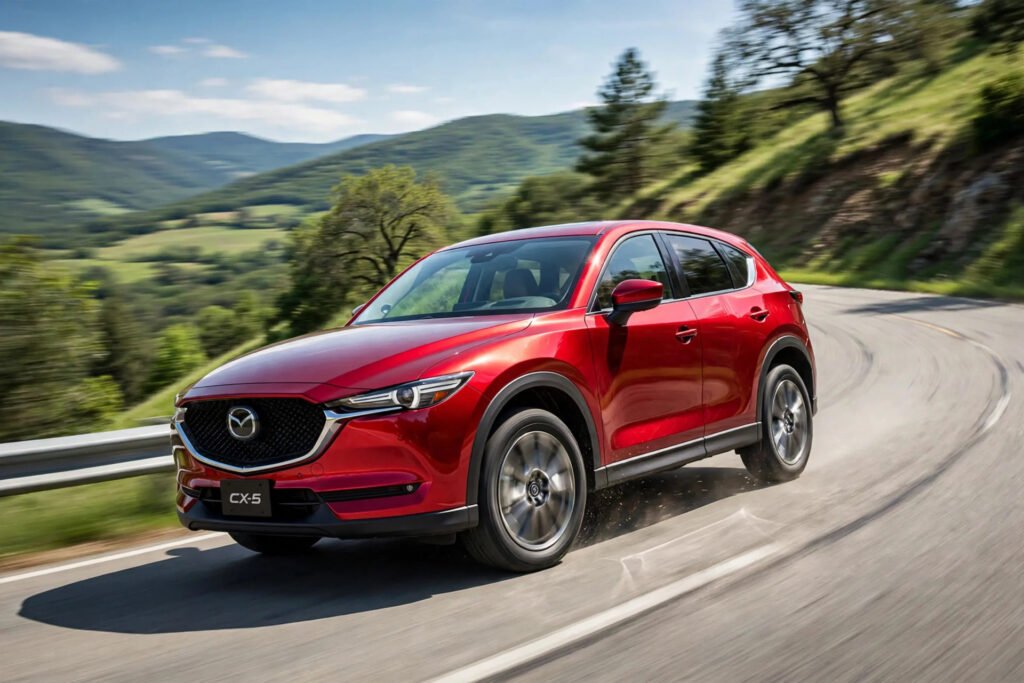
The redesigned CX-5 has exactly one engine: a 2.5-liter naturally aspirated four-cylinder making 187 horsepower and 186 lb-ft of torque, paired with a six-speed automatic and standard all-wheel drive. The old turbocharged engine is gone, and there is no hybrid yet — Mazda has confirmed one is coming for 2027. On the road, the engine feels adequate rather than exciting. What saves the Mazda is everything around the engine: sharper steering, livelier handling, and a chassis that feels like it was tuned by people who enjoy driving.
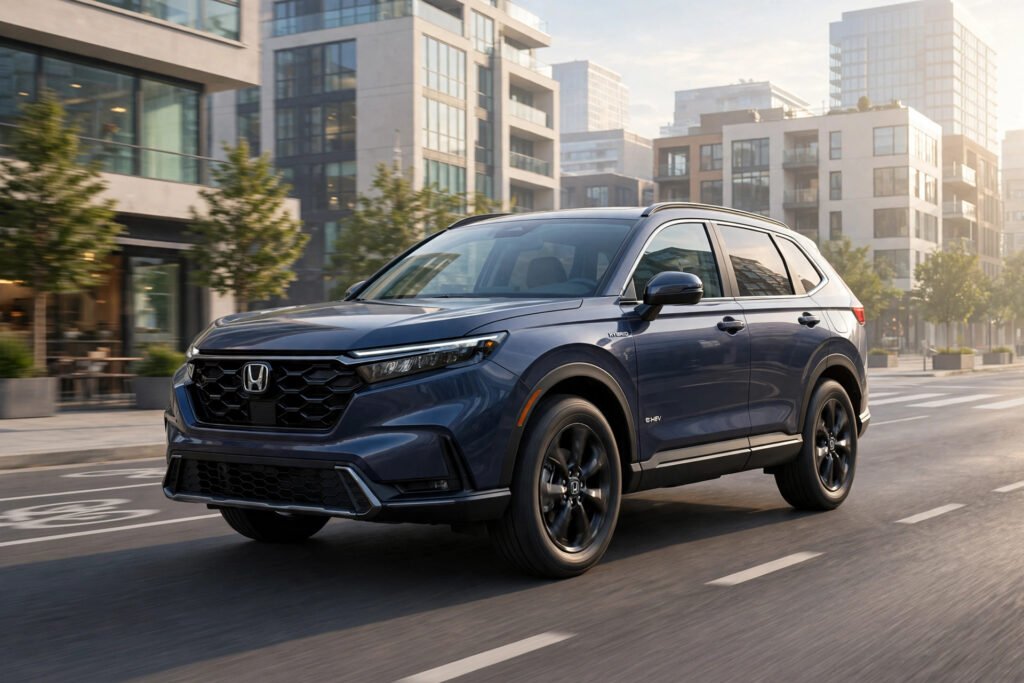
The CR-V gives you a choice, and the choice matters. The base 1.5-liter turbo makes 190 horsepower and 179 lb-ft — nearly identical to the Mazda on paper, but the turbo’s low-end torque makes it feel stronger around town. The hybrid is the real story: a 2.0-liter four-cylinder plus two electric motors for 204 combined horsepower and 247 lb-ft of torque, much of it delivered instantly by the electric motor. Around town, the hybrid frequently runs in pure electric mode at low speeds, and the transition between electric, hybrid, and engine drive is nearly seamless. It is quicker, quieter, and far more efficient than the Mazda — and reviewers who drove both back to back picked the CR-V Hybrid as the better SUV to drive every day, despite the Mazda’s sportier steering.
The transmissions tell the same story. The Mazda’s six-speed automatic is a traditional gearbox: it shifts cleanly and feels connected. The Honda’s CVT is smooth and efficient but less engaging.
Fuel Economy: The CR-V Hybrid Runs Away With It
This is the CR-V’s biggest advantage, and it is not close. The CX-5 is rated at 24 mpg city, 30 highway, and 26 combined — respectable, but the weakest figure in this comparison. The gas CR-V already beats it: 28 city / 33 highway / 30 combined with front-wheel drive, and 29 mpg combined with all-wheel drive. The hybrid CR-V is in another league entirely: up to 40 mpg city and 37 mpg combined with all-wheel drive, and up to 40 mpg combined in front-wheel-drive form.
Put that in money terms. At 12,000 miles a year, the CX-5 uses about 460 gallons of fuel. A CR-V Hybrid AWD uses about 325 gallons. That is roughly 135 fewer gallons a year — several hundred dollars back in your pocket annually, every year you own the car. Over five years, the fuel savings alone can cover most of the hybrid’s price premium.
Space and Practicality: The CR-V Is the Family SUV
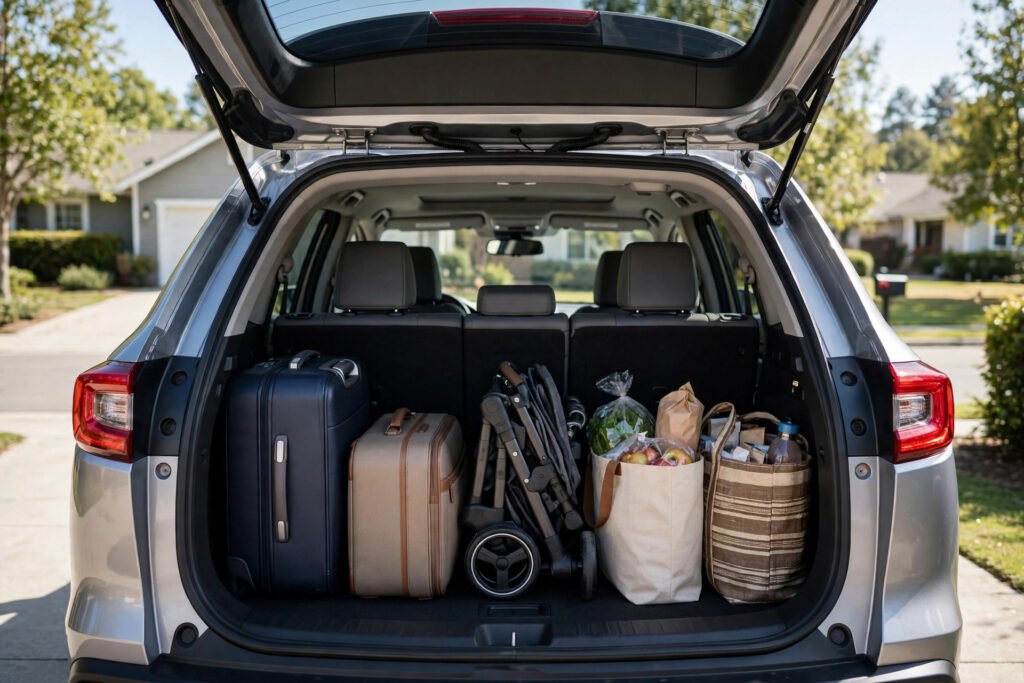
If you carry people and stuff, the CR-V wins every measurement that matters. Behind the second row, the gas CR-V offers 39.3 cubic feet against the CX-5’s 33.7 — about 17 percent more room for groceries, strollers, and suitcases. Fold the seats down and the gap grows: 76.5 cubic feet versus 66.5. Even the hybrid CR-V, which gives up some space to its battery, offers 36.3 cubic feet behind the second row and 71.8 maximum — still ahead of the Mazda on both counts.
The rear seat tells the same story. The redesigned CX-5 is bigger than the old one — 4.5 inches longer overall, with a 4.6-inch-longer wheelbase and more rear leg, knee, and headroom — and it is genuinely more family-friendly than before. But the CR-V’s rear seat is still the roomier, more adult-friendly place to sit, with a flatter floor and more legroom. For a family with two kids in car seats, or for adults who regularly ride in the back, the Honda is the more comfortable choice.
The CX-5 fights back with cleverness rather than volume. Its cargo area is well shaped and its liftgate is wide. But no amount of cleverness adds 10 cubic feet. If space is your top priority, this section ends the debate.
Interior and Technology: Mazda Feels Premium, Honda Feels Practical
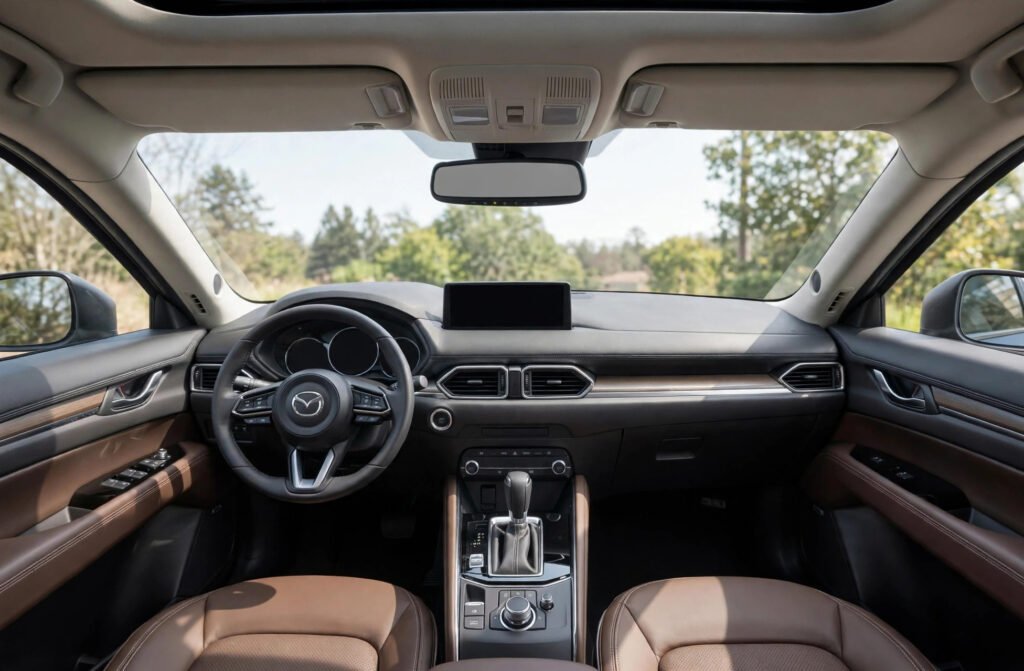
Sit in both SUVs and you will understand why this comparison is hard. The CX-5’s cabin is the nicer place to be. Mazda has always punched above its price on interior quality, and the redesign raises the bar again: soft-touch materials, clean design, and a standard 12.9-inch touchscreen — up to 15.6 inches on the top trim — with Google built in. It is the first Mazda with Google built in, and the big screen makes the Honda’s 9-inch display look small. The CX-5’s cabin feels like it belongs in a $45,000 SUV.
The CR-V’s cabin is less dramatic but more practical. The dashboard is clean and logical, the controls are exactly where your hand expects them, and visibility is excellent. The 9-inch touchscreen is now standard on every 2026 trim, with wireless Apple CarPlay, Android Auto, and wireless phone charging. Honda’s new TrailSport Hybrid trim adds rugged styling and standard all-wheel drive for buyers who want a tougher look.
The choice is between a cabin you admire and a cabin you never have to think about. Younger buyers and design lovers lean Mazda. Families with their hands full lean Honda.
Safety: Both Are Strong, the Mazda Has the Trophy
The CX-5 has the headline safety award. Mazda confirms the redesigned 2026 CX-5 earned a 2026 IIHS Top Safety Pick+ award — the institute’s highest honor — and the SUV carries 10 standard airbags plus a full suite of i-Activsense driver-assistance features, including blind-spot monitoring, rear cross-traffic alert with pedestrian detection, and rear automatic emergency braking. Mazda now holds more 2026 Top Safety Pick+ awards than any other brand.
The CR-V’s safety case is strong but different. It earned a five-star overall rating from NHTSA, the maximum available, and Honda Sensing driver assistance is standard on every trim: adaptive cruise control, lane-keeping assist, blind-spot monitoring, and rear cross-traffic alert. The CR-V’s long-running safety record and its five-star NHTSA result are reassuring — but the CX-5’s Top Safety Pick+ is the more prestigious current award, and it is the Mazda’s to claim in 2026.
One safety note worth making: the 2026 CR-V’s IIHS award status was not confirmed in our research — some dealer sources report it did not make the 2026 IIHS Top Safety Pick list, but that claim comes from a competitor’s site and we could not verify it independently, so we are not stating it as fact. Check the IIHS site for the latest ratings before you buy.
Reliability and Ownership Costs: Honda’s Long Game
Both brands have good reliability reputations, but Honda’s is longer and deeper. The CR-V consistently earns top owner-satisfaction scores for reliability — owners rate it 4.7 to 4.8 out of 5 in published owner data — and one owner-data analysis puts its average annual repair cost at about $368, well below the $526 compact-SUV class average. That is the financial shape of Honda’s reputation: not just fewer problems, but cheaper problems.
The CX-5’s reliability record is also good — Mazda has climbed the reliability rankings steadily over the past decade, and the previous-generation CX-5 was a dependable SUV. The honest caveat is that the 2026 CX-5 is an all-new generation: new platform, new interior electronics, and a recalibrated engine. First-year redesigns always carry a little more risk than a proven model in its fourth year.
Both SUVs carry identical warranties: 3 years / 36,000 miles basic and 5 years / 60,000 miles powertrain. The warranty is the same; the track record favors the Honda. Resale value favors the Honda too — the CR-V has historically held its value better than the CX-5, though the redesigned Mazda’s stronger safety rating and premium cabin may narrow that gap over time.
For tires, both SUVs run similar sizes and benefit from the same care. Our what do tire numbers mean guide explains how to read the size on your sidewall, and when to change your tires covers the warning signs on a family SUV.
Pros and Cons
2026 Mazda CX-5
Pros:
- Lower starting price, with AWD standard on every trim
- Sharper steering and the most engaging drive in the class
- Premium-feeling cabin with a large 12.9-inch (up to 15.6-inch) touchscreen
- IIHS Top Safety Pick+ award for 2026
- Simple five-trim lineup, no confusing options maze
Cons:
- No hybrid option for 2026 — and the only engine feels underpowered
- Worst fuel economy in this comparison (26 mpg combined)
- Less cargo and rear-seat space than the CR-V
- All-new generation means no long-term reliability record yet
2026 Honda CR-V
Pros:
- Hybrid option with up to 40 mpg combined — the efficiency champion
- Best cargo space in the class (up to 76.5 cu ft)
- Roomiest rear seat and most practical family layout
- NHTSA 5-Star overall rating and a long reliability record
- Strong resale value and low ownership costs
Cons:
- Higher starting price, and AWD costs $1,500 extra on gas trims
- Less engaging to drive than the CX-5
- Cabin feels practical rather than premium
- Top hybrid trim reaches about $42,550
Verdict: Which Compact SUV Wins in 2026?
For most buyers, the Honda CR-V is the winner. It is the better family SUV: more space, a hybrid that saves real money every year, a longer reliability record, and stronger resale value. Independent testers who drove both back to back reached the same conclusion — the CR-V is the better SUV to drive every day, and despite its higher price, it costs less to own over five years.
But the Mazda CX-5 is the SUV we would rather drive. Its steering, its cabin, and its standard all-wheel drive make every trip a little more pleasant, and its lower price leaves money in your pocket on day one. If you drive mostly alone or with one passenger, if you live where all-wheel drive matters, and if fuel economy is not your top priority, the CX-5 is a genuinely tempting choice — and the redesigned 2026 model is the best CX-5 Mazda has ever built.
Buy the CR-V if: you need maximum space, you want a hybrid, fuel costs matter to you, or you keep cars for a long time. Buy the CX-5 if: you love driving, you want standard AWD and a premium cabin for under $31,000, and you can live with 26 mpg. Either way, drive both on the same day — the Mazda will win your heart in the first corner, and the Honda will win your head by the time you load the cargo area.
Frequently Asked Questions
Which is better, the Mazda CX-5 or the Honda CR-V?
For most buyers, the Honda CR-V is the better all-round SUV: it offers more passenger and cargo space, a hybrid option with up to 40 mpg combined, and a long reliability record. The Mazda CX-5 is the better choice if you value sharp handling, standard all-wheel drive on every trim, a more premium-feeling cabin, and a lower starting price. The CX-5 wins the drive; the CR-V wins the daily grind.
Is the Mazda CX-5 cheaper than the Honda CR-V?
Yes, at the entry level. The redesigned 2026 Mazda CX-5 starts at $29,990 MSRP, while the 2026 Honda CR-V starts at $30,920 MSRP — a gap of $930 before destination charges. The CX-5 also includes all-wheel drive as standard on every trim, while AWD costs an extra $1,500 on gas CR-V trims. At the top end, the CR-V Sport Touring Hybrid reaches about $42,550, above the CX-5 Premium Plus at $38,990.
Does the 2026 Mazda CX-5 have a hybrid?
No. The redesigned 2026 Mazda CX-5 is gasoline-only, with a single 2.5-liter four-cylinder engine. Mazda has confirmed a hybrid CX-5 is coming, but not until the 2027 model year. The 2026 Honda CR-V offers a hybrid on several trims, with 204 horsepower and up to 40 mpg combined in front-wheel-drive form.
Which gets better gas mileage, the CX-5 or the CR-V?
The CR-V, by a clear margin. The 2026 CX-5 is rated at 24 city / 30 highway / 26 combined mpg. The gas CR-V manages 28 city / 33 highway / 30 combined mpg with front-wheel drive, and the CR-V Hybrid reaches up to 40 mpg combined (43 mpg city in front-wheel-drive form). Over 12,000 miles a year, the hybrid CR-V can save roughly $350 a year in fuel versus the CX-5.
Which has more cargo space, the CX-5 or the CR-V?
The CR-V, by a wide margin. The gas CR-V offers 39.3 cubic feet behind the second row and 76.5 cubic feet maximum, versus 33.7 and 66.5 cubic feet in the CX-5. The hybrid CR-V gives up a little space (36.3 / 71.8 cubic feet) but still beats the Mazda. The redesigned CX-5 is bigger than the old one, but the CR-V remains the cargo king of this class.
Is the Mazda CX-5 or Honda CR-V more reliable?
Both have strong reputations, and the CR-V has the longer track record. The CR-V consistently earns top owner-satisfaction scores for reliability, and owner data puts its average annual repair cost well below the compact-SUV class average. The CX-5 is also well regarded for reliability, but the 2026 model is an all-new generation, so its long-term record is still being written. Both carry identical warranties: 3 years/36,000 miles basic and 5 years/60,000 miles powertrain.