
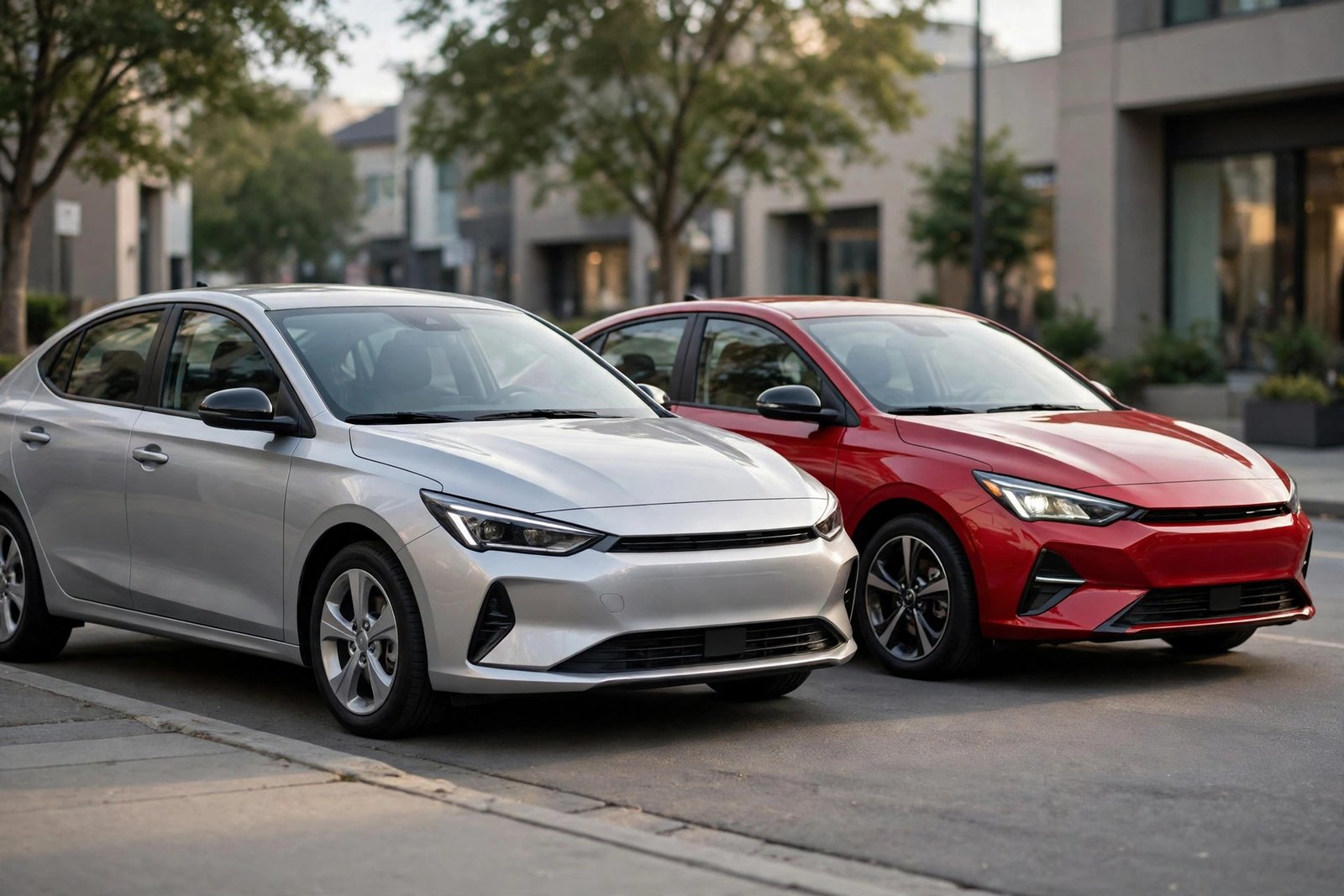
Quick answer: The 2026 Hyundai Elantra SE starts at $22,825 and the 2026 Toyota Corolla LE at $23,125 — just $300 apart. The Corolla has more power (169 hp vs 147), slightly better gas mileage, and holds its value much better. The Elantra has a roomier back seat, a bigger trunk, more standard features, and a warranty twice as long. Buy the Elantra for space, features, and warranty; buy the Corolla for long-term value and resale.
The compact sedan class is small, and these two cars are the reason why. The Corolla is the best-selling nameplate in automotive history, and the Elantra is Hyundai’s best-selling car — both affordable, both efficient, both easy to live with. On paper they look almost identical: 2.0-liter four-cylinder engines, front-wheel drive, about 35 mpg combined, five seats, and a starting price within $300 of each other.
But they are built for different buyers. The Elantra is the value play — more room, more equipment, a longer warranty. The Corolla is the safe play — more power, a stronger reputation, and resale value that embarrasses nearly everything in the class. This comparison works through the real 2026 numbers so you can pick the one that fits your life, not just the one with the lower window sticker.
2026 Hyundai Elantra vs Toyota Corolla: Specs at a Glance
| Spec | 2026 Hyundai Elantra SE | 2026 Toyota Corolla LE |
|---|---|---|
| Starting MSRP | $22,825 | $23,125 |
| Engine | 2.0L 4-cylinder | 2.0L 4-cylinder |
| Horsepower | 147 hp | 169 hp |
| Torque | 132 lb-ft | 151 lb-ft |
| Transmission | IVT (CVT) | Direct Shift CVT |
| EPA fuel economy (city/hwy/comb) | 31 / 40 / 35 mpg | 32 / 41 / 35 mpg |
| Hybrid combined MPG | Up to 54 mpg | Up to 50 mpg |
| Trunk space | 14.2 cu ft | 13.1 cu ft |
| Rear legroom | 38.0 in | 34.8 in |
| Front headroom | 40.6 in | 38.3 in |
| Front legroom | 42.3 in | 42.0 in |
| Basic warranty | 5 years / 60,000 miles | 3 years / 36,000 miles |
| Powertrain warranty | 10 years / 100,000 miles | 5 years / 60,000 miles |
| Base tire size | 195/65R15 | 205/55R16 |
Prices are manufacturer MSRP before destination, tax, title, and license; Hyundai’s current site lists the Elantra SE at $22,825. If you are cross-shopping the Corolla against its other big rival, read our Toyota Corolla vs Honda Civic comparison too.
Price and Value: The Elantra Costs Less, the Corolla Costs Less to Own
The window stickers tell a simple story: the Elantra SE undercuts the Corolla LE by $300. The gap is small, but the Elantra stretches it further with standard equipment. Even the base Elantra comes with an 8-inch touchscreen, wireless Apple CarPlay and Android Auto, and Hyundai SmartSense safety tech — features Toyota spreads across higher Corolla trims or charges extra for. Dollar for dollar, the Elantra gives you more car at the point of sale.
The Corolla’s answer comes later. Resale-value data puts five-year depreciation at roughly 31% for the Corolla against roughly 41% for the Elantra — a gap of about 10 points on cars that cost nearly the same. On a $23,000 purchase, that is roughly $2,000 more of your money still in the car after five years. It is the single biggest financial difference between these two cars, and it is the reason the Corolla keeps winning “best value” arguments despite the higher sticker price.
So the honest math is: the Elantra is cheaper to buy, the Corolla is cheaper to own. If you trade cars every three to five years, the Corolla’s resale advantage likely outweighs the Elantra’s $300 head start. If you buy a car and drive it for a decade, resale matters less and the Elantra’s lower price and longer warranty matter more.
Both cars sit in the same affordable-sedan bracket, and both are thousands cheaper than the average new car in 2026. For the full picture on what these cars cost to run, including tires, our Nissan Sentra vs Toyota Corolla comparison covers another budget rival in the same class.
Engines and Driving: The Corolla Is Quicker, the Elantra Has the Fun Trim
Both cars use a 2.0-liter four-cylinder engine, but they are not the same engine. The Corolla’s makes 169 horsepower and 151 lb-ft of torque; the Elantra’s makes 147 horsepower and 132 lb-ft. That 22-horsepower gap is the clearest mechanical difference in this comparison, and you feel it merging onto a highway or passing a truck. The Corolla is the more responsive car in everyday driving.
Neither car is fast — both are tuned for efficiency, not excitement — but the Corolla’s extra power means it rarely feels strained. The Elantra is adequate around town and fine on the highway, just less eager when you ask for a quick burst of speed.
The Elantra fights back with variety. Its N Line trim adds a 1.6-liter turbocharged engine making 201 horsepower, giving Hyundai a sporty sedan the Corolla lineup simply does not offer. The Corolla’s performance answer is the GR Corolla hatchback, a different and much pricier car. If you want a compact sedan with a genuinely fun-to-drive version, the Elantra N Line is the only option here. At the top of the range, the Elantra N pushes 276 horsepower — a proper performance sedan — but that is a different budget and a different buyer.
Both cars drive well for the class: light steering, comfortable rides, quiet cabins at highway speed. The Elantra’s cabin is the quieter of the two, with more sound-deadening material and a more refined suspension tune. The Corolla feels a touch more planted and precise. Test-drive both back to back over the same roads — the difference is in feel, not in any number on a spec sheet.
Fuel Economy: Corolla Wins on Gas, Elantra Wins on Hybrid
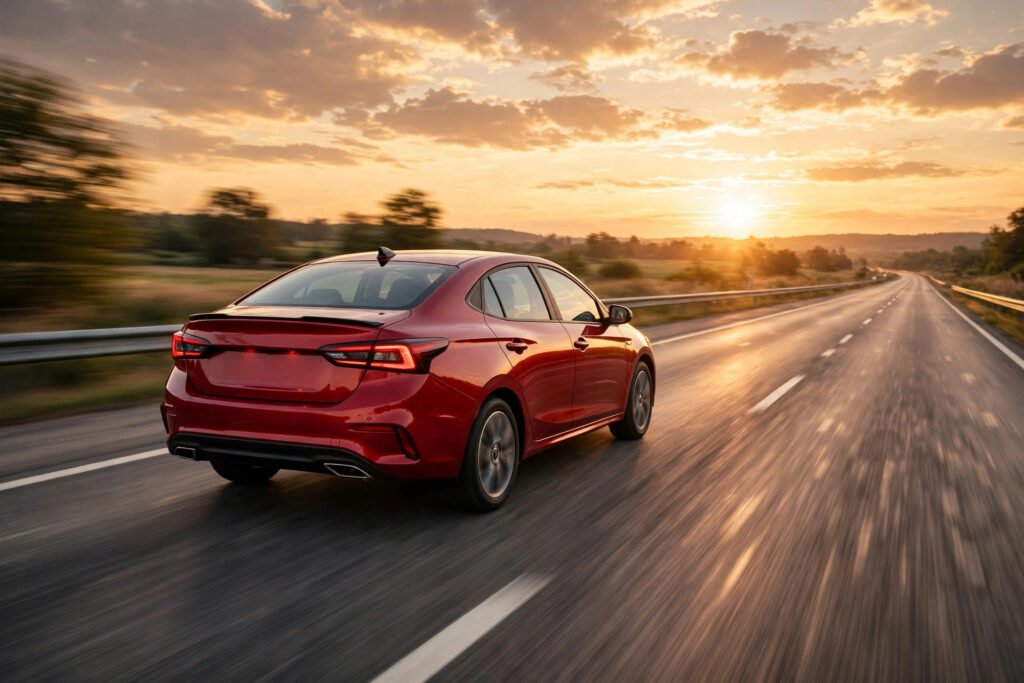
Gas models first: the Corolla edges it. The Corolla LE is EPA-rated at 32 mpg city, 41 highway, and 35 combined; the Elantra SE at 31 city, 40 highway, and 35 combined. That is 1 mpg in the Corolla’s favor everywhere except the combined figure, where they tie. Over 12,000 miles a year, the difference amounts to roughly 10 gallons of fuel — about $35 a year at current prices. Real, but not a reason to choose either car on its own.
The hybrid versions tell a different story. The Elantra Hybrid reaches up to 54 mpg combined, against up to 50 mpg combined for the Corolla Hybrid — a 4-mpg advantage for Hyundai. If fuel economy is your top priority, the Elantra Hybrid is the most efficient car in this comparison, and one of the most efficient non-plug-in sedans you can buy. The Corolla Hybrid counters with available all-wheel drive, which the Elantra does not offer at all — a genuine advantage if you drive in snow.
One practical note: both cars run on regular unleaded, and both deliver their best economy in mixed driving rather than pure city or pure highway use. Your real-world numbers will depend more on your commute than on the 1-mpg gap between them.
Interior and Space: The Elantra Is the Roomier Car
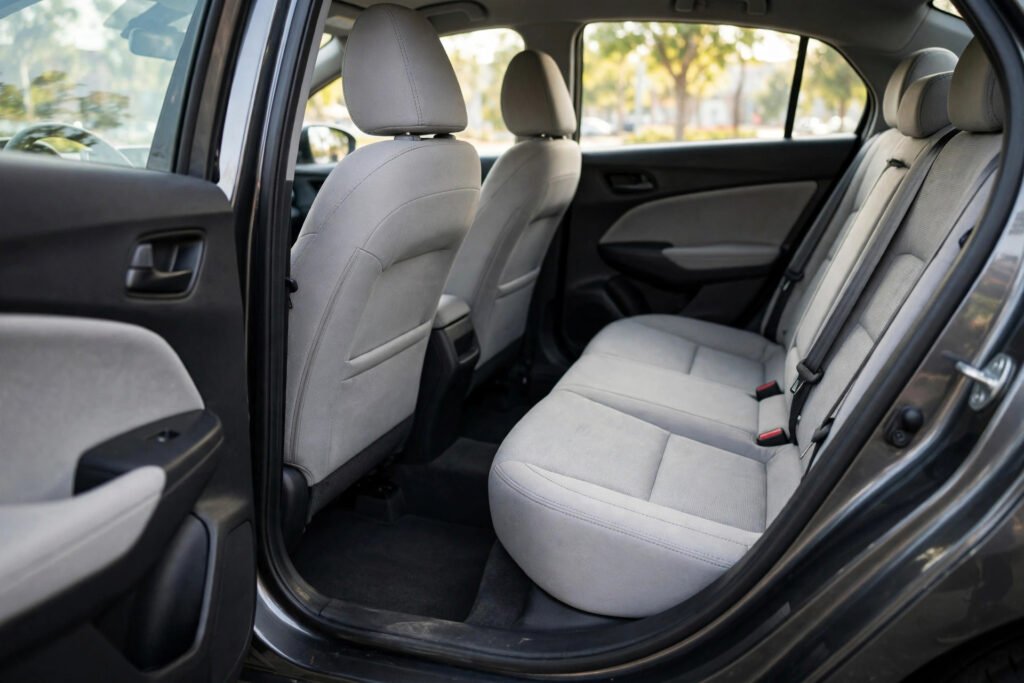
This is the Elantra’s clearest win, and it is not close. Rear-seat passengers get 38.0 inches of legroom in the Elantra against 34.8 inches in the Corolla — a 3.2-inch difference that turns the back seat from “fine for kids” into “fine for adults.” Front headroom favors the Elantra too, 40.6 inches against 38.3, and the trunk is bigger: 14.2 cubic feet against 13.1.

If you regularly carry adult passengers, car seats, or a lot of luggage, the Elantra is simply the more comfortable car. The Corolla’s cabin is well built and its materials feel a touch more premium, but it is a smaller space — Toyota traded room for the Corolla’s sleeker proportions.
Up front, both cars are comfortable for the driver. The Elantra’s dashboard is the more modern design, with a wide infotainment screen and a cleaner layout; the Corolla’s is simpler and more traditional, with physical buttons for the functions you use most. Both come standard with Apple CarPlay and Android Auto, and both offer a full suite of driver-assistance features. Tall drivers should sit in both: the Elantra’s extra headroom is noticeable if you are over six feet.
Safety: Both Are Strong, the Elantra Has the Newer Award
Both cars come standard with a full set of driver-assistance technology — automatic emergency braking, lane-keeping assist, adaptive cruise control, and blind-spot monitoring are standard or available across the range. Toyota Safety Sense 3.0 is standard on every Corolla; Hyundai SmartSense is standard on every Elantra.
On crash-test results, the Elantra earned a 2026 IIHS Top Safety Pick award, and a five-star overall rating from NHTSA. The Corolla was not named in the first round of 2026 IIHS awards — the Institute tightened its criteria this year, which made awards harder to earn across the industry — though the Corolla has a long record of strong crash-test performance in prior model years.
Neither car has a meaningful safety weakness. If the latest IIHS award matters to you, the Elantra holds it. If you are choosing on safety alone, drive the one whose driver-assistance systems feel most natural to you — the Corolla’s adaptive cruise and lane-centering are widely praised for smooth operation in traffic.
Warranty and Ownership: The Elantra’s Biggest Advantage
Hyundai’s warranty is the best in the mainstream car business, and it shows here. The Elantra is covered for 5 years or 60,000 miles bumper-to-bumper and 10 years or 100,000 miles on the powertrain, plus five years of unlimited-mileage roadside assistance. The Corolla is covered for 3 years or 36,000 miles bumper-to-bumper and 5 years or 60,000 miles on the powertrain, with two years of roadside assistance.
That is double the powertrain coverage, and it matters most if you plan to keep the car past year five — exactly when expensive things like transmissions start to fail. Toyota’s reputation says you are less likely to need the warranty; Hyundai’s warranty says you are covered if you do. Both arguments are honest, and which one persuades you says a lot about how you buy cars.
On running costs, the two cars are close. Both use inexpensive 15- and 16-inch tires on base trims — the Elantra SE rides on 195/65R15 tires and the Corolla LE on 205/55R16 — so replacement tires are among the cheapest in the new-car market. Our tire size guide explains what those numbers mean, and our guide to when to change your tires will help you get the full life out of them. Maintenance schedules are similar, and both cars are cheap to insure relative to the average new car.
Technology and Features
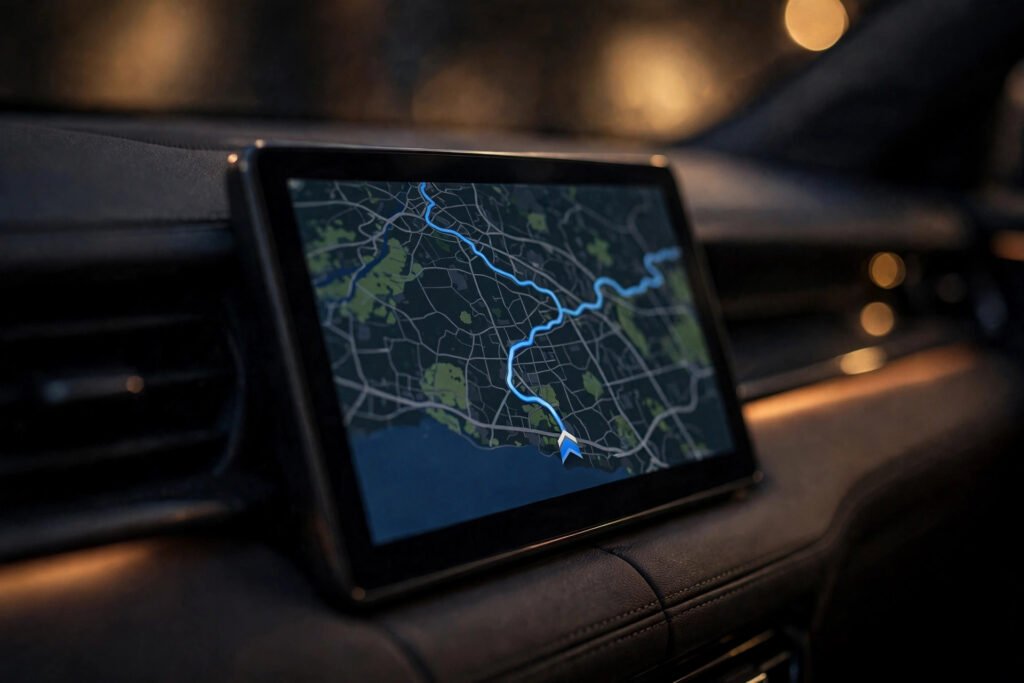
The Elantra leads on standard tech. Wireless Apple CarPlay and Android Auto are standard, the infotainment screen is larger on most trims, and Hyundai’s Blue Link connected services include remote start and vehicle tracking. The Corolla counters with a standard six-speaker audio system (the Elantra SE makes do with four), LED headlamps standard (the Elantra SE uses halogens), and Toyota’s reputation for infotainment that simply works without fuss.
Higher trims widen the Elantra’s advantage: a 10.25-inch touchscreen, a digital instrument cluster, and a Bose premium audio system are available on the Elantra Limited, while the Corolla’s top trims focus more on comfort features like heated seats and a power moonroof. If cabin tech is a priority, the Elantra gives you more of it for the money. If you prefer simple controls and fewer screens, the Corolla’s approach will feel calmer.
Pros and Cons
2026 Hyundai Elantra
Pros: Lower starting price ($22,825); roomier rear seat and bigger trunk; best-in-class 10-year/100,000-mile powertrain warranty; most efficient hybrid at up to 54 mpg combined; N Line turbo trim with 201 hp; more standard tech for the money; 2026 IIHS Top Safety Pick.
Cons: Less power in the base engine (147 hp); weaker resale value (about 41% depreciation over five years); slightly lower gas mileage than the Corolla; no all-wheel-drive option; less prestigious badge.
2026 Toyota Corolla
Pros: More power (169 hp) and slightly better gas mileage; legendary reliability reputation; far better resale value (about 31% depreciation over five years); available all-wheel drive on the hybrid; hatchback body style also available; LED headlamps standard.
Cons: Higher starting price ($23,125); tighter rear seat and smaller trunk; shorter warranty (5-year/60,000-mile powertrain); no sporty turbo sedan trim; fewer standard tech features at the base price.
The Verdict
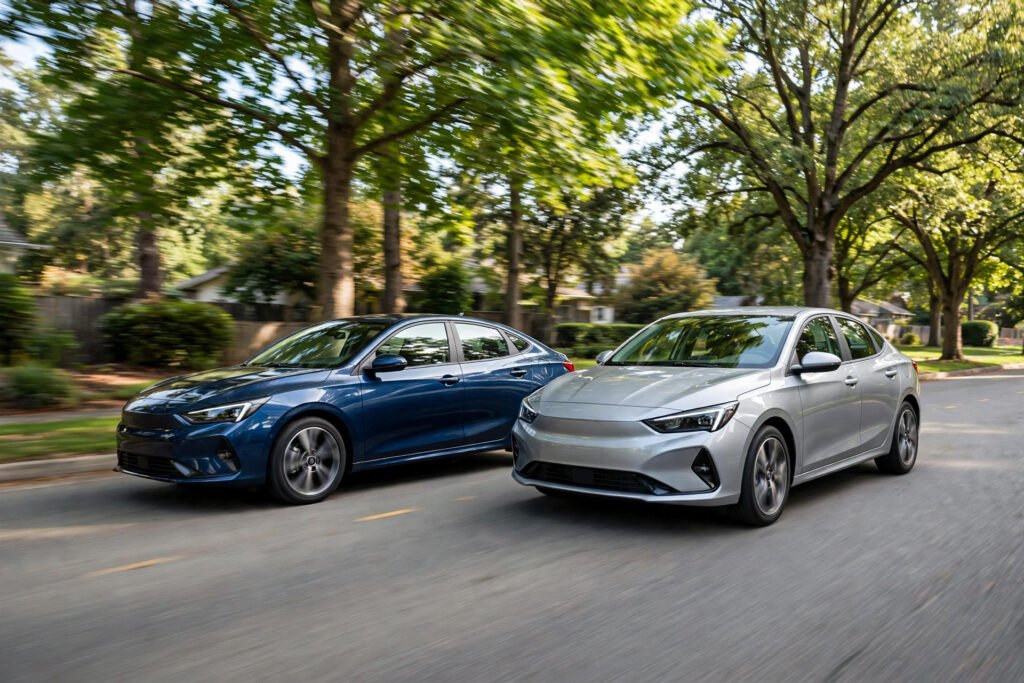
There is no wrong answer here — these are the two best compact sedans you can buy in 2026, and the right one depends on how you will use it.
Buy the Hyundai Elantra if you want the most car for the money: more space for your passengers, more features at the base price, the best warranty in the class, and the most efficient hybrid. It is the better choice for families, commuters who carry adults in the back seat, and anyone who plans to keep the car for a decade and wants the warranty to match.
Buy the Toyota Corolla if you plan to sell or trade the car within five years, because its resale value will return roughly $2,000 more of your money. It is also the pick if you want the stronger reliability reputation, a little more power, the option of all-wheel drive, or a hatchback body style.
If you are still torn, the tiebreaker is simple: sit in the back seat of both. The Elantra’s extra 3.2 inches of rear legroom is something you feel immediately, and for many buyers it settles the decision on the spot. And if you want to see how the two stack up side by side with your own eyes, try our Compare Cars tool — it lays out the specs of both cars in one table.
For more on keeping either car in top shape, our guides to what tire numbers mean and tire balancing vs alignment cover the maintenance that keeps a compact sedan cheap to run for years.
Frequently Asked Questions
Which is cheaper, the 2026 Hyundai Elantra or Toyota Corolla?
The Elantra is cheaper up front. The 2026 Hyundai Elantra SE starts at $22,825 and the 2026 Toyota Corolla LE starts at $23,125, a $300 gap before destination charges. The Corolla claws the money back over time: it holds its value better, losing roughly 31% of its value over five years against about 41% for the Elantra.
Is the Hyundai Elantra or Toyota Corolla more reliable?
The Corolla has the stronger reliability reputation, built over decades, and it holds its resale value better. The Elantra counters with a far longer warranty — 10 years or 100,000 miles on the powertrain versus 5 years or 60,000 miles for the Corolla — which covers you if anything does go wrong.
Which gets better gas mileage, the Elantra or the Corolla?
The gas Corolla wins by a hair: 32 mpg city and 41 highway (35 combined) against the Elantra’s 31 city and 40 highway (35 combined). The hybrid versions flip the result — the Elantra Hybrid reaches up to 54 mpg combined, beating the Corolla Hybrid’s 50 mpg combined.
Which is roomier, the Hyundai Elantra or Toyota Corolla?
The Elantra, clearly. It offers 38.0 inches of rear legroom against the Corolla’s 34.8 inches, more front headroom (40.6 vs 38.3 inches), and a bigger trunk at 14.2 cubic feet versus 13.1. If adults regularly ride in the back seat, the Elantra is the more comfortable car.
Does the Elantra or Corolla have a better warranty?
The Elantra, by a wide margin. Hyundai covers the Elantra for 5 years or 60,000 miles bumper-to-bumper and 10 years or 100,000 miles on the powertrain. Toyota covers the Corolla for 3 years or 36,000 miles bumper-to-bumper and 5 years or 60,000 miles on the powertrain.
Should I buy the Hyundai Elantra or Toyota Corolla in 2026?
Buy the Elantra if you want more space, more features for the money, the best warranty in the class, and the most efficient hybrid. Buy the Corolla if you plan to keep the car a long time and care most about resale value, the stronger reliability reputation, and a small edge in gas mileage and power.