
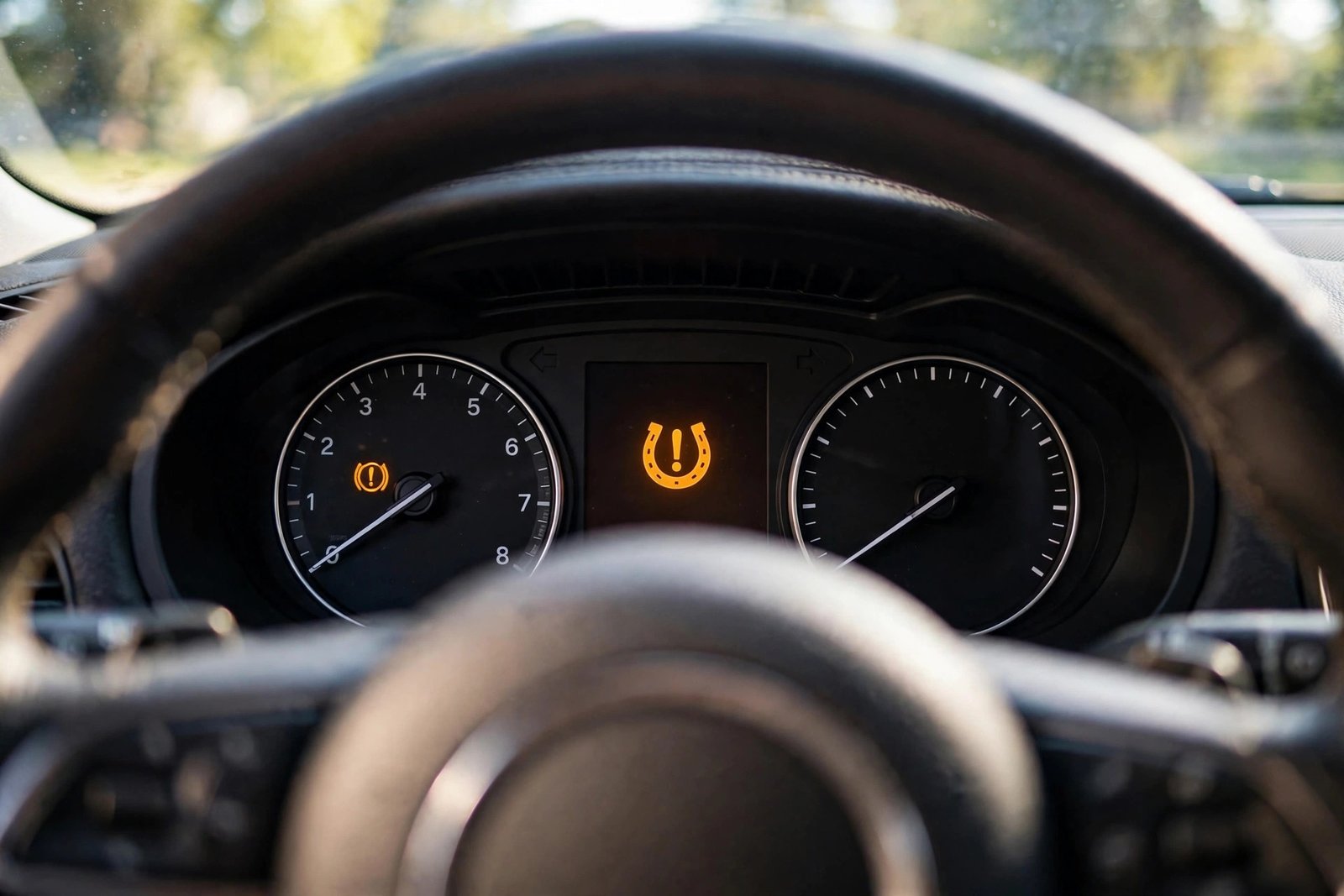
Quick answer: A solid tire pressure light that stays on after filling usually means one of three things: a tire is still below the correct pressure (check the driver’s door-jamb placard, not the tire sidewall), the system hasn’t reset yet and needs a drive or a manual reset, or air is leaking back out — a slow puncture, a bad valve stem, or a low spare tire. Fill every monitored tire to the placard pressure while the tires are cold, drive for about 10 minutes, and if the light is still on, work through the causes below in order.
You did the obvious thing. The light came on, you stopped at a gas station, you filled the tires — and the light is still staring at you from the dashboard. It is one of the most common car frustrations there is, and most of the time it has a simple explanation. The trick is knowing which explanation applies to your car, because “just add more air” only fixes one of them — and adding air blindly can make the problem worse.
This guide walks through the seven real reasons a solid tire pressure light stays on after filling, in the order you should check them. It covers the case where the light is solid and steady. If your light flashes for about a minute when you start the car and then stays on, that is a different warning — a system fault, not low pressure — and our guide to the flashing tire pressure light explains that one.
What the Solid Tire Pressure Light Actually Means
The light is your Tire Pressure Monitoring System, or TPMS. Under the US federal standard FMVSS 138, it must warn you when any tire falls 25% or more below the vehicle maker’s recommended cold pressure — and it has to do so within 20 minutes of that happening. On a car placarded at 35 PSI, that means the light comes on at roughly 26 PSI. By the time you see it, the tire is already well below where it should be.
Two things follow from that. First, the light is a pressure warning, not a damage warning: it says nothing about tread depth, a nail that has not started leaking yet, or a bulging sidewall. Second, the system is slow by design. It does not react the instant you add air. The sensors report on their own schedule, and many cars need a drive — or a manual reset — before the light clears. Tire Rack’s guide makes the same point: once you have inflated correctly, the light may not disappear immediately, and some cars need a few miles of driving or a manual reset before it goes out.
1. You Filled to the Wrong Number
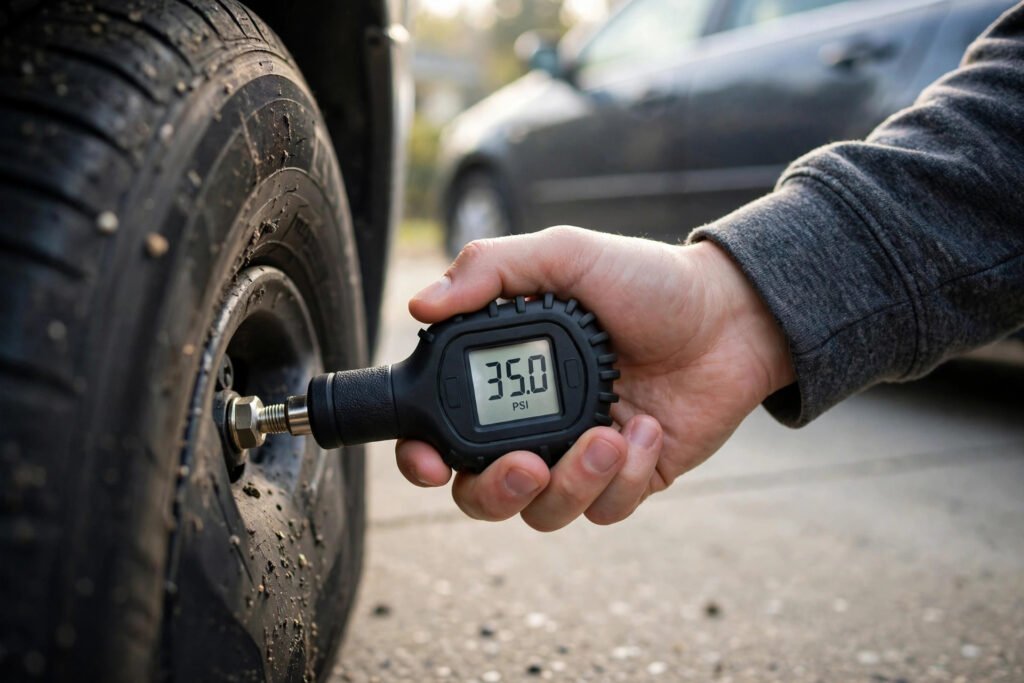
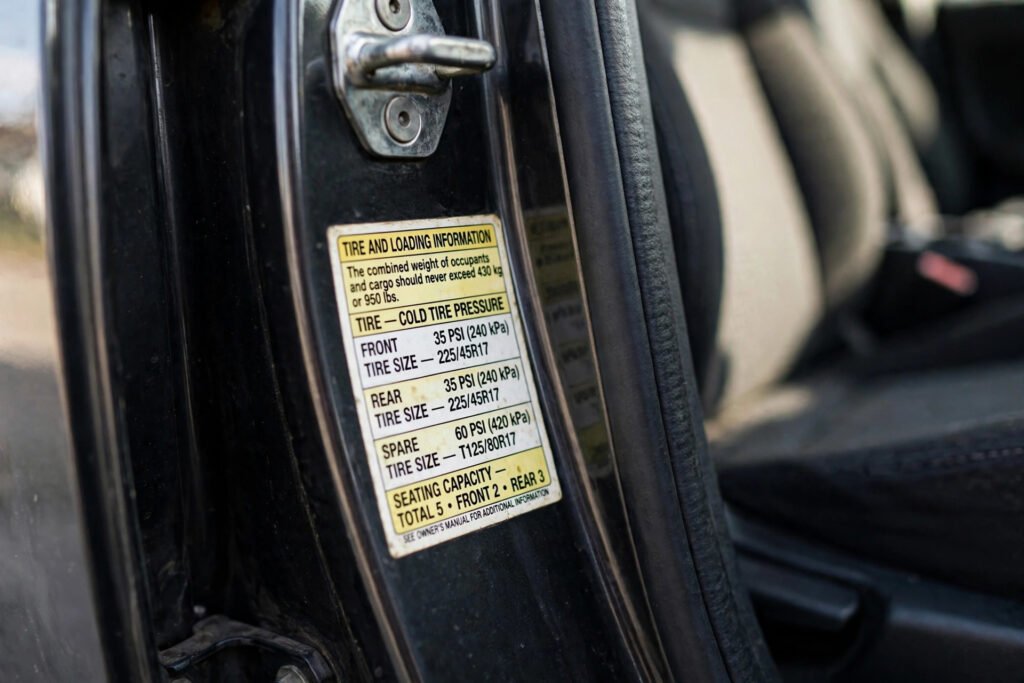
This is the single most common reason the light stays on, and it is the easiest to get wrong. The number that matters is on the sticker in your driver’s door jamb — the placard — or in your owner’s manual. It is not the big number molded into the tire’s sidewall. That sidewall figure is the tire’s maximum pressure, not your car’s recommended pressure, and filling to it will overinflate your tires.
Typical placard pressures run around 30 to 35 PSI for most cars, but the exact figure varies by vehicle, and front and rear tires sometimes differ. If you filled all four tires to the same number from memory, or to the sidewall maximum, recheck them against the placard with a gauge. One tire even a few PSI short can keep the light on, because the system watches every tire and warns on the lowest one.
The other half of this mistake is checking pressure while the tires are warm. Tires gain roughly 4 to 6 PSI in the first twenty minutes of highway driving. Fill to the placard number at a gas station after a long drive and you will be underinflated once the tires cool. NHTSA defines “cold” as a tire that has not been driven on for at least three hours. The reliable method is to check at home before driving, note how many pounds each tire is short, and add exactly that much at the pump.
2. Cold Weather Dropped the Pressure Again
If the light came on during the first cold snap of autumn, the weather is probably your answer. Air contracts as it cools, and tire pressure falls roughly 1 PSI for every 10°F drop in temperature. A tire set correctly at 70°F in the afternoon can read several PSI low on a 30°F morning — without losing a single molecule of air.
That is why this problem is seasonal. Drivers who set their pressures in August watch the light come on in November, fill the tires on a mild afternoon, and then see the light return on the next cold morning. The fix is to set the pressure cold, on a cold morning, to the full placard number — not to the number that looks right once the tires have warmed up. If the light comes on in the morning and goes off after driving, that on-and-off pattern is the classic sign of a marginal tire that dips below the threshold overnight and recovers as it warms. Top it up cold and the pattern stops.
3. The System Hasn’t Reset Yet
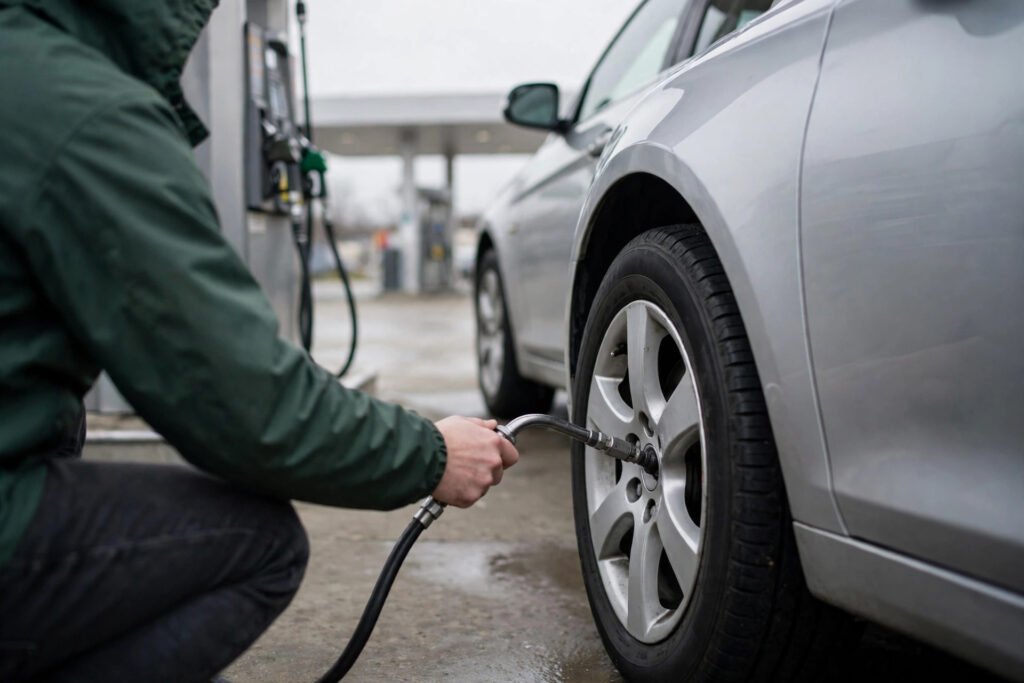
Filling the tires does not switch the light off by itself on every car. The TPMS has to measure the new pressure and, on many vehicles, run through a calibration or relearn step first. How long that takes depends entirely on your vehicle:
| Reset method | How it works | Typical time |
|---|---|---|
| Automatic (drive cycle) | The light clears on its own once the sensors report correct pressure | A few minutes of driving, often about 10 minutes at highway speed |
| Reset button | Hold the TPMS SET button (often under the dash or in the glove box) until the light blinks | A few minutes after the reset, per the owner’s manual |
| Dashboard or infotainment menu | Start calibration through the vehicle settings menu | Varies; some Hondas need about 30 minutes of cumulative driving at 30 to 65 mph |
| Relearn procedure | The car re-registers each sensor’s ID after a rotation or tire change | Requires a relearn sequence or a shop scan tool |
The order matters: inflate first, then reset. Pressing reset before correcting the pressure teaches the system the wrong baseline, and on cars with indirect TPMS (which watches wheel speed rather than measuring pressure directly) it can mask a genuinely low tire. If your car has a reset button — Toyotas, for example, commonly use a SET button you hold until the indicator blinks three times — use it only after every tire is at the placard pressure. Our full guide to how to reset the TPMS walks through the common procedures by brand.
4. A Slow Leak Is Letting the Air Back Out
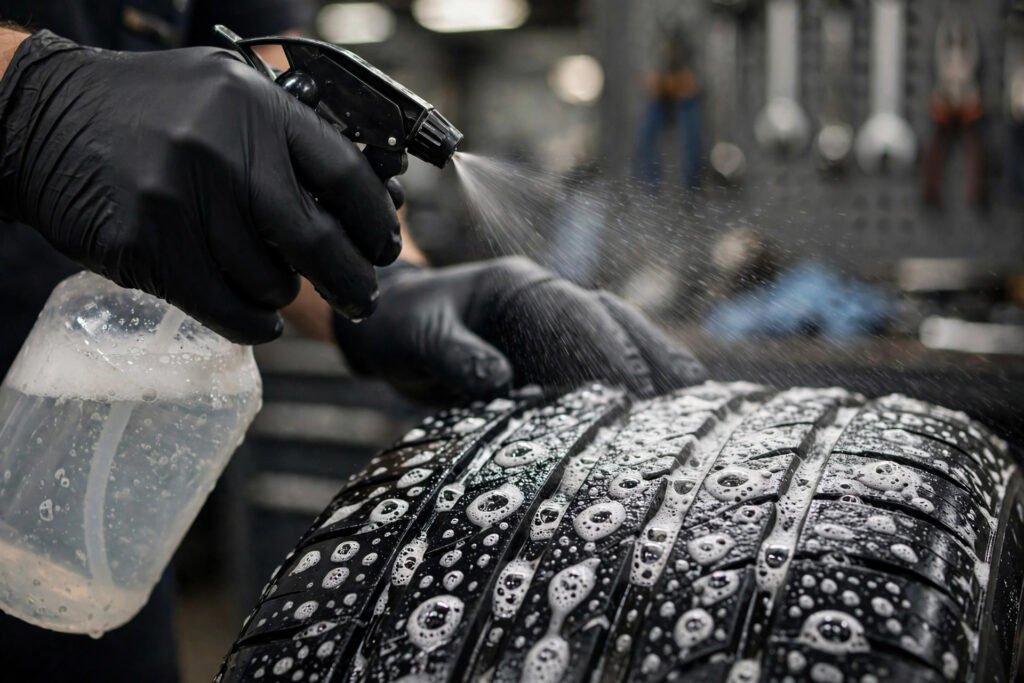
If the light goes off after you fill up and comes back a day or a week later, you almost certainly have a slow leak. A nail or screw in the tread often seals itself well enough to leak only a few PSI a week rather than going flat, which is exactly why the tire looks fine and the light keeps returning.
The other usual suspects are a leaking valve stem, corrosion where the tire seals against the wheel (the bead), and wheel damage from a pothole or curb. The pattern is the giveaway: if one tire is consistently lower than the other three, that tire has a leak. Compare all four readings — if three sit at 35 PSI and one sits at 29, you have found your problem tire.
A simple home test helps. Mix dish soap with water, spray it over the tread, the valve stem, and the bead where the tire meets the rim, and watch for bubbles. Bubbles mean escaping air. A nail in the tread can often be repaired if it is in the center of the tread; damage near the sidewall usually means the tire needs replacing. Either way, do not keep topping up the same tire every week and calling it fixed — a slow leak only gets worse, and a tire running low builds heat that can lead to a blowout. A detailed walkthrough of how to add air and reset TPMS notes the same federal threshold and the same fix order: correct cold pressure first, then the reset your manual describes.
5. The Spare Tire Is Low
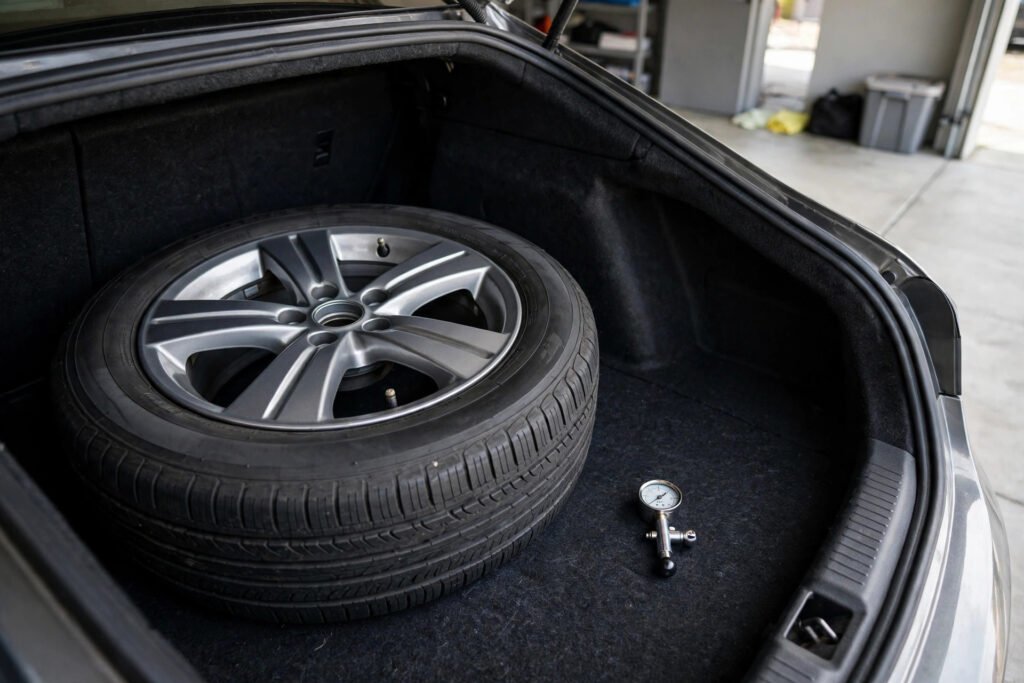
This is the cause almost everyone forgets, because the spare is out of sight. On many vehicles — particularly SUVs and trucks — the full-size spare carries its own TPMS sensor. If that spare is sitting low, the light stays on even though every tire you can see is perfect.
Check your owner’s manual to see whether your spare is monitored. If it is, check its pressure too and inflate it to the pressure listed for it (spares often run at a higher pressure than the road tires, so read the placard or the spare’s own label). Note that most compact temporary spares — the “donut” — have no sensor at all, so a low donut will not trigger the light. If you recently fitted the spare as a road wheel, some cars will also keep the light on until a relearn is done, because the sensorless spare cannot report.
6. You Overfilled the Tires
It sounds backwards, but too much air can keep the light on just like too little. Some TPMS systems warn on overinflation as well as underinflation, and even on systems that only watch for low pressure, a tire filled well past the placard number can behave oddly as it heats up and cools down.
This usually happens at gas station air pumps with inaccurate gauges, or when a driver fills to the sidewall maximum “to be safe.” If your gauge reads well above the placard number on any tire, let air out until it matches. Use your own gauge rather than trusting the pump’s built-in gauge — cheap pencil gauges and pump gauges drift, and a digital gauge you keep in the glove box is a small investment that pays for itself the first time it saves a wrong reading.
7. A Sensor Is Dead, Damaged, or Not Recognized
If the pressure is right, the spare is fine, you have driven the car, and you have done the reset — and the light still will not clear — the problem is in the monitoring system itself, not the air.
TPMS sensors run on small sealed batteries that eventually die, typically after 5 to 10 years depending on the vehicle and climate. When a battery dies, the sensor stops transmitting, and the car cannot confirm that tire’s pressure. A sensor can also be damaged during a tire change, knocked out of calibration by a rotation that was never followed by a relearn, or simply not recognized after new wheels were fitted without compatible sensors.
This is where the flashing pattern becomes important. A light that flashes for 60 to 90 seconds at startup and then stays solid is the system’s way of reporting a fault — most often a dead sensor battery. A solid light that never flashes usually still means low pressure somewhere. If you suspect a sensor fault, a tire shop can scan each sensor with a TPMS tool — many shops will ping them for free — and tell you in minutes which one is not reporting. Replacing a sensor is a shop job: the tire has to come off the wheel to reach it, and the new sensor has to be programmed to the car. Our guide to TPMS sensor replacement cost explains what that job involves, and how to program TPMS sensors covers the relearn side if you are doing it yourself.
What to Do, Step by Step
Work through this in order and stop as soon as the light clears:
- Check cold. Before driving, or after the car has sat for at least three hours, gauge all four tires plus the spare.
- Fill to the placard. Use the driver’s door-jamb number, not the sidewall. Correct any tire that is off, including the spare.
- Drive. Take the car for about 10 minutes at highway speed so the sensors report the new pressures.
- Reset if needed. If the light is still on, use your vehicle’s reset button or dashboard menu — after inflating, never before.
- Recheck in a day or two. If the same tire is low again, you have a slow leak. Spray soapy water on the tread, valve, and bead, or have the tire inspected.
- Get the sensors scanned. If pressures hold and the light still will not clear, a shop scan will identify a dead or unrecognized sensor.
When to Stop Driving and Get Help Now
Most of the time this is an annoyance, not an emergency. But stop and check immediately if a tire looks visibly flat, the car pulls to one side, you hear thumping or feel vibration, or the light is flashing. A tire that is 25% low flexes harder and builds more heat the faster you go, and that heat is what turns a low tire into a blowout. NHTSA attributes nearly 11,000 tire-related crashes in the US each year to tire problems — proper inflation is the simplest prevention there is. If you are unsure whether a tire is safe, check it with a gauge before driving further. A two-minute check beats a roadside tire change.
The Bottom Line
A tire pressure light that stays on after filling is almost never a mystery once you check things in the right order. Start with the placard pressure measured cold — the most common fix by a wide margin. Then give the system a drive and a proper reset. Then look for the leak, the spare, and finally the sensor. In most cases the answer is in the first three steps, and the light goes out on its own once the system sees correct pressure. If it does not, the sensors themselves are telling you they need attention — and a quick scan at a tire shop will say which one.
Frequently Asked Questions
Why is my tire pressure light still on after filling my tires?
The most common reasons are that one or more tires are still below the pressure on the driver’s door-jamb placard (not the sidewall number), the tires were filled while warm and lost pressure as they cooled, a slow leak is letting air out again, the spare tire is low, or the TPMS system simply has not reset yet and needs a drive or a manual reset.
How long does it take for the tire pressure light to turn off after filling tires?
On many vehicles the light turns off on its own after a few minutes of driving once the pressure is correct — often after about 10 minutes at highway speed. Some vehicles need a manual reset through a dashboard button or menu, and some (such as many Hondas) need a TPMS calibration plus up to 30 minutes of cumulative driving before the light clears.
Can cold weather keep the tire pressure light on after filling tires?
Yes. Tire pressure falls roughly 1 PSI for every 10°F drop in temperature. A tire filled correctly on a warm afternoon can read several PSI low on a cold morning, which is enough to keep the light on. Always check and set pressure when the tires are cold, using the door-jamb placard number.
Does the spare tire affect the tire pressure light?
On many vehicles, yes. Some full-size spares carry their own TPMS sensor, and if that spare is low the warning light stays on even when all four road tires are at the correct pressure. Check the spare’s pressure too — and note that many compact temporary spares have no sensor at all.
Is it safe to drive with the tire pressure light still on?
You can drive a short distance at low speed to reach an air pump if the tires look normal and the car handles normally. Do not drive at highway speed or finish a long trip with the light on. If a tire looks flat, the car pulls or thumps, or the light is flashing, stop and check the tires right away.
What should I do if the tire pressure light stays on after filling and resetting?
Recheck every tire — including the spare — with a gauge when cold, confirm the pressure matches the door-jamb placard, and repeat your vehicle’s reset procedure. If the light still stays on, the likely cause is a slow leak or a faulty TPMS sensor, and a tire shop can scan the sensors to find which one is not reporting.
