
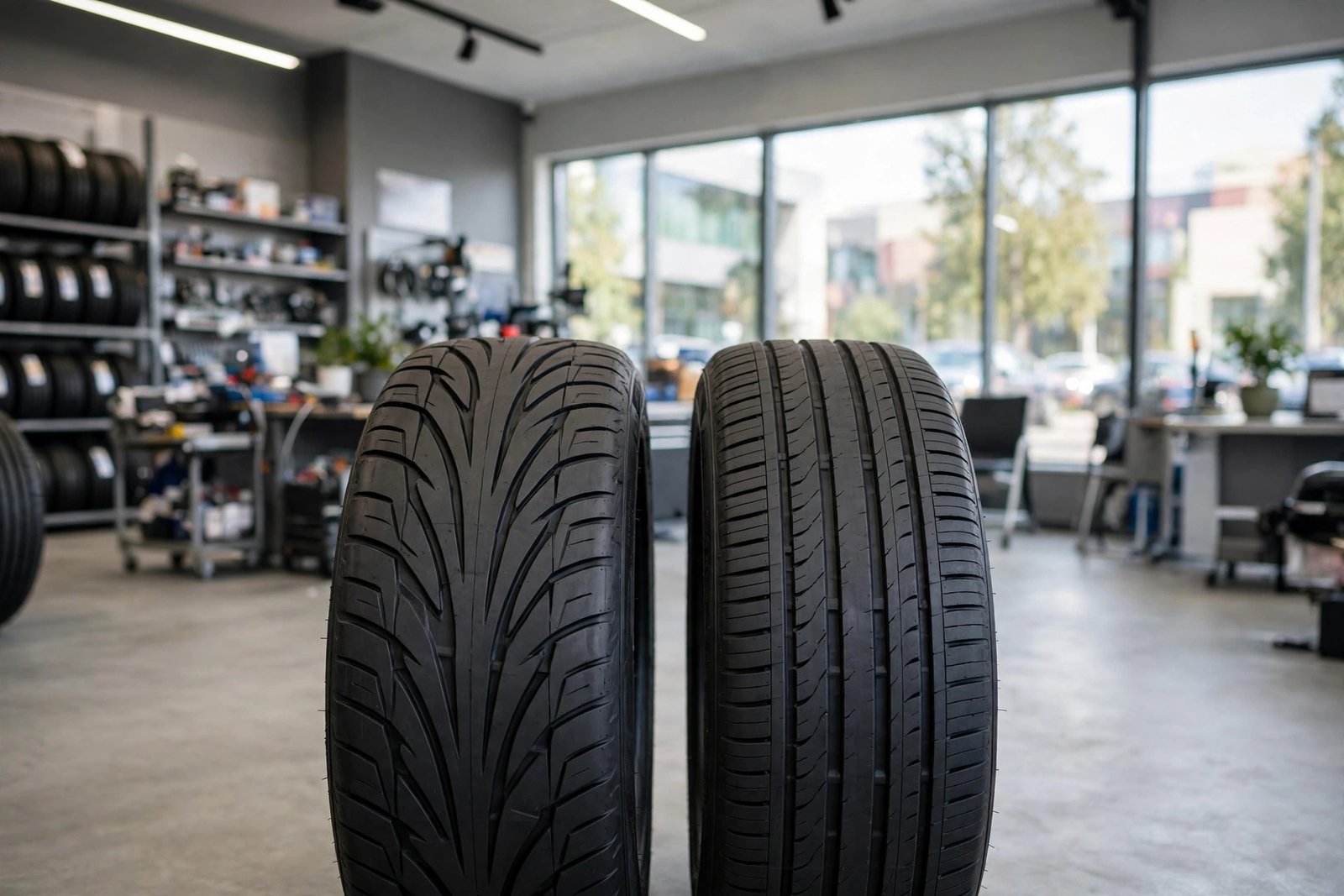
Quick answer: Continental is the better tire brand overall in 2026 — it wins the test record by a wide margin, stops shorter in the wet and in snow, and lasts longer in wear testing. Pirelli is the better buy when price and dry-road feel matter most: it is usually the cheaper tire, matches Continental on dry braking, and brings Formula 1-bred performance character to everyday tires. For most drivers, Continental is the safer default; for sporty drivers on a budget, Pirelli is genuinely tempting.
Continental and Pirelli are the two old Europeans of the tire world. Continental was founded in Hanover, Germany, in 1871; Pirelli followed a year later in Milan, Italy, in 1872. Both have spent more than 150 years building premium tires, both supply original equipment to the world’s biggest carmakers, and both now sell everything from quiet touring tires to track-ready performance rubber.
That shared history makes this a fair fight — and a confusing one for shoppers. A tire shop will happily sell you either brand, and both will feel like a big step up from a budget tire. The differences only show up when you look at hundreds of independent tests side by side, which is exactly what this guide does. Every test number below comes from published test aggregations and manufacturer warranty documents, not from a guess. Where the evidence is thin, this guide says so.
If you are still deciding between premium brands in general, our Goodyear vs Michelin breakdown covers the other big rivalry, and our Michelin vs Bridgestone comparison covers the two brands these two are usually measured against.
Continental vs Pirelli at a Glance
| Continental | Pirelli | |
|---|---|---|
| Founded | 1871, Hanover, Germany | 1872, Milan, Italy |
| Character | Balanced, test-winning all-rounder | Performance-led, sporty feel |
| Shared-test record | 274 wins | 100 wins |
| Owner rating | 7.5 / 10 (3,261 reviews) | 7.2 / 10 (2,410 reviews) |
| Wet braking (average) | ~126 ft | ~130 ft |
| Dry braking (average) | ~126 ft | ~125 ft |
| Snow braking (average) | ~78 ft | ~81 ft |
| Wear-test tread life (average) | ~27,772 miles | ~24,428 miles |
| Longest touring warranty | 80,000 miles (TrueContact Tour) | 70,000 miles (Cinturato P7 All Season Plus II) |
| Price | ~4.1% more on average | Cheaper in 83 of 119 tests |
| Famous for | Winning independent tests | Formula 1 sole tire supplier since 2011 |
The test record and owner scores come from Tire Reviews’ brand comparison, updated in November 2026, which aggregates 381 professional tests where both brands fielded a tire and 5,671 owner reviews.
What the Test Data Actually Says
Most tire comparisons quote one or two magazine tests. That is a weak way to judge a brand, because a single test covers one tire size on one car on one day. The brand-level record is far more honest: across 381 shared professional tests, Continental finished ahead in 274, Pirelli in 100, and 7 were drawn. Continental also beat more of the field on average, finishing ahead of about 84% of the tires in each test it entered, against about 63% for Pirelli.
Owners tell a similar story on a smaller scale. Continental averages 7.5 out of 10 across 3,261 owner reviews; Pirelli averages 7.2 across 2,410. Neither score is bad — both brands sit comfortably in premium territory — but the gap points the same way as the professional tests.
None of this means every Continental beats every Pirelli. Tire lines matter more than badges: a fresh Pirelli design can beat an aging Continental, and vice versa. The pattern below holds across each brand’s current lineup, but always compare the specific tire models for your car, not just the brand name. If you are unsure how to read a tire’s size and ratings, our guide to what tire numbers mean will help before you order.
Wet Performance: Continental’s Clearest Edge
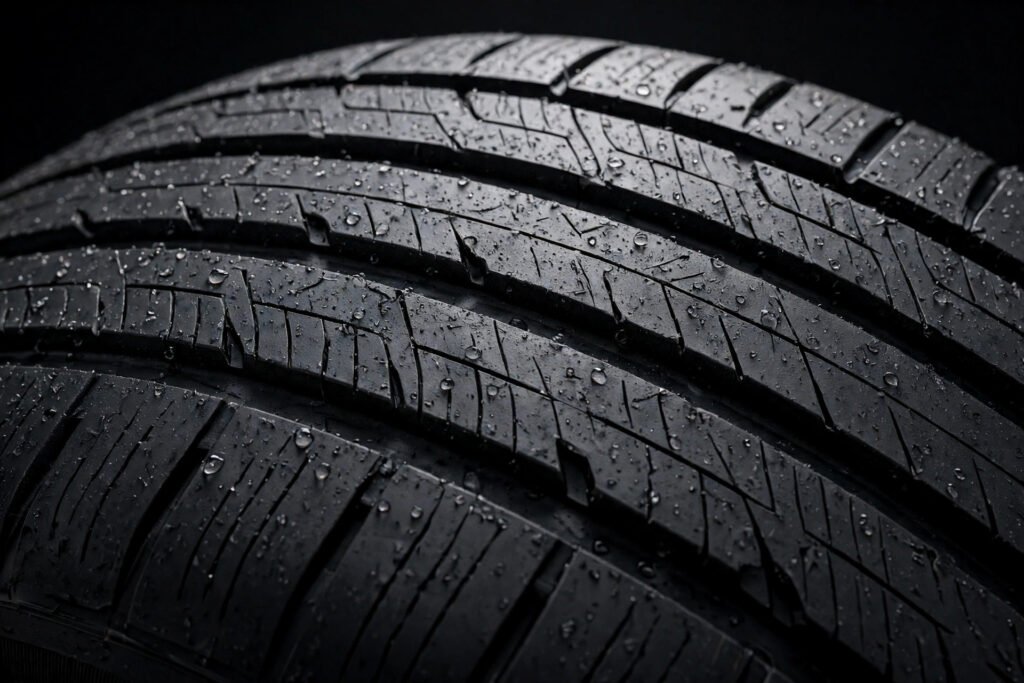
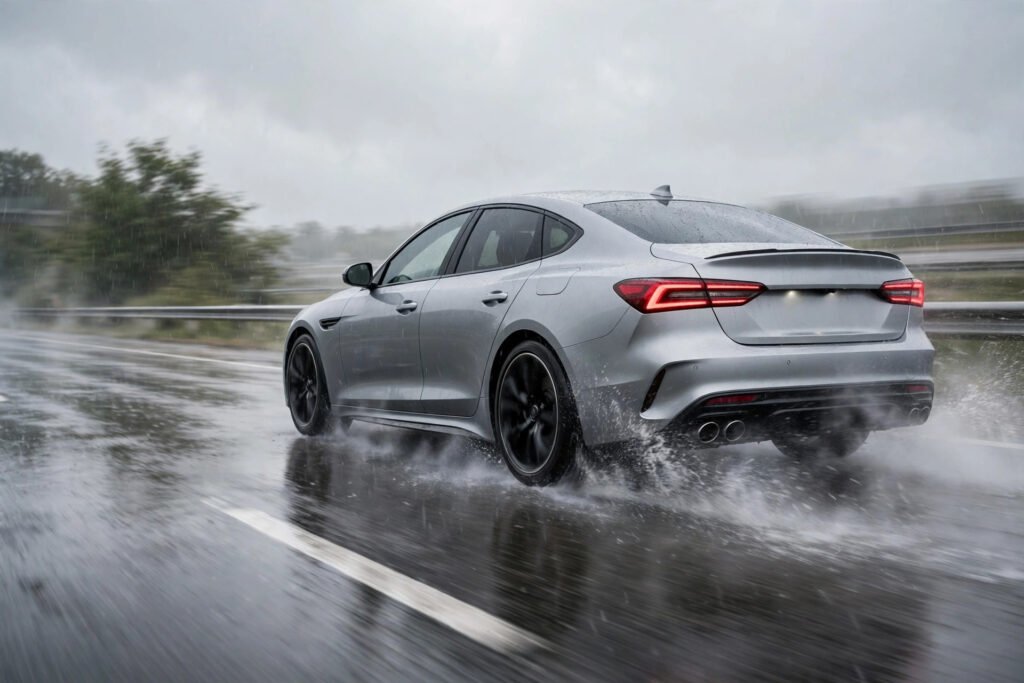
Rain is where tires earn their money, and it is where Continental builds its lead. Across shared tests, Continental averaged about 126 feet in wet braking against about 130 feet for Pirelli, winning 117 of 196 wet-braking comparisons. Four feet may not sound like much, but at highway speeds it is roughly a car length — the difference between stopping in time and not.
The pattern repeats in model-level comparisons. In the all-season segment, the Continental AllSeasonContact has been praised by testers for short wet stopping distances and stable, predictable wet handling, while the older Pirelli Cinturato All Season trailed it clearly on wet braking and aquaplaning. Continental’s wet advantage also shows up in its flagship performance all-season tire, the ExtremeContact DWS06 Plus, which independent testers consistently rate ahead of its Pirelli rival in wet conditions and winter traction.
Pirelli is not weak in the rain — far from it. Its tires post strong aquaplaning scores in several comparisons, and the P Zero All Season Plus earns good marks for all-season traction and control on wet roads. But across the whole body of testing, Continental is the rain tire of the two. If you drive in a wet climate, or your commute includes heavy downpours, that is the single most important difference in this comparison.
Dry Performance: Pirelli Fights Back
Take the rain away and the gap mostly disappears — and in one metric, Pirelli actually leads. Average dry braking across shared tests was about 126 feet for Continental and about 125 feet for Pirelli. That is effectively a tie, with Pirelli a nose ahead.
More importantly, Pirelli’s dry-road character is its strongest selling point. Testers consistently describe Pirelli tires as sharp, responsive, and confidence-inspiring when the road is dry. The P Zero All Season Plus is rated by reviewers as stronger in dry performance, ride comfort, and tread longevity than its Continental rival, with a smoother drive and reduced noise. The Pirelli P Zero line, built on the company’s Formula 1 experience as the sport’s sole tire supplier since 2011, gives sporty drivers the steering feel they want.
Continental answers with the ExtremeContact Sport and the DWS06 Plus, both of which testers rate slightly higher for outright dry grip in some comparisons. But the honest summary is this: on a dry road, you would struggle to tell these brands apart by stopping distance alone. Choose by feel — Pirelli for sharpness, Continental for composure — not by a braking chart.
Snow and Winter: Continental Ahead, but Close

Winter is Continental’s second-strongest area. In snow braking, Continental averaged about 78 feet against about 81 feet for Pirelli across shared tests. In direct winter-tire comparisons, the Continental WinterContact TS 860 won eleven of twelve head-to-heads against the Pirelli Cinturato Winter. That is a dominant record.
Look closer, though, and the gap narrows. Snow braking distances between the two winter tires were nearly identical — about 26.6 meters for the Continental against about 26.9 meters for the Pirelli — and the Pirelli posted an exceptional snow-circle cornering score, suggesting very strong lateral grip on packed snow. Pirelli’s winter tires are genuinely capable; Continental’s are just more consistent across every winter metric at once.
One practical note: both winter tires in that head-to-head have since been replaced by newer designs — the WinterContact TS 860 by the TS 870, and the Cinturato Winter by the Cinturato Winter 2. For real winter, a dedicated winter tire from either brand beats the best all-season tire from either brand. Our all-season vs winter tires guide explains where that line falls.
Touring Tires: The Daily-Driver Showdown
Most buyers are not shopping for track tires. They want a quiet, long-lasting all-season tire for a sedan, crossover, or minivan. Here the two brands’ flagships tell the story.
Continental TrueContact Tour. Continental’s long-mileage touring tire carries an 80,000-mile treadwear warranty on T- and H-rated sizes (70,000 miles on V-rated), with a UTQG treadwear rating of 800. It is the longest warranty in this comparison and one of the longest in the entire touring category. Continental has since folded the TrueContact Tour and the PureContact LS (70,000 miles, UTQG 700) into a single successor, the TrueContact Tour 54, which keeps the 80,000-mile warranty. If long life is your top priority, Continental’s touring line is hard to beat.
Pirelli Cinturato P7 All Season Plus II. Pirelli’s touring flagship carries a 70,000-mile treadwear warranty with a UTQG rating of 700 A A, per Pirelli’s own warranty document. It is a genuinely long-lasting tire, and owners praise its quiet, comfortable ride — but it gives away 10,000 miles of warranty coverage to the Continental, and in wear testing Pirelli’s tires averaged about 24,428 miles against Continental’s 27,772.
| Touring tire | Treadwear warranty | UTQG treadwear |
|---|---|---|
| Continental TrueContact Tour (T/H-rated) | 80,000 miles | 800 |
| Continental PureContact LS | 70,000 miles | 700 |
| Pirelli Cinturato P7 All Season Plus II | 70,000 miles | 700 |
For a high-mileage commuter, the Continental’s warranty edge is worth real money: 10,000 extra miles of coverage is most of a year of driving for the average American. But if you value a quiet cabin over maximum mileage, the Pirelli’s comfort-first character deserves a test drive — or at least a read of owner reviews for your exact size.
Performance All-Season: DWS06 Plus vs P Zero All Season Plus 3

This is the matchup most shoppers actually ask about: two ultra-high-performance all-season tires for sporty sedans and coupes.
| Continental ExtremeContact DWS06 Plus | Pirelli P Zero All Season Plus 3 | |
|---|---|---|
| Treadwear warranty | 50,000 miles | 50,000 miles |
| UTQG rating | 560 AA A | 560 AA A |
| Sizes | 16–22 inches | 17–20 inches (Plus); wider range for Plus 3 |
| Best at | Wet grip, winter traction, straight-line grip | Dry feel, ride comfort, quiet ride |
Yes, the two tires are tied on paper: identical 50,000-mile warranties and identical UTQG 560 AA A ratings. The difference is character. In Tire Rack’s ultra-high-performance all-season testing, the Continental came out ahead on wet performance and winter traction, while the Pirelli countered with a smoother, quieter ride and strong dry performance. The older Pirelli P Zero All Season Plus carried a UTQG 500 rating and a 55,000-mile warranty figure in some listings, but the current Plus 3 matches the Continental exactly at 560 — so compare the current versions, not old stock.
The DWS06 Plus also carries Continental’s signature touch: the letters D, W, and S molded into the tread, which wear away to tell you when dry, wet, or snow performance is fading. It is a small thing, but owners love it, and it is a good reminder to check your tread. Our guide to when to change your tires shows the warning signs in detail.
Comfort, Noise, and Fuel Efficiency
This is the closest part of the comparison. Average noise across shared tests was nearly identical — about 71.17 dB for Continental against about 71.13 dB for Pirelli — a difference no human ear could detect. Comfort scores in model-level tests are similarly close.
Rolling resistance is one place Continental pulls ahead: about 7.61 kg/t against about 8.05 kg/t for Pirelli on average, a small but real fuel-efficiency edge. Pirelli counters with ride quality — reviewers repeatedly call the P Zero All Season Plus smoother and more comfortable than its Continental rival.
Price and Value: Pirelli’s Best Argument
Here is where Pirelli makes its case. Pirelli was the cheaper tire in 83 of 119 shared test line-ups, and on average Continental cost about 4.1% more than Pirelli in like-for-like comparisons. Four percent is not a fortune — on a $200 tire it is about $8 — but across a set of four, plus the fact that Pirelli is cheaper more often than not, the savings add up.
Value is not price alone, though. Continental’s longer tread life can make it cheaper per mile despite the higher sticker price — but in the performance all-season class, where both flagships carry the same 50,000-mile warranty, Pirelli’s lower price is a genuine advantage with no longevity penalty attached.
Before you pay for either brand, compare the total installed price for four tires. Mounting, balancing, and disposal fees can erase an online bargain, and prices vary widely by size. Check Tire Rack, Discount Tire, and SimpleTire for your exact size, and remember that both brands’ warranties require regular rotation — Continental every 6,000 to 8,000 miles, Pirelli every 5,000 to 7,000 miles — to stay valid.

Pros and Cons
Continental
Pros: Wins the independent-test record by a wide margin; shortest wet and snow braking on average; longest touring warranty (80,000 miles); better rolling resistance; higher owner rating; DWS tread-wear indicators on performance tires.
Cons: Costs about 4.1% more on average; dry-road feel is composed rather than sharp; touring lineup was recently consolidated, so older model names can confuse shoppers.
Pirelli
Pros: Usually the cheaper tire; matches or beats Continental on dry braking; sharper, sportier steering feel; smoother and quieter ride in performance lines; Formula 1 pedigree and strong brand cachet; 60-day trial on select replacement lines.
Cons: Loses the test record decisively; shorter wet and snow braking on average; shorter tread life in wear testing; longest touring warranty is 10,000 miles behind Continental’s.
Which Should You Buy?
- Daily commuter, high mileage, wet climate: Continental. The TrueContact Tour’s 80,000-mile warranty and the brand’s wet-braking edge are built for you.
- Sporty sedan or coupe, dry climate, love driving: Pirelli. The P Zero All Season Plus 3 gives you the feel and the dry grip for less money.
- Snow Belt driver: Continental for the winter edge — but buy a dedicated winter tire from either brand before trusting any all-season tire in deep snow.
- Budget-conscious premium buyer: Pirelli. It is cheaper more often than not, and in the performance class the warranty is identical.
- SUV or crossover: Either brand works — compare the specific models. Pirelli’s Scorpion line is its SUV answer, while Continental’s CrossContact and TerrainContact lines cover the same ground.
If you are coming from a budget tire, our best budget tires guide shows how much performance you give up at half the price — and how little, in some cases.
The Verdict
Continental vs Pirelli is not a mismatch; it is a genuinely close rivalry between two premium brands with 150 years of history each. But the weight of evidence points one way: Continental is the better tire brand for most drivers in 2026. It wins 274 of 381 shared professional tests, stops shorter in the wet and in snow, lasts longer in wear testing, and backs its touring tires for up to 80,000 miles. If you want the tire most likely to be the best in its class, buy Continental.
Pirelli’s case is narrower but real. It is usually cheaper, it matches Continental on dry braking, and it delivers the sharp, sporty feel that makes driving fun. If you drive a sporty car in a mostly dry climate and you would rather save money and enjoy the steering than chase the last foot of wet braking distance, Pirelli is the right call — and you will not regret it.
Either way, buy four matching tires, keep them inflated, and rotate them on schedule. That matters more than the badge on the sidewall. And if your car pulls to one side or your tires wear unevenly, read our guide to tire balancing vs alignment before you blame the tires.
Frequently Asked Questions
Which is better, Continental or Pirelli tires?
On independent test evidence, Continental comes out ahead overall. Across 381 shared professional tests, Continental finished ahead of Pirelli 274 times to 100, with 7 draws, and owners rate Continental 7.5 out of 10 versus 7.2 for Pirelli. Pirelli fights back on dry braking and price, where it is usually the cheaper tire.
Are Continental tires better in the rain than Pirelli?
Yes, on average. Across shared professional tests, Continental averaged about 126 feet in wet braking versus about 130 feet for Pirelli, winning 117 of 196 wet-braking comparisons. The gap is small on any single tire, but it is consistent across many tests.
Do Continental or Pirelli tires last longer?
Continental, in most comparable lines. In wear testing, Continental tires averaged about 27,772 miles versus about 24,428 miles for Pirelli. Continental’s TrueContact Tour carries up to an 80,000-mile warranty, while Pirelli’s longest touring warranty, on the Cinturato P7 All Season Plus II, is 70,000 miles.
Are Pirelli tires more expensive than Continental?
Usually the opposite. Pirelli was the cheaper tire in 83 of 119 shared test line-ups, and on average Continental cost about 4.1% more than Pirelli in like-for-like comparisons. Pirelli is the value pick of the two premium brands; Continental charges a small premium for its test-record edge.
Which Continental tire compares to the Pirelli P Zero All Season Plus?
The Continental ExtremeContact DWS06 Plus. Both are ultra-high-performance all-season tires with a 50,000-mile treadwear warranty. The newest Pirelli version, the P Zero All Season Plus 3, matches the Continental’s UTQG 560 AA A rating exactly. Continental generally wins on wet grip and winter traction; Pirelli wins on dry feel and ride comfort.
Is Pirelli or Continental better for winter driving?
Continental has the stronger winter record in head-to-head testing — its WinterContact TS 860 won eleven of twelve direct comparisons against the Pirelli Cinturato Winter — but the two were nearly identical in snow braking distance. For heavy snow, either brand’s dedicated winter tire beats any all-season tire from either brand.