
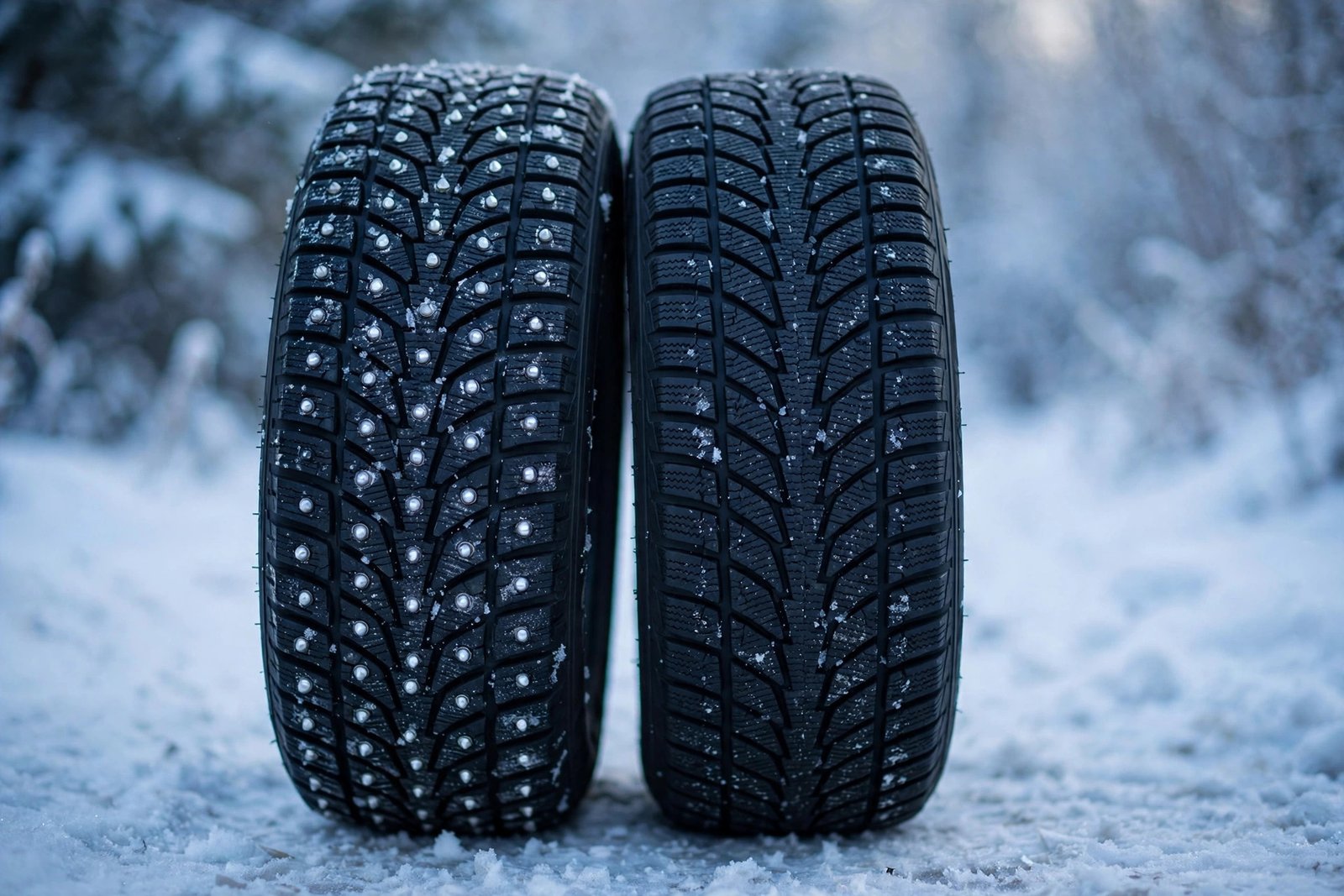
Quick answer: On glare ice, studded tires win clearly — up to 28% shorter stops in independent 2025 testing. Everywhere else, studless tires match or beat them: snow, wet roads, dry roads, noise, and comfort. Unless your roads stay frozen for weeks at a time or your state allows studs, a premium studless tire is the better buy for most American drivers.
Studded vs Studless at a Glance
| Studded winter tires | Studless winter tires | |
|---|---|---|
| Ice braking (50–0 km/h, TM 2025) | 33.9 m (Hakkapeliitta 10) | 47.1 m (VikingContact 8) |
| Snow braking (TM 2025) | 50.3 m | 49.6 m — studless wins |
| Dry braking (TM 2025) | 32.4 m | 31.4 m — studless wins |
| Ice handling lap (TM 2025) | 58.77 s | 54.99 s — studless wins |
| Noise | +4–10 dB louder, clicking/buzzing | Quiet, like a normal tire |
| Best surface | Glare ice near freezing | Snow, slush, wet, dry |
| Legal in the US | Banned in ~10 states, seasonal in ~30 | Legal everywhere |
| Typical lifespan | 5–6 seasons on ice; 2–3 on bare roads | 3–5 winter seasons |
| Cost (set of 4, 2026) | ~$400–$1,800 | ~$400–$1,800 |
| Best for | Frozen rural roads, steep icy hills | Mixed winters, plowed roads, cities |
Test figures are from the 2025 Tekniikan Maailma winter tire test (205/55 R16) comparing the Nokian Hakkapeliitta 10 (studded) and Continental VikingContact 8 (studless). Results vary by tire model, size, and conditions.
Ice: The One Place Studs Clearly Win
This is the whole argument for studded tires, and it is real. On glare ice — the smooth, polished sheet that forms after freezing rain or a melt-and-refreeze cycle — metal studs bite into the surface where rubber alone slides.
The numbers back it up. In the 2025 Tekniikan Maailma test, the studded Nokian Hakkapeliitta 10 stopped from 50 km/h in 33.9 metres. The best studless tire in the same test, the Continental VikingContact 8, needed 47.1 metres. That is a 28% shorter stop — roughly two car lengths at city speed. A Washington State DOT study found a smaller but still meaningful gap of about 15% in favour of studded tires on glare ice.

An Engineering Explained test on a frozen lake made the difference even starker: the same tire stopped from 30 mph in 92 feet with studs versus 182 feet without them. That was one test on one surface, but it shows the physics clearly — on pure ice, studs are in a different league.
The catch is the temperature window. Studs work best near freezing, roughly 20–32 °F (−7 to 0 °C), where the ice is soft enough for the metal pins to penetrate. In deep cold, below about 0 °F, ice gets so hard that studs barely scratch it, and the advantage shrinks. And on anything that is not ice — snow, slush, wet asphalt, dry asphalt — the studs do nothing, or actively hurt (see below).
If your winter means weeks of unplowed, frozen roads, steep icy driveways, or regular freezing rain, studs are the safest choice you can buy. For everyone else, keep reading.
Snow, Wet, and Dry: Studless Takes the Lead
Here is the part that surprises most people: on snow, studded tires are not better. In the same 2025 Tekniikan Maailma test, the studless Continental stopped on snow in 49.6 metres versus 50.3 for the studded Nokian — essentially tied, with studless a nose ahead. That makes sense once you think about it: on snow, grip comes from the tread biting into the snow and the soft rubber compound staying flexible in the cold. Studs add nothing on a surface they cannot penetrate.

On wet and dry pavement, studless wins outright. The studless tire stopped 3% shorter on dry asphalt in the test, and it was faster around the ice-handling course too (54.99 seconds versus 58.77). Studs actually lift the rubber slightly off bare pavement, which lengthens braking distances and dulls handling. They also hurt aquaplaning resistance: in the 2025 Teknikens Värld test, studded tires started aquaplaning at 57–67 km/h while Central European studless tires held on to 75–77 km/h.
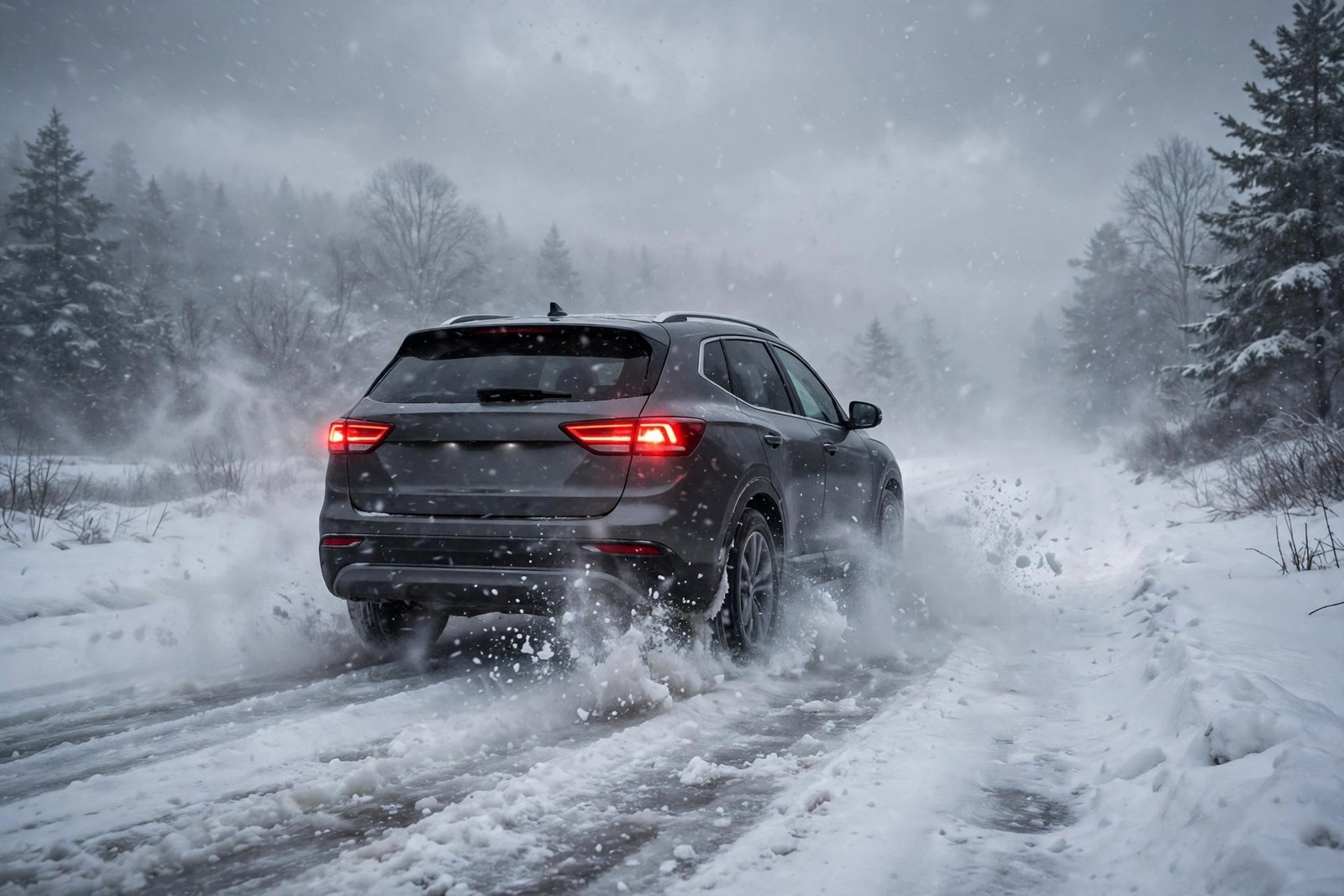
The overall verdict from both 2025 tests is the same: the gap between the best studded and best studless tires has become negligible. The top studless tires would have tied for second place in the studded group. Studs remain the king of ice, but for the other 95% of winter driving, studless is equal or better.
Noise, Comfort, and Road Damage: The Daily Cost of Studs
This is where studded tires lose the daily-driver argument. Metal studs on bare pavement make a constant clicking, buzzing sound. Estimates put the increase at roughly 4–10 decibels over the same tire without studs — enough to be clearly audible and tiring on a long highway drive. Studless winter tires sound like normal tires.
There is also the wear question. Studs are designed to bite ice, not asphalt. Driving them on bare, wet, or dry pavement wears the studs down and shortens the tire’s useful life: about 5–6 winter seasons if you mostly drive on ice and packed snow, but only 2–3 seasons if bare pavement is common. Studless tires typically last 3–5 winter seasons, and some carry real warranties — the Michelin X-Ice Snow has a 40,000-mile treadwear warranty, which is unusual for a winter tire.
Then there is the road itself. Studs grind ruts into asphalt. Alaska attributes about $13.7 million a year in repaving costs to studded tires, and studies have found studded passenger tires cause far more rutting than heavy trucks on the same roads. Asphalt life on heavily studded routes drops from around 15 years to 6–8 years. That is exactly why so many states restrict them.

Legality: Check Before You Buy
This is the factor that decides the question for millions of drivers before performance even enters the picture.
Roughly 10 states ban metal studs outright. The consensus list includes Alabama, Florida, Hawaii, Illinois, Louisiana, Michigan, Minnesota, Mississippi, Texas, and Wisconsin. About 30 more states allow studs only during a set winter window — commonly November 1 to March 31, or November to April 30 depending on the state. Only a handful of states, including Colorado, New Hampshire, Vermont, Wyoming, and Kentucky, allow them year-round.
Fines for running studs out of season typically run $50–$200 — Washington charges about $137, Oregon close to $200. A few states have visitor exceptions (Wisconsin and Minnesota allow out-of-state vehicles up to 30 days), but Illinois has no general visitor exception at all.
Two warnings: state laws change, and sources disagree on a few states (notably California and Michigan), so verify the current rule on your state DOT’s website before buying. If you regularly drive across state lines, a studded set that is legal at home can become a ticket one state over. Studless tires have no such problem — they are legal everywhere, all year.
What Do They Cost?
A set of four winter tires runs roughly $400–$1,800 in 2026 US prices, depending on size and brand — and the studded versus studless price difference is small. Studding itself and the twice-yearly changeovers add some cost and planning, but the tire price is driven far more by size and brand than by studs.
The real cost comparison is lifespan: a studded set that spends most of its life on bare pavement may need replacing in 2–3 seasons, while a studless set used the same way lasts 3–5. Over five winters, the studless tire can easily be the cheaper option — before you count the noise and the legal risk.
The Best Tires in Each Camp (2025–2026)
If you have decided, here are the models that independent testing keeps putting at the top.
Studded: the Nokian Hakkapeliitta 10 is the benchmark — it won the 2025 Tekniikan Maailma studded test and scored a perfect 80/80 on ice and snow braking in the Teknikens Värld test. The Michelin X-Ice North 4 and Bridgestone Blizzak Spike 3 are strong alternatives, and the Goodyear UltraGrip Ice Arctic 2 finished second in the studded category in Teknikens Värld 2025. On a budget, the General AltiMAX Arctic 12 is studdable and well regarded.
Studless: the Nokian Hakkapeliitta R5 is Consumer Reports’ top-rated winter tire for cars and crossovers. The Michelin X-Ice Snow is a perennial top-three finisher with that 40,000-mile warranty, and a new X-Ice SNOW+ launches for winter 2026–27. The Continental VikingContact 8 was the strongest all-rounder in the 2025 tests, the Bridgestone Blizzak WS90 is the safe mainstream pick, and the Goodyear UltraGrip Ice 3 is a confident all-rounder.
For a deeper brand comparison, see our Goodyear vs Michelin tires breakdown. And if you are still deciding between winter tires and all-seasons, our all-season vs winter tires guide covers that choice.
Which Should You Buy?
Buy studded tires if: your roads stay frozen for weeks, you face regular freezing rain or glare ice, you live on steep icy hills or unplowed rural roads, your state allows them for your full winter, and you do not mind the noise. Studs are the maximum-safety option on ice — full stop.
Buy studless tires if: your winter is mixed (plowed roads, slush, wet and dry spells), you drive mostly in a city or suburb, you cross state lines, your state bans or restricts studs, or you value a quiet ride. Modern premium studless tires match studded tires everywhere except glare ice — and beat them on snow, wet, and dry roads.
Either way: buy a full set of four, not two. Mixing winter tires with all-seasons (or studded with studless) creates an imbalance that can spin the car in a slide. Mount them when temperatures consistently drop below 45 °F and take them off in spring — winter rubber wears fast in warm weather. Check your state’s stud dates now, before the first freeze, so you are not shopping in a panic.

Frequently Asked Questions
Do studded tires really stop faster on ice?
Yes, on glare ice. In the 2025 Tekniikan Maailma test, the studded Nokian Hakkapeliitta 10 stopped from 50 km/h in 33.9 metres versus 47.1 metres for the studless Continental VikingContact 8 — about 28% shorter. On snow, wet, and dry pavement, studless tires match or beat studded ones.
Are studded tires legal in the US?
It depends on your state. About 10 states ban metal studs outright, including Michigan, Minnesota, Illinois, Texas, and Florida. Around 30 states allow them only during a set winter window, typically November to March or April. Fines for running studs out of season run $50 to $200. Always check your state DOT before buying.
Are studless winter tires good enough on ice?
For most drivers, yes. Modern premium studless tires have nearly closed the gap — in 2025 independent tests the best studless tires essentially tied the best studded tires overall. Studs still win clearly on glare ice near freezing, but studless tires are better on snow, wet, and dry roads and are much quieter.
How long do studded and studless winter tires last?
A studded set lasts about 5 to 6 winter seasons if used mostly on ice and packed snow, but only 2 to 3 seasons with frequent bare-pavement driving. Studless tires typically last 3 to 5 winter seasons. The Michelin X-Ice Snow carries a 40,000-mile treadwear warranty.
Are studded tires noisy?
Yes — noticeably. Studs add roughly 4 to 10 decibels over the same tire without studs, with a clicking or buzzing sound on bare pavement that many drivers find tiring on long drives. Studless winter tires are far quieter.
Which is better for snow: studded or studless?
Studless, by a small margin. In the 2025 Tekniikan Maailma test, the studless Continental VikingContact 8 stopped on snow in 49.6 metres versus 50.3 metres for the studded Nokian Hakkapeliitta 10. Studs only help on ice — on snow, the rubber compound and tread design do the work.