

Quick answer: The Santa Fe is the stronger all-rounder — 277 hp as standard, more room where a 3-row buyer feels it, and a new torque-converter automatic for 2026 that replaces the recalled dual-clutch. The Sorento is the smarter buy if price and efficiency matter most: it starts $2,765 cheaper, sips less fuel, and is the only one of the pair with a plug-in hybrid. Both share the same platform, wheelbase, and 10-year powertrain warranty.
Quick Specs Head-to-Head
| Spec | 2026 Kia Sorento | 2026 Hyundai Santa Fe |
|---|---|---|
| Starting price (incl. destination) | $33,885 (LX) | $36,650 (SE) |
| Price range (gas, ex-dest.) | $32,390–$47,790 | $35,050–$50,500 |
| Base engine | 2.5L 4-cyl, 191 hp / 181 lb-ft | 2.5L turbo 4-cyl, 277 hp / 311 lb-ft |
| Strongest gas engine | 2.5L turbo, 281 hp / 311 lb-ft | Same 277 hp (only gas engine) |
| Hybrid | 227 hp, 37 mpg combined (FWD) | 231 hp, 36 mpg combined (FWD) |
| Plug-in hybrid | Yes — 261 hp, 74 MPGe, ~31 mi EV range | No |
| Transmission (gas) | 8-speed auto (base); 8-speed DCT (turbo) | NEW 8-speed torque-converter auto |
| Best fuel economy (gas) | 23 city / 31 hwy / 26 combined (FWD) | 20 city / 29 hwy / 24 combined (FWD) |
| Max towing | 4,500 lbs (X-Pro) | 4,500 lbs (XRT) |
| Seating | 7 seats standard | 7 seats standard (6 on Calligraphy) |
| Cargo (behind 3rd / max) | 12.6 / 75.5 cu ft | 14.6 / 79.6 cu ft |
| NHTSA overall safety | 5 stars | 5 stars (gas; hybrid 4 stars) |
| IIHS | Top Safety Pick+ (built after Sept 2025) | Top Safety Pick+ |
| Basic warranty | 5 yr / 60,000 mi | 5 yr / 60,000 mi |
| Powertrain warranty | 10 yr / 100,000 mi | 10 yr / 100,000 mi |
| Free scheduled maintenance | No | Yes — 3 yr / 36,000 mi |
| Edmunds rating | 7.7/10 | 7.5/10 |
Prices include destination unless noted. Figures are typical 2026 US model-year ratings and vary by trim, drivetrain, and options. Confirm exact specs with your dealer before buying.
Price: The Sorento Is Cheaper — But Read the Power Gap First
The Sorento starts at $33,885 including destination; the Santa Fe starts at $36,650. That $2,765 gap is real money, and it is the Sorento’s biggest selling point.
But the gap comes with a catch that changes the math. The Sorento’s base engine is a 191-hp naturally aspirated 2.5-litre four-cylinder. The Santa Fe’s only gas engine — standard on every trim — is a 277-hp turbo. That is an 86-hp and 130 lb-ft difference at the entry level. To match the Santa Fe’s power in a Sorento, you must step up to the turbo model (281 hp), which costs roughly $4,000 more and drops fuel economy.
So the honest price comparison is this: a $33,885 Sorento is cheaper but noticeably slower than a $36,650 Santa Fe. A turbo Sorento with comparable power costs about the same as the Santa Fe — and the Santa Fe still gives you more space and the new transmission. If your budget is truly capped near $34,000, the Sorento is the only one of the pair you can buy. If you can stretch to $37,000, the Santa Fe gives you more for the money.
Want to play with the numbers yourself? Our car comparison tool lets you line up any two vehicles side by side on the specs that matter to you.
Engines and Performance: Four Choices vs Two
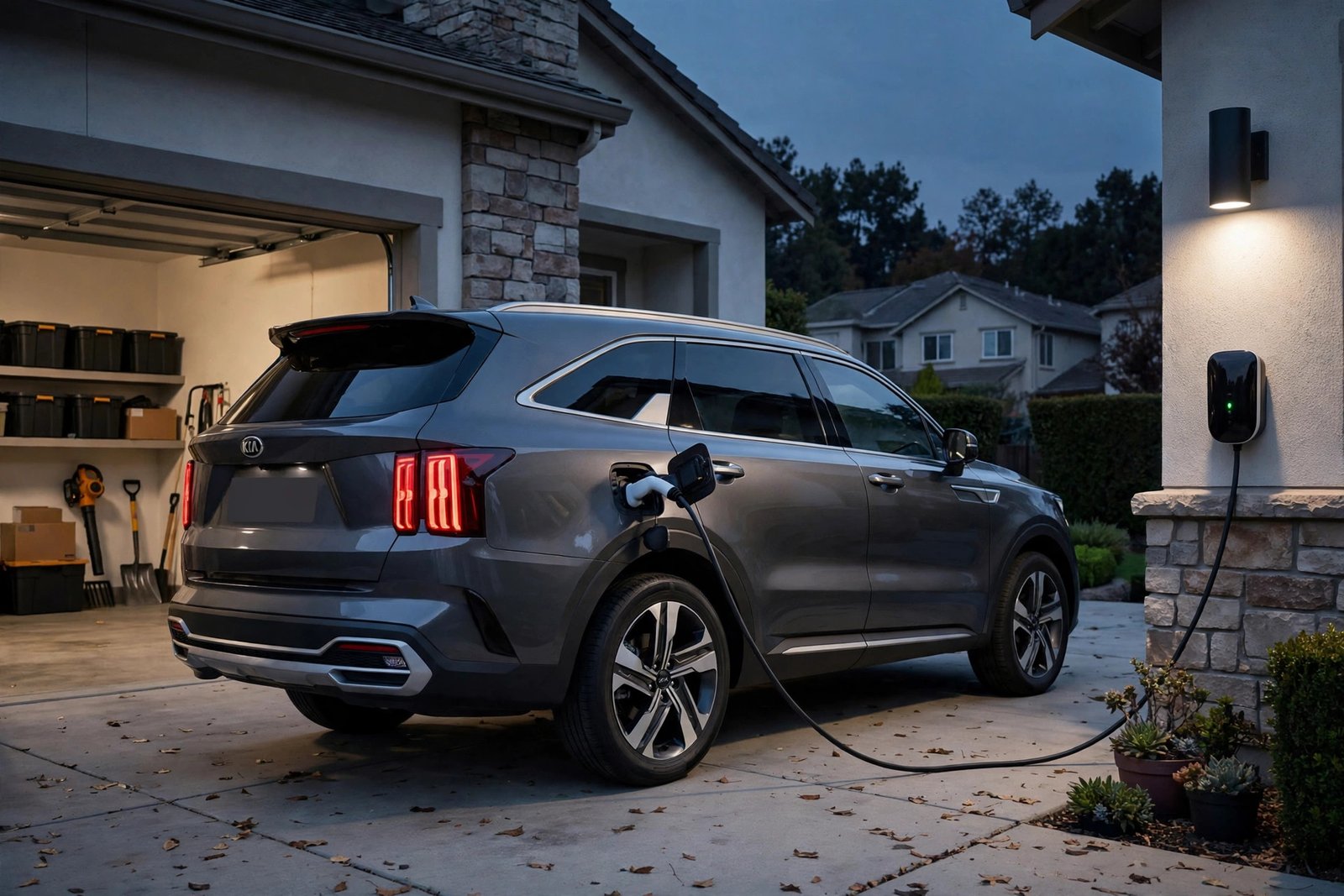
The Sorento offers the widest powertrain menu in the class: a 191-hp base four, a 281-hp turbo four, a 227-hp hybrid, and a 261-hp plug-in hybrid rated at 74 MPGe with about 31 miles of electric-only range. If you can charge at home, the PHEV is a genuine money-saver — and the Santa Fe has no answer to it at any trim.
The Santa Fe keeps it simple: one 277-hp turbo gas engine, plus a 231-hp hybrid. No weak base engine, no PHEV. The hybrid is the efficiency play, rated at up to 36 mpg combined.
In instrumented testing, the turbo Sorento AWD hits 0–60 mph in 6.7 seconds; the Santa Fe XRT AWD does it in 7.2 seconds. The Sorento’s turbo is the quicker of the two when both are fully powered — but the Santa Fe never makes you pay extra to avoid a slow engine, which is the more common real-world frustration.
The 2026 Transmission Story: The Difference Nobody Talks About Enough
This is the most consequential difference between the two SUVs, and the least covered by dealer comparison pages.
For 2026, Hyundai replaced the Santa Fe’s 8-speed dual-clutch transmission with a conventional 8-speed torque-converter automatic. The dual-clutch had been subject to a recall that in some cases required replacement transmissions. The new gearbox is smoother in stop-and-go traffic and removes the reliability question mark entirely.
Kia kept the dual-clutch in the turbo Sorento for 2026. The base Sorento uses a conventional 8-speed automatic, so the issue only affects turbo models — but those are the models most buyers cross-shop against the Santa Fe. If long-term transmission peace of mind matters to you, the Santa Fe’s 2026 change is a genuine reason to pick it.
Fuel Economy: Sorento Wins, But Check the Real World
On paper, the Sorento wins. Base gas: 26 mpg combined versus 24 for the Santa Fe. Hybrid: 37 mpg combined (FWD) versus 36 for the Santa Fe Hybrid. The PHEV stretches further still at 74 MPGe.
The real-world picture is more nuanced. Edmunds’ long-term Santa Fe Hybrid test returned 26.7 mpg in actual driving against a 34 mpg EPA combined rating for the AWD model — a significant gap worth knowing about before you buy on the EPA number alone. The Sorento Hybrid’s real-world figures have not shown the same shortfall in published testing.
Over five years and 60,000 miles at $4 a gallon, one independent cost model puts the Sorento $1,792 cheaper to own overall ($27,785 versus $29,577), mostly from the lower purchase price. Hyundai counters with 3 years / 36,000 miles of complimentary scheduled maintenance; Kia includes none. That free maintenance narrows — but does not erase — the Sorento’s cost advantage.
Check any configuration’s official ratings at fueleconomy.gov before you buy.
Space: Santa Fe Wins Where You Feel It, Sorento Wins One Measurement
The two SUVs share the same 110.8-inch wheelbase and the same 74.8-inch width — they are platform twins, and it shows. But Hyundai packaged the Santa Fe’s extra length better for passengers.
The Santa Fe gives you 14.6 cubic feet behind the third row versus 12.6 for the Sorento, 79.6 cubic feet maximum versus 75.5, and 3 inches more front legroom (44.4 versus 41.4 inches). Those are the numbers a 3-row buyer actually feels: the Santa Fe’s third row is more usable, and its cargo area swallows more with all seats up.

The Sorento wins exactly one space measurement: 45.0 cubic feet behind the second row versus 40.5 for the Santa Fe. If your third row stays folded permanently, the Sorento is actually the roomier car. Both third rows are kids-and-short-trips only — neither is a genuine adult seat, and neither competes with a Telluride or Pilot on third-row room.
Practical touches favour the Santa Fe: a wide tailgate opening, a lockable flush grab handle for roof access, and dual wireless chargers on higher trims. The Sorento counters with a smart power tailgate and available captain’s chairs.

Towing: A Tie at the Top
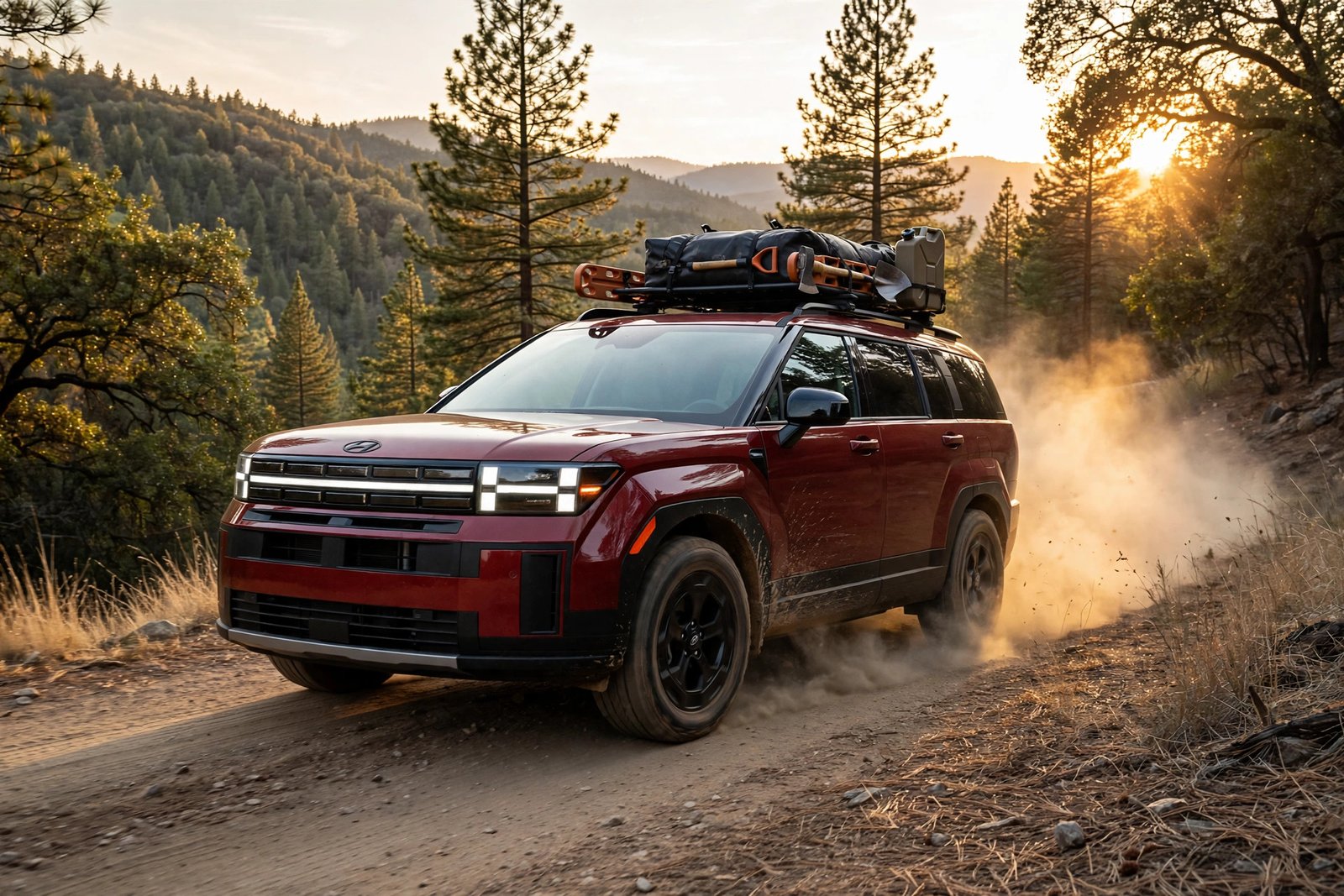
Both SUVs max out at 4,500 lbs — the Sorento X-Pro and the Santa Fe XRT. Standard towing favours the Santa Fe: 3,500 lbs on the gas model versus 2,000 lbs for the base Sorento. The Sorento’s turbo raises that to 3,500 lbs, and only the X-Pro reaches the 4,500-lb maximum.
The Santa Fe Hybrid tows just 2,000 lbs, so if you tow and want a hybrid, the Sorento Hybrid is the better bet. Either way, 4,500 lbs covers a small camper, a pair of jet skis, or a loaded utility trailer — but neither SUV is a serious tow vehicle compared with a body-on-frame truck.
Safety: Both Top-Rated, With One Caveat Each
Both SUVs earn five stars overall from NHTSA (the Santa Fe Hybrid drops to four stars) and both carry IIHS Top Safety Pick+ awards. Standard driver assists are comprehensive on both: automatic emergency braking, lane keeping, blind-spot monitoring, adaptive cruise, and rear cross-traffic alert.
Two caveats worth knowing. The Sorento’s IIHS Top Safety Pick+ applies only to models built after September 2025 — earlier 2026 builds do not carry the award, so check the build date on the door jamb. And the Santa Fe Hybrid’s four-star NHTSA overall rating (versus five for the gas model) is a small but real difference if you are buying the hybrid.
Warranties are identical and class-leading: 5 years / 60,000 miles basic, 10 years / 100,000 miles powertrain. The only difference is Hyundai’s free maintenance; Kia has none. You can look up the full crash-test details at iihs.org.
Reliability and Resale: A Wash With Different Strengths
Both SUVs score 4.0 out of 5 on RepairPal’s reliability scale. The Santa Fe ranks #2 of 26 midsize SUVs on that measure, the Sorento #12 of 29 compact SUVs — different segments, similar scores. Estimated annual repair costs run about $515 for the Santa Fe and $448 for the Sorento.
On resale, the data is mixed: one data-driven comparison gives the Santa Fe the edge on retained value, while another shows the Sorento depreciating less in absolute dollars because it starts cheaper. Neither is a standout or a disaster — both hold value about average for the class. Our most reliable cars roundup has more on which brands hold up best.

Which One Should You Buy?
Buy the Hyundai Santa Fe if: you want the strongest standard engine (277 hp, no weak base), the most passenger and cargo room, the new torque-converter automatic, free scheduled maintenance, or the XRT’s rugged look with 4,500-lb towing.
Buy the Kia Sorento if: your budget is capped near $34,000, you want the best fuel economy, you can charge at home and want the plug-in hybrid, you want four powertrain choices, or your third row stays folded and you value the extra behind-second-row cargo space.
Either way: drive both back to back, check the build date on any Sorento (IIHS award applies only to post-September 2025 builds), and confirm the exact price and MPG of the trim you are buying — the headline figures only apply to specific builds. Full specs live on kia.com and hyundaiusa.com.
Frequently Asked Questions
Which is better, the 2026 Kia Sorento or the Hyundai Santa Fe?
It depends on your priorities. The Santa Fe wins on standard power (277 hp vs the Sorento’s 191 hp base engine), space, and its new 2026 torque-converter automatic. The Sorento wins on price (from $33,885 vs $36,650 including destination), fuel economy, and powertrain choice — it is the only one with a plug-in hybrid.
How much does a 2026 Sorento vs Santa Fe cost?
The 2026 Kia Sorento starts at $33,885 including destination and the 2026 Hyundai Santa Fe starts at $36,650 including destination — a $2,765 gap. The Sorento tops out around $47,790 and the Santa Fe around $50,500 before destination.
Does the 2026 Santa Fe have a new transmission?
Yes. For 2026 Hyundai replaced the Santa Fe’s 8-speed dual-clutch transmission with a conventional 8-speed torque-converter automatic. The dual-clutch had been subject to a recall. The turbo Sorento still uses an 8-speed dual-clutch for 2026.
Which gets better gas mileage, the Sorento or the Santa Fe?
The Sorento, slightly. The base Sorento is rated at 26 mpg combined versus 24 for the gas Santa Fe. The Sorento Hybrid manages 37 mpg combined (FWD) versus 36 for the Santa Fe Hybrid. In real-world testing, the Santa Fe Hybrid returned 26.7 mpg against a 34 mpg EPA rating.
Does the Kia Sorento or Hyundai Santa Fe have a plug-in hybrid?
Only the Sorento. The 2026 Kia Sorento Plug-in Hybrid makes 261 hp, is rated at 74 MPGe, and offers about 31 miles of electric-only range. The Santa Fe offers a regular hybrid but no plug-in hybrid in the US.
Which tows more, the Sorento or the Santa Fe?
It is a tie at the top: both max out at 4,500 lbs (Sorento X-Pro and Santa Fe XRT). Standard towing favours the Santa Fe — 3,500 lbs versus 2,000 lbs for the base Sorento.