
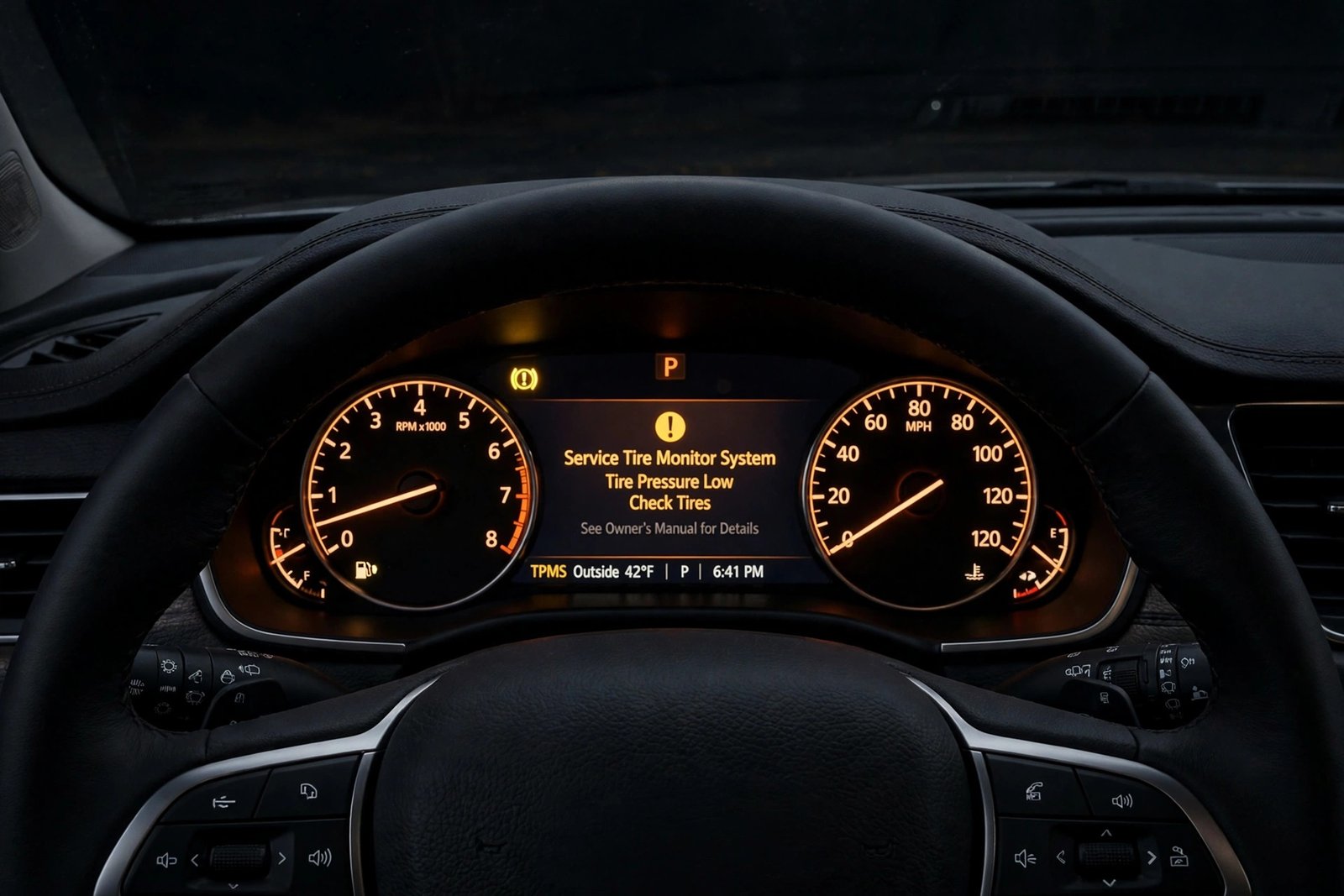
You are driving along when a message pops up on your dashboard: SERVICE TIRE MONITOR SYSTEM. Your first thought is probably that a tire is low on air. That is the natural guess — and it is usually wrong.
Quick Answer
"Service Tire Monitor System" means your car has detected a fault in the Tire Pressure Monitoring System (TPMS) itself. The system that watches your tire pressure may not be working, so it cannot warn you reliably if a tire goes low. The tires may be perfectly fine — the problem is the monitoring system, not the air in your tires.
Adding air will not clear it — only fixing the faulty sensor or system will.
What Is the Tire Pressure Monitoring System (TPMS)?
The Tire Pressure Monitoring System is a safety feature fitted to nearly every car built since 2008, when it became mandatory on new US vehicles under the TREAD Act. Its job is simple: watch the air pressure in your tires and warn you before an underinflated tire causes a blowout, ruins a tire, or hurts your fuel economy.
There are two types:
| System | How it works | Where you find it |
|---|---|---|
| Direct TPMS | A sensor inside each wheel measures the actual pressure and sends it wirelessly to the car’s computer | Most US cars, including all GM vehicles (Chevrolet, GMC, Buick, Cadillac) |
| Indirect TPMS | The ABS system watches wheel rotation speeds and guesses when a tire is low, because an underinflated tire spins faster | Some Honda, Toyota, and European models |
The message is most common on GM vehicles, because that is the exact wording GM uses in the Driver Information Center. Other brands show the same fault differently — a flashing TPMS light, a "TPMS Malfunction" message, or a "Check Tire Pressure Monitoring System" alert — but the meaning is the same on every car.
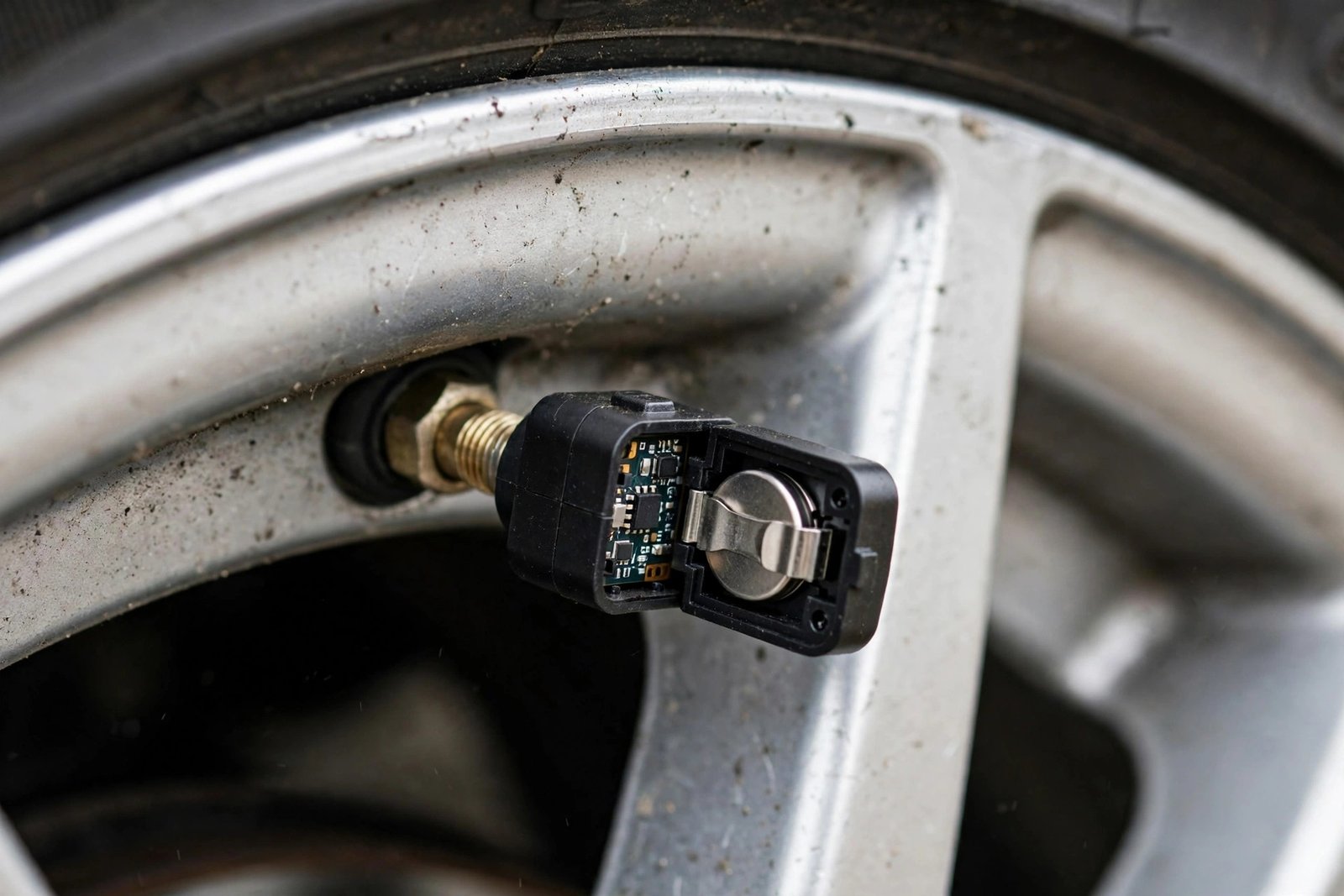
Service Tire Monitor System vs. Low Tire Pressure
This is the point most drivers get wrong.
| Warning | What it means | The sensor is… | What to do |
|---|---|---|---|
| Low Tire Pressure light (horseshoe symbol, solid) | One or more tires is 25% or more below the recommended pressure | Working fine — it caught a real problem | Inflate all four tires to the door jamb pressure |
| Service Tire Monitor System message (text on the dashboard) | The TPMS itself has a fault — a dead sensor, a damaged sensor, or a communication failure | Not working reliably, or not communicating at all | Check pressures with a gauge, then get the system scanned |
| TPMS light flashes for 60–90 seconds, then stays solid | A TPMS malfunction, per NHTSA | Faulty | The system needs diagnosis, not air |
The low-pressure light means the system works and your tire has a problem; the service message means your tire may be fine, but the system that protects you has a problem.
The two warnings can overlap: a tire can be underinflated at the same time the TPMS has a fault. When the service message is on, the system cannot be trusted to warn you about low pressure — so check the tires yourself with a gauge.
Common Causes of the Service Tire Monitor System Warning
In almost every case, one of these six causes is behind the message.
| Cause | Symptoms | Fix | Rough cost |
|---|---|---|---|
| Dead sensor battery | Car is 5–10 years old; one wheel stops reporting pressure | Replace the sensor (the battery is sealed inside) | $240–$299 per sensor (RepairPal); $75–$200 at a tire shop |
| Sensor damaged during tire service | Message appears right after new tires or a rotation | Ask the shop to check sensor communication first | $75–$200 per sensor; free if the shop caused it |
| Relearn needed after tire work | Message appears after rotation or a wheel swap; sensors are healthy | TPMS relearn (drive-based or tool-based) | $49–$71 (RepairPal); often free at the shop that did the work |
| Missing or wrong sensor | Message appears after aftermarket wheels were fitted, or after buying a used car | Fit compatible sensors and program them to the car | $75–$200 per sensor plus programming |
| Wiring or receiver fault | Message comes and goes, or appears with other electrical issues; sensors test fine | Scan the TPMS module; inspect wiring and receiver | $98–$233 for diagnosis (RepairPal) |
| Faulty control module | Rare; message persists after sensors, wiring, and relearn all check out | Replace and program the control module | $491–$531 (RepairPal, updated September 2026) |
1. Dead Sensor Battery — the Most Common Cause
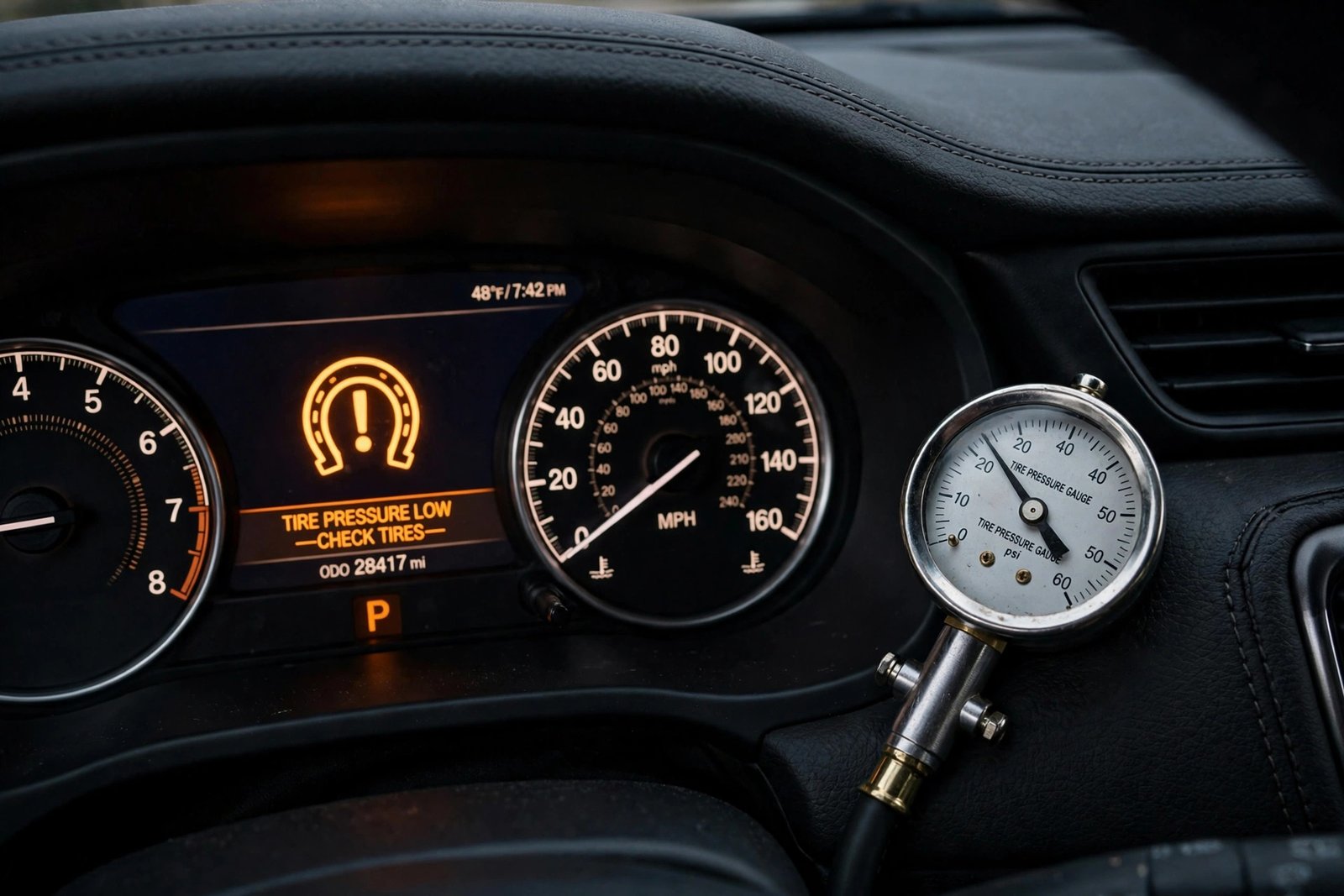
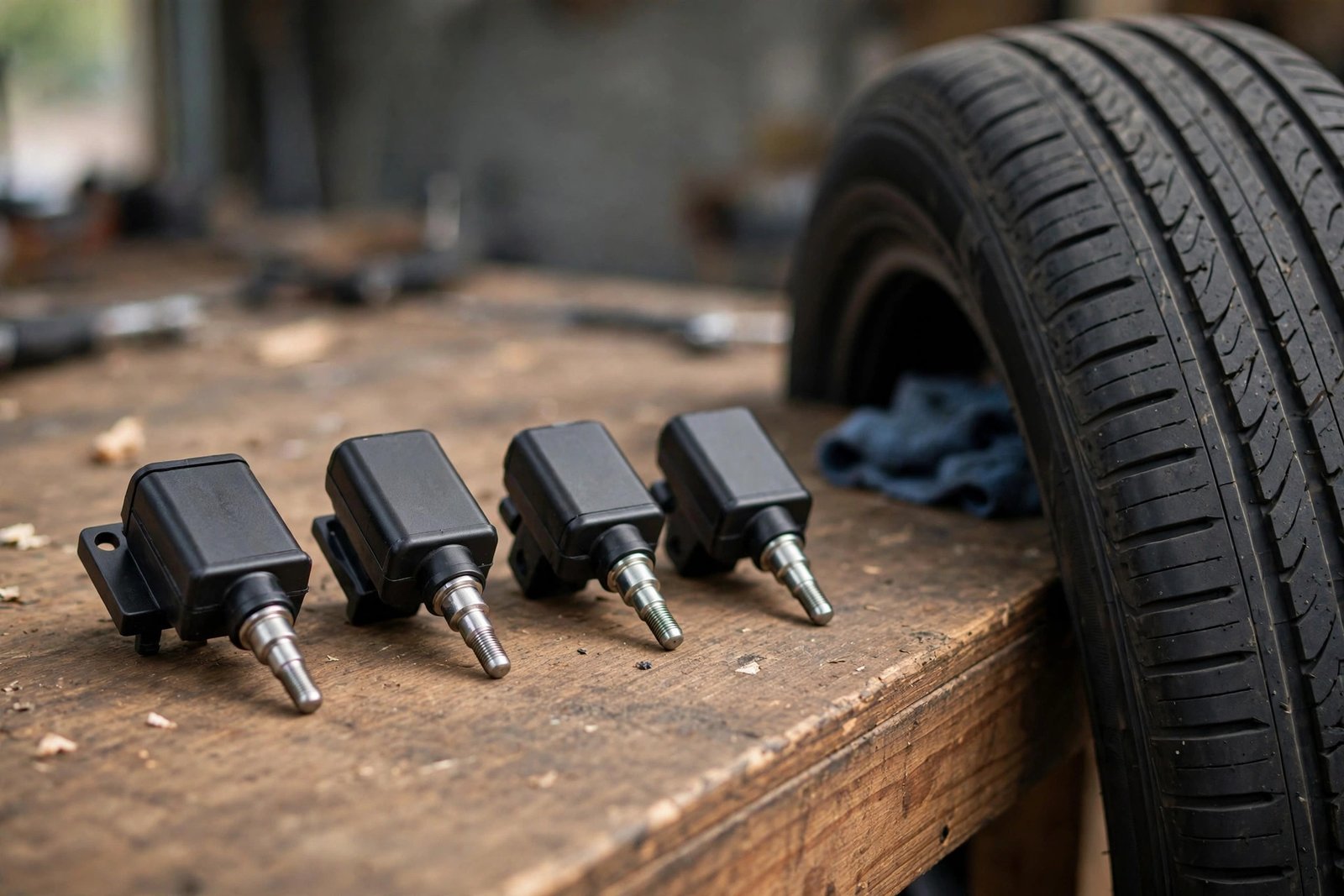
This is the number one reason the message appears on an older car, and it is pure age, not abuse. Each TPMS sensor runs on a small sealed lithium battery that cannot be replaced on its own; when it dies, the sensor goes silent and the service message appears.
How long do they last? 5–10 years is the range most mechanics quote, 7–10 years is what NHTSA described in its original analysis of the federal TPMS rule, and Discount Tire lists 6–10 years or 90,000–120,000 miles. If your car is 7 or 8 years old and the message appears out of nowhere, a dead sensor battery is the most likely suspect.
When one sensor battery dies, the other three — installed the same day — are usually close behind. Replacing all four at once, especially while buying tires, is often cheaper than four separate visits: a set of four aftermarket sensors runs $250–$600 installed, versus $240–$299 for one sensor on its own. For more on sensor life, see our guide on how long TPMS sensors last.
2. Sensor Damaged During Tire Service
TPMS sensors sit right where the tire meets the rim, so a careless tire change can crack or snap one off. If the message appeared within days of tire work, go back to that shop and ask them to check sensor communication before anyone replaces parts — if they damaged it, the repair should be on them.
3. The System Needs a Relearn
After a rotation or wheel swap, the sensors are fine — they are just in different positions than the car expects. The car’s computer needs a relearn to map each sensor ID to its new wheel position. Some cars relearn automatically by driving at 15–100 mph for at least 10 minutes; others need a stationary relearn through the Driver Information Center, using a TPMS activation tool held near each valve stem. Follow the procedure for your exact model.
4. Aftermarket Wheels Without Compatible Sensors
This one catches used-car buyers and anyone who has fitted aftermarket wheels. If the new wheels were installed without transferring the original sensors or fitting compatible ones, the car’s computer has nothing to talk to. TPMS sensors are not universal, so always match the sensor to your exact year, make, and model.
5. Wiring or Receiver Fault
Less common, but real. Damaged wiring, a corroded connector, or a failing receiver can break communication between the sensors and the car’s computer even when every sensor is healthy. Suspect this when the message comes and goes, or appears alongside other electrical issues. A TPMS-capable scan tool can read the fault codes — a basic engine-code reader cannot, so this is a job for a tire shop or a mechanic with the right equipment.
6. Faulty TPMS Control Module
The rarest and most expensive cause. If the sensors, wiring, and relearn all check out and the message will not go away, the control module itself may have failed. RepairPal puts the average replacement at $491–$531 (parts about $403, labor $87–$128) — but never replace it based on the dashboard message alone; it must be confirmed by proper diagnosis first.
What to Do When the Message Appears: Step by Step
Do not panic — but do not ignore it either.
Step 1: Check every tire manually
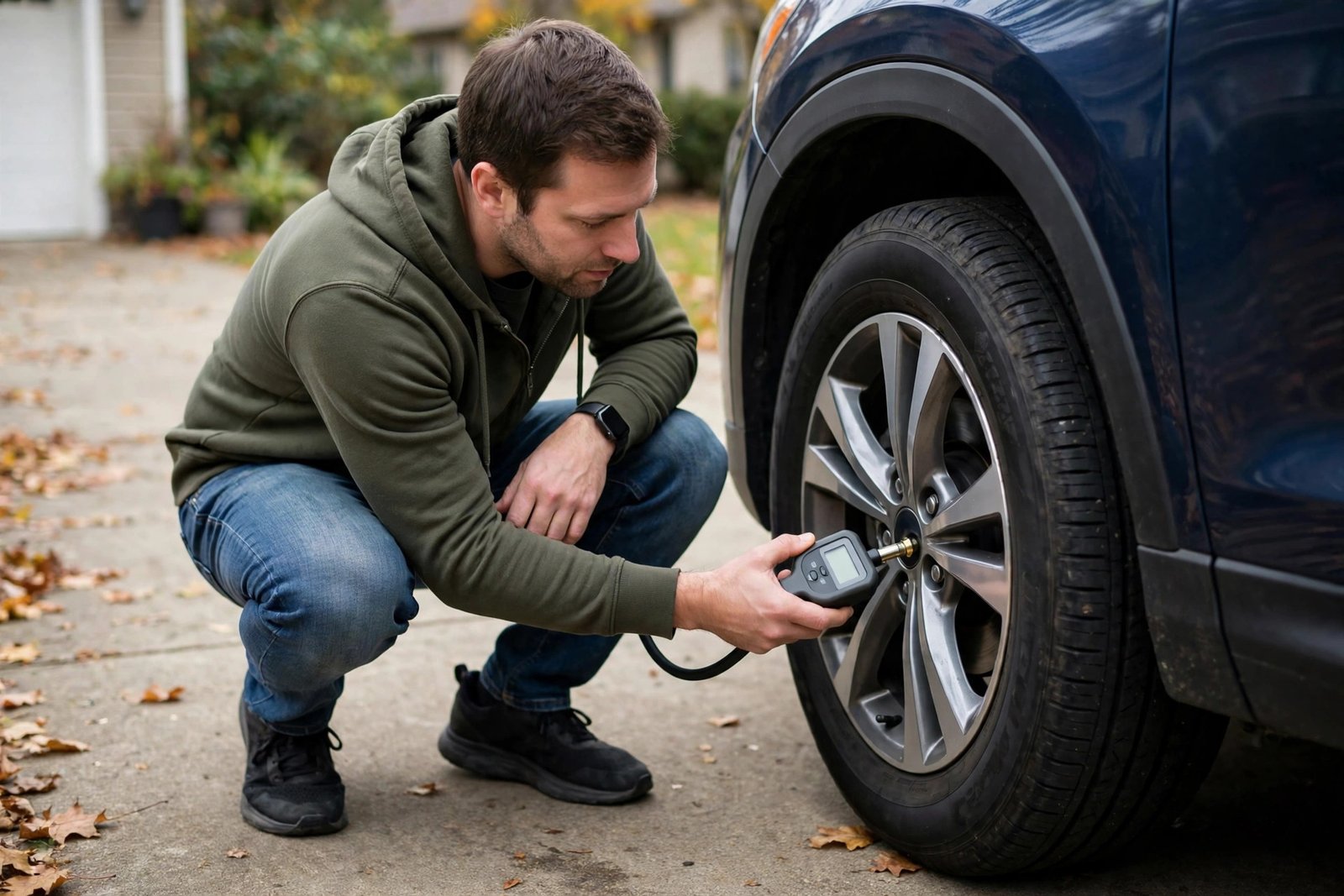
Grab a tire pressure gauge and check all four tires when they are cold — parked for at least three hours and driven less than a mile — because driving heats the tires and raises the reading by 4–8 PSI, which can hide underinflation. Compare each reading to the pressure on the driver’s door jamb sticker, not the tire sidewall (that is the maximum the tire can hold, not what your car needs). Also check for bulges, cuts, nails, or leaks, and do not drive on a tire that is flat, visibly damaged, or losing air fast.
Step 2: Inflate any low tires
If a tire is low, inflate it to the door jamb pressure. This fixes a low-pressure warning — but it will not fix a TPMS fault. If the service message is still there, move on.
Step 3: Note the warning pattern
Watch what the TPMS light does when you start the car:
- Solid light, no message: low pressure. Inflate and drive.
- Light flashes for 60–90 seconds, then stays solid: TPMS malfunction. The system needs diagnosis.
- "Service Tire Monitor System" text message: TPMS fault. The system needs diagnosis.
That flashing pattern is the system’s own way of telling you the difference — see our guide to a flashing tire pressure light.
Step 4: Try the relearn — only if it fits
If the message appeared right after a rotation or wheel swap, a relearn may be all you need — check your owner’s manual for the procedure for your exact model. On many GM models, driving at 15–100 mph for at least 10 minutes triggers an automatic relearn. If the message appeared out of nowhere with no recent tire work, skip this step: a relearn will not fix a dead sensor.

Step 5: Get a TPMS scan
If the message is still there, the car needs a TPMS scan. A tire shop with a TPMS-capable scan tool can read which sensor has stopped communicating and whether the fault is a sensor, the wiring, or the module. Diagnosis typically costs $98–$233 (RepairPal).
Step 6: Repair the confirmed fault — and verify it
Replace only the part the scan identifies, then confirm the warning clears and the system reports pressure for all four wheels — a good shop will show you the live readings.
What NOT to do
- Do not disconnect the battery to clear the message. It will come straight back, and you may lose radio presets for nothing.
- Do not keep resetting the system hoping it sticks. A reset cannot repair a dead sensor or a wiring fault.
- Do not replace sensors or the control module based on the dashboard message alone. The message never says which part failed — scan first, replace second.
Is It Safe to Drive With the Service Tire Monitor System Warning On?
The honest answer is: it depends on your tires, not on the message. The message itself does not make the car unsafe to drive — it means the safety system that watches your tires is down, and a slow leak could go unnoticed until the tire is dangerously low.
Here is the rule to follow:
- Safe for a short drive to a shop — if all four tires check out at the recommended pressure with a gauge and none is damaged or losing air.
- Do not drive — if any tire is flat, visibly damaged, or significantly low. Fix or replace that tire first.
- Do not take a long trip or drive at highway speed for hours with the warning active — a slow leak can turn into a blowout with no warning at all.
- Check pressures manually every few days until the system is repaired — a $10 gauge replaces the $200 sensor system in the meantime.
In many US states, a TPMS fault will not fail a safety inspection on its own, but some states do check it — so get it fixed either way.
How Much Does It Cost to Fix?
The cost depends on the cause. These are the verified national figures as of 2026:
| Repair | Typical cost | Source |
|---|---|---|
| TPMS relearn (standalone) | $49–$71 | RepairPal |
| Full TPMS diagnosis | $98–$233 | RepairPal |
| One sensor, professional shop | $240–$299 | RepairPal average (parts $164–$187, labor $77–$112) |
| One aftermarket sensor, installed | $75–$200 | Industry guides, 2026 |
| Four aftermarket sensors, installed | $250–$600 | Industry guides, 2026 |
| Four sensors at a dealer (OEM) | $600–$1,000+ | Industry guides, 2026 |
| TPMS control module replacement | $491–$531 | RepairPal, updated September 2026 |
The cheapest path is almost always the tire shop, not the dealer — especially bundled with a tire change, when a single sensor can cost as little as $60–$150 per wheel. Ask for an itemized quote. For a deeper breakdown, see our guide to TPMS sensor replacement cost.
Why the Warning Appears More Often in Cold Weather
If the message shows up on the first cold morning of the year, temperature may be involved. Tire pressure drops about 1 PSI for every 10°F drop, so a tire correctly inflated at 70°F will read roughly 4 PSI lower at 30°F — enough to trigger a low-pressure warning.
But cold can also expose a weak sensor battery: one barely hanging on in summer may not transmit in the cold — and that produces the service message, not the low-pressure light. So check the pressures first; if they are fine but the service message stays, the sensor battery is the prime suspect. Our winter tires guide covers cold-weather tire care in more detail.
Service Tire Monitor System on Chevy, GMC, Buick, and Cadillac
On higher-mileage Sierra, Yukon, Acadia, and Terrain models, the most common triggers are dead sensor batteries and missed relearns after tire service.
A few GM-specific notes: most current GM models relearn automatically after driving 15–100 mph for at least 10 minutes; a stationary DIC-menu relearn requires a TPMS activation tool (a standard OBD-II reader will not do it); Yukon models with a sensor-equipped spare can show the message if the spare’s sensor battery dies, so include the spare in any relearn; and first-generation (2007–2016) and second-generation (2017–present) Acadia sensors are not interchangeable. If the message appears right after tire work, check the relearn first. If it appears on an older GM with no recent tire work, the sensor battery is the first suspect.
The Bottom Line
The "Service Tire Monitor System" message is not telling you a tire is low. It is telling you the system that watches your tires has a fault — most often a dead sensor battery on a car 5–10 years old, a sensor damaged during tire work, or a relearn never done after a rotation or wheel swap.
Check your tire pressures with a gauge first — the system cannot be trusted while the fault is active. Then get a TPMS scan to find the failed part. A relearn costs $49–$71, a single sensor $75–$299, and a control module $491–$531 — but never pay for any of it until the scan tells you what is broken. Your tires may be fine. Your warning system is not. Tell the tire shop your car has TPMS before any tire work, and keep a gauge in the glove box.
Frequently Asked Questions
What does Service Tire Monitor System mean?
It means your vehicle has detected a fault in the Tire Pressure Monitoring System (TPMS), so the system may not be able to monitor tire pressure or warn you reliably. It is not the same as a low tire pressure warning — the fault is in the monitoring system itself, not necessarily in the tires.
Is Service Tire Monitor System the same as low tire pressure?
No. A low tire pressure warning means a tire is at least 25% below its recommended pressure and the sensor is working. The service message means the TPMS itself has a fault — a dead sensor battery, a damaged sensor, or a communication problem — and it may not warn you about low pressure at all.
Can I drive with the Service Tire Monitor System warning on?
You can usually drive a short distance to a repair shop if you first check all four tires with a gauge and confirm they are at the recommended pressure and none is damaged or losing air. Do not drive on a flat, visibly damaged, or significantly low tire, and do not take a long trip while the warning is active.
How much does it cost to fix a Service Tire Monitor System warning?
It depends on the cause. A TPMS relearn costs about $49 to $71, a full diagnosis about $98 to $233, and a single sensor replacement averages $240 to $299 at a professional shop according to RepairPal. A faulty control module is rarer and costs about $491 to $531. Aftermarket sensors at a tire shop are often cheaper, especially bundled with a tire change.
Will the Service Tire Monitor System message go away if I add air?
Adding air clears a low tire pressure warning once the pressure is correct, but it will not fix a TPMS fault. If the message stays on after you inflate the tires, the system needs a scan and a repair.
How long do TPMS sensors last?
TPMS sensor batteries typically last 5 to 10 years. NHTSA described them as sealed units with a finite life of 7 to 10 years, and Discount Tire lists 6 to 10 years or 90,000 to 120,000 miles.