

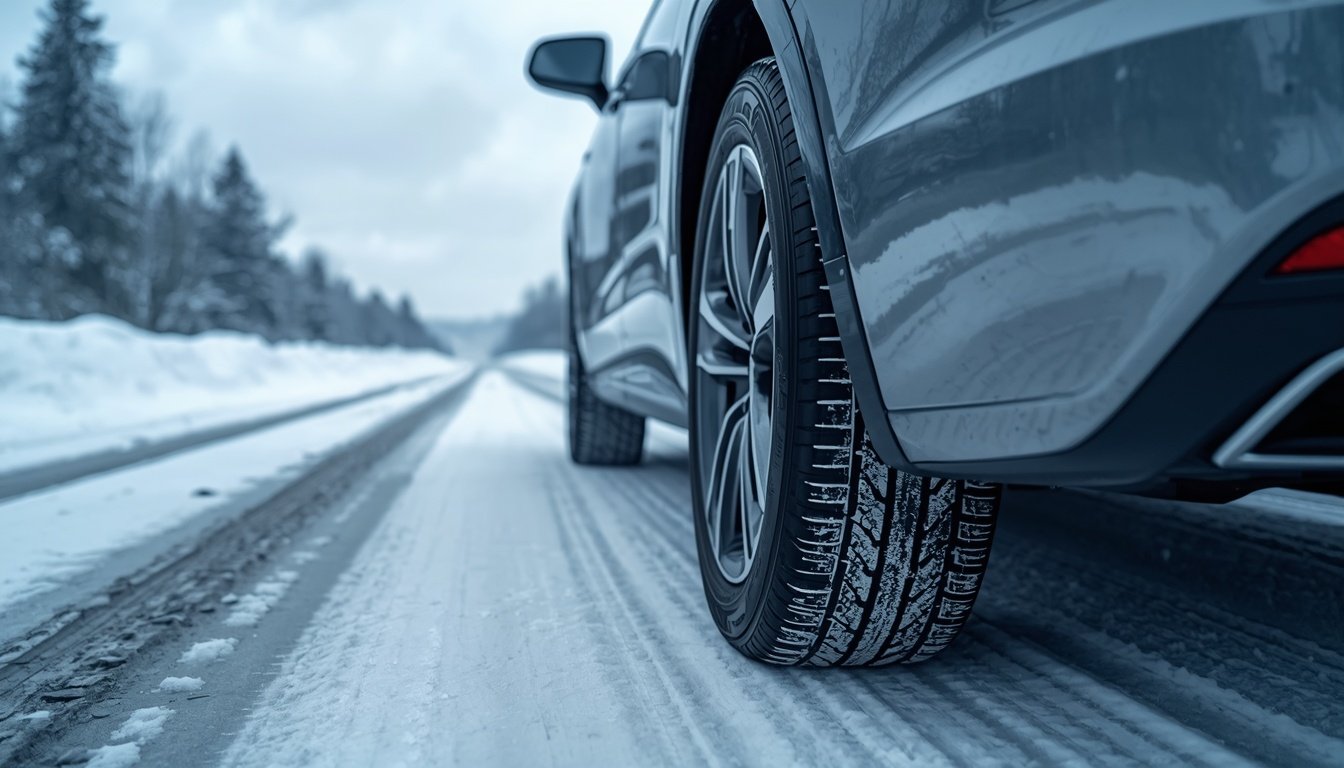
Cold pavement, snow, ice, and slush all ask more of your tires than a dry summer road ever does. Even a vehicle with all-wheel drive still relies on four small contact patches of rubber to brake, steer, and stay planted. So what actually makes a tire good for winter, and when should you make the switch? Here’s what matters.
Why Winter Tires Matter in Cold Weather
Winter tires aren’t just a snow tool — they’re a temperature tool. Their rubber compounds are formulated to stay pliable in the cold, so the tread keeps real contact with the road instead of stiffening up like a hockey puck. The tread pattern is designed to grip snow, slush, and ice specifically.
The National Highway Traffic Safety Administration (NHTSA) warns that winter weather can make roads seriously hazardous, and encourages drivers to prepare their vehicles ahead of snow, sleet, or ice rather than reacting to it. Michelin frames the decision around temperature rather than the calendar, suggesting winter tires become worth considering once daily temperatures consistently sit near 45°F (7°C) — well before the first flakes fall.
How Winter Tires Work Differently
Flexible Rubber Compounds
Standard all-season and summer compounds gradually stiffen as the mercury drops, which shrinks the tire’s actual grip on the pavement. Winter-specific rubber is built to resist that stiffening, so the tread stays soft enough to conform to the road surface even in freezing conditions.
Siping and Tread Design
Look closely at a winter tire and you’ll notice hundreds of thin slits, called sipes, cut across the tread blocks. Each one adds a biting edge that digs into snow and ice. Wider grooves work alongside the sipes to push slush and snow out of the contact area instead of letting it pack in.
Winter Tires vs. All-Season Tires
“All-season” is a bit of a misleading name — it means balanced performance, not top performance in every condition.
| Category | Winter Tires | All-Season Tires |
| Cold temperatures | Excellent | Moderate |
| Deep snow | Excellent | Moderate |
| Ice | Better suited | Limited |
| Dry, warm roads | Less suited | Good |
| Wear in warm weather | Faster | Better suited |
| Typical use | Seasonal | Year-round |
NHTSA notes that all-season tires can handle a range of conditions and offer some mud-and-snow capability, but winter tires are meaningfully more effective once you’re dealing with real depth of snow.
Do AWD and 4WD Vehicles Still Need Winter Tires?
This is probably the most common misconception on the list. All-wheel drive and four-wheel drive help get power to the ground when you’re accelerating on a slippery surface — but they do nothing for braking or steering, which depend entirely on the tires.
Think of AWD as a power-distribution system, not a traction upgrade. Michelin specifically recommends installing winter tires on all four wheels of an AWD or 4WD vehicle rather than just the drive axle, since mismatched grip front-to-back can throw off the vehicle’s handling balance in exactly the conditions where you need it to behave predictably.
When to Install and Remove Winter Tires
You don’t need to wait for a storm to make the switch. Michelin’s 45°F (7°C) guideline exists because that’s roughly where winter compounds start to outperform all-season ones — and by the time it’s snowing, you’re already behind.
Where you live changes the timeline considerably:
- Northern states often need winter tires for several months at a stretch.
- Mountain regions can see winter conditions arrive earlier than the surrounding lowlands.
- Mild-climate drivers may rarely need a dedicated winter set.
- Anyone who regularly drives into snowy mountain areas may need winter capability even if home base stays mild.
Come spring, switch back once temperatures warm up consistently. Winter compounds are softer, and running them on warm pavement burns through tread faster than necessary — better to save that wear for the next cold season.
How to Choose the Right Winter Tires
Start with the tire size for your specific vehicle, found on the driver’s-side door-jamb sticker or in the owner’s manual. NHTSA recommends sticking to the manufacturer’s specifications when shopping for replacements.
Look for the 3PMSF Symbol
The Three-Peak Mountain Snowflake (3PMSF) symbol means a tire has met an established severe-snow traction standard. That’s a step above the more common “M+S” (mud and snow) marking, which signals general capability but doesn’t guarantee the same level of snow performance.
Match Tires to Your Driving Habits
A few honest questions can steer the decision:
- How often do I actually drive in snow?
- Do I deal with ice regularly?
- Are sub-freezing mornings common where I live?
- Do I drive through mountain passes?
- How much of my winter driving happens on the highway?
Tire Pressure and Tread: Two Things Cold Weather Changes
Checking Pressure in the Cold
Tire pressure drops as temperatures fall — it’s simple physics, not a leak. NHTSA advises checking pressure regularly through winter and keeping it at the manufacturer’s recommended level, found on the door-jamb label, not the maximum figure printed on the tire’s sidewall. Check when the tires are “cold,” meaning the car has been parked for a few hours, and don’t compensate by overinflating ahead of a cold snap.
Inspecting Tread and Sidewalls
Before winter hits, look over each tire for cracks, cuts, bulges, uneven wear, or embedded debris. NHTSA’s baseline is at least 2/32 inch of tread, but that’s a legal floor, not a performance target — snow traction drops off well before a tire reaches that limit, so don’t wait until it’s nearly bald to replace it. Check the spare too; discovering it’s flat during an actual emergency is its own kind of bad luck.
| Quick Check | What to Confirm |
| Pressure | Matches door-jamb PSI, checked cold |
| Tread | Even wear, well above 2/32″ |
| Sidewalls | No cracks, bulges, or cuts |
| Spare | Inflated, undamaged |
| TPMS light | Off, or investigated immediately |
Driving Safely on Snow and Ice
Good tires help, but they don’t cancel out physics.
- Slow down. Snow and ice stretch out stopping distances significantly.
- Be smooth. Sudden acceleration, braking, or steering is the fastest way to break traction.
- Add following distance. Give yourself more room than you would on dry pavement.
- Watch bridges and shaded spots. They freeze before the rest of the road does.
- Don’t lean on AWD for stopping. It helps you go; it does nothing for how fast you stop.
Chains, Studs, and Off-Season Storage
Winter tires aren’t the only traction tool available. Studded winter tires add metal studs for extra ice grip, though several states regulate or restrict their use to certain months. Tire chains and cable chains can also help in severe snow, but they need to be the correct size and type for your vehicle — check your manual and local rules before relying on either.
If you keep a dedicated winter set, store it properly during the off-season: clean off road salt and grime, let the tires dry fully, inspect for damage, and store them somewhere cool, dry, and out of direct sunlight, away from chemicals or heat sources. Storing them mounted on their own wheels makes the seasonal swap much easier.
Frequently Asked Questions
Are winter tires really necessary?
They’re most worthwhile if you regularly deal with snow, ice, or sustained freezing temperatures. Mild-climate drivers may not need them.
What temperature is too cold for all-season tires?
There’s no single cutoff, but Michelin points to about 45°F (7°C) as the practical threshold where winter compounds start pulling ahead.
Are winter tires better than all-season tires in snow?
Generally yes — their compounds and tread design are built specifically for cold and snow, not just tolerant of it.
Do AWD vehicles need winter tires?
Yes, if conditions call for it. AWD helps with acceleration, not braking or steering, which still depend on the tires.
How often should I check tire pressure in winter?
At least once a month and before any long trip, measured cold and set to the manufacturer’s spec.
What does the 3PMSF symbol mean?
It marks tires that meet a severe-snow traction standard — a more meaningful signal than the general M+S marking.
Can I use winter tires all year?
You can, but you shouldn’t. The soft compound wears faster on warm pavement and loses its advantage when it’s not actually cold.
Final Thoughts on Winter Tire Safety
Winter driving comes down to more than just swapping tires once a year. Keeping pressure and tread in check, choosing tires that match your actual conditions, and adjusting how you drive all matter just as much as the rubber itself. No tire makes a bad winter road completely safe — but the right one, properly maintained, gives you a real margin when it counts.