
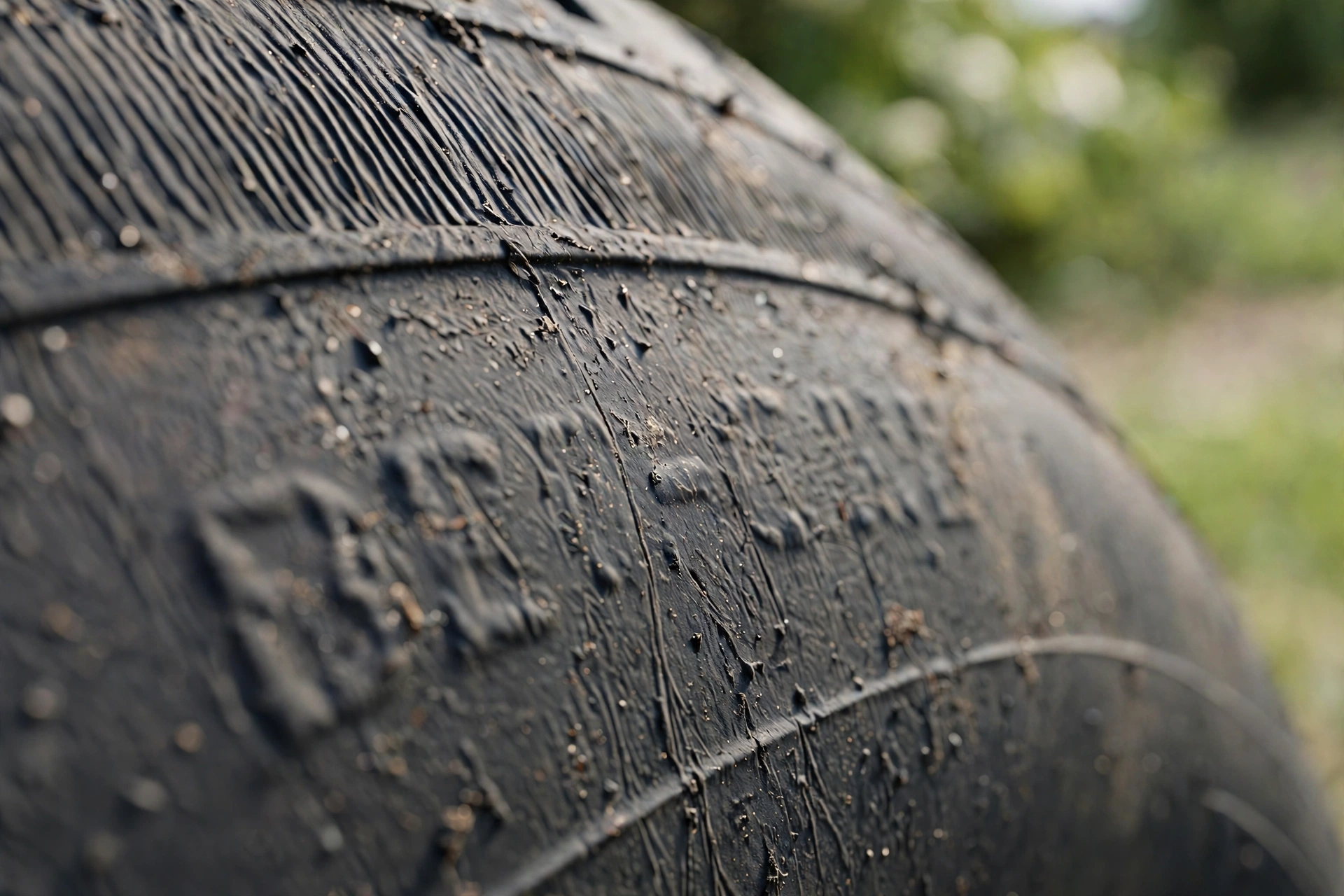
What Do Tire Numbers Mean? How to Read Your Tire Sidewall
Those numbers and letters stamped into your tire’s sidewall aren’t random — they’re a code that tells you the tire’s size, how much weight it can carry, and how fast it can safely go. Once you learn to read it, you’ll never feel lost at the tire shop again.
Take a common example: P215/65R15 95H. In short: P means it’s a passenger tire, 215 is the width in millimeters, 65 is the sidewall height as a percentage of that width, R means radial construction, 15 is the wheel diameter in inches, 95 is the load index, and H is the speed rating. Below, we’ll walk through each piece one by one, with the other markings you’ll find on the sidewall too.
Bookmark this cheat sheet — it decodes any passenger tire size at a glance. Example: P215/65R15 95H.

Walking Through P215/65R15 95H
Here’s our example code, read from left to right:
- P — Passenger tire, made for cars, minivans, and small SUVs.
- 215 — 215 millimeters wide (about 8.5 inches) from sidewall to sidewall.
- 65 — The sidewall height is 65% of the width — 65% of 215 mm is about 140 mm (roughly 5.5 inches).
- R — Radial construction, the way nearly all modern tires are built.
- 15 — Fits a 15-inch wheel.
- 95 — Load index 95, so this tire carries up to 1,521 lbs.
- H — Speed rating H, safe up to 130 mph.
That’s the whole code. Now the tables below — load index and speed rating — are easy to read.
Load Index → Max Load (lbs per tire)
| Index | Lbs | Index | Lbs | Index | Lbs |
|---|---|---|---|---|---|
| 75 | 853 | 87 | 1,201 | 99 | 1,709 |
| 76 | 882 | 88 | 1,235 | 100 | 1,764 |
| 77 | 908 | 89 | 1,279 | 101 | 1,819 |
| 78 | 937 | 90 | 1,323 | 102 | 1,874 |
| 79 | 963 | 91 | 1,356 | 103 | 1,929 |
| 80 | 992 | 92 | 1,389 | 104 | 1,984 |
| 81 | 1,019 | 93 | 1,433 | 105 | 2,039 |
| 82 | 1,047 | 94 | 1,477 | 106 | 2,094 |
| 83 | 1,074 | 95 | 1,521 | 107 | 2,149 |
| 84 | 1,102 | 96 | 1,565 | 108 | 2,205 |
| 85 | 1,135 | 97 | 1,609 | 109 | 2,271 |
| 86 | 1,168 | 98 | 1,653 | 110 | 2,337 |
Speed Rating → Max Speed (mph)
| Rating | Max speed (mph) |
|---|---|
| S | 112 |
| T | 118 |
| U | 124 |
| H | 130 |
| V | 149 |
| Z | 149+ |
| W | 168 |
| Y | 186 |
| (Y) | 186+ |
The Letter Before the Numbers
- P — P-metric: a passenger-car tire built to US sizing standards (e.g. P215/65R15).
- Euro-metric — the European metric sizing standard; same number layout as P-metric with slightly different load ratings.
- No letter prefix (e.g. 215/65R15) — in practice a Euro-metric tire; the most common size format on today’s cars.
- LT — Light Truck: reinforced sidewalls for pickups, full-size SUVs, and vans that tow or haul.
- T — Temporary: a compact spare (“donut”) for short emergency trips only (e.g. T125/70D16).
The Quick Answer: One Example, Decoded
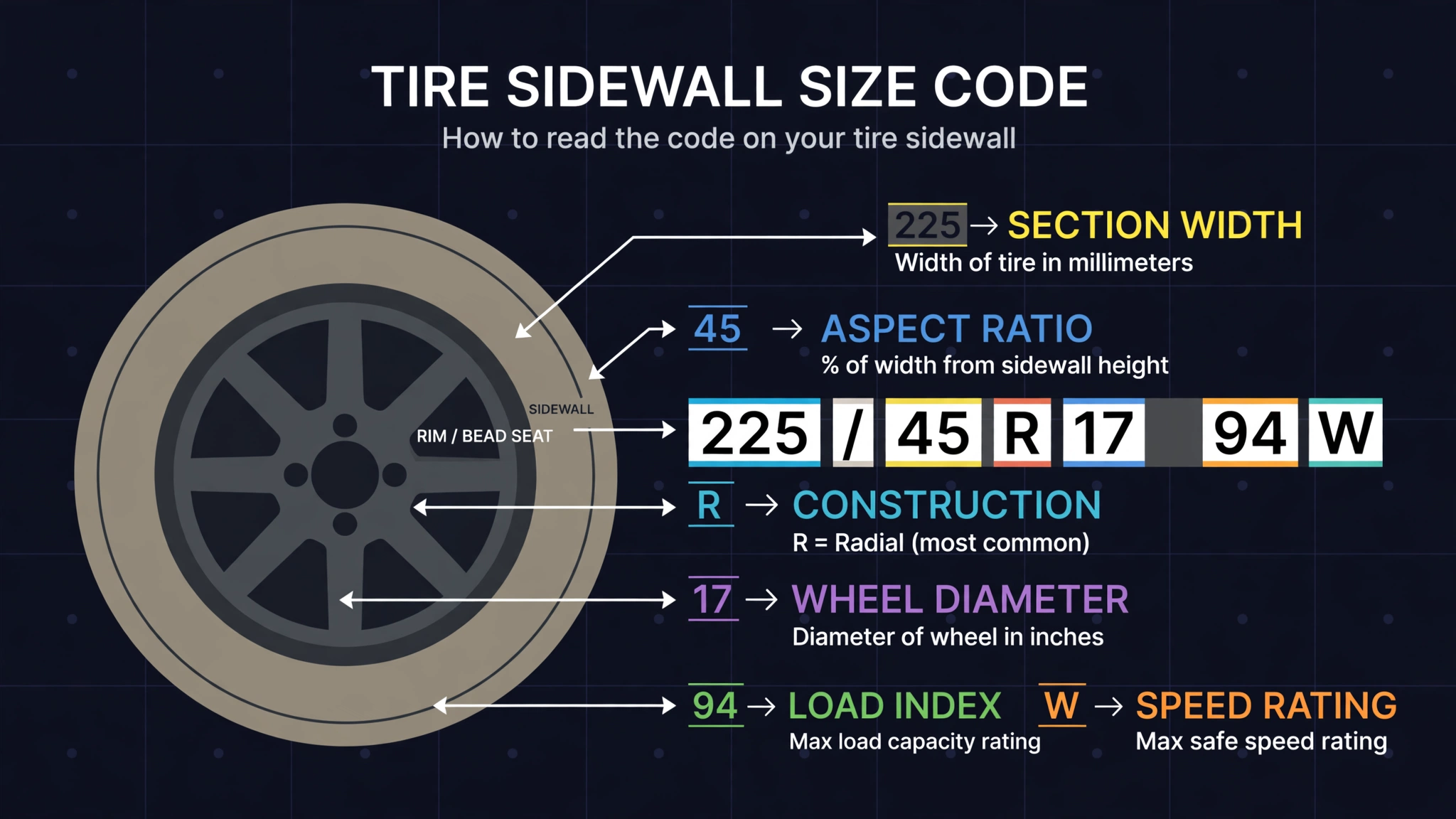
Here’s our example code broken into pieces:
| Code | What it means |
|---|---|
| P | Passenger tire (for cars, minivans, small SUVs) |
| 215 | Section width: 215 millimeters wide |
| 65 | Aspect ratio: sidewall height is 65% of the width |
| R | Radial construction (what nearly all modern tires use) |
| 15 | Fits a 15-inch wheel |
| 95 | Load index: carries up to 1,521 lbs per tire |
| H | Speed rating: safe up to 130 mph |
That’s the whole code. Now let’s slow down and look at each part properly, because each one actually affects how your car drives.
P — The Tire Type
The first letter tells you what kind of vehicle the tire was built for:
- P — Passenger. For cars, minivans, and small SUVs. This is what most drivers have.
- LT — Light Truck. For pickups, full-size SUVs, and vans that haul heavy loads. Built tougher, with higher load capacity.
- ST — Special Trailer. For trailer axles only — never put these on a car.
- T — Temporary. That’s your compact donut spare.
- No letter at all — Usually a Euro-metric tire, made to European standards. Common on many European and some American cars.
This letter matters more than people think. An LT tire and a P tire can share the same size numbers and still carry very different loads — always match the type your vehicle asks for.
215 — The Section Width
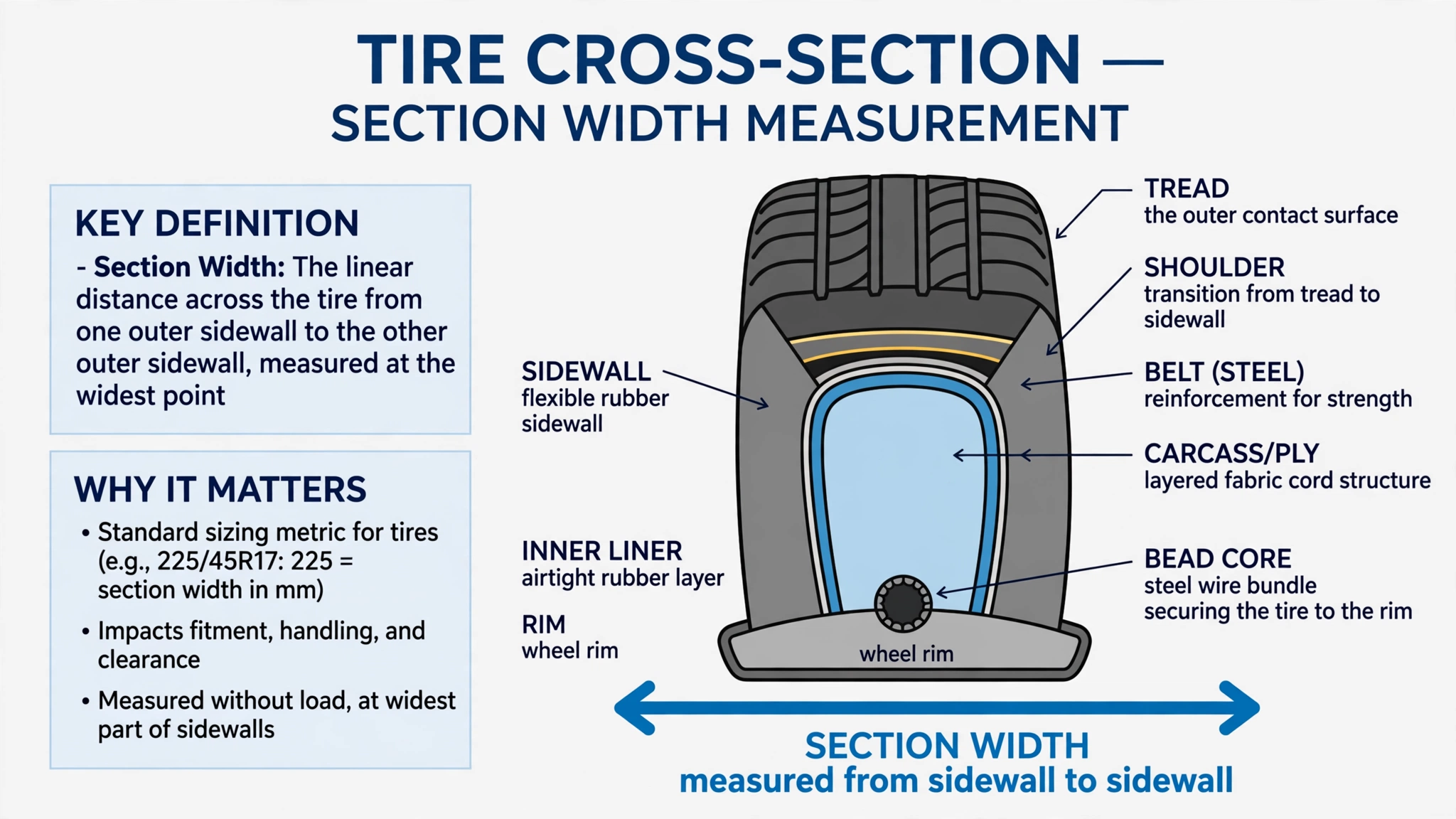
The first number is the tire’s width in millimeters, measured straight across from one sidewall to the other. Our example tire is 215 mm wide — roughly 8.5 inches.
Wider tires put more rubber on the road, which can mean more grip; narrower tires may roll a little easier and can do slightly better in rain and snow. But don’t shop for a wider tire on your own — your car was designed around a specific width range, and going too wide can make the tire rub against the body or suspension.
65 — The Aspect Ratio

This is the number that confuses people most, because it’s not a measurement — it’s a percentage. The aspect ratio is the sidewall height expressed as a percentage of the section width.
For our example: 65% of 215 mm = about 140 mm (roughly 5.5 inches) of sidewall.
Here’s what it means in real driving:
- Higher number (65, 70, 75) — Taller sidewall. More cushion over bumps and potholes, generally a softer, more comfortable ride.
- Lower number (55, 50, 45 and below) — Shorter sidewall, the “low-profile” look. Sharper steering response and sportier handling, but you’ll feel more of the road, and the wheels are easier to damage on a bad pothole.
One trap to avoid: a 65 aspect ratio on a 215-wide tire is not the same sidewall height as 65 on a 245-wide tire. It’s always relative to the width.
R — The Construction Type
R stands for radial, which describes how the tire’s internal cord layers are arranged — running straight across the tire, perpendicular to the direction of travel, with steel belts under the tread.
Almost every tire on the road today is a radial. They last longer, ride smoother, and handle heat better than the older bias-ply (sometimes marked D) construction, which you’ll still see on some trailer tires, farm equipment, and drag racing slicks — but not on a normal car.
15 — The Wheel Diameter
This is the diameter of the wheel the tire fits, in inches. Our example fits a 15-inch wheel, and this number must match your wheel exactly — there is no “close enough” here. A 15-inch tire will not mount on a 16-inch wheel, period.
95 — The Load Index
The load index is a code for the maximum weight each tire can safely carry when properly inflated. Higher number, more capacity. For our example, 95 means 1,521 pounds per tire.
The full load-index table is near the top of this guide: 85 means 1,135 lbs, 90 means 1,323 lbs, 100 means 1,764 lbs, and 110 means 2,337 lbs.
Never fit tires with a lower load index than your vehicle requires. The right number for your car is on the door jamb sticker (more on that below), not necessarily on the tires the previous owner put on.
H — The Speed Rating
The final letter is the maximum sustained speed the tire is rated for, assuming it’s properly inflated and in good condition. H means up to 130 mph.
The full speed-rating table is near the top of this guide: S is 112 mph, T is 118 mph, H is 130 mph, V is 149 mph, W is 168 mph, and Y is 186 mph.
You don’t need a Y-rated tire for a family sedan — but you should never go below the rating your car came with. The speed rating also hints at handling: higher-rated tires usually have stiffer construction and sharper response. Together, the load index and speed rating are called the tire’s service description.
The Other Markings on Your Sidewall

The size code is the headline, but there’s more stamped into the rubber worth knowing:
DOT code and tire age. Every tire sold in the US has a DOT identification number. The last four digits tell you when the tire was made: the first two are the week, the last two are the year. So 2424 means the 24th week of 2024. Tires age even sitting still, so check this on a used car or when buying — you want fresh rubber, not something that’s been in a warehouse for years.
UTQG ratings. The U.S. government rates most passenger tires for treadwear, traction, and temperature resistance under the Uniform Tire Quality Grading System — you’ll see something like “Treadwear 600, Traction A, Temperature B” on the sidewall. Treadwear is a relative number — higher means the tire is expected to last longer (a 600 should outlast a 300, roughly). Traction (AA, A, B, C) grades wet stopping grip. Temperature (A, B, C) grades heat resistance. Useful for comparing tires within a brand, less perfect across brands.
XL — Extra Load. Means the tire is reinforced to carry more weight than the standard version of the same size. If your car specifies XL, don’t downgrade.
M+S and the snowflake. M+S (mud and snow) means the tread is designed for some loose-surface traction. The three-peak mountain snowflake symbol (3PMSF) is stricter — it means the tire passed an actual snow traction test. For real winter driving, look for the snowflake, not just M+S. Our winter tires guide goes deeper on this.
Rotation arrows and “outside” markings. Directional tires have an arrow showing which way they must roll. Asymmetric tires say “outside” on the face that must face out. Mount them wrong and wet grip and wear both suffer.
Tread wear indicators. Small raised bars hidden in the tread grooves. When your tread wears down flush with these bars — at 2/32 of an inch — the tire is legally worn out and needs replacing. The U.S. Tire Manufacturers Association recommends checking your tread every month — the classic penny test takes ten seconds.
Where to Find the Right Size for YOUR Car

Here’s the mistake to avoid: don’t just copy the size of the tires currently on your car. A previous owner may have fitted the wrong size.
Instead, check the sticker on the driver’s door jamb (sometimes inside the fuel flap or glove box). It lists the exact size, load index, and recommended pressure your car’s maker specified. Your owner’s manual has it too. That’s the number to trust — and it’s what a good tire shop will check before selling you anything.
Can You Put a Different Size on Your Car?
Sometimes, yes — but carefully. The golden rule is to keep the overall diameter of the tire as close to the original as possible, because that diameter affects your speedometer accuracy, gearing, and clearance. That’s why “plus sizing” works: a wider tire with a lower aspect ratio on a bigger wheel can end up the same overall height.
If you’re thinking about changing sizes, talk to a tire professional first and check what your owner’s manual allows. And whatever you do, keep the same size on all four wheels (unless your car came staggered from the factory), and never mix radically different sizes front to back on an all-wheel-drive vehicle.
For help picking the right replacement, our complete tire size guide walks through sizing in more detail, and our guide to choosing the right tires covers what to look for when you buy.
Quick Cheat Sheet
| Marking | Meaning | Example |
|---|---|---|
| Letter prefix | Tire type | P = passenger, LT = light truck |
| First number | Width in mm | 215 |
| Second number | Sidewall height as % of width | 65 |
| R | Radial construction | R |
| Third number | Wheel diameter in inches | 15 |
| Load index | Weight capacity code | 95 = 1,521 lbs |
| Speed rating | Max speed letter | H = 130 mph |
| DOT (last 4 digits) | Week/year made | 2424 = week 24, 2024 |
| XL | Extra load reinforced | XL |
| 3PMSF ❄ | Severe snow rated | Snowflake symbol |
Frequently Asked Questions
What do tire numbers mean?
They are the tire’s size code — a string of letters and numbers on the sidewall that tells you the tire’s type, width, aspect ratio, construction, wheel diameter, load index, and speed rating. For example, P215/65R15 95H is a passenger tire, 215 millimeters wide, with a sidewall 65% of the width, radial construction, for a 15-inch wheel, and it carries up to 1,521 lbs per tire at up to 130 mph.
What does P215/65R15 mean?
It’s a common passenger tire size: P means passenger tire, 215 is the width in millimeters, 65 is the aspect ratio (the sidewall height is 65% of the width), R means radial construction, and 15 means it fits a 15-inch wheel. A full size code often adds the load index and speed rating — for example, P215/65R15 95H.
How do I read my tire size?
Find the size code on the sidewall — it looks like P215/65R15 95H — then read it left to right: the letter is the tire type, the first number is the width in millimeters, the number after the slash is the aspect ratio, R means radial, and the last number is the wheel diameter in inches. The final parts are the load index (how much weight the tire can carry) and the speed rating (the fastest safe sustained speed).
What does the 95 mean on a tire?
It’s the load index — a code for the maximum weight each tire can safely carry when properly inflated. A 95 means 1,521 lbs per tire. Never fit a tire with a lower load index than your vehicle requires.
What does the R in a tire size mean?
It stands for radial — the way the tire’s internal cords are arranged. Nearly all modern car tires are radials, which last longer and ride better than the older bias-ply design.
What is a good load index for a car?
Whatever your door jamb sticker says — that’s the answer. As a rough sense, most passenger cars use load indexes in the 85–100 range (1,135–1,764 lbs per tire). Never go below the specified number.
What speed rating do I actually need?
At least what your car came with — check the door sticker. For normal driving, S (112 mph) or T (118 mph) is plenty on most family cars; H (130 mph) and above are common on sportier models. Never downgrade.
How do I tell how old my tires are?
Find the DOT code on the sidewall and read the last four digits: week first, then year. “2424” is the 24th week of 2024. If you only see three digits, the tire was made before 2000 — replace it.
Can I mix tire sizes on my car?
Don’t. Mismatched sizes confuse ABS and traction control, wear unevenly, and on all-wheel-drive cars can damage the drivetrain. Keep all four the same unless the manufacturer specified otherwise.
What does XL mean on a tire?
Extra Load — the tire is reinforced to carry more weight than the standard version of that size. If your car calls for XL, stick with XL.
Conclusion
Reading tire numbers is a skill you’ll use every few years for the rest of your driving life — and now you have it. Remember the pattern: type, width, aspect ratio, construction, wheel diameter, load index, speed rating. Check your door jamb sticker for the size your car actually wants, never downgrade load index or speed rating, and glance at the DOT date before you pay.