
How Often to Rotate Tires? The Short Answer
Most cars need their tires rotated every 5,000 to 7,500 miles, or about every six months — whichever comes first. The simplest habit: rotate your tires every time you get an oil change. But the right interval for your car depends on your drivetrain, your tires, and how you drive, so your owner’s manual is always the final word.
If that sounds like one more maintenance chore to forget, here’s why it matters: skipping rotations is one of the most expensive “savings” in car ownership. Two tires wearing out early costs far more than the small price of keeping all four wearing evenly.
Every 5,000–7,500 miles. Most owner’s manuals call for a tire rotation every 5,000 to 7,500 miles — roughly every other oil change for the average driver. Your manual’s number always wins over any rule of thumb, so check it first.
At least every 6 months. Even low-mileage cars need a rotation about twice a year. Tires wear unevenly with time and seasonal temperature swings. If you swap winter and summer sets, rotate at each swap.
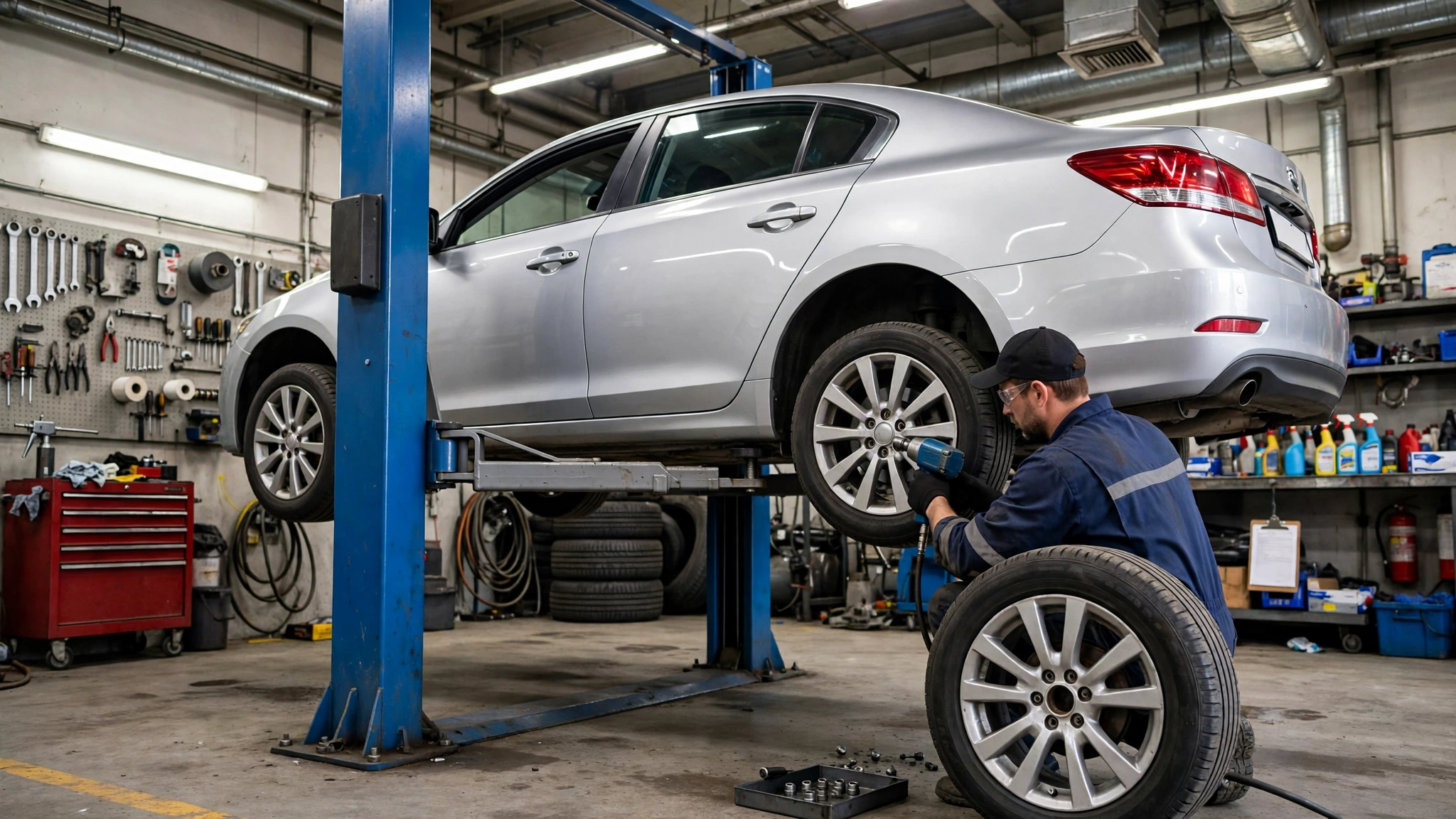
Takes 20–30 minutes. A rotation is one of the fastest services you can get. Most shops finish in 20 to 30 minutes, and many include it free with an oil change, a tire purchase, or a scheduled maintenance visit.
Why Tires Wear Unevenly in the First Place
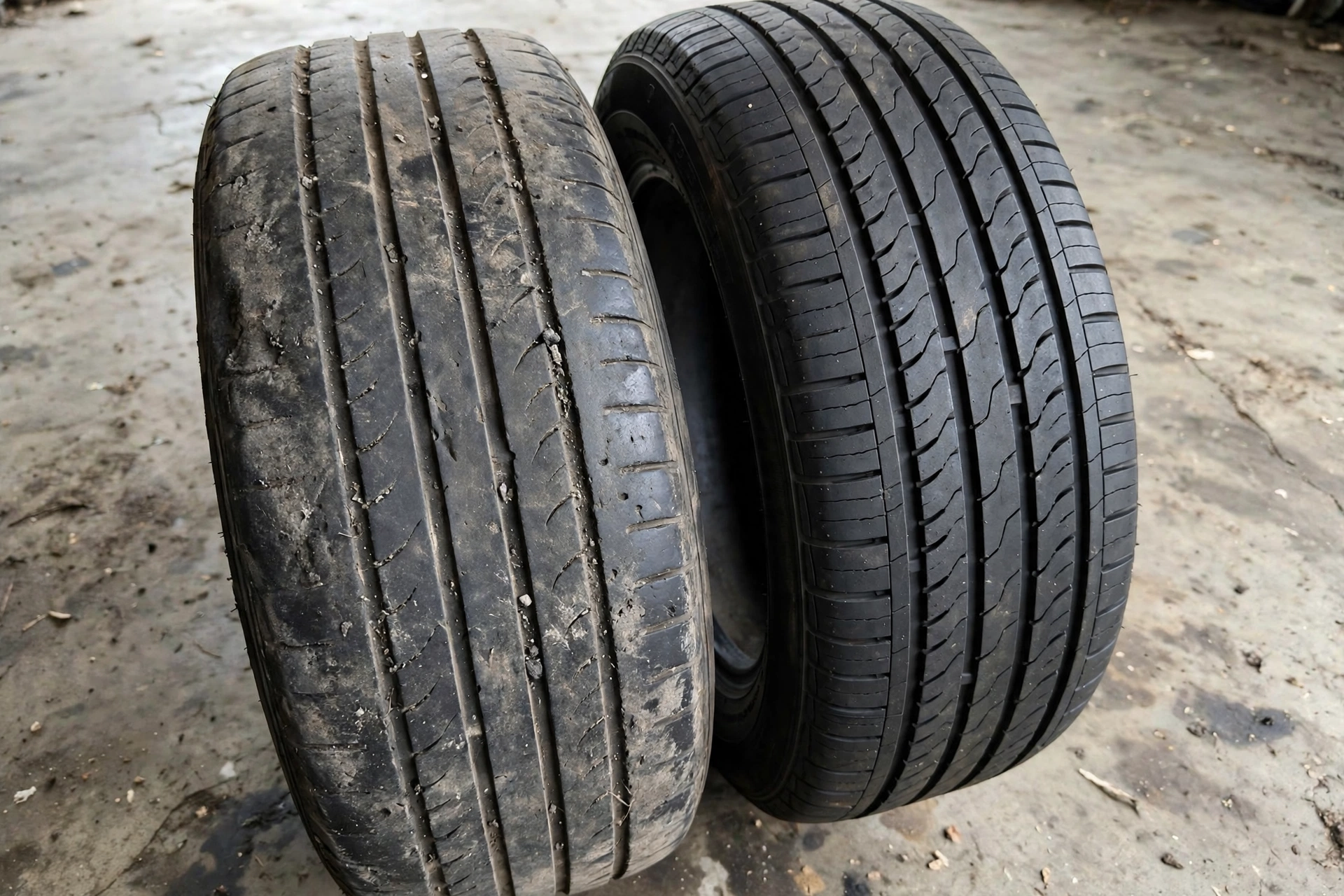
Here’s the thing most drivers never think about: the four tires on your car do not share the work equally.
On a front-wheel-drive car — which is most sedans and crossovers on the road — the front tires do almost everything. They steer the car, they put the engine’s power to the ground, and they handle most of the braking, all while carrying the weight of the engine sitting over them. Those front tires can wear noticeably faster than the rears. On a rear-wheel-drive car or pickup, the wear shifts toward the back, where the power goes down.
Rotation is simply moving each tire to a different corner on a regular schedule, so the wear gets shared around. Instead of replacing two bald front tires while the rears still have half their life left, all four reach the end together — and you get the full mileage you paid for out of the whole set.
Rotation Schedule by Vehicle Type
Your owner’s manual has the exact number for your car, but these ranges cover the vast majority of vehicles:
| Vehicle type | Typical interval | Why |
|---|---|---|
| Front-wheel-drive cars & crossovers | Every 5,000–7,500 miles | Front tires wear fastest from steering, power, and braking |
| Rear-wheel-drive cars & pickups | Every 5,000–7,500 miles | Rear tires take the power; loaded truck beds add rear wear |
| All-wheel-drive & 4×4 SUVs | Every 3,000–5,000 miles | Keeping all four tread depths matched protects the drivetrain |
| Electric vehicles | About every 5,000–6,500 miles | Heavy battery packs and instant torque wear tires faster |
| Trucks that tow regularly | Every 4,000–5,000 miles | Extra weight accelerates uneven wear |
| Heavy-duty trucks and towing | Every 3,000–5,000 miles | Towing and heavy loads wear rear tires much faster — rotate at each oil change. |
A note on all-wheel drive: this one matters more than people realize. AWD systems are designed around four tires that are nearly the same diameter. When one axle wears faster than the other, the system is constantly compensating, which can strain expensive drivetrain components. Many AWD vehicle makers set strict limits on how much tread depth is allowed to differ between tires — staying on your rotation schedule is how you stay inside those limits.
Electric vehicles deserve a special mention too. They skip oil changes, which is exactly the reminder most drivers use for rotations. If you drive an EV, set a mileage reminder on your phone or dashboard app, because the extra weight and instant torque mean your tires are wearing faster than a similar gas car’s would.
No interval listed in your manual? The U.S. Tire Manufacturers Association suggests every 5,000 to 8,000 miles as a safe default.
Tire Rotation Patterns, Explained Simply
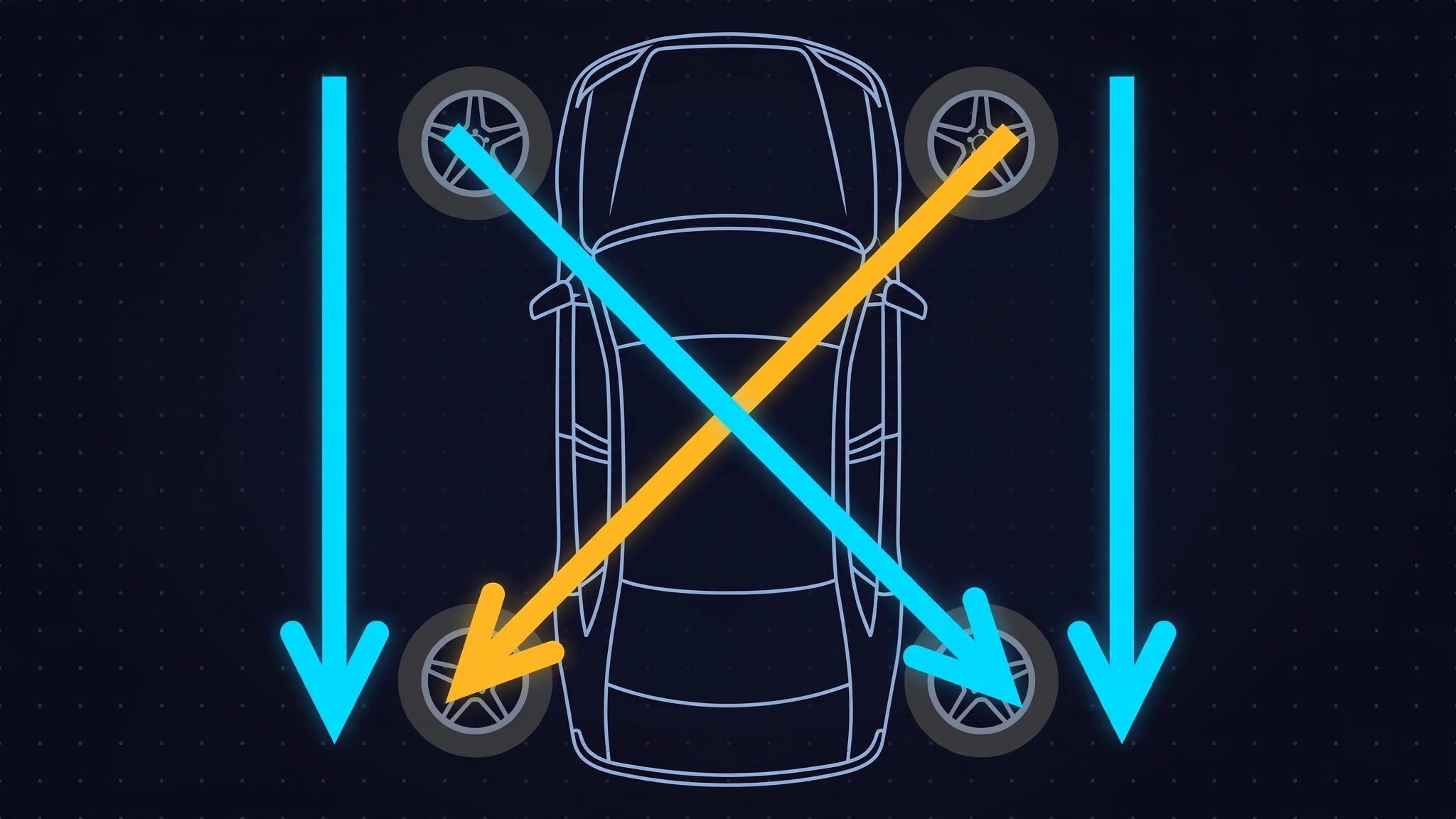
Rotation isn’t random — each tire moves to a specific new position depending on your drivetrain and tire type. A shop handles this automatically, but it helps to know what’s happening:
- Forward cross (front-wheel drive): Front tires move straight back on the same side; rear tires cross to the opposite front corners. This is the most common pattern.
- Rearward cross (rear-wheel drive and AWD): Rear tires move straight forward; front tires cross to the opposite rear corners.
- X-pattern: All four tires swap diagonally — front-left goes to rear-right, and so on. Common for AWD vehicles.
- Front-to-rear, same side: Used for directional tires (tires with a tread pattern designed to roll one way only). These must stay on the same side of the car — they just swap front to back.
- Staggered setups (wider rear tires than front, common on sports cars): These typically can’t be rotated at all, or only side to side. Check your manual.
If you’re not sure what kind of tires you have, reading your tire’s sidewall will tell you — directional tires are marked with a rotation arrow.
5 Signs You’re Overdue for a Rotation
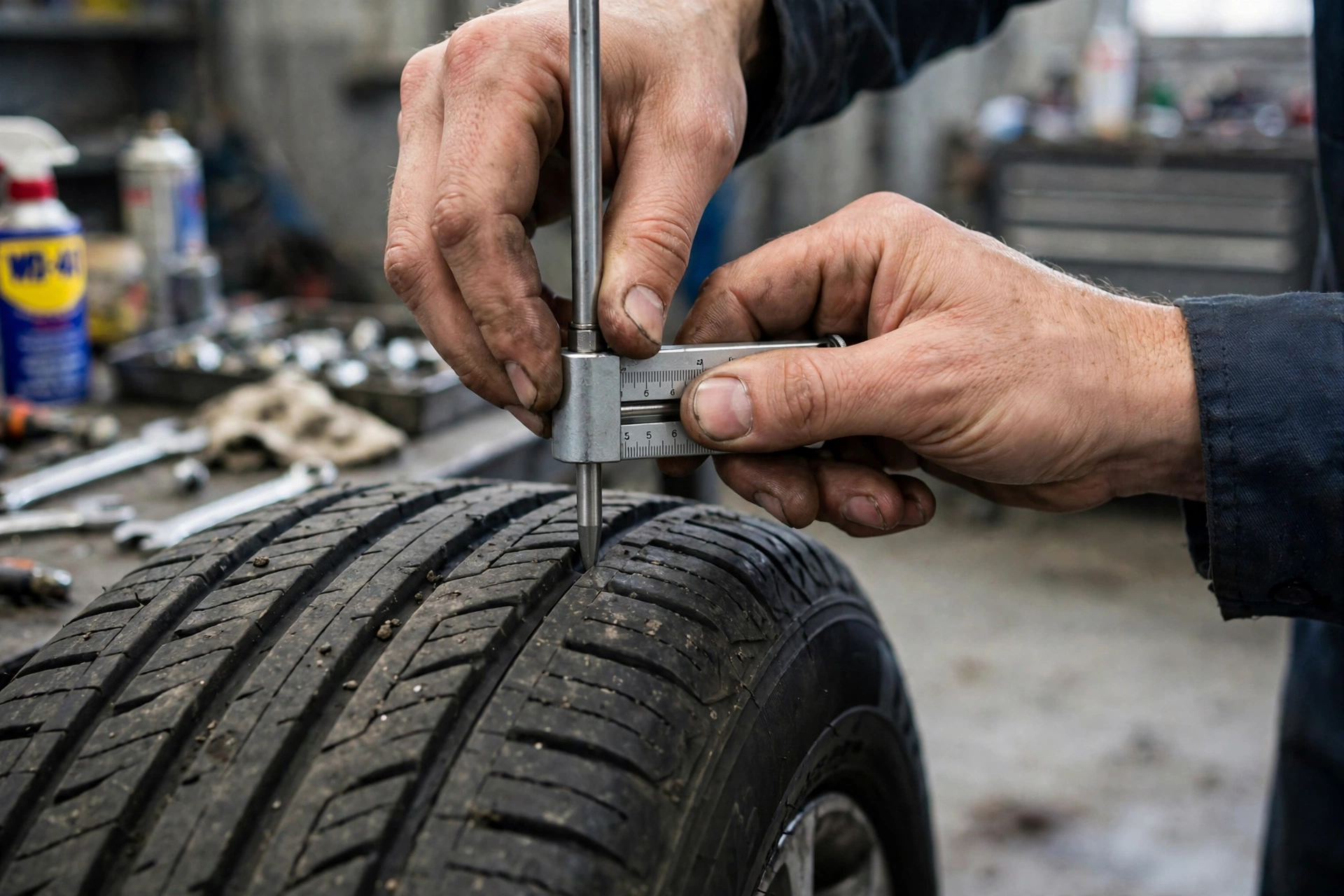
Don’t just go by the calendar. Your tires will tell you when they’re overdue:
- Visibly different tread depth front vs. rear. Run your hand across the tread of a front tire, then a rear one. If one feels noticeably more worn, you’re overdue.
- Vibration in the steering wheel at highway speed. Uneven wear creates imbalance you can feel.
- More road noise than usual. Cupped or feathered tread (scalloped dips or ribs worn on one side) gets loud.
- The car pulls to one side on a straight, flat road.
- It’s been over 7,500 miles or 8+ months since the last rotation — even if everything feels fine, the wear gap is growing silently.
That last one is the trap. Uneven wear is invisible until it isn’t, and by the time you feel it, you’ve already lost tire life you can’t get back.
DIY vs. Professional Rotation: What’s Smarter?
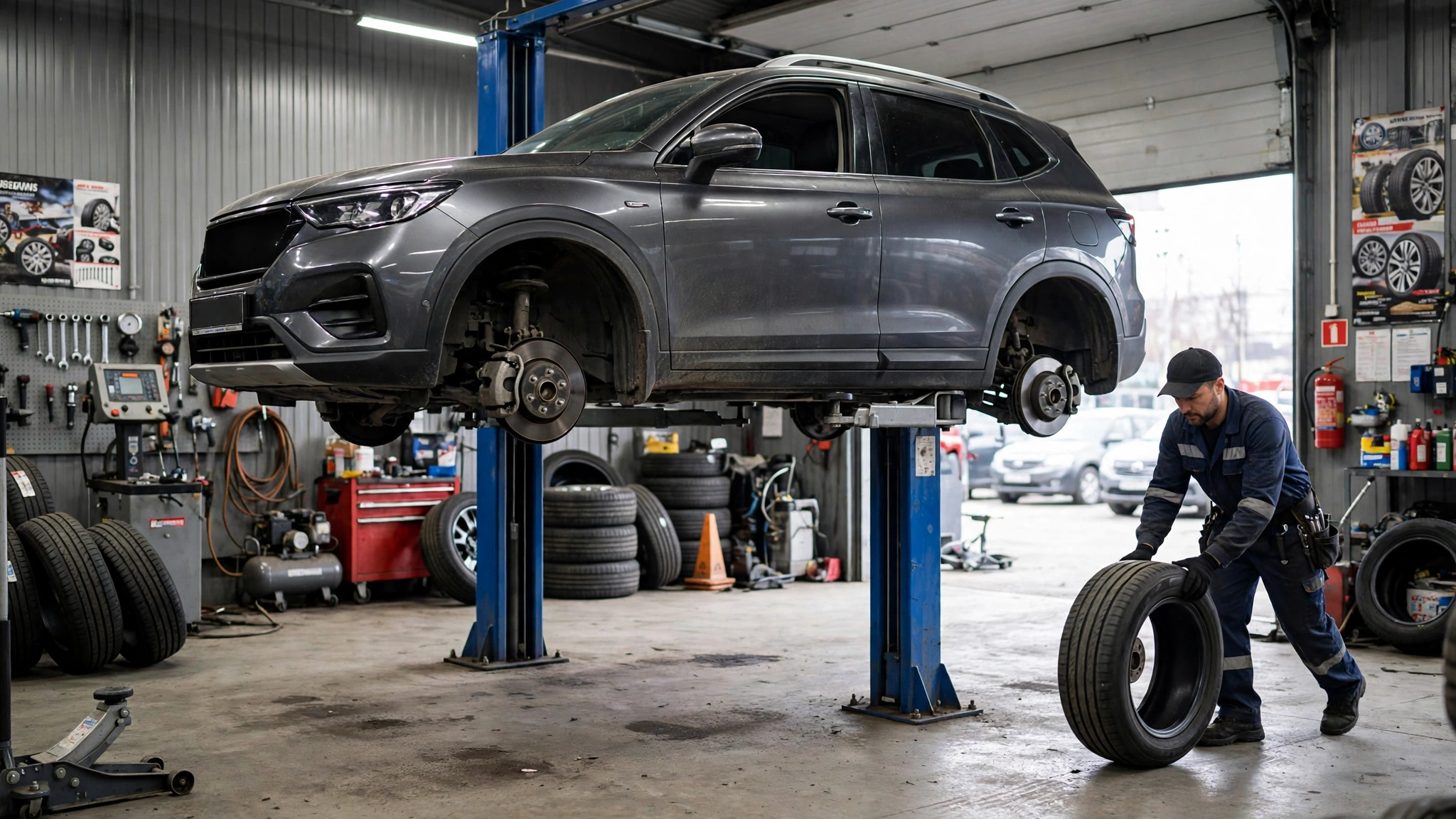
Doing it yourself is absolutely possible if you’re comfortable with a jack and jack stands — and it’s a good skill to have. The non-negotiable rules: work on flat, level ground, use proper jack stands (never rely on the jack alone), follow the correct pattern for your drivetrain, mark each tire’s original position with chalk so you don’t lose track, and torque the lug nuts to your vehicle’s specification when you’re done. Skip any of these and you’re risking your safety to save a few dollars.
A professional rotation is cheap insurance. A standalone rotation typically costs $20–$50 at most tire shops, and many shops include it free with an oil change or tire purchase. More importantly, a technician inspects your tires during the service — catching uneven wear patterns, checking tread depth, adjusting pressure, and spotting balance or alignment issues early. That inspection alone is often worth the price.
For most drivers, the smart move is simple: have it done with your oil change. One appointment, zero extra trips, and a trained eye on your tires twice a year.
What Happens If You Never Rotate Your Tires
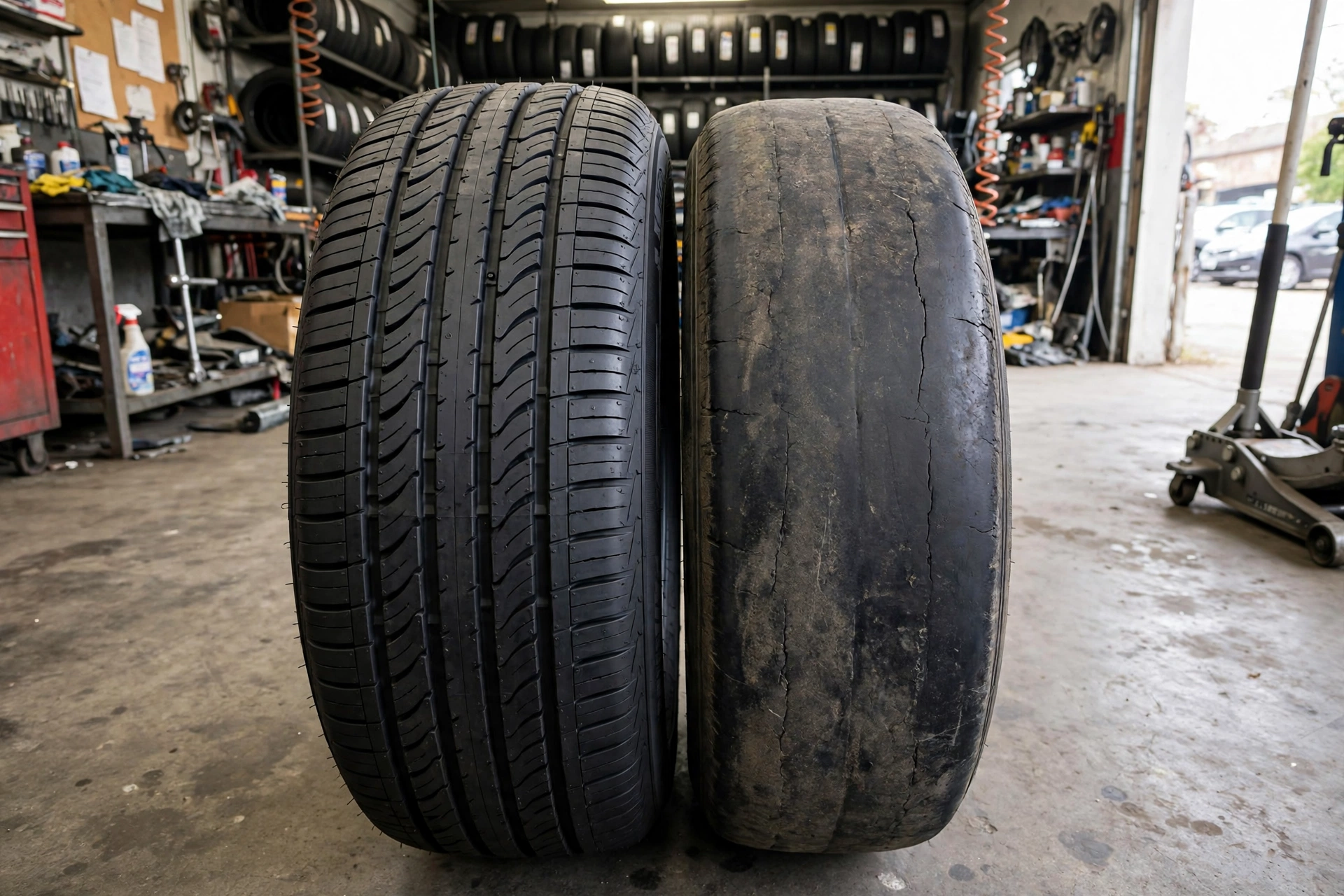
Let’s be direct about the cost of skipping it:
- You buy tires sooner. The worn pair dies early while the other pair still has life — you end up buying tires in pairs at awkward intervals instead of one full set on your schedule.
- Safety drops. Uneven tread means less grip, especially in rain, and longer stopping distances when it matters most. Severely worn spots become weak points where blowouts are more likely, particularly at highway speeds in hot weather.
- The ride gets worse. Vibration, humming road noise, and pulling to one side all get worse as the wear gap grows.
- It can cost you warranty coverage. Many tire manufacturers require proof of regular rotation to honor treadwear warranties. Skip the rotations, skip the warranty.
None of this happens overnight — which is exactly why it’s so easy to ignore until the bill arrives.
Do Electric Vehicles Need Tire Rotations More Often?
Yes — if you drive an EV, rotate more often than the standard schedule. Electric vehicles are heavier than gas cars and deliver instant torque, and both wear tires faster, especially on the drive axle.
Tesla is the most-quoted example: the owner’s manual recommends rotating tires every 6,250 miles, and replacing them once tread depth reaches 2/32 of an inch. That 6,250-mile interval is shorter than the 7,500-mile figure many gas cars use, and it is the number most EV guides cite.
Two EV-specific habits help. First, check tire pressure monthly — underinflation shortens tire life and cuts driving range. Second, rotate on schedule even if the tread “looks fine”: uneven wear on an EV shows up as road noise and lost range before it shows up visually. If your EV’s manual lists its own interval, follow it. Otherwise the 6,250-mile Tesla figure is a safe benchmark for most electric cars.
Frequently Asked Questions
Can I rotate my tires too often?
There’s no real penalty for rotating a little early. If anything, more frequent rotation keeps wear even more consistent. The only downside is your time or the service cost — so sticking to the recommended interval is the sweet spot.
Do I need an alignment with every rotation?
No. Rotation and alignment are different services. Rotation moves the tires around; alignment adjusts the angles of the wheels. You only need an alignment if you notice uneven wear patterns (like feathering on one edge), the car pulls to one side, or you’ve hit a serious pothole or curb. A good shop will tell you if your wear pattern suggests an alignment check.
Should the TPMS light come on after a rotation?
It shouldn’t stay on. Some vehicles need their tire pressure sensors re-registered to the new wheel positions after a rotation — your shop or dealer handles this in minutes. If a flashing TPMS warning light appears after service, go back and have them check the sensor registration rather than ignoring it.
Do new tires go on the front or the rear?
If you’re replacing only two tires, the new pair goes on the rear axle — even on a front-wheel-drive car. This surprises people, but it’s about stability: worn rear tires are more likely to cause the back end to slide in wet conditions. The tire industry is consistent on this one.
How long does a tire rotation take?
Typically 20 to 30 minutes at a shop, often done while you wait — especially when bundled with an oil change. A careful DIY rotation takes most people 45 minutes to an hour including setup and proper torquing.
Is tire rotation really necessary, or is it just upselling?
It’s necessary. The physics is straightforward — different corners of your car wear tires at different rates, and nothing else evens that out. It’s also one of the cheapest maintenance items on your car. If a shop ever tries to sell you a rotation every 3,000 miles on a normal commuter car, that’s upselling — but the service itself, at the right interval, genuinely extends tire life.
The Bottom Line
Rotate your tires every 5,000 to 7,500 miles or about every six months, follow the pattern for your drivetrain, and check your owner’s manual for the exact number. It’s the same advice you’ll find in NHTSA’s tire maintenance guidance: rotate on schedule, and check your owner’s manual for the right interval and pattern for your vehicle. Pair it with your oil change and you’ll never have to think about it. Your tires will last longer, your car will ride better, and you’ll avoid the most avoidable tire bill there is — the one for tires that died early for no good reason.
And when your tires do eventually reach the end of their life, make sure you know when to replace your tires — because even perfectly rotated tires don’t last forever.
