

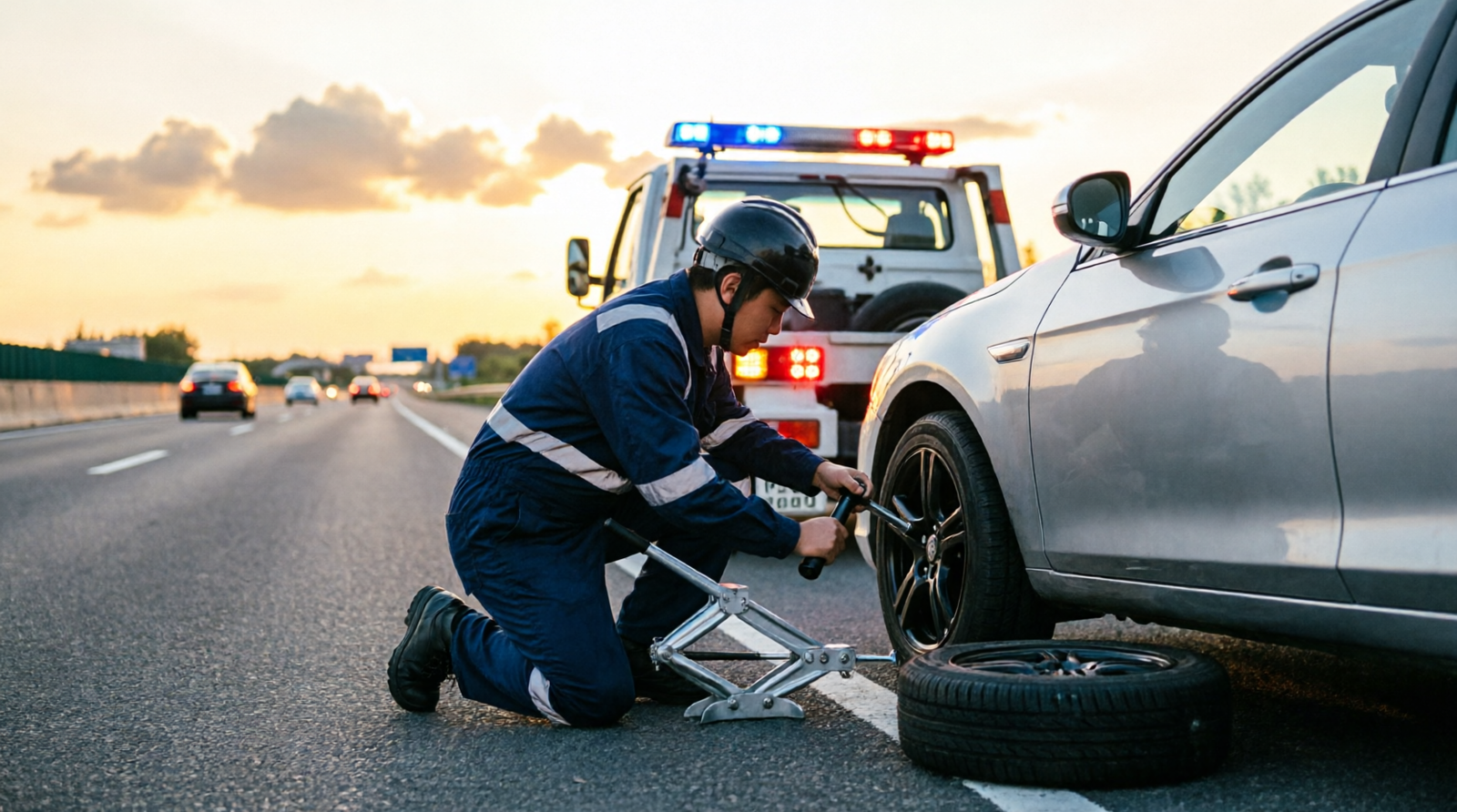
A flat tire always seems to happen at the worst possible time — during rush hour, on a dark stretch of highway, or right before an appointment you can’t miss. Roadside tire replacement services exist for exactly this reason: to get you back on the road safely without forcing you to handle a tire emergency alone. Here’s what these services actually cover, when to call one, and how to prepare so a flat doesn’t turn into a bigger headache.
What Is Roadside Tire Replacement?
Roadside tire replacement sends a technician directly to your location when a tire is flat, punctured, or otherwise unsafe to drive on. Instead of limping to a shop on a damaged tire, help comes to you — whether you’re in a parking lot, on a residential street, or pulled over on the interstate.
Coverage varies by provider. Some services simply swap in your spare, while others carry replacement tires and can install a new one on the spot if they have your size in stock. Auto insurance add-ons, manufacturer roadside programs, and standalone membership clubs (like AAA) all structure this differently — some dispatch their own technicians, while others contract with local tow and repair companies. It’s worth knowing which type of coverage you have before you’re stranded, since response times and included services can differ quite a bit between them.
Common Situations That Call for Roadside Help
- A sudden puncture from road debris
- Sidewall damage from a curb or pothole
- A blowout at speed
- A slow leak that won’t hold air
- A tire too damaged to repair
- No usable spare in the vehicle
- Simply not comfortable changing a tire yourself
The goal isn’t just “changing rubber” — it’s getting your car back into safe driving condition, or arranging a tow when that’s not possible.
When Should You Call for Roadside Tire Replacement?
Not every flat calls for the same response. A tire that’s lost most of its air can suffer additional internal damage — and damage the wheel — if you keep driving on it. If you notice a flat, slow down gradually, move away from traffic when it’s safe to do so, and stop somewhere secure before deciding on next steps.
| Situation | Best Next Step |
| Minor air loss | Check pressure and assess whether it’s safe to drive short distance |
| Completely flat tire | Stop driving; call roadside assistance |
| Sidewall damage | Do not attempt to drive on it |
| No spare available | Request roadside or mobile tire service |
| Unsafe location (highway shoulder, etc.) | Prioritize personal safety first |
If you’re stuck on a busy highway, getting yourself and your passengers somewhere safe matters more than attempting any kind of repair next to moving traffic.
What a Roadside Tire Service Usually Includes
Roadside assistance looks different depending on the company, your membership plan, and where you’re located. Generally, a technician arrives, inspects the tire, and determines whether your spare will work or another solution is needed.
Spare Tire Installation
If your car has a properly inflated spare, this is usually the fastest fix — the replacement is already matched to your vehicle, and a technician can typically have it installed in well under an hour. That said, not every car comes with a full spare anymore. Many newer models rely on repair kits, temporary inflators, or skip the spare altogether to save weight and improve fuel economy. A compact “donut” spare also isn’t meant for long-term use — most are rated for limited mileage and lower speeds, so it’s really meant to get you to a tire shop, not to replace the flat permanently.
Mobile Tire Replacement
Some providers carry tires and can install one right at your location. Availability depends on your tire size, vehicle, and what the technician has in stock — common passenger tire sizes are far easier to source on short notice than specialty or performance sizes. If nothing suitable is on hand, the next step is usually a tow to the nearest tire shop, where a wider inventory is available.
Roadside Tire Replacement vs. Tire Repair
Not every damaged tire needs to be replaced. A technician may determine the tire is safely repairable, depending on where the damage is, how severe it is, and standard repair guidelines.
When Replacement Is the Safer Call
Replacement becomes more likely when there’s:
- Significant sidewall damage
- A large or irregular puncture
- Damage outside the repairable zone (typically the tread’s center area)
- Heavy wear or visible deterioration
- Structural damage from driving on a flat
A tire can look fine from the outside and still have internal damage, which is exactly why a professional inspection matters before you decide to repair rather than replace. Industry guidelines generally limit repairs to punctures within the central tread area and under a certain size — anything closer to the shoulder or sidewall typically calls for replacement, since that part of the tire flexes constantly and a patch or plug isn’t reliable there. The cheapest fix isn’t always the safest one, and a tire shop that recommends replacement over a quick patch is usually looking out for your safety rather than upselling you.
What If You Don’t Have a Spare Tire?
Plenty of drivers only discover they’re missing a spare after they need one. To save space and weight, many manufacturers now equip vehicles with alternatives instead:
- Compact temporary spare
- Full-size spare
- Tire inflator kit
- Tire sealant kit
- Run-flat tires
- No spare equipment at all
Check your owner’s manual before an emergency happens so you know what you’re working with. And don’t assume an inflator kit solves every flat — it can help with minor air loss, but it’s not built for tires with structural or sidewall damage. When in doubt, don’t experiment; call a roadside service instead.
How Much Does Roadside Tire Replacement Cost?
Pricing varies quite a bit across the U.S., depending on your membership, location, time of day, vehicle, and tire size. Some roadside plans include the labor for a tire change but not the cost of the tire itself.
| Cost Factor | Why It Matters |
| Roadside membership | May cover part or all of the service call |
| Replacement tire | Often billed separately from labor |
| Labor | Mobile installation typically includes a service fee |
| Location | Remote areas can carry higher costs |
| Time of day | After-hours or emergency calls may cost more |
| Vehicle type | Specialty or uncommon tire sizes can be harder to source |
Before agreeing to any service, ask exactly what’s included in the quote. It’s a quick question that can save you an unpleasant surprise later. If you’re paying out of pocket without a membership, expect the service call itself to run anywhere from around $50 to $150, with the tire priced separately depending on the brand and size. Calling during normal business hours in a well-populated area is usually your cheapest option; late-night calls or remote locations tend to push the price higher.
How to Stay Safe While Waiting for Help
A flat tire is annoying. Standing next to moving traffic while you wait for help is genuinely dangerous. If you can, move your car well off the road, turn on your hazard lights, and stay alert to traffic around you.
A few things worth doing while you wait:
- Pull as far from traffic as reasonably possible
- Keep hazard lights on
- Avoid standing directly next to the roadway
- Keep passengers clear of moving traffic
- Give the provider an accurate, specific location
- Follow instructions from emergency personnel if the spot feels unsafe
You don’t need to change the tire yourself just because you technically have the tools. Roadside changes can be physically demanding — and risky — with traffic passing a few feet away. If you’re on a highway shoulder, staying inside the vehicle with your seatbelt on until help arrives is often safer than standing outside near the flow of traffic, especially at night or in poor weather.
Preparing for a Future Tire Emergency
The easiest tire emergency to deal with is the one you’ve already planned for. Next time your car is parked and you have a few minutes, check on the basics:
- Spare tire condition and pressure
- Jack and lug wrench
- Tire pressure monitoring system
- Roadside assistance membership details
- Owner’s manual
- Insurance or roadside contact info
- Phone charger or backup battery
It also helps to know your tire size ahead of time — you’ll usually find it on the tire’s sidewall, the driver’s door-jamb sticker, or in the owner’s manual. Save your roadside provider’s number somewhere easy to find on your phone, so you’re not searching for it mid-emergency. It’s also worth checking your spare’s air pressure a few times a year; a spare that’s been sitting unused for a couple of years can lose enough pressure to be useless exactly when you need it most.
Questions to Ask Before Hiring a Mobile Tire Service
If you don’t already have a roadside membership, you may need to call a mobile tire provider directly. Before agreeing to service, it’s worth asking:
- Can you reach my exact location?
- Do you carry my tire size?
- Does the quote include installation?
- Are there extra travel or mobile-service fees?
- What’s the estimated arrival time?
- Can you install a spare I already have?
- What happens if the tire can’t be replaced on-site?
Have your vehicle’s year, make, model, and tire size ready — it gives the provider a much better shot at bringing the right equipment the first time.
What Happens If the Tire Can’t Be Replaced Roadside?
Sometimes a roadside fix just isn’t possible — the right tire isn’t available, the wheel itself is damaged, or there’s a mechanical issue beyond the tire. In these cases, towing to a repair shop is the safer route, where technicians have full access to tires, balancing equipment, and diagnostic tools.
If a technician tells you the car isn’t safe to drive, it’s worth listening — even if it means paying for a tow. A shop can catch problems with the wheel and suspension that just aren’t practical to diagnose on the side of the road, and driving further on a compromised tire risks turning a single tire replacement into a much larger repair bill.
Final Thought
A flat tire can happen anywhere, anytime — but a little preparation makes it far less stressful. Know your spare situation, keep your roadside contact handy, and never push a severely damaged tire further than you have to. When something feels off, getting everyone safely out of harm’s way matters more than getting back on the road quickly.
FAQs About Roadside Tire Replacement
1. Can roadside assistance replace a flat tire?
Yes — depending on your provider and vehicle, they can typically install your spare or arrange another fix.
2. What if my car doesn’t have a spare tire?
Many providers offer mobile tire replacement or will tow you to a shop if a suitable tire isn’t available on-site.
3. Can a roadside technician repair a punctured tire?
Sometimes. It depends on the size and location of the damage, which a professional needs to inspect first.
4. How long does roadside tire replacement take?
The tire change itself is usually quick, but total wait time depends on traffic, location, and technician availability.
5. Does roadside assistance include a new tire?
Not always. Many plans cover the service call and labor but bill the tire itself separately.
6. Is it safe to drive a short distance on a flat tire?
Generally no — even a short drive on a flat can cause lasting damage to the tire and wheel.
7. What should I do while I wait for help to arrive?
Move somewhere safe away from traffic, turn on your hazards, and give the provider a clear, accurate location.