

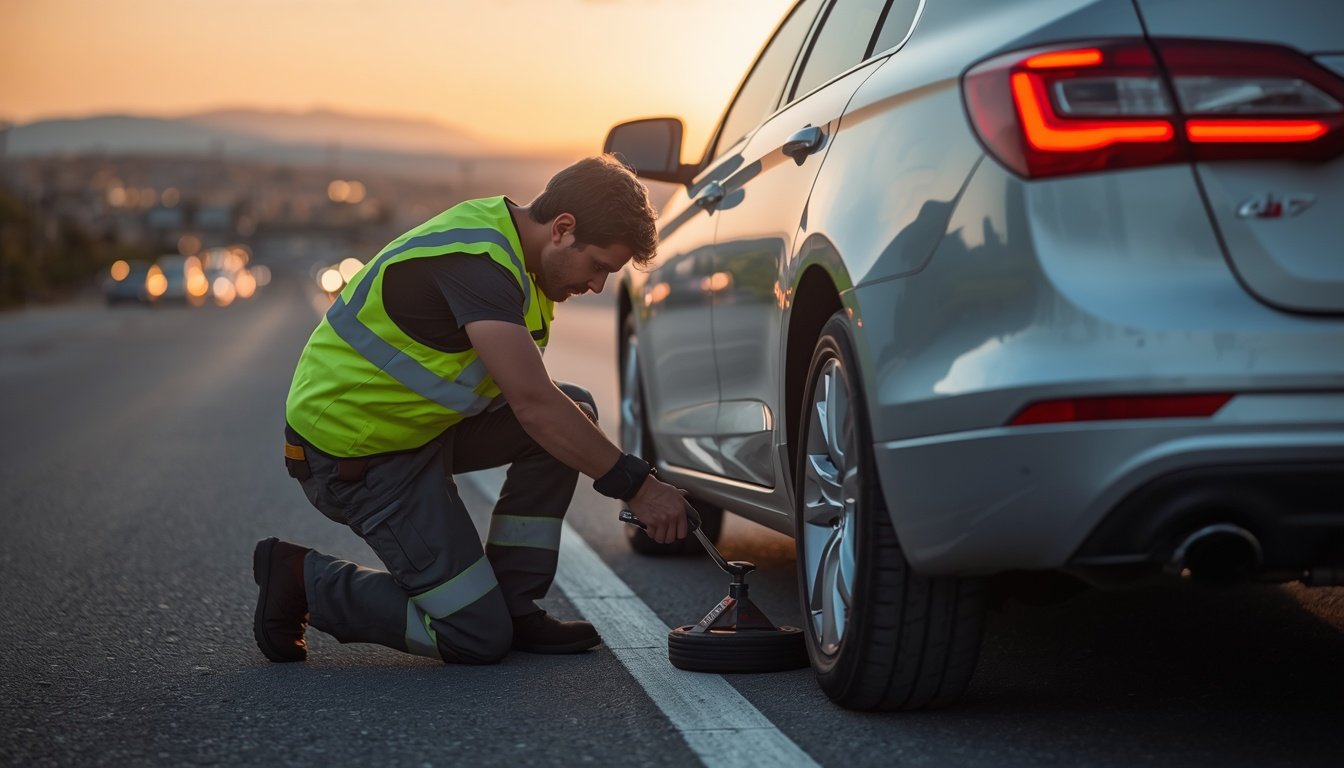
A flat tire always seems to happen at the worst possible time. Once you’re safely stopped, the next question is usually some version of “who can come change this for me?” The short answer: you’ve got more options than you’d think, including roadside assistance, mobile tire services, tow companies, and local tire shops.
Which one makes sense depends on a few things — mainly whether you have a usable spare and how safe your current location is. Here’s how to sort through the options quickly.
What to Do the Moment You Get a Flat
Before you think about who to call, get yourself out of harm’s way.
If you feel the flat while driving, don’t slam the brakes. Ease off the gas, hold the wheel steady, and work your way toward a shoulder, side street, or parking lot — somewhere away from moving traffic.
Once you’re stopped:
- Turn on your hazard lights.
- Shift into Park and set the parking brake.
- Get away from the traffic side of the car if you can.
- Check whether you actually have a spare tire (not every car does anymore).
- Locate the jack and lug wrench.
- Look the spare over before anyone puts it on.
- Call for help if changing it yourself isn’t something you’re comfortable doing.
If you’re stuck on a highway shoulder or somewhere else that feels unsafe, don’t try to be a hero. That’s exactly the situation roadside assistance exists for.
Where to Look for Roadside Tire Help
A search for “spare tire change near me” is going to turn up a mix of service types, and they’re not all the same thing.
Roadside assistance programs
This is usually the fastest route if you’re already stranded. A technician drives out, and if your spare is in good shape, they’ll swap it right there. AAA, for instance, includes spare tire installation for members with a usable spare — and if there isn’t one, they’ll arrange a tow instead.
Mobile tire services
These companies send someone to wherever you are — your driveway, office parking lot, a grocery store lot — rather than making you come to them. Handy if you’d rather not put miles on a temporary spare before you have to.
Local tire shops
A shop can change the flat and tell you, on the spot, whether the damaged tire is repairable or needs replacing. The catch is you have to get the car there first, unless they also run a mobile crew.
Towing companies
Some tow operators handle basic tire changes too, and they’re your go-to if there’s no usable spare at all.
A few search terms worth trying, since results vary by provider:
- “flat tire change near me”
- “mobile tire change near me”
- “roadside tire service near me”
- “emergency tire change near me”
Before picking one, glance at their coverage area, quoted arrival time, and reviews — a five-star rating with a two-hour ETA isn’t much help if you’re on a highway shoulder.
What to Tell the Technician When You Call
Having a few details ready before you dial speeds everything up.
- Your exact location (cross streets, mile marker, or a nearby landmark)
- Vehicle year, make, and model
- Whether you have a spare, and whether it’s inflated
- Which tire is flat
- Whether you’re parked somewhere safe
- Whether you’re on a highway, residential street, or a lot
If you’re on a highway, mention the direction you’re traveling and the nearest exit or mile marker. Most provider apps also let you drop a pin instead of describing your location verbally, which is usually more accurate anyway.
What a Spare Tire Change Actually Costs
Pricing swings quite a bit based on location, time of day, and whether you already have coverage through a membership or insurance plan.
A straightforward swap — pull the damaged wheel, bolt on the spare — is one of the cheaper roadside jobs. Costs climb from there if towing, after-hours rates, or a membership fee get added in.
| Service option | What you generally get | What affects the price |
| Roadside assistance | Technician comes to you | Membership status, plan limits, service fees |
| Mobile tire service | Technician comes to you | Location, time of day, labor |
| Tire shop | Inspection plus repair or replacement | Labor rate, tire cost |
| Towing | Vehicle moved to a shop | Distance, vehicle type, time |
Ask upfront whether the quote covers labor, travel, and any after-hours surcharge — that’s usually where a “cheap” quote turns into a surprise bill. And if you already have roadside coverage through your insurer, credit card, or the automaker, check that before paying out of pocket for a separate service.
If you’re paying out of pocket without any membership, a basic spare swap tends to run cheaper during normal daytime hours than late at night or in bad weather, when demand for roadside help spikes and providers often charge more to send someone out. A tow tacks on additional cost, usually based on distance, so if you’re already a AAA member or your insurance includes roadside coverage, it’s worth checking your plan’s mileage allowance before assuming a tow will be free.
What Actually Happens During the Installation
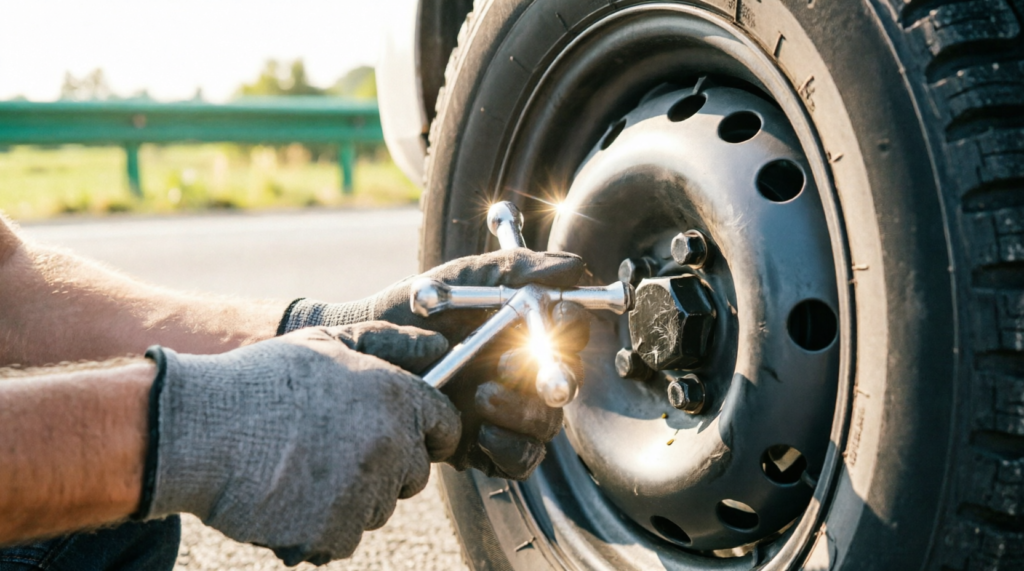
It’s a fairly quick process once someone’s on scene. The technician checks that the car is parked safely, confirms the spare is actually usable, and gives the flat and wheel a quick once-over for obvious damage.
From there, the damaged wheel comes off, the spare goes on, and the lug nuts get torqued down properly. A good technician will also check the spare’s air pressure before sending you off — and mention any limits that come with it.
That last part matters more than people expect. A compact spare doesn’t drive like your regular tire, and treating it like one is how a second problem shows up on the way home.
Once a technician is actually on scene, the swap itself usually takes somewhere around 15 to 30 minutes, assuming the lug nuts aren’t seized and the spare doesn’t need extra inflating. Rusted bolts, a locking lug nut with a missing key, or a spare that’s been sitting flat for years can all stretch that timeline, which is part of why it helps to know your car’s setup before you’re standing on the side of the road figuring it out.
The Rules for Driving on a Spare
Short version: don’t drive on it like it’s a normal tire.
Most cars carry a compact “donut” spare, built to get you to a shop — not to be your daily tire for the next month. The usual speed cap is 50 mph, though your specific vehicle may set a different limit, so it’s worth a quick check of what’s printed on the sidewall or listed in your manual.
| Spare type | What it’s for | Watch out for |
| Compact temporary spare | Short-term emergency use only | Low speed and mileage limits |
| Full-size matching spare | Closer to normal driving | Still follow manufacturer guidance |
| Full-size non-matching spare | Temporary fix | May handle differently than your other tires |
Once you’re past the emergency, get the real tire looked at rather than stretching the spare’s use as long as possible.
When a Tow Makes More Sense Than a Spare
Sometimes swapping the tire isn’t actually the right move. A tow is usually the better call if:
- There’s no spare in the car at all
- The spare itself is flat, cracked, or dry-rotted
- It’s the wrong size or type for your vehicle
- The wheel or rim is bent or damaged
- More than one tire is flat
- The tire separated from the rim and did other damage
- You drive an AWD or 4WD vehicle with tight tire-matching requirements
Most roadside providers will check the spare before they install it, and if it’s not safe to use, they’ll arrange a tow instead — AAA works this way, and most others follow a similar policy. If you’re not sure your spare is even compatible with your car, don’t guess; a technician can tell you in about thirty seconds.
Repair or Replace: What Happens Next
Getting the spare on solves the immediate problem, not the original one. Once you’re somewhere safe, have the damaged tire looked at properly.
A puncture in the tread area is often repairable. Sidewall damage or anything structural usually isn’t — that’s a replacement. It’s also worth having the tire checked if you drove any distance on it while badly underinflated, since that can cause internal damage that isn’t visible from the outside, even if the puncture itself looks minor.
The real question a shop is answering isn’t “does it hold air” — it’s whether the tire is actually safe to trust again.
How to Be Ready Before It Happens
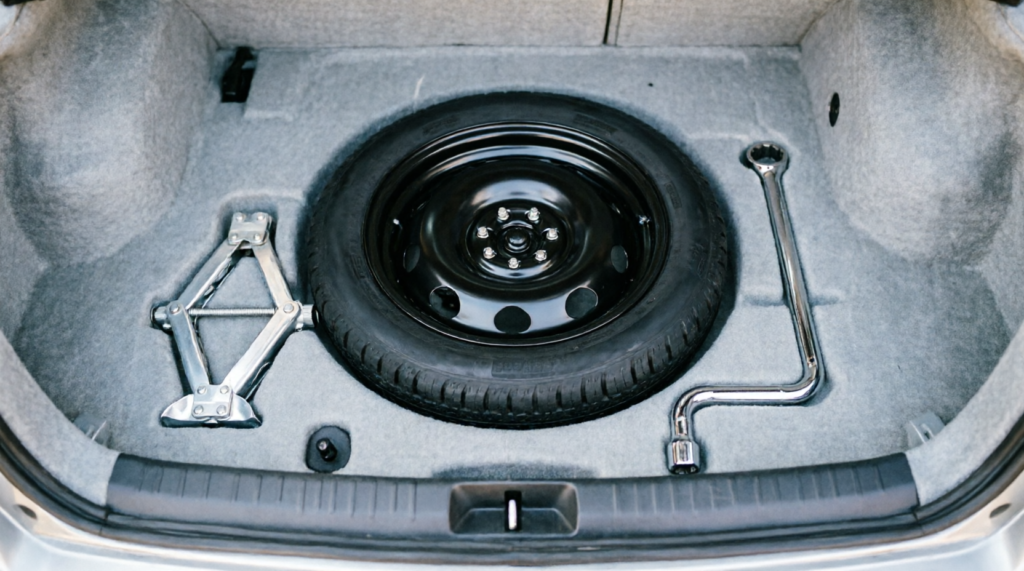
The best time to deal with a flat tire is before you have one.
Take a few minutes now to confirm:
- Where the spare is stored
- Whether it’s properly inflated
- Where the jack and lug wrench live
- Whether your car uses a locking lug nut (and where that key is)
- What your owner’s manual says about spare limits
It’s easy to forget the spare exists until you need it — and a spare that’s been sitting untouched for five years may be flat or dry-rotted by the time you finally do. Saving your roadside provider’s number in your phone now beats searching for it while standing on a shoulder.
Matching the Right Service to Your Situation
There’s no single “best” option — it depends on what you’re dealing with.
| Your situation | Best move |
| Flat tire, usable spare on hand | Roadside assistance |
| Flat tire at home | Mobile tire service or tire shop |
| No usable spare | Towing or mobile tire service |
| Damaged wheel or rim | Towing to a repair shop |
| Need a full tire replacement | Tire shop |
| Stuck somewhere unsafe | Roadside assistance |
The goal isn’t necessarily the closest provider — it’s the one equipped to handle your specific vehicle and situation without making things worse.
Frequently Asked Questions
Can someone come to my exact location to install my spare?
Yes — most roadside and mobile tire services send a technician directly to you, as long as you have a usable spare on hand.
Does AAA handle flat tire changes?
Yes, spare installation is included for members with a usable spare. Without one, they’ll typically arrange a tow instead.
What if I don’t have a spare tire at all?
Call roadside assistance or a mobile tire service — depending on your situation, you may need a tow to the nearest shop.
How long does it usually take for someone to arrive?
It varies with traffic, weather, time of day, and demand. Most providers give you an estimated arrival time when you request service.
How far can I drive on a temporary spare?
It depends on your vehicle. Check the sidewall of the spare and your owner’s manual for the exact speed and distance limits.
Is it okay to drive on a spare for a few days?
Not ideally — it’s meant for short-term use. Get the original tire repaired or replaced as soon as you reasonably can.
What should I do if my spare is flat too?
Don’t drive on it. Call roadside assistance or a tire service and let them know you don’t have a usable spare.
Conclusion
If you’ve got a usable spare and you’re parked somewhere safe, roadside assistance is typically your fastest, simplest option. No spare, damaged wheel, or an unsafe location usually means a tow is the smarter call. Either way, treat the spare as a way to get somewhere safe — not a long-term fix — and get the real tire checked out as soon as you can.