

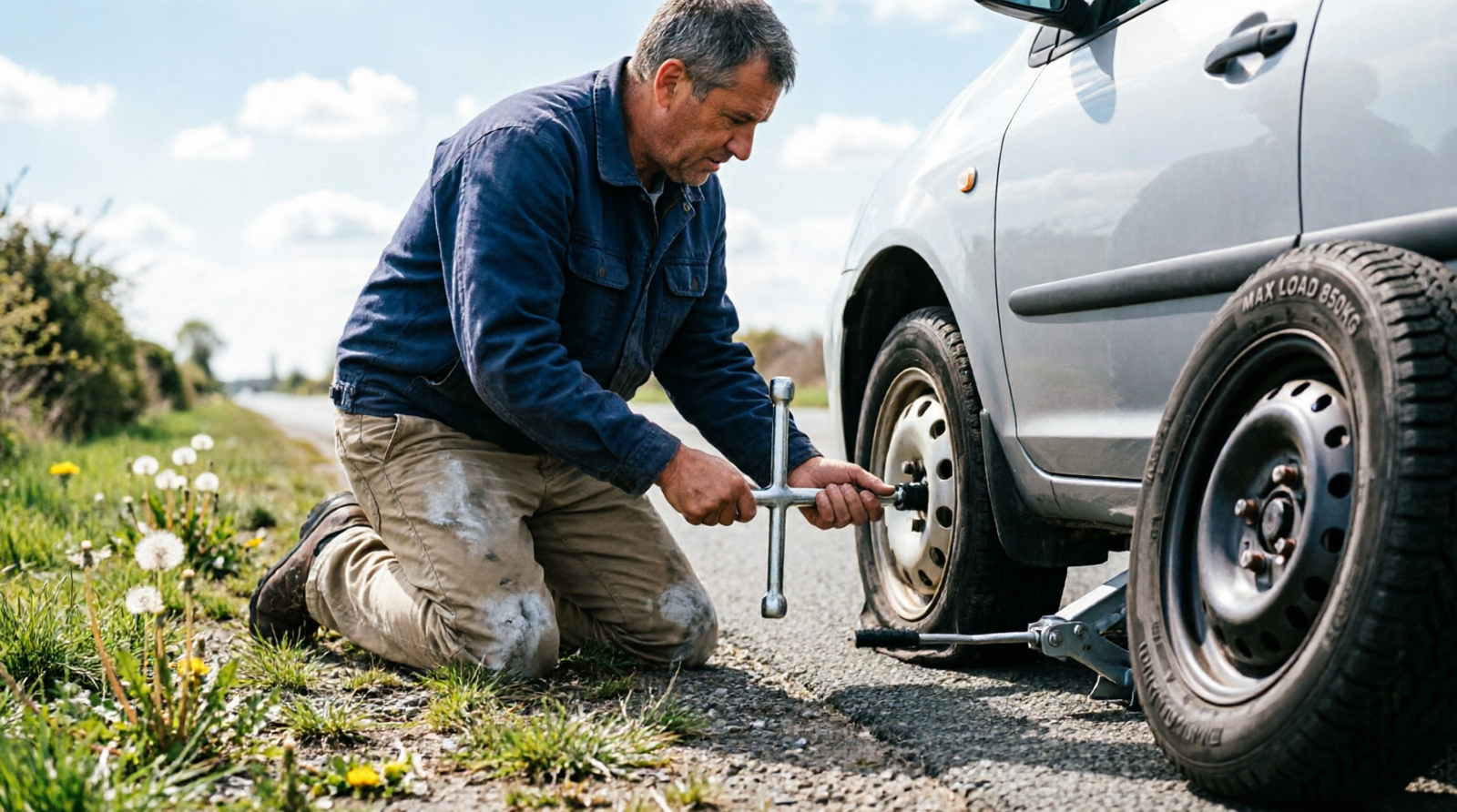
A flat tire has a way of showing up at the worst possible moment — on the highway during rush hour, in a parking lot in the rain, or miles from the nearest gas station. The good news is that if your car has a working spare, a jack, and a lug wrench, you can usually handle it yourself in about half an hour, without waiting on a tow truck. Here’s exactly how to replace a tire safely, from the first warning light to the drive back home.
What You Need to Replace a Car Tire
Before you touch a lug nut, take stock of what you’re working with. Most vehicles that ship with a spare also include the basic tools for a temporary swap.
| Tool or Item | Purpose |
| Spare tire | Replaces the damaged tire temporarily |
| Car jack | Lifts the vehicle off the ground |
| Lug wrench | Removes and tightens lug nuts |
| Wheel chocks | Helps keep the car from rolling |
| Gloves | Keeps your hands cleaner and protected |
| Flashlight | Useful for nighttime tire changes |
| Owner’s manual | Shows jack points and torque specs |
Not every car has a full-size or even donut spare anymore. Some newer models come with a tire-inflation kit or run-flat tires instead. Check your owner’s manual so you know what you’re actually working with before you’re stuck on the shoulder figuring it out.
Types of Spares You Might Find in Your Trunk
Manufacturers don’t all handle spares the same way, and it helps to know which kind you have before an emergency happens.
- Full-size spare — Matches your other tires in size and can typically be driven on normally, though it’s still worth checking the tread.
- Temporary “donut” spare — Smaller and lighter, meant only for short distances at reduced speeds.
- Tire-inflation kit — A sealant-and-compressor combo for minor punctures; it won’t help with a blown sidewall or a large puncture.
- Run-flat tires — Built to keep functioning for a limited distance even after losing pressure, so some vehicles skip the spare entirely.
Knowing which category your car falls into changes how you should react to a flat, so it’s worth a quick check now rather than during a roadside emergency.
Check Your Spare Before You Need It
A spare tire is only helpful if it’s actually usable. Get in the habit of checking its air pressure every few months, along with confirming the jack and lug wrench are still where they belong. It’s an easy step to forget, but a flat spare defeats the entire purpose of having one.
If your car uses a temporary “donut” spare, keep in mind it’s built for limited mileage and lower speeds. The tire itself usually has the speed and distance limits printed right on the sidewall — follow them, since ignoring these limits can wear out the donut quickly or affect handling.
Find a Safe Place to Change the Tire
Safety comes before speed, every time. If you feel a flat tire on a busy road or highway, resist the urge to pull over and start working right where you are.
Instead, slowly steer toward a flat, stable spot away from traffic. Turn on your hazards and set the parking brake. If you can’t reach a safer spot, it’s better to call roadside assistance than to risk changing a tire next to moving cars.
Avoid changing a tire in these situations:
- On a steep hill or incline
- On soft mud or loose gravel
- On an unstable or narrow shoulder
- Where traffic is passing dangerously close
- In low-visibility conditions, like fog or nightfall without lighting
Once you’re parked safely, shut off the engine and make sure everyone in the car moves away from traffic.
Prepare the Car Before Jacking It Up
A few minutes of prep now saves you headaches later. If you have an automatic transmission, shift into Park. Manual transmission drivers should use the gear recommended in the owner’s manual. Either way, set the parking brake firmly.
If you have wheel chocks, place them against a tire that’s staying on the ground — this helps keep the car from rolling while it’s jacked up. Then pull out the spare tire, jack, and lug wrench from their storage spot. Your owner’s manual will point you to the correct jack point, which varies by make and model.
Loosen the Lug Nuts First
Here’s a step beginners often get backward: loosen the lug nuts before lifting the car, not after.
Use the lug wrench to break each nut loose, turning counterclockwise. They’re often tight, so use steady, controlled pressure rather than jerking the wrench. Doing this while the tire still touches the ground keeps the wheel from spinning as you work.
How to Jack Up the Car Safely
Position the jack under the vehicle’s designated jack point — never guess, since the wrong spot can damage the car or cause the jack to slip. Raise the vehicle slowly, following your owner’s manual, until the flat tire is just barely off the ground. You don’t need to lift it any higher than that.
Keep Clear of the Raised Vehicle
Never put any part of your body under a car that’s only supported by a jack. Jacks are designed to lift, not to hold a vehicle securely for extended periods. If the car feels wobbly or unstable at any point, stop and lower it if you safely can, or call for professional help.
Remove the Flat Tire and Install the Spare
Once the tire is off the ground, finish removing the loosened lug nuts and set them aside somewhere they won’t roll away. Grip the tire with both hands and pull it straight toward you.
Sometimes a wheel sticks to the hub due to rust or built-up dirt. If it won’t budge, don’t crawl underneath the car or force it — check your manual or call for help instead.
With the flat tire out of the way, line up the spare’s center hole with the wheel hub and push it into place. Thread the lug nuts on by hand first to avoid cross-threading, then use the wrench to snug them lightly — not fully tight — while the car is still raised.
Tighten the Lug Nuts the Right Way
For five-lug wheels, tighten in a star or crisscross pattern. Four-lug wheels should be tightened by alternating opposite nuts. This pattern distributes pressure evenly so the wheel seats properly against the hub.
Once the spare is snug, lower the car until the tire firmly touches the ground, then remove the jack. Now go back over the lug nuts with the wrench, tightening them fully in that same crisscross pattern.
If your manufacturer specifies a torque value, a torque wrench will get you there precisely. Both over-tightening and under-tightening can cause real problems down the road, so skip the shortcuts — don’t stand on the wrench or use a pipe for extra leverage. Over-tightened lug nuts can warp the brake rotor or strip the threads, while under-tightened ones risk a wheel working loose while you’re driving.
Common Mistakes to Avoid When Changing a Tire
Even careful drivers slip up on their first few tire changes. A few of the most common mistakes include:
- Jacking up the car before loosening the lug nuts. This makes the wheel spin freely, so it’s much harder to get the nuts loose.
- Using the wrong jack point. This can dent the frame or cause the jack to slip mid-change.
- Fully tightening lug nuts while the car is still raised. The wheel isn’t seated properly yet, which can leave nuts unevenly torqued.
- Ignoring the spare’s speed and mileage limits. Treating a donut like a regular tire can damage it or affect your car’s handling.
- Forgetting to check tire pressure afterward. A spare that’s been sitting in the trunk for years may be low on air by the time you need it.
Avoiding these missteps makes the whole process faster and safer.
Quick Installation Checklist
Before you drive off, confirm:
- Every lug nut is installed and tightened
- The wheel sits flush against the hub
- The jack is completely removed and stored
- The flat tire and tools are secured in the trunk
- The spare has adequate air pressure
- Nothing is left under or beside the car
What to Do After Installing the Spare
Getting the spare on isn’t quite the finish line. Temporary spares are meant to get you to a tire shop, not to serve as a long-term replacement — their handling and braking can feel noticeably different from your regular tires.
| After the Tire Change | What to Do |
| Temporary spare installed | Follow its speed and distance limits |
| Full-size spare installed | Check the manual for any restrictions |
| Flat tire damaged | Have it inspected before repairing |
| Lug nuts tightened | Verify torque when possible |
| Tire pressure unknown | Check it as soon as you can |
| Spare has low pressure | Inflate to the manufacturer’s spec |
If a tire-pressure warning light stays on after the swap, don’t panic — it’s often just because the spare lacks a compatible pressure sensor.
When to Call Roadside Assistance Instead
Knowing when not to attempt a tire change is just as valuable as knowing how. Call for help if:
- You’re parked somewhere unsafe or visibility is poor
- The jack, lug wrench, or spare is missing or damaged
- You can’t identify the correct jack point
- The lug nuts won’t loosen with reasonable force
- The vehicle feels unstable on the jack
- The wheel or suspension looks damaged
A roadside technician can handle all of this while you stay somewhere safer. Many auto insurance policies and some credit cards include roadside assistance coverage, so it’s worth checking what you already have access to before assuming a tow truck will cost you out of pocket.
Preventing Future Flat Tires
You can’t avoid every nail in the road, but routine tire care cuts down your odds of getting stranded. Check tire pressure monthly and keep it at the level your manufacturer recommends. Look over the tread for cracks, bulges, uneven wear, or embedded debris — and don’t forget to check the spare occasionally, too.
Rotations and alignments, done on schedule, also help your tires wear evenly and last longer. Most manufacturers recommend rotating tires roughly every 5,000 to 7,500 miles, which is a good habit to pair with an oil change so it doesn’t slip your mind.
Frequently Asked Questions
How long does it take to replace a car tire?
For someone with experience, about 15–30 minutes under safe conditions. Beginners may need a bit longer.
Can I replace a tire without a jack?
No — you need to lift the vehicle safely before removing the damaged wheel.
Should I replace all four tires at once?
Not always. It depends on tread wear, tire type, and the condition of your remaining tires.
How far can I drive on a spare tire?
It depends on the spare type. Temporary spares have specific speed and mileage limits printed on the sidewall.
Can I drive right after changing a tire?
Yes, once the wheel is properly tightened, though you should still follow the spare’s driving restrictions.
What if the lug nuts are too tight to remove?
Don’t force it with unsafe methods. If controlled pressure doesn’t work, call roadside assistance.
Is a flat tire always repairable?
No. Punctures are often fixable, but sidewall damage usually means the tire needs full replacement.
Final Thoughts
Changing a tire isn’t complicated once you know the steps, but safety always comes first. Find stable ground, use the correct jack point, tighten the lug nuts properly, and respect your spare’s limitations until you can get a full-size tire back on the car. When something feels off or unsafe, calling roadside assistance is always the smarter move.