

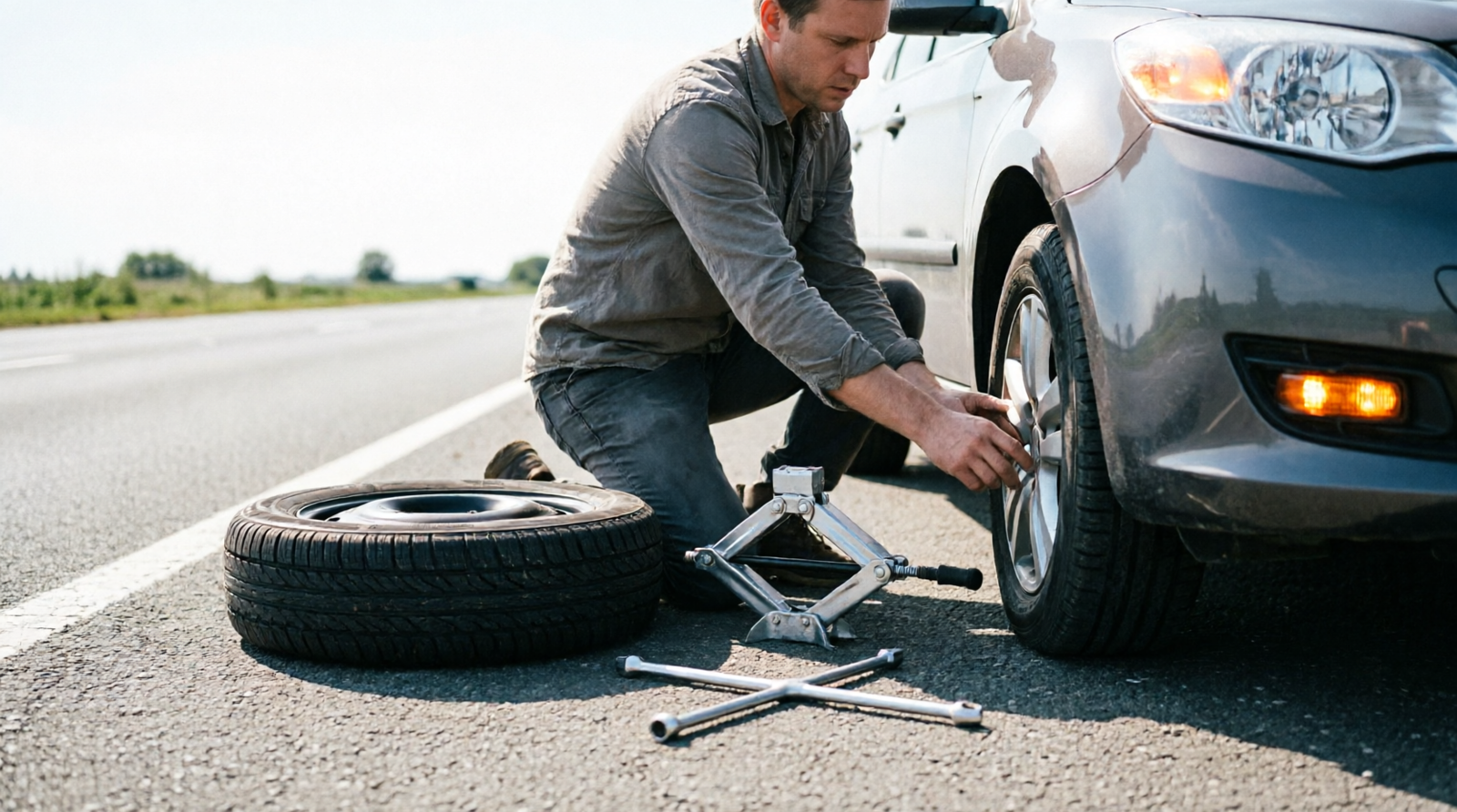
A flat tire can turn an ordinary drive into a stressful moment, especially on a busy road or far from home. If you’re wondering how to replace tyre in car, the honest answer is that the safest approach depends on where you’re stopped, the type of damage, and whether you have the right spare. This guide walks through what to check, when it’s safe to handle it yourself, and when to call for help.
What Does It Mean to Replace a Car Tire?
Replacing a tire means removing a damaged or worn tire and fitting a suitable one in its place. That’s different from simply adding air to a tire that’s lost pressure over time.
A tire typically needs replacement because of:
- A puncture that can’t be safely repaired
- A damaged sidewall
- Excessive or uneven tread wear
- Cracking or rubber deterioration
- A blowout or other major damage
- The wrong size or type for the vehicle
Not every flat needs a brand-new tire, though. A qualified tire professional can inspect the damage and tell you whether a repair is realistic or whether replacement is the only safe option. It’s also worth remembering that a tire replacement is different from a wheel repair — a bent rim or damaged wheel is a separate issue that a tire shop or mechanic needs to check independently, since a new tire mounted on a damaged wheel won’t solve the underlying problem.
What to Do the Moment You Get a Flat
Your first priority is safety, not speed. If you notice a flat while driving, ease off the gas and look for a spot away from moving traffic — ideally a parking lot, well-lit area, or wide shoulder.
Once you’ve stopped:
- Turn on your hazard lights.
- Shift into park and set the parking brake.
- Keep passengers away from traffic and off the roadside.
- Avoid standing between your car and passing vehicles.
- Call a trusted adult or roadside assistance if the location feels unsafe.
A flat tire on a highway shoulder is genuinely risky. Even with a spare and the right tools, professional assistance is often the smarter call than working next to fast-moving traffic. If you can, position the vehicle so the damaged tire faces away from traffic — this gives you more of a buffer if you do need to step out and open the trunk. Turning the steering wheel slightly away from the road can also help keep the car from rolling toward traffic if it happens to shift while jacked up.
How to Tell If a Tire Actually Needs Replacing
A tire can lose air for several reasons — a puncture, a bad valve, or even a wheel issue. It’s worth having a professional take a look whenever you notice:
- Persistent air loss
- Visible cuts or cracks
- Bulges on the sidewall
- Severe or uneven tread wear
- Repeated punctures
- Vibration or odd handling
- A tire-pressure warning light
Tire Age Matters Too
Rubber degrades over time even if the tread still looks fine. Heat, sunlight, and simple age can make tires brittle from the inside out, long before the tread wears down to the legal limit. Check your owner’s manual and the tire manufacturer’s guidance for age recommendations, and when in doubt, have a shop inspect it — most shops can check the manufacture date stamped on the sidewall in a few seconds.
Can Every Flat Tire Be Repaired?
Not always, and this is one of the most common misconceptions drivers have. Technicians look at the location, size, and depth of the damage, along with a look at both the inside and outside of the tire, since damage isn’t always visible from the outside alone.
Sidewall damage is particularly concerning because the sidewall helps support the vehicle’s weight and flexes constantly while driving. A tire driven while severely underinflated can also suffer hidden internal damage, even if the original puncture looks minor. That’s why a quick glance usually isn’t enough to declare a tire safe to reuse — a proper inspection off the vehicle is the only reliable way to know for sure.
Spare Tire vs. Replacement Tire: What’s the Difference?
A spare is meant to get you out of a tough spot — it isn’t always meant to be permanent. Vehicles come with different spare types, each with its own rules.
| Type | Typical Purpose | Important Consideration |
| Full-size spare | Temporary or longer-term use | Still needs regular maintenance |
| Compact (“donut”) spare | Emergency use only | Usually limited in speed and distance |
| Tire repair kit | Certain minor punctures | Not suitable for all damage types |
| Inflator/compressor | Adding air | Won’t fix serious damage |
Always check your vehicle’s manual for specific restrictions — some compact spares are rated for as little as 50 miles at reduced speed.
Equipment Normally Used for a Tire Change
Most vehicles equipped with a spare also carry basic tools for an emergency change, though the exact kit varies by make and model:
- Spare tire
- Vehicle-specific jack
- Lug wrench
- Wheel chocks
- Owner’s manual
- Wheel-lock key, if applicable
Some newer vehicles skip the traditional spare entirely in favor of a tire mobility kit, an inflator and sealant, or run-flat tires that can be driven on for a limited distance even after losing air. Before you’re ever stuck on the roadside, it’s worth asking someone to show you where your car actually stores this equipment — it’s often tucked under the cargo floor, beneath the vehicle, or in a side panel you’d never think to check under pressure.
When You Should Call Roadside Assistance
You are never obligated to change a tire yourself. Roadside help is especially worth calling when:
- The car is stopped on a highway shoulder
- You’re unsure how the jack or lug wrench works
- The tire shows serious visible damage
- The spare is missing or underinflated
- The ground is uneven or unstable
- Weather or poor visibility makes working outside unsafe
Roadside technicians can quickly assess whether the car is safe to drive on a spare or needs a tow. For teen drivers especially, looping in a parent or guardian is far safer than attempting to lift a vehicle alone.
Many auto insurance policies, credit cards, and new-car warranties already include some form of roadside assistance, so it’s worth checking what coverage you already have before assuming you’d need to pay out of pocket for a tow or service call. Keeping that number saved in your phone, alongside a trusted adult’s contact information, means you’re not scrambling to find it during an actual emergency.
Why the Correct Tire Size Really Matters
Buying a “close enough” tire isn’t the same as buying the right one. Your vehicle is engineered around specific tire details, including:
- Size
- Load rating
- Speed rating
- Construction type
- Recommended inflation pressure
Two tires can look nearly identical and still carry very different load or speed ratings. Installing the wrong one can affect handling and braking. This information is listed in your owner’s manual and on the tire-information label, usually found on the driver’s door jamb.
The tire size code itself — something like “225/65R17” — tells a shop the width, sidewall height, construction type, and wheel diameter your vehicle needs. It’s worth writing this down or taking a photo of your existing tire’s sidewall so you have it on hand if you’re ever shopping for a replacement away from home. If you’re buying a permanent replacement rather than using an emergency spare, a tire professional can walk you through the trade-offs between tire brands, tread patterns, and price points.
After the Spare Goes On, What Happens Next?
Putting on a spare doesn’t mean the problem is solved — it means you’ve bought time. Temporary spares are meant to get you to a shop, not to replace your commute tire long-term.
Once you’re somewhere safe, the damaged tire should be inspected and, depending on the findings, either repaired, replaced, or disposed of. It’s also worth having a technician check tire pressure across all four wheels, especially if the new tire differs noticeably from the others.
Driving too long or too fast on a compact spare can also put extra strain on the vehicle’s differential in certain drivetrains, since the spare’s smaller diameter changes how that wheel rotates relative to the others. This is another reason manufacturers set firm mileage and speed limits on temporary spares rather than just suggesting them as a general guideline.
How to Prevent Future Tire Problems
You can’t avoid every road hazard, but a few habits go a long way.
Check tire pressure regularly. Use the pressure listed on your vehicle’s door-jamb label — not the maximum number printed on the tire’s sidewall.
Inspect tread and sidewalls. Look for cuts, cracks, bulges, or embedded objects, and get anything unusual checked out rather than assuming it’s fine.
Rotate tires on schedule. Following your manufacturer’s maintenance schedule helps tires wear evenly and can catch alignment or suspension issues early.
Keep your spare ready. A spare that’s sat unused for years may be underinflated or degraded when you actually need it. Check it a few times a year the same way you’d check your other tires.
Common Mistakes to Avoid With a Flat Tire
Even careful drivers make these errors when stress takes over:
- Continuing to drive on a flat — this can wreck the tire, wheel, and even suspension parts within a mile or two.
- Stopping somewhere unsafe — a few extra minutes spent reaching a safer spot is worth far more than the time saved by stopping immediately.
- Using the wrong spare — not all spares fit all situations, and mismatched sizes can throw off handling.
- Ignoring a pressure warning light — it’s rarely nothing, even if the car still feels fine to drive.
- Assuming every puncture is fixable — location and severity decide that, not guesswork or wishful thinking.
- Working next to fast traffic — highway shoulders are more dangerous than they look, especially at night or in bad weather.
- Getting under a car supported only by a jack — a jack is meant to hold the car briefly during a wheel change, not to support your body weight underneath it.
How Much Does Tire Replacement Cost?
Costs vary by vehicle, tire brand, size, and location, plus whether extra services are needed.
| Service | What Affects the Cost |
| New replacement tire | Size, brand, performance rating |
| Mounting | Shop labor and tire size |
| Wheel balancing | Vehicle and wheel type |
| Roadside assistance | Membership, provider, service type |
| Tire repair | Damage type and repairability |
| Multiple tire replacement | Number and type of tires needed |
It’s always reasonable to ask for a full estimate before agreeing to any non-emergency work.
FAQs About Replacing a Car Tire
How often should car tires be replaced?
There’s no single mileage rule — tread wear, age, damage, and driving conditions all factor in.
Can I drive on a spare tire?
It depends on the type. Compact spares usually have strict speed and distance limits, so check your manual.
Can every flat tire be repaired?
No. Certain sidewall or severe damage isn’t safely repairable and requires a new tire.
What should I do if I get a flat on the highway?
Move to a safe spot if possible, turn on hazards, stay clear of traffic, and call roadside assistance.
Do all cars have spare tires?
Not anymore. Many newer vehicles use repair kits, inflators, or run-flat tires instead.
Should all four tires match?
Matching tires generally means more predictable handling, so it’s worth asking a professional before mixing types.
How do I find the right tire size for my car?
Check the tire-information label on the driver’s door jamb, your owner’s manual, or ask a tire shop to confirm.
Conclusion
Knowing how to replace tyre in car is useful, but knowing when not to do it yourself matters just as much. If you’re somewhere unsafe, missing the right equipment, or simply unsure, call a trusted adult or roadside service. Regular pressure checks and tread inspections are the easiest way to avoid getting caught out in the first place.