
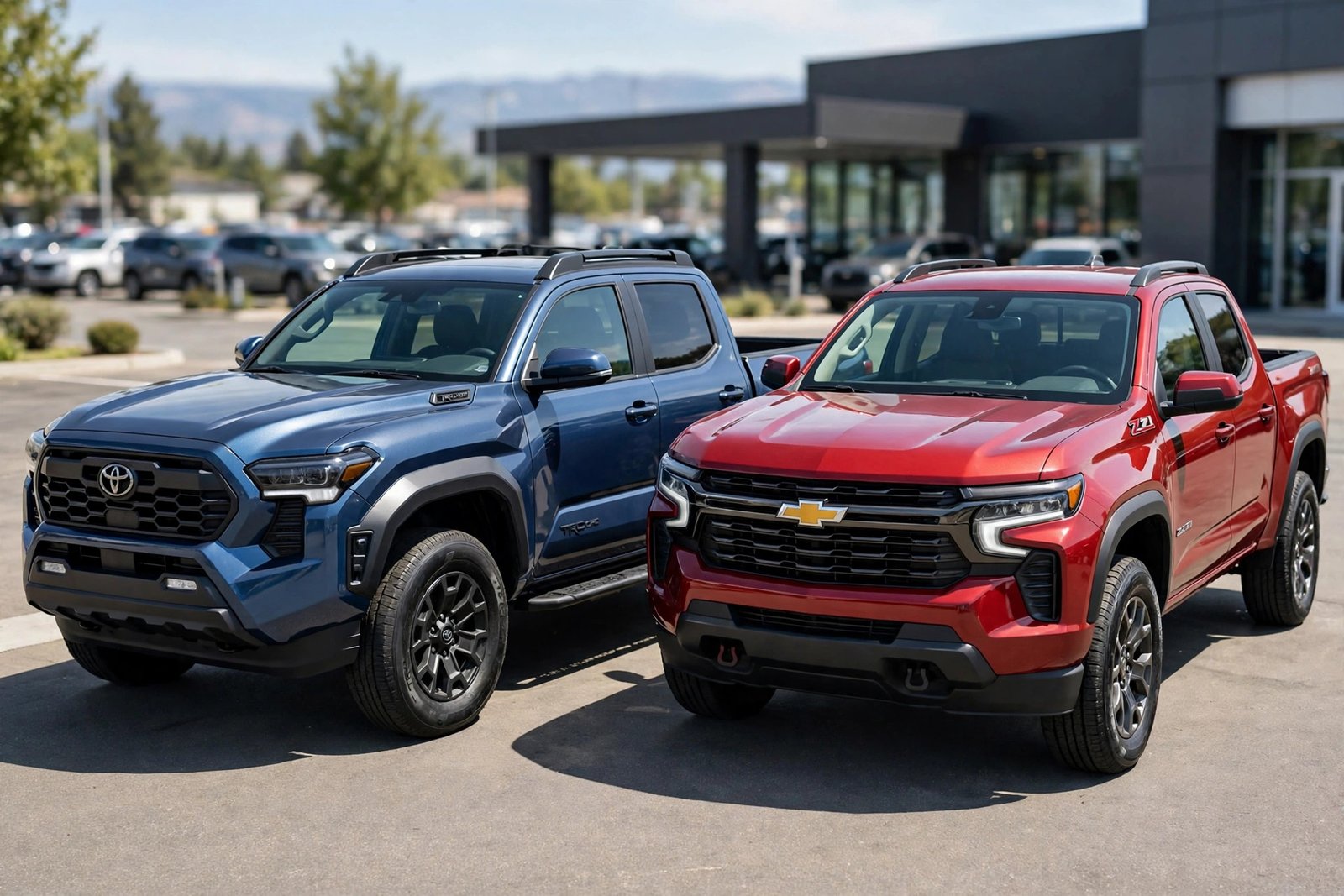
Quick answer: The Chevrolet Colorado wins on muscle: one engine in every trim — 310 horsepower and 430 lb-ft of torque — and up to 7,700 lbs of towing, 1,200 lbs more than the Tacoma. The Toyota Tacoma wins almost everywhere else: a hybrid option with 326 horsepower, better fuel economy (23 mpg combined vs 21), eleven trims including a long-bed option the Colorado does not offer, and the strongest resale value in the midsize class. If you tow a heavy camper or boat, buy the Colorado. If you want the best all-round midsize truck — and the one that will be worth the most in five years — buy the Tacoma.
Two different answers to the same question
The Tacoma and the Colorado are the two best-selling midsize pickups in America, and they could hardly be more different in philosophy. Toyota gives you choice: eleven trims, two cabs, two bed lengths, three powertrains including the segment’s only hybrid, and a price range that runs from about $34,000 to about $66,000 including destination. Chevrolet gives you simplicity: six trims, one cab, one bed, one engine — and that engine is a hammer.
Both trucks were redesigned recently — the Colorado in 2023, the Tacoma in 2024 — so both feel modern inside, both ride well for body-on-frame trucks, and both are genuinely capable off road in their trail trims. The decision comes down to what you actually do with a truck: how much you tow, how far you drive, how long you keep it, and whether you want a truck that does one thing brilliantly or everything well.
The two trucks at a glance
| 2026 Toyota Tacoma | 2026 Chevrolet Colorado | |
|---|---|---|
| Starting MSRP | ~$32,545 (SR) | ~$32,400 (WT) |
| Price range incl. destination | ~$34,000–$66,000 | ~$35,000–$53,000 |
| Trims | 11 | 6 |
| Standard engine | 2.4L turbo four, 228 hp / 243 lb-ft (SR) | 2.7L TurboMax four, 310 hp / 430 lb-ft (every trim) |
| Mainstream engine | 2.4L turbo, 278 hp / 317 lb-ft (SR5 and up) | Same 310 hp / 430 lb-ft |
| Hybrid option | i-FORCE MAX, 326 hp / 465 lb-ft | None |
| Max towing | 6,500 lbs | 7,700 lbs |
| Max payload | 1,705 lbs | 1,684 lbs |
| Best fuel economy | 23 mpg combined | 21 mpg combined |
| Bed options | 5-ft (~60 in) or 6-ft (73.7 in) | Single 5-ft-2-in bed (61.7 in) |
| Bed volume | 38.3 cu. ft. (5-ft) / 46.6 cu. ft. (6-ft) | 41.9 cu. ft. |
| Cabs | XtraCab or Double Cab | Crew Cab only |
Prices are manufacturer starting MSRPs before destination, taxes, title and dealer fees unless noted. Tacoma’s starting MSRP varies by source ($32,145 to $32,545 before destination, about $34,190 including destination) — see the verification notes.
Price: a tie at the bottom, a gap at the top
At the entry level, these two trucks cost almost exactly the same. The Tacoma SR starts at about $32,545 MSRP and the Colorado WT at about $32,400 — a difference of roughly $150, which is nothing on a $32,000 purchase. Including destination, both start in the $34,000 to $35,000 range.
The ranges diverge as you climb. The Tacoma’s eleven trims stretch from the work-truck SR all the way to the TRD Pro at around $66,000 including destination. The Colorado’s six trims — WT, Custom, LT, Trail Boss, Z71 and ZR2 — top out at about $53,000. That means the most expensive Tacoma costs roughly $13,000 more than the most expensive Colorado.
In the middle, where most buyers actually shop, the value picture favors the Tacoma on equipment and the Colorado on power. A four-wheel-drive Tacoma SR5 Double Cab with the Upgrade Package runs about $45,000 and delivers the expected truck capability with automatic climate control, upgraded audio and an integrated trailer-brake controller. A comparable Colorado LT costs a little less but gives you more engine for the money. The honest advice: build both trucks the way you would actually buy them, with the same equipment, and compare the out-the-door prices — the sticker gap at the base evaporates quickly once options are added.
Engines and power: one hammer vs a whole toolbox
The Colorado’s engine strategy is beautifully simple: every single trim, from the $32,400 WT work truck to the $53,000 ZR2, gets the same 2.7-liter TurboMax four-cylinder making 310 horsepower and 430 lb-ft of torque. It is the highest standard torque figure in the midsize class, and it means there is no bad Colorado to buy and no expensive engine upgrade to agonize over. You get the strong engine whether you want it or not — and most buyers will be glad of it. The torque arrives low and pulls hard, which is exactly what you want when towing or merging onto a highway with a loaded bed.
The Tacoma makes you choose. The base SR gets a 2.4-liter turbo four making 228 horsepower and 243 lb-ft — adequate, but noticeably weaker than the Colorado. SR5 trims and up get a stronger tune of the same engine: 278 horsepower and 317 lb-ft. And then there is the i-FORCE MAX hybrid, which pairs the turbo four with an electric motor for 326 horsepower and 465 lb-ft of torque — more power and more torque than the Colorado, with the electric motor delivering its torque from a standstill.
So the power ranking depends on how much you spend. At the base, the Colorado wins by a wide margin: 310 hp against 228. In the middle, the Colorado still wins: 310 hp against 278. At the top, the Tacoma hybrid wins: 326 hp and 465 lb-ft against 310 and 430. But the hybrid costs thousands more, and it is only available on higher trims. If you want maximum power for minimum money, the Colorado is the answer. If you want maximum power, period, and you are willing to pay for it, the Tacoma hybrid is the answer.
Fuel economy: the Tacoma sips, the Colorado drinks
The Tacoma wins on fuel economy, though neither truck is frugal by car standards. The Tacoma SR5 with rear-wheel drive is EPA-rated at 21 mpg city, 26 highway and 23 combined. The i-FORCE MAX hybrid matches 23 mpg combined even with four-wheel drive — remarkable for a truck making 326 horsepower. The thirstiest Tacoma is the manual-transmission four-wheel-drive model at 20 mpg combined.
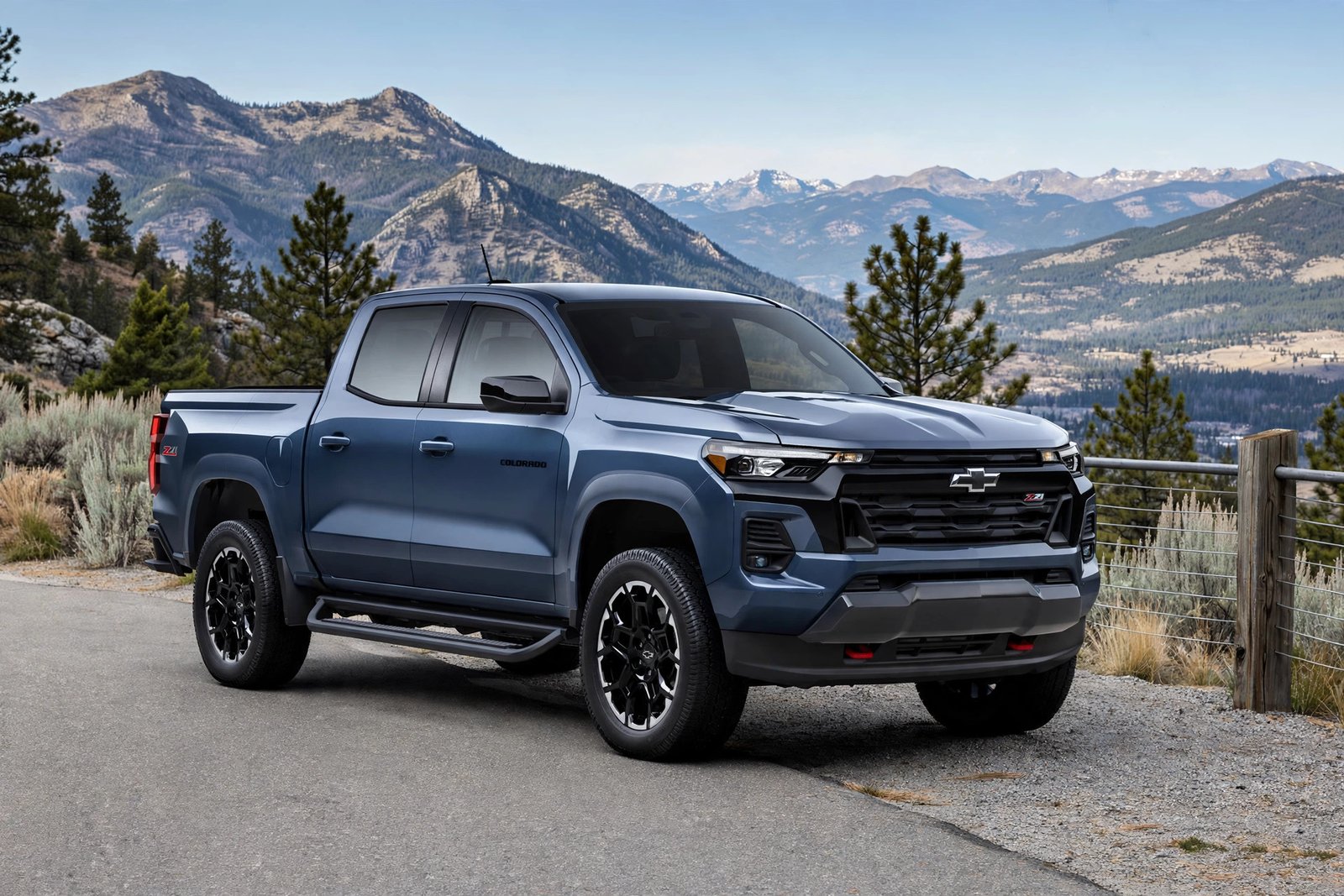
The Colorado’s best EPA rating is 21 mpg combined for two-wheel-drive trims. Four-wheel-drive models fall to 19 mpg combined, and the off-road ZR2 with its heavy tires and lifted suspension drops to about 16 to 17 mpg combined. There is no hybrid Colorado and no efficient option.
In dollars, at 12,000 miles a year and $3.50 a gallon, the Tacoma at 23 mpg combined uses about 522 gallons a year, costing roughly $1,826. The Colorado at 21 mpg uses about 571 gallons, costing about $2,000. The difference is roughly $175 a year — modest, but it adds up to nearly $900 over five years, and it grows if you drive more or if gas prices rise. One head-to-head comparison of off-road trims found the fuel difference over 60,000 miles was about $571 in the Tacoma’s favor. Fuel economy alone will not decide this comparison, but it is one more small win for the Tacoma, and it compounds with the Tacoma’s stronger resale value.
Towing and payload: the Colorado’s home turf
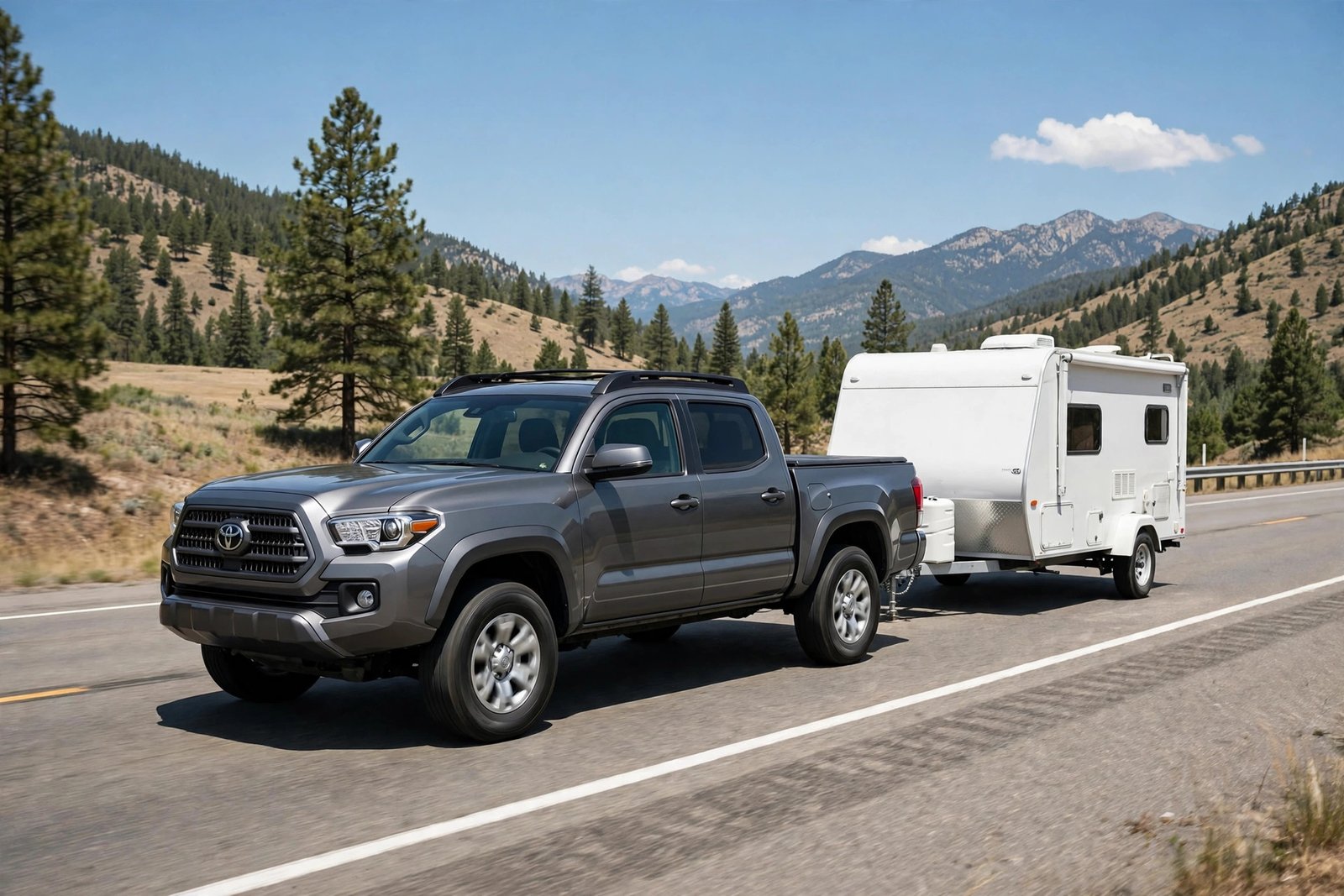
Towing is the Colorado’s biggest win, and it is not close. Properly equipped with the Advanced Trailering Package, the Colorado tows up to 7,700 lbs — 1,200 lbs more than the Tacoma’s maximum of 6,500 lbs. That 1,200-lb gap is the difference between a camper you can tow and one you cannot, between a boat that fits your truck and one that needs a full-size pickup.
The Tacoma’s 6,500-lb maximum applies to SR5 and TRD PreRunner trims; most other Tacoma trims sit between 6,300 and 6,400 lbs, and the i-FORCE MAX hybrid drops to 6,000 lbs. The Colorado’s off-road ZR2 also drops to 6,000 lbs, because its specialized suspension and tires trade towing for trail ability — the same trade the Tacoma TRD Pro makes at about 6,000 lbs.
Payload is effectively a tie, and the numbers deserve a careful note because sources conflict. Toyota’s figures put the Tacoma’s maximum payload at 1,705 lbs. Chevrolet’s own 2026 press specifications put the Colorado’s maximum payload at 1,684 lbs for WT and LT trims, 1,587 lbs for Trail Boss and Z71, and 1,151 lbs for the ZR2. Some third-party sources quote higher Colorado payload figures — Capital One lists 2,046 lbs and Autoblog lists 1,833 lbs — but those conflict with General Motors’ own published spec sheet, so we have used GM’s figures here and flagged the conflict in the verification notes. On the official numbers, the Tacoma carries about 20 lbs more than the Colorado. In practice, both trucks haul roughly 1,700 lbs, which covers a bed full of mulch, a couple of dirt bikes, or a weekend of camping gear.
The practical rule: if you tow more than 6,500 lbs, the Colorado is the only choice between these two. If you tow less than that, towing should not decide the purchase — look at everything else instead.
Beds and cabs: choice vs simplicity
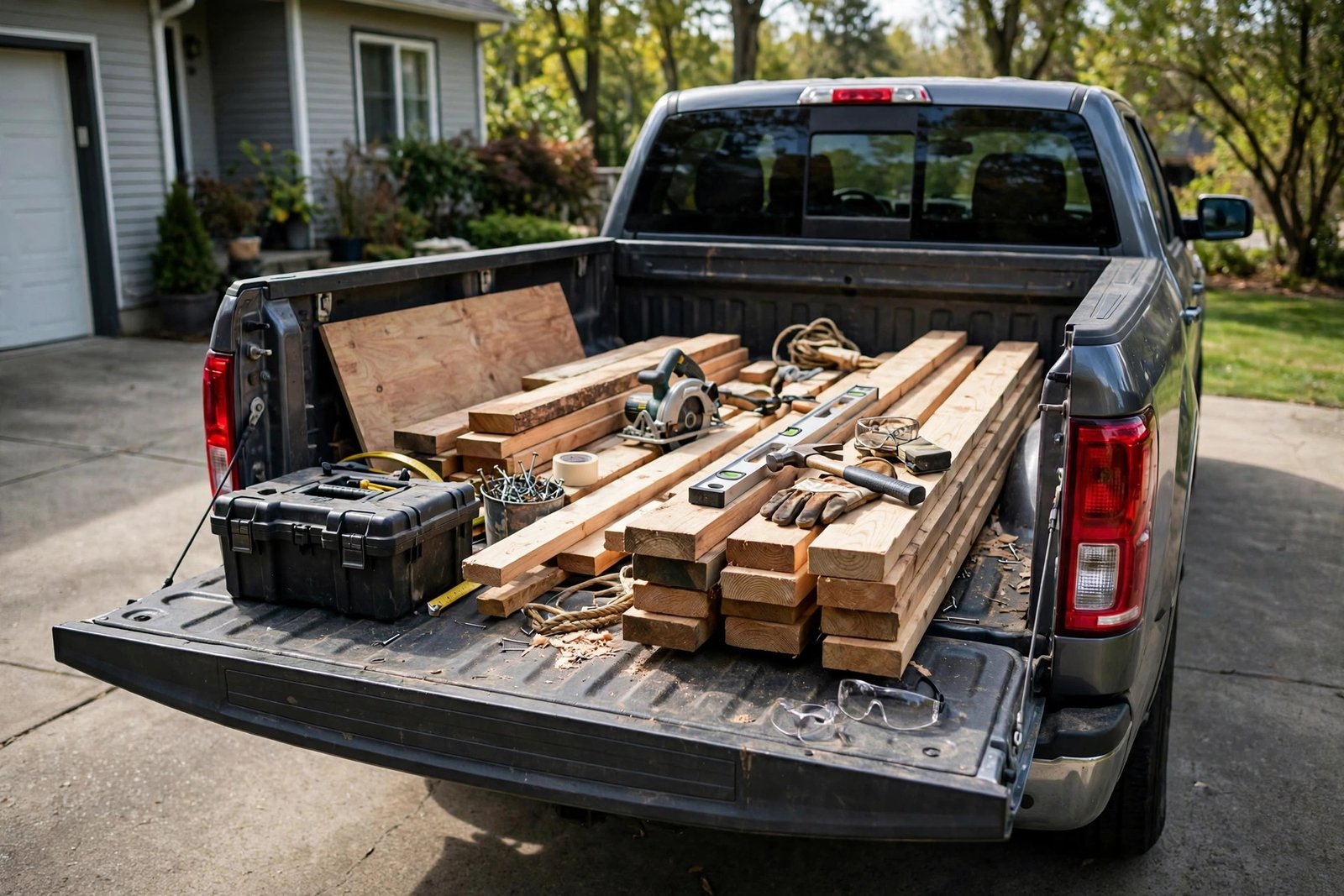
The Tacoma offers something the Colorado simply does not: a choice. You can have an XtraCab (two doors, small rear seats, more bed) or a Double Cab (four doors, proper rear seats), and a 5-foot bed of about 60 inches or a 6-foot bed of 73.7 inches. The 5-foot bed holds 38.3 cubic feet and the 6-foot bed 46.6 cubic feet. If you regularly carry long items — lumber, kayaks, a dirt bike with the tailgate up — the long bed is a genuine advantage, and only the Tacoma offers it.
The Colorado keeps it simple: every Colorado is a crew cab with a single 5-foot-2-inch bed, 61.7 inches long, 58.8 inches wide across the floor and 45.5 inches between the wheel housings, for 41.9 cubic feet of cargo volume. That is actually more volume than the Tacoma’s short bed (41.9 vs 38.3 cubic feet), because the Colorado’s bed is wider — 2.4 inches more floor width than the Tacoma’s. It also comes with up to 17 tie-down points and a multi-position tailgate with a StowFlex storage compartment.
So the bed comparison is a trade: the Tacoma gives you length if you want it, the Colorado gives you width and a cleverer tailgate as standard. For most buyers, who carry a mix of gear rather than one very long item, the Colorado’s wider bed is arguably the more useful of the two. But if you need a 6-foot bed, there is no Colorado that fits — full stop.
Off-road trims: TRD Pro vs ZR2
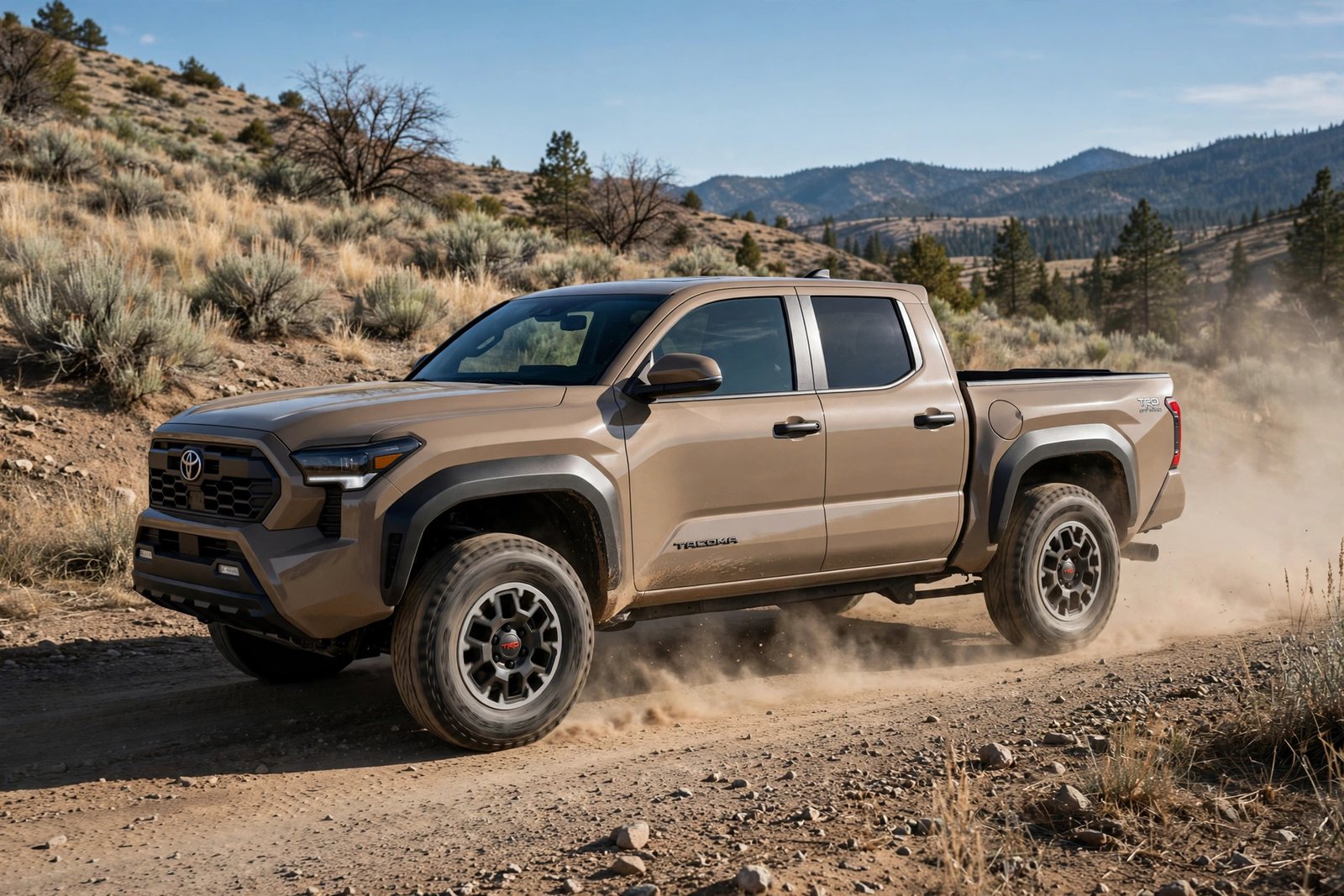
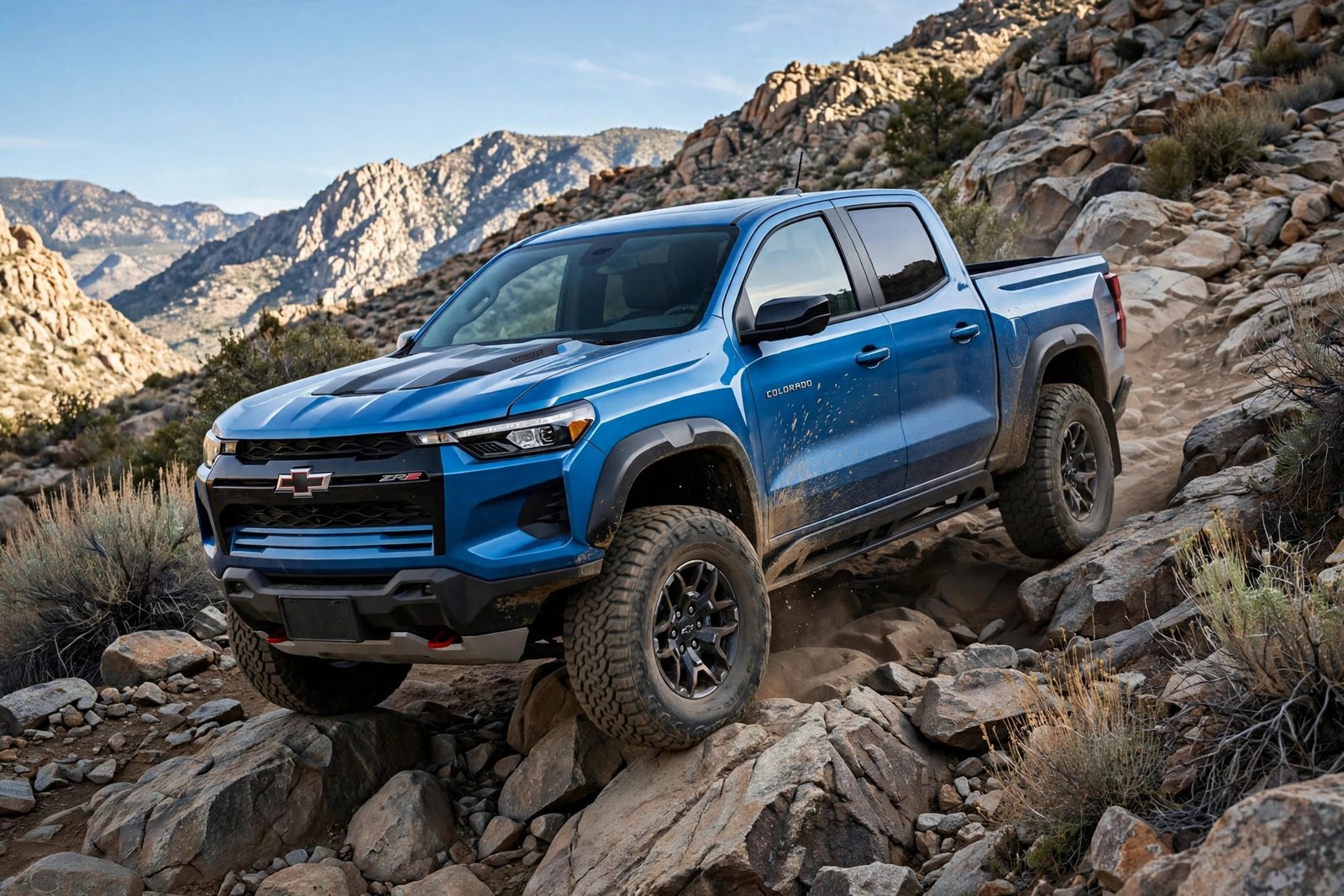
The flagship off-road comparison is where this rivalry gets genuinely close. The Tacoma TRD Pro costs around $66,000 including destination; the Colorado ZR2 costs around $53,000. That is a $13,000 gap for trucks aimed at the same buyer, and it is the single biggest price difference in this whole comparison.
The TRD Pro comes standard with the i-FORCE MAX hybrid — 326 horsepower and 465 lb-ft — plus Fox shocks, locking differentials, skid plates and an onboard air compressor on select trims. The ZR2 counters with its 310-hp TurboMax, Multimatic DSSV dampers — among the most sophisticated off-road dampers fitted to any pickup — locking differentials front and rear, and a more modern cabin. Independent comparisons have called the ZR2 the better value by a wide margin, noting that it costs near $53,000 against the TRD Pro’s near $66,000 while offering comparable trail ability and a nicer interior.
Step down a level and the picture is similar. The Tacoma TRD Off-Road (from about $42,415) and the Colorado Trail Boss (from about $40,400) are the mid-level trail trucks, and the comparison is tight: the Colorado has the stronger standard engine (310 hp vs 278), the Tacoma has the hybrid option and slightly better fuel economy, and the Colorado tows more. One detailed comparison found the Tacoma TRD Off-Road costs $6,505 less to own over five years than the Trail Boss despite costing $2,015 more to buy — because the Tacoma’s fuel economy and resale value claw back the purchase premium and then some.
Interior, tech and daily driving
The Colorado has the more modern cabin. Reviewers consistently praise its large touchscreen, clean layout and comfortable seats, and its interior feels a generation newer than the Tacoma’s in places. The Tacoma’s cabin is functional and durable — built to be hosed out after a muddy weekend — but some of its plastics and its driving position feel less polished, especially in lower trims.
Space is close: the Colorado offers 45.2 inches of front legroom and 34.7 inches in the rear; the Tacoma is comparable, though its rear seats in the Double Cab are tighter than the Colorado’s crew cab. Both trucks seat five, both offer wireless smartphone integration, and both come with a full suite of driver-assistance features as standard.
On the road, the Colorado’s torque makes it feel stronger in everyday driving — merging, passing, towing — while the Tacoma hybrid feels stronger still when you pay for it. The Tacoma’s ride is a little firmer and more truck-like; the Colorado is a little quieter and more car-like on the highway. Neither is a luxury vehicle, and a test drive on your own roads will tell you more than any review.
Warranty, reliability and resale value
Warranty coverage is nearly identical: Toyota offers 3 years or 36,000 miles bumper-to-bumper and 5 years or 60,000 miles on the powertrain, plus ToyotaCare scheduled maintenance for 2 years or 25,000 miles. Chevrolet offers 3 years or 36,000 miles bumper-to-bumper and 5 years or 60,000 miles on the powertrain. ToyotaCare is a small but real advantage — two years of free oil changes and inspections.
Reliability and resale value are where the Tacoma earns its reputation. The Tacoma has been the best-selling midsize truck in America for nearly two decades, and it has the strongest resale value in the class — a fact that shows up directly in ownership costs. The TRD Off-Road vs Trail Boss comparison mentioned above is the clearest evidence: the Tacoma cost $6,505 less to own over five years despite a higher purchase price, because it held its value better and used less fuel.
The Colorado is not unreliable — the current generation has a good record so far, and its single-engine lineup means there is only one powertrain to get right — but it does not hold its value like a Tacoma. If you keep a truck for ten years, that matters less. If you trade in after three or four years, the Tacoma’s resale advantage can be worth thousands of dollars, and it can easily outweigh the Colorado’s towing advantage if you never tow near the limit.
Which midsize truck should you buy?
Buy the Chevrolet Colorado if: you tow more than 6,500 lbs, you want the strongest standard engine in the class without paying for an upgrade, you prefer a simpler lineup with one engine and one bed, or you want the best off-road value — the ZR2 at around $53,000 is a genuine bargain next to the $66,000 TRD Pro. The Colorado LT is the value pick for most buyers: full-size power at a midsize price.
Buy the Toyota Tacoma if: you want the best all-round truck, the only hybrid in the class, the best fuel economy, a long-bed option, the widest choice of trims, or the strongest resale value. The SR5 Double Cab is the sweet spot for most buyers — about $45,000 with four-wheel drive and the Upgrade Package, with the equipment most people actually use. Off-road buyers should look at the TRD Off-Road, and buyers who want maximum power should look at the i-FORCE MAX hybrid.
Our pick: the Toyota Tacoma SR5. The Colorado tows more and its engine is a gem, but the Tacoma does everything else a little bit better — fuel economy, choice, resale value, long-bed availability — and those advantages add up to a better truck for most owners over most years. The exception is simple and absolute: if your trailer weighs more than 6,500 lbs, buy the Colorado and do not look back.
Pros and cons
Toyota Tacoma — pros: segment’s only hybrid (326 hp, 465 lb-ft); best fuel economy (23 mpg combined); 11 trims and a 6-foot bed option; strongest resale value; ToyotaCare maintenance included. Cons: base engine is weak (228 hp); maximum towing of 6,500 lbs trails the Colorado by 1,200 lbs; TRD Pro is very expensive (about $66,000); cabin feels less modern than the Colorado’s.
Chevrolet Colorado — pros: 310 hp and 430 lb-ft standard on every trim; best-in-class towing (7,700 lbs); simplest lineup — one engine, one cab, one bed; more modern cabin; ZR2 is a bargain against the TRD Pro. Cons: no hybrid and worse fuel economy (21 mpg combined at best); no long-bed option; weaker resale value; ZR2 fuel economy drops to about 16–17 mpg combined.
Related reads
- Compare Cars tool — compare any two cars side by side
- Chevrolet Colorado vs Ford Ranger
- Toyota Tacoma vs Ford Ranger: Which Midsize Truck Wins?
- Ford F-150 vs Chevy Silverado Reliability
- Car Comparisons — all comparison articles