

Quick answer: The most common cause of a shake at highway speed is wheel imbalance — a small weight fell off a rim, or the tire wore unevenly. A vibration felt mostly in the steering wheel usually points to a front tire or wheel; a shake felt in the seat or floor usually points to a rear tire, the driveline, or worn suspension. Rebalancing is the cheapest fix and the right first step. If the shake only appears when you brake, suspect uneven brake rotors instead. And if the vibration is severe, sudden, or comes with a bulge on a tire or a tire pressure warning, slow down and get the car checked before driving at highway speed again.
Why a small problem only shows up at highway speed
At 30 mph, each wheel turns roughly 400 times a minute; at 65 mph, more than twice as fast. A heavy spot on a tire — a missing balance weight, a flat spot, a stiff patch in the rubber — pulls outward once on every revolution. At low speed that pull is slow and weak enough to ignore; at highway speed it repeats so fast and so hard that you feel it in the steering wheel, the seat, and the floor.
That is also why a balance problem has a “sweet spot”: many drivers report the shake is worst between about 55 and 70 mph and eases off above or below that range. A shake that appears in a specific speed band and fades outside it is the classic signature of a tire or wheel problem, not an engine or transmission problem.
Before you spend a dollar, note four things: when the shake happens, where you feel it, whether braking or acceleration changes it, and whether anything happened recently — new tires, a pothole, a curb hit, a service visit. Accurate answers help a shop find the problem much faster.
Where you feel it tells you a lot
The location of the vibration is the best free clue you have. It is not a final diagnosis — several faults can feel alike from the driver’s seat — but it narrows the search a lot.
| Where you feel it | What it commonly suggests |
|---|---|
| Steering wheel shakes | Front tires or wheels — balance, a bent front rim, tire damage, or front suspension wear |
| Seat or floor shakes | Rear tires or wheels, or the driveline — balance, a bent rear rim, a worn wheel bearing, or a driveshaft/CV joint issue |
| Brake pedal pulses, steering wheel shakes when braking | Uneven brake rotors |
| Shake gets worse under acceleration | Driveline — worn CV joints or axle parts |
| Shake changes when you turn | Wheel bearing or suspension wear on one side |
A steering wheel vibration is the most common complaint, and the front wheels are the easiest to balance and inspect. A seat or floor shake is trickier, because rear-tire and driveline problems feel similar. And a shake that only shows up under braking is a different problem entirely — your tires may be fine, and the rotors are the suspect.
Cause 1: Wheel imbalance — the most common culprit
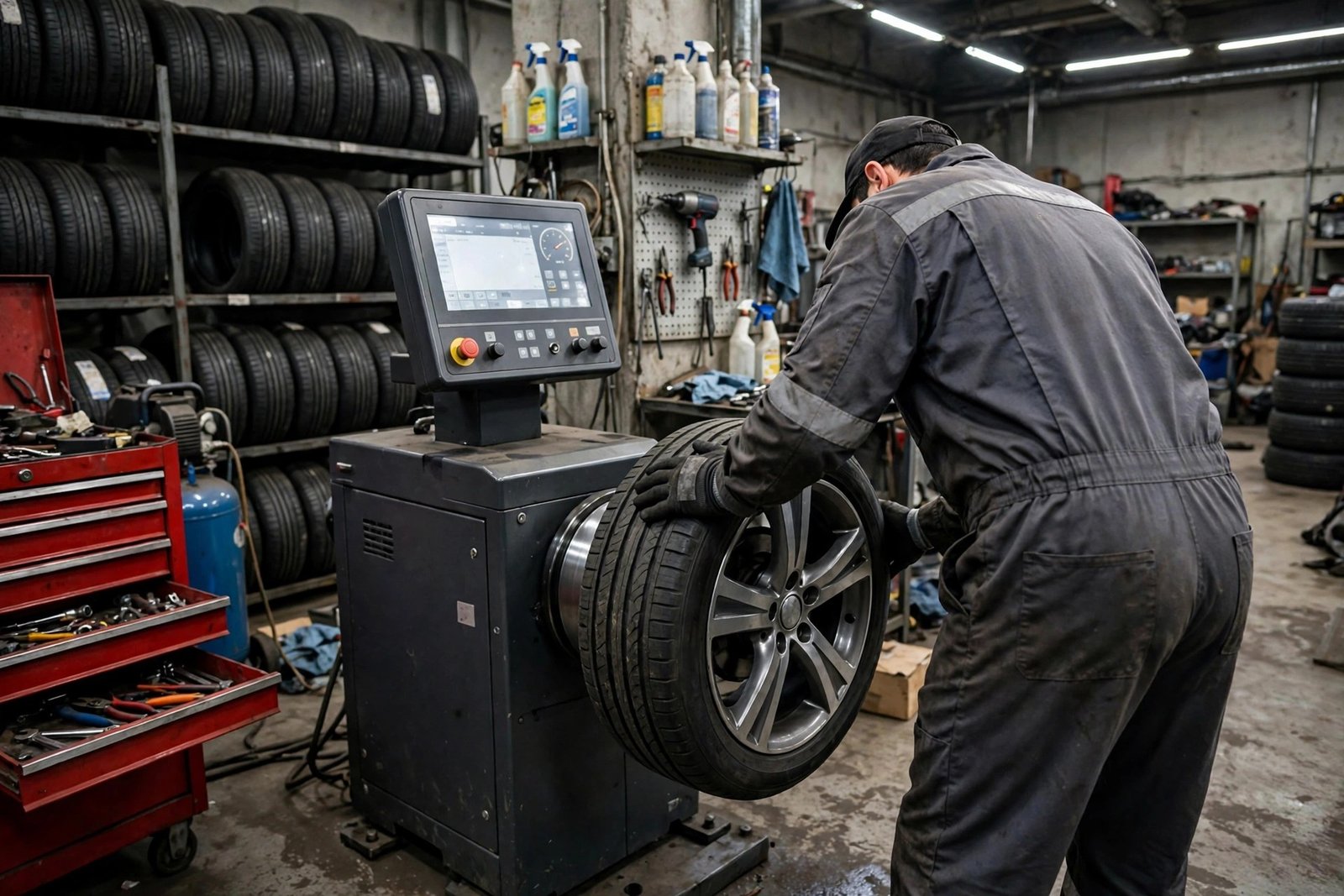
No tire or wheel is perfectly uniform in weight. When a tire is mounted, a technician spins the assembly on a balancing machine, finds the heavy and light spots, and clips or sticks small weights onto the rim to even things out. That balance does not last forever.
A weight can fall off after a curb scrape or a pothole hit, a tire can wear unevenly and change the balance over time, and a tire that was never balanced properly after a repair can shake from day one.
The symptoms are distinctive: a steady vibration in a speed range, often around 55 to 70 mph, that fades above or below it. The steering wheel shimmies if a front wheel is the problem; the seat or floor vibrates if a rear wheel is.
The fix: a rebalance on a proper machine. This is the cheapest and most common repair for highway vibration, and it is where every good diagnosis starts. If balancing cures the shake, you are done. If it does not, the problem is something the balancer cannot fix — which brings us to the next causes.
Cause 2: Tire damage — belt separation, flat spots, and uneven wear
A tire can be perfectly balanced and still shake, because the problem is in the rubber itself, not the weight distribution.
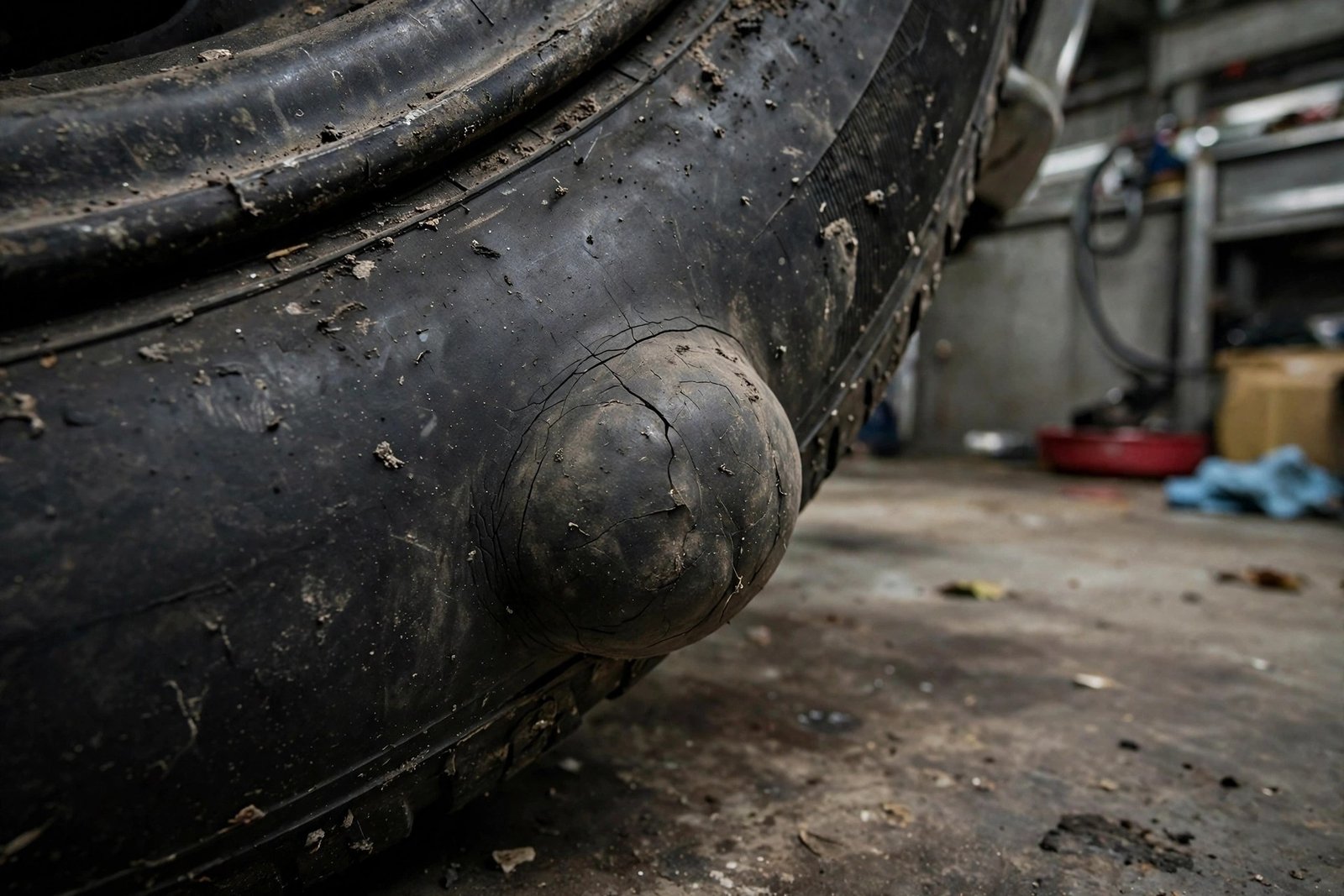
Belt separation is the serious one. Inside every tire, steel or fabric belts hold the tread in shape. A hard pothole strike or curb impact can break those belts loose from the rubber, creating a bulge, a flat spot, or a wobble that grows with speed. A tire with a separated belt is dangerous: it can fail suddenly. If you see a bulge or bubble on the sidewall or tread, do not keep driving on it — fit the spare and get the tire replaced.
Flat spots happen when a car sits parked for a long time: the tire flattens slightly where it touches the ground, and the first few miles feel thumpy. Most work themselves out as the tire warms up, but one that is still there after 15 to 20 minutes of driving needs inspection.
Uneven wear is slower and sneakier. Skipped rotations, wrong tire pressure, and worn suspension parts leave parts of the tread higher or lower than the rest. Cupping — uneven dips across the tread — is a strong hint that the shocks or struts are worn. Feathering, where tread blocks are worn smooth on one edge and sharp on the other, usually points to an alignment problem. Once the tread surface is no longer uniform, the tire slaps the road unevenly at speed, and no rebalance will smooth it out, because the tire itself is no longer round.
The fix: inspect the tires. Look for bulges, cracks, missing chunks, and uneven wear patterns. A bulging or separated tire must be replaced, not repaired. A tire worn unevenly from an alignment or suspension fault needs the underlying fault fixed first, or the new tire will wear the same way.
Cause 3: A bent or damaged wheel
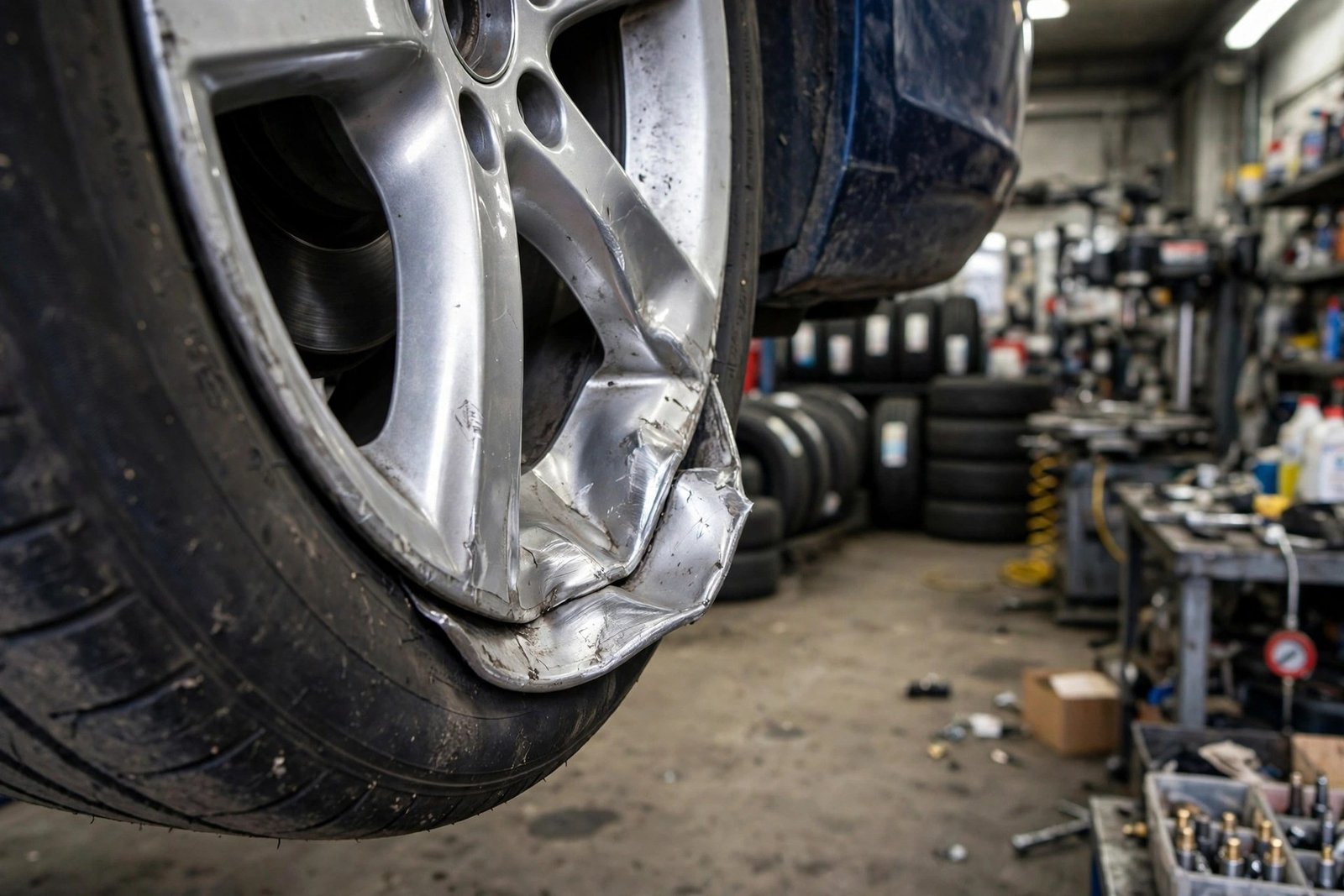
A pothole or curb impact can bend a rim just enough that the wheel no longer spins true. The bend may be visible if you look closely, or it may only show up when the wheel is spun on a balancing machine — the rim wobbles side to side even though the balance weights are correct.
Most modern cars run alloy wheels, and a bent alloy wheel can often be straightened by a specialist, typically for about $75 to $250 per wheel. A cracked wheel, or a bend too severe to straighten safely, must be replaced.
Mud, snow, or ice packed inside a wheel can cause a similar shake, and it costs nothing to fix — a thorough wash of the wheels, especially the inside of the rim, can make it disappear. Check this before you pay for anything, especially after driving through mud or a snowstorm.
The fix: have the shop spin each wheel on the balancer and watch for wobble, and ask them to check for cracks. If a wheel is bent, get a straightening quote before assuming you need a new one.
Cause 4: Road force variation — balanced, but still shaking
Sometimes a tire and wheel can be balanced perfectly on a machine and still shake on the road. The reason is road force variation: the tire does not roll evenly under the weight of the car. A stiff spot in the rubber, a slight difference in the tire’s construction, or the way the tire sits on the rim can make one part of the tire push harder against the road than the rest.
A standard balancer spins the wheel in the air, so it cannot see this problem. A road force balancer presses a roller against the tire while it spins, simulating the car’s weight, and measures how much the force varies. If the variation is too high, the technician can rotate the tire on the rim to line up its stiff spot with the wheel’s low spot — called match mounting — or, in stubborn cases, the tire may need replacing.
Ask about this when a balance did not cure the shake — not every shop has a road force machine, so call ahead.
Cause 5: Alignment — usually blamed, rarely the cause
Wheel alignment is the first thing many drivers blame for a shake, and it is usually the wrong suspect. Alignment sets the angles of the wheels so they point straight and sit flat; when it is off, the car pulls to one side, the steering wheel sits crooked, and the tires wear unevenly.
What alignment does not usually do is create a speed-specific vibration on its own. The connection is indirect: bad alignment causes uneven tire wear, and that wear eventually causes vibration. So if your car shakes and also pulls, or your tires show feathered edges, an alignment is part of the fix — but rarely the whole fix. Fix the alignment and the worn tire together, or the new tire will wear the same way and the shake will come back.
A four-wheel alignment typically costs about $85 to $273 in the US, depending on the shop and the car, based on 2026 shop invoice data and national labor estimates. It is a maintenance job worth doing when the symptoms point to it — just do not expect it to cure a balance-type shake by itself.
Cause 6: Worn steering and suspension parts
The steering and suspension systems hold each wheel in place with tight tolerances. As parts wear, they develop play — small amounts of looseness that let the wheel wobble when road forces hit it at speed.
The usual suspects are tie rod ends, ball joints, control arm bushings, wheel bearings, and shocks or struts. A worn tie rod end lets the wheel steer itself slightly with every bump, a worn ball joint lets the steering knuckle move up and down, and a worn wheel bearing often adds a humming noise that changes when you turn. Worn shocks or struts let the tire bounce instead of staying planted, which shows up as cupped tread wear.
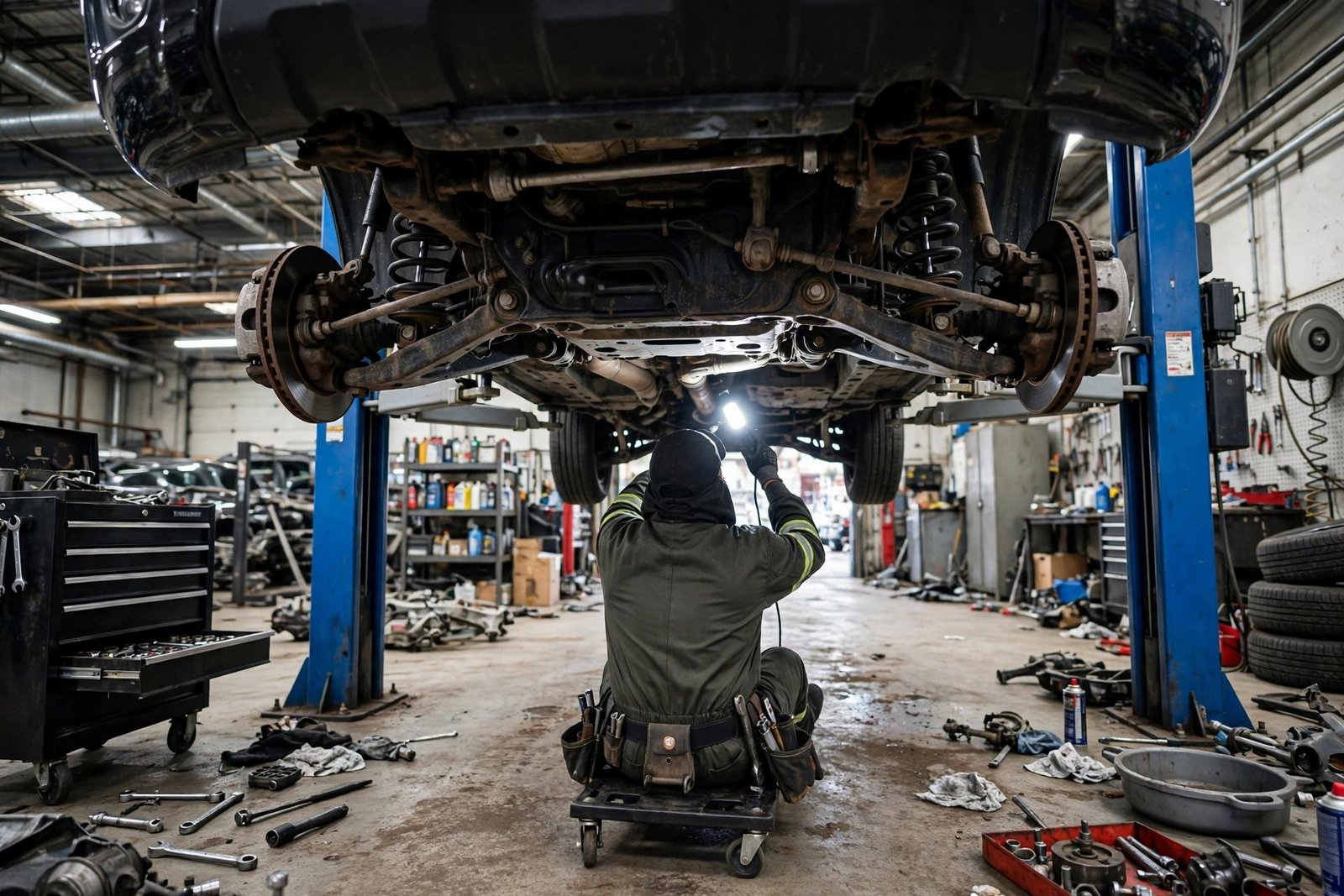
These problems usually develop gradually, and the vibration often comes with other clues: clunking over bumps, wandering on the highway, a loose-feeling steering wheel, or a noise that changes with speed or direction. A shop checks for play by lifting the car and moving each wheel by hand — a test you cannot do properly at home.
The fix: replace the worn part, then align the car. Typical 2026 US costs from shop invoice data, including labor: a tie rod end about $172 to $427, a wheel bearing or hub about $268 to $554, and struts or shocks about $255 to $706. These are bigger jobs than a balance, which is why the cheap checks come first.
Cause 7: Brake rotors — the shake that only appears when you brake
If the car is smooth at speed and only shakes when you press the brake pedal, the tires are probably innocent. Uneven brake rotors — often called warped rotors — pulse against the pads with every rotation, and you feel that pulse in the pedal and the steering wheel.
Rotors become uneven from heat, usually after hard or repeated braking, or from a stuck caliper that keeps one pad dragging. The fix is to resurface them if they are thick enough, or replace them if they are not. Either way, this is a brake job, not a tire job — and because it is the brakes, do not put it off.
Symptom-to-cause diagnostic table
Use this table to narrow the search before you call a shop. It is a guide to what to check next, not a confirmed diagnosis.
| What you notice | Most likely cause | Sensible next step |
|---|---|---|
| Steady shake in a speed range (55–70 mph), fades above and below | Wheel imbalance | Rebalance all four wheels |
| Steering wheel shimmies | Front wheel balance, bent front rim, or front tire damage | Balance front wheels; inspect front tires and rims |
| Seat or floor shakes | Rear wheel balance, bent rear rim, or driveline wear | Balance rear wheels; check wheel bearings and CV joints |
| Shake only when braking | Uneven brake rotors | Brake inspection; resurface or replace rotors |
| Shake worse under acceleration | Worn CV joint or axle | Driveline inspection |
| Shake plus pulling or crooked steering wheel | Alignment, plus uneven tire wear | Alignment check and tire inspection |
| Shake plus clunking, wandering, or looseness | Worn tie rods, ball joints, or bushings | Suspension inspection on a lift |
| Bulge on a tire, or shake started after a pothole | Belt separation or bent wheel | Stop and inspect; replace the tire if it bulges |
| Shake after sitting parked for weeks | Temporary flat spots | Drive 15–20 minutes; if it stays, inspect the tires |
| Shake that balancing did not fix | Road force variation or a bent wheel | Road force balance; check the rim for wobble |
What to check yourself before the shop
A five-minute inspection can save you a diagnostic fee — or tell you to stop driving right away.
- Look at all four tires for bulges, bubbles, cracks, missing chunks of tread, and anything lodged in the tread. A bulge means the tire’s internal structure has failed: fit the spare and do not drive on it.
- Check tire pressure against the driver’s door-jamb placard, not the maximum printed on the tire sidewall, and check when the tires are cold. Low pressure will not usually cause a classic highway shake by itself, but it worsens handling and uneven wear.
- Look for missing wheel weights — small clip-on or adhesive weights on the rim. A clean spot or adhesive residue where a weight used to be is a strong hint.
- Check the wheels for visible bends, cracks, and mud or ice packed inside the rim. Wash the wheels thoroughly — packed mud is a free fix.
- Feel the tread. Run your hand carefully across the tread (watch for nails or wires). Dips, scallops, or one edge sharper than the other point to wear problems that balancing cannot fix.
- Note the details: when the shake starts, where you feel it, whether braking changes it, and whether it followed a pothole or new tires. Write it down — the shop will ask, and accurate answers save time and money.

What a shop does, and what it should cost
A good shop works through the causes in order of cost, cheapest first: rebalance, check for a bent wheel or tire damage, run a road force balance if the shake survives, then dig into suspension parts.
| Fix | Typical US cost (2026) | Notes |
|---|---|---|
| Wheel balancing | About $15–$50 per tire | Often bundled with rotation; cheapest first step |
| Road force balance | Usually a bit more than a standard balance | Ask if the shop has a road force machine |
| Four-wheel alignment | About $85–$273 | National labor estimates; front-end only is cheaper, about $65–$100 |
| Bent alloy wheel straightening | About $75–$250 per wheel | Cracked or severely bent wheels must be replaced, not straightened |
| New tire (if damaged or worn out) | About $100–$400 per tire; drivers paid an average of $212 | Price depends on size, brand, and type |
| Tie rod end replacement | About $172–$427 | Alignment needed afterwards |
| Wheel bearing or hub | About $268–$554 | Often comes with a humming noise |
| Struts or shocks | About $255–$706 | Cupped tread wear is a telltale sign |
Prices vary by region, vehicle, and shop. Get a quote in writing before authorizing work, and ask the shop to show you the worn part or bent wheel before they replace it.
When to stop driving and get help
Most highway vibration is an annoyance that turns into a repair bill, not an emergency. But some versions are genuinely dangerous — slow down, pull over safely, and get help if:
- The shaking starts suddenly or gets much worse in a short time
- You see a bulge or bubble on any tire, or a tire is losing air fast
- The tire pressure warning light comes on
- The steering feels loose, or the car pulls hard to one side
- You hear grinding, clunking, or a loud humming that was not there before
- The vibration followed a hard pothole or curb hit and the car does not feel right
A tire with a separated belt can blow out without warning, and a loose suspension part can let a wheel move in ways it was never meant to. A tow costs far less than losing control at 65 mph.
How to prevent it coming back
- Balance the wheels whenever tires are mounted, rotated, or repaired — and any time a weight falls off.
- Rotate your tires every 5,000 to 8,000 miles so wear stays even.
- Keep tire pressure at the door-placard number, checked monthly when cold.
- Avoid potholes and curbs where you can, and slow down for the ones you cannot avoid.
- Have the alignment checked with new tires, after a hard impact, or when you notice pulling or uneven wear.
- Replace worn suspension parts promptly — a worn shock does not just hurt the ride, it chews through tires.
A shake at highway speed is your car telling you something is wrong with the parts that connect it to the road. In most cases the answer is simple and cheap: a rebalance. Work through the checks cheapest first, and you will find the cause without paying for parts you do not need.
Related reads
- How Much Does Tire Balancing Cost?
- Tire Balancing vs Alignment: What’s the Difference?
- How to Check Tire Tread Depth
- Best Budget Tires
- Compare Cars tool — compare any two cars side by side
Sources
- Why does my car shake at highway speed? — Apkappe
- What causes tire vibration at highway speeds? — My Tire Crew
- Can tires cause vibration at high speed? — EngineerFix
- Car repair costs 2026 (ARI invoice data) — ARI
- How much does it cost to fix a bent wheel? — ThePricer
- Tire and alignment cost guide — BerksConnect