
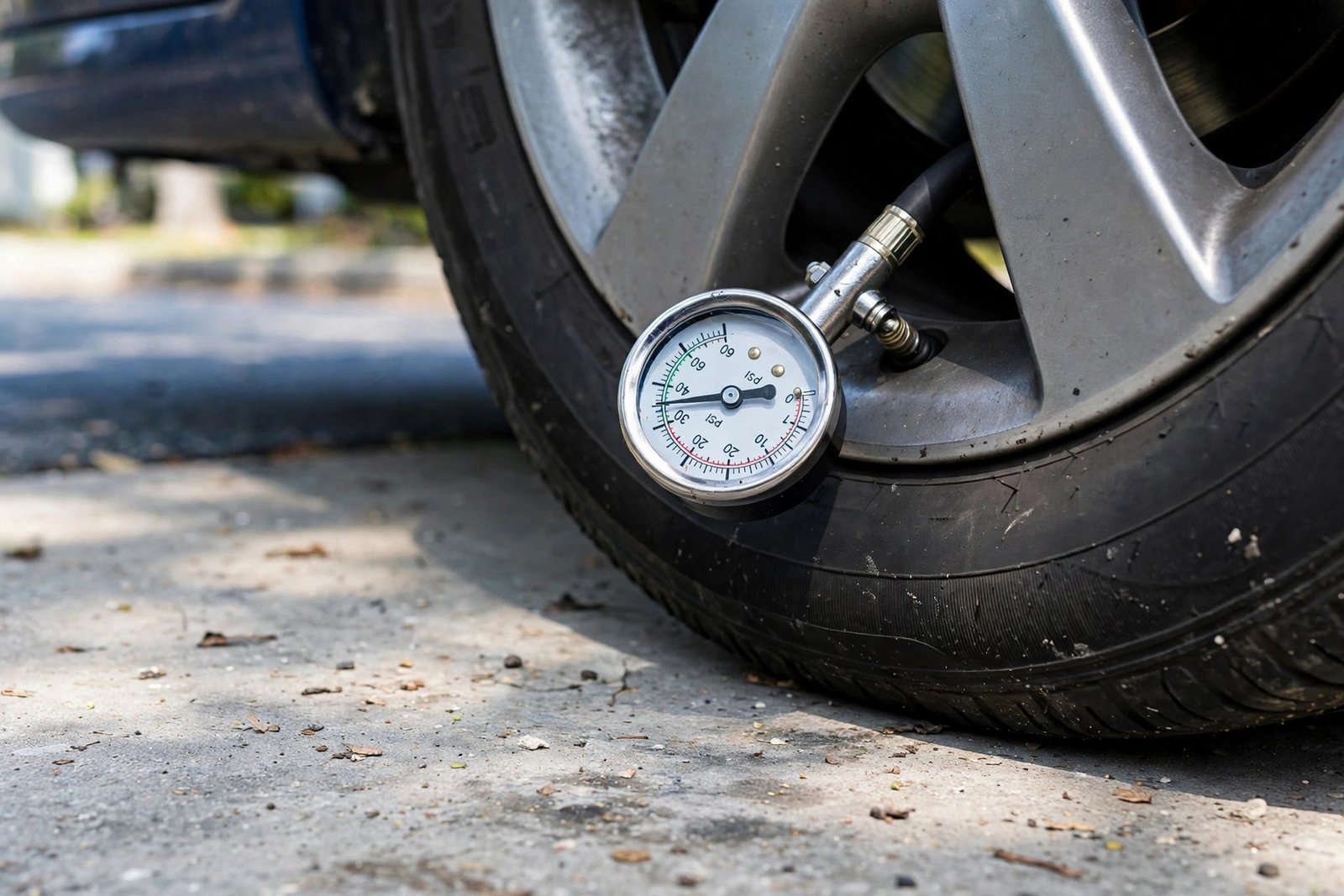
Quick answer: Yes, a tire can keep losing air with no visible puncture — and it usually means the air is escaping somewhere you are not looking. The most common culprits are a leaking valve stem or valve core, a bead leak where the tire seals against the wheel, a tiny nail or screw hidden in a tread groove, or a cracked or corroded wheel. Cold weather can also drop pressure by about 1 PSI for every 10°F without any leak at all. The fastest way to find it is the soapy water test: spray the valve, tread, sidewalls and rim edge, and the bubbles will show you exactly where the air is escaping.
First, rule out the two things that are not leaks
Before you start hunting for a hole, check the two causes that are not leaks at all. They are the most common reason people think they have a puncture when they do not.
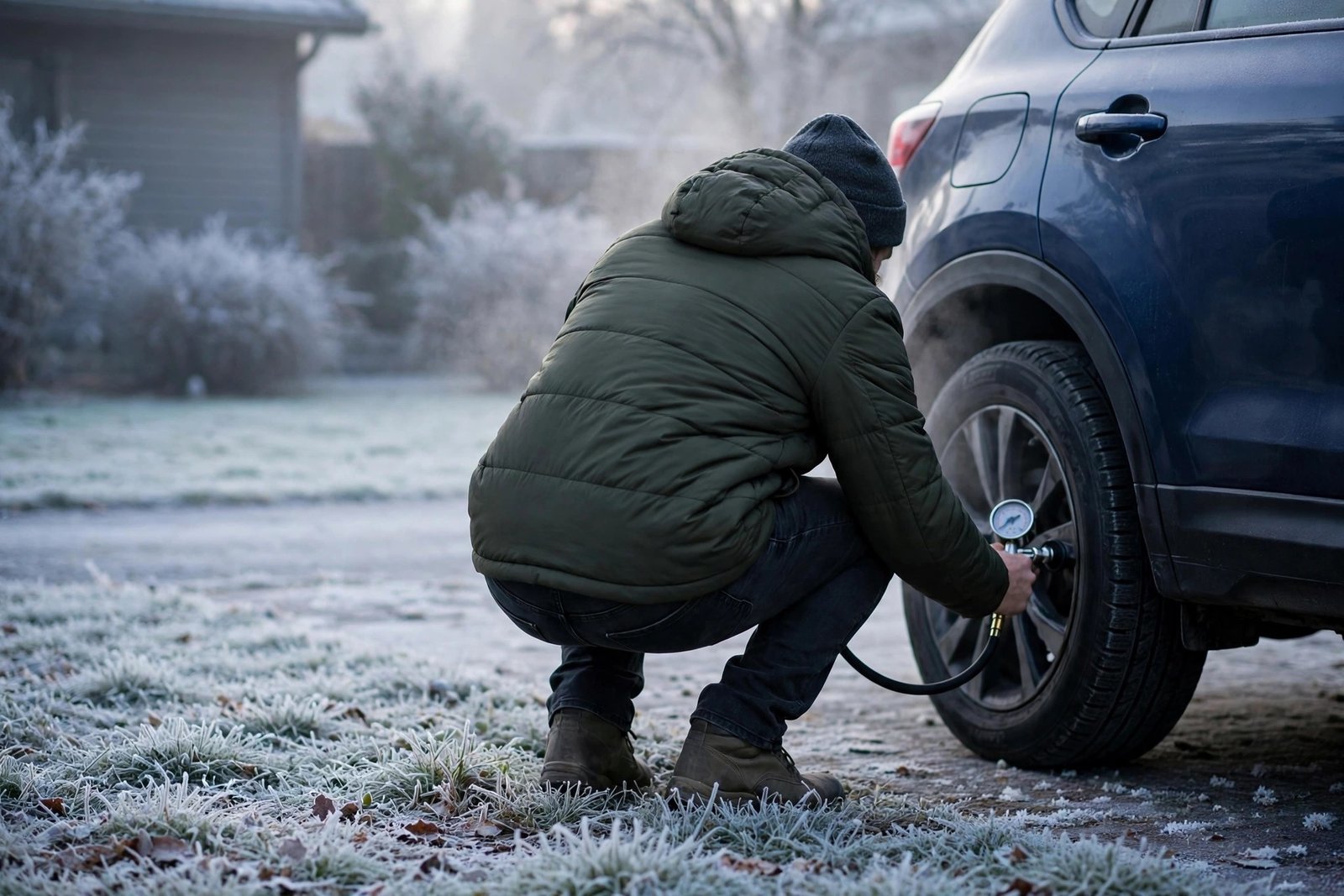
Cold weather. Air pressure falls as temperature falls — roughly 1 PSI for every 10°F drop, and some guides put it at 1 to 2 PSI per 10°F. A cold snap overnight can easily knock several PSI off all four tires at once and trigger the TPMS light in the morning. If all four tires dropped by a similar amount after a cold night, that is temperature, not a leak. Inflate them to the pressure on the driver’s door jamb sticker when the tires are cold, and watch whether they hold.
Natural permeation. Tire rubber is slightly porous, and air molecules slowly migrate through it. Even a perfectly healthy tire loses about 1 to 2 PSI a month this way, and older tires lose it faster as the rubber dries and cracks. A tire that needs a top-up every month or two is probably fine. A tire that needs air every week — or every day — has a real leak.
| What you notice | Most likely cause | Urgency |
|---|---|---|
| All four tires down after a cold snap | Temperature drop, not a leak | Top up and watch |
| Needs air every month or two | Natural permeation, aging rubber | Normal — check monthly |
| Needs air every few days | Valve stem, valve core, or small bead leak | Diagnose soon |
| Loses air overnight or within a day | Larger bead or wheel leak, hidden puncture | Fix quickly — do not keep driving on it |
| Started right after new tires or wheel service | TPMS seal or bead seating problem | Take it back to the shop that did the work |
| One tire only, and it keeps dropping | A leak in that wheel assembly | Find it with the soap test below |
The soapy water test: find the leak in 10 minutes
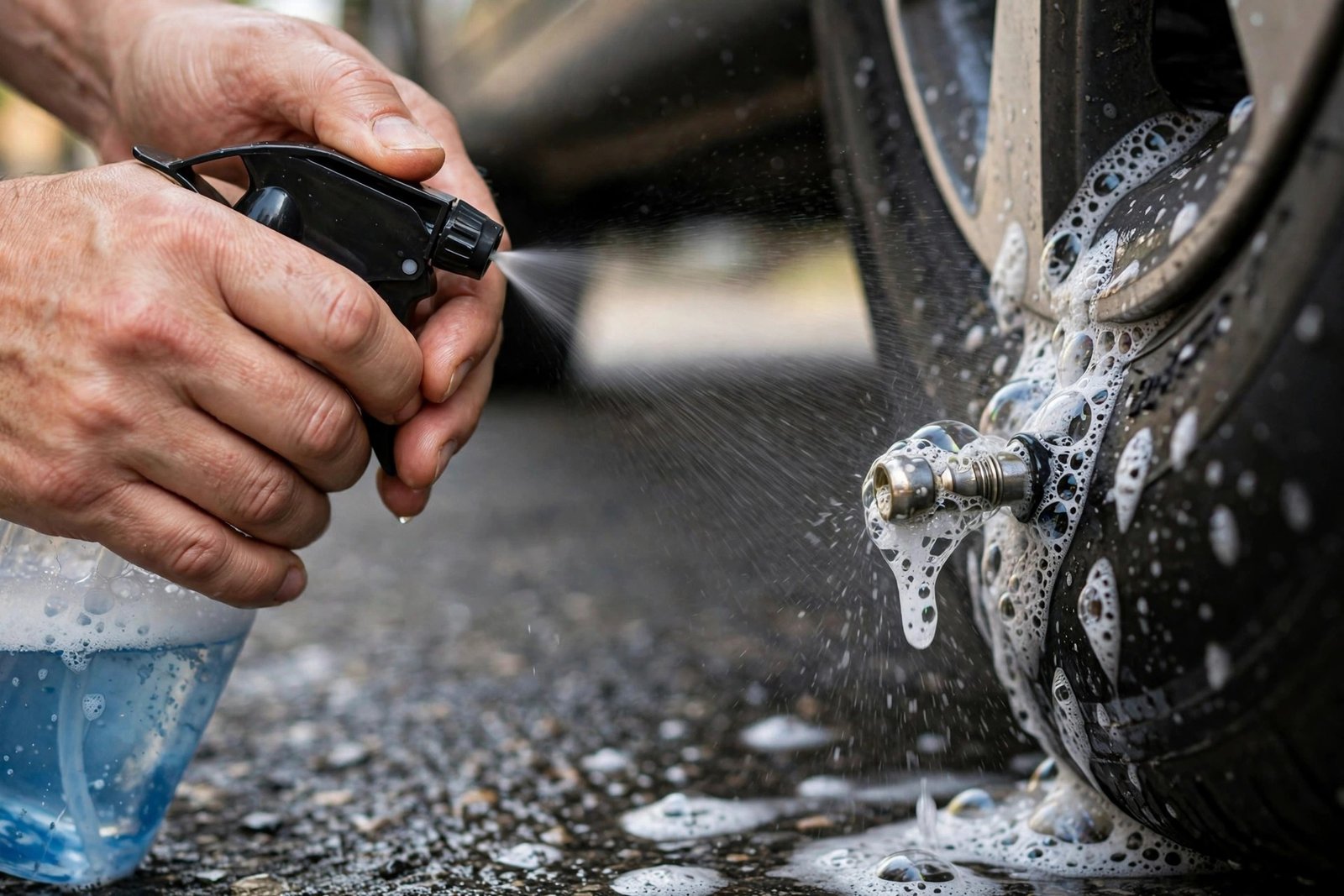
You do not need special equipment to find most slow leaks. A spray bottle, dish soap and water will do it.
- Inflate the tire to its recommended pressure — the number on the door jamb sticker, not the maximum on the sidewall. A leak is easier to find when the tire is fully pressurized.
- Mix soapy water — a squirt of dish soap in a spray bottle of water, shaken up. Washing-up liquid works better than plain water because it makes stable bubbles.
- Spray the valve stem first, including the tip and the base where it meets the wheel. Watch for 30 seconds. Bubbles at the tip mean a valve core problem; bubbles at the base mean the stem or its seal is leaking.
- Spray the tread, working your way around the whole tire, including deep inside the grooves. A nail or screw often sits down in a groove where you cannot see it from a standing position.
- Spray the sidewalls and look closely for small cuts, cracks or bulges.
- Spray the rim edge all the way around, where the tire meets the wheel. Bubbles here mean a bead leak.
- If you find nothing, have a tire shop dunk the wheel in a water tank. A submerged wheel shows even the smallest leak as a stream of bubbles, including leaks on the inside of the wheel you cannot reach with a spray bottle.
1. Leaking valve stem or valve core
This is the single most overlooked cause, and the cheapest to fix. The valve stem is the small rubber or metal tube you attach the air hose to, and the valve core is the tiny spring-loaded pin inside it that seals the air in.
Rubber valve stems age. Heat, ozone, UV light and road salt dry the rubber out until it cracks, and a cracked stem bleeds air slowly — often so slowly that you only notice the pressure dropping over days. The valve core can also loosen, corrode or get a speck of dirt on its seal, which lets air escape through the tip of the stem.
How to tell: bubbles at the valve tip mean the core; bubbles at the base mean the stem or its seal. A missing valve cap makes the problem worse, because dirt gets into the core — the cap is a real seal, not decoration, so replace it if it is gone.
The fix and the cost: a valve core is about $3 to $5 in parts and can be swapped in minutes with a cheap valve tool, without removing the tire. A full rubber valve stem replacement costs about $20 to $50 per tire installed, because the tire has to come off the wheel to fit a new stem. Replacing a stem is a shop job for most people, since breaking the bead and reseating the tire needs proper equipment.
2. Bead leak — where the tire meets the wheel
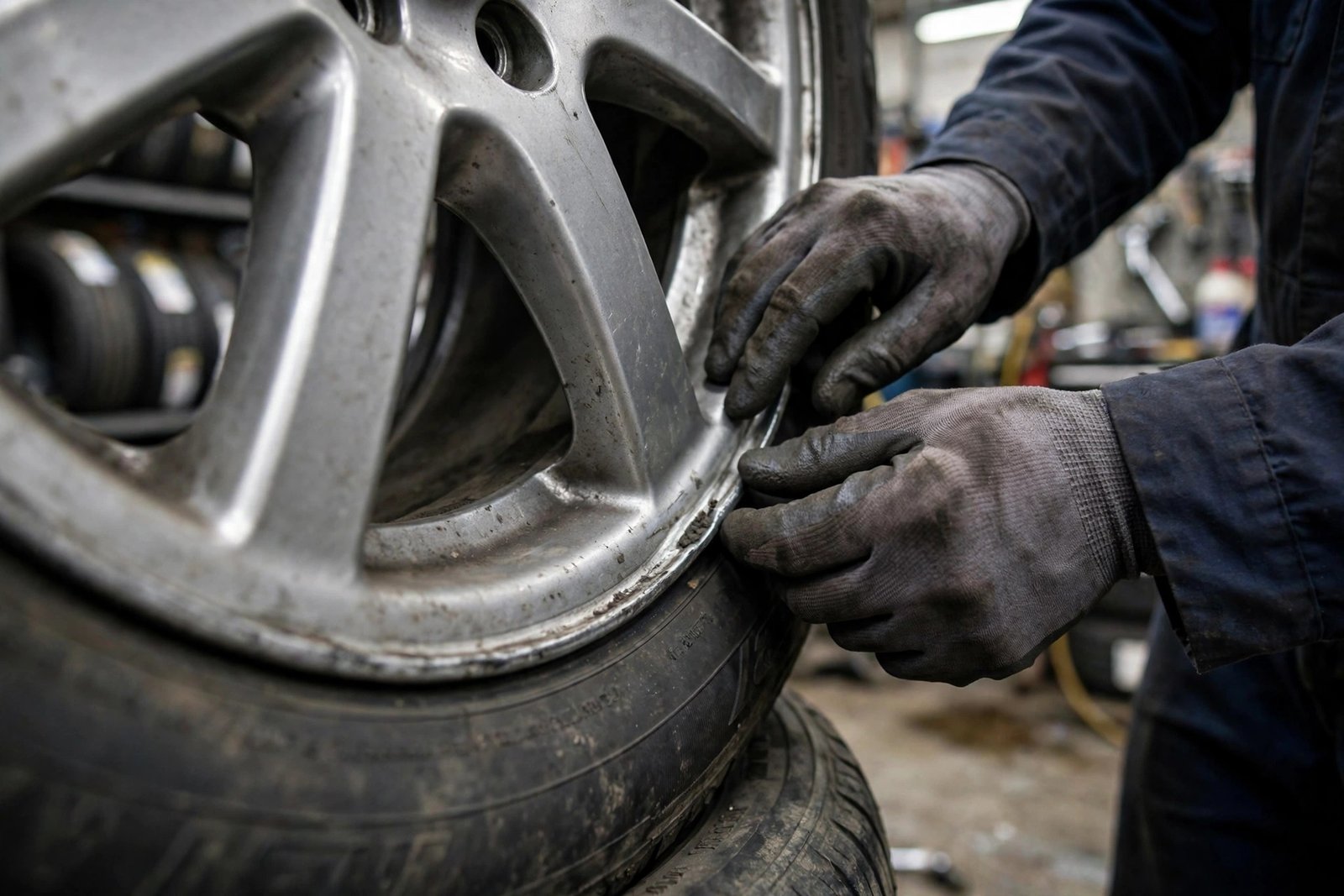
The bead is the reinforced inner edge of the tire that presses against the rim to form an airtight seal. When that seal fails, air seeps out around the edge of the wheel — with no damage visible anywhere on the tread.
Corrosion is the usual culprit, especially on aluminum alloy wheels. Road salt, moisture and brake dust cause oxidation on the rim surface where the bead sits, and the flaking oxide creates an uneven surface the rubber cannot seal against. Dirt trapped between the bead and the rim during mounting, or a tire that was never seated quite right, does the same thing.
How to tell: bubbles around the rim edge in the soap test, and the problem is often worse in winter, when road salt is at its worst. Bead leaks are also more likely on older wheels, or on a tire that was recently mounted.
The fix and the cost: the tire comes off, the rim’s bead seat is cleaned down to bare metal, a bead sealant is applied, and the tire is remounted and rebalanced. It is a routine shop job, usually in the same price range as a valve stem replacement, and it solves the large majority of slow, non-puncture air loss. If the rim is heavily corroded, the shop may recommend refinishing the wheel or replacing it.
3. A hidden nail, screw, or piece of debris
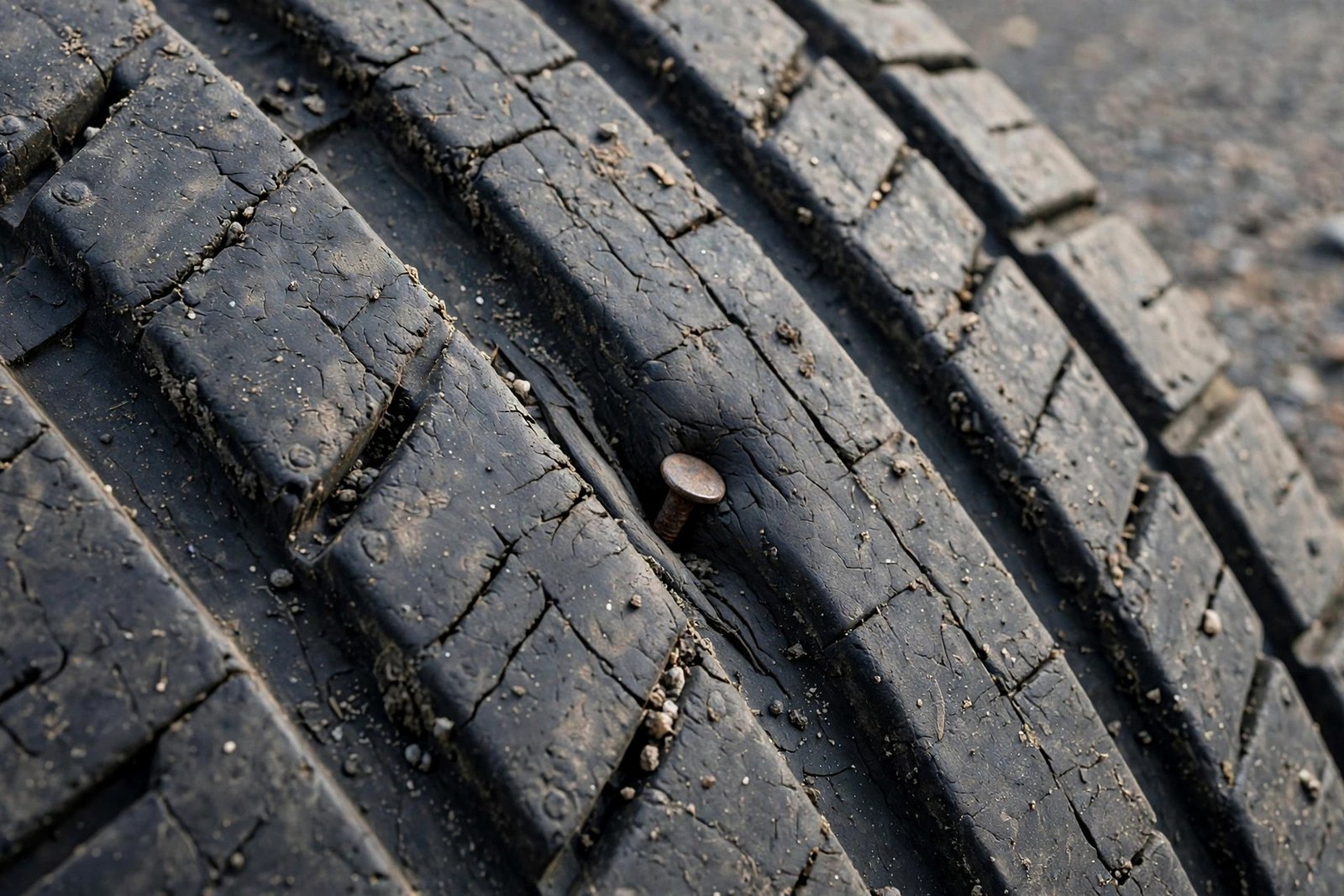
Not every puncture announces itself. A small nail or screw can embed itself in the tread and plug its own hole, so the tire holds air for days or weeks while leaking slowly around the object. This is the classic slow puncture, and it is easy to miss because the head of the nail can sit down inside a tread groove, out of sight unless you look closely.
How to tell: bubbles on the tread in the soap test, or a small dark spot in a groove when you run your hand — carefully — over the tread. Check the whole circumference; the object is often near the shoulder of the tread rather than the center.
The fix and the cost: a puncture in the central three-quarters of the tread, less than 1/4 inch (6 mm) across, can usually be repaired with a professional plug-and-patch. A puncture in the sidewall, or near the shoulder, cannot be repaired safely — the tire has to be replaced. Never pull a nail out on the roadside and keep driving; the object is the only thing plugging the hole, and removing it can turn a slow leak into a flat in minutes.
4. Cracked, bent, or corroded wheel
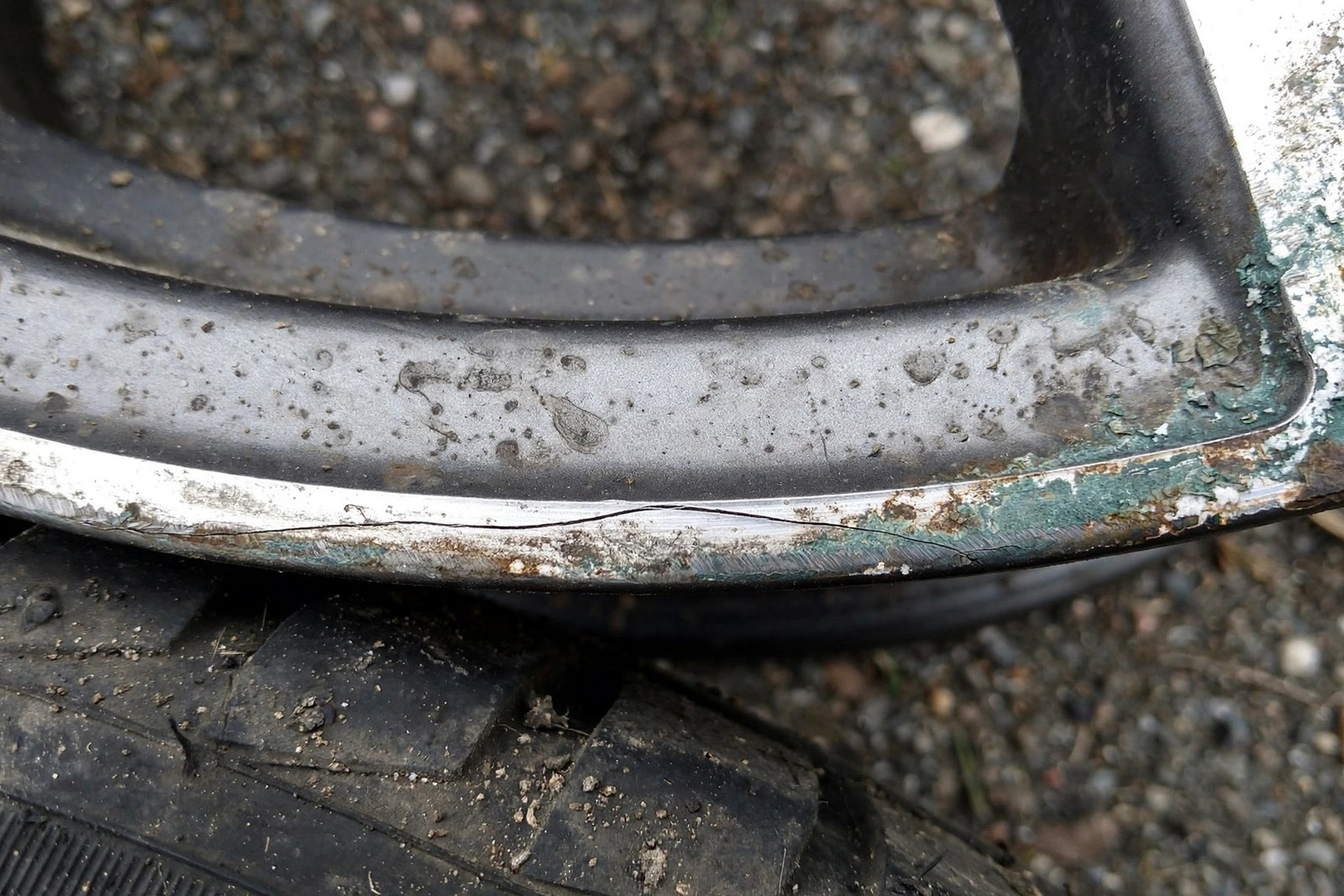
Sometimes the tire is fine and the wheel is the problem. A hard hit on a pothole or a curb can bend a rim just enough to break the bead seal, or crack it outright. A hairline crack in an alloy wheel can be invisible to the naked eye and still leak air steadily.
Cast-aluminum wheels can also suffer from porosity — microscopic voids left inside the metal during casting that slowly let air through. It is uncommon, but it is a real cause of a tire that loses air with no puncture and no visible wheel damage.
How to tell: a leak that started after a pothole strike or a curb hit, bubbles on the wheel itself rather than the tire, or a wheel that is visibly bent or has a flat spot on the rim edge. A dunk test at a tire shop will show bubbles coming from the metal.
The fix and the cost: a bent steel wheel can sometimes be straightened; a bent or cracked alloy wheel usually has to be replaced. This is the expensive end of the scale — a replacement wheel can cost several hundred dollars — so get a second opinion before you agree to it, and check whether your wheel is covered by a warranty or by the tire shop that mounted it.
5. Leaking TPMS sensor seal
If your car has a tire pressure monitoring system, the sensor is bolted to the wheel and sealed with a small rubber grommet or seal. Over time that seal ages and gets brittle, or the retaining nut gets over-tightened during service, and air starts leaking around the base of the sensor where it meets the rim.
This is easy to confuse with a valve stem leak, because on many cars the TPMS sensor is built into the valve stem assembly. The difference is in the fix: sometimes only the seal needs replacing, not the whole sensor.
How to tell: bubbles around the base of the valve stem or sensor where it passes through the wheel, especially on a car that recently had tires fitted or sensors serviced.
The fix and the cost: a TPMS service kit — new seals, grommet, nut and valve core — costs about $5 to $10 per wheel in parts, and most good tire shops fit a new service kit whenever a tire is removed. A full TPMS sensor replacement is a different job: about $75 to $200 or more per wheel installed, and on some cars the new sensor has to be programmed to the car. If only the seal is leaking, do not let anyone sell you a whole sensor.
6. A failed old puncture repair
A puncture repair that looked fine can develop a slow leak months or years later. Plug-only repairs are the most likely to fail — a plug can work loose or shrink — which is why the proper repair is a plug-and-patch combination done from the inside of the tire. A patch can also lift if the inside of the tire was not cleaned properly before it was fitted.
How to tell: the leak is at the site of an old repair, which you may be able to see as a plug in the tread or a patch mark on the inside of the tire. A shop will spot it when the tire is off the wheel.
The fix and the cost: a failed repair usually means a new repair, done properly with a plug-and-patch, if the hole is still in a repairable part of the tread. If the tire has been repaired before in the same area, or the hole has grown, the tire may need replacing.
7. Sidewall cuts, cracks, and aging rubber
The sidewall flexes every time the wheel turns, so small cuts and cracks there open and close as you drive, letting air seep out slowly. Curb scuffs, a sharp stone, or age-related dry rot — fine cracks across the sidewall rubber — are the usual causes. Older tires are more prone to this, because the rubber loses flexibility as it ages.
How to tell: fine cracks or a visible cut on the sidewall, sometimes with bubbles in the soap test. Also check the tire’s age: the DOT code on the sidewall ends in a four-digit week and year of manufacture, and tires over six years old deserve a close look even if the tread is fine.
The fix and the cost: sidewall damage cannot be repaired safely. A cut or cracked sidewall means a new tire. This is one of the few causes on this list where there is no cheap fix, and driving on a damaged sidewall is genuinely dangerous — the sidewall is the part of the tire that holds the car up, and a failure there is usually sudden.
8. Overloading and hard driving
Overloading does not create a leak by itself, but it makes every other problem worse. An overloaded tire runs hotter and flexes more, which opens up small cracks, stresses the bead seal and speeds up air loss through the rubber.
How to tell: the pressure drops faster when the car is loaded, and the tires look visibly squashed at the bottom even at the correct pressure.
The fix and the cost: check the maximum load rating on your tires and the placard on the door jamb, and do not exceed it. If you regularly carry heavy loads or tow, inflate to the higher pressure your owner’s manual recommends for loaded driving.
9. A faulty TPMS sensor reading — when there is no leak at all
Sometimes the tire is fine and the sensor is lying. A TPMS sensor with a dying battery, a damaged sensor or a system that needs recalibration can report low pressure, or trigger the warning light, when the tire is actually holding air perfectly well.
How to tell: a manual pressure gauge reads normal while the dashboard says low, or the warning comes and goes without any change in the actual pressure. A gauge costs a few dollars and settles the question in seconds.
The fix and the cost: check the pressure with a gauge first, then reset or relearn the TPMS system using the procedure in your owner’s manual. If a sensor is genuinely faulty, replacement runs about $75 to $200 or more per wheel, including programming.
When to stop driving and get help now
Most slow leaks give you time to book a shop visit. A few situations do not.
- The tire loses pressure overnight or drops below about 20 PSI — it can overheat and blow out.
- You can see sidewall damage, a bulge, or a crack in the wheel.
- The tire has gone flat more than once, or you have already topped it up several times in a week.
- The car pulls to one side, vibrates badly, or feels unstable.
In any of those cases, fit the spare or call for roadside assistance rather than topping the tire up and carrying on. Driving on a severely underinflated tire does not just risk a blowout — it can destroy the tire and the wheel, turning a $30 valve stem job into a new tire and a new wheel.
What it costs to fix, by cause
| Cause | Typical fix | Typical cost |
|---|---|---|
| Valve core | Replace the core | $3–$5 in parts |
| Valve stem (rubber) | Replace the stem | $20–$50 per tire, installed |
| Bead leak | Clean, reseal and remount | Similar to a valve stem job |
| Hidden nail (repairable) | Professional plug-and-patch | Usually a modest shop fee |
| TPMS service kit (seals only) | New seals and core | $5–$10 in parts |
| TPMS sensor (full replacement) | New sensor + programming | $75–$200+ per wheel |
| Failed old repair | Re-repair or replace the tire | Varies — new tire if not repairable |
| Sidewall damage | Replace the tire | Cost of a new tire |
| Cracked or bent wheel | Repair or replace the wheel | Several hundred dollars if replaced |
Most causes on this list are cheap. The valve and the bead seal — the two most common culprits — are both small jobs. The expensive outcomes are a cracked wheel or a damaged sidewall, and both are reasons to find the leak early rather than topping the tire up for months and hoping it goes away.
How to stop it happening again
A few habits will keep slow leaks rare. Check your tire pressures at least once a month, with a gauge, when the tires are cold — the TPMS light only comes on when pressure is already 25% low, which is far too late to be your only check. Keep the valve caps on; they keep dirt out of the cores. Ask the tire shop to fit a new valve stem and a new TPMS service kit whenever a tire is removed — the parts cost a few dollars and the labor is already being done.
A tire that keeps losing air is annoying, but it is almost always a small problem with a small fix. Work through the list, find the leak with soapy water, and fix the actual cause — not the symptom.
Related reads
- Compare Cars tool — compare any two cars side by side
- TPMS Sensor Replacement Cost: $50–$250 Per Wheel
- TPMS Light On But Tires Are Fine
- Tire Pressure Light Still On After Filling Tires
- How to Reset TPMS Without a Tool
- How to Check Tire Tread Depth
- How Much Does Tire Balancing Cost?
- Best Budget Tires