
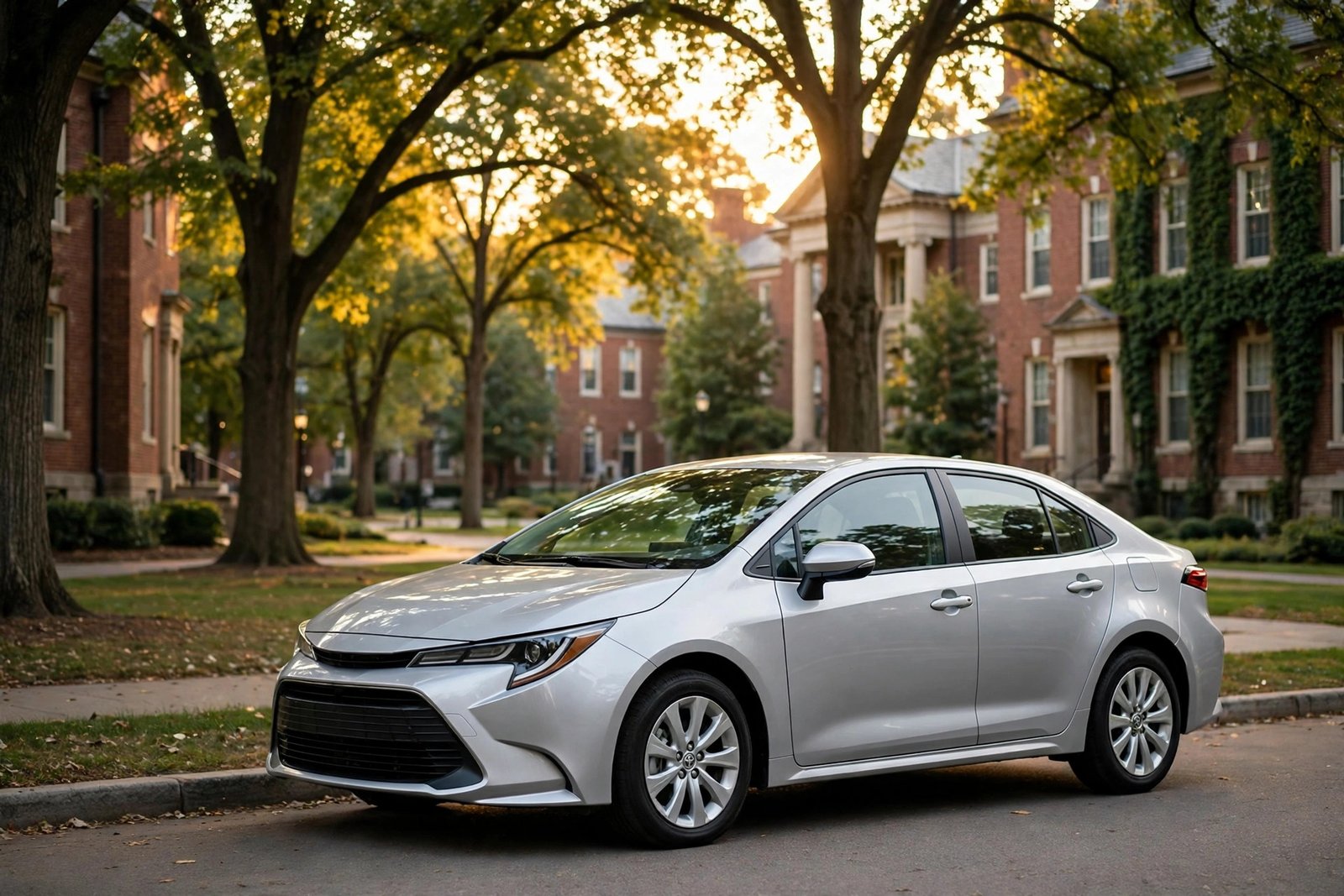
Quick answer: The best overall car for a college student is a used Toyota Corolla (2018–2022) — dead reliable, cheap to insure, and sips gas. On the tightest budget, a used Honda Fit (2015–2020) gives you the most cargo space per dollar for dorm moves. Long commuters should look at a used Toyota Prius — nothing else touches its fuel economy.
College is expensive enough without your car joining in. The right student car starts every morning (even during finals week), fits in a tight campus parking spot, and doesn’t eat your part-time paycheck in gas, insurance, and surprise repairs. The wrong car quietly drains hundreds a month until that “great deal” feels like a second tuition bill.
Here are 10 cars actual students can afford — with real-world price ranges, fuel economy, insurance tiers, and one honest drawback each.
How to read the numbers: new-car prices and MPG figures are for the 2026 models, checked November 11, 2026. MPG is the EPA combined rating for the base trim; the safety rating is the 2026 IIHS Top Safety Pick award, or the NHTSA overall star rating where a car didn’t earn one. The Kia Soul was discontinued after the 2025 model year, so a new Soul means a leftover 2025.
What actually matters in a college car
Forget horsepower. The short list that matters on a student budget:
- Reliability. Cars with a track record of sailing past 150,000+ miles with basic maintenance win — a breakdown during finals week isn’t a learning experience anyone needs.
- Total cost, not the sticker price. Insurance, gas, tires, and repairs are where the real money goes. A $9,000 car costing $250/month to insure is worse than a $13,000 one costing $120.
- Fuel economy. Commutes, weekend trips home, late-night food runs — every 5 mpg matters when you’re buying your own gas.
- Insurance friendliness. Drivers under 25 pay the highest rates in the country. Modest engines and strong safety ratings keep premiums down.
- Cargo for real student life. Dorm move-in, IKEA runs, airport carpools — hatchbacks and fold-flat seats earn their keep.
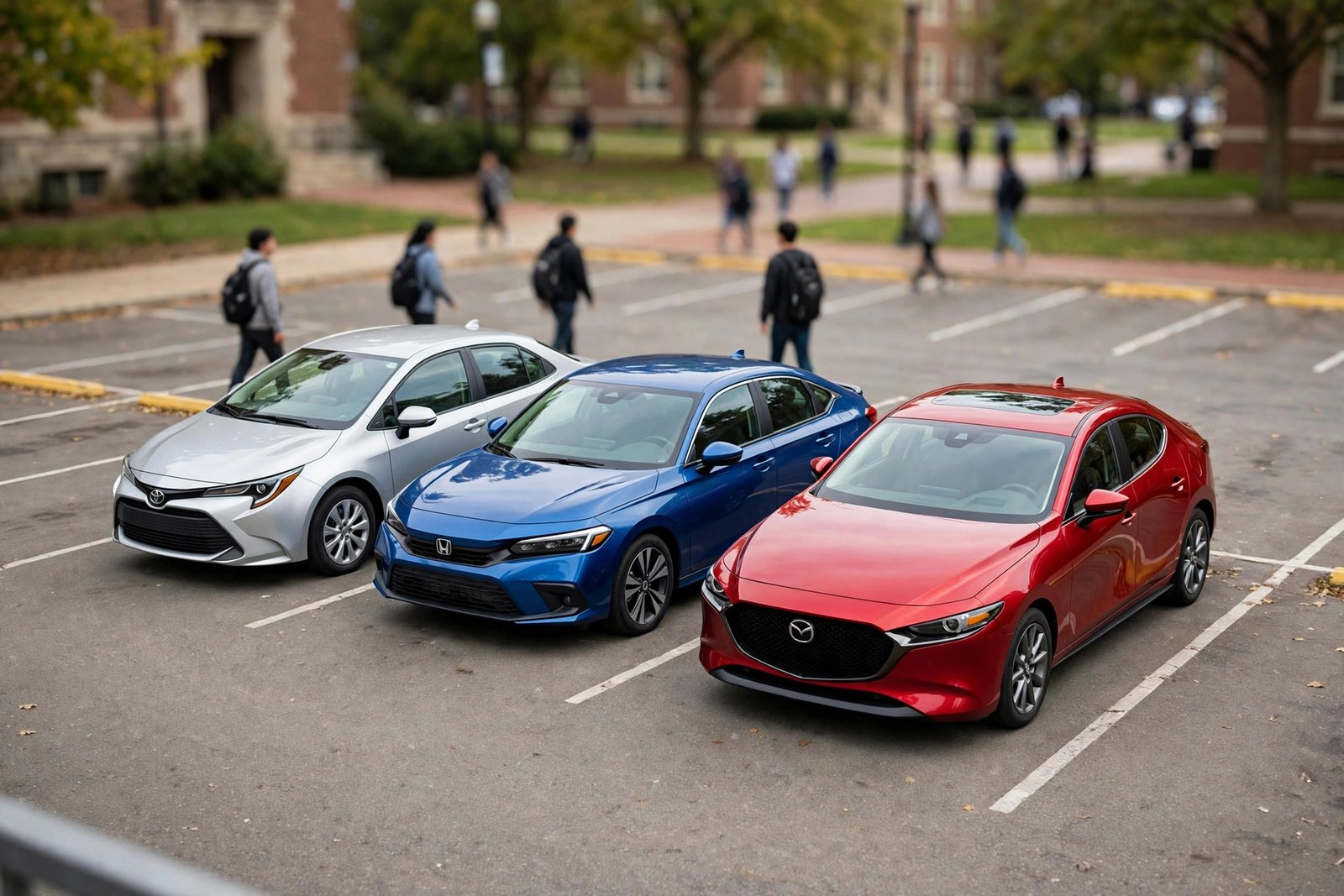

The 10 best cars for college students
1. Toyota Corolla — the default answer (for good reason)
Used (2018–2022): $13,000–$20,000 · New: $23,125 (LE) · MPG: 35 combined (EPA) · Insurance: Low · Reliability: Excellent · Safety: 5-star overall (NHTSA)
The most recommended student car in America because it simply refuses to die — cheap maintenance, parts everywhere, and standard driver-assist safety tech on newer models that keeps insurance among the lowest of any car you can buy.
Cargo: Sedan trunk handles groceries and suitcases; the hatchback swallows dorm gear far better. Drawback: It’s boring — appliance-like driving and basic infotainment on older trims. Enthusiasts should skip to #3.
2. Honda Civic — the fun default
Used (2018–2022): $14,000–$22,000 · New: $24,695 (LX) · MPG: 36 combined (EPA) · Insurance: Low–Moderate · Reliability: Excellent · Safety: IIHS Top Safety Pick (hatchback)
Everything the Corolla does, with more personality — sharper handling, a nicer interior, and stronger resale value. Roomy, easy to park, and cheap to run. Stick with standard 2.0L trims for the best insurance rates. (Can’t choose between the two Japanese giants? Our Toyota vs Honda breakdown compares them head to head.)
Cargo: Decent trunk; the hatchback is the dorm-move hero. Drawback: Strong resale cuts both ways — you’ll pay more used than for a comparable Elantra. Avoid Sport/Si trims: tempting, but they spike a young driver’s insurance fast.
3. Mazda3 — the driver’s pick
Used (2017–2021): $12,000–$20,000 · New: from around $24,000 · MPG: 30 combined (EPA) · Insurance: Low–Moderate · Reliability: Very good · Safety: IIHS Top Safety Pick+
Feels like a car costing $10,000 more — sharp steering, a genuinely premium cabin, and head-turning looks. Get the hatchback if you move every August; its versatility is worth seeking out. Reliability is strong, a half-step behind Toyota/Honda.
Cargo: Hatchback plus fold-flat seats hauls dorm loads easily. Drawback: Tight rear seat for tall friends, a smaller trunk than the Civic’s, and fuel economy trails the class leaders by a few mpg.
4. Hyundai Elantra — the value play
Used (2019–2023): $12,000–$19,000 · New: from around $22,000 · MPG: 35 combined (EPA) · Insurance: Low · Reliability: Good and improving · Safety: IIHS Top Safety Pick
The most features per dollar here — big touchscreen, driver assists, sharp styling — for less than its Japanese rivals. Bonus: check whether any of Hyundai’s long factory powertrain warranty still transfers to the used car you’re eyeing.
Cargo: Competitive trunk for the class. Drawback: Weaker resale value — great when you’re buying used, less great when you sell after graduation. Some interior plastics feel budget-grade.
5. Toyota Prius — the commuter’s cheat code
Used (2017–2022): $14,000–$24,000 · New: from around $28,000 · MPG: 57 combined (EPA) · Insurance: Low–Moderate · Reliability: Excellent · Safety: IIHS Top Safety Pick+
For long commutes, nothing touches the Prius — around 50 mpg combined means half the gas-station visits of your friends. The hatchback swallows surprising cargo, and Toyota’s hybrid system is famously durable.
Cargo: Hatchback versatility handles dorm moves with ease. Drawback: Higher purchase price than a comparable Corolla, and a hybrid battery replacement outside warranty is expensive (rare, but real). Not exciting to drive — proudly an appliance.

6. Honda Fit — the budget cargo king
Used (2015–2020): $9,000–$15,000 · New: discontinued after 2020 · MPG: 36 combined (EPA) · Insurance: Low · Reliability: Excellent · Safety: 5-star overall (NHTSA)
The smartest answer nobody talks about. Cheapest car here, sips gas, and its folding “Magic Seat” creates a flat cargo floor that swallows a mini-fridge, boxes, and a bike all at once. Dollar for dollar, nothing beats it on move-in day.
Cargo: Best in class for its size — this is the Fit’s whole personality. Drawback: Discontinued after 2020, so every example is aging. Noisy on the highway and the small engine strains with a full load. Buy on condition, not mileage.
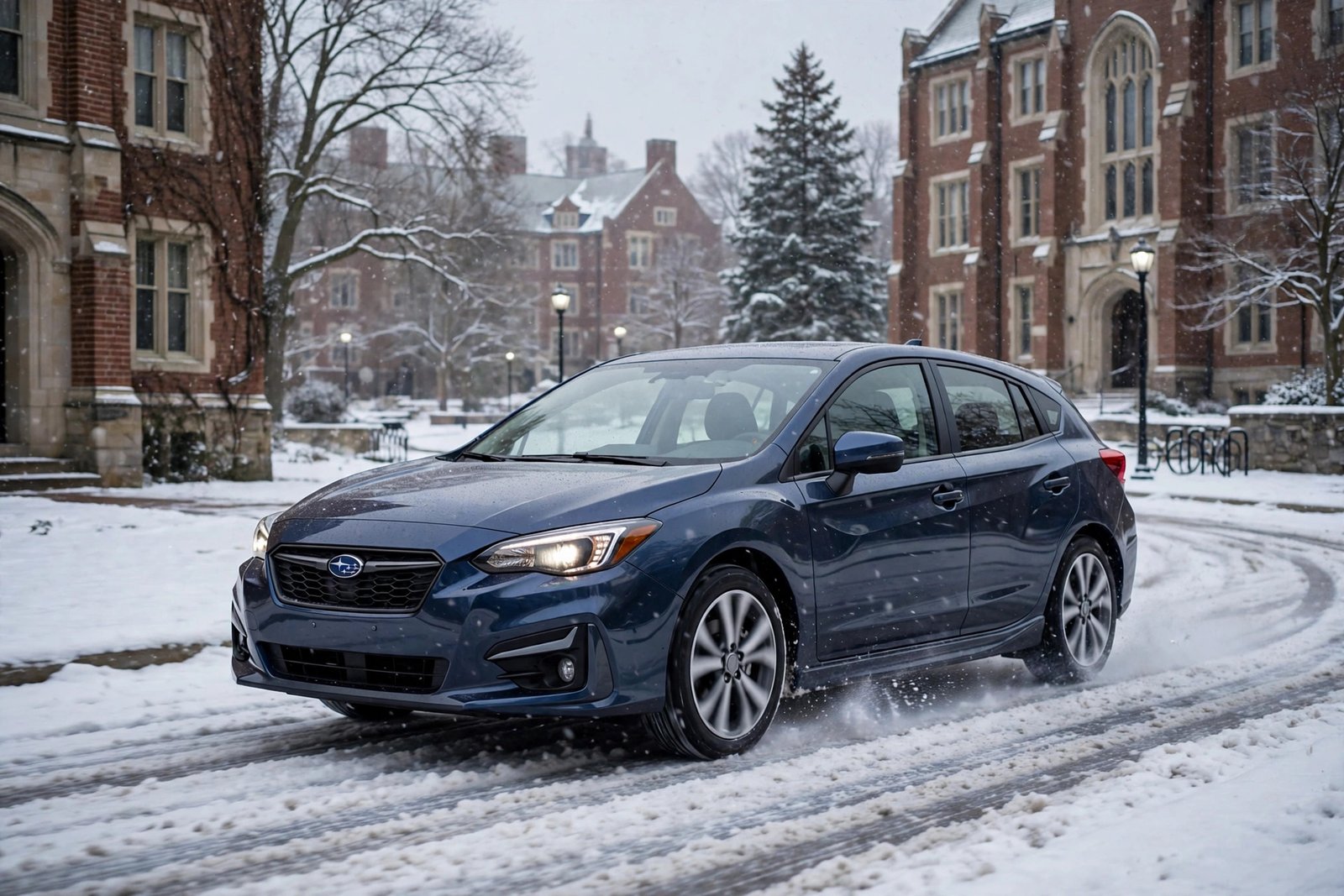
7. Subaru Impreza — the snow-belt pick
Used (2018–2022): $13,000–$20,000 · New: from around $23,000 · MPG: 29 combined (EPA) · Insurance: Low–Moderate · Reliability: Good · Safety: 5-star overall (NHTSA)
Standard all-wheel drive at a compact-car price — in snow states, that’s a genuine advantage on unplowed roads. Available as a sedan or a more practical hatchback.
Cargo: Get the hatchback for gear. Drawback: The CVT can feel rubber-bandy, fuel economy trails front-wheel-drive rivals, and the infotainment feels dated. Don’t pay for AWD you don’t need — in warm states a Corolla is cheaper to run.
8. Kia Soul — the boxy overachiever
Used (2018–2022): $11,000–$18,000 · New: from around $21,000 · MPG: 30 combined (EPA) · Insurance: Low · Reliability: Good · Safety: 4-star overall (NHTSA)
Don’t let the toaster shape fool you — tall roof, upright seating, and a huge cargo opening make it brilliant for hauling friends and furniture. Cheap to buy and insure; later models add Apple CarPlay and driver assists. Prioritize condition over model year.
Cargo: Excellent — the boxy shape is honest, usable space. Drawback: Highway wind noise, a slow base engine when fully loaded, and polarizing looks. You’ll love it or hate it.
9. Toyota Camry — the road-trip sedan
Used (2018–2022): $15,000–$24,000 · New: from around $27,000 · MPG: 51 combined (EPA) · Insurance: Low–Moderate · Reliability: Excellent · Safety: IIHS Top Safety Pick+
If home is a six-hour drive away, the Camry earns its place — quieter and more comfortable on the highway than any compact here, with a back seat that fits actual adults and the same “just works” reliability. The hybrid pushes toward 47 mpg combined if your budget stretches.
Cargo: Big trunk, but it’s a sedan — no hatch versatility. Drawback: Bigger means trickier campus parking and a higher price than compacts. Overkill if you mostly drive across town.
10. Honda CR-V — the small SUV for gear-heavy lives
Used (2017–2021): $16,000–$25,000 · New: from around $30,000 · MPG: 30 combined (EPA) · Insurance: Low–Moderate · Reliability: Very good · Safety: 5-star overall (NHTSA)
The priciest pick here, but the right call if you genuinely need space — outdoor gear, band equipment, regular carpools. Holds value extremely well with a roomy cabin. Only step up to a crossover if you’ll use the space; otherwise a compact does the job cheaper. Torn between two finalists? Run them through our free car comparison tool side by side.
Cargo: Cavernous with seats folded. Drawback: Most expensive to buy and fuel on this list — more car than most students need.
New vs. used: what makes sense on a student budget?
For most students, used wins — and it’s not close. A 3-to-7-year-old car has taken its biggest depreciation hit, costs less to insure, and still includes modern safety tech like backup cameras and automatic emergency braking. That age window is the sweet spot: no new-car premium, no inherited beater.
New makes sense in two cases: the payment and higher insurance fit comfortably, or a full factory warranty is worth the premium to your family. Leasing is usually a trap for students — mileage limits punish long drives home, and you own nothing at graduation.
The monthly-math rule: don’t shop by sticker price. Add the estimated payment + insurance quote + fuel, and make sure part-time income or family help covers it with room left for food.
How to buy a used car without getting burned
Most student-car horror stories start with skipping the basics:
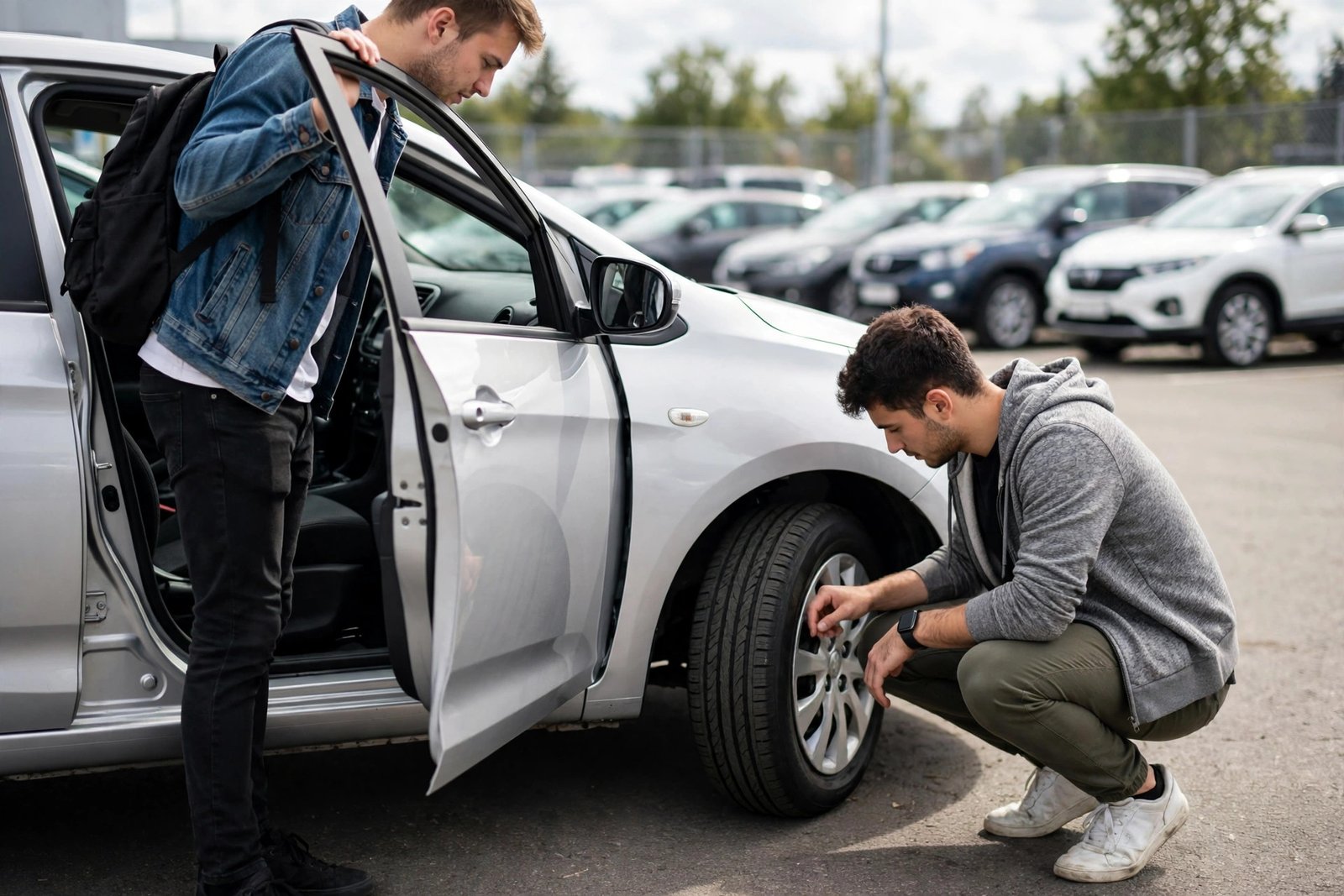
- Get a vehicle history report. Accidents, salvage/flood titles, and odometer rollbacks show up here. Walk away from any branded title — no exceptions.
- Pay for a pre-purchase inspection. An independent mechanic puts the car on a lift for around $100–$200 and spots what you can’t: leaks, worn suspension, hidden accident repairs. Best money you’ll spend.
- Check for open recalls on the NHTSA website with the VIN — free, two minutes.
- Look at the tires and brakes. Replacing both right after purchase can add $1,000+ you didn’t budget. Uneven tire wear can signal alignment or suspension trouble.
- Test drive like you mean it. Highway speeds, hard braking, tight turns, A/C blasting. Listen for clunks, watch for warning lights, feel for smooth shifts.
- Ask for maintenance records. Regular oil changes and documented service beat low mileage every time — a cared-for car at 110,000 miles beats a neglected one at 70,000.
For context on which models hold up longest, see our roundup of the most reliable cars.
Car insurance tips for drivers under 25
Insurance is the budget-killer nobody warns you about — a 20-year-old can pay two to three times a 35-year-old’s rate for the same car. Fight back:
- Get quotes BEFORE you buy. Two same-priced cars can have wildly different premiums — ten minutes quoting the exact car can save thousands over four years.
- Stay on a parent’s policy if possible. Being added to a parent’s multi-car policy is almost always cheaper than your own standalone policy.
- Ask about the good-student discount. Most major insurers cut rates for full-time students with a B average or better — often up to 25%. Bring your transcript.
- Consider telematics. Usage-based programs (app or plug-in device) can cut 10–30% for genuinely careful drivers. Real money if you drive calmly.
- Raise your deductible — carefully. Going from $500 to $1,000 lowers premiums, but only if you actually have $1,000 saved for an emergency.
- Boring cars win. Modest sedans and hatchbacks cost less to insure than anything sporty or luxurious. The IIHS publishes the safety ratings insurers watch — strong crash scores help.
- Walk in with real numbers. Check exact MPG on fueleconomy.gov and market pricing on kbb.com before negotiating — data is leverage.
Frequently asked questions
What’s the best car for a college student on a really tight budget?
A used Honda Fit (2015–2020, roughly $9,000–$15,000) — cheap to buy, insure, and fuel, with best-in-class cargo space for dorm moves. An older Hyundai Elantra or Kia Soul stretches a thin budget nearly as far.
Should a college student buy a new or used car?
Used, in most cases. A 3-to-7-year-old car has absorbed the steepest depreciation, costs less to insure, and still has modern safety features. Buy new only if the budget comfortably covers the higher payment and insurance.
How much should a college student spend on a car?
Think monthly: payment + insurance + fuel should fit part-time income or family support without stress. For most students that lands in the $8,000–$18,000 used range — enough for a reliable compact with room to spare.
What’s the cheapest car for a college student to insure?
Small, modest-powered, safety-rated cars — the Corolla, Fit, Elantra, and Soul consistently rank among the cheapest. Always quote the exact car before buying; young-driver premiums vary enormously by model and trim.
Does a college student need all-wheel drive?
Only in snow-belt states. Elsewhere, front-wheel drive with good all-season tires handles winter fine and costs less to buy, fuel, and maintain. For serious snow, the Subaru Impreza is the affordable AWD answer.
What mileage is too high on a used student car?
Condition beats odometer — the sweet spot is roughly 70,000–125,000 miles with documented maintenance. A cared-for car at 110,000 miles beats a neglected one at 60,000. Get a pre-purchase inspection regardless.