

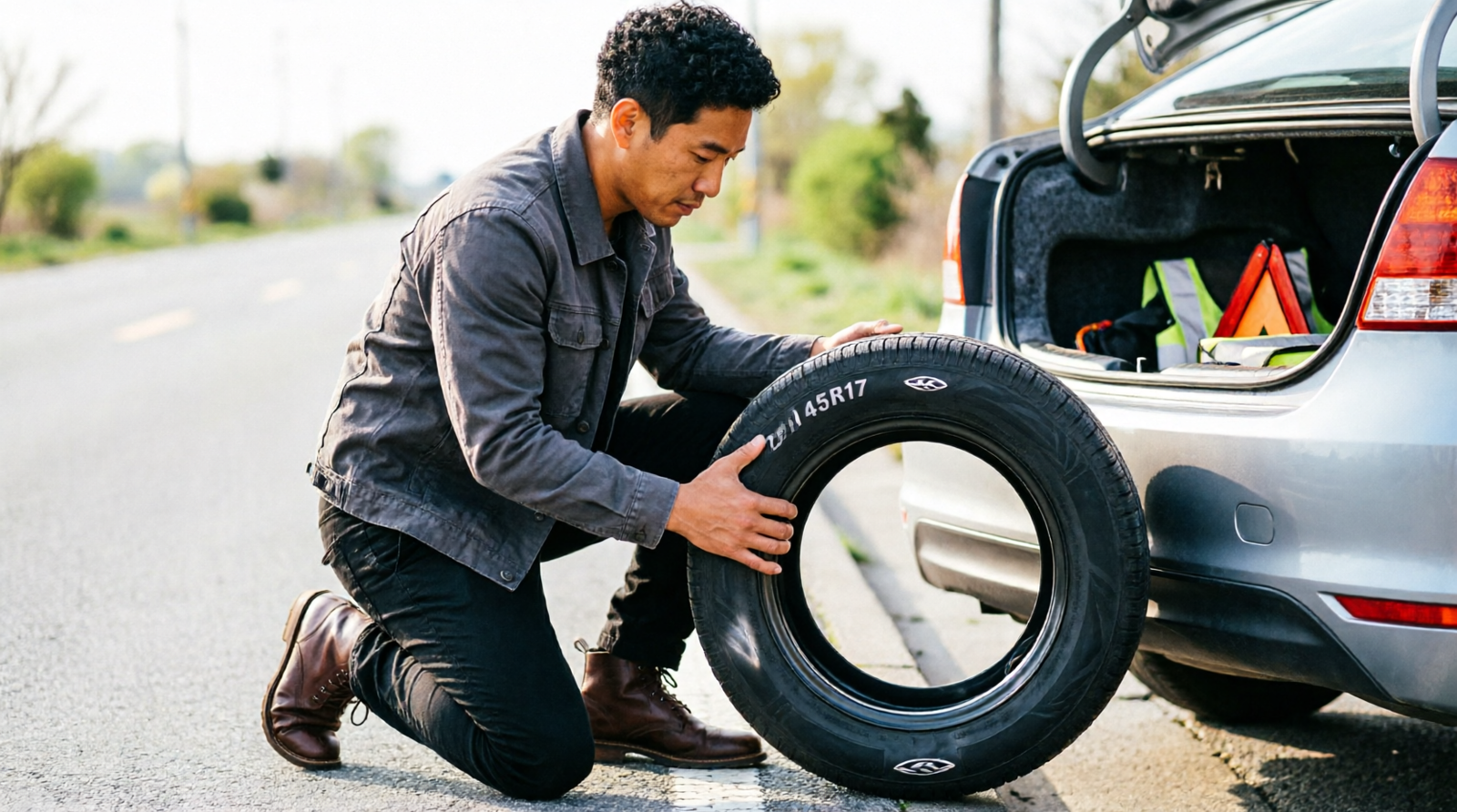
A flat tire has a way of showing up at the worst possible moment. Before you can swap it out, though, you need to actually get the spare tire loose — and depending on your vehicle, that’s not always as obvious as popping a trunk. Here’s how to find your spare, get it out safely, and avoid the mistakes that trip up most drivers.
Before You Start: Safety First
Your safety matters more than getting back on the road quickly. If you can, pull over to a flat, stable spot away from moving traffic before you touch anything.
A few quick steps before you go near the spare:
- Park on level, firm ground
- Shift into Park (or engage the parking brake in a manual)
- Turn off the engine and pocket the keys
- Turn on your hazard lights
- Keep passengers off the roadside, away from traffic
One more thing: don’t crawl underneath your car just to reach an underbody spare. Nearly every vehicle with an underbody spare has a winch or lowering system that releases it from above, so there’s no need to put yourself under the car.
Where Is the Spare Tire Located in a Car?
Spare tire placement depends heavily on the type of vehicle you drive. Sedans, SUVs, and trucks all handle it a little differently.
| Spare Tire Location | Common Vehicle Types | How It Usually Comes Out |
| Under the trunk floor | Cars, crossovers | Lift the floor panel and release the fastener |
| Under the vehicle | SUVs, trucks, some vans | Lower it using a winch tool |
| Exterior rear mount | Some SUVs, trucks | Release the carrier or mounting hardware |
| Side compartment | Older or specialty vehicles | Open the panel and remove retaining hardware |
If you’re not sure where yours is, your owner’s manual will tell you exactly where to look. Also worth checking: some newer vehicles skip the spare tire entirely and instead include a tire inflator or repair kit.
Why Location Varies by Vehicle
Automakers choose spare placement based on space, weight distribution, and body style. Sedans and crossovers usually have room under the trunk floor since there’s no separate cargo bed to work around. Trucks and larger SUVs, on the other hand, often mount the spare underneath the frame or on the tailgate to keep the cargo area clear and free up interior space. If you’ve recently switched from a car to a truck (or vice versa), it’s worth re-familiarizing yourself with the setup — the process really isn’t the same.
Types of Spare Tires: Full-Size vs. Compact
Not all spares are created equal, and knowing which type your vehicle carries changes how you should treat it once it’s out.
Full-Size Spares
A full-size spare matches your regular tires in size and is built to handle normal driving conditions. Older trucks and some SUVs still come with these. Once it’s mounted, you can usually drive on it just like any other tire, though it’s still smart to get your damaged tire repaired or replaced soon.
Compact “Donut” Spares
Most modern sedans and crossovers carry a compact spare instead — smaller, lighter, and designed strictly for temporary use. These typically come with a posted speed limit (often around 50 mph) and a mileage cap, usually somewhere between 50 and 70 miles. Driving farther or faster than recommended can wear it out quickly or affect handling.
Run-Flat Tires and Repair Kits
Some vehicles skip the spare altogether. Run-flat tires are built to keep you moving for a short distance even after losing air, while other cars include a sealant-and-inflator kit meant for small punctures. If your car falls into either category, there may be no spare to remove at all — worth confirming before you go looking for one that isn’t there.
Tools You’ll Need to Remove a Spare Tire
Most manufacturers store everything you need right alongside the spare or in a nearby compartment. Common tools include:
- A lug wrench or tire iron
- A jack and jack handle
- A spare-tire lowering tool (for underbody spares)
- A screwdriver for certain access panels
- Your owner’s manual
Not every step requires every tool — a trunk-mounted spare, for instance, might only need you to twist a retaining knob by hand. It’s still a good idea to locate these tools before you actually need them. Digging through your trunk in the dark on the side of the highway is a bad time to learn where things are stored.
How to Remove a Spare Tire From the Trunk
Trunk-mounted spares are typically the easiest to access, and the process is fairly consistent across most cars.
Step-by-Step Process
- Open the trunk and clear away any cargo blocking the floor.
- Lift the floor panel. Look for a handle, strap, or recessed grip.
- Locate the spare sitting in its molded storage well.
- Loosen the retaining fastener, usually a plastic or metal knob in the wheel’s center — turn it counterclockwise.
- Lift the tire out, gripping it securely as you remove it.
If it feels stuck, don’t yank on it. There may be a second bracket or cover holding it in place that you’ve missed.
Some trunk-mounted setups also include a small tray around the spare that holds the jack, lug wrench, and lowering tool together. Take everything out at once so you’re not making a second trip back to the trunk mid-repair.
How to Take Out a Spare Tire From Under the Vehicle
Underbody spares, common on trucks and SUVs, look intimidating but usually just require a simple winch mechanism.
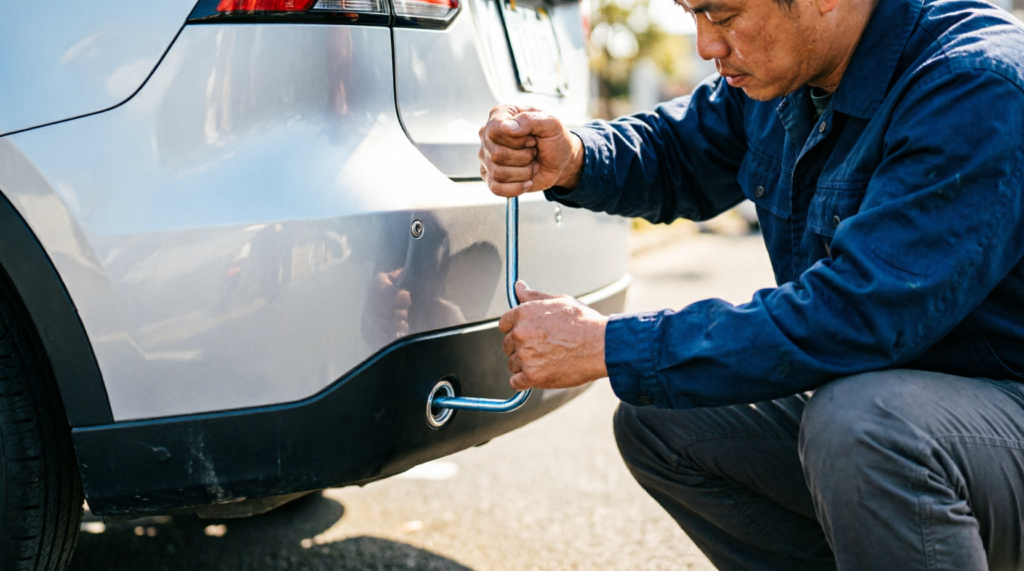
Start by locating the access point, often a small cover near the rear bumper. Insert the lowering tool provided with your vehicle and turn it in the direction specified in your owner’s manual — the spare will gradually drop toward the ground.
Once it reaches the ground, follow your vehicle’s instructions to detach the cable, hook, or retaining plate. Never position yourself underneath the vehicle during this process; you shouldn’t need to.
If the mechanism won’t budge, stop. A seized winch is a job for a professional, not something to force with extra muscle. Rust and road grime are the usual culprits, especially in areas with harsh winters or a lot of salted roads — a quick spray of penetrating oil on the access point every so often can prevent this from becoming a problem later.
How to Remove a Spare Tire From an Exterior Mount
Some SUVs and trucks carry their spare on the tailgate or an external carrier, usually secured with lug nuts or a locking mechanism.
Open the carrier or tailgate if needed, then use a lug wrench to loosen the fasteners holding the tire. Keep one hand on the wheel as you remove the last fastener so it doesn’t drop unexpectedly — these tires are often heavier and more awkward than trunk-mounted ones. If you’re struggling to control it, ask someone to help rather than trying to catch it solo.
Once it’s free, set it flat in a secure spot until you’re ready to install it.
Checking the Spare Before You Use It
Getting the tire out is only half the job. Before bolting it on, give it a quick once-over.
Look for:
- Cracks or visible damage
- Anything lodged in the tread
- Noticeably low air pressure
- Signs of age or dry rot
- Damage to the wheel itself
Pay attention to the label on the tire, too. A compact “donut” spare isn’t built to perform like a full-size tire — it usually comes with a lower speed limit and is meant for short-term use only. Even full-size spares may have their own age or condition requirements, so check your owner’s manual rather than assuming.
Common Mistakes to Avoid When Removing a Spare Tire
A few avoidable errors tend to turn a quick job into a frustrating one:
Forgetting the tools. The spare doesn’t help much without the lug wrench and jack — check the full compartment before you start.
Forcing a stuck mechanism. Corrosion or dirt can make a bolt or winch stiff. Muscling through it risks breaking the hardware.
Working too close to traffic. If you can’t reach a safe spot, it’s worth calling for roadside help instead of changing the tire where you are.
Ignoring the spare’s limits. Temporary spares aren’t meant for long drives or high speeds — check the sidewall.
Leaving gear loose afterward. Secure the damaged tire and your tools once you’re done; loose items can shift around while you drive.
Keeping Your Spare Ready for Next Time
A spare can sit untouched for years, which doesn’t mean it’s automatically ready to use. Make it part of your regular vehicle maintenance to:
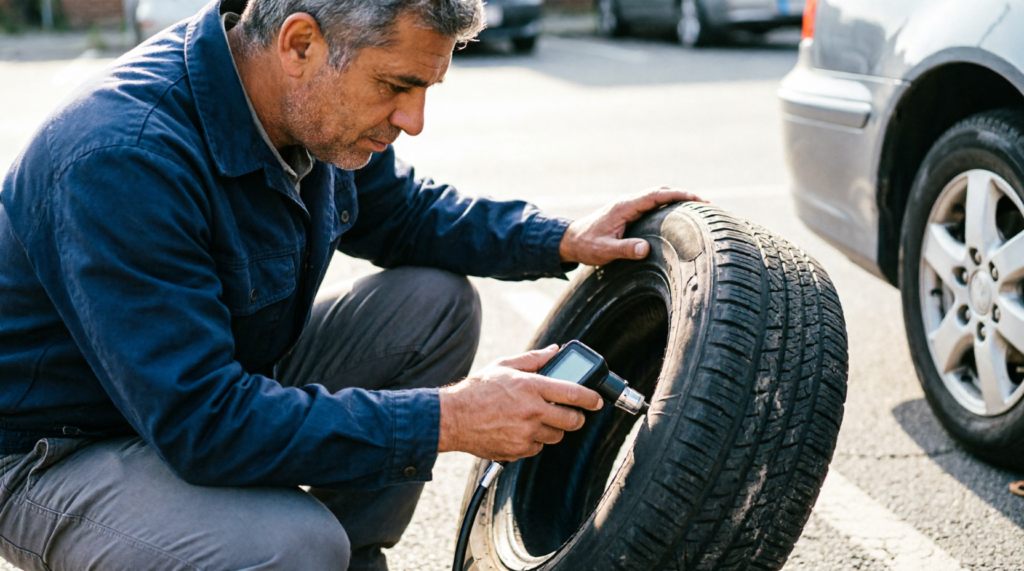
- Check the spare’s air pressure periodically
- Look it over for cracking or dry rot
- Confirm the jack, lug wrench, and lowering tool are all present and working
This is especially worth doing before a long road trip. A perfectly good spare is useless if the tool needed to reach it is missing or seized.
A Simple Seasonal Check
A good habit is to glance at the spare every time you rotate your regular tires or get an oil change — most shops will do this for free if you ask. Tire pressure naturally drops over time even without a puncture, and rubber degrades faster in extreme heat or cold. If your spare is more than six to ten years old, regardless of how it looks, it’s worth asking a tire shop to inspect it, since rubber compounds break down with age even when tread depth looks fine.
When to Call for Roadside Assistance
Not every flat is a DIY situation. Calling for help makes sense if you’re stuck somewhere unsafe, missing the right tools, or unable to access the spare at all.
It’s also the smarter move if the lowering mechanism is jammed, the spare itself looks damaged, or you’re just not confident handling the jack and tire tools. A roadside assistance plan can be a useful backstop if you spend a lot of time on highways or unfamiliar roads — the goal is getting back on the road safely, not proving you can do it alone.
Conclusion
Getting your spare tire out doesn’t have to be a mystery, whether it’s tucked under the trunk floor, mounted underneath the vehicle, or hanging on the back. Take a few minutes now to find yours and check that the tools are where they should be — it makes a flat tire a lot less stressful when it actually happens.
FAQs About Taking Out a Spare Tire
1. Where is the spare tire usually located?
It depends on the vehicle — under the trunk floor, underneath the car, or mounted externally. Check your owner’s manual for the exact spot.
2. How do I remove a spare tire from under my car?
Most underbody spares lower with a special tool inserted into an access point near the rear bumper, following your manual’s instructions.
3. Do all cars have a spare tire?
No. Many newer vehicles come with a tire repair kit or inflator instead of a traditional spare.
4. What tools do I need to remove a spare tire?
Typically a lug wrench, jack handle, and sometimes a lowering tool — though some trunk-mounted spares need none of these.
5. Can I drive normally on a temporary spare?
Usually not. Compact “donut” spares often have speed and distance limits printed on the sidewall.
6. What if my spare tire won’t come out?
Don’t force it. Check for an additional retaining device, and consider roadside assistance if it stays stuck.
7. How often should I check my spare tire?
Check it periodically, especially before long trips, along with the jack and other tire-changing tools.