


A flat tire can happen anywhere — on the highway, in a parking lot, or on a quiet road miles from home. When it does, searching for roadside tire change near me is usually the fastest way to find help.
The good news: you have options. Roadside assistance can install your spare, a mobile tire service can come to you, or a tow truck can take your vehicle to a shop if the tire can’t be safely replaced on the spot. Here’s what to know before you call, how to stay safe, and what it may cost.
What Does Roadside Tire Change Near Me Mean?
Before you search or call anyone, it helps to know what you’re actually asking for because “tire change,” “tire repair,” and “mobile tire replacement” don’t all mean the same thing.
When someone searches for roadside tire change, they’re usually looking for a technician who can come to their location and deal with a flat. In many roadside assistance programs, a tire change means removing the damaged tire and installing your vehicle’s usable spare — not bringing you a brand-new tire.
AAA, for example, offers flat-tire assistance when you have a usable spare. If you don’t have one, towing may be the available option. Mobile tire companies can go further, sometimes repairing a tire, installing your spare, or bringing a replacement tire directly to you.
Not every vehicle has a traditional spare, either. Many newer cars come with a tire-inflation kit — a sealant and small compressor — instead of a spare wheel. These kits may work for certain small punctures, but they generally won’t solve sidewall damage, a shredded tire, or a damaged wheel.
Comparing the Service Types
| Service | What usually happens | Best for |
| Roadside tire change | Your flat is swapped for your spare | You have a usable spare |
| Tire repair | A technician attempts to fix a repairable puncture | Minor punctures in a suitable location |
| Mobile tire replacement | A new tire is brought to your location | No usable spare or a damaged tire |
| Towing | Your vehicle is transported to a shop | Unsafe or unrepairable situations |
Always confirm exactly what’s included before approving work. Some providers charge for the service separately from the cost of a replacement tire, while an existing roadside plan may cover some or all of the service.
What to Do When You Get a Flat Tire
Your first priority is safety, not speed. Getting the tire changed can wait a few minutes; getting off the road safely can’t.
If you notice a flat while driving, avoid sudden braking or sharp steering. Ease off the gas and look for a safe place to stop — ideally a wide shoulder, parking area, or side street, completely off the travel lane.
Once stopped:
- Turn on your hazard lights.
- Shift to Park and set the parking brake.
- Turn off the engine.
- Keep passengers away from moving traffic.
- Avoid standing between your vehicle and passing cars.
- Call roadside assistance if changing the tire yourself isn’t safe.
If you’re on a busy highway shoulder, don’t attempt a DIY change just because you have a spare. Getting out of the vehicle exposes you to passing traffic. Assess the situation from inside the vehicle first.
If the Tire Blew Out
A blowout is more than a slow leak. You may see shredded rubber, sidewall damage, or damage to the wheel itself. It can also cause a loud bang and a sudden pull to one side, which can be unsettling at highway speed.
Grip the steering wheel firmly, avoid hard braking, and gradually reduce your speed before moving toward a safer stopping location.
Don’t keep driving on a fully flat tire unless moving the vehicle a very short distance is necessary to reach a safer spot. Doing so can damage the wheel and make the vehicle harder to control. A roadside technician can determine whether your spare is safe to install or whether the vehicle needs a tow instead.
When Should You Call for Roadside Tire Assistance?
You’re never obligated to change a tire yourself just because you know how. Calling for help makes sense when you’re uncomfortable using a jack, don’t have the necessary equipment, or are stopped somewhere dangerous.
Roadside assistance can also be the better choice when:
- You’re stopped on a busy highway shoulder.
- It’s dark or the weather is bad.
- You’re in an unfamiliar area.
- A physical limitation makes changing the tire difficult.
- Your spare is damaged or under-inflated.
- You don’t have a jack or lug wrench.
A spare isn’t automatically safe just because it’s been sitting in your trunk. Check for obvious damage and proper inflation when you can, and mention any concerns to the provider before they arrive.
If a technician determines that the spare isn’t safe to use, the vehicle may need to be towed to a shop instead.
What If Your Car Has Run-Flat Tires?
If your vehicle has run-flat tires instead of a spare, the situation is different. Run-flat tires are designed to travel a limited distance at a reduced speed after losing pressure, which can give you time to reach a safer location or repair facility.
However, run-flats aren’t a permanent solution. If you’ve lost pressure, check your owner’s manual for the manufacturer’s distance and speed limits and consider calling for roadside assistance once you’re safely off the road.
Can Roadside Assistance Install Your Spare Tire?
Installing a spare is one of the most common forms of roadside tire assistance. The technician removes the flat, installs the spare, secures the wheel, and checks that the vehicle is ready to move.
However, coverage varies by provider and membership plan.
AAA, for example, includes spare-tire installation as part of its roadside assistance, but it does not provide the spare tire itself. If you don’t have a usable spare, towing may be the available option.
A mobile tire replacement service is different. Some independent providers carry replacement tires and can install one at your location.
Does Roadside Assistance Bring a New Tire?
Not usually. Traditional roadside assistance generally focuses on services such as installing a customer’s spare, inflating a tire, or towing the vehicle.
A mobile tire service may be able to bring a replacement tire directly to you. Before booking, ask:
- Do you bring replacement tires, or only install my spare?
- Is the tire itself included in the quoted price?
- Do you carry the exact size my vehicle needs?
- Is this service available at my location?
- What happens if the tire can’t be safely repaired?
Getting clear answers before approving the service can prevent an unexpected bill.
How Much Does a Roadside Tire Change Cost?
There’s no single nationwide price for a roadside tire change. Cost depends on whether you already have roadside coverage, the provider, your location, time of day, distance, and whether you need a spare installed or a replacement tire.
Rather than relying on one national price, it’s better to understand what can affect your bill.
| Service | What affects the cost | Notes |
| Spare installation | Service or labor fee | You provide the usable spare |
| Mobile tire replacement | Service fee + replacement tire | Tire cost varies by size and type |
| Tire repair | Service and repair fee | Only suitable damage may be repairable |
| Towing | Distance and provider | May be partly or fully covered by a roadside plan |
Your bill can be higher if you need a brand-new tire, delivery to your location, long-distance towing, after-hours service, multiple services, or work outside a provider’s normal coverage area.
Existing roadside coverage can make a significant difference. Before paying out of pocket, check your auto club membership, insurance policy, vehicle manufacturer’s roadside program, or other benefits that may include roadside assistance.
Always ask for the total price before authorizing non-emergency work. If possible, get the quoted price in writing or by text.
How to Find a Reliable Roadside Tire Change Near You
Start by checking coverage you may already have. An auto club membership, auto insurance policy, vehicle manufacturer’s roadside program, or another service you already pay for may include tire assistance.
If you do need to search for a provider, look for:
- Clear pricing
- 24/7 availability if you need it
- A defined service area
- Recent customer reviews
- A clear explanation of what’s included
- A reliable phone number or booking method
A provider’s website or listing should make it reasonably clear whether they install spares, repair tires, sell replacements, or mainly provide towing.
If that’s unclear, call and ask before approving the service.
Pay Attention to Recent Reviews
Recent reviews can be more useful than an overall star rating alone. Look for comments about response times, pricing, professionalism, and whether customers received the service they were promised.
Some larger providers also offer technician tracking through an app or text link, which can make the wait less uncertain.
Don’t choose a provider based only on the first search result. Compare the service offered, estimated price, coverage area, and customer feedback when the situation allows.
What Information Should You Give the Technician?
The more accurate information you provide, the easier it is for the provider to send the right help.
Have these details ready:
- Your exact location
- Vehicle make, model, and year
- The specific tire problem
- Whether you have a spare
- Whether the spare is inflated
- Whether the vehicle is safely off the road
If you’re on a highway, include the road name, direction of travel, and nearest exit or mile marker.
Mention anything that could complicate the job too, such as:
- A locked lug nut
- Missing lug-nut key
- Damaged wheel
- Limited shoulder space
- A spare with low pressure
- A vehicle stuck in mud or another difficult position
Don’t assume the technician will discover these details after arriving.
What If You Need a Replacement Tire?
If you don’t have a spare and need a mobile tire replacement, provide the tire size if you know it. You can usually find the size printed on the tire sidewall.
If you’re unsure, give the technician your vehicle’s exact make, model, and year. A photo of the damaged tire can also help the provider determine what may be needed.
How to Stay Safe While Waiting for Roadside Assistance
Once help is on the way, your job shifts from problem-solving to staying safe and making it easy for the technician to find you.
Keep your hazard lights on, especially near traffic. If it’s safe, stay inside the vehicle with your seat belt fastened rather than standing beside it.
At night, share your location with the provider and give precise directions. Never step into a traffic lane to place a warning triangle. Visibility isn’t worth putting yourself in danger.
What About Bad Weather?
Weather adds its own risks. In heavy rain or snow, visibility for other drivers drops sharply, so staying in a safe location becomes even more important.
In extreme heat, you may need to run the engine briefly for air conditioning while waiting. Make sure the exhaust is clear of snow, mud, or debris before doing so.
If conditions become dangerous, tell the roadside provider. They may be able to advise you on the safest place to wait.
What Happens After the Tire Is Changed?
Getting the spare installed doesn’t necessarily mean the original problem is solved.
A temporary “donut” spare is meant to get you to a shop, not to become your everyday tire. Follow the speed and distance limits printed on the spare or listed in your owner’s manual.
Have the Damaged Tire Inspected
A simple puncture in a repairable area may be fixable, but sidewall damage, large punctures, exposed cords, or other serious damage can mean replacement.
If the other three tires already have significant wear, a tire shop may also recommend replacing more than one tire so the tires are properly matched for your vehicle.
Check the Wheel and Lug Nuts
The wheel should be properly secured after the tire change. If the roadside technician doesn’t use a torque wrench on-site, consider having the lug nuts checked with a torque wrench at a tire shop afterward.
If the vehicle begins vibrating, pulling to one side, making unusual noises, or behaving differently after the tire change, stop driving and have it inspected rather than assuming the problem will go away.
Roadside Assistance vs. Changing the Tire Yourself
| Situation | Better option |
| Safe parking area and you know how to change a tire | DIY change |
| Busy highway shoulder | Roadside assistance |
| No jack or lug wrench | Roadside assistance |
| No usable spare | Mobile replacement or towing |
| Damaged wheel | Professional inspection |
| Nighttime emergency in an unfamiliar area | Roadside assistance |
| Severe blowout | Professional assistance |
The cheapest option isn’t always the safest option. If you’re exposed to traffic or don’t have the right equipment, professional help can be worth the cost.
What to Keep in Your Car for Future Tire Problems
A little preparation can make the next flat much less stressful.
Consider keeping:
It’s worth checking your spare periodically to make sure it still holds air and that your jack and lug wrench are present and suitable for your vehicle.
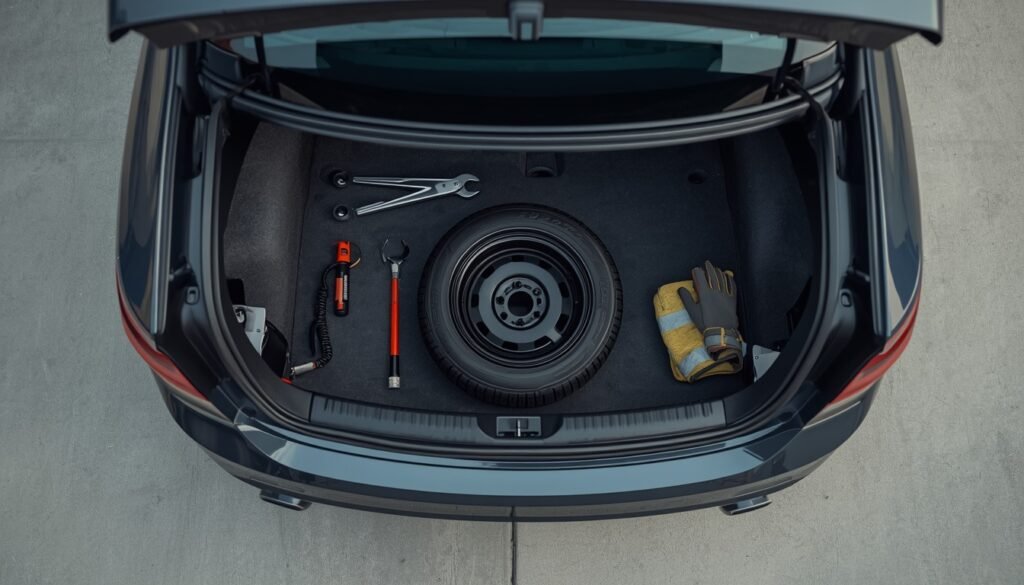
- A properly inflated spare
- Jack and lug wrench
- Tire-pressure gauge
- Portable tire inflator
- Flashlight or headlamp
- Reflective vest
- Gloves
- Phone charger or power bank
- Roadside assistance information
You can make this a simple habit by checking the spare when you check your other tires.
Most importantly, check your spare before you need it. Low pressure won’t help when you’re already stranded, and discovering a problem with your spare on a dark highway shoulder is the worst possible time to find out.
FAQs About Roadside Tire Changes
Can roadside assistance change a flat tire?
Yes. Many roadside assistance programs will replace a flat with your vehicle’s usable spare, though coverage limits vary by provider.
What if I don’t have a spare tire?
You’ll likely need a tow or a mobile tire replacement service, since traditional roadside assistance often doesn’t supply replacement tires.
Will roadside assistance repair a punctured tire?
It depends on the provider. Some only install a spare, while mobile tire companies may offer on-site repair for suitable punctures.
How much does a roadside tire change cost?
It varies widely. Existing coverage may include the service, while pay-per-use and independent providers charge different rates.
Can someone change my tire at home?
Yes. Many roadside and mobile tire services can come to your driveway, workplace, parking lot, or roadside location.
How long does a roadside tire change take?
The tire change itself can be fairly quick, but total wait time depends on traffic, weather, location, and provider availability.
Can I drive normally on a donut spare?
No. Temporary spares have speed and distance limits, so follow the guidance printed on the tire and in your owner’s manual.
Conclusion
Searching for roadside tire change near me is often the fastest path to help when a flat leaves you stranded. Know whether you have a usable spare, check what roadside coverage you already have, and don’t hesitate to call for help when the location is unsafe or the damage looks serious. Once the spare is installed, drive within its limits and have the original tire inspected as soon as possible.