

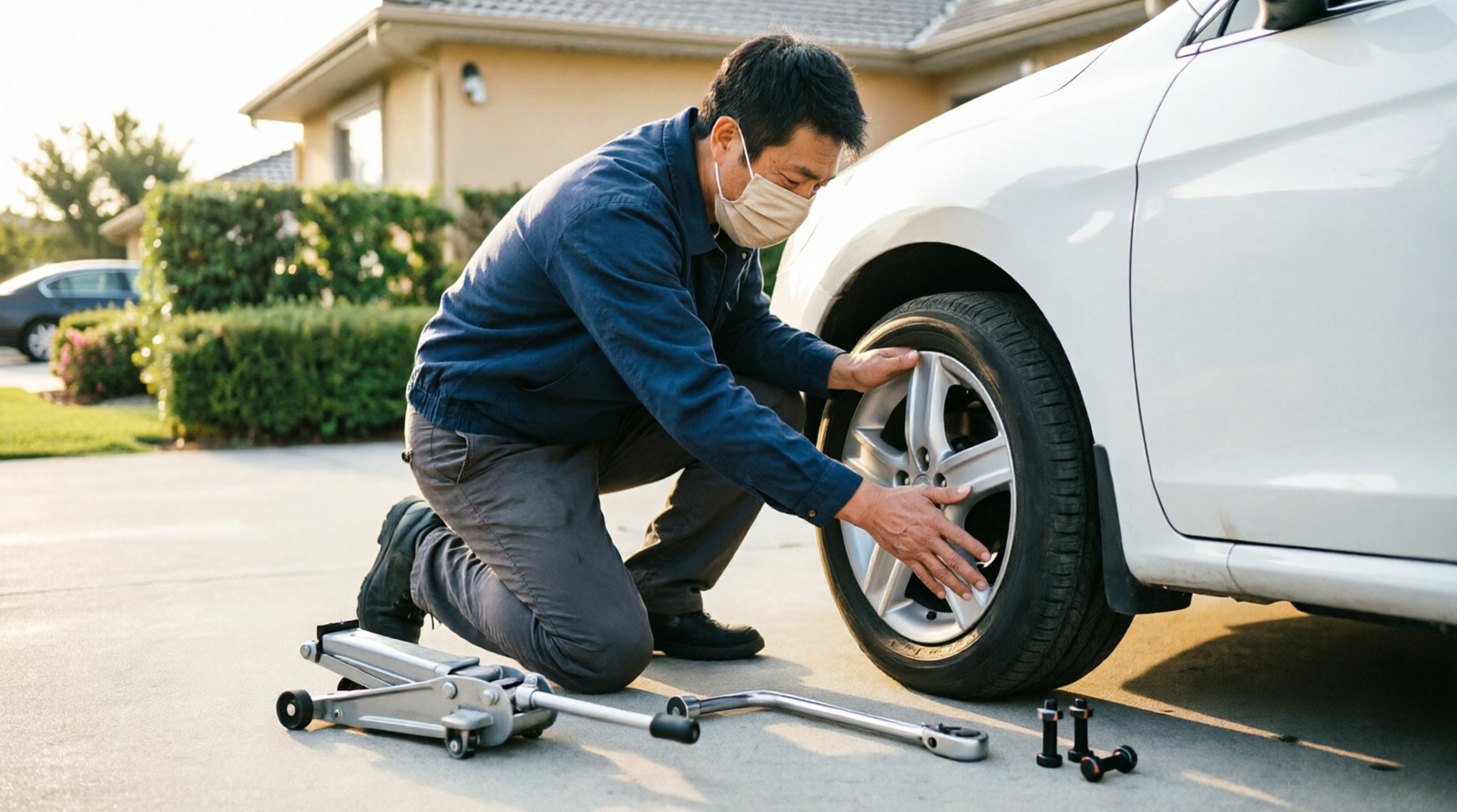
A spare tire sits in your trunk for years, quietly waiting for the one day you actually need it. The problem? That “one day” is the worst possible time to find out your spare is flat, cracked, or the wrong size. Because it’s easy to forget about a tire you never actually drive on, spares end up being one of the most neglected parts of routine car care — right up until they’re the only thing standing between you and a tow truck.
Knowing when and how to replace a spare tire keeps you from turning a minor flat into a bigger headache on the side of the road. Here’s everything you need to know — from spotting the warning signs to picking the right replacement and getting it installed correctly.
When Should You Replace Your Spare Tire?
There’s no single expiration date stamped on every spare. How long yours lasts depends on its age, how it’s been stored, and whether it shows any visible wear.
Age is usually the biggest factor. Rubber breaks down over time from heat, oxygen, and moisture exposure — even if the tire has never touched pavement. A spare that looks brand new can still be dangerously brittle underneath.
Damage matters too. If you spot cracks, bulges, or cuts, or if the tire has ever been punctured, get it checked by a tire professional before you count on it in an emergency.
Check Your Spare Before You Need It
The best time to inspect your spare is long before a flat happens. Make it part of your regular car maintenance:
- Confirm it’s inflated to the manufacturer’s recommended pressure
- Look over the tread and sidewalls for cracking or bulging
- Make sure the jack and lug wrench are still in the car and usable
- Know exactly where the spare is stored
If your car came with a compact “donut” spare, remember it’s built for short-term emergency use, not as a stand-in for a regular tire.
How Long Does a Spare Tire Actually Last?
Most spares hold up for several years, but there’s no universal number that applies to every vehicle or tire. Manufacturing date, storage conditions, and general wear all play a role.
You can find the tire’s birthdate on the sidewall, printed as part of the DOT identification number. The last four digits tell you the week and year it was made — a code ending in 3522, for instance, means the tire came off the line in the 35th week of 2022.
| What to Check | What It Tells You |
| DOT code (last 4 digits) | Week and year the tire was manufactured |
| Sidewall cracking | Rubber has started to degrade |
| Storage location | Heat exposure speeds up aging |
| Inflation pressure | Whether it’s actually ready to use |
Age alone isn’t the whole story — a spare kept in a hot garage will age faster than one in a climate-controlled space. When in doubt, have a tire shop take a look.
Signs Your Spare Tire Needs to Be Replaced
A spare can look fine from a few feet away and still not be safe to drive on. Here’s what to actually watch for.
Cracks or dry rot. Small cracks along the sidewall or tread are a sign the rubber is deteriorating, even if the tire has zero miles on it.
Bulges or odd shapes. A bulge usually points to internal damage, and it’s not something to risk driving on.
Punctures or cuts. Any damage to the tire, especially near the tread or sidewall, can make it unreliable when you need it most.
Excessive age. Mileage doesn’t tell the whole story — an old, low-mileage spare can still be unsafe.
Missing equipment. Sometimes the tire itself is fine, but the jack, lug wrench, or mounting hardware has gone missing. A spare you can’t actually install is just as useless as a flat one.
None of these issues are always obvious from a quick glance, which is why it helps to physically pull the spare out once or twice a year instead of just checking that it’s “still there.” A tire that looks perfectly round can still hide sidewall cracking on the side facing the trunk floor.
What to Know Before Buying a Replacement
Before you buy anything, pull out your owner’s manual. It’ll tell you whether your vehicle needs a compact temporary spare, a full-size spare, or something else entirely.
Have these details on hand:
- Tire size and wheel diameter
- Load and speed ratings
- Wheel bolt pattern
- Recommended inflation pressure
- Whether your vehicle needs a specific tire-pressure monitoring (TPMS) sensor
Don’t assume any donut-shaped spare will fit your car — temporary spares are built for specific vehicles, not universal use. If you’re unsure about any of this, a tire shop can pull up the exact specs for your car’s year, make, and model.
How to Replace a Spare Tire, Step by Step
Once you’ve got the correct replacement in hand, installing it is fairly straightforward.
Step 1: Confirm the Fit
Double-check the new spare’s specs against your owner’s manual before removing the old one.
Step 2: Remove the Old Spare
Depending on your vehicle, this might mean loosening a retaining bolt or lowering a carrier from underneath the car. Hang onto any hardware you’ll reuse.
Step 3: Inspect the Storage Area
Clear out dirt or debris from the compartment or mount, and check for damage that could interfere with the new tire sitting properly.
Step 4: Install the New Spare
Set the replacement in place according to your vehicle’s instructions, and make sure it’s seated securely if it’s mounted to a carrier.
Step 5: Set the Right Pressure
Temporary spares often need a different inflation pressure than your regular tires — check the sidewall or manual rather than guessing.
Step 6: Secure Everything
Make sure the spare, jack, and lug wrench are all properly stored. A loose spare rattling around — or missing tools when you need them — defeats the whole purpose.
Choosing the Right Replacement Spare
Picking a spare isn’t just about matching the diameter of your old tire. The wheel and tire both need to work with your specific vehicle.
| Factor | Why It Matters |
| Tire size | Confirms physical compatibility with your vehicle |
| Load rating | Determines how much weight it can safely carry |
| Speed rating | Sets safe operating limits |
| Wheel specs | Ensures a proper fit on your hub |
| Tire type | Determines short-term vs. long-term use |
A full-size spare is closer to your regular tires in performance, but it takes up more trunk space. A compact temporary spare saves room but usually comes with speed and distance restrictions. Neither is “better” — it depends on what your vehicle supports and how much cargo space you’re willing to give up.
Can You Replace a Spare Tire Yourself?
If you already have the correct replacement, swapping it into storage is often a manageable DIY task. That said, it’s worth calling in a professional if:
- You’re not confident the replacement actually fits
- The mounting hardware looks damaged or worn
- The old spare shows unusual wear you can’t explain
- Your vehicle uses a specialized spare-tire system
There’s not much upside to guessing when it comes to equipment you might need in a genuine emergency. A quick check by a professional can save you from a nasty surprise later.
Common Mistakes to Avoid
A few avoidable mistakes show up again and again:
- Buying a spare based on looks alone, without checking specs
- Assuming an unused spare is automatically safe
- Using the wrong inflation pressure
- Treating a temporary donut spare like a regular tire
- Skipping the jack and lug wrench check
- Leaving the spare unsecured in the trunk
- Waiting for a roadside emergency to find out something’s wrong
Avoiding these is mostly about building a five-minute check into your regular maintenance routine, rather than a one-time fix.
How Much Does It Cost to Replace a Spare Tire?
Costs vary quite a bit depending on the tire type and whether you need a new wheel too. A compact temporary spare is generally cheaper than a full-size replacement, and prices climb further if you need mounting, balancing, or a new TPMS sensor.
Before buying, ask whether the quoted price covers just the tire or the full package — wheel, installation, and valve stem included. And always give the shop your vehicle’s year, make, model, and trim so you’re pricing out the correct part, not just something that looks close.
If your current wheel is in good shape and just needs a fresh tire mounted, that’s usually the cheaper route. A cracked, bent, or corroded wheel is a different story — at that point you’re paying for both parts, plus labor to mount and balance the new setup.
Storing and Maintaining Your New Spare
Once the new spare is installed, keeping it road-ready doesn’t take much effort:
- Check inflation pressure during routine maintenance visits
- Inspect the carrier for rust or damage if it’s mounted underneath the vehicle
- Look over the sidewall and tread periodically for cracks or cuts
- Confirm the jack, lug wrench, and any wheel-lock adapter are still in the car
If your vehicle skips the spare altogether and relies on an inflator kit instead, check that kit’s expiration date too — sealant canisters don’t last forever either.
FAQs
How often should a spare tire be replaced?
There’s no fixed interval — follow your tire and vehicle manufacturer’s guidance, and replace it sooner if you notice cracking, damage, or other aging signs.
Can I use any spare tire on my car?
No. It needs to match your vehicle’s exact size, load rating, and wheel specifications.
Can an old, unused spare still be unsafe?
Yes. Tires age from heat and time even without ever being driven, so mileage isn’t a reliable indicator.
Is a donut spare safe to drive on?
It’s built for short-term emergency use only, typically with speed and distance limits printed right on the tire.
Should I replace just the tire or the whole wheel?
If the wheel is undamaged and compatible, replacing just the tire is usually enough. Damaged or incompatible wheels need replacing too.
How do I know what spare fits my vehicle?
Check your owner’s manual or the specs on your current spare — a tire shop can also confirm it using your vehicle’s year, make, and model.
Can I install a new spare myself?
Yes, if you already have the correct replacement and understand the mounting system. When you’re unsure about fit, professional installation is the safer bet.
Final Thoughts
A spare tire only does its job if it’s actually ready when you need it. A quick inspection every few months — checking age, pressure, and condition — is a lot easier than dealing with a second flat tire on the side of the road. When it’s time to replace yours, lean on your owner’s manual and, if you’re unsure about fit, a trustworthy tire shop.