

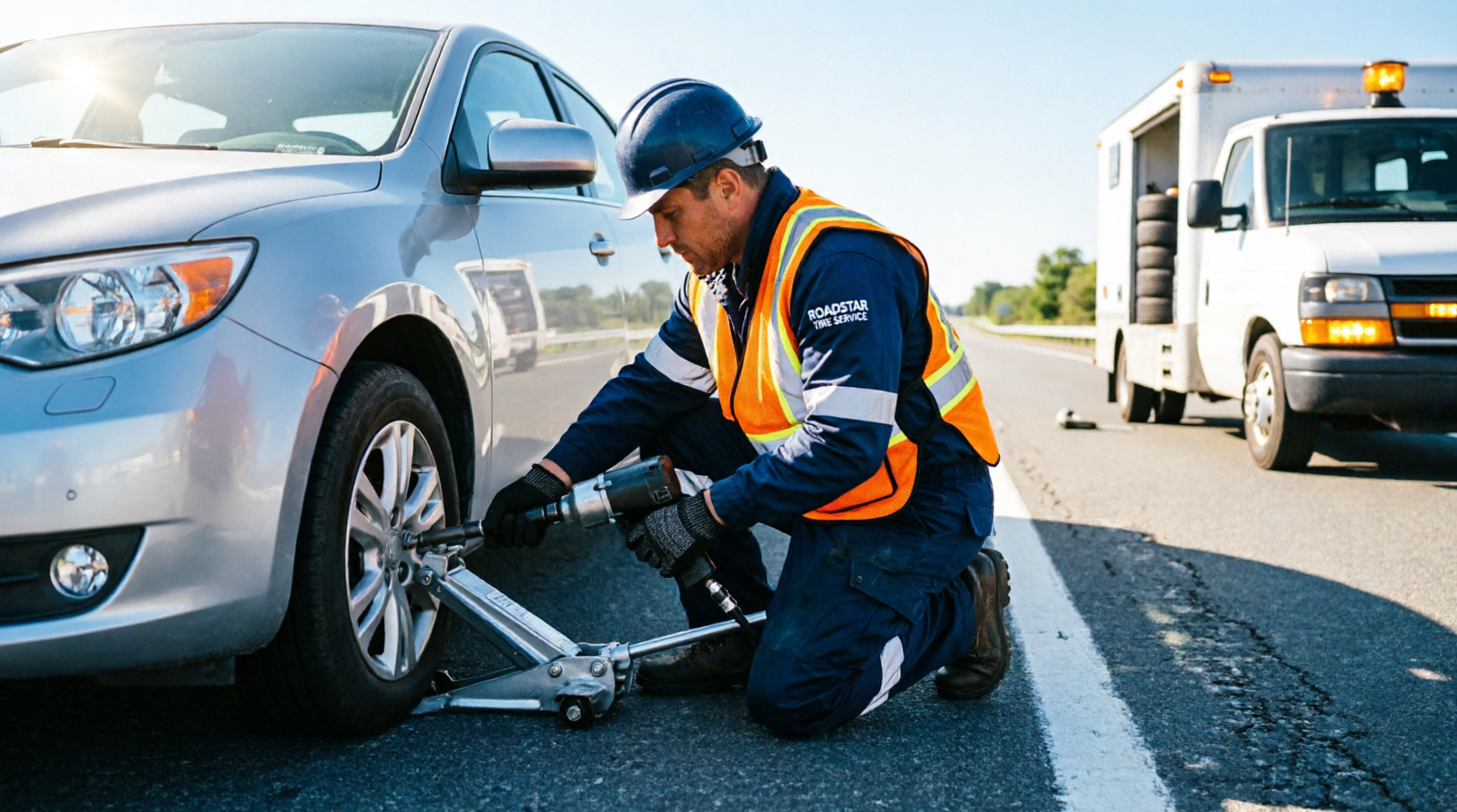
A flat tire can turn an ordinary drive into a stressful roadside problem, especially when you’re far from home with no tools on hand. A portable tire change service solves that by sending a technician and equipment directly to you, so your damaged or flat tire gets replaced right where you’re parked instead of requiring a trip to a repair shop.
For drivers across the United States, this kind of mobile tire service is especially useful during road trips, daily commutes, or unexpected breakdowns. Here’s a closer look at what these services are, how they work, what they cost, and what to know before you call one.
What Is a Portable Tire Change Service?
A portable tire change service is a mobile tire service that comes to your vehicle instead of the other way around. You contact a technician, share your location and vehicle details, and wait for them to arrive.
Once there, the technician can typically install your spare or mount a replacement tire they’ve brought along. Many mobile tire companies also offer related roadside services like tire repair, inflation, and battery jump-starts. The exact scope of service depends on the provider and the nature of your tire problem.
Some companies operate as standalone mobile tire businesses, while others are affiliated with a local tire shop and simply dispatch a technician when needed. Either way, the goal is the same: get you back on the road without requiring a tow or a long wait at a shop counter.
Portable Tire Change vs. Traditional Tire Shop
A traditional tire shop requires getting your vehicle there first, which isn’t always possible with a flat. A portable service flips that arrangement.
| Portable Tire Change | Traditional Tire Shop |
|---|---|
| Technician comes to you | You drive to the shop |
| Useful for roadside emergencies | Better for scheduled service |
| Can save on towing time | Usually has more on-site equipment |
| May replace a tire on-site | Can handle more extensive repairs |
| Convenient at home or work | May offer a broader tire selection |
Portable service tends to matter most when the vehicle genuinely can’t be driven safely because of the flat or damage to the tire.
How Does a Portable Tire Change Work?
The process is fairly simple from the driver’s side. You call a mobile tire provider, describe the situation, and they’ll usually ask for your vehicle’s make, model, tire size, and location. If you need a full replacement tire rather than just your spare installed, the company may first confirm they have the right tire available.
Typical process:
- Contact a mobile tire service.
- Share your location and vehicle information.
- Explain whether you have a usable spare or need a replacement tire.
- Confirm the estimated price and what’s included.
- Wait in a safe spot while the technician travels to you.
- The technician changes or replaces the tire.
- The work is checked and the tire is properly secured before you drive off.
If the vehicle has damage beyond the tire itself, the technician may recommend towing it to a shop rather than attempting a full repair roadside.
When Should You Call a Portable Tire Change Service?
Not every tire issue needs a mobile technician, but several common situations make it the right call.
You Have a Flat Tire
If your tire suddenly loses air and you don’t have the tools, know-how, or a safe spot to change it yourself, a mobile technician can come to you directly.
You Don’t Have a Usable Spare
Many newer vehicles skip the traditional spare tire altogether. If yours is one of them, a portable tire service may be your most practical option.
You’re Stuck Away From Home
A flat during a road trip is its own kind of frustrating. If the nearest tire shop is miles away, having someone come to you often beats arranging a tow.
Your Tire Is Damaged
A tire with significant sidewall or tread damage may not be safe to drive on at all. Continuing to a shop in that condition risks further damage to the tire, wheel, or vehicle.
What Does a Portable Tire Change Cost?
Pricing for a portable tire change varies quite a bit across the country. Your location, the time of day, your vehicle type, tire size, labor, and whether a new tire is needed all factor into the final number.
A simple roadside swap using your existing spare will generally cost less than having a technician bring and install a brand-new tire.
| Cost Factor | Why It Matters |
|---|---|
| Service call | Covers the technician’s trip to your location |
| Labor | Pays for removing and installing the tire |
| Replacement tire | Needed if your spare isn’t usable |
| Tire size | Larger or specialty tires may cost more |
| Time of service | Nights, weekends, and holidays may carry higher rates |
| Distance | Longer travel distances can increase the price |
Always ask for an estimate up front, and confirm whether taxes, disposal fees, mileage, or after-hours charges are already baked into the quote.
It’s also worth asking whether the company charges a flat rate or bills labor and travel separately. Flat-rate pricing tends to be easier to budget for, especially if you’re calling during an emergency and don’t have time to negotiate. If a quote seems unusually low compared to others in your area, ask what it does and doesn’t include before agreeing to the appointment.
Can a Portable Tire Service Bring a New Tire?
Yes — many mobile tire providers can bring a replacement tire, though availability depends on the company and what’s in stock.
When you call, give the technician as much detail as you can: your vehicle’s year, make, model, trim, tire size, and any information printed on the tire’s sidewall. If you’re not sure of your tire size, a technician can often determine it from your vehicle details.
Why Tire Matching Matters
The replacement tire needs to actually suit your vehicle. Installing the wrong size or an unsuitable tire type can affect handling, braking, ground clearance, and overall safety. If you’re only replacing one tire, the technician may also look at the condition of the others — in some cases, replacing more than one is the safer recommendation depending on wear and vehicle type.
What Should You Do While Waiting for the Technician?
Your safety comes first after a flat tire, before worrying about the tire itself.
If you can safely move the vehicle away from traffic, do that first. Turn on your hazard lights and stay somewhere safe while you wait.
While you wait:
- Turn on your hazard lights.
- Move away from traffic when it’s safe to do so.
- Keep passengers in a secure location.
- Give the technician clear directions to your exact spot.
- Keep your phone nearby in case they call.
- Avoid driving on a severely damaged or flat tire, even a short distance.
If you’re stopped on a highway shoulder, stay cautious even after the service vehicle arrives — passing traffic is still a real hazard.
Portable Tire Change vs. Roadside Assistance
These two services overlap, but they aren’t identical. Roadside assistance programs — through an auto club, insurer, or vehicle manufacturer — often include a tire change as one of several covered services. A dedicated mobile tire company, on the other hand, usually specializes in tire work and is paid directly for the job.
| Feature | Portable Tire Service | Roadside Assistance |
|---|---|---|
| Tire replacement | Often available | Depends on the plan |
| Spare installation | Usually available | Commonly included |
| New tire delivery | Offered by some providers | Less commonly included |
| Other roadside services | Depends on the company | Often included |
| Payment | Usually direct | May be covered by membership |
Before paying out of pocket, check whether your existing roadside assistance coverage already includes a tire change.
What Vehicles Can Use Portable Tire Services?
Portable tire services generally cover passenger cars, SUVs, and light trucks, but not every provider handles every vehicle type. Large trucks, RVs, trailers, performance cars, and vehicles with unusual tire sizes may need specialized equipment that not all mobile companies carry.
When you call, describe your vehicle clearly and mention the tire size if you know it, along with whether you have a full-size spare, a compact temporary spare, or no spare at all.
Some tire problems go beyond a standard swap — a damaged wheel, seized lug nuts, or unusual wheel locks, for example. A technician can assess on the spot whether the job is safe to complete roadside, or whether the vehicle needs to be towed to a facility with more specialized equipment.
If you drive a leased or newer vehicle, it’s also worth checking whether tire service is something your manufacturer’s warranty or roadside plan already covers before booking an independent mobile provider. Some automakers include a limited number of tire-related service calls as part of a new-vehicle package.
How to Choose a Portable Tire Change Provider
Not every mobile tire company offers the same pricing, coverage area, or availability. A few minutes of comparison can save you from surprises later.
- Look for clear pricing. A reputable provider should explain the base service charge and flag any additional costs upfront.
- Check service availability. Some companies run 24/7; others keep limited hours. Confirm before you rely on one for a late-night flat.
- Confirm tire availability. If you need a new tire, don’t assume they’ll have your exact size — confirm the brand, size, and total price beforehand.
- Read recent reviews. Look for consistent patterns in response time, communication, and professionalism rather than a single outlier review.
How to Prepare for a Portable Tire Emergency
A little preparation makes a future flat far less stressful. Start by knowing whether your vehicle even has a spare, and check its condition and air pressure periodically — a spare that’s sat unused for years may not be ready when you need it. It also helps to know your tire size and keep basic vehicle information handy.
Keep these items in your vehicle:
- Owner’s manual
- Tire pressure gauge
- Flashlight
- Phone charger
- Emergency roadside supplies
- Reflective safety equipment
- Portable air compressor, if appropriate for your vehicle
You don’t need to be able to change the tire yourself — just knowing what you have on hand helps you make faster, safer decisions in the moment.
Final Thoughts
A portable tire change can turn a stressful flat into a much simpler fix. Instead of risking a drive on a damaged tire, you can have a qualified technician come to you, check the vehicle, and get you back on the road safely. Before you call, compare pricing, confirm tire availability, and above all, stay safe while you wait — especially near moving traffic.
FAQs About Portable Tire Change
1. What is a portable tire change? It’s a mobile service where a technician travels to your vehicle to replace or change a tire instead of you driving to a shop.
2. Can a mobile tire service install my spare? Yes, most portable tire services can install a usable spare tire on your vehicle.
3. Can they bring a replacement tire? Some providers carry replacement tires, but it depends on the tire size, your vehicle, and their current inventory.
4. How much does a portable tire change cost? Prices vary by labor, location, time of day, and whether a new tire is needed. Always ask for an estimate first.
5. Can portable tire services come to my home? Yes, mobile tire companies typically serve homes, workplaces, parking lots, and roadside locations.
6. Is it safe to drive on a flat tire to reach a shop? Generally no — driving on a flat can damage the tire and wheel and create a safety risk. It’s better to have it handled where you are.
7. Should I use roadside assistance or a mobile tire company? Either can work well. Check your existing roadside coverage first, then compare it against a local mobile provider’s pricing and response time.