

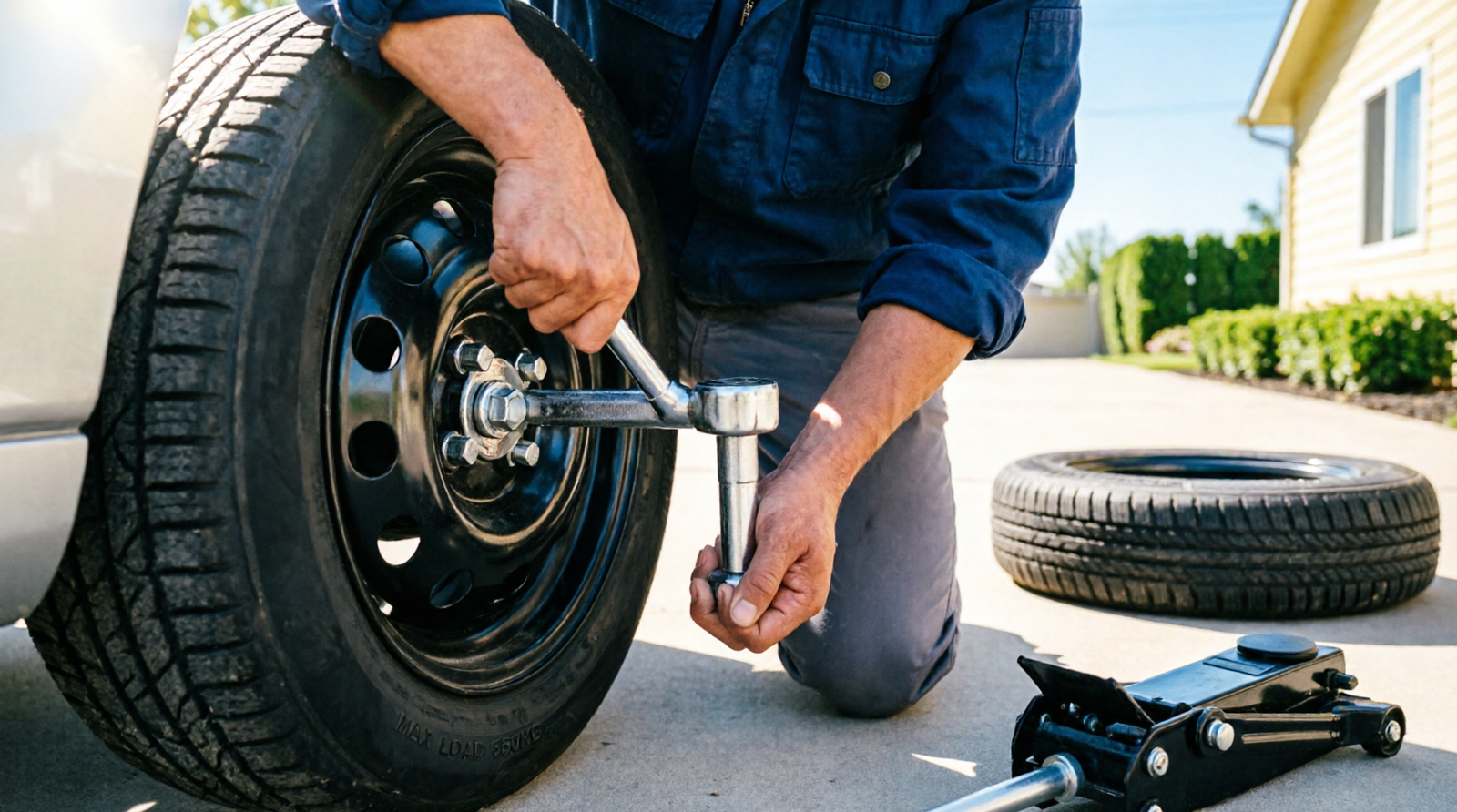
A flat tire has a way of turning a normal errand into a stressful ordeal, especially if you’ve never dealt with one before. The good news: changing a tire is one of the more approachable car repairs out there. You don’t need mechanical training, just the right tools, a little patience, and a safe spot to work.
Here’s everything a beginner needs to know before tackling their first tire change.
Is Changing a Tire Easy for Beginners?
For most people, yes. Once you understand the steps, swapping a flat for a spare is manageable even without any prior experience.
What trips people up isn’t usually the concept — it’s the physical parts: stubborn lug nuts, positioning the jack correctly, and wrestling with a heavy wheel. None of that requires special skill, just care and the right technique.
A typical tire change follows this general sequence:
- Find a safe, level spot to park
- Secure the vehicle so it can’t roll
- Loosen the lug nuts
- Raise the car with the jack
- Remove the flat tire
- Install the spare
- Tighten the lug nuts properly
- Lower the car and do a final check
If you’ve never done this before, it’s worth practicing at home rather than learning for the first time on the side of a road. Ask an experienced friend, family member, or mechanic to walk you through it once, and you’ll feel far more confident when a real flat happens.
What Makes a Tire Change Easier or Harder
The vehicle itself plays a big role. A compact sedan usually has a lightweight spare and an easy-to-reach jack point. A larger SUV or truck often has a heavier wheel and a spare mounted underneath the frame, which adds complexity.
Weather and location matter just as much. Changing a tire in your driveway on a calm afternoon is a completely different experience than doing it on a busy highway shoulder in the rain.
| Factor | Easier Situation | Harder Situation |
| Location | Driveway or parking lot | Busy roadside |
| Weather | Dry and mild | Rain, snow, or extreme heat |
| Wheel size | Small, lightweight | Large, heavy |
| Lug nuts | Loosen easily | Corroded or overtightened |
| Spare condition | Properly inflated | Flat or missing |
| Tools | Complete factory kit | Missing or damaged |
| Experience | Practiced beforehand | First attempt during an emergency |
It’s also worth knowing what your car is actually equipped with. Some newer vehicles skip the traditional spare altogether in favor of a sealant-and-inflator kit or run-flat tires. Check your owner’s manual now, before you actually need the answer.
Sedans vs. SUVs vs. Trucks
Vehicle type changes the experience more than most people expect. Sedans tend to have smaller wheels and a jack that’s easy to access from the trunk. SUVs and trucks often carry a full-size spare mounted underneath the chassis, which means you’ll need a separate tool just to lower it before you can even start the swap. Heavier vehicles also mean heavier wheels, so lifting and carrying takes more effort. None of this makes the job impossible — it just means a truck owner should expect the process to take a little longer than someone with a compact car.
Tools You Need to Change a Tire
Most vehicles come with the basics already stored in the trunk or underneath the cargo area. Here’s what you’ll typically need:
- Spare tire — confirm it’s the right type and properly inflated
- Vehicle jack — used to lift the car
- Lug wrench — loosens and tightens the lug nuts
- Wheel wedges or chocks — keep the car from rolling
- Gloves — for grip and cleanliness
- Flashlight — helpful in low light
- Owner’s manual — shows your car’s specific jack points and torque specs
A torque wrench is a nice addition too, since lug nuts should be tightened to your manufacturer’s exact specification rather than just “as tight as you can get it.” Overtightening can strip threads or warp a brake rotor, while undertightening risks a wheel working loose while you drive.
And don’t assume every jack works the same way — lifting points vary by vehicle, and using the wrong spot can damage the car or make the jack unstable. Some vehicles mark the correct jack points with small notches or arrows along the frame rail, but when in doubt, your owner’s manual is the most reliable source.
How Long Does It Take to Change a Tire?
Someone with experience can usually finish in 15 to 30 minutes under decent conditions. Beginners often need a bit longer while they get familiar with where everything is.
| Task | Approximate Time |
| Find a safe spot and secure the car | 3–5 minutes |
| Gather tools and the spare | 2–5 minutes |
| Loosen lug nuts | 2–5 minutes |
| Raise the car and remove the tire | 3–5 minutes |
| Install the spare and tighten nuts | 3–5 minutes |
| Final checks and cleanup | 3–5 minutes |
These are rough estimates — a rusted lug nut, an awkward jack location, or bad weather can stretch things out considerably. If your surroundings feel unsafe, don’t rush to save time. Calling roadside assistance is almost always the better call.
How to Change a Tire Safely
Knowing the process takes the panic out of a flat tire, but safety should always come before speed.
1. Move to a Safe Location
If you notice a flat while driving, stay calm and gradually pull into a driveway, parking lot, or another stable area away from moving traffic. If you can’t reach somewhere safe, call for help instead of working next to passing cars.
2. Secure the Vehicle
Shift into park (or the correct gear for a manual transmission) and set the parking brake. Turn on your hazard lights, and keep passengers away from traffic.
3. Gather the Spare and Tools
Locate your spare, jack, and lug wrench, and confirm the spare looks usable. Loosen the lug nuts slightly while the tire is still on the ground — this keeps the wheel from spinning while you work.
4. Position the Jack Correctly
Only lift the car at the manufacturer’s specified jack point. Raise it just enough for the flat tire to clear the ground, and never put any part of your body underneath a vehicle that’s only supported by a jack.
5. Remove the Flat Tire
Finish removing the lug nuts and carefully pull the wheel free. Wheels are often heavier than they look, particularly on larger vehicles, so lift with care. Set the flat tire flat on the ground nearby rather than leaning it against the car, where it could tip or roll.
6. Install the Spare
Set the spare onto the hub and thread the lug nuts on by hand. Tighten them in a crisscross pattern so the wheel seats evenly.
7. Lower the Car and Tighten the Lug Nuts
Lower the vehicle per your manual’s instructions, then tighten the lug nuts to the correct torque specification.
8. Double-Check Everything
Before driving off, confirm the spare is secure and properly inflated. Temporary spares (“donuts”) come with speed and distance limits, so check your manual before heading out.
What to Do If You Get a Flat While Driving
Feeling a tire go flat mid-drive is unsettling, but the priority is staying in control of the car. Never attempt to change a tire while the vehicle is moving.
Ease off the gas, avoid sudden steering or braking, and gradually work your way to a safe pull-off spot. If you end up somewhere risky — like a narrow highway shoulder — it may be safer to stay in the car and call for roadside help rather than stepping out into traffic.
The goal isn’t to fix the tire as fast as possible. It’s to get everyone in the car somewhere safe first.
When You Should Not Change a Tire Yourself
Changing a tire is usually manageable, but there are moments when calling a professional makes more sense:
- You’re stopped somewhere with fast-moving traffic or a narrow shoulder
- You don’t have the right jack or equipment
- The spare is missing, damaged, or the wrong size
- The lug nuts won’t budge, even with effort
- You can’t identify the correct jack point
- You’re simply not comfortable doing it
There’s no shame in calling for help. Recognizing when a job is outside your comfort zone is part of being a responsible driver.
Common Mistakes to Avoid
Most tire-changing mishaps happen because someone rushes through the process. A few extra minutes of care goes a long way:
- Jacking up the car at the wrong point
- Skipping the parking brake or wheel chocks
- Removing lug nuts before loosening them on the ground
- Reaching under a vehicle supported only by a jack
- Driving too fast or too far on a temporary spare
- Ignoring the spare’s tire pressure
- Forgetting to re-check lug nut tightness before driving
Many of these mistakes only become a problem later — a loose lug nut might feel fine at first but can work its way off after a few miles of driving. That’s why it’s worth pulling over after driving a short distance on a newly installed spare and giving the nuts one more check with the lug wrench.
How to Make Future Tire Changes Easier
A little prep work now saves a lot of stress later.
- Check your spare regularly. Don’t discover it’s flat during an emergency.
- Know where your tools live. Storage locations vary by vehicle, so find them ahead of time.
- Read your owner’s manual. It has your car’s specific jack points, torque specs, and spare-tire limits.
- Keep a roadside assistance plan handy. It’s a safety net for unsafe locations or unusable spares.
- Practice once, in a low-stress setting. It makes the real thing far less intimidating.
Spare Tire vs. Repair Kit vs. Roadside Assistance
Not every flat calls for the same fix. Depending on your vehicle, you might have different options available.
| Option | Best For | Consideration |
| Full-size spare | Replacing a damaged tire | Drives similar to a regular tire |
| Temporary spare | Short-term emergency use | Speed and distance limits apply |
| Tire repair kit | Small, specific punctures | Not suitable for every type of damage |
| Roadside assistance | Unsafe locations or tough repairs | Professional help may be the safer route |
A repair kit isn’t a cure-all — sidewall damage or a major blowout usually calls for a replacement tire rather than a patch. Always defer to your vehicle and tire manufacturer’s guidance.
FAQs
Is changing a tire really easy?
For most drivers, yes. The steps are simple, but you’ll need the right tools, proper technique, and a safe place to work.
How long does it take to change a tire?
Around 15–30 minutes for someone experienced; beginners may need a bit more time.
Can I change a tire without a jack?
Not safely. The car needs to be properly lifted, so use the correct jack or call for professional help.
Can I drive normally on a spare tire?
It depends on the type. Temporary spares have speed and distance restrictions, so check your owner’s manual.
What should I do if I get a flat on the highway?
Move to a safe spot if you can. If it’s not safe to work there, call roadside assistance instead.
Do all cars come with a spare tire?
No. Some vehicles use repair kits or run-flat tires instead — check what your car has before you need it.
Should I practice changing a tire before an emergency happens?
Yes. Practicing once in a safe setting makes a real flat far less stressful to deal with.
Final Thoughts
Changing a tire isn’t complicated once you know the steps, but safety always comes first. Know where your tools and spare are, understand your car’s jack points, and don’t hesitate to call for help if the situation feels unsafe. A little preparation now makes all the difference when a flat actually happens.