

A flat tire always seems to happen at the worst possible time, and once you’ve pulled over safely, the next hurdle is simply getting the spare out. Depending on your vehicle, that spare might be bolted under the trunk floor, hanging beneath the rear bumper, or locked onto an exterior carrier. None of these setups are particularly hard to deal with once you know what you’re looking at, but each one works a little differently. Here’s how to remove a spare tire safely, no matter where your car, truck, or SUV happens to keep it.
What You’ll Need Before Removing a Spare Tire
Before touching anything, park on level ground if you possibly can, shut off the engine, set the parking brake, and shift into Park (or first gear for a manual transmission). If you’re dealing with a flat tire on the road, make sure you’re well clear of moving traffic before you start working.
Most vehicles store a jack and lug wrench right alongside the spare, so you may already have everything you need without digging through the garage. Here’s a quick rundown of what typically comes in handy:
| Item | Purpose |
| Gloves | Keeps your hands clean and protected from sharp edges |
| Lug wrench | Loosens and tightens lug nuts |
| Vehicle jack | Lifts the car when removing an installed spare |
| Wheel chocks | Keeps the vehicle from rolling while it’s raised |
| Flashlight | Helps you see under-vehicle spares in low light |
| Owner’s manual | Shows the exact release mechanism for your model |
If you can’t locate the jack or wrench, check your owner’s manual — some vehicles tuck them into an unexpected spot, like a side panel in the trunk.
Finding Where Your Spare Tire Is Stored
Automakers don’t all use the same layout, so the first real step in spare tire removal is figuring out where yours actually lives.
Under the Trunk Floor
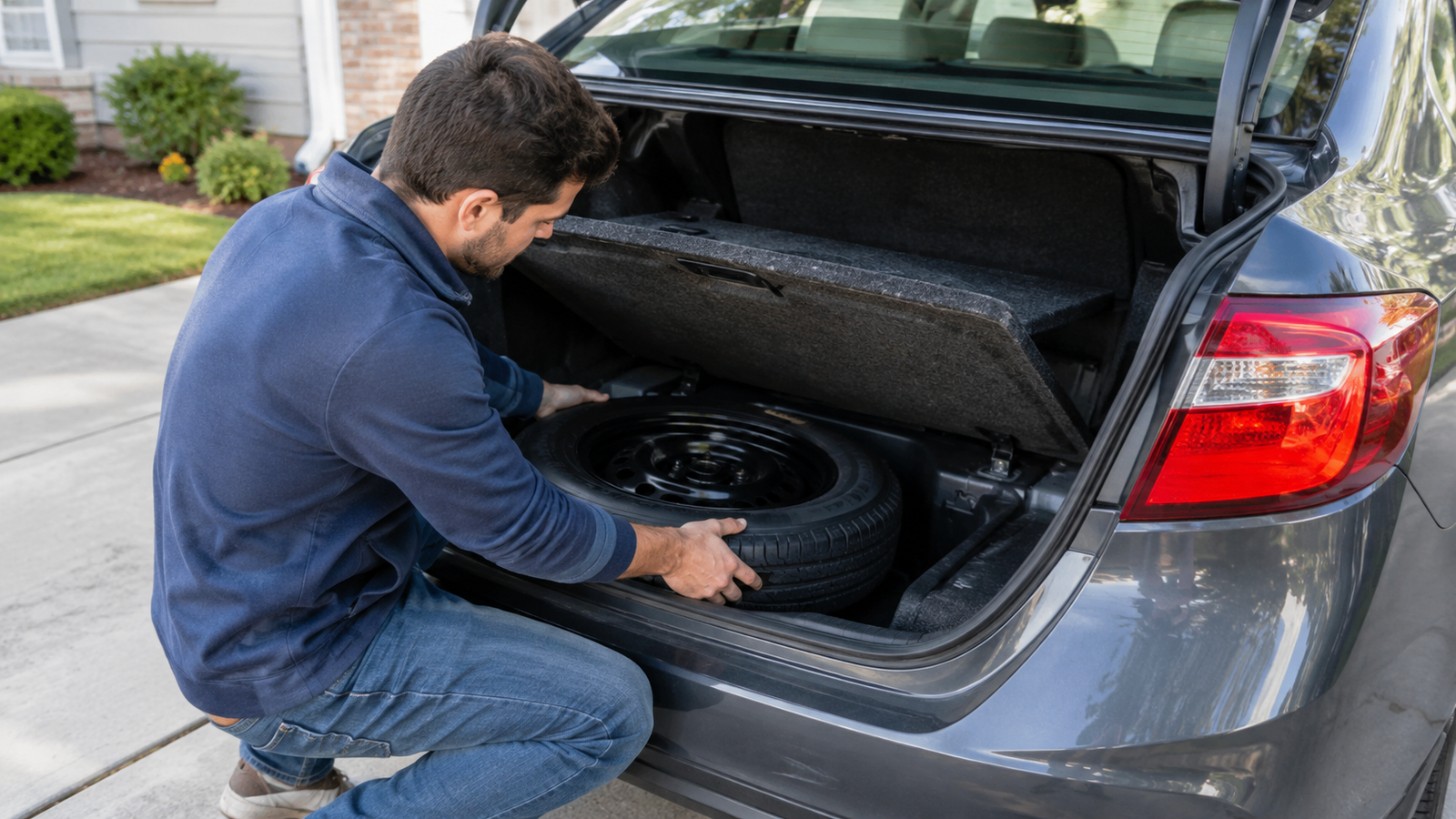
This is the most common setup for sedans and hatchbacks. Lift the carpet or floor panel in the trunk and you’ll usually find a tire secured with a center bolt, wing nut, or plastic retainer.
Underneath the Vehicle
Trucks, SUVs, and some cars mount the spare beneath the rear of the vehicle, held in place by a cable or chain. Look under the rear bumper or cargo floor for a small access point.
On a Rear-Mounted Carrier
Off-road SUVs and some older trucks carry the spare on an exterior rack, often attached to the rear door. These typically need to be unlocked and swung open before the tire can come off.
In a Side Compartment
A handful of vehicles tuck the spare into a side storage area inside the cargo space rather than under the floor. If you don’t see it in the usual spot, check both sides of the trunk.
How to Remove a Spare Tire From the Trunk
If your spare lives inside the trunk, the process is fairly quick.
- Clear the compartment. Move aside any cargo, carpet panels, or plastic trays covering the tire, and set them somewhere they won’t get scratched or lost.
- Locate the retaining hardware. Look at the center of the wheel for a bolt, wing nut, or plastic cap holding it down.
- Loosen and remove it. Turn the retainer counterclockwise. Most are designed to come off by hand or with minimal tool pressure — if it’s fighting you, double-check your owner’s manual before forcing it, especially with plastic hardware that can crack.
- Lift the tire out carefully. A full-size spare can weigh 40 pounds or more, so bend your knees and lift with your legs rather than your back.
- Set it down somewhere stable. Place it flat on the ground away from traffic, especially if you’re mid-repair on the roadside.
How to Remove a Spare Tire Mounted Under the Vehicle
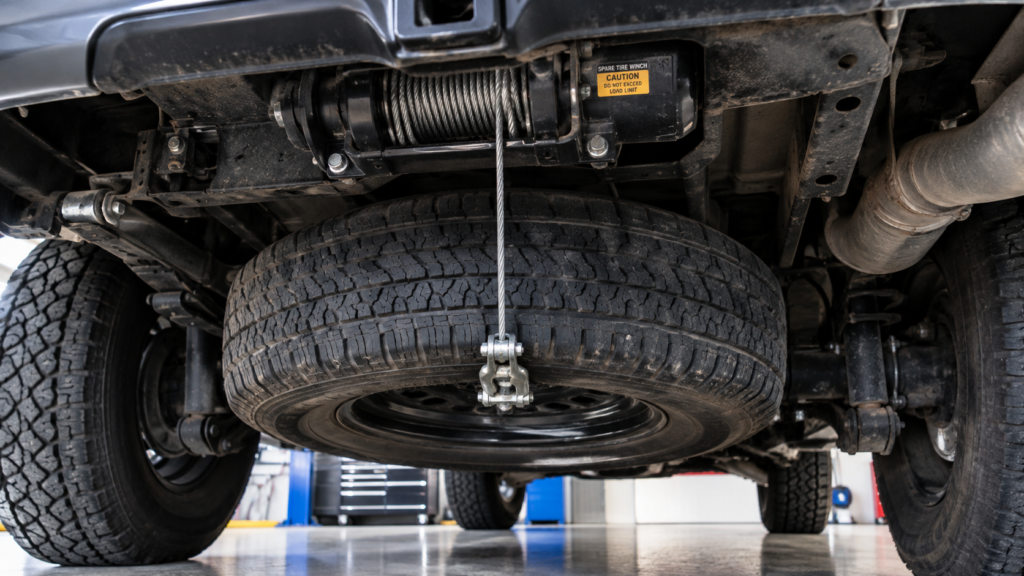
Underbody spares use a winch-and-cable system instead of a simple bolt, so the steps look a bit different.
- Find the access point. Look for a small opening near the rear bumper or cargo area — your owner’s manual will point you to the exact spot.
- Insert the release tool. Most jack kits include a long rod or crank made specifically for this. Slide it into the opening until it connects with the winch mechanism.
- Turn to lower the tire. Turning counterclockwise typically drops the spare toward the ground. Go slowly and avoid yanking on the cable once it’s taut.
- Slide the tire out. Once it’s resting on the pavement, pull it out from underneath the vehicle, tilting it if needed to clear the frame.
- Free it from the cable. A hook, plate, or cable end is often still threaded through the wheel’s center hole. Rotate or reposition it as your manual describes, then pull it free.
How to Remove a Spare Tire From a Rear-Mounted Carrier
External carriers are common on off-road-style SUVs, and while the hardware varies by brand, the general approach stays consistent.
First, release any lock or latch holding the carrier shut, then swing it away from the vehicle so you have room to work. Next, remove the lug nuts or central retainer holding the wheel against the rack — a standard lug wrench usually does the job. Because these tires are often heavy, keep one hand supporting the wheel as you remove the last fastener, then lower it to the ground rather than letting it drop.
How to Take Off an Installed Spare Tire
Sometimes “removing a spare tire” means taking one off the vehicle after it’s already been mounted — say, once your regular tire has been repaired. This works the same way as swapping any wheel.
- Park on solid, level ground, engage the parking brake, and use wheel chocks on the opposite side of the vehicle from the wheel you’re removing.
- Loosen the lug nuts slightly while the tire is still touching the ground — turn each one counterclockwise, but don’t take them all the way off yet.
- Raise the vehicle using the jack point specified in your owner’s manual until the wheel is just clear of the pavement. Never climb under a vehicle that’s supported only by a jack; if you need more than a quick swap, use rated jack stands.
- Finish removing the lug nuts and keep them together in one spot, like a cup holder or small bag, so they don’t roll away.
- Pull the tire off. Grip it with both hands and pull straight toward you. If it’s stuck to the hub from corrosion, a gentle rocking motion usually works better than hitting it with a tool.
- Check the hub and wheel studs for rust, cracks, or damage before you move on. If anything looks seriously worn, have a mechanic take a look before driving further.
What to Do After Removing the Spare
Don’t just toss the spare back into the trunk once it’s out. Give it a quick once-over first — check the sidewall for cracks or bulges and look for anything embedded in the tread.
While you’re at it, check the pressure. Spares can lose air even if they’ve never touched the road, and compact temporary spares usually need a much higher pressure than your regular tires — check the number on the tire’s sidewall or your vehicle’s door-jamb sticker rather than guessing.
When you’re ready to store it, secure the tire back in its compartment with the retaining hardware tightened. A loose tire rolling around in the trunk isn’t just annoying — it can become a serious hazard during hard braking or a collision. Finally, put the jack, wrench, and any extension tools back where they belong so they’re easy to find next time.
Common Problems When Removing a Spare Tire
Even a routine spare tire removal can hit a snag. Here’s how to work through the most common ones.
| Problem | What to Try |
| Retaining bolt won’t turn | Check the manual for the correct tool; avoid excessive force on plastic parts |
| Spare won’t lower | Confirm the release rod is fully seated in the winch mechanism |
| Cable is stuck | Look for dirt, rust, or corrosion jamming the mechanism |
| Wheel won’t budge from the hub | Rock it gently from side to side rather than prying or hitting it |
| Tire is too heavy to lift alone | Ask for help or call roadside assistance instead of straining yourself |
| Can’t find the tools | Check the jack storage compartment, often under the trunk floor or in a side panel |
If an underbody winch is badly rusted or completely jammed, it’s usually smarter to call roadside assistance than to crawl underneath a vehicle on the shoulder of a road trying to force it.
Safety Tips for Removing a Spare Tire
- Pull as far away from traffic as you safely can before starting.
- Turn on your hazard lights if you’re stopped on the roadside.
- Always set the parking brake before jacking up the vehicle.
- Never put any part of your body under a car supported only by a jack.
- Use the jack point your manufacturer specifies — not just any flat spot underneath.
- Wear gloves, especially with a dirty or rusted wheel.
- Ask for help with a full-size spare; they’re heavier than they look.
- Keep lug nuts together so none go missing.
- Follow the speed and mileage limits printed on a temporary spare.
- If traffic is moving fast around you, call for roadside help rather than risk it.
When Should You Replace Your Spare Tire?
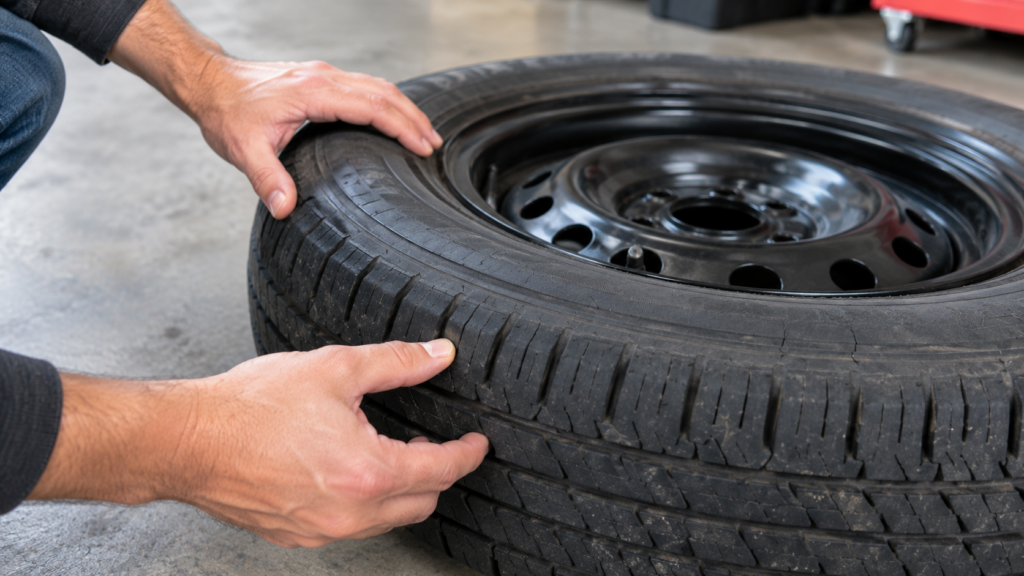
Just because a spare has never touched the road doesn’t mean it’s still in good shape. Rubber degrades over time, and a spare tucked under a vehicle is constantly exposed to moisture, road salt, and temperature swings.
It’s worth replacing your spare if you notice any of the following:
- Cracking or splitting in the sidewall
- Visible bulges or odd deformities
- Heavy weathering or sun damage
- Significant tread wear
- A tire that’s past the age limit recommended by its manufacturer
Take a look at the wheel itself, too. Rust, bent metal, or damaged mounting holes can make even a “good” tire unsafe to drive on. When in doubt, a tire shop can inspect it in a few minutes.
Frequently Asked Questions
Do I need a jack to remove a spare tire?
Not if it’s still in storage. A jack is only necessary once you’re taking a wheel off the vehicle itself.
Where is the spare tire usually located?
Common spots include under the trunk floor, beneath the rear of the vehicle, in a side cargo compartment, or on an exterior rear-mounted carrier.
Why won’t my spare tire come loose?
The retaining hardware or lowering cable is likely still engaged. Check your owner’s manual for the exact release steps before applying more force.
How do I get a spare tire out from under my car?
Insert the release tool into the access point near the rear bumper, turn it to lower the tire, then free it from the cable once it’s on the ground.
Should I check the spare’s air pressure before using it?
Yes — spares lose air over time, and compact spares often need higher pressure than your regular tires. Check the sidewall or door-jamb sticker for the correct number.
Is it okay to drive far on a temporary spare?
No. Temporary spares are built for limited use, so stick to the speed and distance limits printed on the tire or listed in your manual.
What should I do if the spare won’t budge at all?
Stop forcing it and recheck the mechanism against your owner’s manual. If it’s still stuck, roadside assistance can safely handle a jammed winch or corroded hardware.
Conclusion
Removing a spare tire isn’t complicated once you know where to look and how your vehicle’s system works — trunk-mounted, underbody, or externally carried. Take it slow, follow your owner’s manual for anything unfamiliar, and put safety ahead of speed, especially if you’re working near traffic or under a raised vehicle.