

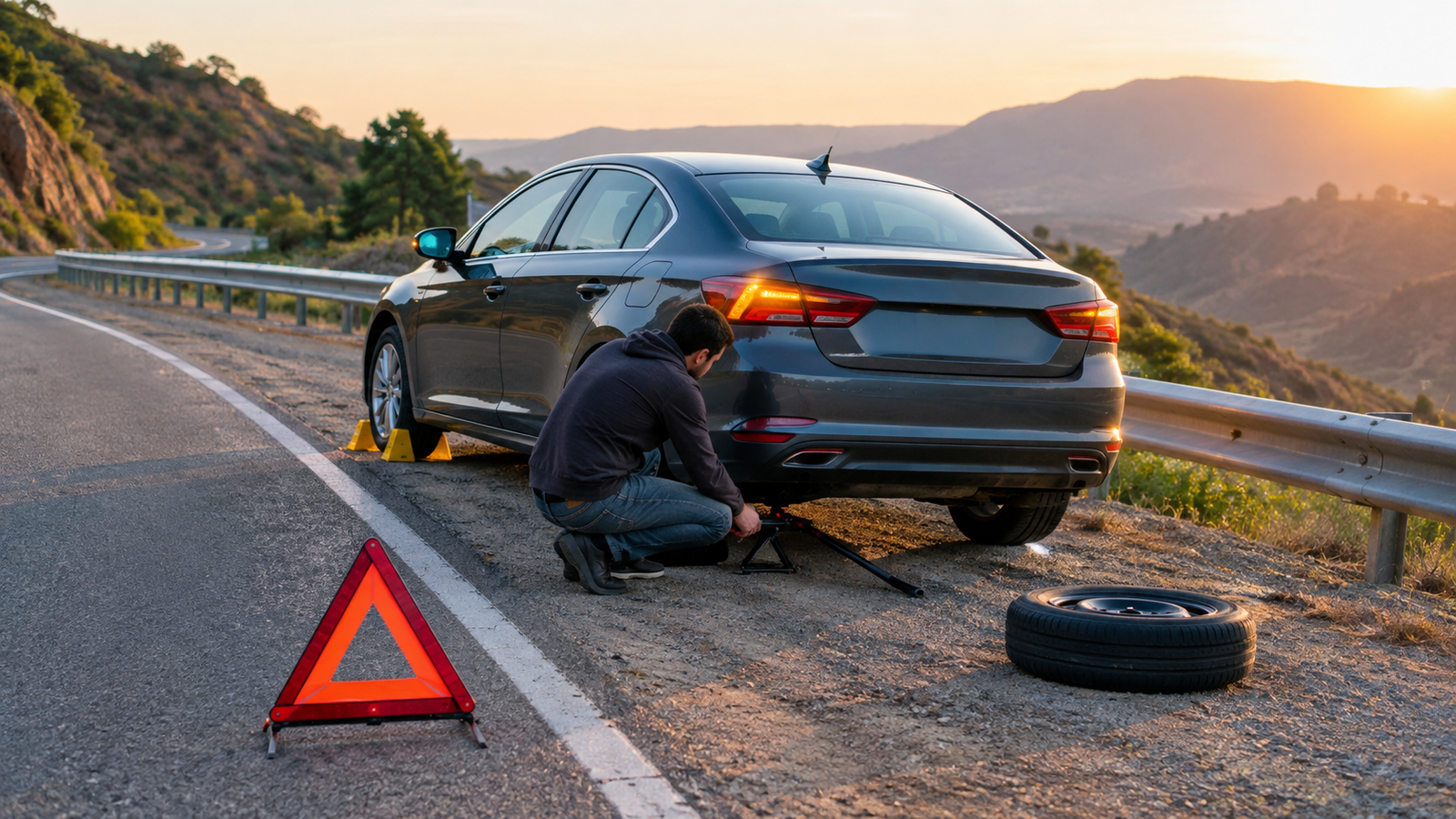
Getting a flat tire is annoying enough on flat ground. Getting one on a hill is a different problem altogether. If you’ve ever pulled over on a slope with a thumping tire and wondered whether you should just get out and start jacking up the car, here’s what you need to know before you do — because changing a tire on an incline carries risks that a lot of drivers don’t think about until they’re already in the middle of it.
Can You Change a Tire on an Incline? The Short Answer
Technically, yes — it’s physically possible to change a tire on a slope. People do it. But “possible” and “safe” are two very different things. A sloped surface makes the jack less stable, changes how the vehicle’s weight is distributed, and increases the odds that the car rolls or shifts while you’re working beside or underneath it.
If you get a flat tire on a hill, your first move should always be finding the nearest reasonably level spot to pull over. If that’s not realistic — because of traffic, a damaged tire, or a lack of safe options nearby — calling roadside assistance is usually the smarter call than attempting a roadside tire change on unstable ground.
Why Inclines Make Tire Changes Riskier
When a car sits on level pavement, its weight is distributed evenly across all four tires and the suspension is doing what it was designed to do. On a slope, that balance shifts before you even touch the jack — and once you start lifting one corner of the vehicle, things get considerably less predictable.
The vehicle can roll
A car parked on a hill can move downhill if it isn’t securely restrained, and even a small roll is dangerous when a wheel has been removed and part of the vehicle’s weight is resting on a jack instead of the ground. Shifting an automatic transmission into Park, or a manual into a low gear, along with setting the parking brake firmly, all reduce the risk — but none of these steps make an inclined surface behave like a flat one. Gravity is still working against you the entire time.
The jack loses stability
Jacks are engineered to lift a vehicle at specific points on a firm, level surface. Tilt that surface even slightly, and the base of the jack can lean, slide, or pop out from under its load while the vehicle is in the air. This is one of the most common causes of roadside tire-change accidents, and it’s exactly why jack stability matters more on an incline than almost anywhere else.
Weight shifts as the wheel comes off
Pulling a wheel changes how weight is distributed at that corner of the vehicle. On level ground, that shift is manageable. On a hill, it’s harder to predict — especially if the flat happens to be on the downhill side of the car, where the remaining weight has more leverage working against the jack.
The ground itself may not hold
Slope isn’t the only variable. Gravel, mud, wet grass, sand, or a crumbling shoulder can make a jack sink or slide even on a gentle grade, which compounds the danger of an already tricky lift. A firm, dry surface is just as important as a flat one.
Should You Try It, or Look for Level Ground First?
As a general rule, look for level ground before you ever touch the jack. A nearby parking lot, a driveway, a gas station, or a wide, paved shoulder is almost always worth the extra few minutes of driving — provided the tire can physically handle it.
That last part matters. Don’t drive on a tire that’s completely flat, shredded, or separated from the rim just to reach a better spot. Doing so risks damaging the wheel itself and can make the vehicle harder to steer or brake. The right move depends on a few factors: how bad the tire actually looks, how close traffic is, how much daylight or visibility you have, and how far you’d realistically need to travel to reach safer footing.
If moving the car isn’t a safe option, don’t force it. That’s the point where it makes more sense to secure the vehicle where it is and call for help instead of improvising a fix.
Conditions That Turn a Minor Slope into a Major Hazard
Not every incline carries the same level of risk. A gentle grade on solid asphalt is a completely different situation than a steep hill with loose gravel underfoot and cars whipping by at 60 mph. Here’s what tends to make a roadside tire change more dangerous:
| Condition | Why It’s Risky |
| Steep grade | Higher chance the vehicle rolls |
| Loose gravel | Jack can shift or sink |
| Soft shoulder | Poor footing for the jack |
| Wet grass or mud | Almost no stable support |
| Heavy traffic | Risk of being struck while working |
| Narrow roadside | Little room to work safely |
| Low visibility (night, fog) | Harder for other drivers to see you |
| Vehicle facing downhill | Greater rollback risk |
| Cracked or uneven pavement | Unpredictable jack placement |
If two or three of these overlap — say, a steep shoulder at dusk with heavy traffic whizzing past — that’s a strong signal to skip the DIY repair and wait for professional help instead.
What to Do the Moment You Get a Flat on a Hill
Before you pop the trunk for the spare, take a beat to actually assess the situation. Rushing into a tire change is how a manageable inconvenience turns into something dangerous.
- Get clear of traffic. If it’s safe to move a short distance, position the car as far from moving vehicles as you reasonably can, and switch on your hazard lights immediately.
- Look for level ground nearby. A flat, firm surface within a short, safe distance — a parking lot, a wide driveway entrance, even a less-sloped stretch of shoulder — is almost always worth the extra effort.
- Secure the vehicle. Shift into Park, or select an appropriate gear if you’re driving a manual, and set the parking brake firmly. Turn off the engine before doing anything else.
- Inspect the ground around the car. Check for gravel, mud, soft dirt, or cracked pavement before you even think about setting down the jack.
- Weigh calling for help. If nothing about the setup feels stable — the slope, the traffic, the surface — roadside assistance is the safer bet, even if it means waiting twenty or thirty minutes.
How to Set Up the Vehicle If You Have No Other Option
Sometimes there’s genuinely nowhere else to go, and you have to work with the incline you’ve got. If that’s the case, take extra time on the setup — most incline-related accidents happen because someone rushed this part.
Lock it down first
Set the parking brake, select Park or an appropriate low gear, and switch on your hazard lights, especially if you’re anywhere near a road with active traffic. If it’s dark, consider setting out reflective triangles or flares if you have them.
Chock the wheels correctly
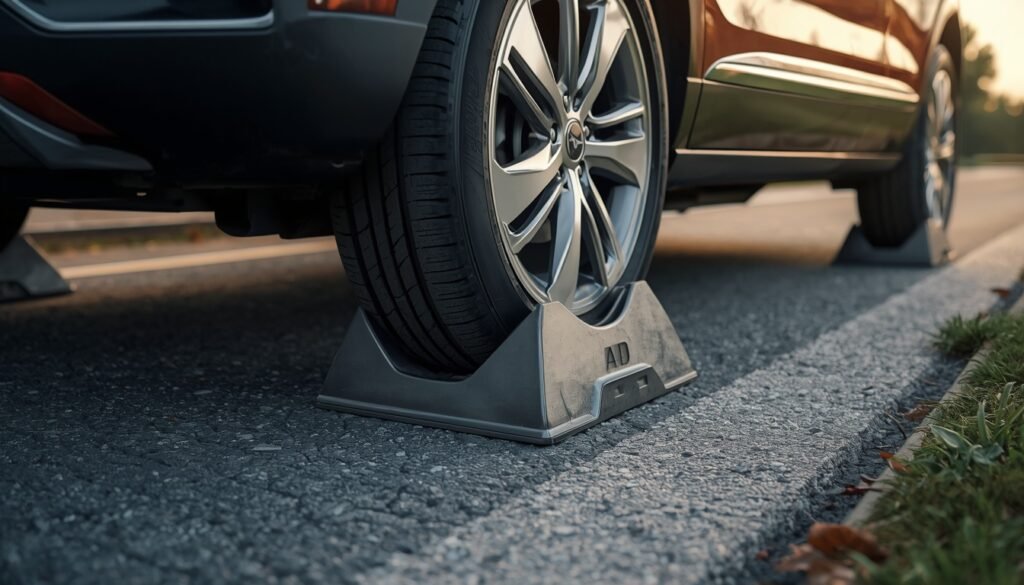
Wheel chocks — not a random rock or chunk of wood — go against the wheels that will remain on the ground, positioned on the side the vehicle would roll toward if it moved. This single step matters far more on a slope than it does on level pavement, and skipping it is one of the riskiest shortcuts a driver can take.
Choose the most stable ground available
Scan the immediate area for the firmest, flattest patch within reach. Avoid mud, loose gravel, and any surface that looks like it could shift or compress under the jack’s weight once the vehicle starts to lift.
Changing the Tire Step by Step on a Slope
Once the vehicle is as secure as it’s going to get, the actual mechanics of the tire change follow the same basic steps as they would on level ground — just with more caution and more double-checking at every stage.
Position the jack and break the lug nuts loose
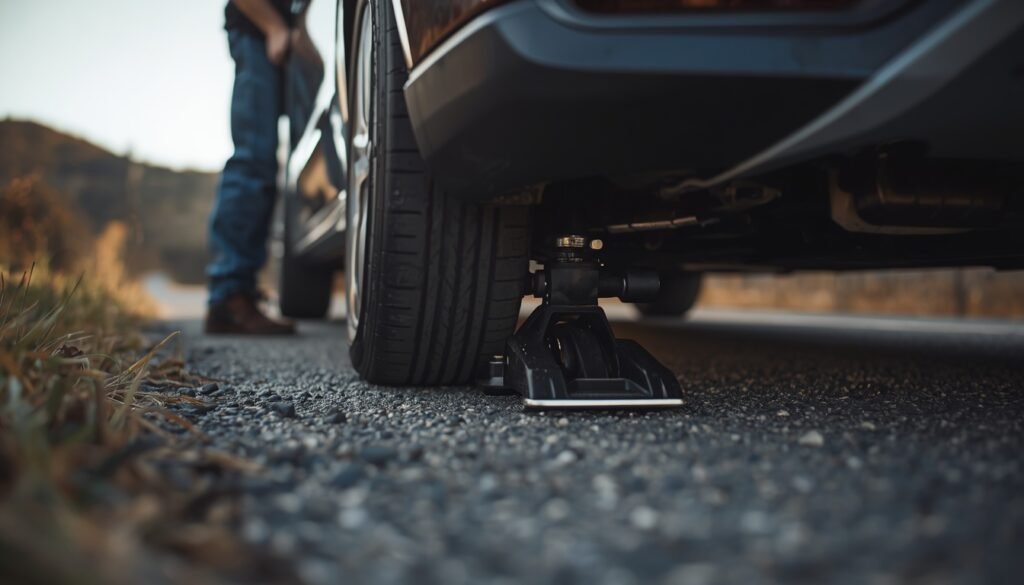
Find your vehicle’s designated jack point in the owner’s manual; improvising a lift point can damage the frame or destabilize the jack entirely. With the tire still touching the ground — its contact with the pavement is what keeps the wheel from spinning — loosen, but don’t fully remove, the lug nuts with a counterclockwise turn.
Lift only as far as necessary
Raise the vehicle just enough to clear the flat tire from the ground, and no higher. The more height you add, the more room there is for something to go wrong if the jack shifts even slightly. Keep your body, hands, and feet clear of the space beneath the car at all times — a roadside repair should never require crawling underneath a vehicle held up only by a jack.
Mount the spare and lower slowly
Line up the spare with the wheel studs, hand-tighten the lug nuts in a crisscross pattern to avoid cross-threading, and lower the vehicle carefully while keeping an eye on how the jack handles the transferring weight. Once the tire is flat on the ground again, finish tightening the lug nuts to the manufacturer’s torque spec — ideally with a torque wrench, or have them checked and properly torqued at a tire shop soon after. If your spare is a temporary “donut,” remember it typically comes with speed and distance limits listed on its sidewall.
Things You Should Never Do When a Vehicle Is on an Incline
Some shortcuts turn a routine roadside repair into a genuinely dangerous situation. Avoid all of the following:
- Getting underneath a vehicle held up only by a jack
- Setting the jack on mud, gravel, or badly uneven ground
- Continuing to lift once the jack looks like it’s leaning or sliding
- Placing the jack anywhere other than the manufacturer’s approved lift point
- Removing all the lug nuts before the car is properly supported
- Using a rock, brick, or other improvised object instead of a real wheel chock
- Standing on the downhill side of a vehicle that could roll
- Driving on a badly damaged tire just to reach flatter ground
- Rushing the setup because traffic or weather is making you anxious
When It’s Time to Call Roadside Assistance Instead
Some situations simply aren’t worth handling solo. Call for help if you’re stopped on a steep grade, close to fast-moving traffic, stuck on an unstable shoulder, or unable to get the jack to sit securely no matter how you position it. The same goes if the vehicle has already shifted or rolled slightly, the wheel or rim looks damaged, or you’re genuinely unsure where the correct jack point is on your specific vehicle.
If you have roadside coverage through your insurer, an auto club membership, or your vehicle’s manufacturer warranty, this is exactly the scenario that coverage exists for. A short wait for a trained professional almost always beats a rushed repair on questionable ground.
Stock Your Trunk Before You Need It
A flat tire on a hill is a lot less stressful when your car is already equipped to handle it. Keep these items on hand year-round:
- A properly inflated spare tire
- A working jack and lug wrench
- Wheel chocks
- A flashlight or headlamp
- Work gloves
- Your owner’s manual
- Basic roadside warning equipment (reflective triangles or flares)
It’s worth checking your spare’s air pressure every few months. A spare that’s been sitting untouched in the trunk for years may be flat itself by the time you actually need it — which turns a bad situation into a worse one.
Quick Decision Guide
Use this checklist any time you’re deciding whether to attempt a tire change on a slope:
| Situation | What to Do |
| Mild slope, firm ground, plenty of space | Try to find level ground first |
| Steep incline | Avoid changing it yourself |
| Soft or unstable shoulder | Don’t use the jack there |
| Heavy traffic nearby | Prioritize calling for help |
| Tire still holds some air | Consider a short move to safer ground |
| Tire is completely flat | Don’t drive on it |
| Jack won’t sit securely | Stop immediately |
| Vehicle starts to shift | Reassess before continuing |
FAQs
Can you change a tire on a slight incline?
Even a gentle slope is less stable than flat ground. Move to a level surface first if you can do so safely.
Can I use a jack on a hill?
A jack needs firm, level ground and the correct lift point to work safely — a hill rarely offers either.
What should I do if I get a flat tire on a steep hill?
Turn on your hazards, move away from traffic if possible, and call roadside assistance if you can’t reach safer ground.
Should I use the parking brake when changing a tire?
Yes, always — along with putting the car in Park or an appropriate gear for a manual transmission.
Do wheel chocks make it safe to change a tire on a hill?
They reduce the risk of rolling, but they don’t turn a steep or unstable spot into a genuinely safe one.
Can I drive on a flat tire to reach level ground?
Generally no — driving on a fully flat tire can damage the wheel and affect your control of the vehicle.
Is it safer to just call roadside assistance on an incline?
In most cases, yes, especially on steep grades, unstable shoulders, or near heavy traffic.
Conclusion
Changing a tire on an incline is possible, but it’s rarely the safest choice available to you. Whenever you can, move to level, firm ground before pulling out the jack — and if that’s not an option, treat the slope with extra caution, chock the wheels properly, and don’t hesitate to call for professional help. A flat tire is inconvenient, but it’s not worth risking your safety to fix in a hurry.